
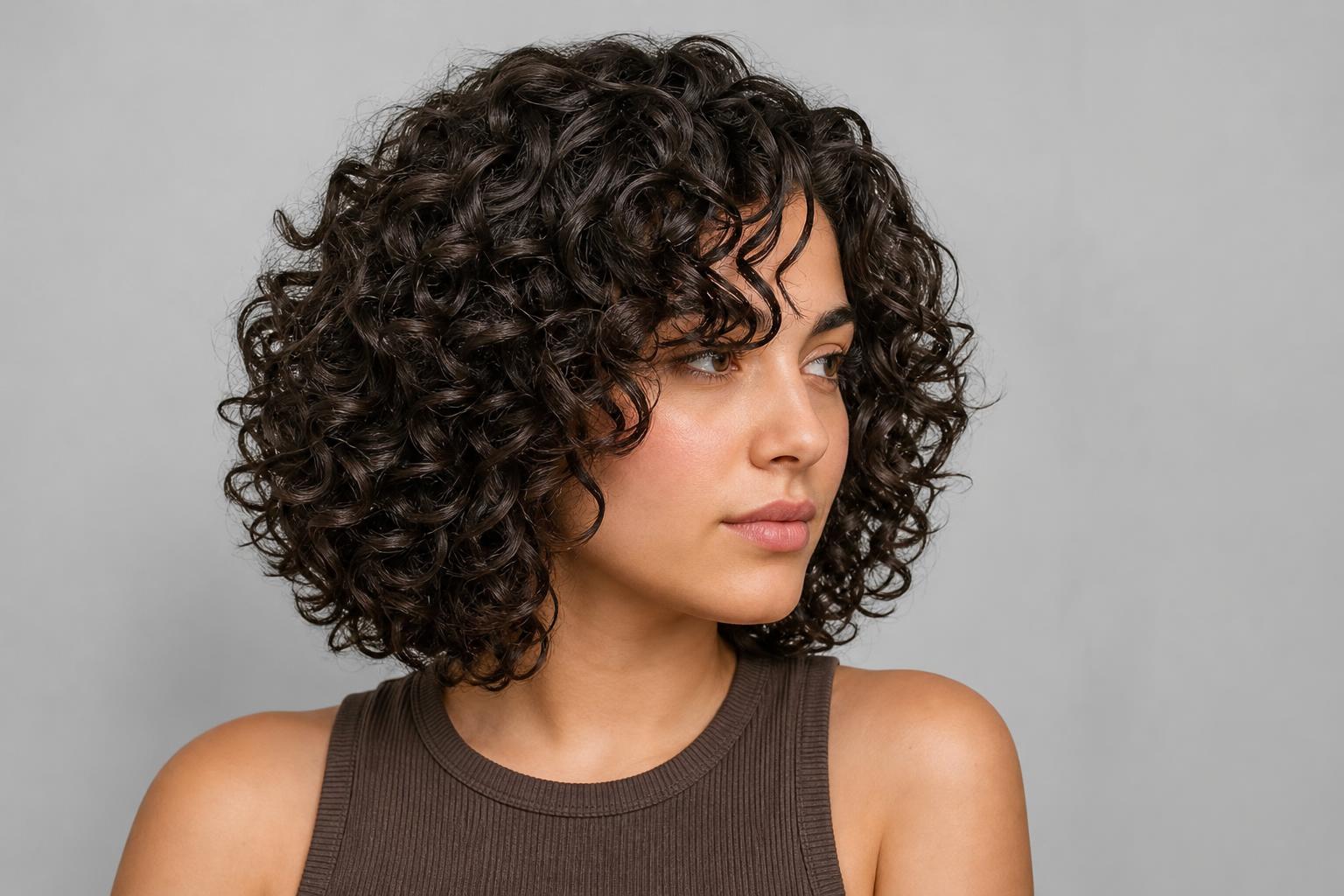
Curly hair rarely fails because of one bad bottle; it fails because the shampoo and the conditioner were chosen separately.
The best shampoo and conditioner for curly hair is a matched pair, where the strength of the cleanser is balanced against the weight of the conditioner. A gentle low-lather shampoo paired with a heavy butter-based conditioner leaves residue that flattens curl within a week. A strong clarifying shampoo paired with a light rinse-out leaves the hair squeaky and frizzy by the afternoon. Getting the pairing right matters more than any single ingredient on either label.
This guide covers which cleanser strength suits each curl pattern, how porosity decides the conditioner weight you need, the wash rotation that prevents buildup without stripping, how to apply both products so the conditioner actually does its job, and the four myths that send most people to the wrong shelf.
| Factor | Details |
|---|---|
| The pairing rule | Gentler cleanser needs a lighter conditioner; stronger cleanser can carry a heavier one |
| What to check first | The first five ingredients on both bottles, not the front-of-pack claims |
| Where the work happens | Shampoo on the scalp only; conditioner on the lengths and ends only |
| Avoid if | You have an itchy or flaking scalp, where a conditioning cleanser makes it worse |
| Reset schedule | One clarifying wash every 4 to 6 weeks regardless of which pair you settle on |
The Conditioner Does More of the Work Than the Shampoo
Curly hair is dry at the ends for a structural reason: the twists in the strand stop scalp oil from traveling down it, so the last few inches never receive what straight hair receives passively. Shampoo cannot fix that; it can only avoid making it worse. The conditioner is the product actually replacing what the curl pattern prevents, which is why a mediocre shampoo paired with an excellent conditioner outperforms the reverse almost every time.
That changes how to budget. If you are choosing where to spend, spend on the conditioner and pick the plainest gentle cleanser you can find. It also changes quantity: most people use roughly twice as much shampoo as they need and half as much conditioner. Reversing those two habits alone improves curl definition before any product changes hands.
Stylist tip: Your shampoo and conditioner do not need to come from the same line, and matching them by brand is a marketing habit rather than a chemistry requirement. Pairing a low-lather cleanser from one range with a slip-heavy conditioner from another is completely normal, and it is how most stylists build their own routine.
What to Read on a Curly Conditioner Label
Conditioners work through cationic ingredients that carry a positive charge and cling to the negatively charged surface of hair, which is what produces slip and reduces the friction that causes breakage during detangling. On the label these appear as names ending in trimonium chloride or trimonium methosulfate, usually behentrimonium or cetrimonium. Their position in the ingredient list tells you the weight: high in the list means a rich, heavy formula, further down means a light one.
Fatty alcohols like cetyl, cetearyl, and stearyl alcohol are the second thing to look for, and they are not the drying kind of alcohol despite the name. They give a conditioner its body and its ability to coat evenly. A conditioner where water is followed immediately by fatty alcohols and a trimonium compound is a genuine curly-hair conditioner regardless of what the front of the bottle claims.
Heavier Is Not Better for Looser Curl Patterns
The thickest conditioner on the shelf is aimed at coily 4-type hair, and using it on 2c waves is the single most common cause of limp, undefined curl. Weight collapses a loose pattern. If your curls looked better before you switched to a richer product, the product is not failing; it is simply built for a different texture, and the fix is to move down a tier rather than to wash more often.
Silicones Are a Removal Problem, Not an Ingredient Problem
Silicones coat the strand and smooth it, which genuinely reduces frizz, and the trouble only starts if the coating accumulates because nothing in your routine removes it. Water-soluble versions rinse out with any cleanser, while the ones named dimethicone or amodimethicone need a stronger surfactant. Using them is fine as long as you pair them with a wash that can strip them, and the mismatch, not the silicone, is what causes the limp, coated result people blame on the ingredient.
Match the Pair to Your Curl Pattern
Curl pattern determines how quickly oil travels down the strand and how much weight the curl can carry before it drops. Those two facts set both halves of the pairing. The table below gives the starting point for each pattern, and the notes in the last column are the adjustment most people end up making after two or three washes.
| Curl Pattern | Cleanser Type | Conditioner Weight | Wash Frequency |
|---|---|---|---|
| 2a to 2c waves | Standard gentle shampoo, moderate lather | Light, fluid, rinse-out only | 2 to 3 times a week |
| 3a to 3b curls | Low-lather cleanser, sulfate-free | Medium cream, slip-focused | Twice a week |
| 3c curls | Low-lather cleanser or co-wash on alternate washes | Rich cream with a leave-in layered over | Once or twice a week |
| 4a to 4c coils | Co-wash mainly, with a real shampoo every third wash | Thick, butter-based, detangling | Once a week or every 10 days |
| Fine hair, any pattern | Gentle shampoo, never a co-wash as the default | One tier lighter than the pattern suggests | Every 2 to 3 days |
If you are unsure which row you are in, the practical test is what happens on day three: waves go greasy at the root, 3-type curls go frizzy at the ends, and coils go dry and brittle throughout. Those three failure modes point to different rows even when the curl looks similar when wet. The distinction between the tighter patterns is covered in more detail in our breakdown of curly versus coily hair.
Porosity Decides How Much Conditioner Stays On
Porosity describes how open the cuticle scales sit, and it governs whether a conditioner soaks in or sits on the surface. High porosity hair, common after color or heat damage, absorbs product quickly and loses moisture just as fast, so it needs a heavier conditioner and benefits from a sealing step afterward. Low porosity hair repels product; a rich cream applied to it never penetrates and instead builds up as a film that makes the hair feel coated and look dull.
The practical adjustment for low porosity hair is heat and dilution rather than a different product: apply conditioner to warm, wet hair and leave it under a towel or cap for five minutes so the cuticle lifts enough to let it in. For high porosity hair, the adjustment is layering rather than a single heavy application. A simple porosity test at home settles which of the two you are working with in about ten minutes.
A Pre-Wash Oil Reduces What the Wash Takes Out
Hair swells when it absorbs water and contracts as it dries, and that repeated swelling is a mechanical stress on the cuticle. Applying coconut oil before washing reduced protein loss from the hair shaft in a Journal of Cosmetic Science study comparing mineral, sunflower, and coconut oils, an effect the researchers attributed to the oil limiting how much the strand swells during the wash. Mineral and sunflower oils did not produce the same result.
In a real routine that means twenty minutes of oil on the lengths before a wash day, not an overnight soak, and only on the mid-lengths and ends rather than the scalp. It is most worth doing on the wash where you use your strongest cleanser. Skip it entirely if your hair is fine, since the oil is difficult to remove without a second shampoo pass that undoes the benefit.
The Wash Rotation That Prevents Buildup
Nobody needs the same wash every time, and treating one bottle as your only cleanser is what produces either buildup or dryness depending on which bottle you chose. A rotation solves both. The point of the schedule below is that each cleanser type gets used where it does the most good and the least harm.
| Wash Type | How Often | What It Does | Pair It With |
|---|---|---|---|
| Co-wash | Between real washes, as needed | Rinses sweat and refreshes curl without removing much | A light rinse-out or nothing at all |
| Low-lather shampoo | Your default wash | Cleans the scalp while leaving the lengths intact | Your standard conditioner for your pattern |
| Clarifying shampoo | Every 4 to 6 weeks | Strips silicone, mineral, and hard-water deposits | A deep conditioner in the same session, always |
| Protein treatment | Every 6 to 8 weeks if color-treated | Temporarily fills gaps in a damaged cuticle | A moisturizing conditioner immediately after |
The clarifying step is the one most people skip and the one that rescues a routine that has stopped working. If your usual products suddenly stop defining curl, the cause is almost always accumulation rather than a formula change, and one wash with a clarifying shampoo followed by a deep conditioner rather than a mask resets it.
How to Apply Both So the Pairing Works
Application changes the result as much as the products do. Shampoo belongs on the scalp only, worked in with fingertips rather than nails, and the suds that run down as you rinse are enough cleaning for the lengths. Anything you scrub directly into the ends is removing moisture from the part of the hair that has the least.
Conditioner goes on soaking wet hair, from the ears down, in sections. Rake it through with your fingers, then cup handfuls of hair and squeeze upward toward the scalp until you hear the water move through it. That squeezing step forces conditioner and water into the curl and is the difference between a conditioner that coats and one that penetrates. Rinse with cool water for the last few seconds, then avoid a towel entirely; a cotton T-shirt does the same job without roughing up the cuticle, which is a large part of air-drying curly hair without frizz.
Stylist tip: Leave a small amount of conditioner in rather than rinsing until the hair feels clean. Curly hair that squeaks after conditioning has been over-rinsed, and the slippery feeling people rinse away is exactly the film that prevents frizz once the hair dries.
Four Myths That Send People to the Wrong Bottle
Curly hair advice online circulates faster than it is checked, and four claims in particular lead to purchases that make things worse. Each one contains a grain of truth, which is why they persist.
Myth: Curly Hair Should Never Be Shampooed
Reality: Scalps produce sebum regardless of curl pattern, and a scalp that is never properly cleansed develops flaking, itching, and in some cases slowed growth. Co-washing is a supplement between washes rather than a replacement for them. Anyone with a flaking or itchy scalp should be shampooing more, not less.
Myth: A Moisturizing Shampoo Is Better for Dry Curls
Reality: Conditioning agents in a shampoo are rinsed away seconds after they are applied, so they contribute far less than the same ingredients in a conditioner that stays on for minutes. A moisturizing shampoo is mostly a marketing position. Choose a shampoo for how gently it cleans and get your moisture from the second bottle.
Myth: The Shampoo and Conditioner Must Match
Reality: There is no chemical dependency between a cleanser and a conditioner from the same range, and buying them as a set mostly guarantees a consistent fragrance. What matters is that the cleanser is strong enough to remove whatever the conditioner leaves behind. Mixing ranges to achieve that balance is normal practice.
Myth: More Protein Means Stronger Curls
Reality: Protein fills gaps in a damaged cuticle temporarily, and hair that is not damaged has no gaps to fill, so the extra protein simply stiffens the strand. Overloaded hair feels rough, dry, and snaps rather than stretching. If your curls became brittle after adding a bonding or strengthening product, stop it and use a plain moisturizing conditioner for two weeks.
FAQ
Can I Use a Regular Shampoo on Curly Hair?
Yes, particularly on looser 2-type waves, provided you keep it on the scalp and follow with a conditioner suited to your pattern. The reason curly-specific shampoos exist is that stronger surfactants remove more oil, and curly hair has less of it to spare along the lengths. If your current shampoo leaves your ends feeling rough rather than clean, that is the signal to switch, and our guide to what sulfate-free actually means explains what the alternatives are doing differently.
How Do I Know If My Conditioner Is Too Heavy?
Heavy conditioner shows as curls that look defined when wet and drop flat within an hour of drying, often with a slight film on the strand when you run fingers through it. Roots go greasy faster than usual too. Move one tier lighter and give it three washes before judging, since a single wash after buildup will not tell you much.
Is Co-Washing Enough on Its Own?
For 4-type coils it can be the main method with a real shampoo every third wash, but for anything looser it leaves the scalp under-cleaned within a couple of weeks. Fine curly hair does worst of all on a co-wash-only routine because the residue weighs it down immediately. Treat co-washing as a refresh between washes rather than the whole routine.
How Much Conditioner Should I Actually Use?
Most people with shoulder-length curls need two to three times what the bottle implies, roughly a palmful rather than a coin-sized amount. The reliable test is coverage: every section should feel slippery before you start rinsing. Using less and leaving it on longer does not compensate, since the limiting factor is contact rather than time.
Do I Need a Separate Leave-In as Well?
Anyone with 3c or tighter texture, high porosity, or color-treated hair generally does, because the rinse-out alone cannot supply enough on its own. Looser patterns usually do not and often look better without one. If you add a leave-in, apply it to soaking wet hair right after rinsing rather than to towel-dried hair, and choose it as part of a full curly hair product routine rather than in isolation.
Why Did My Products Stop Working?
Product accumulation is the usual answer, followed by a change in your water. Hard water leaves mineral deposits that block conditioner from reaching the strand, which reads as a product failure but is actually a coating. One clarifying wash tells you which it is: if the curl returns immediately afterward, it was buildup.
Does Water Temperature Matter?
Warm water helps a conditioner absorb, especially on low porosity hair, and a cool rinse at the very end helps the cuticle lie flat. Hot water is the version to avoid, since it lifts the cuticle and strips oil at the same time. The temperature difference is small compared to the products, but it is free.
Choosing the best shampoo and conditioner for curly hair comes down to matching cleanser strength against conditioner weight rather than hunting for a single miracle bottle. Start from your curl pattern, adjust for porosity, keep a clarifying wash in the rotation every month or so, and put the conditioner where the curl actually needs it. Two products chosen to work together will outperform two expensive ones chosen alone.
Hair results vary based on your natural hair type, texture, density, and condition. Always consult with a licensed hairstylist before making significant changes, especially with chemical treatments or dramatic length changes. Photos may show styled results that require professional tools and products to replicate.