

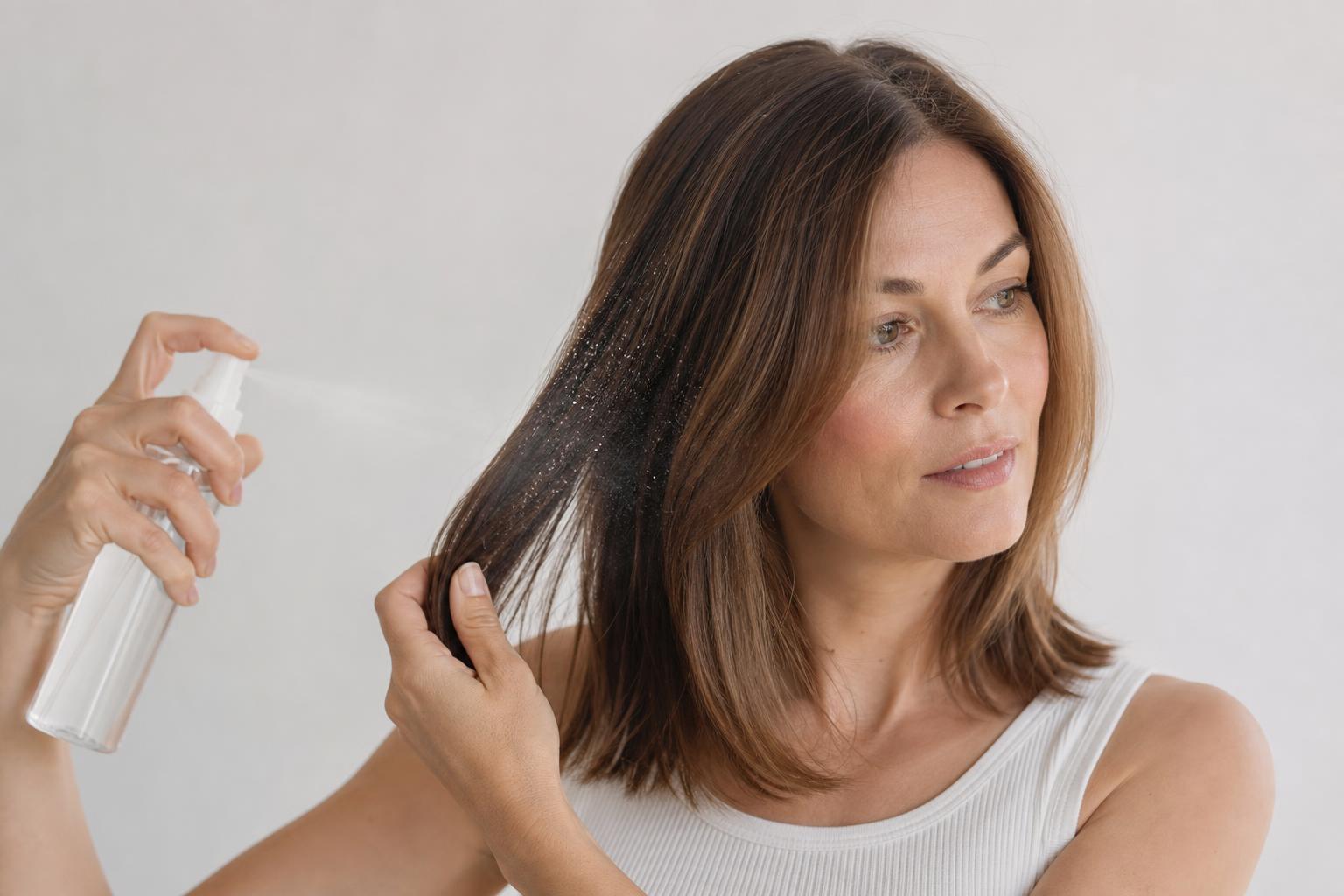
The glass-of-water test that taught most people their hair porosity has never been validated by anyone who studies hair for a living.
Hair porosity describes how easily water and product move through the cuticle, the overlapping outer scales of each strand. Low porosity hair resists water going in and takes a long time to dry. High porosity hair soaks water up fast and loses it just as fast. The practical signal is not a strand floating in a glass, it is how long your hair takes to air-dry and how it behaves in the hours after you wash it.
This guide explains what the cuticle is actually doing, why the float test fails as a diagnostic, three home checks that tell you something real, and the specific changes worth making to your routine once you know where your hair falls. It also covers the cases where porosity is not the problem you think it is.
What Hair Porosity Actually Describes
Each strand is wrapped in cuticle scales that overlap like roof tiles, held down by a lipid layer of ceramides, fatty acids, and cholesterol. When those scales lie flat and the lipid layer is intact, water and product struggle to get past them, which is low porosity. When bleach, heat, friction, or UV exposure degrades that lipid layer and lifts the scales, water passes in and out freely, which is high porosity. The 2024 review of chemical bonds and hair behaviour in the International Journal of Cosmetic Science traces this permeability back to the condition of the cuticle and its bonding, which is why porosity tracks damage history so closely.
That last point is the one most articles skip. Porosity is not a fixed trait you are born with in the way curl pattern is. It is largely a record of what has happened to your hair. Virgin hair trends low to medium; hair that has been lightened twice trends high, and the ends are almost always more porous than the roots because they are years older and have been through more.
Stylist tip: Test the mid-lengths and the ends separately, not the roots. New growth at the scalp is undamaged on almost everyone, so testing there tells you your best-case porosity rather than the porosity of the hair you are actually trying to treat.
Why the Float Test Does Not Work
The float test asks you to drop a clean strand into a glass of water and read porosity from whether it sinks or floats. It appears on nearly every major brand’s hair page, and it is not a test that hair scientists or trichologists accept. It has never been validated in the cosmetic-chemistry literature and it is not taught in regulated cosmetology curricula.
The reasons it fails are mechanical. Whether a strand floats is governed by surface tension and surface chemistry, so leftover conditioner, natural sebum, or a silicone residue will keep a high-porosity strand floating indefinitely. Strand diameter changes the result independently of porosity. And the test has no endpoint: wait long enough and every strand sinks, so the answer depends entirely on when you decide to stop watching. The chemist Michelle Wong covers the problem in detail in her breakdown of why home porosity tests do not measure porosity.
Real measurement in a lab uses gas sorption or electron microscopy to look at pore volume and cuticle structure directly. Neither is available to you at home, which is fine, because the behavioral signals below are good enough to make routine decisions from.
Three Home Checks That Tell You Something Useful
None of these give you a number. What they give you is a consistent read on whether your hair resists water or grabs it, which is the only distinction your routine actually needs. Do all three before deciding, because any one of them can mislead on its own.
Air-Dry Time Is the Most Reliable Signal You Have
Wash your hair, squeeze out the excess with a towel, and leave it alone with no product and no heat. Low porosity hair commonly takes three hours or more to dry fully and can still feel cool at the mid-lengths well past that. High porosity hair is often dry inside an hour. Density affects this too, so compare your own hair against itself over time rather than against a friend’s.
The Spray Test Reads How Fast Water Enters the Cuticle
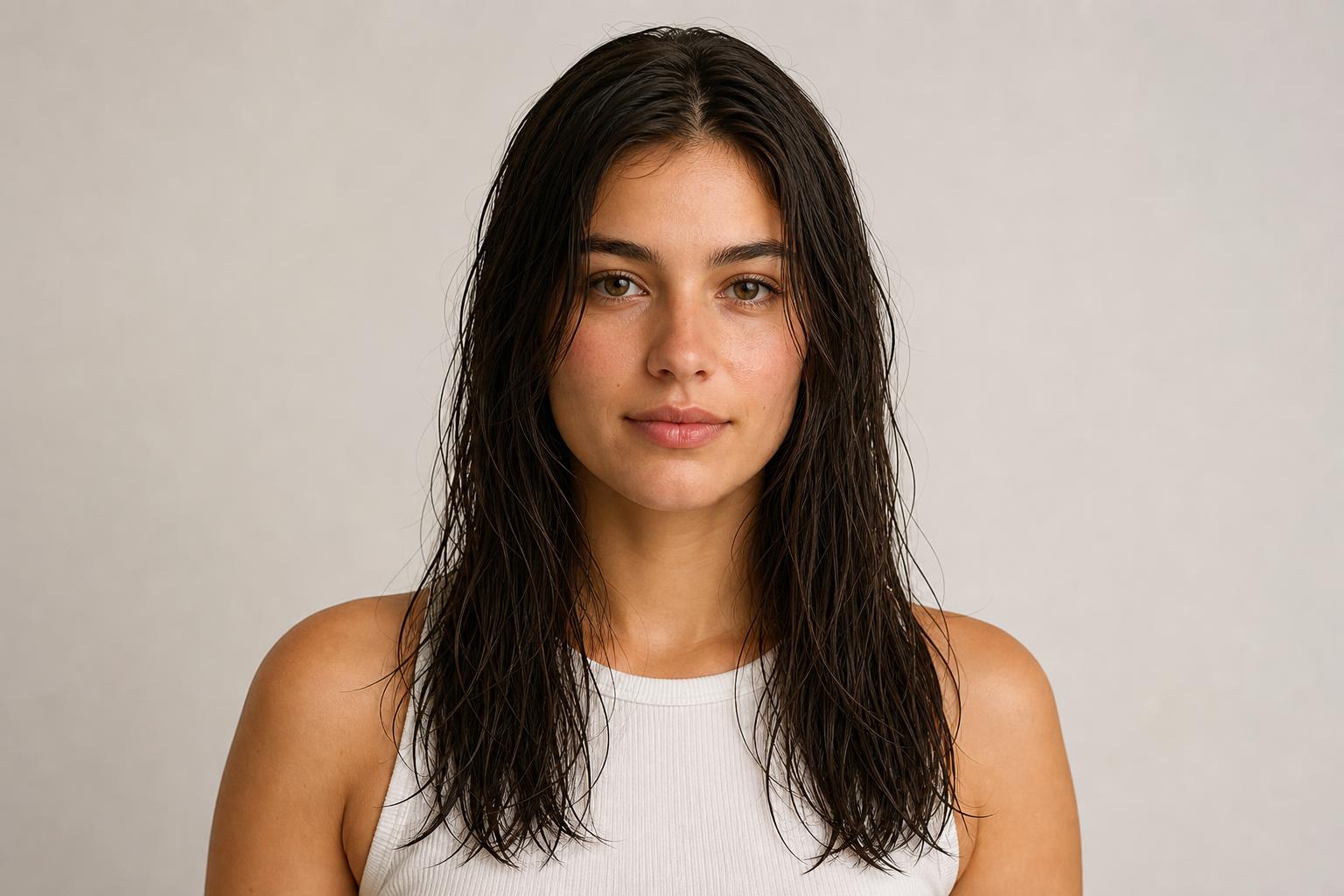
On dry, product-free hair, mist a small section at the mid-lengths with a spray bottle and watch what the droplets do. On low porosity hair they bead and sit on the surface for several seconds before sinking in. On high porosity hair they vanish almost immediately. This is the same principle the float test gestures at, but it works better because you are watching absorption over a controlled area rather than inferring it from buoyancy.
How Your Hair Takes Color Is the Strongest Evidence of All
Your colorist already knows your porosity, whether or not either of you has used the word. Hair that refuses to lift, takes an extra ten minutes to process, and resists toner is low porosity. Hair that grabs color fast, goes darker than intended, and fades within three weeks is high porosity. Ask at your next appointment how your hair processed, because a professional’s read on a full head beats any home test on a single strand.
Stylist tip: If your hair grabs toner and then washes it out within a fortnight, ask for a demi-permanent gloss rather than a permanent toner. On porous hair the gentler formula deposits more evenly and does not push the cuticle open further, which is what causes the next round of fade to happen even faster.
What Actually Changes Once You Know
Knowing your porosity is only worth anything if it changes what you do. The differences are concentrated in four places: how you get product in, what weight of product you use, how much protein your hair wants, and how you handle heat and water temperature.
| Routine Element | Low Porosity | High Porosity |
|---|---|---|
| Getting product in | Apply to warm, damp hair; gentle heat from a cap or warm towel helps | Absorbs readily; focus on sealing it in rather than driving it in |
| Product weight | Lightweight liquids, milks, and sprays; heavy butters sit on top | Richer creams and oils; light products disappear without effect |
| Protein | Use sparingly; builds up fast and causes stiffness | Benefits from regular protein to fill gaps in the cuticle |
| Clarifying | Every 2 to 4 weeks; buildup is the main enemy | Rarely; stripping makes moisture loss worse |
| Water temperature | Warm water helps lift the cuticle enough for product to enter | Cooler final rinse to help the cuticle lie back down |
| Drying and styling | Long air-dry times; plan around them or use low heat to speed it | Dries fast but frizzes fast; a leave-in before drying matters most |
The drying-time difference has a practical knock-on effect that catches people out. Any styling method that relies on hair drying in a set shape takes far longer on low porosity hair, which is why a technique that works overnight for one person leaves another with damp, shapeless pieces. Anyone setting curls without heat overnight needs to build that extra time in rather than assuming the standard eight hours is enough.
Porosity Myths That Cost You Money
The porosity conversation online has drifted a long way from the science, and most of the drift points toward buying something. These are the three claims worth ignoring.
Myth: Porosity Is a Fixed Hair Type Like Curl Pattern
Reality: Curl pattern is genetic and permanent. Porosity is mostly earned through damage, and it varies along a single strand. Your roots and your ends can genuinely sit in different categories at the same time, which is why a single product routine applied root to tip often works on one part of your hair and not the other.
Myth: You Can Permanently Lower High Porosity
Reality: A damaged cuticle does not regrow. Bond builders, protein treatments, and sealing products genuinely improve how porous hair behaves, but the effect washes out and has to be repeated. The only permanent fix for a badly porous length is cutting it off and protecting the new growth.
Myth: Low Porosity Hair Needs Heavy Oils and Butters
Reality: This gets it backwards. Low porosity hair already struggles to let things in, so a heavy butter sits on the surface, attracts buildup, and makes the hair feel coated and dull. Lightweight, water-based products applied to warm damp hair get further in. Heavy oils belong on high porosity hair, where they help slow moisture escaping.
When Porosity Is Not Your Real Problem
Porosity has become the default explanation for every hair complaint, and it is not always the right one. Before rebuilding a routine around it, rule out these first.
- Product buildup. Hair that feels coated, will not absorb anything, and looks dull is more often carrying weeks of silicone and styling residue than expressing low porosity. Clarify once and reassess before changing anything else.
- Hard water. Mineral deposits from hard water leave a film that mimics low porosity almost exactly, and no amount of lightweight product will fix it. A chelating shampoo is the diagnostic here.
- Density and texture, not porosity. Thick hair takes a long time to dry regardless of cuticle condition, so a slow air-dry on dense hair is weak evidence on its own. Curl pattern and density are separate variables, and our guide to curl types from 2A through 4C covers where that line falls.
- Scalp condition. Flaking, itch, and greasy roots with dry ends are scalp issues, and porosity changes nothing about them. A routine built around the scalp itself addresses those directly.
- Simple mechanical damage. Split, rough ends from friction and brushing behave like high porosity hair because they are damaged, but the fix is a trim and gentler handling rather than a protein regimen.
Building the Routine Around It
Once you have a read, change one thing at a time and give it three or four washes before judging. Porosity-driven routines fail most often because people swap six products at once and cannot tell which change helped.
For low porosity hair, the highest-value single change is applying conditioner to warm, damp hair and leaving it under a cap for ten minutes. For high porosity hair, it is adding a leave-in and a sealing cream to soaking-wet hair rather than towel-dried hair, so there is more moisture to trap in the first place. Both changes cost nothing and tell you quickly whether you have read your hair correctly. If you are rebuilding from scratch, our framework for a full hair care routine gives the order of operations to slot these into.
FAQ
Is the Hair Porosity Float Test Accurate?
No. Whether a strand floats depends on surface tension, sebum, product residue, and strand thickness rather than porosity, and the test has no defined stopping point since all hair eventually sinks. It has not been validated in cosmetic chemistry research and is not part of professional cosmetology training. Air-dry time and the spray test are more informative, and your colorist’s read is better than either.
Can Hair Porosity Change Over Time?
Yes, and it usually moves in one direction. Bleach, permanent color, heat styling, UV exposure, and mechanical friction all degrade the cuticle and raise porosity, which is why ends are almost always more porous than roots. Porosity only drops meaningfully when high-porosity length is cut off and replaced by healthier new growth.
What Does Low Porosity Hair Need Most?
Warmth and lightweight products. Applying conditioner to warm, damp hair under a shower cap for ten minutes gets more moisture in than any product swap will. Avoid heavy butters and heavy oils, which sit on the surface and build up, and clarify every two to four weeks to clear what has accumulated.
How Do I Treat High Porosity Hair Without Overloading Protein?
Alternate. Use a protein treatment every third or fourth wash rather than every wash, and follow each one with a rich moisturizing conditioner. Hair that feels stiff, straw-like, or snaps rather than stretches when wet has had too much protein, and the fix is to pause it entirely for a few weeks and use moisture only.
Do Roots and Ends Have Different Porosity?
Almost always. Hair at the scalp is new and undamaged; hair at the ends may be three or four years old and has been through every wash, brush, and heat session since. Treat the two zones differently, applying lighter product at the roots and richer product from the mid-lengths down, rather than the same thing everywhere.
Does Porosity Determine Which Haircut Suits Me?
Not directly, but it affects how a cut behaves day to day. High porosity hair frizzes faster and holds a style for less time, so blunt shapes that rely on a clean line need more upkeep than textured shapes that tolerate movement. It matters most in damp weather, where porous hair swells fastest and cuts built for humid climates earn their keep.
Hair porosity is worth understanding precisely because it changes so few things, and changes those few things a lot. Skip the glass of water, watch how long your hair takes to dry and how it behaves after a color appointment, and adjust product weight and protein around what you find. Change one variable at a time, give it a month, and let your hair’s actual behavior settle the question rather than a test that was never designed to answer it.
Hair results vary based on your natural hair type, texture, density, and condition. Always consult with a licensed hairstylist before making significant changes, especially with chemical treatments or dramatic length changes. Photos may show styled results that require professional tools and products to replicate.

6 responses