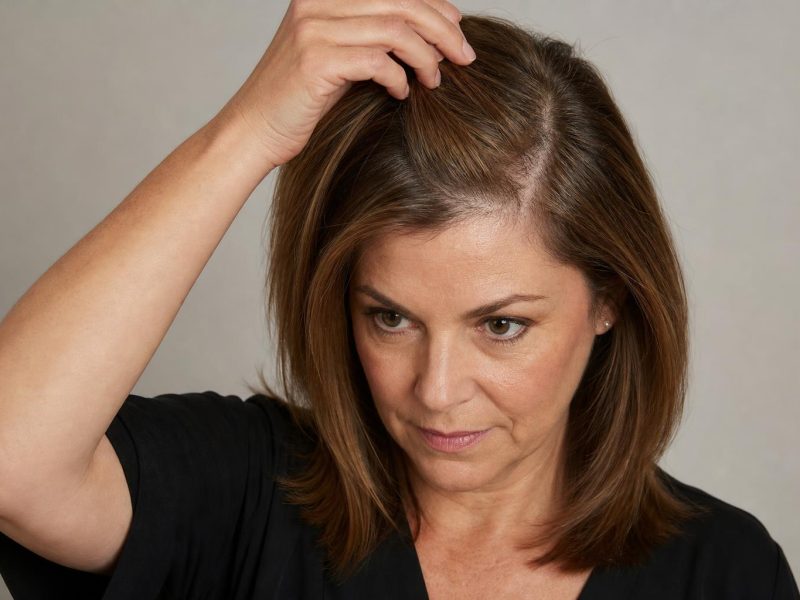

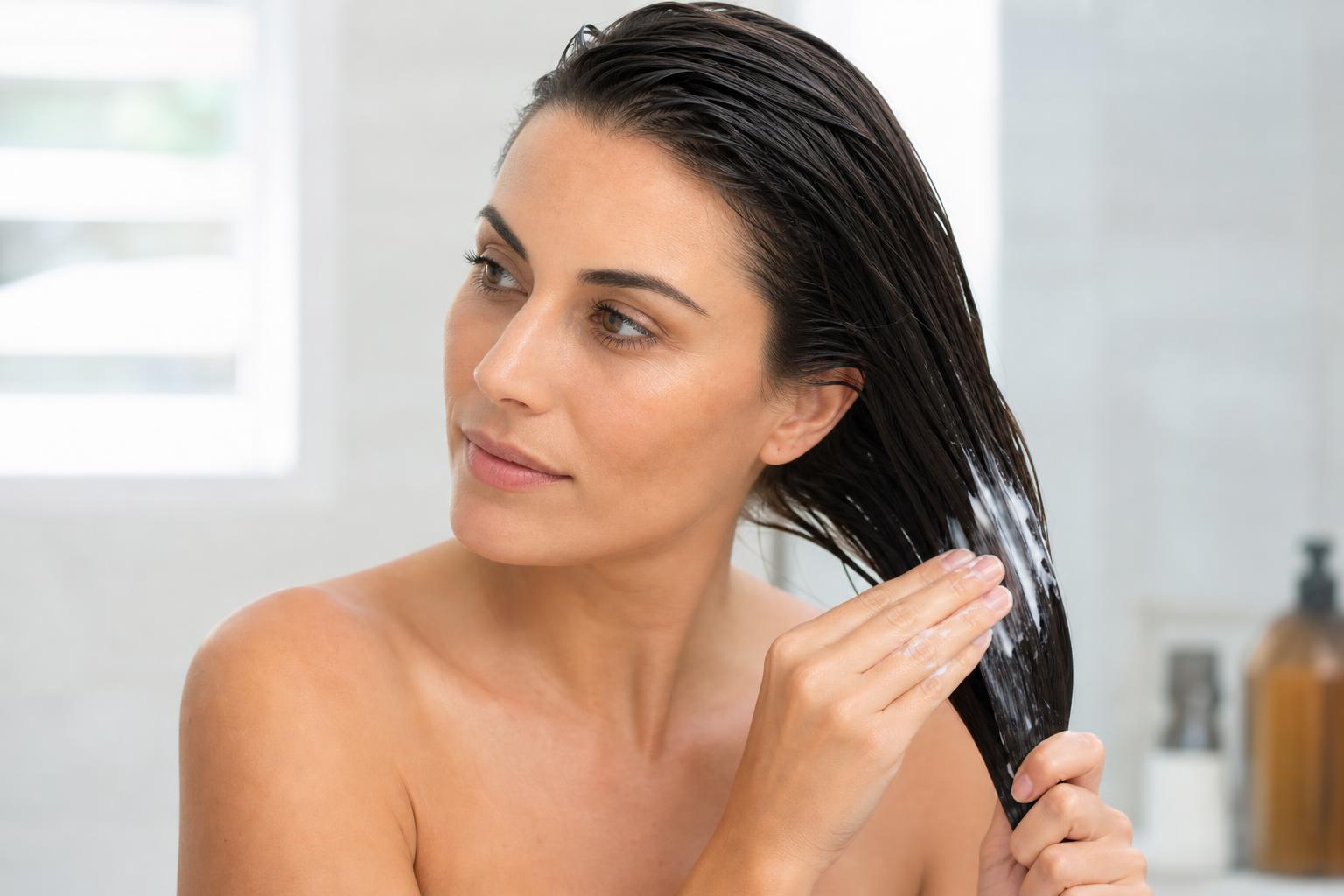
Deep conditioner and hair mask are usually the same product wearing two different labels, and the leave-in is the only one of the three doing a genuinely different job.
A deep conditioner and a hair mask both sit on wet hair for 10 to 30 minutes and get rinsed out, and there is no industry definition separating them. Brands pick whichever word suits the packaging. A leave-in conditioner is the real outlier: it goes on damp hair, never gets rinsed, and stays on the surface all day acting as a detangler, humidity buffer, and heat barrier. So the useful question is not which of the three is best, it is which one belongs in which step.
This guide sorts out what each product actually does, compares them on dwell time and where they work in the hair shaft, shows where each belongs in your wash order, explains why heat does more for a treatment than extra time does, and covers what happens when you try to stack all three in one session.
Deep Conditioner and Hair Mask Are Mostly the Same Category
There is no regulatory or professional standard that separates a deep conditioner from a hair mask. Both are rinse-out treatments with a higher concentration of conditioning agents than your everyday conditioner, both want 10 to 30 minutes of contact, and both target the same problems. When brands do draw a line, the mask is usually the thicker of the two and often carries the protein or reconstructing claim, while the deep conditioner leans toward moisture. That is a marketing convention, not chemistry.
If you own one product labelled “deep conditioner” and one labelled “mask” and you use them on alternating weeks, check the ingredient lists before assuming you are getting two different treatments. What genuinely distinguishes any two of these products is whether the formula is protein-forward, moisture-forward, or oil-forward. That distinction has real consequences and it does not correlate with the name on the tub. Working out which one your hair currently needs is a separate diagnosis, and our guide to telling protein and moisture needs apart covers the symptoms that point each way.
Stylist tip: Read the fifth to tenth ingredients rather than the front of the tub. If you see hydrolyzed keratin, hydrolyzed wheat protein, or amino acids high on the list, it is a protein treatment regardless of what the label calls it. If you see fatty alcohols such as cetearyl alcohol and behentrimonium methosulfate with no proteins in sight, it is a moisture treatment.
Leave-In Conditioner Is the One That Is Genuinely Different
A leave-in is formulated to stay put. It is much lighter than a rinse-out treatment, usually a milk, spray, or thin cream, and its whole purpose is to remain on the hair surface after you leave the bathroom. That surface film is what makes it useful: it keeps the cuticle smooth so a comb can pass through, it slows moisture loss on a humid or dry day, and it puts a layer between your hair and a hot tool.
Because it never gets rinsed, a leave-in is the one product of the three where over-application shows up immediately as limp, coated hair. Fine hair usually needs a pea-sized amount of a spray formula on mid-lengths and ends only. Coarse or coily hair can take considerably more, applied while the hair is still visibly wet so the product locks in the water rather than replacing it. A leave-in also overlaps with a dedicated heat protectant on many labels, and our guide to applying heat protectant properly explains when one product can genuinely do both jobs.
The Comparison That Actually Matters
Forget the product names for a moment and compare them on the four things that change your result: how long they stay on, where in the hair they act, how often you use them, and what problem they solve.
| Product | Dwell Time | Where It Works | Frequency | Solves |
|---|---|---|---|---|
| Everyday conditioner | 1 to 3 minutes, rinsed | Cuticle surface only | Every wash | Tangles, static, post-shampoo roughness |
| Deep conditioner or mask | 10 to 30 minutes, rinsed | Cuticle plus partial cortex, depending on molecule size | Weekly to fortnightly | Dryness, brittleness, weak elasticity |
| Leave-in conditioner | All day, never rinsed | Surface film on the outside of the shaft | Every wash day, and between | Detangling, frizz, heat and friction protection |
| Bond builder | 5 to 20 minutes, rinsed | Internal bonds inside the cortex | After chemical services, then monthly | Structural damage from bleach or relaxer |
The bond builder row is there because it is the category most often confused with a mask, and it is the one genuinely doing something different at a chemical level rather than a marketing level. We separate the three treatment classes in more detail in our breakdown of what bond builders do and do not do.
Heat Does More for a Treatment Than Extra Time Does
Here is the part the packaging never mentions: penetration is much slower and much more size-dependent than “leave on for 20 minutes” implies. Research published in the International Journal of Cosmetic Science on hydrolysed keratin penetration soaked hair fibres for three hours and found that only the small peptides, around 221 daltons, reached deep into the cortex. The large ones, around 75,000 daltons, had barely entered the outer layers even after that full three hours and mostly sat adsorbed on the surface.
Two practical conclusions follow. First, if a product’s actives are large molecules, no amount of extra sitting time will drive them into the cortex, so leaving a mask on for two hours instead of twenty minutes is mostly wasted effort. Second, the reason stylists reach for a warm towel or a hooded dryer is that gentle heat lifts the cuticle scales and improves uptake in a way that waiting alone does not. Ten minutes under a warm towel outperforms forty minutes at room temperature for most formulas.
Porosity changes this equation more than any product feature does. High-porosity hair has a lifted, damaged cuticle that lets product in quickly and lets water out just as fast, so it wants shorter treatments applied more often. Low-porosity hair resists uptake entirely without heat. If you have never established which you have, the tests in our hair porosity walkthrough take about ten minutes and change how you should be using every product in this article.
Stylist tip: Apply a deep treatment to damp hair rather than soaking wet hair. Hair that is dripping is already saturated with water, and the product simply dilutes and runs off. Squeeze the excess out with a towel or an old cotton shirt first, then apply. This one change makes a bigger difference to results than upgrading to a more expensive tub.
Where Each One Belongs in Your Wash Routine
The order matters because each product is designed for a different moisture state of the hair, and using them out of sequence cancels the benefit. A standard wash day with a treatment looks like this.
- Shampoo first, always. Product cannot reach hair that is coated in old oil and residue, and treating unclean hair is the most common reason people conclude an expensive mask “did nothing.”
- Skip your everyday conditioner on treatment days. The deep conditioner or mask replaces it. Using both is redundant and weighs fine hair down for no additional benefit.
- Apply the deep treatment to towel-damp hair, mid-lengths and ends first, roots last or not at all. Clip it up, add gentle heat if you have it, and give it the time on the label rather than double.
- Rinse with cool water. Not cold enough to be unpleasant, just cooler than the wash, which helps the cuticle lie flat as you finish.
- Leave-in goes on last, while the hair is still damp. Applying it to dry hair traps nothing and usually looks greasy. This is also the moment to add your styling cream or gel if you use one.
If your hair feels coated and dull no matter which products you use, the problem may not be the routine at all. Mineral deposits from your water supply build a film that mimics product buildup exactly, and it needs a chelating formula rather than a better conditioner, which we cover in our guide to hard water and its effect on hair.
Stacking All Three the Same Day Does Not Compound
A mask, a bond builder, a protein treatment, and a leave-in in a single session is a common response to damaged hair and it does not work the way people hope. The hair shaft has a finite capacity to take up product on any given day, and once the cuticle is saturated the rest simply sits on the outside or rinses away. Beyond the wasted product, three specific things go wrong.
- You cannot tell what worked. If your hair feels better, you have no idea which of four products caused it, so you cannot repeat the result or drop the two that did nothing.
- Protein overload becomes easy. Several of these categories quietly contain protein. Stacking them on hair that needed moisture produces the stiff, straw-like texture people then misread as needing even more treatment.
- Weight accumulates. Fine and low-porosity hair in particular ends up limp and greasy at the roots within a day, which sends people back to washing more often than they need to.
Use one rinse-out treatment per wash day, plus a leave-in. Space a bond builder into its own session on a different week. If you are treating genuine damage, give any single change two or three weeks before adding another variable, because split ends and breakage do not resolve in one session regardless of what you use, as our guide to managing split ends between trims spells out.
Which One to Reach For, by Symptom
Choose by what your hair is doing rather than by what the product is called. The table below maps the most common complaints to the category that addresses them.
| What Your Hair Is Doing | Reach For | Why |
|---|---|---|
| Tangles badly, rough after washing | Leave-in conditioner | Surface slip is a coating job, not a penetration job |
| Dry and dull through the mid-lengths | Moisture-forward deep conditioner | Needs contact time to restore water content |
| Stretches then snaps when wet | Protein-forward mask | Elasticity loss points to protein, not moisture |
| Stiff, straw-like, snaps dry | Moisture treatment, and pause all protein | Classic protein overload signature |
| Gummy and stretchy right after bleaching | Bond builder | Structural bond damage no conditioner reaches |
| Frizzes within an hour of styling | Leave-in plus a sealing cream or oil | Humidity is entering the shaft from outside |
| Limp and flat after any treatment | Lighter leave-in, ends only | Fine hair is being overloaded, not underfed |
FAQ
Can I Use a Hair Mask and a Deep Conditioner in the Same Wash?
There is no benefit, because in most cases they are the same category of product and the hair can only absorb so much in one session. Pick whichever formula matches your current need, moisture or protein, and use that alone. If you genuinely own one protein product and one moisture product, alternate them across separate wash days rather than layering them.
How Long Should I Really Leave a Hair Mask On?
Follow the label, which is usually 10 to 30 minutes, and add gentle heat rather than adding time. Studies of protein penetration show that large molecules are still largely surface-bound after hours of soaking, so doubling the time does not double the effect. For protein treatments specifically, going well past the stated time can leave hair stiff, which is the opposite of what you wanted.
Do I Still Need a Regular Conditioner If I Use a Leave-In?
Usually yes, because they work at different moments. Rinse-out conditioner closes the cuticle immediately after shampoo, when the hair is most swollen and vulnerable, while a leave-in protects it through the day. The exception is very fine hair, where a lightweight leave-in spray alone is often enough and using both makes the hair go flat by lunchtime.
Can I Leave a Hair Mask on Overnight?
You can, but for most formulas it adds nothing, and for protein-heavy ones it can leave hair brittle. Overnight treatments are worth it mainly with oil-based products on coarse, high-porosity, or coily hair, where the extra hours help the oil work through a resistant cuticle. Cover your hair to protect bedding, and never leave a protein reconstructor on overnight.
Is a Leave-In Conditioner the Same as a Heat Protectant?
Some leave-ins provide real heat protection and many do not, so check for an explicit thermal-protection claim rather than assuming. A conditioning film alone gives a small buffer, but products formulated as heat protectants contain specific polymers and silicones chosen to distribute heat. If your leave-in makes no thermal claim, apply a dedicated protectant on top before any hot tool.
How Often Should I Deep Condition?
Once a week suits most people, moving to every two weeks for fine or low-porosity hair that goes limp easily, and up to twice a week for coily, bleached, or high-porosity hair. Frequency should respond to how your hair feels rather than to a fixed schedule, since seasons, color services, and heat use all shift the need. If your hair feels heavy or greasy the next day, you are treating too often or using too much.
Why Does My Hair Feel Worse After a Protein Mask?
That is protein overload, and it means your hair needed moisture instead. Excess protein binds to the shaft and makes it rigid, so hair that was merely dry becomes stiff, rough, and prone to snapping. Stop all protein products, use a rich moisture treatment for the next two or three washes, and reassess. Hair recovers from this within a few weeks once the protein is discontinued.
Sorting out deep conditioner vs hair mask vs leave-in is less about picking a winner and more about knowing that two of them overlap almost completely while the third does an entirely separate job. Check the ingredient list rather than the label, use one rinse-out treatment per wash day, add warmth instead of extra minutes, and finish with a leave-in on damp hair. That sequence covers what nearly every hair type needs without the shelf full of half-used tubs.
Hair results vary based on your natural hair type, texture, density, and condition. Always consult with a licensed hairstylist before making significant changes, especially with chemical treatments or dramatic length changes. Photos may show styled results that require professional tools and products to replicate.