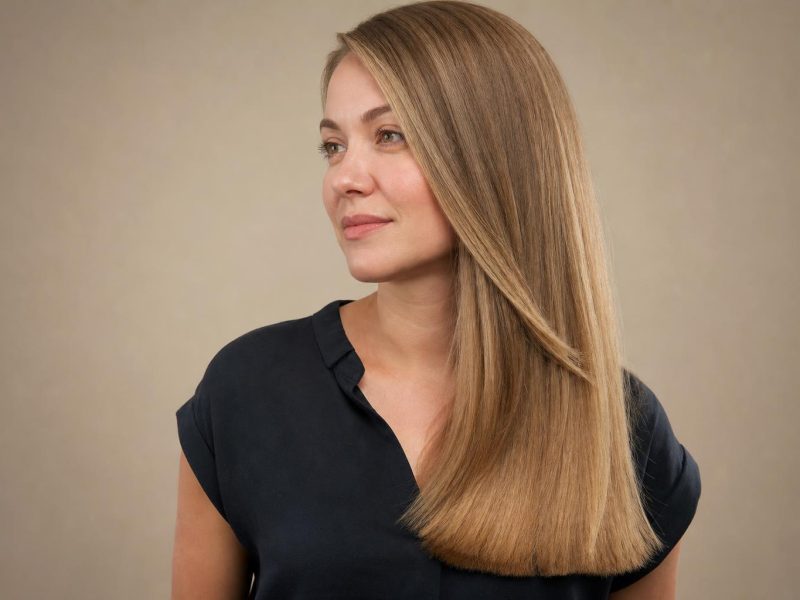

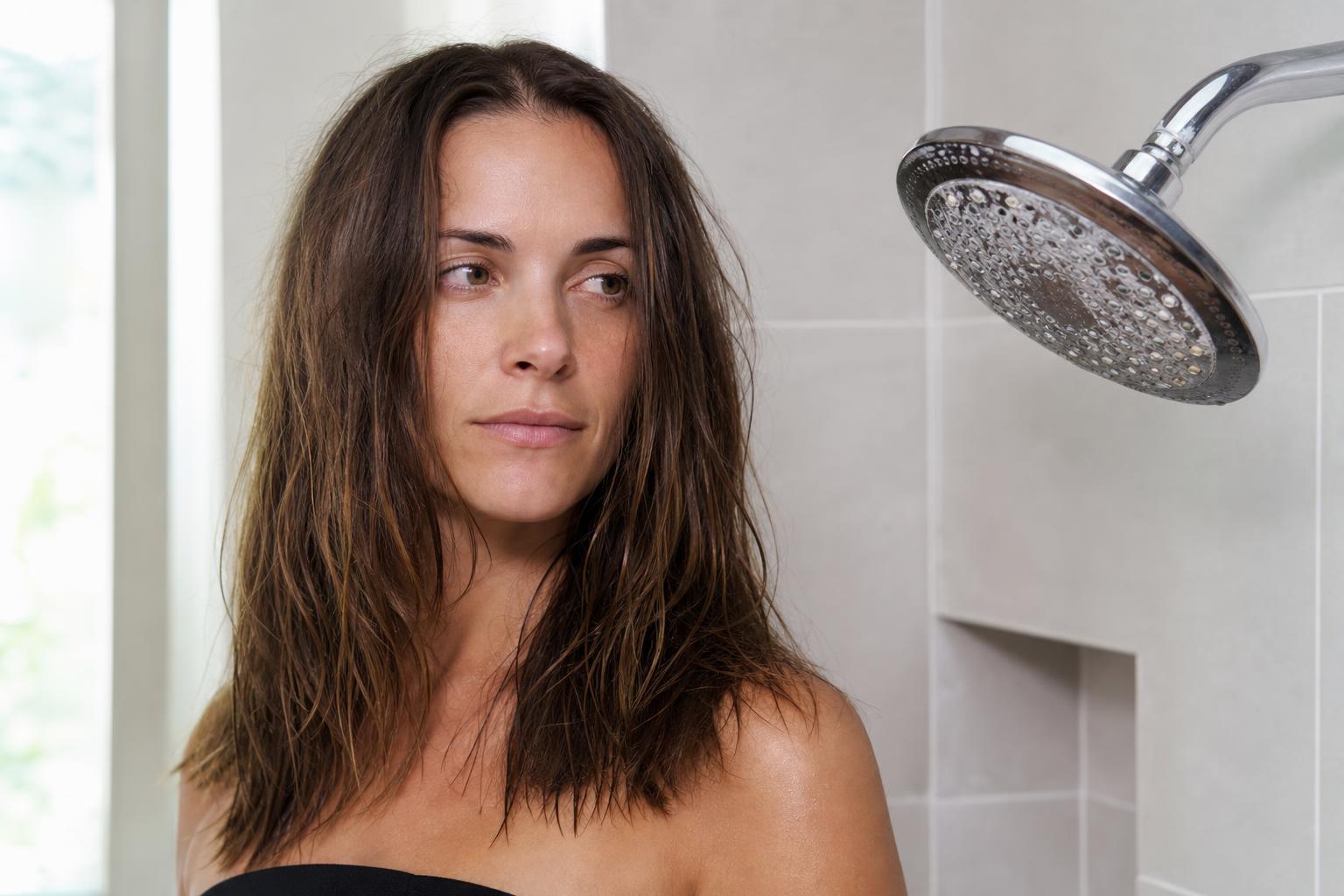
If your hair feels coated no matter what you wash it with, the problem is more likely your water than your shampoo.
Hard water carries dissolved calcium and magnesium that bind to the hair shaft and stay there, building a film that ordinary shampoo cannot lift. The result is hair that feels rough and slightly waxy at the same time, resists conditioner, refuses to lather properly, and turns brassy or dull weeks earlier than it should after color. A chelating shampoo removes those minerals; a clarifying shampoo does not, and confusing the two is why most people never solve this.
This guide covers how to confirm hard water is your culprit rather than damage or product buildup, what the minerals do to a strand at the structural level, the difference between chelating and clarifying formulas, a realistic wash-day routine, and an honest assessment of what shower filters and water softeners each achieve.
How to Tell If Hard Water Is Actually Your Problem
Mineral buildup has a distinctive feel that separates it from dryness or chemical damage. Hair coated in calcium feels rough and grabby when dry but oddly slick and heavy when wet, and conditioner seems to sit on top rather than absorb. Lather is the giveaway: hard water reacts with the surfactants in shampoo to form an insoluble scum, so you find yourself using two or three times the product to get any foam at all.
Check the other surfaces in your bathroom before you blame your hair. White crust around the showerhead, chalky spots on glass, and soap scum that returns within days of cleaning all point to the same water. You can also look up your municipal supply directly, since most utilities publish an annual water quality report, and the United States Geological Survey classifies anything above 121 milligrams per liter as hard and above 180 as very hard.
Stylist tip: Wash one section of hair with bottled distilled water and compare it dry against the rest. If that section feels noticeably softer and lighter the next morning, your tap water is doing the damage, and no product swap will fix what the rinse is putting back on.
What Calcium and Magnesium Do to a Hair Strand
Mineral ions deposit on the cuticle and work their way into the outer layers of the shaft, where they raise the cuticle scales and make the surface physically rougher. That roughness is what you feel as tangling and what you see as dullness, since a lifted cuticle scatters light instead of reflecting it. On porous or previously bleached hair the effect compounds fast, because an already-open cuticle takes on far more mineral than a smooth one.
The strength cost is measurable rather than theoretical. Researchers comparing hair treated with deionized water against hair treated with hard water found a statistically significant drop in tensile strength in the hard water group, which lines up with what people report as unexplained breakage. Separate microscopy work has documented visible changes to the hair shaft surface tied to water hardness under a scanning electron microscope.
Color is where most people first notice something is wrong. Copper and iron traces in hard water oxidize inside the hair and pull blonde tones warm and brunette tones muddy, which is why a fresh gloss can go brassy within three washes in a hard water house. If your color has ever faded far faster than your colorist predicted, mineral load is worth ruling out before you blame the formula. Persistent warmth of that kind often gets treated as a toning issue when the real fix is removing what is causing brassy tones to develop in the first place.
Chelating Shampoo and Clarifying Shampoo Are Not the Same Product
This is the distinction almost every hard water article skips, and it decides whether your routine works. Clarifying shampoos use strong surfactants to strip oils, silicones, and styling residue. Surfactants cannot bind metal ions, so no matter how harsh the clarifier, the calcium stays exactly where it is. Chelating shampoos contain agents such as EDTA or phytic acid that grab those ions and carry them down the drain.
| Feature | Chelating Shampoo | Clarifying Shampoo |
|---|---|---|
| Removes | Calcium, magnesium, copper, iron, chlorine residue, plus product buildup | Oils, silicones, dry shampoo, styling product only |
| Key ingredients | EDTA, phytic acid, sodium gluconate, citric acid | Sodium lauryl sulfate or similar high-strength surfactants |
| Use it when | Hair feels coated, color goes brassy fast, you swim or live with hard water | Hair is limp from heavy styling products or oil |
| Frequency | Every 2 to 4 weeks in a hard water area | Every 2 to 6 weeks depending on product use |
| Effect on color | Can lift some deposited tone, so schedule before a toning appointment | Fades color noticeably on freshly treated hair |
| Follow with | A rich mask, always, since chelating leaves hair thirsty | A standard conditioner or light mask |
Both formulas are stripping, which is why neither belongs in a weekly rotation. Overusing a chelating shampoo pulls out natural oils and can make fine hair feel like straw, so treat it as a scheduled reset rather than a regular cleanser. How often you need it also depends on how often you wash overall, and stretching the gap between washes reduces the number of mineral-loaded rinses your hair takes. Our guide to how often you should really wash your hair covers the trade-offs there.
The Wash-Day Routine That Actually Removes Buildup
Removing minerals is a sequence, not a single product. Doing the steps out of order is the most common reason people try a chelating shampoo once, feel their hair go straw-dry, and give up on the whole approach. Work through the four steps below on a day when you have twenty minutes, and repeat every two to four weeks rather than weekly.
Step 1: Chelate Before You Condition Anything
What you need: A chelating shampoo with EDTA or phytic acid listed in the first half of the ingredients.
How: Apply to wet hair, work through the mid-lengths and ends with your fingertips rather than your nails, and leave it on for three to five minutes before rinsing. A second short pass is worth it if your water is very hard.
Why: The chelating agents need contact time to bind the ions. Rinsing straight away removes surface residue but leaves most of the mineral load behind.
Common mistake: Applying it like a normal shampoo and rinsing in thirty seconds, then concluding the product does not work.
Step 2: Rebuild Moisture in the Same Shower
What you need: A rich, fatty-alcohol-based deep conditioner or mask.
How: Apply generously from mid-lengths down, cover with a shower cap, and leave for ten minutes. Comb through with a wide-tooth comb while the mask is on.
Why: Chelating removes far more than minerals, including a fair amount of the oil that keeps the cuticle smooth. Skipping this step is what makes people describe the routine as damaging.
Common mistake: Reaching for a protein treatment here. Freshly chelated hair wants moisture first, and protein on top of that combination often goes brittle.
Step 3: Finish With a Cool Acidic Rinse
What you need: Diluted apple cider vinegar at roughly one tablespoon per cup of water, or a pH-balancing rinse.
How: Pour over the hair after the mask, leave for thirty seconds, and rinse with the coolest water you can stand.
Why: Acid closes the cuticle after an alkaline wash and helps neutralize residual alkalinity that hard water leaves behind. Cool water flattens the scales further.
Common mistake: Using undiluted vinegar, which is far too acidic and dries the scalp.
Step 4: Seal the Cuticle Before Heat
What you need: A leave-in conditioner and a heat protectant appropriate to your tool.
How: Apply the leave-in to damp hair, then the protectant, and let both absorb for a minute before any dryer or iron touches your hair.
Why: Newly stripped hair is more vulnerable to heat than usual, and layering protection matters more on the day you chelate than on any other. The correct way to apply heat protectant makes a measurable difference here.
Common mistake: Blow-drying immediately on high heat because the hair feels cleaner and easier to handle.
Filters, Softeners, and What Each One Realistically Does
Prevention beats treatment here, but the hardware market is full of overclaiming. The blunt version is that most showerhead filters are built to remove chlorine and sediment, not calcium and magnesium, and calcium and magnesium are what define hard water. That does not make filters useless, since chlorine contributes to dryness and color fade in its own right, but buying one and expecting soft water is a disappointment waiting to happen.
| Option | Removes Minerals? | Realistic Benefit | Worth It If |
|---|---|---|---|
| Carbon showerhead filter | No | Less chlorine, slightly less dryness and color fade | Your water is chlorinated and you rent |
| KDF or multi-stage filter | Partially, and only briefly | Some reduction in heavy metals, cartridge fades fast | You will actually replace cartridges on schedule |
| Whole-house ion-exchange softener | Yes | Genuine soft water at every tap, noticeable within a week | You own the home and your water tests very hard |
| Final rinse with bottled distilled water | Prevents new deposits | Cheap, effective, tedious, best for wash days before events | You wash twice a week or less |
| Chelating shampoo on a schedule | Yes, after the fact | Resets hair that has already picked up buildup | Always, in a hard water area |
Stylist tip: If you are booking a color appointment, chelate a week before rather than the day before. Removing mineral load first means the color develops evenly instead of grabbing unpredictably at the roots, and a week gives the hair time to rebalance so the toner takes cleanly.
When Hard Water Is Not the Cause
Plenty of hair complaints get blamed on water when something else is driving them, and chelating a problem that is not mineral-related makes it worse. Rule out these first if the pattern below matches yours better than the coated feeling described above.
- Hair that snaps when wet and stretches like gum is structural damage from bleach or chemical services, and it needs a bond treatment rather than a mineral reset.
- Ends that are rough while the roots feel fine usually indicate age and wear on the oldest hair rather than deposits, which coat the whole length fairly evenly.
- Hair that goes limp within a day of washing is more often silicone or oil buildup, which a clarifying shampoo handles at a fraction of the harshness.
- Sudden shedding from the scalp is not a water hardness issue. Diffuse hair loss has medical causes worth investigating with a doctor, and no shampoo addresses it.
- Frizz that appears only in humid weather is a porosity and moisture-balance question, and a simple porosity test tells you more than a water report will.
What to Tell Your Stylist
Lead with the water, not the symptom. Saying “I am on very hard water and my color keeps going brassy by week three” gives your colorist something to plan around, and most will adjust the formula or add a chelating step at the bowl before they start. Plenty of salons keep a professional-strength mineral remover behind the desk that is stronger than anything sold at retail.
Ask specifically: “Can you do a chelating treatment before we tone, and how long should I wait after it before you color?” That question tells a stylist you understand the sequence, and it opens the conversation about timing rather than leaving them to guess how much buildup they are working through. It is also worth asking what they recommend as a home version, since retail chelating products vary widely in strength.
If you swim regularly, mention that in the same breath. Pool water adds chlorine and copper on top of your household minerals, and the green cast that blonde hair picks up in a chlorinated pool comes from copper rather than the chlorine everyone blames.
FAQ
Can Hard Water Cause Hair Loss?
Hard water causes breakage rather than loss from the root, and the two feel very different. Breakage produces short broken pieces of varying length across the mid-lengths, while true shedding comes out with a white bulb at the end. If you are finding whole hairs with a root attached in noticeably increased numbers, that is a question for a doctor, not a shampoo aisle.
How Do I Find Out How Hard My Water Is?
Your local water utility publishes an annual quality report that lists hardness, usually in milligrams per liter or grains per gallon, and it is free to look up. A hardware store test strip gives you a rough reading in under a minute if you are on a private well. Anything above 121 milligrams per liter counts as hard, and above 180 you will see the effects on your hair clearly.
Will a Chelating Shampoo Strip My Color?
It can lift some deposited tone, particularly on freshly applied semi-permanent or gloss color. Use it a week before a color appointment rather than a week after, and skip it entirely in the first two washes following a fresh gloss. Permanent color is far more stable and rarely shifts noticeably from one chelating wash.
Is Bottled Water Rinsing Actually Worth the Effort?
For a final rinse before an event or a photo, yes, and the difference in shine is visible. As a daily habit it is expensive and impractical, and a scheduled chelating wash achieves more for less effort. Distilled is the version to buy if you try it, since spring water carries its own minerals.
Does Hard Water Affect Curly Hair More?
Curly and coily textures feel the effects sooner because the cuticle is naturally more raised along the curves of the strand, which gives minerals more surface to cling to. Definition suffers first, with curls clumping less and frizzing more, well before the hair feels rough to the touch. Chelating every three weeks and a heavier leave-in usually restores the pattern.
Can I Just Use a Clarifying Shampoo More Often Instead?
No, and this is the central point of the whole category. Clarifying surfactants have no mechanism for binding calcium or magnesium, so washing more often with one strips oil without touching the mineral film. You end up with hair that is both coated and dried out, which is the worst of both.
How Long Until My Hair Feels Normal Again?
Most people notice a clear difference after the first proper chelating wash, with softness and shine improving further over the following two or three washes as moisture rebuilds. Hair that has spent years in very hard water may need two chelating sessions a fortnight apart. Preventing new deposits matters more than the reset once you are there.
Sources
- International Journal of Trichology — Changes in Baseline Strength of Hair Treated With Hard Water
- Indian Journal of Dermatology, Venereology and Leprology — SEM Study of Hair Shaft Changes and Water Hardness
- United States Geological Survey — Hardness of Water
Hard water hair is one of the few hair problems with a genuinely simple fix once you identify it correctly, and the identification is the part most people get wrong. Confirm the coated feeling and the poor lather, reach for a chelating shampoo rather than a clarifying one, and always follow it with real moisture. Everything else in your hair care routine works better once the minerals are off the strand.
Hair results vary based on your natural hair type, texture, density, and condition. Always consult with a licensed hairstylist before making significant changes, especially with chemical treatments or dramatic length changes. Photos may show styled results that require professional tools and products to replicate.