


Brassy brown hair is an orange or red undertone showing through, and the fix is to neutralize it with a blue-based product, not to dye your hair darker.
When brown hair turns brassy, the warm pigment underneath has become visible as your color fades. The instinct is to reach for a darker box dye, but that just buries the problem and often leaves hair flat and muddy. The real correction uses color theory: blue sits opposite orange on the color wheel, so a blue-toned shampoo or gloss cancels the brass while keeping your depth exactly where it is.
This guide explains why brown hair goes brassy in the first place, how to read the exact tone you are fighting, a step-by-step home routine to tone it out without darkening, how to prevent it from coming back, and when the problem needs a colorist instead of a bottle. Everything here is aimed at keeping your brown the same level, just cooler and cleaner.
Why Brown Hair Turns Brassy
Brassiness is not a random accident, it is warm underlying pigment being exposed as the cool tones on top wear away. Brown hair naturally holds a lot of red and orange pigment, so anything that strips or oxidizes the color lets that warmth surface. Knowing the cause tells you how to stop it from returning after you correct it.
- Fading from washing, especially with sulfate shampoos that strip toner and gloss faster than the underlying color.
- Hard water and mineral buildup, which deposit iron and copper that oxidize into an orange cast.
- Sun and UV exposure, which break down cool pigment and lighten the warm base underneath.
- Lightening services, since any highlight or balayage exposes warmer pigment as it lifts, and that warmth returns as the toner fades.
Stylist tip: If your brass appears within a week of a color appointment, mineral-heavy water is the likely culprit. A clarifying or chelating shampoo used every few weeks removes the buildup that a regular wash leaves behind.
The Color Wheel Tells You Exactly What Neutralizes Your Brass
Toning works on one principle: opposite colors on the wheel cancel each other. Look at your hair in natural daylight and name the warm tone you actually see, because the right corrector depends on it. Brunettes usually fight orange, which is why blue is the workhorse, while lighter brown and highlighted pieces often turn yellow and need purple instead.
| Brassy Tone You See | Sits Opposite | Neutralize With | Common On |
|---|---|---|---|
| Orange | Blue | Blue shampoo or blue-based gloss | Medium to dark brown |
| Red-orange | Blue-green | Blue shampoo, ash-toned gloss | Dark brown, faded box color |
| Yellow | Purple | Purple shampoo | Light brown, highlights, babylights |
| Red | Green | Green-based gloss (usually professional) | Dark brown, previous red dye |

How to Tone Brassy Brown Hair at Home Without Darkening It
The goal of at-home toning is to deposit a whisper of cool pigment on top of your existing color, never to add depth. Work in gentle steps and check your hair between them, because it is easier to add more toning than to undo an overdone result. Cool water and patience do most of the work here.
Step 1: Neutralize the Orange with Blue Shampoo
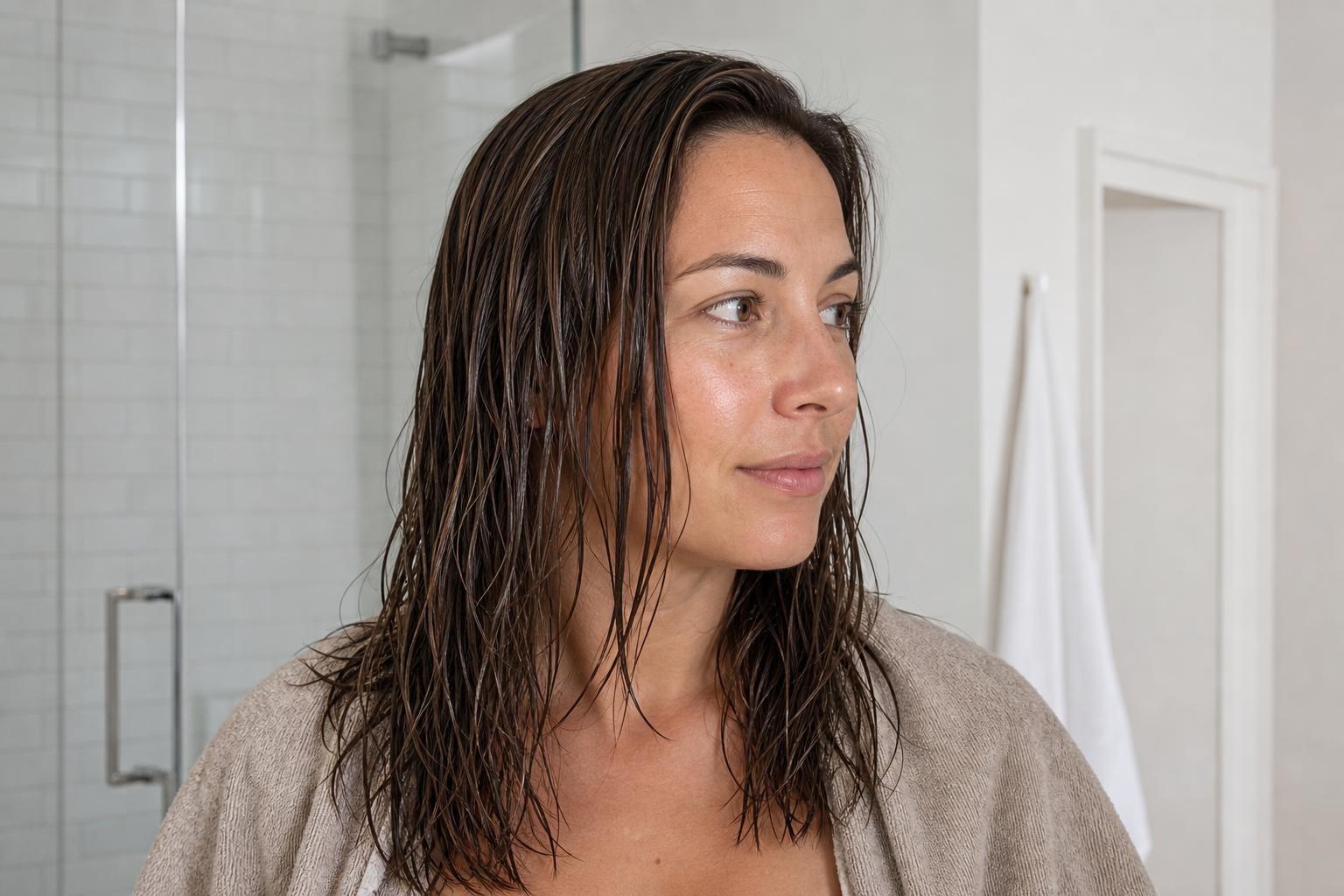
On wet hair, work a small amount of blue shampoo through the brassiest sections, usually the mid-lengths and ends, and leave it on for two to five minutes depending on how stubborn the orange is. The longer it sits, the more the blue pigment deposits, so start with three minutes the first time. Rinse with cool water, which keeps the cuticle closed and the tone locked in. On brown hair, use blue rather than purple, since purple only cancels yellow and will not touch true orange brass.
Step 2: Refresh Cool Tone with a Demi-Permanent Gloss
When shampoo alone is not enough, an at-home demi-permanent gloss in a neutral or ash tone at your current level refreshes the color without going darker. A gloss coats the strand and adds shine while depositing cool pigment, and because it is demi-permanent, it fades out gradually rather than leaving a line. Match the gloss to your existing depth, since choosing a darker shade is exactly what leaves brown hair looking muddy. Aim for a cool, neutral target like a soft mushroom taupe brown rather than anything warmer.
Step 3: Seal and Hydrate to Hold the Correction
Toning products can leave hair feeling dry, so follow with a hydrating mask or a blue-tinted conditioner to rebalance moisture. Well-conditioned hair holds cool tone longer because a smooth cuticle reflects light evenly instead of showing patchy warmth. Space your toning to once or twice a week, using a color-safe shampoo on the days in between.
Blue Shampoo and Purple Shampoo Do Different Jobs
The most common home-toning mistake on brown hair is grabbing purple shampoo because it is what everyone talks about. Purple neutralizes yellow, which is the problem on blonde and heavily highlighted hair, but it does almost nothing for the orange brass that brunettes see. If your highlights or babylights and foil highlights have turned pale yellow, purple is right; if your solid brown or balayage lengths have gone orange, reach for blue. Some brunettes with both problems alternate the two.
How to Keep Brassiness from Coming Back
Correcting the tone is only half the job, since the same causes will pull the warmth back out within weeks if nothing changes. Prevention is mostly about protecting your cool pigment from the things that strip it. A few habit changes stretch the time between corrections considerably.
- Switch to a sulfate-free, color-safe shampoo so each wash strips less toner from the surface.
- Use a chelating or clarifying shampoo every two to four weeks if you have hard water, to lift the minerals that oxidize into orange.
- Wear a hat or use a UV-protective spray in strong sun, which fades cool tone fastest.
- Rinse in cooler water and avoid very hot showers, which open the cuticle and speed toner loss.
When At-Home Toning Will Not Fix It
Home products deposit tone, but they cannot lift or remove pigment, so some situations need a professional. Trying to force these with more shampoo or a darker box dye usually makes the problem harder to correct later.
- Deep, stubborn orange from lifted or previously bleached hair often needs a professional toner mixed at the right level, which lasts far longer than shampoo.
- Green or muddy results from over-toning need a colorist to rebalance, not more blue pigment piled on top.
- Banding, where the brass sits in uneven stripes, points to a placement or lift issue that toning cannot even out.
- Red brass on dark brown usually needs a green-based professional gloss, since green correctors are hard to use safely at home.
Stylist tip: A salon gloss or glaze is the single best value for brassy brown hair. It costs less than a full color, takes about 30 minutes, and refreshes cool tone across the whole head in a way home shampoo cannot match. For anyone weighing lower-upkeep color overall, our notes on asking for a lived-in balayage explain how placement affects how often brass shows.
What to Tell Your Colorist
Be specific about the tone you want gone and the depth you want to keep. Useful language sounds like: “My brown has gone orange and I want it neutralized to a cool or neutral tone at the same level, not darker.” Ask directly for a gloss or toner rather than a full color if depth is fine, and mention your water and sun exposure so they can recommend the right home routine. Naming the exact undertone helps, and our guide to cool-toned espresso brown shows the kind of ashy result to reference.
FAQ
Does Purple Shampoo Work on Brassy Brown Hair?
Purple shampoo only works if your brass is yellow, which is uncommon on brown hair. Most brunettes see orange brass, and orange is neutralized by blue, not purple. If you have light brown hair with pale yellow highlights, purple helps those pieces, but for solid brown that has gone orange you want a blue shampoo.
Can I Fix Brassy Hair Without Dyeing It Darker?
Yes, and darkening is usually the wrong move. Toning deposits a thin layer of cool pigment that cancels the warmth while keeping your level the same. A blue shampoo followed by a neutral demi-permanent gloss corrects the tone without changing how light or dark your brown is.
How Often Should I Use Blue Shampoo on Brown Hair?
Once or twice a week is plenty for most people, with a regular color-safe shampoo in between. Using it every day can leave a dull blue-gray cast, especially on lighter or more porous hair. Start with once a week and increase only if the brass returns quickly.
Why Does My Brown Hair Keep Going Brassy So Fast?
Fast-returning brass almost always points to hard water, sun exposure, or a stripping shampoo. Mineral buildup and UV break down cool pigment quickly, so the warm base underneath resurfaces within a week or two. A chelating shampoo and a sulfate-free routine slow this down more than repeated toning does.
Will Toning Damage My Hair?
Blue and purple shampoos and demi-permanent glosses are gentle and do not lift or bleach, so they cause minimal damage. They can be drying, though, which is why a hydrating mask afterward matters. The bigger risk to your hair is repeated box dye or bleach used to chase the brass instead of simply toning it.
Is Blue Shampoo or a Gloss Better for Brassy Brunettes?
Blue shampoo is the easy maintenance tool between appointments, while a gloss is the stronger, longer-lasting correction. Shampoo handles light, everyday brass, but once the warmth is set in, a demi-permanent gloss deposits more pigment and lasts several weeks. Many brunettes use both: a gloss to reset and blue shampoo to hold it.
Color correcting brassy brown hair is really just applying color theory at home, canceling orange with blue and keeping your depth exactly where it is. Reach for blue rather than purple, tone in gentle steps, and protect your cool pigment from hard water and sun so the correction lasts. When the brass is stubborn or uneven, a quick salon gloss will neutralize it faster and more evenly than anything in the shower.
Hair results vary based on your natural hair type, texture, density, and condition. Always consult with a licensed hairstylist before making significant changes, especially with chemical treatments or dramatic length changes. Photos may show styled results that require professional tools and products to replicate.
2 responses