
Beard dandruff is usually seborrheic dermatitis in a new location, which is why the scalp routine that fixes your hair flakes often fails on your face until you change how long the shampoo stays on the skin.
Beard dandruff is flaking on the skin under facial hair, most often caused by the same yeast-driven condition behind scalp dandruff. The fix that works for most men is a medicated wash with 1% ketoconazole, zinc pyrithione or selenium sulfide, massaged into the skin under the beard and left on for a few minutes, two to three times a week until the flakes stop. After that, one wash a week usually keeps it from coming back. Dry winter air and a stressful month are the two triggers that bring it back most often.
This guide explains what is happening on the skin, helps you tell beard dandruff apart from dry skin, ringworm and razor-bump folliculitis, gives a two-phase routine with realistic timings, settles the beard oil question, and lists the signs that mean a dermatologist should take over. If your scalp flakes too, our guide on getting rid of scalp dandruff for good uses the same active ingredients.
| Factor | Details |
|---|---|
| Most common cause | Seborrheic dermatitis, a reaction to Malassezia yeast living on oily skin |
| What the flakes look like | Yellowish or white, slightly greasy scale, often with pink or darker skin underneath |
| First-line treatment | 1% ketoconazole, zinc pyrithione or selenium sulfide wash on the skin, not just the hair |
| Clearing phase | 2 to 3 medicated washes a week for 2 to 4 weeks |
| Maintenance | 1 medicated wash a week, plus a light, alcohol-free moisturizer |
| See a dermatologist if | No change after 4 weeks, bald patches, pus bumps, thick silvery plaques or spreading redness |
What Beard Dandruff Actually Is
The skin under a beard is some of the oiliest skin on the body, and oily skin is where Malassezia yeast thrives. This yeast lives on almost everyone without causing trouble. In some people, though, the skin reacts to what the yeast leaves behind, speeds up its shedding and turns red and itchy. That reaction is seborrheic dermatitis, and when it shows up in a beard, people call it beard dandruff or “beardruff.”
The American Academy of Dermatology notes that seborrheic dermatitis often develops under a beard or mustache, and it names cold, dry weather and rising stress as common flare triggers. That pattern matches what most bearded men notice: the flakes get worse from November to February and during a bad stretch at work, then ease off in summer.
The mechanism matters because it explains why scrubbing harder does not work. A review of the yeast’s role in the condition describes how Malassezia breaks down skin oil into free fatty acids, and oleic acid applied to the skin worsens shedding in people with seborrheic dermatitis while barely affecting people without it. The flaking is an irritation response, so the goal is to calm the yeast and the skin, not to sand the flakes away.
Stylist tip: Barbers see this constantly, and the tell is where the flakes collect. Dandruff from the skin gathers at the base of the hairs and along the jawline, while flakes from a dried-out product show up at the tips of the beard hair and brush off easily.
Beard Dandruff or Something Else? Four Look-Alikes
Several skin problems produce flakes or bumps under a beard, and they need different fixes. Dry skin wants moisture, a fungal infection wants a different antifungal treatment, and folliculitis wants the hair to stop growing back into the skin. Using a dandruff routine on the wrong problem wastes a month. The table below covers the four you are most likely to confuse, and our comparison of psoriasis and dandruff on the scalp goes deeper on the psoriasis side.
| Condition | What You See | Skin Feels | What Helps |
|---|---|---|---|
| Seborrheic dermatitis (beard dandruff) | Yellowish, slightly greasy flakes; pink or darkened patches; often the eyebrows and sides of the nose too | Itchy, oily | Medicated antifungal wash with contact time |
| Dry skin | Small, fine, white flakes; no redness; worse after hot showers | Tight, rough | Gentler cleanser, lukewarm water, moisturizer |
| Psoriasis | Thick, silvery-white scale on sharply edged plaques; often elbows, knees or scalp too | Sore, sometimes cracked | Dermatologist treatment |
| Tinea barbae (beard ringworm) | Ring-shaped or swollen red patches, broken hairs, patchy hair loss | Tender, sometimes pus-filled | Prescription antifungal from a doctor |
| Folliculitis and razor bumps | Small red or pus-topped bumps around individual hairs, usually on the neck | Sore, stinging after shaving | Stop close shaving; see a doctor if it spreads |
Two flake types can also exist at once. A man with mild seborrheic dermatitis who then washes with a harsh body wash gets greasy flakes at the roots and dry flakes on top. In that case, treat the yeast first and fix the moisture second, because moisturizer alone will make the greasy layer worse.
How to Get Rid of Beard Dandruff in Two Phases
The routine that works has a short clearing phase and a lighter maintenance phase, and most failures come from skipping the contact time or quitting the medicated wash the week the flakes disappear. The steps below assume beard dandruff rather than one of the look-alikes above. Any of the standard active ingredients in dandruff shampoo can be used on a beard, though selenium sulfide can tint very light or gray beard hair, so blond and silver beards usually do better with zinc pyrithione or ketoconazole.
Step 1: Brush the Beard Before It Gets Wet
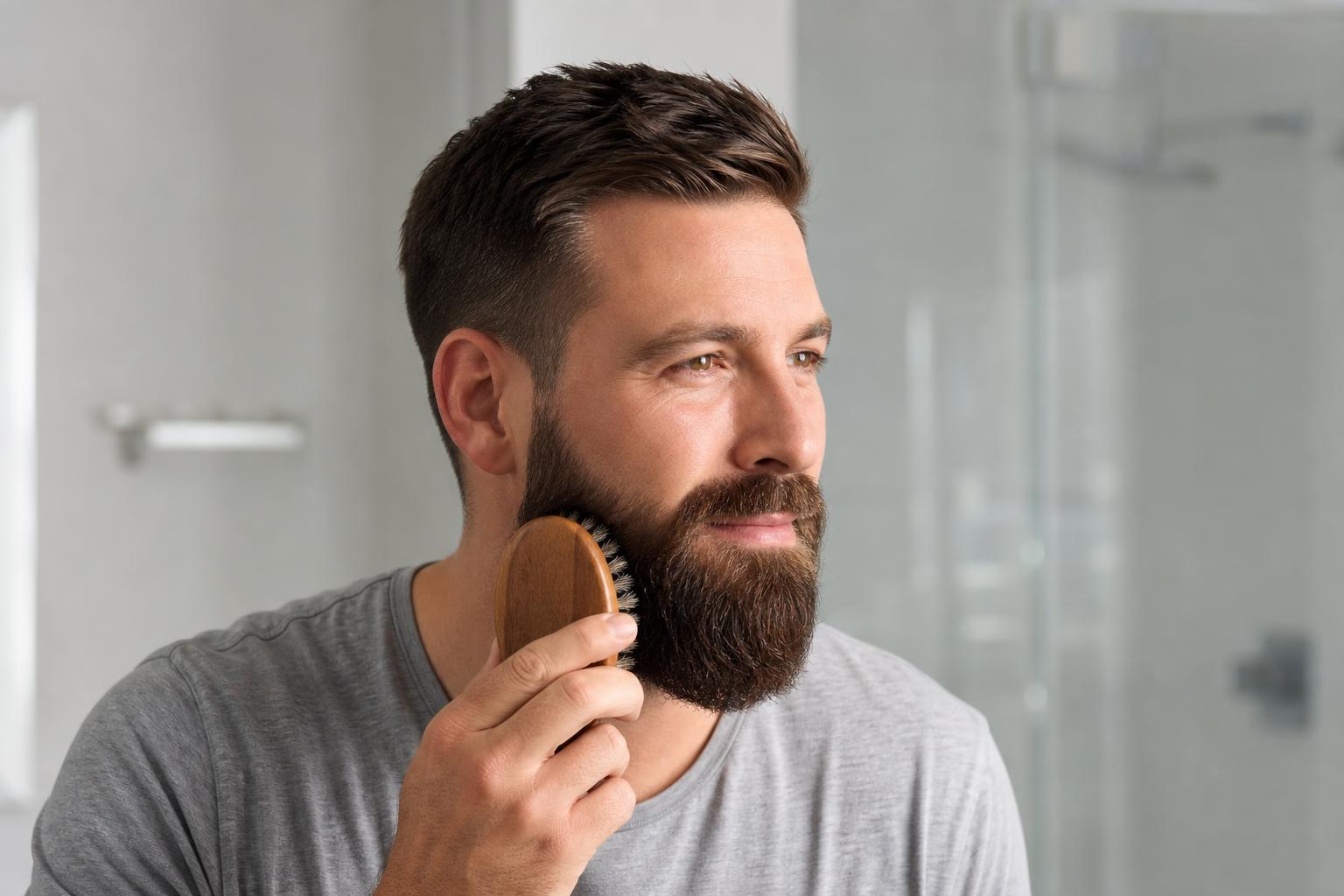
What you need: A boar bristle beard brush or a wide-tooth beard comb.
How: Brush against the grain first, from the neck up toward the chin, then back down. Thirty seconds is enough.
Why: Lifting the hair loosens scale sitting at the base of the hairs, so the wash can reach the skin instead of foaming on top of the beard.
Common mistake: Digging in with fingernails. Scratching breaks the skin and turns an itchy problem into a sore one.
Step 2: Work the Medicated Wash Into the Skin, Not the Hair
What you need: A shampoo with 1% ketoconazole, zinc pyrithione or selenium sulfide.
How: Wet the beard, use a small amount, about the size of a nickel for a short beard and twice that for a long one, and massage it down to the skin with your fingertips.
Why: The yeast lives on the skin surface. Lather that stays in the beard hair never touches it.
Common mistake: Rinsing straight away, which is how most men use shampoo on their hair.
Step 3: Leave It On for a Few Minutes
How: Leave the lather in place for about five minutes, or as long as the label directs. Wash the rest of your body while you wait, then rinse with lukewarm water.
Why: Antifungal ingredients need contact time to work. This single change fixes more “the shampoo does nothing” complaints than switching brands.
Common mistake: Getting it in the eyes or leaving it far longer than the label says, which can sting and dry out the skin around the mouth.
Step 4: Pat Dry and Moisturize the Skin Lightly
How: Pat, do not rub, with a clean towel. Then apply a few drops of a light, alcohol-free beard moisturizer to the skin, not only the ends of the hair.
Why: Medicated washes can leave the skin tight, and tight skin flakes too. The AAD specifically recommends choosing products labeled alcohol-free for people prone to flare-ups, since alcohol dries the skin.
Step 5: Drop to Once a Week After the Flakes Clear
Seborrheic dermatitis is controlled, not cured, so the medicated wash stays in the routine at a lower frequency. On the other days, use a gentle beard wash or plain water. If flakes return within a week of stepping down, go back to twice a week and try stepping down again after another two weeks.
Treatment Schedule With Realistic Timings
Most men see fewer flakes within the first week and clear skin by week three or four if the diagnosis is right. The table sets out a schedule that fits a normal week. If nothing has changed by the end of week four, the problem is probably not simple beard dandruff.
| Stage | Medicated Wash | Other Days | What to Expect |
|---|---|---|---|
| Week 1 | 3 times, about 5 minutes each | Water rinse, light moisturizer | Less itch first, flakes still visible |
| Weeks 2 to 3 | 2 to 3 times | Gentle beard wash once, brush daily | Redness fades, flakes mostly gone |
| Week 4 | 2 times | Normal routine | Clear skin; if not, book a dermatologist |
| Maintenance | Once a week | Normal routine | Occasional small flare in cold months |
| Flare-up | Back to 2 to 3 times for 2 weeks | Water rinse, light moisturizer | Settles faster than the first round |
Beard Oil Can Help or Hurt Depending on What Is in It
Beard oil is the standard advice for flakes, and for dry skin it works. For seborrheic dermatitis, the picture is less simple. The yeast feeds on skin oils, and the same research that links the condition to oleic acid means a heavy oil rich in oleic acid can, in some men, feed the problem it is meant to soothe. Olive oil is the obvious example, since oleic acid is its main fatty acid.
That does not mean every beard oil is off limits. Jojoba is a liquid wax rather than a typical plant oil and is the most common base in lighter beard products, and many men with beard dandruff use it without trouble. The practical test is simple: if the flakes get greasier or itchier within a week of starting an oil, stop it for two weeks while you run the medicated routine, then try a lighter formula applied sparingly to the hair rather than soaked into the skin.
Stylist tip: Three or four drops is enough for a beard under two inches. Most men with a flaky, oily beard are using a full dropper every morning, which leaves a film on the skin that holds on to scale.
Common Beard Dandruff Myths
Most of the bad advice about beard dandruff comes from treating it as a dryness problem. These are the three beliefs that keep men stuck.
Myth: Beard Dandruff Means Your Skin Is Too Dry
Reality: The most common cause is an oily-skin condition, and the flakes are often greasy rather than dry. Dry skin does cause flaking, but it looks different, as our guide to telling dandruff from a dry scalp explains, and the same distinction holds on the face.
Myth: Washing the Beard Every Day With Regular Shampoo Will Fix It
Reality: Daily washing with a standard hair shampoo strips the skin without treating the yeast, which often adds dry flakes on top of the original problem. A medicated wash two or three times a week does more than a regular one seven times a week.
Myth: Shaving It Off Is the Only Real Cure
Reality: Shaving does help, and the AAD lists keeping the skin hair-free as one way to reduce flare-ups. It is an option, not a requirement. Most men clear their skin and keep the beard with the routine above, and shaving will not help if the real problem is psoriasis or an infection.
When Beard Flakes Need a Dermatologist
Over-the-counter washes handle most beard dandruff, but some signs point to a different condition or a case that needs prescription treatment. Book an appointment if any of these apply.
- No improvement after four weeks of correct use. A dermatologist can confirm the diagnosis and prescribe a stronger antifungal or a short course of anti-inflammatory cream.
- Patchy hair loss or broken hairs in the beard. This suggests beard ringworm, which needs prescription antifungal treatment rather than shampoo.
- Pus-filled bumps, swelling or tenderness. These point to folliculitis or infection, and a medicated dandruff wash will not fix either.
- Thick, silvery plaques with sharp edges. This pattern fits psoriasis, especially if you have similar patches on the elbows, knees or scalp.
- Redness spreading beyond the beard line. Anything that spreads, weeps or hurts is worth a professional look.
What to Tell Your Barber
A good barber will not be put off by beard dandruff, and telling them up front helps them avoid making it worse. Clippers and hot towels are fine; what irritates flaky skin is a close shave with a blade, alcohol aftershave and heavy product.
Try something like: “My beard skin gets flaky and irritated. Can you keep a little length on the beard rather than taking it right down, skip the alcohol aftershave, and use a clean brush on the neck?” If you get a neckline shave, ask for it to go with the grain only. The same care applies to short fade haircuts where the fade runs into the beard, since the skin at the sideburns is often where flakes start.
A beard kept at a quarter inch or longer is easier to treat than stubble, because stubble scrapes the skin and you cannot massage a wash through it as easily. A barber can also shape the beard so the jawline is trimmed tidy while the cheeks stay soft.
FAQ
Is Beard Dandruff the Same as Scalp Dandruff?
Usually, yes. Both are most often seborrheic dermatitis, caused by the skin reacting to Malassezia yeast, and many men get both at once. The same active ingredients work in both places, but beard skin is thinner and more sensitive, so follow the label timing and moisturize afterward.
Can I Use My Regular Dandruff Shampoo on My Beard?
Yes, as long as it contains ketoconazole, zinc pyrithione or selenium sulfide and you keep it out of your eyes. Work it into the skin, leave it on for a few minutes, and rinse well. If your beard is blond or gray, avoid selenium sulfide, which can tint light hair.
How Long Does It Take to Get Rid of Beard Dandruff?
Most men see a clear difference within one to two weeks and clear skin within three to four weeks. The condition tends to return if you stop completely, so plan on a weekly medicated wash to keep it away. No change after four weeks is a reason to see a dermatologist.
Does Beard Oil Cause Beard Dandruff?
Beard oil does not cause it, but a heavy oil can make seborrheic dermatitis worse in some men. Oils high in oleic acid, such as olive oil, are the ones to watch. Use a light product sparingly on the hair, and stop it for two weeks if the flakes get greasier.
Is Beard Dandruff Contagious?
No. Seborrheic dermatitis cannot be passed to another person, and the yeast involved already lives on most people’s skin. Beard ringworm is the exception, since it is a fungal infection that can spread, which is one more reason to see a doctor about patchy hair loss. Our explainer on whether dandruff can spread covers the scalp side.
Why Is My Beard Dandruff Worse in Winter?
Cold, dry air is one of the most common triggers for seborrheic dermatitis flares. Indoor heating and hot showers dry the skin further. Step the medicated wash back up to twice a week when the weather turns, and keep showers lukewarm.
Beard dandruff comes back when the routine stops, so the real goal is a habit you can keep: brush before washing, get a medicated wash down to the skin and give it a few minutes, moisturize lightly, then drop to once a week. If four weeks of that has not cleared your beard dandruff, bring the table above to a dermatologist and let them rule out the look-alikes.
This article is for general information and is not medical advice. Skin conditions under a beard can look alike, so see a dermatologist or doctor if flaking persists, spreads, or comes with pain, bumps or hair loss. Always follow the directions on medicated products.