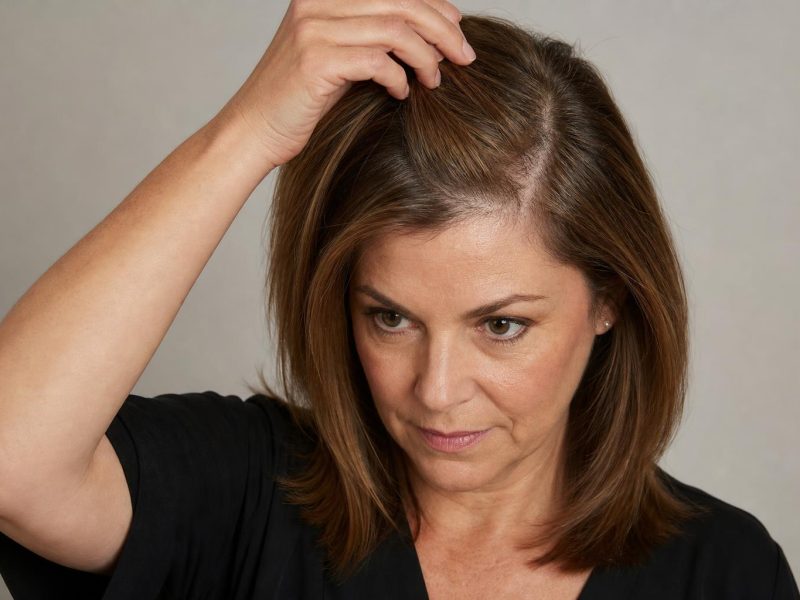


Dandruff is not contagious, and it cannot pass between people through a hairbrush, a hat, a pillow or close contact.
The reason is straightforward: the yeast involved in dandruff already lives on virtually every adult scalp. Dandruff is the mildest form of seborrheic dermatitis, a condition dermatologists classify as non-contagious, and it develops when someone’s own scalp reacts to a microbe that was there all along rather than when that microbe is passed to them. Nothing about sharing a bed, a comb or a gym bench transmits it.
This guide explains why the science rules out transmission, why dandruff still appears to run in households, which scalp conditions genuinely are contagious and how to tell them apart, what the honest answer is on sharing brushes and hats, and when persistent flaking is a reason to see a doctor rather than to buy another shampoo.
The Yeast Involved Is Already on Almost Every Scalp
Dandruff is associated with yeasts of the genus Malassezia, and the critical detail is that these are part of the normal flora of human skin, particularly on oily areas like the scalp, chest and back. They are not an infection that arrives from outside. They colonize most people in the first months of life and stay there permanently without causing any problem at all.
What separates a flaking scalp from a calm one is the response, not the exposure. Susceptibility depends on how much sebum the scalp produces, how the skin barrier behaves, and how the individual immune system reacts to the byproducts the yeast creates as it metabolizes oil. Two people can carry near-identical amounts of Malassezia and only one of them will flake. Because the organism is universal and the reaction is individual, there is nothing to catch.
This is why dermatologists describe seborrheic dermatitis as a non-contagious condition. Dandruff sits at the mild end of that same spectrum, with flaking and itch but without the inflamed, greasy red patches that mark the more severe form. Both behave the same way regarding transmission, which is to say they do not transmit.
Why Dandruff Seems to Run in Households
Families do often flake together, which is where the contagion idea comes from, and there are three explanations that have nothing to do with passing anything between people. The first is inherited scalp behavior: sebum production and skin barrier characteristics run in families, so relatives frequently share the oily-scalp tendency that makes flaking likely. The second is a shared environment, since the same dry heated house, the same hard water and the same winter all press on every scalp under that roof at once.
The third is shared habits. Households tend to use the same shampoo, wash on similar schedules and use the same styling products, and all three influence flaking. A family that switched to a heavy conditioner or started washing less often will see several scalps respond in the same direction within a few weeks. What looks like transmission is a group of similar scalps meeting a common trigger.
Timing reinforces the illusion. Dandruff flares seasonally, worsening for most people in cold, dry months, so household members often notice their symptoms in the same few weeks. That correlation is climate rather than contact.
What Actually Is Contagious on a Scalp
Several scalp conditions do spread between people, and confusing one for dandruff is the genuine risk in this topic. The distinction matters because the contagious conditions need treatment rather than a change of shampoo, and because a couple of them spread readily among children.
| Condition | Contagious? | What It Looks Like | What to Do |
|---|---|---|---|
| Dandruff | No | Loose white or yellowish flakes, mild itch, no hair loss | Medicated shampoo with an active ingredient |
| Seborrheic dermatitis | No | Greasy yellow scale on red, inflamed skin; often affects eyebrows and nose creases too | See a doctor if shampoo alone does not control it |
| Scalp ringworm | Yes, highly | Round scaly patches with broken hairs or bald spots; common in children | Needs prescription oral antifungal treatment |
| Head lice | Yes | Intense itch, visible insects, eggs glued firmly to the hair shaft | Treatment plus combing; household screening |
| Scalp psoriasis | No | Thick silvery plaques with a defined edge, often past the hairline | Medical diagnosis; different treatments from dandruff |
The most useful home test separates flakes from eggs. Dandruff flakes brush off easily and fall onto the shoulders; louse eggs are cemented to the hair shaft and will not slide when you try to move them with a fingernail. If something on the scalp resists being brushed away, it is not dandruff. Similarly, dandruff does not cause bald patches, so round areas of hair loss with scale point toward ringworm and need a doctor rather than a shampoo aisle.
Sharing Brushes, Hats and Pillows
Using someone else’s hairbrush will not give you dandruff, and sleeping on the pillow of someone who has it will not either. The yeast on their scalp is the same yeast already on yours. If you have never flaked, transferring more of an organism you already carry does not change the equation, because the flaking comes from your own scalp’s oil production and immune response.
There is still a sensible reason to keep brushes personal, and it is the contagious conditions in the table above rather than dandruff. Head lice pass on shared brushes, hats and hair ties, and scalp ringworm passes on shared combs, towels and pillows. Anyone in a household with young children has a real argument for not sharing hair tools, and it has nothing to do with flaking.
Stylist tip: a visibly flaking scalp is never a reason to avoid a salon appointment, and stylists see it constantly. Say something at the start rather than hoping it goes unnoticed, because a stylist who knows will skip the vigorous scrub, use lukewarm rather than hot water, and avoid the alcohol-heavy finishing sprays that make an irritated scalp worse for days afterward.
When Flaking Is Something Other Than Dandruff
Ordinary dandruff responds to a medicated shampoo within a few weeks. Several situations call for a doctor instead.
- Round patches of scale with broken hairs or bald spots, which suggest scalp ringworm and need oral prescription treatment rather than anything topical.
- Thick, silvery, sharply edged plaques that extend past the hairline onto the forehead or behind the ears, which point toward psoriasis and are treated differently.
- Flaking that has not improved at all after four to six weeks of consistent use of a medicated shampoo with a proven active ingredient.
- Redness, swelling, weeping, crusting, or any pain, which suggest infection or inflammation beyond simple dandruff.
- Sudden severe flaking alongside hair shedding, particularly if it started after a new medication or a significant illness.
- Any flaking in an infant that spreads beyond the scalp, which should be assessed rather than treated with adult products.
How to Reduce Flaking If It Is Dandruff
Since the trigger is your own scalp environment, treatment works by reducing the yeast population, slowing the shedding of skin cells, or both. The active ingredient is the thing that matters on the bottle, not the brand or the fragrance, and each active works slightly differently.
| Active Ingredient | How It Works | Notes |
|---|---|---|
| Ketoconazole | Antifungal; reduces the yeast population directly | Often the most effective for stubborn cases; available over the counter at lower strengths |
| Zinc pyrithione | Antifungal and antibacterial | The most common drugstore active; gentle enough for frequent use |
| Selenium sulfide | Slows skin cell turnover and reduces yeast | Can discolor light, gray or color-treated hair; rinse thoroughly |
| Salicylic acid | Loosens and lifts existing scale | Clears buildup but does not address the yeast; often paired with another active |
| Coal tar | Slows the rate at which scalp skin cells are shed | Strong odor; can stain light hair and increase sun sensitivity |
Stylist tip: leave a medicated shampoo on the scalp for a full three to five minutes before rinsing, and time it rather than guessing. The active ingredient needs contact time to work, and the single most common reason people conclude a dandruff shampoo is ineffective is that they lathered and rinsed within twenty seconds. Rotating between two different actives every few weeks also tends to hold results better than using one indefinitely.
Product buildup complicates the picture, because heavy styling residue on the scalp produces flakes that look identical to dandruff but respond to nothing antifungal. If your flaking coincided with a new dry shampoo or a heavier styling routine, a clarifying wash to strip the buildup is worth trying before assuming the cause is yeast. Working out whether you have dandruff or simply a dry scalp is the other distinction worth settling first, since a dry scalp needs moisture and gentler cleansing rather than an antifungal. Once the cause is clear, the step-by-step routine for clearing dandruff covers the practical schedule, and switching to a milder sulfate-free formula on non-treatment days keeps an irritated scalp calmer between washes.
Common Dandruff Myths
Myth: Dandruff Means You Do Not Wash Your Hair Enough
Reality: dandruff is associated with oil production and an individual immune response, not with hygiene, and it occurs in people who wash daily. Washing too infrequently can let oil and scale accumulate and make existing flaking look worse, but it is not the cause. Scrubbing harder or washing more often does not resolve it and often irritates the scalp further.
Myth: You Can Give Dandruff to Your Partner or Your Children
Reality: there is nothing to transmit, since the yeast involved is already present on nearly every human scalp. Family members flake together because they share sebum characteristics, a home environment and often a shampoo, not because anything passed between them. Sharing a pillow, a bed or a hairbrush carries no risk of dandruff.
Myth: Dandruff Causes Hair Loss
Reality: dandruff itself does not damage follicles or cause hair to fall out. Persistent scratching of an itchy scalp can break hairs and cause temporary shedding, which is a mechanical effect rather than the condition itself. Flaking accompanied by genuine bald patches suggests a different diagnosis and should be assessed by a doctor.
FAQ
Can You Catch Dandruff from Someone Else?
No. Dandruff cannot be transmitted between people because the yeast associated with it already lives on almost every adult scalp as part of normal skin flora. Whether someone flakes depends on their own oil production and immune response, not on exposure. Close contact, shared beds and shared hair tools carry no risk.
Can I Get Dandruff from Sharing a Hairbrush?
Not dandruff, no. Sharing a brush with someone who flakes will not cause you to flake, since you already carry the organism involved. Head lice and scalp ringworm do pass on shared brushes and hats though, so keeping hair tools personal remains sensible for other reasons, particularly in households with young children.
Is Seborrheic Dermatitis Contagious?
Seborrheic dermatitis is not contagious, and dandruff is generally described as its mildest form. The more severe version shows greasy yellow scale on red, inflamed skin and often affects the eyebrows, nose creases and chest as well as the scalp. It behaves the same way as dandruff regarding transmission, but it usually needs medical treatment rather than shampoo alone.
How Can I Tell Dandruff from Head Lice?
Dandruff flakes brush off the hair easily and fall onto the shoulders, while louse eggs are firmly cemented to the hair shaft and will not slide when pushed with a fingernail. Lice also cause a much more intense, persistent itch, and the insects themselves are visible on close inspection near the scalp. If something will not brush away, it is not dandruff.
Why Do My Whole Family Have Dandruff at the Same Time?
Households share the genetics that govern sebum production, the same dry indoor climate, the same water and often the same shampoo, so several scalps respond to the same conditions at once. Dandruff also flares seasonally in cold, dry months, which concentrates symptoms into the same few weeks for everyone under one roof. None of that involves transmission.
Does Dandruff Ever Go Away Permanently?
For most people it is a chronic condition that is controlled rather than cured, since the underlying yeast is a permanent resident and the scalp characteristics that drive the reaction do not change. Symptoms usually clear within a few weeks of consistent treatment and return if treatment stops entirely. Many people manage it long term by using a medicated shampoo once or twice a week rather than daily.
Should I See a Doctor About Dandruff?
See a doctor if flaking has not improved after four to six weeks of consistent medicated shampoo use, or if there are bald patches, thick silvery plaques extending past the hairline, redness, swelling, weeping or pain. Those signs point toward ringworm, psoriasis or infection rather than dandruff, and each needs different treatment. Persistent flaking in an infant should also be assessed rather than self-treated.
Sources
- American Academy of Dermatology: Seborrheic Dermatitis Overview
- StatPearls, NCBI Bookshelf: Malassezia Furfur
- Seborrheic Dermatitis and Dandruff: A Comprehensive Review
The short answer to whether dandruff is contagious is no, and the reason is worth remembering: the yeast involved is already on your scalp and everyone else’s, so there is nothing to pass along. Keep your own hairbrush for the sake of lice and ringworm rather than flaking, give a medicated shampoo a full three to five minutes of contact time before rinsing, and see a doctor if six weeks of consistent treatment has changed nothing.
Hair results vary based on your natural hair type, texture, density, and condition. Always consult with a licensed hairstylist before making significant changes, especially with chemical treatments or dramatic length changes. This article is general information and not medical advice; scalp conditions that persist, worsen, or involve hair loss should be assessed by a doctor or dermatologist.