


Clarifying shampoo is a reset button, not a shampoo, and using it on the wrong schedule does more damage than never using it at all.
A clarifying shampoo uses stronger surfactants than a daily formula to strip away what regular washing leaves behind: silicone from conditioners, wax and polymer from styling products, oxidized sebum, chlorine, and mineral scale from hard water. Most people need it once or twice a month. If you use styling product daily, swim, or live in a hard water area, once a week is closer to right, and if your hair is color-treated, once every three to four weeks is the ceiling before fade becomes noticeable.
This guide covers what clarifying shampoo removes that your normal one cannot, how it differs from a chelating shampoo, the frequency that matches your hair type and water, the washing method that stops it from drying your ends out, and the situations where you should skip it entirely.
What a Clarifying Shampoo Actually Removes
A daily shampoo is formulated to clean the scalp without stripping the hair, which means it removes fresh oil and loose dirt and leaves almost everything else in place. Clarifying formulas use higher concentrations of anionic surfactants, often sodium lauryl sulfate or ammonium lauryl sulfate, at a level that dissolves the substances a mild cleanser cannot. Four categories of residue build up on hair, and only one of them washes out on its own.
The first is silicone, which comes from conditioners, leave-ins, and heat protectants. Non-water-soluble silicones such as dimethicone coat the hair shaft and stay put through several washes, which is what makes hair feel slick when wet but heavy and dull when dry. The second is styling polymer and wax from gel, mousse, clay, pomade, and dry shampoo used between washes. The third is oxidized sebum, which is your own oil that has sat on the scalp long enough to harden. The fourth is mineral scale, and it is the one people most often mistake for damage.
Stylist tip: If your hair feels squeaky at the roots but limp and coated from the ears down, the problem is almost always silicone rather than oil. Check the ingredient list on your conditioner for anything ending in cone, conol, or xane, and if the first three ingredients include one, that is where the weight is coming from.
Clarifying and Chelating Shampoos Are Not the Same Product
These two names get used interchangeably on shelf and in salon, and the practical difference matters if you have hard water. A clarifying shampoo dissolves organic residue with surfactants. A chelating shampoo adds an agent such as EDTA, phytic acid, or citric acid that binds metal ions and lifts them off the hair. Calcium and magnesium bond electrostatically to the cuticle and a surfactant alone will not remove them, which is why people in hard water areas clarify weekly and still feel coated.
The consequences of leaving mineral scale in place are measurable. Research published in the International Journal of Trichology comparing hair treated with hard water against deionized water found significantly reduced tensile strength in the hard water group, meaning the hair snapped under less force. An earlier study in the same journal on the effects of hard water on hair documented the same association between water hardness and hair fragility. If your area runs hard, mineral buildup is doing structural work on your hair, not just making it look dull.
| Shampoo Type | Removes | Key Ingredients | Typical Frequency |
|---|---|---|---|
| Daily or gentle | Fresh oil, sweat, loose dirt | Mild or sulfate-free surfactants, cocamidopropyl betaine | Every wash |
| Clarifying | Silicone, styling polymer, wax, oxidized sebum | Sodium lauryl sulfate, ammonium lauryl sulfate | Weekly to monthly |
| Chelating | Calcium, magnesium, iron, copper, chlorine residue | EDTA, phytic acid, citric acid, gluconolactone | Every 2 to 4 weeks in hard water areas |
| Purple or blue toning | Nothing; it deposits pigment rather than removing residue | Violet or blue direct dyes | Every 2 to 3 washes as needed |
How Often to Use Clarifying Shampoo by Hair Type
Frequency is not a single number, and the advice to clarify once a week that appears on most bottles is written for the average product user with medium hair in soft water. Three variables move that number: how much styling product you apply, how hard your water is, and how porous your hair is. Start at the interval below for your type and adjust based on how your hair feels three days after washing rather than on the day itself.
Fine and Oily Hair Benefits from Weekly Clarifying
Fine hair carries less surface area per strand, so the same amount of residue weighs it down proportionally more. If your roots go flat within a day of washing and dry shampoo stops working by mid-morning, weekly clarifying is the correction. Follow it with a lightweight conditioner on the ends only, never the roots.
Thick and Coarse Hair Usually Needs It Twice a Month
Coarse textures tolerate more product before looking weighed down, and they lose moisture faster when stripped. Twice a month is the working default, moving to weekly only during heavy styling periods. Pair each clarifying wash with a deep conditioning treatment in the same session, since the cuticle is open and will absorb more than usual.
Curly and Coily Hair Should Clarify Every Two to Four Weeks
Curl patterns from 3a through 4c rely on gels, creams, and butters that build up faster than any other routine, so clarifying is genuinely necessary, but the drying risk is also highest. Every two to four weeks is the range most curl specialists work with. Detangle before you clarify, not after, because stripped curls tangle more readily while wet.
Color-Treated Hair Should Stretch to Three or Four Weeks
Strong surfactants open the cuticle and let dye molecules escape, which is why clarifying too often is one of the fastest ways to lose an expensive color. Three to four weeks is the safe interval, and it is worth timing your clarifying wash for the week before a salon appointment rather than the week after. Red and copper tones lose the most in a single clarifying wash because those pigment molecules are the largest and sit closest to the surface.
Swimmers and Hard Water Households Need a Chelating Formula Weekly
Chlorine and copper from pool water bind to the hair the same way calcium does, and a standard clarifying shampoo removes only part of it. A chelating formula used within a few hours of swimming is far more effective than one used the next day. This is also the routine that prevents the green cast blonde hair picks up in pools, which comes from copper rather than chlorine itself.
How to Use Clarifying Shampoo Without Drying Your Ends
Most of the dryness people blame on clarifying shampoo comes from applying it the same way as a normal shampoo. The residue you are targeting concentrates at the scalp and the first few inches of the hair, not at the ends, and the ends are the oldest and most fragile part of the strand. Treating the two zones differently is the whole technique.
Step 1: Wet the Hair Thoroughly Before Applying
What you need: Warm water and about sixty seconds of patience.
How: Soak the hair for a full minute before the shampoo touches it, working water through with your fingers from scalp to ends.
Why: A saturated strand absorbs less shampoo, which limits how deeply the surfactant penetrates and keeps the cleansing at the surface where the residue is.
Common mistake: Applying to damp rather than soaked hair, which concentrates the product in patches and over-cleans wherever it lands first.
Step 2: Apply Only to the Scalp and Roots
What you need: A coin-sized amount for short hair, roughly double that for anything past the shoulders.
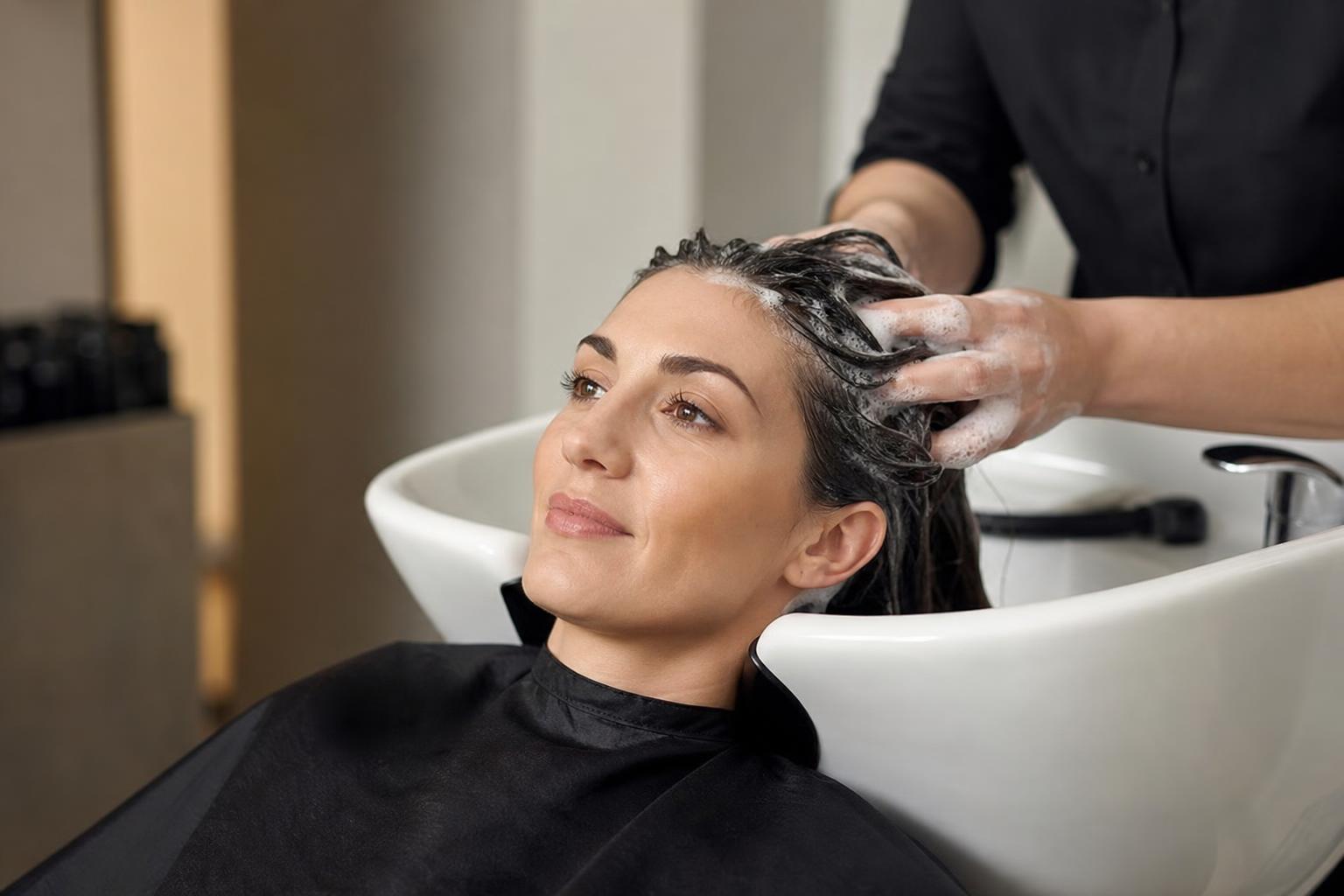
How: Emulsify the shampoo between your palms first, then apply directly to the scalp in sections and massage with your fingertips for sixty to ninety seconds.
Why: The lather that runs down the length as you rinse is enough to clean the mid-lengths and ends. Direct application there is what strips them.
Common mistake: Scrubbing with fingernails rather than fingertips, which irritates the scalp and can trigger the rebound oil production people then blame on the shampoo.
Step 3: Rinse Longer Than Feels Necessary
What you need: Cool to lukewarm water and two full minutes.
How: Rinse until the water runs completely clear and the hair no longer feels slippery at the roots.
Why: Clarifying surfactants left in the hair keep working as it dries, and that residual cleansing is a common cause of the straw-like feel people report.
Common mistake: Stopping at the usual thirty seconds, which is calibrated for a much milder formula.
Step 4: Follow with a Deep Conditioner, Not a Rinse-Out
What you need: A deep conditioning mask, applied from the ears down.
How: Leave it on for five to ten minutes with the hair loosely piled, then rinse with cool water.
Why: The cuticle is at its most open right after clarifying, which is the single best window in your routine for a treatment to absorb. The difference between a deep conditioner and a standard rinse-out comes down to how long the ingredients need to work, and a two-minute conditioner cannot do this job.
Common mistake: Skipping conditioner entirely because the hair feels clean, which leaves the cuticle raised and the hair rough by the time it dries.
Signs You Need to Clarify and Signs You Do Not
Buildup and damage produce similar complaints, and treating one as the other makes things worse. Buildup is additive, so it shows up as weight, dullness, and product that stops working. Damage is subtractive, so it shows up as breakage, split ends, and hair that absorbs water instantly. A clarifying shampoo fixes the first and aggravates the second.
Clarify if your hair feels heavy or coated within a day of washing, if your usual styling products have stopped holding, if your curls have gone limp and stopped clumping, if your color looks muddier than it did in the salon, or if your scalp feels itchy and tight rather than flaky. Those are all residue signals.
Do not clarify if your hair is snapping mid-shaft, if the ends look white and frayed, if you have bleached within the past two weeks, or if your scalp is actively flaking. Flaking specifically is worth diagnosing before treating, since dandruff and a dry scalp need opposite interventions and clarifying will worsen one of them.
Stylist tip: Run a strand between your thumbnail and finger from root to tip. If it feels smooth going down and slightly bumpy coming back up, that is a normal cuticle. If it feels waxy in both directions, that is buildup. If it catches and feels rough going down, that is damage, and clarifying is the wrong call.
Common Clarifying Shampoo Myths
Myth: Clarifying Shampoo Strips Your Natural Oils Permanently
Reality: Sebum production resumes within hours and returns to baseline within a day or two. What people experience as permanent stripping is usually the absence of the silicone film they had grown used to, which made hair feel smooth without actually conditioning it. Give it two washes before judging the result.
Myth: You Should Clarify Before Every Color Appointment
Reality: Clarify two to three days before, not the same day. Freshly clarified hair has a raised cuticle and higher porosity, which makes color absorb unevenly and often darker than intended at the ends. Most colorists prefer hair that is clean but has had a day or two to settle.
Myth: A Sulfate-Free Shampoo Can Clarify Just as Well
Reality: Some can, but most cannot remove non-water-soluble silicone. Milder surfactants such as sodium cocoyl isethionate clean effectively without stripping, which is exactly why they leave silicone behind. If you use a sulfate-free shampoo as your daily wash, you need a clarifying wash more often, not less.
Myth: If a Little Works, More Works Better
Reality: Clarifying twice in one wash session or twice in one week does not remove more residue, because the first wash already dissolved what was soluble. The second wash acts on the hair itself, raising the cuticle further and increasing moisture loss. One thorough wash is the whole treatment.
When to Skip Clarifying Shampoo Entirely
Clarifying shampoo is a useful tool with a narrow job, and there are situations where the honest answer is to leave it on the shelf.
- You have had a keratin or smoothing treatment in the past three months. Sulfate-based clarifying formulas break down the treatment and shorten its life considerably. Use a sulfate-free wash and let the treatment run its course.
- Your hair is freshly bleached or lightened within the last fourteen days. The cuticle has not fully closed, and a strong surfactant at that stage increases porosity and moisture loss. Wait, and reach for a bond-building treatment instead.
- You wear a protective style such as braids, twists, or a sew-in. Clarifying shampoo is difficult to rinse out fully through a dense style, and any surfactant left against the scalp causes irritation. A diluted cleanser applied with an applicator bottle is the better approach.
- You use almost no styling product and have soft water. There may simply be nothing to remove, and clarifying on a schedule for its own sake only costs you moisture. Wash normally and clarify when your hair actually feels coated.
- Your scalp is currently irritated, broken, or actively flaking. Treat the scalp condition first with the appropriate medicated or soothing product, then clarify once the skin has settled.
FAQ
How Often Should You Use Clarifying Shampoo?
Once or twice a month suits most people, moving to weekly if you use styling product daily, swim regularly, or have hard water. Color-treated hair should stay at three to four week intervals to limit fade. The reliable test is how your hair feels three days after a normal wash: if it is already heavy and flat by then, you are clarifying too rarely.
Can You Use Clarifying Shampoo on Color-Treated Hair?
Yes, but sparingly and never in the first week after a color service. Each clarifying wash opens the cuticle and releases some dye, and red, copper, and fashion shades lose the most because those pigment molecules are largest and least anchored. Time your clarifying wash for the week before your next appointment so any fade is corrected at the same visit.
Does Clarifying Shampoo Help with Greasy Roots?
It helps if the greasiness is caused by residue rather than by sebum production. Dry shampoo, silicone-heavy conditioners, and hard water all leave deposits at the root that trap fresh oil and make hair look greasy sooner. If your roots are genuinely producing more oil, the answer is adjusting how often you wash rather than clarifying more aggressively.
What Is the Difference Between Clarifying and Chelating Shampoo?
A clarifying shampoo uses strong surfactants to dissolve organic residue such as silicone, wax, and oil. A chelating shampoo adds ingredients like EDTA or phytic acid that bind metal ions, which is the only way to remove calcium, magnesium, and copper deposits from hard water or pool water. If you clarify weekly and your hair still feels coated and dull, you likely need the chelating version.
Will Clarifying Shampoo Remove Toner or Gloss?
It will remove a meaningful amount of both, since toners and glosses are semi-permanent and sit largely on the cuticle surface. Expect a noticeable shift in tone after a single clarifying wash, particularly on blonde hair where brassiness returns quickly. If you use a purple shampoo to control brassy tones, plan to re-tone in the same week you clarify.
Can You Use Clarifying Shampoo on Curly Hair?
Yes, and curly routines usually need it more than straight ones because gels, creams, and butters build up quickly and stop curls from clumping. Every two to four weeks is the standard interval. Always follow with a deep conditioner and detangle before washing rather than after, since freshly clarified curls tangle far more readily while wet.
What Can I Use If I Do Not Have a Clarifying Shampoo?
A diluted apple cider vinegar rinse, roughly one tablespoon in a cup of water poured over the scalp and rinsed after a minute, removes light residue and helps flatten the cuticle. It will not touch silicone or mineral scale, so it is a stopgap rather than a substitute. Baking soda is a common home suggestion and is worth avoiding entirely, since its high pH raises the cuticle and roughens the hair surface.
Used on the right schedule, a clarifying shampoo makes every other product in your routine work better, because conditioner, styling cream, and toner all perform differently on a clean cuticle than on a coated one. Match the frequency to your water, your product habit, and your color rather than to the instruction on the bottle, and always pair the wash with a deep conditioner in the same session. That combination is what separates a reset from a strip.
Hair results vary based on your natural hair type, texture, density, and condition. Always consult with a licensed hairstylist before making significant changes, especially with chemical treatments or dramatic length changes. Photos may show styled results that require professional tools and products to replicate.


2 responses