
Dandruff shampoo only works if you leave it on long enough for the active ingredient to reach the scalp, and almost nobody does.
Dandruff shampoos work by controlling a yeast called Malassezia that lives on almost everyone’s scalp and triggers flaking in people whose skin reacts to it. Four active ingredients do the actual work: zinc pyrithione, ketoconazole, selenium sulfide, and salicylic acid. Which one you need depends on whether your flaking is mild and greasy, stubborn and recurring, or accompanied by redness, and the answer changes which bottle you should be reaching for.
This guide covers what each active ingredient does and when to choose it, the contact time that separates a shampoo that works from one that does not, how often to use it without drying your hair out, what to do when a shampoo stops working after a few months, and the flaking that is not dandruff at all and needs a different approach entirely.
What Dandruff Shampoo Actually Treats
Dandruff is not a hygiene problem and it is not simple dryness. It happens when Malassezia, a yeast that feeds on the oils your scalp produces, breaks those oils down into byproducts that irritate the skin in people who are sensitive to them. The scalp responds by speeding up cell turnover, and the result is visible clumps of skin cells shedding faster than they can flake away invisibly. This is why the flakes are usually yellowish and slightly oily rather than white and powdery.
Because a yeast drives the process, the shampoos that work are antifungal rather than moisturizing. Research on the mechanism by which zinc pyrithione acts against Malassezia restricta, published in Scientific Reports, found the ingredient disrupts the yeast’s metabolism at the cellular level rather than simply washing it away. That distinction matters practically: a product has to stay in contact with the scalp long enough to act, which a thirty-second wash does not achieve.
Stylist tip: Check the flakes before you buy anything. Rub a small amount of the shedding between your fingers. Oily, yellow-tinged, and slightly sticky points to dandruff. Dry, white, and powdery points to a dry scalp, which needs moisture rather than an antifungal, and the two conditions require opposite treatments.
The Four Active Ingredients and When to Use Each
Every effective dandruff shampoo is built around one of four actives, and the marketing on the front of the bottle tells you far less than the drug facts panel on the back. Read that panel and note the ingredient and its percentage, because a 1% ketoconazole shampoo and a 2% one behave differently. The table below maps each active to the situation it handles best.
| Active Ingredient | How It Works | Best For | Watch Out For |
|---|---|---|---|
| Zinc pyrithione | Antifungal and antibacterial; disrupts yeast metabolism | Mild to moderate everyday flaking; the standard starting point | Can leave a residue that dulls fine hair over time |
| Ketoconazole | Targeted antifungal; the strongest over-the-counter option | Stubborn or recurring dandruff that other shampoos have not cleared | 1% is sold over the counter; 2% usually needs a prescription |
| Selenium sulfide | Antifungal that also slows scalp cell turnover | Heavy flaking with visible oiliness at the roots | Can discolor blonde, gray, and chemically treated hair |
| Salicylic acid | Exfoliant; loosens and lifts existing scale rather than killing yeast | Thick built-up plaques that other shampoos cannot penetrate | Drying on its own; pair it with an antifungal rather than using it alone |
Where two of these are directly compared, ketoconazole tends to come out ahead on severity. A multicenter randomized trial published in Skin Pharmacology and Applied Skin Physiology found that after four weeks, ketoconazole 2% shampoo outperformed zinc pyrithione 1% in severe dandruff and seborrheic dermatitis. For mild flaking, that gap matters much less, and zinc pyrithione is the sensible first purchase because it is cheaper and gentler on color.
Zinc Pyrithione Is the Right Starting Point for Most People
If your flaking is mild, appears mostly in winter, or shows up when you stretch your washes, start here. It is the most widely available active, the least likely to affect color, and it works for a large majority of cases. Give it four weeks of consistent use before deciding it has failed.
Ketoconazole Is for Dandruff That Comes Back Within Days
Flaking that returns forty-eight hours after washing, or that has not responded to zinc pyrithione after a month, calls for a targeted antifungal. The 1% strength is available over the counter in most markets and is used twice weekly. If 1% does not clear it in six weeks, that is the point to ask a doctor about the 2% prescription version rather than buying more of the same.
Selenium Sulfide Suits Oily Scalps but Not Light Hair
This one has a genuine drawback worth knowing before you buy: it can leave an orange or brassy cast on blonde, gray, silver, and chemically lightened hair. On dark hair with heavy, greasy flaking it works quickly and is well worth using. On anything lighter, choose a different active or accept that you will need a toning wash afterward.
Salicylic Acid Removes Scale but Does Not Treat the Cause
Salicylic acid lifts thickened patches of scale so other treatments can reach the skin underneath, which makes it a useful partner rather than a solo treatment. Used alone it can leave the scalp drier and trigger a rebound in oil production. The practical approach is a salicylic acid wash first to clear the build-up, then an antifungal to control what caused it.
Contact Time Matters More Than Which Bottle You Buy
This is the single most common reason a dandruff shampoo appears not to work. Antifungal actives need time on the skin to reach an effective concentration, and most people rinse after twenty or thirty seconds out of habit. Five minutes is the working minimum, and up to ten gives better results with the stronger actives.
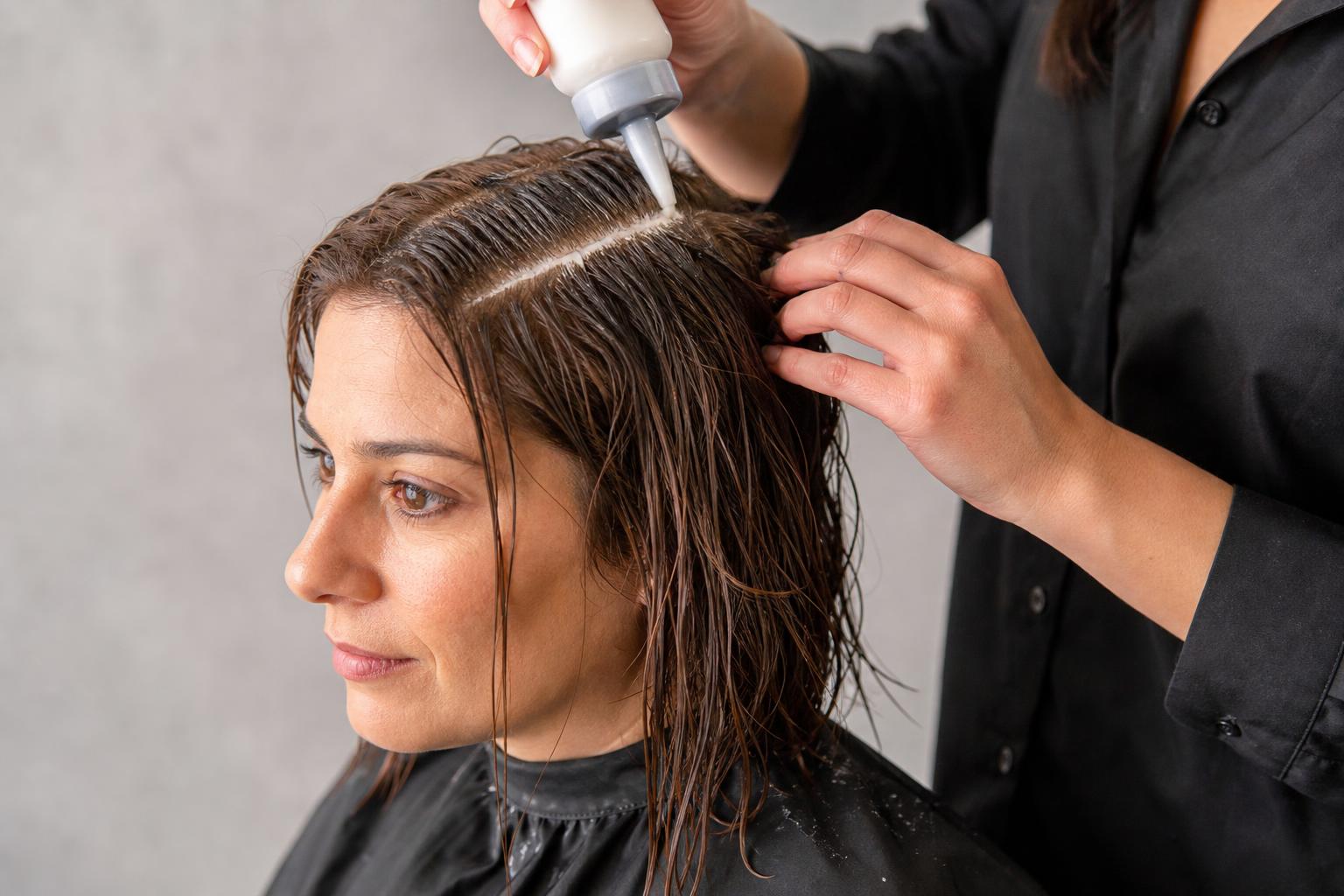
Step 1: Apply Directly to the Scalp, Not the Hair
What you need: A coin-sized amount, applied in sections with the hair parted.
How: Part the hair in four or five sections and squeeze the shampoo along each part line, so it lands on skin rather than on the lengths.
Why: The active works on the scalp. Shampoo distributed through the mid-lengths and ends is treating hair that does not have dandruff.
Common mistake: Piling all the hair on top of the head and lathering, which spreads a thin film everywhere and a useful concentration nowhere.
Step 2: Massage for Sixty Seconds with Your Fingertips
What you need: Fingertips or a soft silicone scalp brush.
How: Work in small circles across the whole scalp, paying attention to the hairline, behind the ears, and the nape, which are the spots people consistently miss.
Why: Mechanical loosening lifts the scale so the active can reach the skin beneath it.
Common mistake: Scratching with fingernails, which breaks the skin barrier and makes irritation worse rather than better.
Step 3: Leave It On for Five to Ten Minutes
What you need: A timer, or the rest of your shower.
How: Leave the lather in place while you do everything else, then rinse thoroughly at the very end.
Why: Contact time is what determines whether enough active reaches the scalp. This step is the difference between a shampoo that works and one that does not.
Common mistake: Rinsing after thirty seconds and concluding the product is ineffective, which is the most frequent reason people cycle through four or five brands without improvement.
Step 4: Condition the Lengths, Never the Scalp
What you need: A regular conditioner, applied from the ears down.
How: Keep conditioner well away from the roots, and rinse it fully.
Why: Medicated shampoos are drying on the hair itself, so the lengths need conditioning even though the scalp does not. Conditioner at the root feeds the oil that Malassezia lives on.
Common mistake: Skipping conditioner entirely, which leaves the mid-lengths rough and is why dandruff shampoos get a reputation for wrecking hair.
How Often to Use Dandruff Shampoo
Frequency depends on the active and on how your scalp responds, but the general shape is the same for everyone: heavier use to clear the flaking, then a lower maintenance schedule to keep it away. Stopping entirely once the flaking clears is the single most common reason it comes back within a month, because the yeast population rebuilds as soon as nothing is controlling it.
| Phase | Frequency | Duration | What to Expect |
|---|---|---|---|
| Clearing phase | 2 to 3 times a week | 4 to 6 weeks | Noticeable reduction in flaking by week 2 or 3 |
| Maintenance | Once a week or once a fortnight | Ongoing | Flaking stays controlled; use a regular shampoo on other days |
| Flare-up | Back to 2 to 3 times a week | 2 to 3 weeks | Common in winter, under stress, or after illness |
| Textured or coily hair | Once a week at most | Ongoing | Fewer washes overall, so contact time matters even more |
Coily and tightly textured hair is the exception worth calling out, since washing two or three times a week is neither realistic nor good for the hair. The workaround is applying the shampoo only to the scalp with an applicator bottle, extending the contact time toward ten minutes, and following with a thorough conditioning treatment on the lengths. Building this into an existing scalp care routine works better than adding an extra wash day.
Why Your Dandruff Shampoo Stopped Working
A shampoo that cleared your flaking for three months and then stopped is a familiar complaint, and there are three common explanations. Working through them in order is faster than buying a new bottle each time.
The first is that you moved from the clearing phase to nothing rather than to maintenance. Flaking returns because the underlying yeast was controlled, not eliminated, and control ends when the treatment does. The second is contact time creeping downward: people are diligent for the first month and back to thirty-second washes by the third. The third, and the least common, is genuine tolerance, where the scalp flora shifts and a particular active becomes less effective.
Rotating between two shampoos with different actives handles the third case and does no harm in the other two. A practical rotation is zinc pyrithione for regular maintenance and ketoconazole once a fortnight, or alternating salicylic acid and an antifungal when scale builds up between washes. Keep both bottles and alternate rather than switching entirely.
Stylist tip: Before concluding a shampoo has failed, do one wash exactly by the book: applied to the scalp in sections, massaged for a full minute, left on for eight minutes, rinsed thoroughly. A surprising number of apparent product failures resolve on that single wash, which tells you the problem was method rather than the bottle.
Flaking That Is Not Dandruff
Not every flake on a dark shirt comes from dandruff, and using an antifungal on something else at best does nothing and at worst makes it worse. These are the conditions most often mistaken for it.
- Dry scalp. The flakes are small, white, and powdery rather than oily, and the skin feels tight after washing. This needs moisture and gentler cleansing, not an antifungal, and using a dandruff shampoo will make it noticeably worse.
- Product build-up. Dry shampoo, styling polymer, and silicone accumulate at the root and shed in flat, translucent sheets rather than in clumps. A clarifying shampoo clears this in one wash.
- Scalp psoriasis. Patches are thick, silvery, sharply edged, and often extend past the hairline onto the forehead or behind the ears. This is a dermatological condition and needs medical treatment rather than an over-the-counter shampoo.
- Contact dermatitis. Flaking with itching and redness that started within days of a new product, dye, or treatment points to a reaction. Stop the new product first and see whether it settles before treating the flaking itself.
- Hard water residue. Mineral scale from hard water can leave a gritty deposit at the root that resembles flaking. A chelating shampoo removes it, and the same minerals affect the hair itself beyond the scalp.
When to See a Doctor Instead
Over-the-counter dandruff shampoo handles the large majority of cases, and there is a clear line where it stops being the right tool.
- Six weeks of correct use with no improvement at all. If contact time and frequency have both been right and nothing has changed, the diagnosis is probably not dandruff.
- Redness, swelling, weeping, or crusting on the scalp. These point to infection or an inflammatory condition rather than simple flaking, and an antifungal shampoo will not address them.
- Flaking accompanied by hair loss in the same area. Shedding concentrated where the flaking is worst needs assessment rather than self-treatment.
- Patches that extend onto the face, chest, or behind the ears. Seborrheic dermatitis affecting several areas is usually managed better with prescription treatment.
- Sudden severe onset in an adult who has never had dandruff. A significant change with no obvious trigger is worth having looked at rather than treated blind.
FAQ
How Long Should You Leave Dandruff Shampoo On?
Five minutes minimum, and up to ten for ketoconazole or selenium sulfide. This is the step most people skip and the most common reason a product appears ineffective, since the antifungal needs sustained contact with the skin to reach a working concentration. Apply it first, leave it while you do everything else in the shower, and rinse last.
Can You Use Dandruff Shampoo Every Day?
You can during a clearing phase, but two to three times a week is usually enough and daily use often dries the hair without clearing the flaking any faster. Once the scalp settles, drop to once a week or once a fortnight and use a regular shampoo in between. Textured and coily hair should stay at once a week at most and extend the contact time instead.
Does Dandruff Shampoo Damage Colored Hair?
Selenium sulfide is the one to avoid, since it can leave an orange or brassy cast on blonde, gray, and lightened hair. Zinc pyrithione and ketoconazole are both far safer on color, though any medicated shampoo will fade dye somewhat faster than a gentle one. Applying it only to the scalp rather than through the lengths limits the fade considerably.
Why Does My Dandruff Come Back When I Stop Using the Shampoo?
Because the treatment controls the yeast that causes dandruff rather than eliminating it, so the population rebuilds once nothing is holding it back. Dandruff is a managed condition rather than a curable one for most people. Move to a maintenance schedule of one wash a week or fortnight instead of stopping entirely.
Is Dandruff Caused by Washing Your Hair Too Little or Too Much?
Too little, in most cases. Malassezia feeds on scalp oil, so stretching washes gives it more to work with and flaking usually worsens. Washing more often is not a treatment on its own, but people who wash once a week and have dandruff frequently improve simply by moving to two or three times, and wash frequency is worth reviewing alongside any product change.
Can I Use Dandruff Shampoo on My Beard?
Yes, and the same yeast causes flaking there, so the same actives work. Use the same method: apply to the skin under the beard rather than to the hair, leave it for several minutes, and follow with a beard conditioner or oil on the hair itself. Facial skin is more sensitive than scalp skin, so start with zinc pyrithione rather than the stronger actives.
Do Natural Remedies Like Tea Tree Oil Work for Dandruff?
Tea tree oil has genuine antifungal activity and helps some people with mild flaking, but it is considerably less consistent than the standard actives and needs diluting to avoid irritation. It is a reasonable adjunct and a poor replacement for a proven antifungal if your flaking is moderate or severe. Apple cider vinegar and baking soda rinses, which come up frequently, do not address the yeast at all and baking soda in particular raises scalp pH in a way that tends to make irritation worse.
Choosing the right dandruff shampoo comes down to matching the active ingredient to the kind of flaking you actually have, then giving it the contact time the label quietly assumes you will. Start with zinc pyrithione, escalate to ketoconazole if six weeks brings no change, and move to a maintenance schedule rather than stopping once the scalp clears. If nothing shifts after a correct six-week trial, the problem is likely something other than dandruff and worth having diagnosed.
Hair results vary based on your natural hair type, texture, density, and condition. Always consult with a licensed hairstylist before making significant changes, especially with chemical treatments or dramatic length changes. Photos may show styled results that require professional tools and products to replicate.