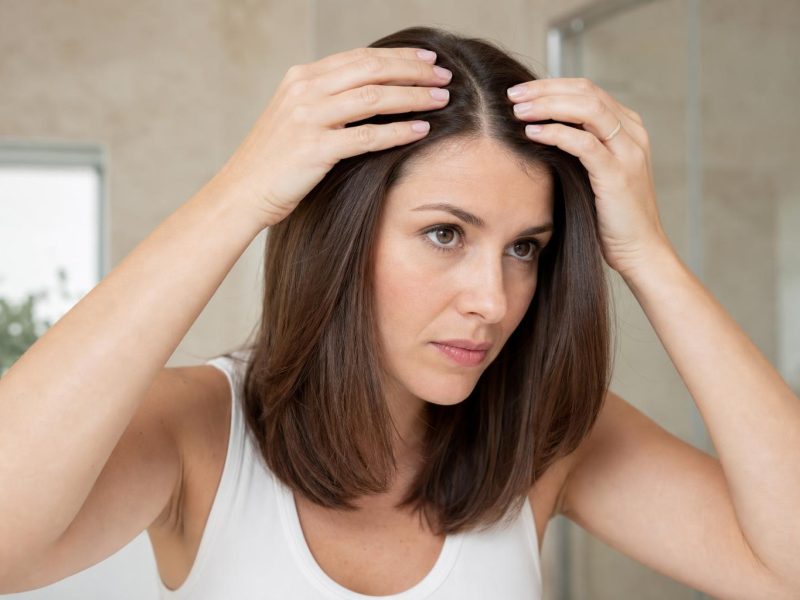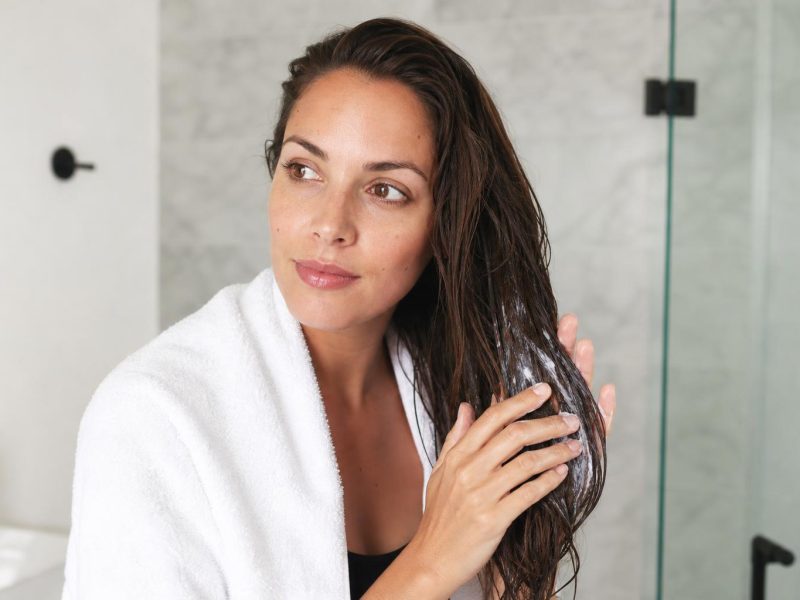

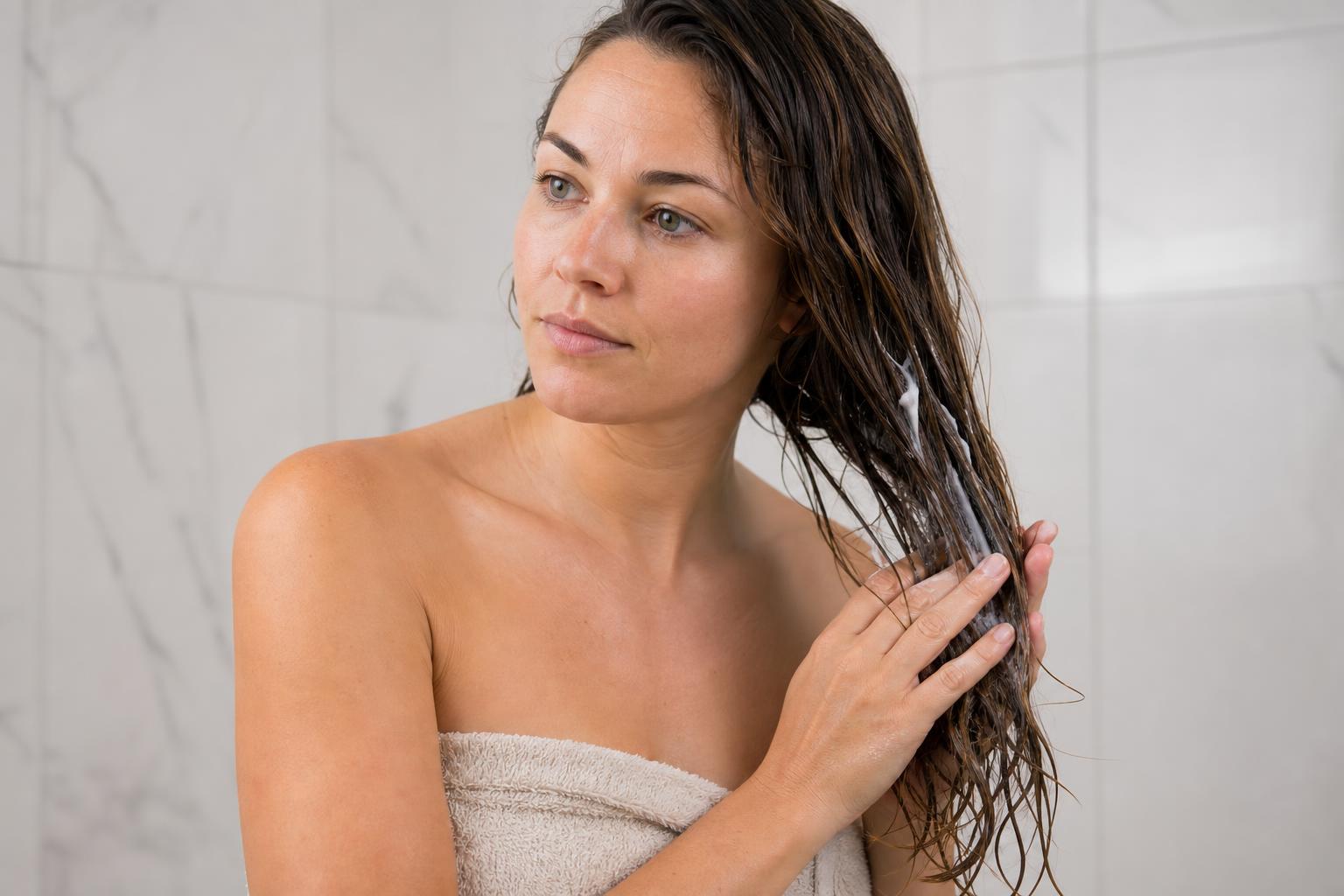
A moisturizing conditioner softens hair because of a positively charged ingredient that clings to the strand, not because of the oils pictured on the front of the bottle.
The moisturizing conditioner worth buying for dry hair lists a cationic conditioning agent such as behentrimonium chloride, cetrimonium chloride or a polyquaternium in its first five ingredients, backed by a fatty alcohol like cetearyl alcohol. Those two groups do most of the softening. Oils, butters and plant extracts further down the list change how heavy the finish feels, which matters for matching a formula to your hair far more than it matters for how moisturized the hair ends up.
This guide explains what conditioner actually leaves on the hair, how to read a label in under a minute, which formula weight suits fine, medium, coarse and curly hair, and how to apply it so the ends get the benefit instead of the roots. If you have already changed shampoos after learning why shampoo cannot hydrate hair, conditioner is the other half of that routine and the half that does the real work.
What a Moisturizing Conditioner Actually Does
Hair carries a net negative charge at any pH above roughly 3.7, which covers every shampoo and tap-water condition you will meet in a shower. Conditioners are built around cationic, positively charged ingredients that are pulled toward that negative surface and stay attached when you rinse. A review of hair care chemistry in Polymers (2023) notes that damaged hair adsorbs more conditioner than healthy hair because its surface is more negatively charged, which is why bleached ends soak up product that the roots barely hold.
What stays behind is a thin film that lays the cuticle flat, cuts friction between strands and calms static. That film is the slip and softness you feel. Conditioner does not put water into the hair. Water comes from washing, and the film slows how quickly the strand dries out and turns rough again. “Moisturizing” on a label is shorthand for a richer film, not a separate kind of chemistry.
Stylist tip: Judge a conditioner by how your hair feels completely dry the next day, not while it is dripping in the shower. Nearly every formula feels slippery when wet, and the one that is right for you is the one that still feels soft and tangles less a full day later.
How to Read a Moisturizing Conditioner Label
Ingredients above 1 percent are listed in descending order of concentration, so the first six or seven lines tell you nearly everything. Water comes first. After that you are looking for four groups, and the balance between them decides whether a formula suits your hair or just smells pleasant.
Cationic Ingredients Do the Softening
Behentrimonium chloride, behentrimonium methosulfate, cetrimonium chloride, stearamidopropyl dimethylamine and polyquaternium-10 are the workhorses. Behentrimonium compounds have a long carbon chain and give heavier slip, which suits coarse, curly and chemically treated hair. Cetrimonium chloride is lighter and turns up more often in formulas aimed at fine hair. If none of these appear in the top half of the list, the product is mostly a scented oil emulsion and will rinse away with little effect.
Fatty Alcohols Are Not the Drying Kind of Alcohol
Cetyl, stearyl and cetearyl alcohol are waxy solids that thicken the cream and add a smoothing layer of their own. They have nothing in common with the ethanol or alcohol denat. that can leave hairspray feeling harsh. In most rinse-out conditioners the cationic ingredient and the fatty alcohol form a gel network together, which is why a well-made formula feels thick in your palm yet spreads through wet hair easily.
Silicones Decide How the Ends Finish
Dimethicone gives the most shine and slip. Amodimethicone carries a positive charge, so it clings mainly to the damaged sections and rinses away from healthier roots more easily. Lighter silicones such as cyclopentasiloxane evaporate after styling. Silicones are one of the most effective ways to protect ends that are already rough, and buildup only becomes a problem when a heavy dimethicone is used daily alongside a very mild shampoo. A clarifying wash every two to four weeks clears it.
Oils, Butters and Humectants Come Last
Shea butter, argan oil, avocado oil, glycerin, panthenol and aloe usually appear after the first several ingredients. They add weight and a softer, cushioned feel. Glycerin pulls water from the air, which helps in moderate humidity but can make hair swell and frizz on a sticky summer day. Treat these as the seasoning in the formula rather than its main ingredient.
| Ingredient Group | Label Names | What You Notice | Best Suited To |
|---|---|---|---|
| Cationic softener | Behentrimonium chloride or methosulfate, cetrimonium chloride, polyquaternium-10 | Slip while detangling, less static once dry | Every hair type; heavier versions for coarse or curly hair |
| Fatty alcohol | Cetyl, stearyl, cetearyl alcohol | Thick texture, smoother surface | Every hair type |
| Silicone | Dimethicone, amodimethicone, cyclopentasiloxane | Shine, sealed ends, faster detangling | Bleached, heat-styled and coarse hair |
| Humectant | Glycerin, panthenol, propanediol, aloe | Bouncier feel in moderate humidity | Wavy and curly hair outside very humid climates |
| Oil or butter | Shea butter, argan, avocado, olive, coconut oil | Weight and a cushioned, softer finish | Thick, coarse and coily hair |
| Protein | Hydrolyzed keratin, wheat, rice or silk protein | Firmer strands; stiffness if overused | Overstretched, gummy or heavily bleached hair |
Match the Conditioner Weight to Your Hair
The same bottle can be exactly right on one head and a greasy, flattening weight on another. Strand thickness and porosity predict the right formula better than how dry your hair happens to feel this week. If you are unsure where your hair falls, a porosity check that stylists actually trust is a faster guide than any claim on the label.
| Hair Type | Look For | Limit | Amount (Shoulder Length) | Leave On |
|---|---|---|---|---|
| Fine, straight | Cetrimonium chloride, polyquaternium, light or volatile silicones | Butters and coconut oil in the top five | Nickel-sized, ends only | 1 to 2 minutes |
| Medium, wavy | Behentrimonium plus a light silicone | Heavy butters on daily use | Quarter-sized | 2 to 3 minutes |
| Thick, coarse | Behentrimonium methosulfate, dimethicone, shea or avocado | Formulas labeled volumizing | Half a palmful | 3 to 5 minutes |
| Curly or coily (3b to 4c) | Behentrimonium high on the list, fatty alcohols, glycerin in moderate climates | Protein at every wash if curls feel stiff | Full palmful, worked in sections | 5 minutes |
| Bleached or highlighted | Amodimethicone, behentrimonium, occasional protein | Silicone-free formulas on very porous ends | Quarter-sized, extra on the last 2 inches | 3 to 5 minutes |
Length changes the amount, not the formula, so double those amounts for hair that reaches mid-back. Curly and coily hair usually does best with a rich rinse-out followed by a small amount of leave-in, and choosing the two as a pair is covered in the curly hair shampoo and conditioner guide.
How to Apply Conditioner So It Actually Deposits
Most disappointing results come from placement and water, not from a poor formula. A conditioner dropped onto soaking hair gets diluted and slides off before the cationic ingredients have a chance to attach. These five steps take no longer than a normal shower routine.
- Squeeze excess water out of your hair with both hands before you reach for the bottle, so the product lands on damp strands rather than a sheet of water.
- Start at the ends and work upward to about ear level, because the ends are the oldest and most worn part of every strand while the roots have scalp oil.
- Detangle while the conditioner is in, using your fingers first and then a wide-tooth comb from the ends upward.
- Leave it for two to five minutes, since most deposition happens early and extra time mainly helps thick or curly hair get fully coated.
- Rinse with lukewarm water until the hair feels slippery but no longer coated or slimy.
Stylist tip: If your ends still feel rough after conditioning but your roots go limp by lunchtime, the formula is fine and the placement is off. Apply to the lower two-thirds of the hair only, then add a second small pump to the last two inches, where most of the damage lives.
When a Rich Moisturizing Conditioner Is the Wrong Fix
A heavier conditioner cannot solve every kind of dry-feeling hair, and in a few situations it makes the real problem harder to spot. Hair that stretches and feels gummy when wet is often short on protein rather than softness, and the protein and moisture balance guide walks through the stretch test that tells them apart.
- Straw-like hair in a hard-water area usually has a mineral coating that blocks conditioner from attaching, so a chelating shampoo does more than a richer cream.
- Split ends cannot be glued back together by any conditioner, which only smooths them for a day or two until the next trim removes them.
- Fine hair that turns flat and stringy needs a lighter formula or ends-only application, and skipping conditioner entirely tends to create more breakage from tangles.
- A flaking or itchy scalp is a scalp condition, and working a heavy conditioner into the roots can feed the problem instead of calming it.
Common Conditioner Myths
Conditioner marketing leans hard on what a formula leaves out, which has pushed several half-truths into everyday advice. These three cause the most wasted money.
Myth: Silicone-Free Conditioners Are More Moisturizing
Reality: Removing silicones removes one of the main ingredients that seal rough ends and cut friction during combing. Silicone-free formulas suit fine hair that gets weighed down easily and people who co-wash without ever using a clarifying shampoo. For bleached or heat-styled hair, a well-formulated silicone conditioner usually leaves ends noticeably softer.
Myth: Leaving Regular Conditioner On for 20 Minutes Turns It into a Mask
Reality: A rinse-out conditioner deposits most of what it can within the first few minutes. Masks and deep conditioners carry higher concentrations of the same ingredient groups, which is where their extra effect comes from, as explained in this breakdown of deep conditioners and hair masks. Sitting longer with a regular formula mainly costs you hot water.
Myth: Oily Hair Should Skip Conditioner
Reality: An oily scalp and dry ends often come together, especially on hair longer than the shoulders. Skip the roots, not the conditioner. A light cetrimonium-based formula on the bottom half keeps the ends from tangling and snapping without speeding up greasiness at the part.
What to Tell Your Stylist
Your stylist can see porosity, damage lines and product buildup that are hard to judge in a bathroom mirror, so use your next appointment to get a straight answer. Try asking: “Does my hair need more protein or more softness right now?” and “Where along the strand does the damage start, and should I condition only below that point?” If you color your hair, ask which conditioner your colorist uses after toning and whether a silicone formula would help your ends hold the shade. Bring the bottle you use at home or a photo of its ingredient list, because a stylist can spot a mismatch in seconds.
FAQ
Is a Moisturizing Conditioner Different from a Hydrating Conditioner?
No, the two terms have no regulated meaning and brands use them interchangeably. Some companies reserve “hydrating” for lighter formulas with more glycerin and “moisturizing” for richer ones with butters, but the only reliable way to tell is the ingredient list. Look at which cationic ingredient comes first and whether oils or butters appear in the top five.
Can I Use Moisturizing Conditioner Every Day?
Yes, if you wash every day, conditioning after each wash is fine for most hair types. Daily use becomes a problem mainly with heavy dimethicone or butter formulas on fine hair, where buildup shows as limp roots and dull color within a week or two. Rotating in a clarifying wash every couple of weeks keeps daily conditioning from weighing hair down.
Should Conditioner Go on the Scalp?
Usually not, because the scalp makes its own oil and conditioner residue can clog the base of the hair. Very coarse, coily hair with a genuinely dry scalp is the main exception. If your scalp flakes, sort out whether you are dealing with dandruff or a dry scalp before adding more product there, since the two need opposite approaches.
Why Does My Hair Still Feel Dry After Using Conditioner?
The most common causes are hard water minerals, too much protein, or heat damage that has left the ends too porous to hold a film for long. A chelating wash often solves the first, and hard water damage has a distinctive rough, squeaky feel that no conditioner fixes. If water is not the issue, try a formula higher in behentrimonium and a silicone, and trim the last half inch of damaged ends.
Is Leave-In Conditioner Better Than Rinse-Out Conditioner?
Neither is better, because they do different jobs. A rinse-out conditioner smooths and detangles in the shower, while a leave-in is a lighter layer that protects hair through drying and styling. Dry, curly or bleached hair usually benefits from both, while fine straight hair often needs only the rinse-out.
How Can I Tell If a Conditioner Is Too Heavy for My Hair?
Hair that looks flat at the roots, separates into strings or feels waxy by the end of the day is carrying more conditioner than it needs. Use half the amount and keep it below ear level for a week before switching products. If the problem continues, move to a formula without butters or coconut oil in its first five ingredients.
A moisturizing conditioner earns its place through what it leaves on your ends, so read the first six ingredients, match the weight to your strand thickness, and apply it from the ends upward on hair that has been squeezed out first. Change one variable at a time for a week and judge the result on dry hair the next day. For related routines, the full set of hair care guides covers shampoo, scalp care and damage repair.
Hair results vary based on your natural hair type, texture, density, and condition. Always consult with a licensed hairstylist before making significant changes, especially with chemical treatments or dramatic length changes. Photos may show styled results that require professional tools and products to replicate.