
A hair mask for dry hair works when it matches the reason your hair is dry, which is why the same rich mask softens one person’s curls and leaves another person’s fine hair limp.
The best hair mask for dry hair depends on the cause: bleached or heat-damaged hair needs a mask with conditioning agents like behentrimonium chloride and a lightweight silicone to smooth a roughened surface, curly and coily hair needs a richer mask built on fatty alcohols and butters, and low-porosity hair needs a light mask applied with gentle warmth. Use it once a week on towel-dried hair for 5 to 20 minutes, from the mid-lengths to the ends.
This guide helps you identify why your hair feels dry, read a mask label for the ingredients that match, apply it so it actually reaches the hair, set a realistic schedule, and recognize the situations where no mask will help. If you are still deciding between product types, our comparison of deep conditioner vs hair mask explains how the categories overlap.
Why Your Hair Is Dry Decides Which Mask Works
Dry hair is not one condition. Hair feels rough, dull and stiff when its outer cuticle layer is lifted or worn, when natural scalp oil cannot travel down the strand, or when water leaves the fiber too quickly. Each cause calls for a different kind of mask, and a mismatch is why many people say masks do nothing for them.
| Cause of Dryness | How It Feels | Mask to Choose | How Often |
|---|---|---|---|
| Bleach or color damage | Rough, tangles when wet, stretchy | Repair mask with cationic conditioners, amodimethicone and a little protein | 1 to 2 times a week |
| Heat styling | Dull, frizzy, split at the ends | Smoothing mask with silicones or light oils | Once a week |
| Curly or coily texture | Dry to the touch, frizz, curls lose shape | Rich moisture mask with fatty alcohols, shea butter, glycerin | Every wash day |
| Low porosity | Products stay on top, hair slow to get wet | Lightweight mask, used with gentle warmth | Every 1 to 2 weeks |
| Too much protein | Stiff, straw-like, snaps easily | Protein-free moisture mask | Once a week until softness returns |
| Hard water or buildup | Coated, dull, heavy yet dry | Clarify or chelate first, then a light mask | After each clarifying wash |
If you are not sure which group you fall into, a hair porosity test narrows it down quickly, and stiff, crunchy hair after several protein treatments is a sign to read up on protein vs moisture balance before buying anything new.
How to Read a Hair Mask Label
Mask labels are full of fruit and flower names that appear near the bottom of the list in tiny amounts. The ingredients that do the work are usually in the first five to eight positions, and they fall into a few groups.
Cationic Conditioners Do the Smoothing
Behentrimonium chloride, cetrimonium chloride and stearamidopropyl dimethylamine carry a positive charge that sticks to the negatively charged surface of damaged hair. A review of hair cosmetics in the International Journal of Trichology describes how damaged hair carries more negative charge, which is why these ingredients help rough, bleached lengths the most. Look for one in the top five.
Fatty Alcohols Soften Rather Than Dry
Cetyl, stearyl and cetearyl alcohol are waxy conditioning ingredients that give masks their thick texture and a soft, slippery feel. They are not the same as the drying alcohol found in hairspray. A mask with two or three of them high on the list is a sign of a rich formula suited to curly, coily or very dry hair.
Silicones, Oils and Butters Seal the Surface
Amodimethicone and dimethicone form a thin film that reduces friction and frizz, and amodimethicone tends to settle more on damaged areas. Shea butter, coconut oil and argan oil add softness and shine. Fine hair does better with silicones and light oils than with heavy butters.
Proteins and Humectants Are Supporting Players
Hydrolyzed keratin, wheat or rice protein can temporarily strengthen weak spots on bleached hair, but too much makes hair stiff. Glycerin and panthenol attract water, which helps curls in normal weather but can add frizz in very humid or very dry climates.
Stylist tip: Squeeze a pea-sized dot of the mask between your fingers in the store or at home. A mask that feels slippery and almost silky as you rub it will detangle and smooth; one that feels thick but tacky usually has more humectants and butters and suits curls more than straight hair.
How to Apply a Hair Mask So It Actually Works
Application matters as much as formula. The most common reason a good mask underperforms is that it goes onto dripping-wet hair and gets diluted and rinsed away before it can coat the strands.
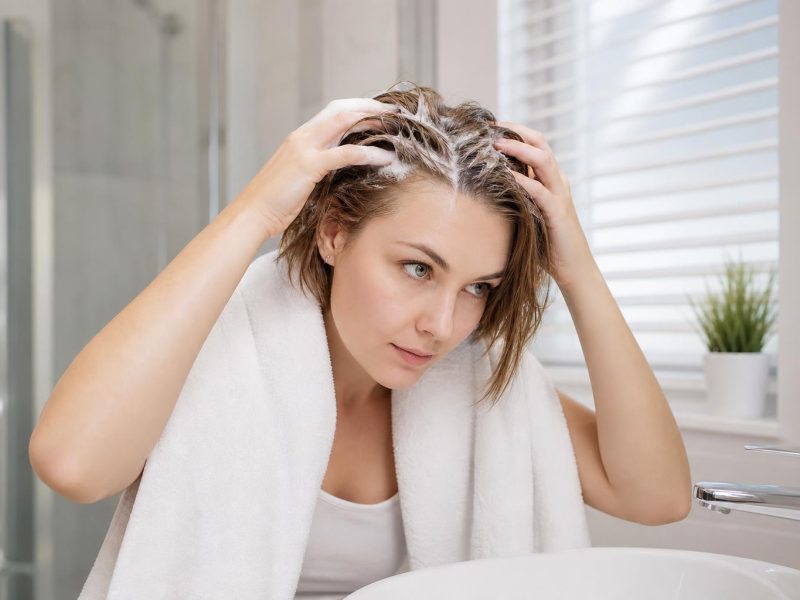
- Shampoo as usual, then squeeze out water with your hands and blot with a towel until the hair is damp, not dripping.
- Divide the hair into two to four sections so the product reaches the underside, not just the top layer.
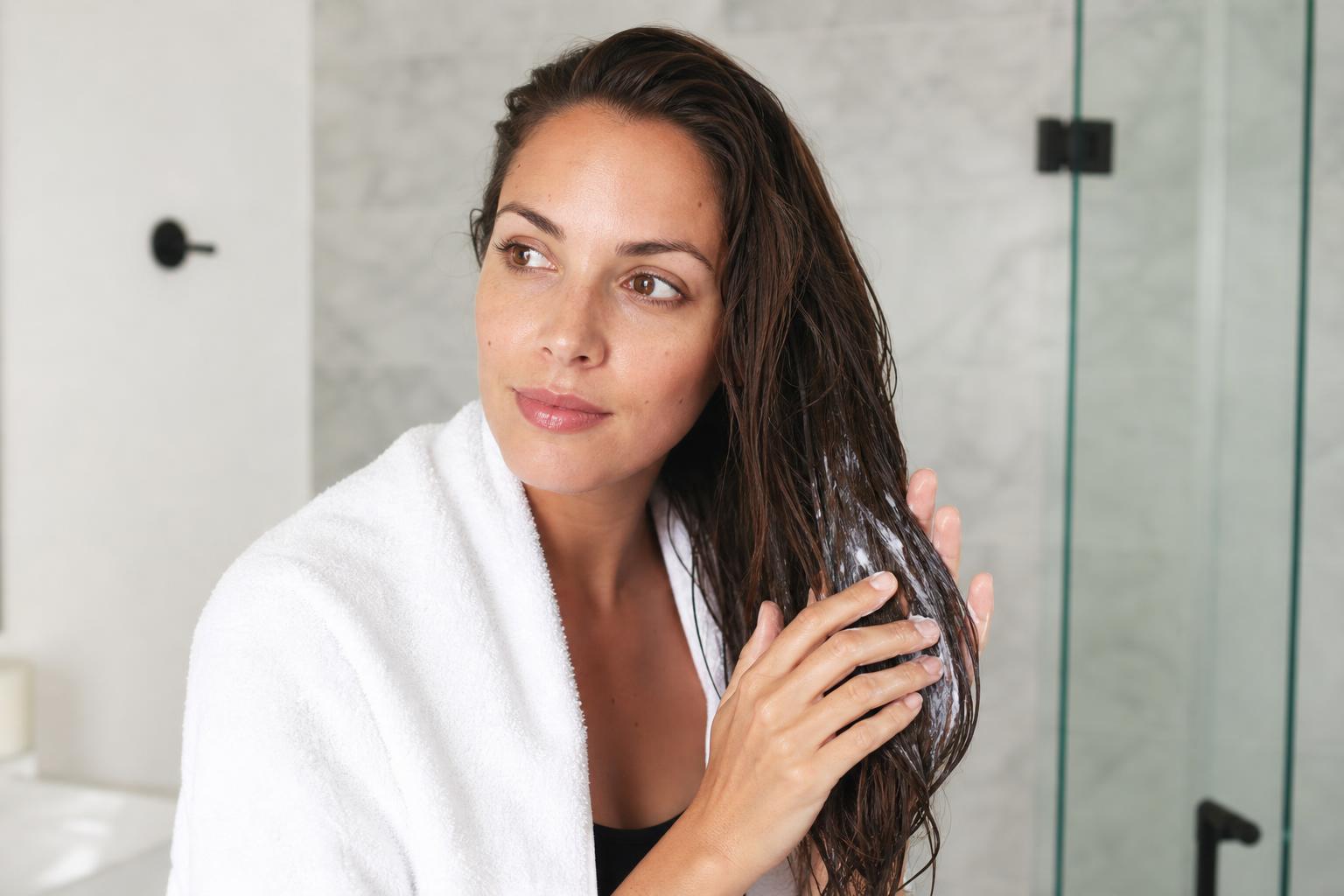
- Apply the mask from the mid-lengths to the ends, using about a tablespoon for shoulder-length hair and more for long or thick hair.
- Comb it through with a wide-tooth comb so every strand is coated evenly.
- Leave it on for the time on the label, usually 5 to 20 minutes, with a shower cap to hold in warmth if your hair is low porosity.
- Rinse with lukewarm water until the hair feels smooth but not slippery, and skip your regular conditioner that day.
Keep masks off the scalp unless the label says otherwise, since rich formulas can leave roots greasy and weigh fine hair down. If you rinse and your hair still feels coated, rinse for another minute or use a little less next time.
A Coconut Oil Pre-Wash Helps Porous Hair Before the Mask
For bleached or very porous hair, a light coating of coconut oil before shampooing can reduce damage from the wash itself. A study by Rele and Mohile in the Journal of Cosmetic Science found coconut oil was the only one of three oils tested that noticeably reduced protein loss from both damaged and undamaged hair when used as a pre-wash treatment. Apply a teaspoon to the dry lengths 30 minutes before washing, shampoo as normal, then follow with your mask.
Skip this step on low-porosity or fine hair, where coconut oil tends to stay on the surface and leave hair stiff or greasy even after washing.
Do DIY Hair Masks Work for Dry Hair?
Kitchen masks can soften hair for a day or two, but they cannot match the conditioning ingredients in a formulated mask, and some are messy to rinse out. They are worth trying when you want a quick fix, as long as expectations are realistic.
- Honey mixed with a little olive oil: honey attracts water and oil adds slip, which softens mildly dry ends; rinse well since honey gets sticky.
- Mashed avocado: adds richness to thick or curly hair, but tiny pieces cling to the hair, so blend it completely smooth.
- Plain yogurt: leaves hair feeling softer for some people, but the effect is short-lived and it can smell sour if not rinsed thoroughly.
- Egg: often sold online as a protein treatment, but it mostly coats the surface, and hot rinse water can cook it into the hair.
None of these should go on bleached hair right before a color appointment, since residues can affect how dye takes.
Hair Mask Myths That Waste Money
Mask marketing promises repair that no rinse-off product can deliver. Knowing the limits keeps you from buying three masks when the real fix is a trim or a routine change.
Myth: A Mask Can Repair Split Ends
Reality: Masks can smooth a split end and hold it together temporarily until the next wash, but they cannot fuse it back into one strand. Splits keep traveling up the hair until they are cut off. Our guide to managing split ends between trims covers what helps in the meantime.
Myth: Protein Masks Are the Strongest Fix for Dry Hair
Reality: Protein helps bleached, weak hair that stretches when wet, but on hair that is simply dry, it can make strands stiffer and more likely to snap. Most dry hair needs moisture and smoothing ingredients far more often than protein.
Myth: The Longer a Mask Stays On, the Better
Reality: Conditioning ingredients attach to the hair within the first several minutes, and most of the benefit is in place by the time on the label. Extra hours rarely add softness and can leave fine hair limp. Warmth from a shower cap makes a bigger difference than time.
When a Hair Mask Will Not Fix Dry Hair
Some dryness has a cause that no mask can reach. If one of these sounds familiar, change the root cause first.
- Gummy, overstretched ends after bleaching: hair that stretches and does not spring back has lost too much internal structure, and a trim of the damaged length is the only real fix.
- A dry, flaky scalp: hair masks are made for the lengths, and scalp flaking needs a scalp-specific approach; this guide to dandruff vs dry scalp helps you tell them apart.
- Daily hot tools without protection: a weekly mask cannot keep up with a flat iron at high heat every morning, so lower the temperature and use a heat protectant correctly.
- Heavy buildup or hard water: a coated strand cannot absorb conditioning ingredients, so clarify or chelate first, or the mask adds another layer on top.
- Sudden dryness with other symptoms: brittle hair along with fatigue, shedding or brittle nails can reflect thyroid or nutritional issues and is worth raising with a doctor.
Stylist tip: If your hair feels dry only at the ends, try a mask on the bottom third alone for a month before switching products. Many people apply a mask from the ears down when only the oldest few inches need it, and the upper lengths end up heavy.
FAQ
How Often Should I Use a Hair Mask for Dry Hair?
Once a week suits most dry hair. Bleached hair and curly or coily hair can use a mask twice a week or every wash day, while fine hair usually does better every one to two weeks. Cut back if your hair starts to feel limp, heavy or greasy.
Should I Put a Hair Mask on Wet or Dry Hair?
Put most hair masks on clean, towel-dried hair that is damp but not dripping. Too much water dilutes the mask and makes it slide off before it coats the strands. Oil-based pre-wash treatments are the exception and go on dry hair before shampooing.
Can I Use a Hair Mask Instead of Conditioner?
Yes, on the days you use a mask you can skip regular conditioner. A mask is a richer conditioner, so using both adds weight without extra benefit. On other wash days, go back to your usual conditioner, and consider a moisturizing conditioner if your hair still feels dry between masks.
Why Does My Hair Feel Drier After a Hair Mask?
Hair that feels drier after a mask usually got too much protein or has buildup that the mask sat on top of. Check the label for hydrolyzed proteins or keratin in the top half of the list. Switch to a protein-free moisture mask and use a clarifying shampoo once before trying again.
Do I Need to Rinse Out a Hair Mask?
Yes, rinse out any mask labeled as a rinse-off treatment. These formulas are too rich to leave in and will make hair greasy and attract dirt. If you want something that stays in, use a leave-in conditioner or a leave-in mask made for that purpose.
Is a Hair Mask Worth It for Fine Dry Hair?
A lightweight mask can help fine dry hair if you use it sparingly and only on the ends. Look for a silicone-based or light cream formula rather than a butter-heavy one. Use half the amount on the label and leave it on for the shorter end of the suggested time.
Sources
- International Journal of Trichology: Hair Cosmetics, An Overview
- Journal of Cosmetic Science: Effect of Mineral Oil, Sunflower Oil, and Coconut Oil on Prevention of Hair Damage (Rele and Mohile, 2003)
The right hair mask for dry hair starts with the cause: repair ingredients for bleached lengths, rich fatty alcohols and butters for curls, and a light formula with warmth for low-porosity hair. Apply it to towel-dried hair from the mid-lengths down, rinse it fully, and give one mask four weeks before judging it. If nothing changes, look at heat, buildup or damaged ends before buying another jar. More wash-day guides are collected in our hair care section.
Hair results vary based on your natural hair type, texture, density, and condition. Always consult with a licensed hairstylist before making significant changes, especially with chemical treatments. See a doctor if dryness comes with hair loss, scalp irritation or other symptoms.