
The best shampoo for greasy hair is a clear, non-conditioning formula used often enough, and the washing schedule matters as much as the bottle.
A good shampoo for greasy hair has three traits: a cleansing base strong enough to lift scalp oil, no conditioning polymers, silicones or plant oils high on the ingredient list, and a clear or translucent look rather than a creamy, pearly one. Pair it with washing every day or every other day, because research on wash frequency found that washing more often lowered scalp oil and itch without the “overstripping” rebound many people fear.
This guide explains how to read a shampoo label for oily roots, which ingredients to skip, how to set a wash schedule for your hair type, what to do when your scalp is oily but your ends are dry, and when greasy hair is a scalp condition that shampoo alone will not fix.
Why Some Shampoos Make Oily Hair Worse
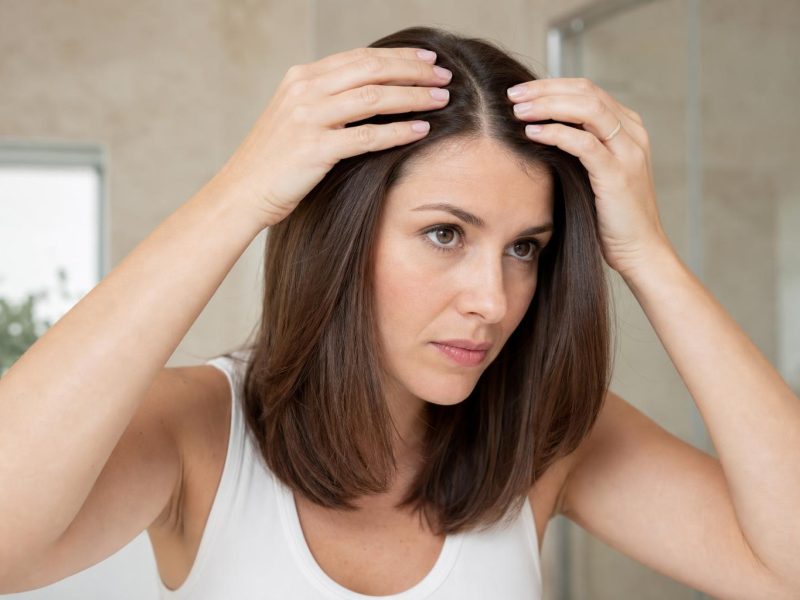
Greasy hair starts at the scalp, where sebaceous glands release oil that travels down each strand. Most shampoos sold for dry, damaged or frizzy hair are designed to leave something behind, and on an oily scalp that film adds to the oil instead of clearing it.
Moisturizing and smoothing shampoos contain positively charged conditioning ingredients that stick to hair after rinsing. A 2023 review of hair conditioning chemistry in Polymers explains that these cationic compounds bind to the negatively charged hair surface, which is exactly why they soften damaged lengths. On fine hair near an oily scalp, the same deposit makes roots flat and slick by the next morning.
Oil also builds on itself. Sebum left on the scalp oxidizes over the day, and a 2026 study in Skin Research and Technology found that higher scalp sebum went along with more oxidized scalp lipids, which tracked with participants’ reports of itch and flaking. Clearing it regularly is the goal, not preserving it.
How to Read a Shampoo Label for Greasy Hair
Ingredients are listed from the highest amount to the lowest, so the first six or seven names tell you almost everything. Look for a proper cleansing surfactant near the top, and check that conditioning ingredients are absent or near the end of the list.
| On the Label | What It Does | For Greasy Roots |
|---|---|---|
| Sodium laureth sulfate, sodium C14-16 olefin sulfonate | Strong, effective oil removal | Good choice near the top of the list |
| Cocamidopropyl betaine, decyl glucoside | Milder cleansers that soften the main surfactant | Fine as a second or third ingredient |
| Polyquaternium-10, guar hydroxypropyltrimonium chloride | Conditioning polymers that stay on hair after rinsing | Skip if listed in the top half |
| Dimethicone, amodimethicone | Silicones that coat and smooth | Skip in a shampoo; use them only in conditioner on the ends |
| Argan, coconut or shea oil or butter | Adds richness and slip | Skip if in the first seven ingredients |
| Salicylic acid | Loosens oil and flakes at the scalp | Useful when oiliness comes with buildup or light flaking |
| “2-in-1”, “moisture”, “smoothing”, “repair” | Marketing words for a conditioning formula | Usually the wrong bottle for oily roots |
Words like “balancing,” “clarifying,” “purifying,” “volumizing” or “for normal to oily hair” usually signal a lighter formula, but always confirm with the ingredient list. A quick visual clue helps in the store too: clear or translucent gels tend to be lighter, while opaque, pearly shampoos usually contain conditioning agents that create that creamy look.
Stylist tip: If you already own a moisturizing shampoo you like, keep it for the day after a clarifying wash rather than tossing it. Alternating a lighter formula with it often solves slick roots without giving up the softness in your lengths.
How Often to Wash Greasy Hair
Wash frequency is the biggest lever for oily hair, bigger than any single ingredient. A two-part study in Skin Appendage Disorders by Punyani, Tosti and colleagues found that washing more often reduced scalp oil, flaking and itch, and that worries about overcleaning did not hold up in their measurements or in participants’ own ratings. For most people with greasy roots, that means every day or every other day.
| Hair Type | Wash Every | Shampoo Type | Conditioner Placement |
|---|---|---|---|
| Fine, straight | 1 day | Clear volumizing or balancing formula | Bottom 2 to 3 inches only, or skip on short hair |
| Medium to thick, straight or wavy | 1 to 2 days | Balancing formula, clarify weekly | Mid-lengths and ends |
| Curly or coily with an oily scalp | 2 to 4 days | Gentle cleanser on the scalp only | Full lengths, generous amount |
| Color-treated | 1 to 2 days | Milder cleanser on roots, cool water | Mid-lengths and ends |
| Oily scalp with flakes | 1 to 2 days | Antidandruff shampoo 2 to 3 times a week | Ends only |
These are starting points; the broader guide on how often to wash your hair covers climate, workouts and styling habits that shift the numbers. If your curly scalp gets oily but your curls cannot handle daily washing, a scalp-only wash with a conditioner rinse through the lengths keeps the curl pattern intact.
How to Shampoo Greasy Hair So Roots Stay Clean Longer
Technique changes how long a wash lasts. The same shampoo can buy you an extra half day if it reaches the scalp properly and nothing heavy goes back on the roots afterward.
Step 1: Wet the Scalp Completely
How: Rinse for a full 30 to 60 seconds with lukewarm water, lifting sections with your fingers so water reaches the scalp at the crown and behind the ears. Why: Shampoo spreads and foams poorly on hair that is only wet on the surface. Common mistake: Very hot water feels cleaner but can leave the scalp irritated, which does not help oiliness.
Step 2: Shampoo Twice, Scalp First
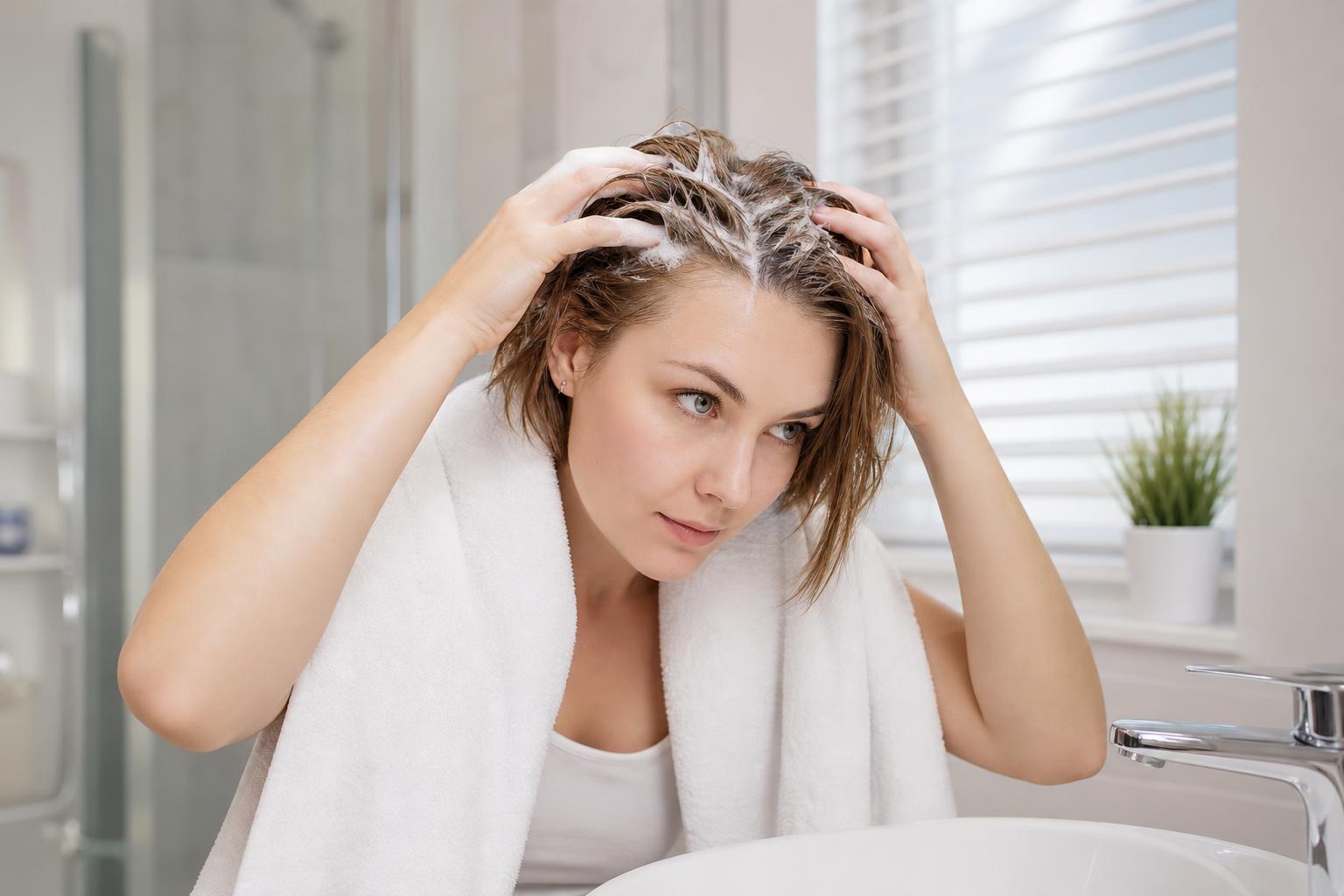
How: Apply a quarter-sized amount to the scalp in three or four spots, massage with the pads of your fingers for about a minute, rinse, then repeat with a smaller amount. Why: The first wash breaks up oil and product; the second one actually foams and cleans the skin. Common mistake: Piling shampoo on the lengths, which get enough cleaning from the rinse water running down.
Step 3: Condition Only Where Hair Is Dry
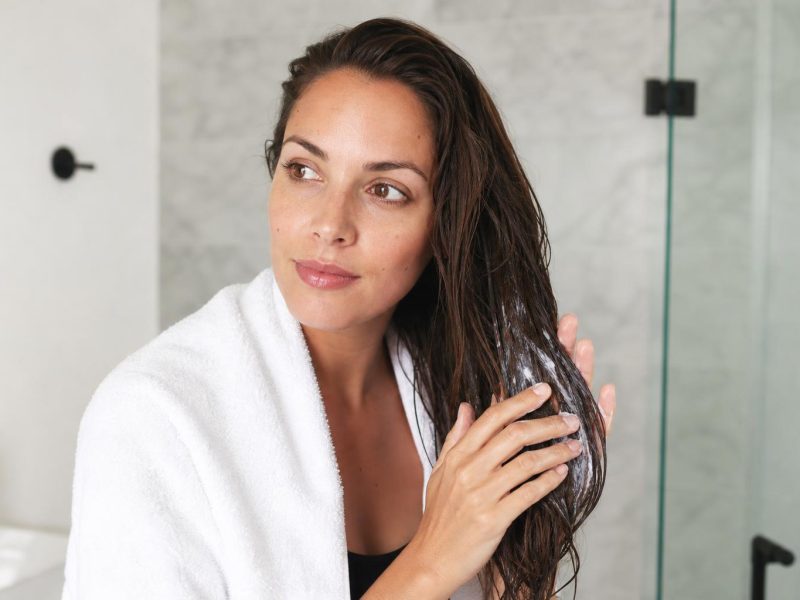
How: Squeeze out excess water, then apply conditioner from the ears or jaw down, keeping it at least three inches away from the scalp. Why: Roots already get oil from the scalp, so conditioner there just adds weight. Common mistake: Skipping conditioner entirely, which leaves ends tangled and rough on longer hair.
Step 4: Rinse Longer Than Feels Necessary
How: Rinse for another 30 seconds after the hair stops feeling slippery, with your head tipped back so residue runs away from the roots. Why: Leftover shampoo and conditioner at the hairline show up as flat, dull roots by the next morning.
Oily Scalp With Dry Ends Needs Two Different Products
Longer hair often has an oily scalp and dry, rough ends at the same time, because scalp oil rarely travels more than a few inches down the strand. Treat them as two separate zones: a clear shampoo on the scalp, and conditioner, a leave-in or a drop of hair oil on the lengths. A clarifying shampoo once a week keeps buildup from these products from creeping up toward the roots.
Stylist tip: Put leave-in or oil on your ends before you tie your hair up for the day, not after. Adding product later means your hands carry it back up to the roots every time you touch your hair.
Between Washes: What Helps and What Hides the Problem
Dry shampoo absorbs oil at the roots and buys one extra day, but it does not clean the scalp, so it works best as a bridge between washes rather than a replacement. Spray it on clean hair at night before the oil appears, which helps it absorb as oil comes through. The step-by-step method is in our guide on how to use dry shampoo.
- Clean your hairbrush every week, since oil and old product build up in the bristles and go straight back on clean hair.
- Change pillowcases every two or three days if you wash daily and still wake up with flat roots.
- Keep face moisturizer and sunscreen off the hairline, because rich creams wick into the front of the hair.
- Avoid brushing oily hair repeatedly during the day, which drags scalp oil down the lengths faster.
Greasy Hair Myths That Keep Roots Oily
Several popular beliefs about oily hair lead people to wash less and use richer products, which usually makes the problem last longer.
Myth: Washing Less Trains Your Scalp to Make Less Oil
Reality: The controlled wash-frequency study mentioned above found the opposite pattern, with more frequent washing linked to less scalp oil and less itch. Oil production is driven mainly by hormones and genetics, not by how often you shampoo. Skipping washes just lets oil and oxidized residue stay on the scalp longer.
Myth: Sulfate-Free Shampoo Is Always Better for Oily Hair
Reality: Many sulfate-free formulas are designed to be mild and can struggle with a very oily scalp, especially on fine hair. A sulfate-based shampoo is often the more effective choice for greasy roots, while sulfate-free formulas suit sensitive scalps, curly hair and fresh color. The trade-offs are covered in our sulfate-free shampoo guide.
Myth: Oily Hair Does Not Need Conditioner
Reality: The scalp being oily says nothing about the ends, which can be dry from heat styling, sun and color. Skipping conditioner on shoulder-length or longer hair causes tangles and breakage. Applying it only to the lower lengths avoids adding weight at the roots.
When Greasy Hair Is Not a Shampoo Problem
Some oily scalps need a doctor or a different treatment, and no shampoo swap will fix them. See a dermatologist if any of these apply.
- Oiliness with yellow, greasy flakes and redness: this often points to seborrheic dermatitis, which responds to medicated antidandruff shampoos rather than oil-control formulas.
- A sudden change in oil level: new oiliness that appears over a few weeks can follow hormonal shifts, new medications or stress, and it is worth mentioning to a doctor.
- Oiliness with thinning hair: an oily scalp alongside noticeable shedding can have a shared hormonal cause and deserves a proper assessment.
- Burning, sores or pain: a scalp that hurts after washing needs medical attention, not a stronger cleanser.
If your oily scalp comes with visible white or yellow flakes, a medicated formula from our dandruff shampoo guide is the better starting point than a standard oil-control shampoo.
FAQ
Is It Bad to Wash Greasy Hair Every Day?
No, washing greasy hair every day is fine for most people and often helps. Research on wash frequency found daily washing lowered scalp oil and itch without causing a rebound. Use a clear shampoo on the scalp and conditioner only on the ends to keep daily washing gentle on the lengths.
Why Does My Hair Get Greasy the Day After Washing?
Hair that looks oily within a day usually has leftover conditioning product at the roots, a naturally oily scalp, or fine, straight strands that show oil quickly. Check whether your shampoo or conditioner contains silicones or conditioning polymers high on the list. Rinsing longer and keeping conditioner three inches from the scalp often adds half a day.
Does Clarifying Shampoo Help Greasy Hair?
Yes, a clarifying shampoo once a week helps by removing buildup that makes roots look oily sooner. It is stronger than a daily shampoo, so most people should not use it every wash. Follow it with conditioner on the lengths, since clarifying can leave ends feeling rough.
Should Men Use a Different Shampoo for Oily Hair?
Men do not need a separate type of shampoo, but short hair usually needs less conditioner and can often skip it entirely. Men’s scalps tend to produce more oil on average, so daily washing with a clear, balancing shampoo works well. Avoid 2-in-1 products if your roots get oily quickly.
Can Hard Water Make Hair Feel Greasy?
Yes, hard water can make hair feel coated, heavy and dull, which is easy to mistake for grease. Minerals react with shampoo and leave residue on the hair. A chelating shampoo once a week and a shower filter help, and our guide to hard water hair damage explains how to tell the difference.
Does Hair Get Less Oily with Age?
Scalp oil production usually drops with age, especially after menopause for women, so many people find they can wash less often in their 50s and 60s. Oiliness tends to be highest from the teenage years through the 30s. Adjust your wash schedule and shampoo strength as your scalp changes rather than sticking with the same routine for decades.
Sources
- Skin Appendage Disorders: The Impact of Shampoo Wash Frequency on Scalp and Hair Conditions (Punyani et al., 2021)
- Skin Research and Technology: Physiological Characteristics of Scalp Skin With High Sebum Production and the Impacts of Shampoo Cleansing (2026)
- Polymers: On Hair Care Physicochemistry and Conditioning Agents (2023)
Choosing a shampoo for greasy hair comes down to a clear, non-conditioning formula on the scalp, conditioner kept to the ends, and a wash schedule that clears oil before it builds. Check the first seven ingredients before you buy, try washing every day or every other day for two weeks, and see a dermatologist if the oiliness comes with redness or heavy flaking. More scalp and wash-routine guides are in our hair care section.
This article is for general information and is not a substitute for medical advice. Hair and scalp results vary based on your natural hair type, texture, density, and condition. Consult a dermatologist about persistent scalp oiliness, flaking or irritation, and a licensed hairstylist before making significant changes to your hair care routine.