

A shampoo cannot put moisture into hair, so the best hydrating shampoo is simply the one that takes the least out, and you identify it from the first five ingredients rather than the word on the front.
Shampoo is a rinse-off cleanser that spends roughly 60 seconds on your hair before it goes down the drain. In that window it removes sebum, product, and some of the lipid layer that keeps water inside the strand. The glycerin, aloe, and oils listed on the label of a hydrating formula are present in small amounts and rinse away with everything else. What actually separates a gentle shampoo from a stripping one is the detergent doing the cleaning, and that is named in the first few lines of the ingredient list.
This guide explains what a shampoo can and cannot do for dry hair, shows you how to read a surfactant list in ten seconds, separates the three different causes of dryness that need three different products, covers how humectants behave in dry air, and gives you a washing method that reduces damage regardless of which bottle you own.
| Factor | Details |
|---|---|
| What to look for | A mild primary surfactant in the first five ingredients |
| What to ignore | Oils and botanicals listed after the fragrance, which are present in trace amounts |
| Best for | Coarse, curly, coily, color-treated, and heat-damaged hair |
| Wash frequency | 2 to 3 times a week for most dry hair, 1 to 2 for coily textures |
| Avoid if | Your scalp is oily or you use silicone-heavy stylers daily |
A Shampoo Cleans; the Conditioner Does the Hydrating
The division of labor between the two bottles is settled science, and it is worth knowing before spending money on the wrong one. Shampoo’s function is detergency: surfactant molecules attach to oil at one end and water at the other, lift it off the fiber, and carry it away in the rinse. Conditioner does the opposite job, depositing positively charged ingredients that cling to the damaged, negatively charged parts of the cuticle and seal it. A dermatology review of hair cosmetics published in the International Journal of Trichology describes conditioners as working to restore the water-repellent surface and mimic 18-MEA, the natural lipid layer on the cuticle. Shampoos do none of that.
Which reframes the whole shopping question. You are not looking for a shampoo that adds moisture, because no rinse-off cleanser does that in any meaningful way. You are looking for one that cleans your scalp without removing more of the lipid layer than it has to, so that the conditioner has less repair work to do. That is a real difference between products, it just is not the difference the front label advertises.
Stylist tip: If your budget only stretches to upgrading one product, upgrade the conditioner or the mask, not the shampoo. A gentle shampoo prevents damage; a good conditioner reverses the feel of it, and the difference shows up faster in the mirror.
The First Five Ingredients Tell You Everything
Ingredient lists run in descending order of concentration, so the primary surfactant appears near the top, usually second or third after water. That single ingredient does most of the cleaning and most of the stripping. Everything listed after the fragrance is present at a fraction of a percent and will not change how your hair feels. Turn the bottle over, read the first five lines, and match them against the table below.
| Surfactant on the Label | Strength | Who It Suits |
|---|---|---|
| Sodium lauryl sulfate | Strongest | Oily scalps, heavy buildup, occasional deep cleaning only |
| Sodium laureth sulfate | Strong but gentler | Normal to oily hair, fine hair that goes limp easily |
| Sodium cocoyl isethionate | Mild | Dry, coarse, or color-treated hair that still needs real cleaning |
| Cocamidopropyl betaine | Mild, usually a secondary | Blended with others to soften a stronger primary detergent |
| Decyl or lauryl glucoside | Very mild | Coily hair, dry scalps, anyone washing more than three times a week |
| Cetyl or behentrimonium alcohol first | Barely cleansing | Co-wash territory, needs a clarifying wash every two weeks |
A useful check: if the bottle says hydrating and the second ingredient is sodium lauryl sulfate, the hydrating claim is coming from something further down the list at a concentration too low to counteract the detergent above it. That is the single most common gap between a label and what is inside it, and the reason our breakdown of what sulfate-free actually changes matters more than the marketing suggests.
Three Different Kinds of Dry Hair Need Three Different Products
Dryness is a symptom with several causes, and buying the wrong category is why people cycle through hydrating shampoos without improvement. Hair that is dry because it lacks lipids needs oils and emollients. Hair that is dry because the cuticle is damaged and porous needs protein and bond repair. Hair that is dry because the scalp produces little sebum needs a gentler cleanser and less frequent washing. The same bottle rarely fixes two of these.
| Cause | How to Recognize It | What Actually Helps |
|---|---|---|
| Lipid loss | Ends feel rough and look dull, but the hair still stretches and springs back | Mild surfactant plus an oil-rich rinse-out conditioner |
| Cuticle damage and porosity | Soaks up water instantly, dries fast, snaps when stretched wet | A protein or bond-building treatment first, hydration second |
| Low sebum production | Scalp feels tight after washing, flaking is fine and dry | Wash less often with a glucoside-based cleanser |
| Structural coil pattern | Type 4 texture, dry from the mid-shaft down regardless of routine | Cream cleanser, leave-in, and sealing oil in sequence |
The second row is the one people misdiagnose most often. Bleached or heat-damaged hair that feels dry is usually protein-starved rather than water-starved, and pouring more moisture into it makes it limp and mushy instead of soft. The test takes ten seconds: pull a wet strand gently. If it stretches a long way and does not return, it needs protein. If it snaps immediately with no stretch, it needs moisture. Our guide to telling protein need from moisture need walks through the full assessment.
Humectants Work With You or Against You Depending on the Air
Glycerin, propylene glycol, sodium PCA, and hyaluronic acid are humectants, which means they attract water and hold it. In humid conditions they pull moisture from the air into the hair, which is helpful up to the point where it becomes frizz. In genuinely dry air, in winter with the heating on or in an arid climate, a humectant with no water available in the air will pull it from the nearest source instead, which can be the inside of the strand.
This is why a hydrating shampoo that worked beautifully in August feels drying in January. It is not the product changing, it is the environment around it. Practical version: in dry months, favor emollient ingredients such as fatty alcohols and oils over humectant-led formulas, and keep humectants for the humid half of the year. Since a shampoo rinses off anyway, the effect matters far more in your leave-in and conditioner than in the wash itself.
Stylist tip: Apply shampoo only to the scalp and let the lather rinse down through the lengths. The ends are the oldest and driest part of your hair and they do not need direct detergent contact; the runoff cleans them adequately. This single change makes an average shampoo behave like a gentler one.
When a Hydrating Shampoo Is the Wrong Choice
Gentle cleansers are not universally better, and switching to one when your hair does not need it creates a different set of problems. The situations below all produce hair that looks worse rather than better after a few weeks on a low-strength formula.
- Your scalp is genuinely oily. A mild surfactant leaves sebum behind, and roots go flat and greasy within a day.
- You use silicone serums or heavy stylers daily. Most mild cleansers do not remove them, and the buildup blocks anything you apply afterward.
- Your hair is fine and low density. Cream formulas coat the strand and the extra weight collapses the volume you were relying on.
- You have dandruff or seborrheic dermatitis. The active ingredient in a medicated shampoo needs contact with the scalp, and swapping it for a moisturizing formula stops the treatment working.
- You swim regularly in chlorinated water. Chlorine and mineral deposits need a chelating or clarifying wash, which a hydrating formula is not designed to provide.
The common workaround is to keep two shampoos and rotate them, using a stronger wash roughly every two weeks. That approach is standard practice for anyone co-washing as well: the review of cleansing conditioners in Skin Appendage Disorders notes that conditioner washing cannot handle an oily scalp or heavy buildup on its own and needs a clarifying shampoo roughly every fifteen days. Our guide to how often clarifying belongs in a routine covers the rotation in practice.
How You Wash Matters as Much as What You Wash With
Detergent strength is only one variable. Water temperature, friction, and contact time all change how much the hair gives up during a wash, and all three are free to adjust. Protein loss from hair rises with both temperature and mechanical friction, so scrubbing hot and hard undoes most of what a gentler formula bought you.
Step 1: Wet the Hair Fully Before Any Product
How: Run water through for a full 30 seconds until the hair is saturated rather than damp.
Why: Saturated hair absorbs less of the surfactant solution, and the shampoo spreads with far less rubbing.
Step 2: Emulsify in Your Hands First
How: Rub the shampoo between wet palms until it turns cloudy, then apply to the scalp in sections.
Why: Neat shampoo applied straight from the bottle concentrates in one spot and gets rubbed around, which is friction the hair does not need.
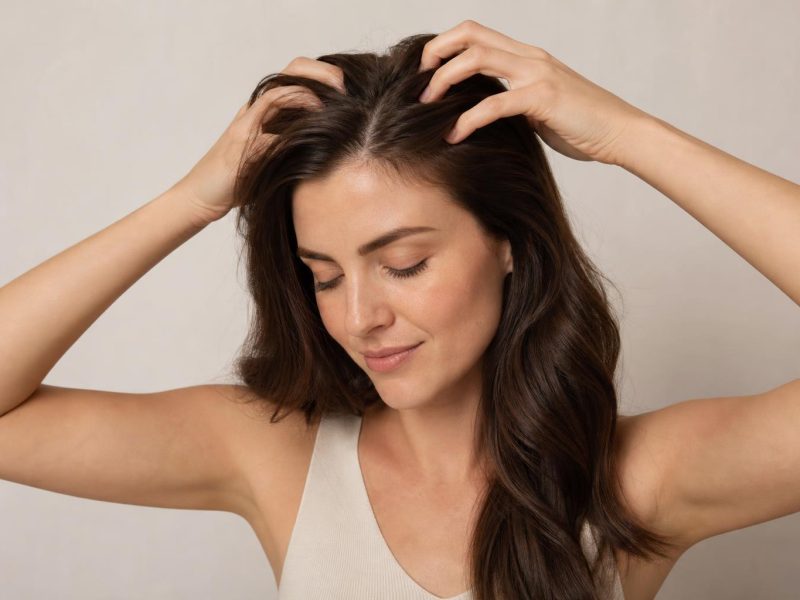
Step 3: Use Fingertips, Never Nails, and Keep It Under a Minute
How: Massage the scalp with the pads of the fingers for 45 to 60 seconds, then rinse.
Common mistake: Piling the lengths on top of the head and scrubbing them together. That tangles the cuticle and costs more protein than the detergent itself.
Step 4: Finish the Rinse Cool
How: Wash in warm water, then drop the temperature for the final 15 seconds.
Why: Hot water swells the cuticle and increases what the wash removes. A cool finish is not a beauty myth here, it is a temperature effect on the fiber.
What to Look for on the Shelf
Take thirty seconds with the bottle before it goes in the basket. Confirm the primary surfactant is a mild one from the table above. Check whether any oil or butter appears before the fragrance in the list, since anything after it is a trace addition. Then check the format: cream shampoos hold more emollient than clear gel formulas and generally suit coarse and coily hair better, while clear formulas rinse cleaner and suit fine hair.
Match the conditioner to the same decision at the same time, because that is where the hydration you are shopping for actually happens. Anyone with textured hair choosing both halves at once will find the pairing logic in our guide to matching cleanser strength to conditioner weight on curls, and anyone deciding how deep the conditioning step needs to go can compare a deep conditioner against a mask before committing.
FAQ
Does a Hydrating Shampoo Actually Add Moisture to Hair?
Not in any lasting way. A rinse-off cleanser has around a minute of contact time and its main function is removing oil and dirt, so whatever humectants it contains leave with the rinse water. The realistic benefit of a hydrating formula is that it strips less than a strong sulfate shampoo, leaving more of the natural lipid layer intact. The actual moisture deposit happens in the conditioner, mask, or leave-in that follows.
Is Sulfate-Free Always Better for Dry Hair?
Usually, but not automatically. Sulfate-free covers a wide range of detergents, some of which clean nearly as strongly as sulfates, and a few sulfate-free formulas leave enough residue to weigh down fine hair. The useful question is not whether sulfates are absent but which surfactant replaced them, since a glucoside-based cleanser and a sulfosuccinate-based one behave quite differently on the same head of hair.
How Often Should You Wash Dry Hair?
Two to three times a week suits most dry, straight to wavy hair, and once or twice a week suits coily textures where sebum travels down the strand slowly. Washing less than that lets sebum and product accumulate at the scalp, which causes its own irritation and flaking. If your scalp itches or flakes between washes you are washing too little, not too much, regardless of how dry the ends feel.
Can You Use a Hydrating Shampoo Every Day?
You can, and for people who exercise daily or work in dusty conditions it is a reasonable trade. Choose a glucoside-based formula, keep it strictly on the scalp, and add a leave-in conditioner to the mid-lengths afterward to offset the extra washes. Daily washing with a strong sulfate shampoo is a different matter and will show as roughness at the ends within a month.
Why Does My Hair Feel Drier After Switching to a Moisturizing Shampoo?
Two likely reasons. If the new formula is mild, it may not be removing your previous silicone conditioners, and the buildup blocks water and product from reaching the strand. If your hair is bleached or heat-damaged, the dryness is usually protein loss rather than water loss, and a moisture-only routine makes it feel softer but weaker. Clarify once to rule out the first, then test for elasticity to check the second.
Do Expensive Hydrating Shampoos Work Better Than Drugstore Ones?
Price correlates poorly with surfactant quality. Mild cleansers such as sodium cocoyl isethionate and the glucosides appear in both budget and premium formulas, and plenty of expensive bottles still use sodium laureth sulfate as the primary detergent. Read the first five ingredients on both and buy the better list, which is often the cheaper one. Where price does buy something real is in conditioners and masks, where the concentration of emollients and cationic ingredients genuinely varies.
Should You Shampoo Twice?
Only if the first wash produces very little lather, which usually means there is enough oil or product on the hair to absorb the surfactant. In that case a short second pass cleans properly with less total scrubbing. On dry hair washed regularly, a single wash is enough, and doubling up is an easy way to remove lipids you wanted to keep.
The best hydrating shampoo for your hair is the mildest one that still leaves your scalp genuinely clean, and you find it by reading the first five ingredients rather than the claim on the front. Work out which kind of dryness you have first, buy the cleanser and the conditioner as a pair, and keep a stronger wash on hand for every second or third week. Change how you wash at the same time, because a cool rinse and fingertips on the scalp do more for dry ends than any upgrade in the bottle.
Hair results vary based on your natural hair type, texture, density, and condition. Always consult with a licensed hairstylist before making significant changes, especially with chemical treatments or dramatic length changes. Photos may show styled results that require professional tools and products to replicate.