

Frizz is a cuticle problem, which is why smoothing the surface of dry hair never fixes it for longer than an hour.
Each strand is wrapped in overlapping cuticle scales. When they lie flat, hair reflects light evenly and feels smooth; when they are lifted or damaged, water moves in and out freely, the shaft swells unevenly, and individual strands push out of alignment. That is frizz. It follows that the only durable fix is reducing how much water crosses the cuticle, which means sealing and hydrating rather than flattening, and doing most of the work while the hair is still wet.
This guide separates the four distinct causes of frizz, since each needs a different response, sets out what genuinely works and what only appears to, adjusts the routine by hair type, gives the order of operations that matters most, and covers how to tell ordinary frizz apart from breakage, which looks similar and needs the opposite approach.
Frizz Is a Cuticle Problem, Not a Texture Problem
Hair readily absorbs water, and a great deal of it. Undamaged hair can take on an additional 20 to 30 percent of its own weight in water, while permed, tinted and bleached hair can absorb 30 to 50 percent, because chemical processing lifts and erodes the cuticle. As water enters, the shaft swells; as it dries, the shaft contracts. Repeat that cycle often enough and the cuticle degrades further, a process cosmetic chemists call hygral fatigue, which is why frizz tends to get worse over time rather than staying constant.
Humidity drives the same mechanism from outside. Water in the air forms temporary hydrogen bonds with keratin, and hair with a compromised cuticle takes on that moisture unevenly along its length. The strand swells in patches, the scales catch on each other, and hair that looked smooth indoors turns rough within minutes of stepping outside. None of this is caused by your hair being curly, wavy or coarse. Texture influences how visible frizz is, but the underlying event is the cuticle letting water through.
That reframes the goal usefully. You are not trying to weigh hair down or force it flat. You are trying to get water into the hair once, deliberately, and then slow how fast it moves back out, which is what every effective anti-frizz step below actually does.
Four Causes, and Each Needs a Different Fix
Most frizz advice fails because it treats one cause as if it were all of them. Work out which of the four applies to you before changing anything, since the wrong fix can make the situation worse. Many people have two running at once.
| Cause | How to Recognize It | What Fixes It |
|---|---|---|
| Damaged, high-porosity cuticle | Worst at the ends; hair soaks water fast and dries fast; usually color-treated or heat-styled | Bond repair, protein and moisture balance, less heat, a trim |
| Humidity | Fine indoors, frizzy within minutes outside; seasonal and weather-linked | An oil or silicone seal over damp hair to slow moisture exchange |
| Dehydration | Hair feels rough and straw-like dry, and frizzes uniformly along the length | Leave-in conditioner, weekly mask, gentler cleansing |
| Mechanical friction | Worst at the crown and where hair touches a pillow or collar; appears overnight | Satin pillowcase, microfiber drying, no dry brushing |
The dehydration and damage categories are the two most often confused, and the distinction matters because the fixes point in opposite directions. Dehydrated hair needs moisture and will get worse under repeated protein treatments; damaged, over-elastic hair needs protein and gets mushy under endless moisture masks. Establishing whether your hair needs protein or moisture is genuinely the first diagnostic step, and treating the wrong one is the most common reason a new routine makes frizz worse.
What Actually Works
Everything effective happens in a narrow window: while the hair is wet or damp. Once hair has dried, the cuticle has already set in whatever position it took, and products applied afterward can only coat the outside temporarily.
Apply Everything to Soaking Wet Hair, Not Damp Hair
Leave-in conditioner and cream distribute evenly through wet hair and unevenly through damp hair, which produces patches that behave differently as they dry. Apply while the hair is still dripping, rake it through with your fingers rather than a brush, and do not touch it again until it is fully dry. Every touch during drying disturbs the cuticle as it sets, and hands-off drying is the single largest improvement most people can make at zero cost.
Seal With an Oil Over the Top of Your Cream
A light oil applied over a water-based leave-in creates a hydrophobic layer that slows how fast moisture crosses the cuticle in both directions. This is also why oils reduce swelling: research on oil penetration into hair fibers found that oil in the shaft limits how much water it takes up, which lessens the swell-and-shrink cycling that degrades the cuticle. Order matters here. Water-based product first, oil second, because oil applied first blocks the hydration you are trying to lock in.
Dry With Microfiber or a Cotton T-Shirt, Never a Terry Towel
A standard terry towel has looped fibers that catch individual strands and lift the cuticle mechanically, which is why hair often looks worse immediately after towel-drying than it did in the shower. Squeeze water out with a microfiber towel or an old cotton t-shirt instead of rubbing. This one change visibly reduces frizz on wavy and curly hair within a single wash.
Finish the Rinse Cool
Hot water holds the cuticle open; a final thirty seconds under cool water helps it close before you leave the shower. The effect is modest on its own and adds up when combined with the other steps. It costs nothing and requires no product, which makes it worth doing even if it is not dramatic.
Cover Your Hair at Night
Cotton pillowcases pull moisture out of hair and create friction through six or seven hours of movement, which is why overnight frizz concentrates at the crown and the sides. A satin or silk pillowcase, a bonnet, or a loose braid all reduce it substantially. The practical difference between silk and satin is smaller than most marketing suggests, and either beats cotton.
Stylist tip: if you diffuse, set the dryer to low speed and medium heat and leave the hair alone until it is at least 80 percent dry. High airflow is what creates frizz during diffusing, not the heat, because moving air pushes strands out of their clumps while the cuticle is still setting. Most people use the opposite settings and blame the dryer.
What Does Not Work
Several widely repeated fixes either do nothing or make frizz worse.
- Brushing dry hair. Combing or brushing when dry separates the natural clumps and lifts the cuticle, converting defined texture into a halo. Detangle in the shower with conditioner in the hair instead.
- More heat and more flat-ironing. Straightening frizzy hair produces smoothness that lasts until the next humid day and adds cuticle damage that makes the underlying problem permanently worse.
- Alcohol-heavy finishing sprays. Anything with a high proportion of drying alcohols high in the ingredient list evaporates fast, taking moisture with it and leaving the hair rougher a few hours later.
- Stacking protein treatments. Protein is the right answer for genuinely damaged hair and the wrong one for dehydrated hair, where repeated use produces brittleness and a distinctive straw texture.
- Skipping conditioner to avoid weighing hair down. Under-conditioned hair frizzes more, not less, and the weight problem is usually about product type rather than whether you condition at all.
- Washing more often to control oiliness. Frequent stripping with harsh detergent removes the lipid layer that slows moisture exchange; a gentler sulfate-free formula holds that barrier better.
Frizz Behaves Differently by Hair Type
The mechanism is identical across textures, but where the frizz shows up and which products work change considerably. Match the weight of the product to the density of the hair, since the most common mistake is a fine-haired person using a curl cream built for coils, or the reverse.
Fine Straight Hair Frizzes at the Crown First
Short broken hairs and flyaways at the crown are the usual presentation, and they are often mechanical rather than moisture-related. Heavy creams flatten fine hair without solving it. Use a lightweight leave-in spray, a single drop of oil on the mid-lengths only, and address the pillowcase, which is doing more damage here than the weather.
Wavy Hair Frizzes When the Clumps Break
Type 2 waves form clumps that hold their pattern until something separates them, and touching, brushing or high dryer airflow is usually what does it. Apply product to soaking hair, scrunch once, and then genuinely leave it alone. Wavy hair also responds well to a light mousse, which forms a soft cast that holds the clump while it dries and can be scrunched out afterward.
Curly Hair Needs More Water Than It Looks Like
Type 3 curls frizz most when product goes on hair that has already begun to dry. Work in the shower with the water still running if necessary. Curls also benefit from a gel or cream that forms a cast, since the cast protects the curl shape while it dries and is broken up with your fingers at the end.
Coily Hair Frizzes From Moisture Loss Along the Shaft
Type 4 hair has the most cuticle scales per inch and the most bends where natural oil struggles to travel, so it loses moisture fastest. Layering a water-based leave-in, then a cream, then a sealing oil is the standard approach for a reason. Night covering is not optional at this texture, since a single night on cotton undoes a wash day.
Color-Treated Hair Frizzes Because the Cuticle Is Compromised
Lightening lifts the cuticle permanently, which is why bleached hair takes on so much more water than virgin hair and frizzes far more readily. Bond-building treatments address the internal structure rather than the surface, and what bond builders actually do is worth understanding before spending on one. Reducing the frequency of lightening does more than any product.
When Frizz Is Actually Breakage
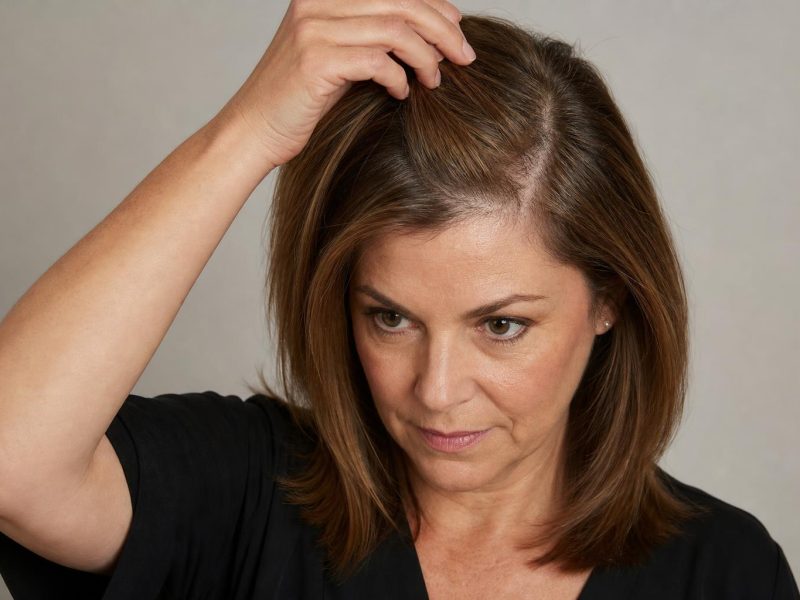
A halo of short hairs standing up along the part or the crown is frequently mistaken for frizz and treated with more product, which does nothing because those are not frizzy long hairs. They are broken ones, snapped mid-shaft, growing back at a fraction of the length of the rest.
The test is simple. Follow one of the offending hairs from the root with your fingers. If it ends abruptly at three or four inches while the surrounding hair is much longer, it broke. Genuine frizz involves full-length hairs that have pushed out of alignment, and you can trace them all the way down. A halo of broken hairs points toward mechanical damage, chemical over-processing, or tension from tight styles, and it needs those causes removed rather than a smoothing serum.
Stylist tip: ask your stylist to check the mid-shaft rather than the ends when you complain about frizz. Damage from heat and chemistry concentrates where the flat iron passes most often, which is usually the mid-lengths, and it can be substantial while the ends still look fine. Trimming the ends when the damage sits higher removes healthy hair and changes nothing.
Two other causes are worth ruling out. Hard water deposits minerals on the cuticle that hold it open and leave hair rough regardless of product, and what hard water does to hair over time is often the missing variable when a good routine stops working after a house move. Split ends also fray upward along the shaft and read as frizz from a distance, which is why managing splits between trims affects how frizzy hair looks even when nothing else has changed.
The Order of Operations
Sequence matters more than any individual product, and most routines fail on order rather than on ingredients.
- Wash with a gentle, sulfate-free cleanser, focusing on the scalp rather than the length.
- Condition, and detangle with fingers or a wide-tooth comb while the conditioner is still in.
- Rinse cool for the last thirty seconds.
- Apply leave-in conditioner to soaking wet hair, before you towel anything.
- Add a cream or gel if your texture needs a cast, raking or scrunching it through.
- Seal with a small amount of oil over the top, concentrating on the mid-lengths and ends.
- Squeeze out water with a microfiber towel or t-shirt, never rubbing.
- Air-dry or diffuse on low airflow, and do not touch the hair until it is fully dry.
FAQ
What Actually Causes Frizzy Hair?
Frizz happens when the cuticle scales on the outside of each strand lift, letting water move in and out unevenly so the shaft swells in patches and strands push out of alignment. The lifting comes from damage, dehydration, humidity or mechanical friction, and each of those needs a different response. Texture affects how visible frizz is but is not the cause.
How Do I Stop My Hair Frizzing in Humidity?
Seal damp hair with a light oil or a silicone-containing serum layered over a water-based leave-in, which slows how fast atmospheric moisture crosses the cuticle. Apply everything while the hair is soaking wet rather than damp, and let it dry undisturbed. Styles that keep the hair contained, such as a braid or a low bun, also outperform loose hair on genuinely humid days.
Does Cutting Your Hair Get Rid of Frizz?
A trim helps if the frizz is concentrated at damaged ends, and it does nothing if the damage sits at the mid-shaft or if the cause is humidity or dehydration. Check where the roughness actually starts by running your fingers down a section. Cutting healthy ends while the real problem is higher up removes length without improving anything.
Is Frizzy Hair Damaged Hair?
Not always. Damage is one of four causes, alongside humidity, dehydration and mechanical friction, and perfectly healthy hair frizzes in humid weather because the cuticle naturally lets some water through. Frizz that is worst at the ends and accompanied by rough texture and fast drying does suggest damage; frizz that appears only outdoors on humid days does not.
Should I Use Oil or Cream for Frizzy Hair?
Both, in that order. A water-based leave-in cream delivers hydration into the hair, and an oil applied over the top seals it in and slows moisture exchange with the air. Applying oil first blocks the cream from working, which is one of the most common sequencing mistakes. Match the quantity to your density, since fine hair needs a drop and coily hair needs considerably more.
Why Is My Hair Frizzy Even Though It Is Not Dry?
Over-moisturized hair frizzes too, particularly if it has been given repeated deep conditioning without any protein. Hair in that state feels soft and limp when wet, stretches noticeably before breaking, and lacks definition. If that describes yours, a protein treatment rather than another mask is the correction, and the frizz usually settles within one or two washes.
Do Silk Pillowcases Really Help with Frizz?
They help with the friction component, which is a real cause of the frizz that appears overnight at the crown and sides. A smooth surface lets hair slide rather than catch, and it draws less moisture out of the hair than cotton does. It will not fix frizz caused by damage or humidity, so treat it as one part of a routine rather than a solution on its own.
Learning how to fix frizzy hair comes down to accepting that the work happens in the shower rather than in front of a mirror afterward. Identify which of the four causes applies to you, apply leave-in and then oil to soaking wet hair, dry it without a terry towel and without touching it, and cover it at night. If a halo of short hairs is the real complaint, check whether they are broken rather than frizzy, because that needs a different fix entirely.
Hair results vary based on your natural hair type, texture, density, and condition. Always consult with a licensed hairstylist before making significant changes, especially with chemical treatments or dramatic length changes. Photos may show styled results that require professional tools and products to replicate.