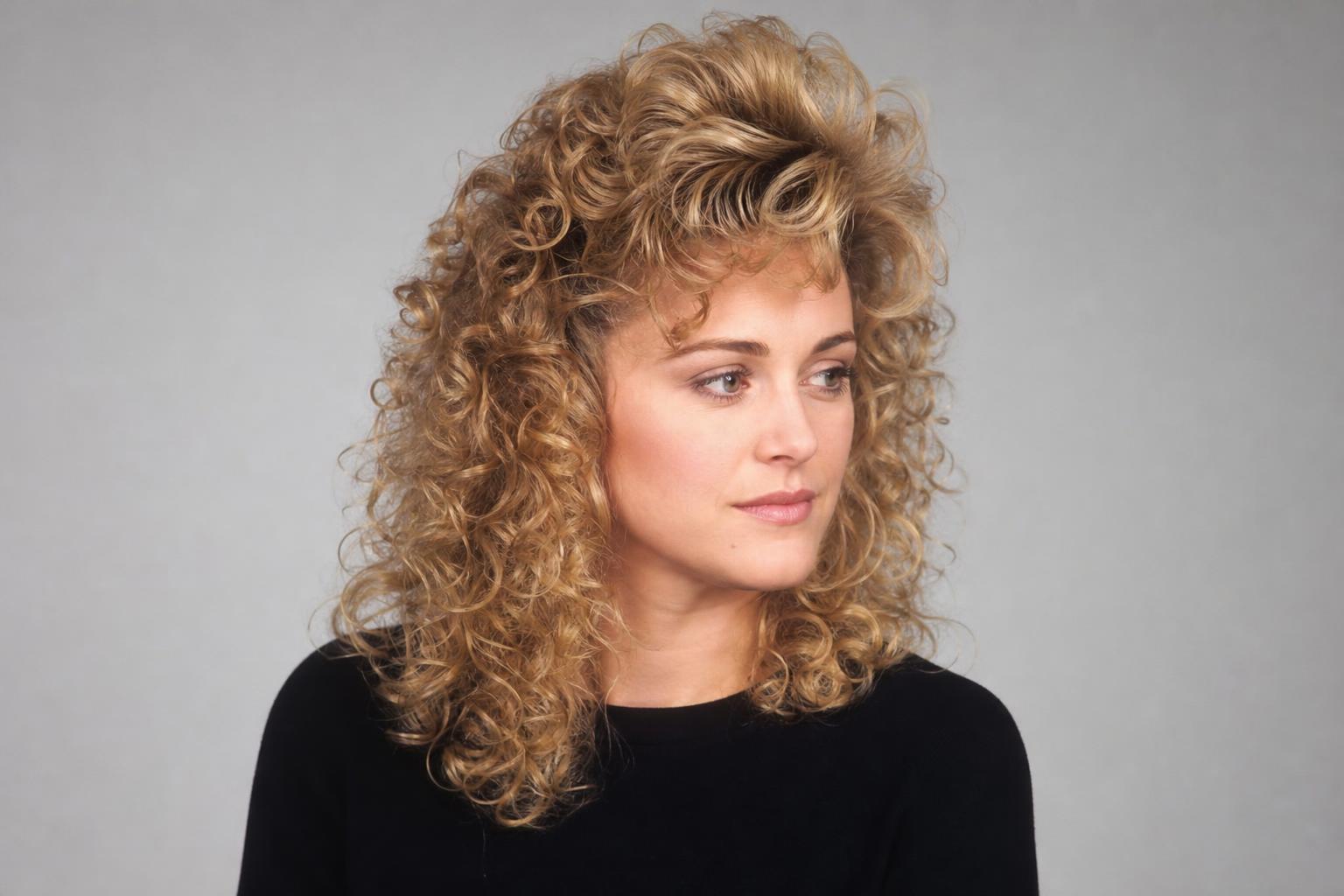
Almost every 80s hairstyle was built on one idea, more volume than hair naturally has, and today’s versions keep the shape while using far less perm solution and hairspray.
80s hairstyles were defined by height and texture: spiral perms, teased crowns, crimped lengths, side ponytails, feathered layers, mullets, flattops and hi-top fades. Most of that volume came from chemical perms, hot rollers, mousse and aerosol hairspray. Here are 25 of the most recognizable 80s hairstyles for women and men, each with a note on how it was done then and how to wear it now without a full perm.
The gallery is grouped into big hair and perms, ponytails and half-ups, feathered and new wave cuts, men’s cuts, and textured and natural styles. After it, you will find how to get 80s volume without chemicals, which styles suit your hair type, the products of the decade and their modern swaps, when to skip a perm, and what to say to your stylist or barber.
| Factor | Details |
|---|---|
| Signature features | Height at the crown, teased bangs, tight curl, crimped texture, contrast lengths |
| Easiest to recreate | Side ponytail, crimped hair, feathered layers, hot-roller curls |
| Needs a stylist or barber | Perms, mullets, flattops, hi-top fades, asymmetrical cuts |
| Styling time | 5 minutes for a side pony; 30 to 45 minutes for teased big hair |
| Avoid if | Hair is bleached, breaking or fine and fragile, for perms and daily teasing |
Big Hair, Perms and Crimps
Big hair was the look of the decade for women. The permanent wave was already about 80 years old by then; according to the Fashion, Costume, and Culture encyclopedia, hairdresser Charles Nestlé introduced his perm machine in 1906. The 80s version pushed it further with tight spiral rods, teasing and firm-hold spray.
1. Spiral Perm with a Teased Crown
Long hair was wrapped vertically around thin rods to create corkscrew curls from root to end, then teased at the crown for extra height. The result was shoulder-length or longer hair that looked twice its real volume. A modern version uses larger rods for looser, bouncier spirals.
2. Dynasty Power Blowout
Oval and heart-shaped faces handled this smooth, round-brushed bouffant best, because the width at the sides balanced a narrower chin. Hair was set on large hot rollers, brushed out and lifted high at the crown. It was the TV soap opera look of the era, and a softer blowout with big velcro rollers gets close today.
3. Teased Mall Bangs
Thick, coarse hair held this upright fan of bangs far better than fine hair, which collapsed by lunchtime. The fringe was curled back over a round brush, teased at the base and sprayed until it stood on its own. A gentler update is a curled, swept-back fringe with light teasing only at the root.
4. Permed Bob
Chin-length hair with a medium perm dries into a round, curly shape with no need for heat. To style it now, scrunch in mousse on wet hair and diffuse on low, then leave it alone. Our guide to perms for short hair covers rod sizes for a softer result.
5. Hot-Roller Barrel Curls
Big, glossy curls set on hot rollers lasted a day or two without any chemicals, which made them the non-perm route to 80s hair. Setting takes about 20 minutes plus cooling time. Brush them out gently for volume or leave them as defined curls.
6. Crimped Hair
The zigzag texture from a crimping iron showed up best on light blonde and highlighted hair, where the ridges catch the light. It was often crimped from ear level down, with the roots left smooth. Use a heat protectant and the lowest temperature that holds the crimp.
Ponytails, Bows and Half-Ups
Ponytails were the everyday version of 80s hair, and most of them still work with no chemical treatment at all. They relied on scrunchies, big bows, banana clips and plenty of height at the crown before the hair was tied back.
7. High Side Ponytail with a Scrunchie
Ask a stylist to leave a few face-framing pieces loose if you want this for an event, because a side pony looks severe with every strand pulled back. At home, gather hair above one ear, tease the ponytail lightly and wrap it in a fabric scrunchie. It takes under five minutes on straight or wavy hair.
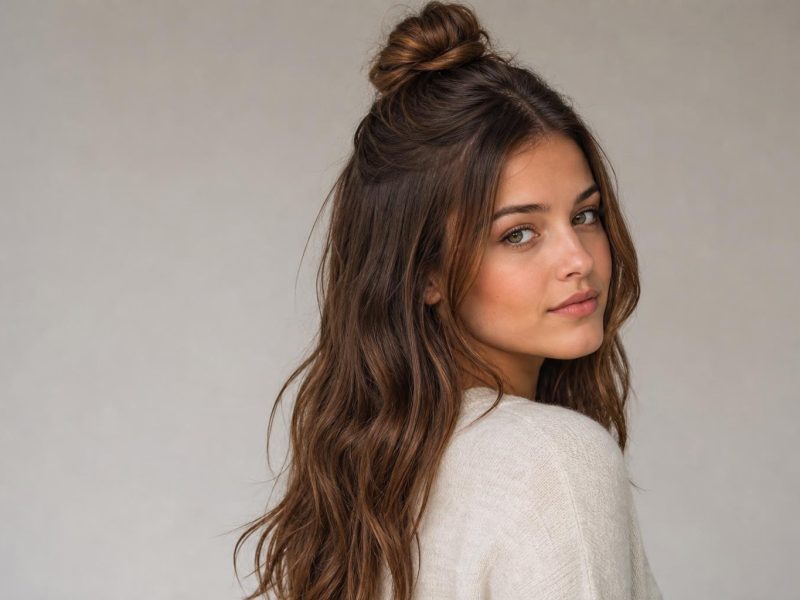
8. Half-Up Pouf with a Bow
Unlike a modern half-up top knot, the 80s version lifted the top section into a teased pouf and fastened it with an oversized bow or clip. The lower half stayed curled or crimped. It suits medium to long hair and works well as a costume look with no cut required.
9. Banana Clip Ponytail
A curved banana clip held thick hair in a vertical ridge of curls down the back of the head, like a mohawk of ponytail. It needs medium to thick hair to fill the clip. Curling the lengths first makes the ridge fuller.
Feathered, Layered and New Wave Cuts
Not every 80s look depended on a perm. Feathered layers carried over from the late 70s, while new wave music brought sharp asymmetry, short spikes and shaved sections. Many of these cuts have come back in softer form.
10. Feathered Layers
Long, face-framing layers brushed back and away from the face flatter round and square faces, because the swept-back lines add height and soften the jaw. The layers start around the cheekbones. Today’s version is close to curtain bangs with long layers.
11. Short Layered Cut with Height on Top
Fine hair gets real lift from this short, layered cut, made famous by Princess Diana in the later 80s. The top layers are cut short enough to stand up and are blow-dried to one side, with the sides tapered over the ears. It needs a trim every 5 to 6 weeks to keep the shape.
12. Short Spiky Layers
Choppy layers of 2 to 3 inches were gelled into points for a punk or pop look. To recreate it, work a strong-hold gel or paste into towel-dried hair and blow-dry the pieces upward, twisting the ends with your fingertips. A matte paste gives a softer modern finish than wet-look gel.
13. Asymmetrical Wedge Bob
One side falls to the jaw while the other is cut above the ear, often with a stacked, wedge-shaped back. The dramatic difference in length needs trims every 4 to 6 weeks, or the short side grows into the long side. Softer asymmetrical bobs keep the idea with less upkeep.
14. Rocker Shag
Heavy, choppy layers and bleached or highlighted streaks gave rock musicians a shaggy mane that looked deliberately messy. The highlights made the layering show up from a distance. Our collection of long shag haircuts shows how the same structure looks today with softer color.
Men’s 80s Haircuts
Men’s 80s hair ranged from office-sharp to rock-star wild. The mullet, flattop and hi-top fade are the three most copied today, and each one depends on precise barbering rather than product.
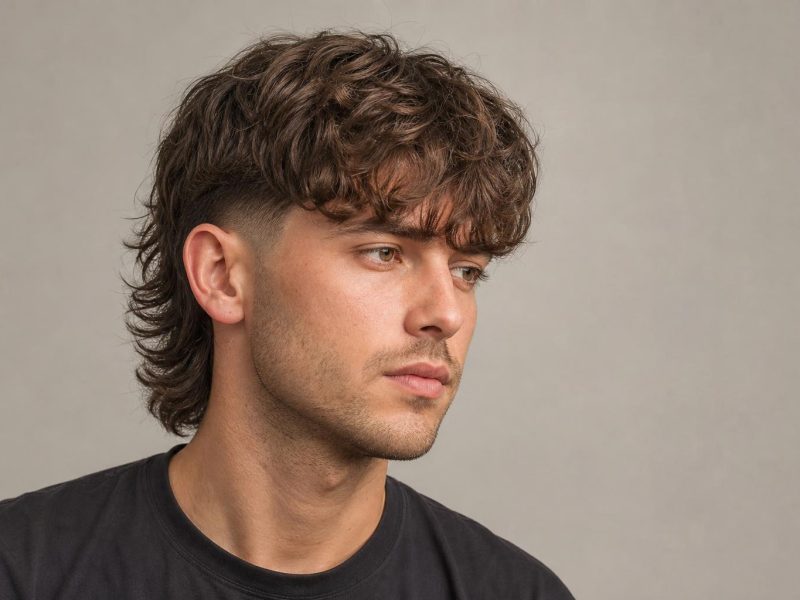
15. Classic Mullet
Tell your barber exactly where you want the short front to stop and how far down the back should fall; “short on top and sides, long at the neck” alone gets you anything from subtle to extreme. The original was short at the front and sides with 3 or more inches over the collar. Our mullet cutting guide explains the sections.
16. Flattop
Where a crew cut is rounded on top, the flattop is cut to a level plane, like a table, with the sides clipped close. Hair on top is usually half an inch to 1.5 inches, stood up with a firm wax. It needs thick, coarse hair that grows upright.
17. Hi-Top Fade
Coily hair is grown out on top, shaped with clippers and a comb into a tall, flat-topped block, then faded down tight on the sides. The height often reached 4 inches or more. It was a defining hip-hop look of the late 80s and is shaped by a barber every 2 to 3 weeks.
18. Rocker Perm
Long-faced men wore this permed mane well, because the curly width at the sides balanced the length of the face. Shoulder-length hair was permed into loose curls and left full. A modern version uses a body wave rather than a tight perm.
19. New Wave Swoop Fringe
Straight, fine to medium hair was grown long on top and blow-dried and sprayed into swooping wings, as worn by the band A Flock of Seagulls. The sides were kept shorter. It is mostly a costume look now, set with a round brush and strong hairspray.
20. Mohawk with Liberty Spikes
The center strip was grown several inches long and set into separate spikes with gel, soap or strong spray, while the sides were shaved. For a party, twist small sections of product-coated hair and blast them with a hairdryer on cool. A mohawk fade is the wearable modern cousin.
21. Slicked-Back Wet Look
Corporate men combed medium-length hair straight back with gel or pomade for a glossy, wet finish. It needs 3 to 5 inches on top and a trim every 4 to 6 weeks at the sides and neck. A water-based pomade washes out more easily than the heavy gels of the time.
22. Rattail with a Short Crop
A thin tail of hair was left long at the nape, sometimes braided or bleached a lighter color, while the rest of the head was cropped short. The contrast was the whole point. It is one of the easiest 80s looks to reverse with a single trim.
Textured and Natural 80s Hairstyles
Some of the decade’s most influential styles came from Black hair culture, from chemically loosened curls to sharp asymmetric cuts. These looks need a stylist or barber experienced with textured hair.
23. Jheri Curl
Loosening tightly coiled hair into glossy, wet-look curls took a two-step chemical process in the original Jheri curl, named after chemist Jheri Redding. It needed curl activator every day to stay moist. If you want it today, ask a stylist about a curl reformation only if you accept that upkeep; most people now get the defined look with a wash-and-go and a curl cream.
24. Tapered Afro
Compared with the large rounded afros of the 70s, the 80s version was shaped shorter and tapered at the sides and back. It keeps natural coils with no chemicals. Our guide to the afro taper fade shows how barbers refine it today.
25. Asymmetrical Cut with a Shaved Side
Clipped close on one side and swept long across the forehead on the other, this cut was usually worn on relaxed hair, as worn by hip-hop groups like Salt-N-Pepa. The long side was blow-dried smooth or curled under. On natural hair, the same line works with a short tapered side and a longer twisted top.
How to Get 80s Volume Without a Perm
Most people who want 80s hair for a party or a photo shoot do not want a perm that lasts three to six months. Heatless sets, hot rollers and root teasing give 80s volume for a day or two. These steps work on straight or wavy hair that is at least shoulder length.
- Wash and apply a golf-ball-sized amount of volumizing mousse to damp roots and lengths.
- Set small sections in foam rollers or tight braids overnight, or use hot rollers for 20 minutes on dry hair.
- Release the curls once they are completely cool and rake them apart with your fingers for width.
- Tease the roots at the crown with a fine-tooth comb, pushing short strokes toward the scalp, then smooth the top layer over it.
- Finish with a flexible-hold hairspray, spraying under sections rather than on top to keep the hair soft.
Stylist tip: Tease with a comb that has wide spacing, and brush it out the next day only after applying a conditioner or detangler to dry hair. Most of the breakage people blame on backcombing actually happens when they rip out the knots.
Modern Ways to Wear 80s Hair
Several 80s looks are back in softer form. The difference is usually looser curl, less hairspray and shorter contrast between lengths. Use this table to find the everyday version of the look you like.
| 80s Original | Modern Update | What Changed |
|---|---|---|
| Spiral perm | Body wave or loose perm | Bigger rods, softer curl, no teasing |
| Feathered layers | Curtain bangs with long layers | Less blow-dried flip, more movement |
| Classic mullet | Modern or shag mullet | Blended layers instead of a hard step |
| Teased mall bangs | Swept-back curled fringe | Root lift only, no stiff fan |
| Crimped hair | Mini waver texture | Softer S-waves instead of sharp zigzags |
| Hi-top fade | Shorter high top with a taper | Lower height, softer edges |
| Side ponytail | Low side pony with a silk scrunchie | Placed lower, less teasing |
The mullet is the clearest example of an 80s cut that never fully left. Our gallery of modern mullets for men shows how barbers now blend the back into the sides.
Which 80s Styles Suit Your Hair Type
80s volume behaves very differently depending on your texture. Match the style to your hair first and you will spend less time and product getting it to hold.
| Hair Type | Best 80s Styles | Harder to Pull Off |
|---|---|---|
| Fine and straight | Short layered cut, side ponytail, crimped hair | Teased mall bangs, banana clip ponytail |
| Thick and straight | Flattop, mullet, power blowout, mall bangs | Crimping, which takes a long time on dense hair |
| Wavy | Feathered layers, rocker shag, hot-roller curls | Sleek wet look, which fights the wave |
| Curly | Big curly volume without a perm, curly mullet, half-up pouf | Crimping and feathering, which need straight hair |
| Coily | Hi-top fade, tapered afro, asymmetric shaved side | Spiral perm, which is not needed on coily hair |
80s Hair Products Then and Now
Recreating 80s hair is much easier on your hair than it was the first time, because the products are gentler. Here is what people used then and what does the same job today.
| Then | What It Did | Gentler Swap Today |
|---|---|---|
| Extra-hold aerosol hairspray | Locked teased hair in place for a full day | Flexible or brushable hairspray |
| Styling mousse | Root volume and curl hold | Alcohol-light volumizing mousse |
| Crimping iron | Zigzag texture | Ceramic crimper or mini waver with a temperature dial |
| Tight spiral perm | Permanent curl for 3 to 6 months | Foam rollers, braids or hot rollers |
| Wet-look gel | Slicked or spiked hold | Water-based pomade or matte paste |
| Curl activator | Kept Jheri curls moist and glossy | Leave-in conditioner and curl cream |
When a Perm or Heavy Teasing Is Not a Good Idea
The fun of 80s hair wears off quickly if it damages your real hair. These are the situations where a stylist would steer you to a temporary version.
- Bleached or highlighted hair: a perm on top of lightener can leave hair gummy and breaking, so use rollers or a curling wand instead.
- Fine, fragile hair: daily teasing roughs up the cuticle and snaps strands at the crown, so save it for one-off events.
- Recent relaxer or keratin treatment: another chemical service too soon can overprocess the hair, so wait until a stylist has checked its condition.
- You want it for one night: a perm lasts months and grows out with a visible line, so a hot-roller set is the better choice for a party.
- Very short grow-out tolerance: mullets and asymmetrical cuts pass through awkward stages when you grow them out, so try a softer version first.
What to Tell Your Stylist or Barber
80s names mean different things to different stylists. Describe the length, the shape and the finish, and bring a photo of both the original look and the modern version you want.
- For a soft perm: “I’d like a loose body wave with large rods, not tight spirals. I want volume that looks natural when I air-dry.”
- For feathered layers: “Long layers starting at my cheekbones, cut so they fall back and away from my face, with curtain bangs.”
- For a mullet: “Short and textured on the sides, about 2 inches on top, and 3 inches longer at the back, blended rather than a hard step.”
- For a hi-top: “About 3 inches on top shaped flat and square, with a high taper on the sides.”
Stylist tip: Ask your stylist to show you how to set the look at the end of the appointment. Most 80s styles depend more on how you dry and set them than on the cut itself, and five minutes of instruction saves weeks of guessing.
FAQ
What Were the Most Popular 80s Hairstyles?
The most popular 80s hairstyles were spiral perms, teased big hair, side ponytails, feathered layers, crimped hair, mullets, flattops and hi-top fades. Women focused on height and curl, while men wore everything from slicked-back hair to mohawks. Scrunchies, bows and banana clips were the main accessories.
How Do I Get 80s Hair Without a Perm?
Set your hair in foam rollers, braids or hot rollers, then tease the roots at the crown. Volumizing mousse on damp hair and a flexible hairspray at the end hold the shape for a day or two. A crimping iron adds texture if you want the crimped look instead.
What Were 80s Bangs Called?
Teased 80s bangs are often called mall bangs, mall hair or claw bangs. They were curled back, teased at the base and sprayed to stand up in a fan. A softer, swept-back curled fringe is the modern version.
What Was the Most Popular 80s Hairstyle for Men?
The mullet is the men’s hairstyle most associated with the 80s. The flattop, hi-top fade, slicked-back wet look and permed rocker hair were also widely worn. The mullet and hi-top have both returned in blended, lower-contrast versions.
Are 80s Hairstyles Coming Back?
Yes, several 80s shapes are popular again in softer form. Modern mullets, curtain bangs with feathered layers, loose perms and scrunchie ponytails all trace back to the decade. The main difference is less teasing and lighter-hold products.
How Long Did 80s Perms Last?
A perm usually lasts about 3 to 6 months before the new growth at the roots is noticeably straighter. The curl itself stays in the permed lengths until they are cut off. Looser modern perms relax faster than the tight spirals of the 80s.
The easiest 80s hairstyles to try today are the ones you can wash out: hot-roller volume, a crimped section, a side ponytail or feathered layers. For a lasting change, choose a softened cut such as a modern mullet or a loose perm, and bring both the original 80s photo and a current version to your stylist so the result looks like now, not a costume.
Hair results vary based on your natural hair type, texture, density, and condition. Always consult with a licensed hairstylist before making significant changes, especially with chemical treatments such as perms and relaxers. Photos may show styled results that require professional tools and products to replicate.