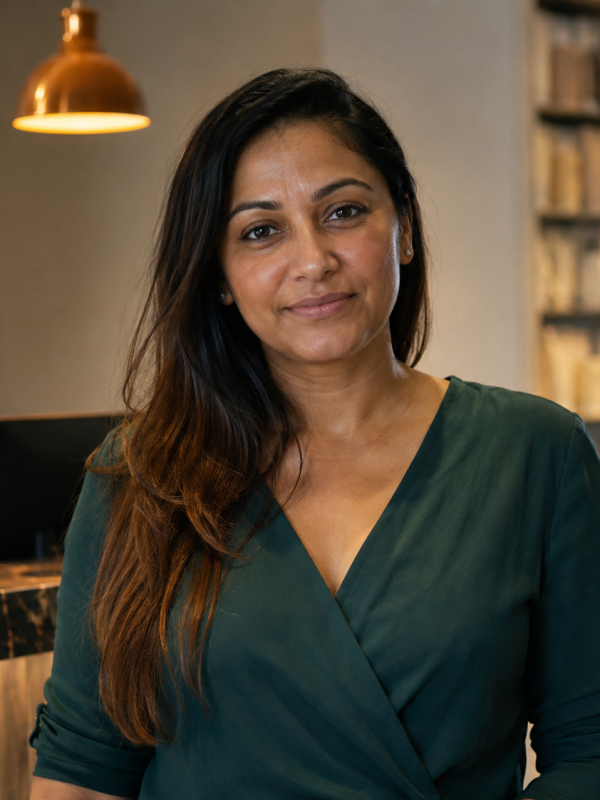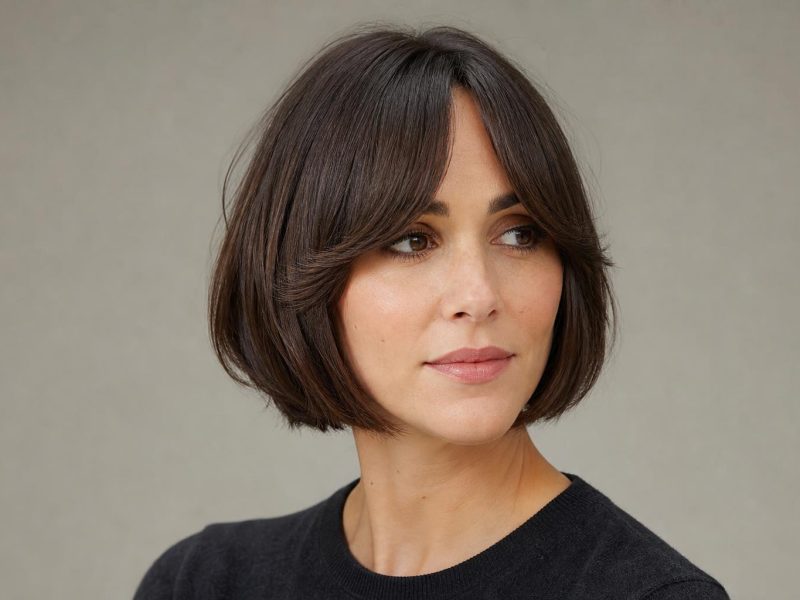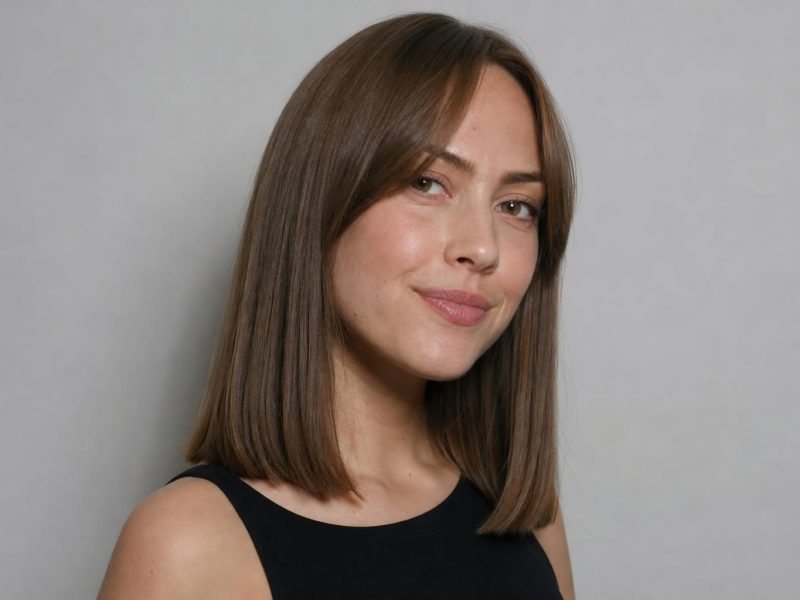



Short hair perms have more variation than most people realize: a body wave uses large rods to create soft S-curves, a spiral perm wraps the hair vertically for tight ringlets, and a Korean digital perm uses heated rods to produce bouncy, end-focused waves. These 30 looks are organized by perm type so you can match the technique to your hair texture, length, and maintenance preference.
Perms work on short hair starting at 2 to 3 inches of length, with longer short hair (chin-length bobs and lobs) supporting the full range of techniques. The variation in results comes almost entirely from rod size, wrapping angle, and solution strength. A 5/8-inch rod with a standard cold wave solution creates something very different from a 1.5-inch rod with a gentle acid formula, even on the same head of hair.
Here are 30 short hair perm looks across five technique categories, with a face shape guide, a maintenance table, a limiting section, and the exact consultation language that gets your stylist to the result you actually want.
| Factor | Details |
|---|---|
| Minimum length | 2 to 3 inches; longer short hair supports more perm types |
| Technique types | Body wave, spiral, Korean digital, loose wave, root and texture perm |
| Duration | Cold wave: 8–12 weeks; digital perm: 4–6 months |
| Session time | 2 to 4 hours depending on technique and hair density |
| Not suitable for | Severely bleached hair, active scalp conditions, hair under 2 inches |
What Makes a Modern Short Hair Perm Different
The perm of the 1980s used alkaline solution and small rods to produce tight, uniform curls across the entire head. Modern short hair perms are built around specificity: which sections get permed, what rod size produces the wave you want, and whether the solution is a cold wave formula or a heat-activated digital process. The difference between a dated perm and a current one is almost always in how deliberately precise the technique was applied.
The three most common modern techniques for short hair are the cold wave body perm, the spiral perm, and the Korean digital perm. A cold wave body perm wraps large rods horizontally through the hair, produces soft S-curves, and processes without heat. A spiral perm wraps the hair vertically around smaller rods to create corkscrew ringlets. A Korean digital perm applies controlled heat from an electronic machine during processing to create bouncy, end-focused waves with straighter roots. Understanding which technique produces which result is the first decision in a successful perm consultation. If you are also weighing a cut change, note that layered cuts for curly hair follow a similar logic: the shape of the cut determines where the texture sits, so the stylist should design the cut around the perm pattern, not the other way around.
Stylist tip: Modern perm solutions come in three categories: alkaline (stronger, faster processing, more curl definition), acid wave (gentler, longer processing, softer result), and thioglycolate-free or amino-acid formulas for fine or sensitive hair. Ask your stylist which formula they plan to use and why it suits your hair type before the rods go in. The solution choice, not the rod size, is the most important factor in whether your perm damages your hair.
Body Wave Perms
Body wave perms use the largest available rod sizes, typically 5/8 inch to 1.5 inches in diameter, to create the loosest possible wave pattern. The result falls somewhere between naturally wavy hair and a traditional perm, adding volume and texture rather than defined curls. Body waves suit short bobs, lobs, and longer pixie styles with at least 3 inches of length.
1. Body Wave Bob with Soft S-Curves
Body waves on a short bob place large-rod wave patterns through chin-length to shoulder-length hair, creating soft S-curves that give the appearance of naturally thick, voluminous texture. Rods measuring 5/8 inch to 3/4 inch produce the loose wave signature of this technique; anything smaller shifts the result toward a tighter curl pattern. Processing time runs 20 to 30 minutes for a cold perm solution and up to 45 minutes if a gentler acid wave formula is used on previously processed hair.
2. Body Wave Placement for Round Faces
Round faces gain visual length from a body wave when the wave pattern concentrates toward the crown and ends rather than sitting tightly at the sides of the head. A bob with a center part and crown volume draws the eye upward, counteracting the horizontal emphasis a round face shape naturally carries. Ask your stylist to set the rods at the crown using a slight root-lift technique before applying solution, so the finished wave creates height rather than width.
3. Body Wave for Fine Hair
Fine hair holds a body wave well when the solution matches the hair’s existing porosity, since fine strands process faster than coarse hair and can over-process if an alkaline formula designed for resistant hair is used. On fine hair, a body wave adds volume and texture without requiring daily product application, making it one of the most practical chemical services for naturally flat, low-density short hair. The trade-off is grow-out visibility: the contrast between new flat growth and permed texture becomes noticeable within 6 to 8 weeks.
4. Air-Dry Styling for Body Wave Perms
Air-drying a body wave produces the most natural result. After washing, apply a curl-defining cream or light mousse to soaking-wet hair and scrunch upward section by section, then leave the hair completely undisturbed until it dries. Touching it while wet causes the wave pattern to frizz and separate before it sets. A diffuser attachment on low heat can accelerate the process without disrupting the wave structure if time is limited.
5. Body Wave Maintenance and Grow-Out Timeline
A body wave on short hair typically lasts 8 to 12 weeks before the wave pattern relaxes noticeably at the ends. Root grow-out is the first visible change, appearing within 6 to 8 weeks on fine or oily hair. Trimming the ends every 6 to 8 weeks helps maintain the shape of the permed section and prevents the wave from looking uneven as the unpermed roots lengthen. Color-treated hair processes faster and loses wave definition earlier than unprocessed hair, shortening the effective timeline by 2 to 4 weeks.
6. What to Tell Your Stylist for a Body Wave
Tell your stylist: “I want a body wave using the largest rod size appropriate for my hair length. I want loose S-curves, not ringlets, and I want it to look like natural volume rather than a traditional perm.” This framing directs the stylist toward a large rod and a lower-strength or shorter-process solution. Also confirm whether the stylist plans to use an alkaline or acid wave formula, since acid wave is the safer choice for first-time perms and color-treated hair.
Spiral and Root Perms
Spiral perms wrap the hair vertically around the rod from root to tip rather than horizontally, producing defined corkscrew or ringlet curl. Root perms target only the new growth at the scalp, adding lift without treating the length. Both techniques are distinct in purpose: spiral perms add curl throughout, root perms add volume at the crown.
7. Body Wave vs. Digital Perm: How They Differ
Cold body waves apply perm solution while the hair sits wrapped on rods at room temperature, then neutralize to lock in the wave. Digital perms pass heat through electronic rods during processing, bonding the wave pattern more deeply and creating end-focused curl with relatively straighter roots. Cold body waves produce more uniform texture from root to tip. Digital perms create the bouncy, defined end-curl associated with Korean perm aesthetics. On short hair, the choice comes down to whether you want consistent all-over texture or a specific end-emphasis silhouette.
8. Spiral Perm on Dark Uncolored Hair
Dark or unprocessed hair holds a spiral perm longer than pre-lightened hair because the intact cuticle layer resists the solution slightly, resulting in a more controlled process and a longer-lasting curl. On dark brown or black hair, a spiral perm creates highly defined ringlets that stay visible for 4 to 6 months with proper care. The contrast between a dark base and the defined curl structure also creates visual density, making hair appear fuller than before the service.
9. How Spiral Perms Work on Short Hair
Spiral perms wrap each section of hair vertically around the rod from root to tip, producing a helix shape rather than a standard wave. The wrapping angle is the key technical variable: vertical creates the corkscrew pattern, horizontal creates a wave. On short hair, spiral perms work best when the hair is at least 3 to 4 inches long, providing enough vertical distance on the rod to form a complete curl. Hair shorter than 3 inches can be spiral-permed but tends to produce a tighter, less defined texture because the rod circumference has more influence over the shorter section.
10. Spiral Perm for Heart-Shaped Faces
Heart faces have a wider forehead and narrower jaw, which means curl positioned at cheekbone or chin level adds volume at a flattering point. A curl pattern that tightens at the roots and softens toward the ends places visual volume at jaw level, which helps balance a narrower chin. If your hair is shorter than 3 inches at the sides, ask your stylist whether a root perm or soft body wave creates better proportions for your face shape before committing to a full spiral.
11. Spiral Perm on Thick Short Hair
Thick hair carries a spiral perm in a way that produces dramatic, high-volume ringlet texture, because the density of the base adds visual weight to each curl. One practical consideration is that the number of rods required significantly extends the service time, since each section must be wrapped individually to ensure a consistent curl pattern. On very thick hair, a stylist may section the hair into smaller zones before wrapping to ensure even solution penetration from root to tip.
12. Diffusing a Spiral Perm for Defined Ringlets
Cup individual spiral curls inside the diffuser bowl rather than pressing the attachment flat against the head. Hold each section in the bowl for 20 to 30 seconds before moving to the next. Agitating the curls while diffusing stretches and frizzes the spiral pattern; the goal is to dry without disturbing the helix structure. Apply a light-hold curl gel to soaking-wet hair before diffusing to add slip between strands and prevent individual ringlets from separating during the drying process.
Korean and Digital Perms
Korean and digital perms use a heat-activated machine during the perm process to create bouncy, end-focused waves with relatively straight roots. The technique is popular for creating K-drama-style hair: voluminous at the ends, lighter at the crown, with a soft and modern curl that does not appear traditionally permed.
13. Root Perm Between Full Perm Services
A root perm applies solution only to the new growth at the scalp, leaving the previously permed length untouched. Root perms extend the effective life of a spiral or body wave perm by 6 to 8 weeks and address the flat-root problem that appears as the hair grows out. They are gentler than a full re-service because they avoid double-processing already-treated sections, reducing the cumulative chemical exposure that builds over multiple perm appointments.
14. What to Tell Your Stylist for a Spiral Perm
Say to your stylist: “I want a spiral perm with vertical rod wrapping from root to tip to create defined ringlets. I do not want horizontal wrapping, and I do not want waves. Please confirm you are using a spiral wrapping technique before you begin.” Specifying vertical wrapping matters because some stylists default to horizontal even for a service labeled “spiral,” which produces a different result. Smaller rods create tighter ringlets; medium rods produce a looser spiral that softens into a natural-looking curl over time.
15. Cold Perm vs. Digital Perm: Which Lasts Longer
Cold perms process at room temperature and create a uniform wave from root to tip that typically lasts 8 to 12 weeks on short hair. Digital perms heat the rods to a preset temperature and bond the wave pattern more deeply into the cuticle, producing results that last 4 to 6 months. The extended duration of a digital perm comes with the requirement that the hair be in strong enough condition to tolerate combined heat and chemical processing; fine, damaged, or heavily highlighted hair may need a thorough conditioning pre-treatment before a digital perm is advisable.
16. Color Timing Around a Digital Perm Service
Color services and digital perm services should be spaced at least two weeks apart to prevent compounding chemical stress on the hair shaft. Most stylists recommend completing the perm first, waiting two to three weeks for the wave bonds to stabilize, then scheduling the color appointment. Perming previously lightened or highlighted hair is possible but requires a stylist experienced with color-treated textures; bleach-affected hair processes much faster than the perm formula anticipates. Caramel highlights over a short digital perm create a warm, dimensional look, but timing between the two services matters for hair integrity.
17. Korean Digital Perm on Short Hair
Korean digital perms apply heat through electronic rods during the perm process to produce end-focused bounce with straighter roots, the silhouette associated with K-drama and K-pop styling. On short hair, this technique adds fullness and movement at the perimeter rather than across the entire head, producing a rounded shape that photographs well from the front and side. The wave definition in a Korean digital perm typically peaks 4 to 6 weeks after the service and softens gradually to a more relaxed wave over months.
18. Korean Digital Perm for Square Face Shapes
Square faces benefit from the end-focused curl of a Korean digital perm because soft movement at jaw level visually rounds the corners of a wide, angular jawline. The straighter roots prevent added width at the crown, keeping the visual emphasis at the lower perimeter of the face rather than the top. Avoiding tight all-over curl is especially important for square faces: crown-heavy volume makes the face appear taller and wider simultaneously, which amplifies squareness rather than softening it.
Loose Wave and Beach Perms
Loose wave perms use the largest rod sizes available, often 1 inch or larger, to create the softest possible wave pattern. The result resembles naturally wavy hair rather than a traditional perm, making these techniques the most popular entry point for people who want texture without the defined curl of a classic perm.
19. Digital Perm on Coarse or Resistant Hair
Coarse hair requires a longer processing window for digital perms because the thicker cuticle layer resists solution penetration more effectively than fine or medium-textured hair. Stylists typically extend processing time by 10 to 15 minutes and may use a slightly stronger concentration to break down the cuticle bonds before the heat phase activates. Coarse hair also tends to hold digital perm results longer than fine hair, with wave definition often lasting 5 to 6 months before noticeable relaxation.
20. Styling a Korean Digital Perm for Bounce
Let the hair air-dry in the direction the wave falls naturally, without scrunching or disturbing the curl pattern while wet. Korean digital perms respond best to a light blow-out on low heat once the hair reaches about 80 percent dry, using a round brush or your fingers to lift the wave and add the characteristic end-bounce. A lightweight volumizing spray at the roots during this step prevents the curl from collapsing at the crown. Avoid twisting or pulling individual sections while wet; disruption while the wave is reforming after washing creates uneven texture at the next dry.
21. Post-Service Wash Routine for Digital Perms
Wait at least 48 hours after a digital perm service before washing the hair. Washing before the wave bonds have finished forming breaks the curl pattern in unpredictable ways, causing uneven or frizzy results that cannot be corrected without redoing the service. After the initial 48-hour window, use a sulfate-free shampoo and a moisture-rich conditioner on every wash. A weekly deep-conditioning mask helps compensate for the increase in porosity that heat-and-chemical processing creates in the treated sections.
22. What to Tell Your Stylist for the Loosest Wave
Tell your stylist: “I want the loosest possible perm wave. Use your largest rod size, and I am comfortable stopping the processing time early if the curl looks looser than expected at 15 minutes.” Requesting an early process stop is one of the most effective ways to soften the result, since wave definition tightens with processing time. On a wolf cut with bangs, a loose perm wave adds movement to the layers without making the texture appear overdone.
23. Loose Wave Perm vs. Heat-Styled Beachy Waves
A loose perm wave is permanent until it grows out, meaning you have the texture every day without styling effort. A beachy wave created with a curling iron lasts one day and requires daily repetition to maintain. The perm delivers low-maintenance texture on most days, but it also means the wave does not change day to day the way a heat-styled wave can. People who want texture on some days and smooth on others may find a permanent wave more constraining than expected, since straightening a fresh perm repeatedly can relax the wave pattern prematurely.
24. Loose Wave Perm on Balayage Short Hair
Short hair with balayage on brown hair takes on additional dimension when a loose wave perm is added, because the alternating light and dark sections of the color show through the peaks and valleys of the wave pattern. The movement makes the tonal variation appear more dimensional than it does on flat, straight hair. Schedule the perm first and the balayage at least two weeks afterward, confirming with your colorist that the perm bonds have stabilized before any bleach is applied near the previously treated sections.
Volume and Texture Perms
Volume and texture perms target lift and root movement rather than defined curl patterns. Root perms add lift at the scalp while leaving the length largely untouched. Texture perms through the mid-lengths and ends add roughness and visual density to fine or flat hair. Both are lower-commitment than full spiral or body wave services and suit people who want structural texture without dramatic curl.
25. How a Root Perm Adds Volume Without Curl
A root perm applies solution from the scalp to approximately 2 inches of new growth only, without treating the length. The goal is lift at the root rather than curl through the ends. On short hair with a flat crown, a root perm creates standing volume that blow-drying and dry shampoo alone cannot replicate without repeated daily effort. The solution is applied to just the root sections and processed for 10 to 20 minutes before neutralizing, leaving the length unaffected.
26. Root and Texture Perm for Oblong Faces
Oblong faces need width rather than height. A texture perm applied with deliberate side-diffusion technique adds volume at the temples and cheeks, working against the vertical emphasis an oblong face already carries. Styling the permed texture outward rather than upward, using a diffuser angled at 45 degrees rather than held directly underneath, distributes volume horizontally instead of pushing it toward the crown. Curtain bangs combined with a side-diffused texture perm create additional horizontal width at the forehead, completing the proportional shift.
27. Root Perm for Fine Flat Short Hair
Fine hair gains more noticeable volume from a root perm than from any other perm type because the lift occurs exactly where fine hair fails most visibly: at the scalp, where fine strands lie flat and create the appearance of sparse density. Even a modest root perm produces a perceivable increase in volume because lifted roots prevent the hair from collapsing against the head. Request a mild acid-wave solution for fine hair root perms; alkaline solutions process too quickly on fine strands and can create tighter-than-wanted texture at the crown.
28. Texture Perm Styled with Sea Salt Spray
A texturizing perm on a shullet or layered short cut creates a deliberately undone, high-texture effect when styled with a small amount of sea salt spray on damp hair. Scrunch the spray through the roots and mid-lengths, then air-dry without touching until completely dry. The perm texture and the salt spray’s hold reinforce each other, producing more visual volume than either achieves alone.
29. First Two Weeks After a Perm: What to Avoid
The first 48 hours after a perm are the highest-risk period for wave disruption, since the bonds formed during processing are still stabilizing. Beyond the initial window, the full two weeks matter for structural longevity: avoid swimming in chlorinated water, using hot tools above 350 degrees Fahrenheit, and pulling the hair into a tight ponytail during this period. After two weeks, the wave pattern is considered set and daily styling has less impact on long-term wave integrity. Schedule the first post-perm haircut at 6 weeks to shape the growth without cutting into the freshly permed sections.
30. Why a Strand Test Matters Before Any Perm
Before agreeing to any perm service, ask your stylist to perform a strand test on a small, inconspicuous section of hair. A strand test applies the proposed solution to a single piece of hair for the planned processing time, then checks whether the strand maintains its integrity without excessive stretching or breakage and whether the curl pattern that forms matches your expectations. If your hair has been chemically colored, relaxed, or heavily highlighted, a strand test is not optional: it is the most reliable way to predict how your full head of hair will respond before the service is applied across all sections.
Which Perm Works Best for Your Face Shape
Volume placement in a perm works the same way volume placement in a blowout does: where the texture sits relative to the face determines whether it flatters or disrupts the natural proportions. The table below maps effective perm types and placement approaches by face shape.

| Face Shape | Best Perm Type | Placement Tip |
|---|---|---|
| Oval | Any perm type; most flexible face shape for texture | No placement restrictions; choose based on desired texture and maintenance |
| Round | Body wave or digital perm with center part and crown volume | Concentrate volume at the crown; minimize width at the sides |
| Square | Korean digital perm (end-focused, soft jaw-level wave) | Curl should soften and round the jaw corners; avoid tight crown curl that adds height and width together |
| Heart | Soft body wave or loose wave at the ends and mid-length | Volume at chin level balances a narrow jaw; avoid wide curl placement at the temples |
| Oblong | Texture perm with side-diffusion for horizontal volume | Maximize width at temples and cheeks; avoid all-over curl that adds vertical height |
| Diamond | Body wave or loose wave with volume at the temples | Add width at the widest natural point; avoid tight curl at the cheekbones that narrows the mid-face |
When a Perm Is NOT the Right Choice
Perms are suitable for most hair types and lengths, but certain conditions make a perm inadvisable or significantly limit which technique can be used safely.
- Severely bleached or over-processed hair: Hair that has been heavily lightened or repeatedly chemically treated is too porous to hold a perm reliably. Perm solution on very porous hair can cause significant breakage, since the cuticle offers little resistance to the chemical. If your hair feels mushy or stretches without snapping back when wet, a perm is not safe until the hair’s condition has been rebuilt through protein and moisture treatments over several months.
- Active scalp conditions: Psoriasis, seborrheic dermatitis, eczema, or any open wound or irritation on the scalp rules out perm services until the condition has cleared. Perm solution on an irritated scalp causes significant discomfort and can worsen the underlying condition. Always disclose scalp conditions to your stylist before any chemical service.
- Hair under 2 inches: Perm rods require enough hair to wrap at least one complete revolution for the curl to form properly. Hair shorter than 2 inches cannot wrap around even the smallest rod, producing a patchy result rather than defined texture. At a very short pixie length, consult with your stylist about whether your specific length is sufficient for the technique you want before booking.
- Freshly relaxed hair: Applying a perm over a chemical relaxer is not recommended without significant time between services and a professional assessment of hair integrity. Relaxers permanently straighten the hair’s bonds; perms permanently reform them. Layering these two services on already-processed hair creates a high risk of breakage. A minimum of 6 months between a relaxer and a perm is a reasonable starting point, with a strand test required before proceeding.
What to Tell Your Stylist
Perm consultations fail most often when the client uses general terms and the stylist interprets them differently. “A little wave,” “natural-looking curl,” and “not too tight” all mean different things to different stylists. The scripts below are technique-specific and give precise technical direction.
For a loose body wave: “I want a body wave using your largest available rod size. I want S-curves, not ringlets, and I am comfortable stopping the processing time early if the curl looks looser than expected at 15 minutes.”
For a spiral perm: “I want vertical rod wrapping to create corkscrew ringlets, not horizontal wrapping for waves. Please confirm you are using a spiral wrapping technique before you begin.”
For a Korean digital perm: “I want a digital perm with end-focused wave and straight roots. I want the bounce to sit at the ends and mid-length, not at the crown.”
For a root perm: “I want solution applied only to the root area, approximately 2 inches from the scalp. I do not want the length touched.”
Stylist tip: Bring at least two reference photos to your perm consultation: one of the texture you want, and one of a texture you do not want. The contrast between the two photos communicates more clearly than any verbal description, since stylists interpret language through the lens of what they do most frequently. Without a reference photo, a salon that mostly does tight perms will interpret “a little wave” accordingly.
Perm Maintenance for Short Hair
The first 48 hours after a perm are the most critical for wave integrity. After that, ongoing maintenance determines how long the texture lasts and how healthy the hair remains between services.
| Period | What to Do | What to Avoid |
|---|---|---|
| First 48 hours | Keep hair completely dry; do not wash, wet, or style | Any water contact; ponytails or clips; heat tools |
| First 2 weeks | Sulfate-free shampoo; wide-tooth comb on wet hair; satin pillowcase | Chlorine pools; heat tools above 350°F; tight updos |
| Ongoing | Weekly deep conditioning mask; curl-defining product on wet hair; trim every 6–8 weeks | Sulfate shampoos; heavy oils that weigh curl down; repeated straightening |
| Re-service timing | Cold wave: every 8–12 weeks; digital perm: every 4–6 months; root perm: every 6–8 weeks | Double-processing without a strand test; scheduling too soon after a color service |
FAQ
How Long Does a Perm Last on Short Hair?
A cold wave perm on short hair lasts 8 to 12 weeks before the wave pattern relaxes noticeably. A digital or Korean perm lasts 4 to 6 months. The shorter the hair, the faster the permed sections grow out and get trimmed away, which is why perm results appear to fade faster on short hair than on long hair. The chemical result in the treated sections is permanent; what changes over time is the proportion of permed hair versus new growth.
Can I Get a Perm on Colored or Bleached Hair?
Perming colored hair is possible in most cases, but bleached or heavily lightened hair requires a professional assessment before proceeding. The more porous the hair, the faster and more intensely perm solution processes. A strand test on the most damaged section of the hair is the only reliable way to assess safety. Hair that has been colored with a semi-permanent or permanent dye without bleach typically tolerates a perm well, especially with an acid wave formula selected for the service.
Will a Perm Damage My Short Hair?
Every perm service causes some degree of structural change. The degree of damage depends on the solution formula used, the processing time, and the current condition of the hair. Modern acid wave formulas and amino-acid perm solutions cause significantly less damage than traditional alkaline formulas. On healthy, unprocessed hair, a well-executed perm with proper aftercare causes manageable change that deep conditioning and regular trims can address. On already-compromised hair, any perm carries a higher risk of breakage.
What Is the 48-Hour Rule for Perms?
The 48-hour rule refers to the window after a perm service during which the wave bonds are still stabilizing inside the hair shaft. Washing, wetting, or mechanically manipulating the hair during this period can disrupt the newly formed bonds before they are fully set, resulting in uneven wave definition or premature relaxation. Keeping the hair completely dry and undisturbed for the first 48 hours after the service is the single most important step for preserving the intended texture.
Can I Straighten My Permed Short Hair?
Straightening permed hair with a flat iron is possible, but repeated heat straightening relaxes the perm wave pattern faster than normal styling. Occasional straightening on a fully set perm (after the first two weeks) with a heat protectant is unlikely to cause significant damage. Regular straightening shortens the perm’s effective duration considerably. If you want the flexibility to straighten some days and wear the wave on others, discuss this before the perm appointment to choose the softest, largest-rod technique that still shows texture when the hair air-dries naturally.
Which Perm Type Is Best for Fine Short Hair?
A root perm or acid wave body wave is best for fine short hair. Root perms target the flat-crown problem directly by adding lift at the scalp without adding weight through the length. Acid wave body perms use a gentler formula that processes more slowly on fine strands, reducing over-processing risk. Spiral perms on fine hair can produce tight, dense-looking ringlets that appear heavier than the actual hair density, which can emphasize thinness rather than create the appearance of fuller texture.
The best perms for short hair match the wave type to the hair’s density, existing condition, and the face shape the texture needs to complement. A body wave and a spiral perm both use the same chemical process but produce entirely different results in texture, styling requirements, and maintenance timeline. Booking a consultation before the service rather than deciding the technique on the day is the most reliable way to walk out with perms for short hair that look like a deliberate choice.
Hair results vary based on your natural hair type, texture, density, and condition. Always consult with a licensed hairstylist before making significant changes, especially with chemical treatments. Photos may show styled results that require professional tools and products to replicate.