

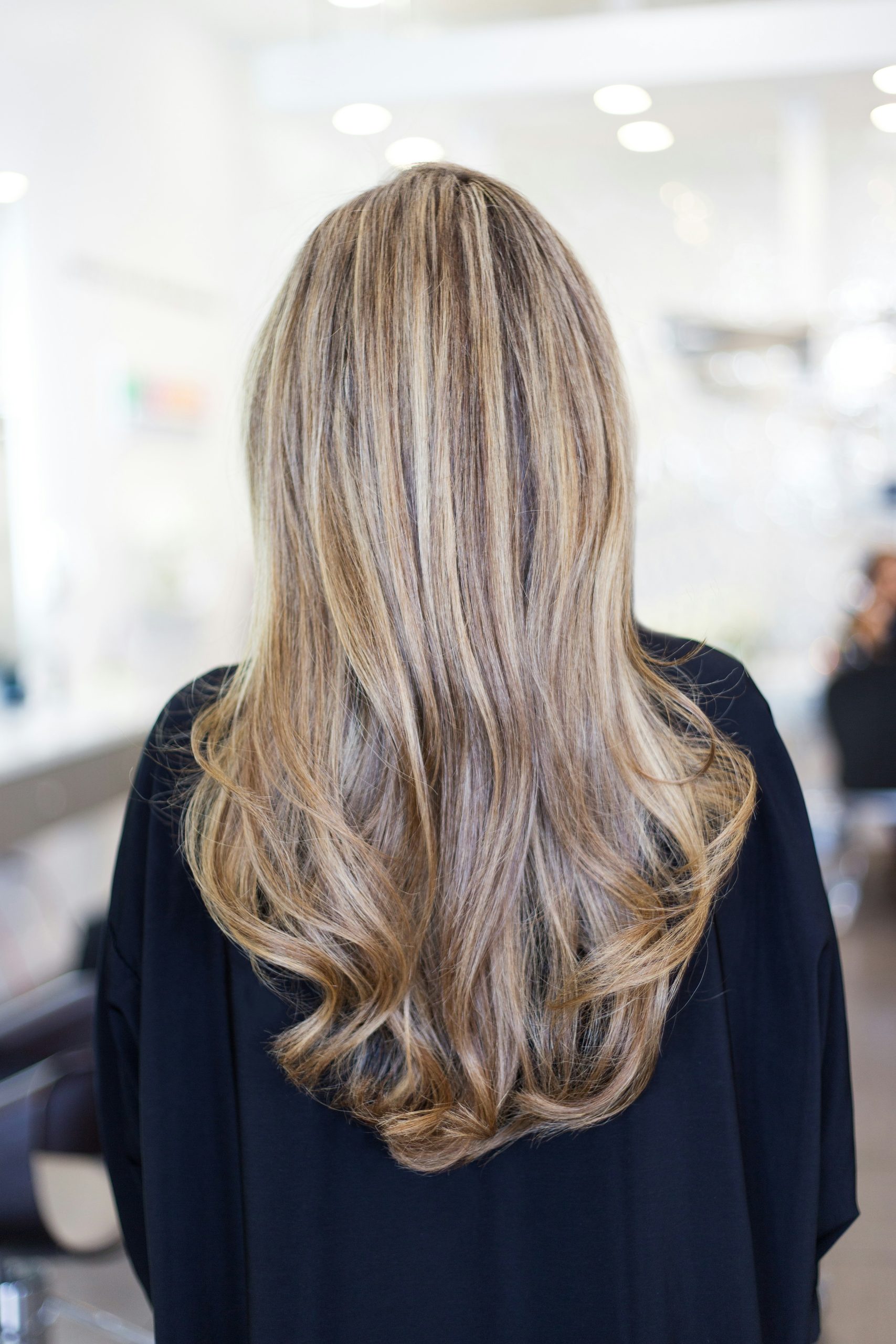

The shullet is a shag-mullet hybrid that delivers the dramatic length contrast of a classic mullet, shorter framing the face and longer at the back, but softened by blended layering that makes the whole thing feel effortless rather than retro.
A shullet keeps more volume and movement around the crown than a traditional mullet, thanks to the internal layering borrowed from the shag. The layers connect through rather than disconnecting abruptly at the ear, which gives the cut a more wearable silhouette. Wavy and curly hair carry this style best because the texture naturally fills out the layering, but straight hair versions work too when the stylist adds enough internal layers to prevent the back section from falling flat.
Here are 25 shullet styles from chin-length to mid-back, broken down by hair type and variation, with a face shape guide, a cut-by-cut comparison to similar styles, and the salon language you need to get exactly what you want.
| Factor | Details |
|---|---|
| Best for | Wavy or curly hair, medium to thick density; oval, square, and heart face shapes |
| Maintenance | Trims every 6–8 weeks; daily styling light to moderate depending on texture |
| Works with | 2a–3c curl patterns, collarbone to mid-back starting lengths |
| Avoid if | Very fine straight hair without body, very round faces, strictly formal environments |
| Salon time | 45–75 minutes for the cut; add 30–45 minutes if color is involved |
How the Shullet Differs from a Shag, Mullet, and Wolf Cut
These four cuts get confused regularly, and for good reason: they all depend on layering, texture, and a relaxed silhouette. The differences come down to where the length contrast falls, how aggressively it is graduated, and whether the layers blend continuously or disconnect at some point.
| Feature | Shullet | Shag | Mullet | Wolf Cut |
|---|---|---|---|---|
| Length contrast | High: shorter face frame, noticeably longer back | Moderate: shorter crown, longer perimeter | Very high: dramatic short-to-long drop | Moderate-high: shorter crown, longer nape |
| Layer blending | Blended throughout; no hard line | Fully blended; seamless | Disconnected or semi-disconnected at the ear | Sharp contrast at crown vs perimeter |
| Best hair type | Wavy to curly, medium-thick density | Medium-thick, wavy to curly | Most types; works on fine straight hair | Medium density, straight to wavy |
| Trim frequency | Every 6–8 weeks | Every 8–12 weeks | Every 6–8 weeks | Every 6–8 weeks |
| Overall vibe | Edgy but approachable | Effortless and boho | Bold and deliberate | Edgy and defined |
The shullet’s defining feature is blended length graduation: shorter layers frame the face and build longer through the crown toward the nape, without a visible jump or disconnection at the ear. A wolf cut with bangs comes close in silhouette but keeps a sharper contrast between the short crown layers and the longer perimeter. A classic mullet disconnects those two zones entirely. The shullet blends them.
Stylist tip: When booking a shullet, confirm your stylist has experience with both shag and mullet techniques. A stylist fluent in one but not the other tends to default to their stronger skill, and you can end up with a shag or a mullet rather than the hybrid you came in for.
Classic Shullets
These variations stay close to the original concept: face-framing layers noticeably shorter than the nape section, with enough internal layering to keep the back from looking like a plain mullet. They work across most textures and starting lengths.
1. Layered Face-Frame Shullet
Point-cut layers starting around cheekbone level build the face frame, then graduate longer through the crown with razor-softened ends that prevent bulk from accumulating at the nape. The technique borrows from a shag on the top section and from a mullet in the back, which is what keeps the overall shape coherent. Ask your stylist to maintain connected layers throughout; a gap between the face frame and the back section pushes this toward a standard mullet.
2. Side-Swept Fringe Shullet for Oval Faces
Oval faces get the most flexibility with a shullet because balanced proportions do not need compensating from the cut itself. A side-swept fringe opens up the face slightly and adds asymmetry, preventing the look from appearing too structured. Length through the back can run from collarbone to mid-back on oval faces without any proportion problems.
3. Blunt-Perimeter Shullet for Thick Hair
Thick hair holds the shullet’s length contrast clearly, but heavy layering throughout causes the back to puff outward rather than fall smoothly. Keeping the perimeter ends blunter gives the back section weight and prevents the triangle effect that oversaturated layering creates on dense hair. The front layers can still be heavily textured; the bluntness at the bottom provides the counterbalance.
4. Blow-Dry Smooth Shullet
A medium round brush and a dryer on medium heat pulled through the layers tames the shullet into a sleeker version without losing the length contrast. Blow the face frame sections forward and slightly inward, then pull the back sections downward to elongate. A small amount of smoothing serum worked through the mid-lengths before drying prevents frizz from breaking the silhouette.
5. Grow-Out-Friendly Shullet
At weeks 6–8, the shorter face layers grow toward chin length while the back layers push past their original cut point, transitioning the shullet into a longer, softer version rather than looking neglected. If you want to keep the original proportions, a trim is due at this stage. Growing toward a more even length means skipping the trim and letting the face frame catch up over 3–4 months.
6. Copper-Highlighted Shullet
Copper and auburn highlights placed through the mid-lengths and ends make the layering pattern visible from across a room, with each layer catching a slightly different tone depending on thickness and placement. A color-depositing conditioner used between salon visits preserves the warmth and prevents the tone from fading into a muddy brassy shade by the third week after coloring.
7. Curtain Bangs Shullet
Curtain bangs parted at the center and falling on either side of the face are the most versatile fringe option for a shullet, framing the forehead without visually shortening the face, and growing out gracefully over time. If you already have curtain bangs on straight hair, asking your stylist to extend the layering into a shullet is one of the lower-commitment entries into this style.
8. Shullet vs. Hush Cut for a Softer Effect
The hush cut is the understated sibling of the shullet: same general idea of face framing with a longer back section, but lighter layering that comes across as elegant. If the shullet feels too deliberate for your personal style but you like the silhouette, the hush cut makes a useful comparison photo to bring to your consultation.
9. Choppy Textured Shullet
Scissor-over-comb through the crown combined with slide cutting through the lower layers creates visibly choppy surface texture that makes the shullet look styled rather than simply grown out. This approach works well on thick hair that tends to look heavy with standard layering, since the choppy finish breaks up the visual mass. Daily styling takes about 5 minutes with a sea-salt texturizing spray and finger-scrunching through the mid-lengths.
Wavy and Curly Shullets
Wavy and curly hair are where the shullet performs best. Natural texture fills out the layers and creates movement that straight hair can only approximate with product and heat. One critical technique rule: wavy and curly shullets should always be cut dry, so the stylist can see how the curl pattern affects the actual resting length of each section before committing to any cut.
10. Natural Wave Shullet (2a–2c Waves)
Loose to medium waves in the 2a–2c range carry a shullet with minimal effort, the natural movement defining the layers without a diffuser or any scrunching product. Ask your stylist to leave the back sections slightly longer than the target length to account for the wave pattern pulling the hair up and inward. Air-dried, this version looks finished in about 20 minutes.
11. Curly Shullet for Square and Heart Faces
Square faces benefit from crown volume that softens the angularity of the jawline by giving the eye a resting point higher up. Heart faces need a different emphasis: more volume through the mid-lengths than at the crown, which balances a wider forehead against a narrower chin. A diffuser used upward from the mid-lengths builds the volume heart faces need without loading the crown area.
12. Diffused Curly Shullet
Scrunch-dry with a diffuser starting at the ends and working upward lifts the roots and prevents the back sections from dragging flat before they are fully dry. A curl-defining cream applied to soaking-wet hair before any heat ensures the curl clumps stay intact throughout the drying process. For most curl types, this is a 15–20 minute routine.
13. Low-Porosity Curl Shullet
Low-porosity curls resist moisture uptake, which means heavy product-based styling routines can weigh the shullet’s layers down and turn the face frame into a limp curtain. On low-porosity hair, apply a lightweight leave-in with heat (shower steam works well) and skip thick creams entirely. This hair type looks better with volume and strand separation than with product-heavy definition.
14. Balayage on a Curly Shullet
Balayage placed along the curl spirals rather than painted through flat sections creates a dimensional effect that looks woven into the texture rather than applied over it. The shorter face frame layers should stay close to the natural base color; lightening those sections too aggressively makes the face frame look visually detached from the rest of the cut. Concentrate the lightness from the mid-lengths downward.
15. The Salon Script for a Curly Shullet
Tell your stylist: “I want a dry shullet cut: shorter face-framing layers around the crown that graduate longer through the back, with the layers blended so there is no disconnection at the ear. Keep about 2 inches more length in the back than the face frame layers, texturize the ends, and do not remove too much weight from the mid-shaft.” Bring at least two reference photos showing both the front framing and the back length you want.
16. Curly Shullet vs. Curly Shag
A curly shag keeps all lengths more even, with the shortest layers at the crown and the longest at the perimeter, producing a voluminous rounded silhouette. A curly shullet pulls that perimeter length down and back so the front section is clearly shorter than the nape area. If you want your curls to form a uniform cloud shape, the shag is the better fit. If you want clear front-to-back length contrast, the shullet is the stronger choice.
17. 3b–3c Curl Shullet
Tighter curl patterns in the 3b–3c range experience significant shrinkage, meaning a shullet cut at what looks like collarbone length while wet springs up to chin or jaw length once dry. Your stylist needs to cut for the dry length, not the wet measurement. The classic mistake on tight curls is wet-cutting and ending up 3–4 inches shorter than intended. Always confirm your stylist works with your specific curl pattern regularly before booking this cut.
Short and Bold Shullets
Short shullets run from chin to jaw length at the face frame, with the back section falling to collarbone at most. The length contrast is more pronounced at these shorter proportions, and the overall effect leans more deliberately edgy than longer versions of the same cut.
18. Chin-Length Face Frame with Collarbone Back
At this proportion, the stylist takes a clear length drop between the face frame and back rather than blending everything gradually, which is the technical decision that separates this from a shag. A face frame at chin level extending to collarbone in the back gives roughly 3–4 inches of contrast that registers as deliberate. Less than 2 inches of contrast and the result looks like an uneven cut rather than an actual shullet.
19. Short Shullet with Curtain Bangs for Round Faces
Round faces need vertical lines, and a short shullet can provide them, but the fringe choice is critical. Heavy or blunt bangs on a short shullet add horizontal width at the forehead without compensating length below. Soft curtain bangs parted at the center and falling past the brow line create vertical movement while keeping the face frame open. Avoid chin-length versions on notably round faces, as the proportions are too short to elongate effectively.
20. Piece-y Textured Short Shullet
A matte clay or fiber product worked through dry hair on a short shullet separates the layers into defined pieces that make the cut look styled. Work a small amount between your palms and press into the crown and face frame sections in an upward motion, then scrunch through the back. The whole process takes under 3 minutes and produces more definition than airdrying alone.
21. Short Shullet Grow-Out Timeline
Short shullets grow out more noticeably than longer versions because the proportion contrast softens faster. By week 8–10 the face frame has filled in enough that the length difference becomes subtle rather than dramatic. If you want to keep the characteristic contrast, plan for trims every 6 weeks. Growing toward a longer version means skipping trims for 3–4 months to let the shorter sections catch up before the next cut reshapes the overall length.
Long Shullets
Long shullets run from collarbone to mid-back in the back section, with face-frame layers from chin to shoulder. The length contrast is most visually apparent at these proportions and the style looks distinctive even when the hair is pulled back or half-up.
22. Collarbone Face Frame with Mid-Back Back Section
Taking an intentional length drop between the collarbone face layers and the mid-back section is the technique decision that separates this from a standard long shag. Ask your stylist to leave a clearly visible contrast when the hair is pulled forward. More than 4–5 inches of contrast at this length starts pushing toward full mullet territory, which may or may not be the goal depending on the look you are after.
23. Long Shullet for Fine Hair
Fine hair struggles with a long shullet because the back sections tend to look stringy rather than textured at this length. If you have fine hair and want this proportion, ask your stylist to razor-cut the ends of the back sections to create surface texture without removing weight from the mid-shaft. A volumizing mousse blown through on low heat gives the crown layers lift that holds through the day.
24. Long Shullet with Balayage
Lighter balayage concentrated through the back sections creates a visual where the face frame stays close to the natural base while the longer back catches the light, reinforcing the cut’s length contrast through color. The color-to-cut relationship at this length is genuinely collaborative. Expect to return to the salon every 12–16 weeks for a color refresh rather than every 6–8.
25. What to Ask for a Long Shullet
Bring two reference photos to the consultation: one showing the face frame length and fringe style you want, and one showing the back length and texture level. Tell your stylist: “I want a long shullet, shorter face-framing layers at around shoulder level that extend to mid-back at the nape, with blended layering through the crown and razor-textured ends.” The long wolf cut for women is a useful reference for communicating the back length you have in mind, even if the cutting techniques differ.
How to Choose the Right Shullet for Your Face Shape
Two variables determine the best shullet for your face shape: how much front-to-back length contrast to use, and which fringe style pairs with your proportions. The table below summarizes the key decisions for each face shape.

| Face Shape | Best Variation | Fringe Choice | Avoid |
|---|---|---|---|
| Oval | Any length and contrast ratio | Curtain bangs, side-swept, or no fringe | Heavy full fringe that hides balanced proportions |
| Round | Medium to long versions; longer back section elongates | Curtain bangs, center or side part | Short chin-length face frame with blunt fringe |
| Square | Classic or wavy shullet with crown volume to soften the jaw | Soft wispy fringe or curtain bangs | Very short face frame that emphasizes a strong jaw |
| Heart | Medium length with volume at mid-lengths, not the crown | Curtain bangs or center-parted fringe | Heavy crown volume that widens an already broad forehead |
| Oblong | Short shullet with a fuller fringe to add horizontal width | Full fringe or brow-grazing curtain bangs | Long shullets with no fringe, which add length to an already long face |
| Diamond | Layered shullet with width at jaw and forehead level | Side-swept fringe or soft curtain bangs | Slicked-back face frame that draws attention to a narrow forehead |
When a Shullet Is NOT the Right Choice
The shullet works well on a wide range of hair types and face shapes, but it is not the right call in every situation. Here are the specific cases where a different cut will serve you better.
- Very fine, flat straight hair without natural movement: The layering that gives the shullet its texture will thin out fine hair at the ends, and the back section will fall flat rather than with any volume. A textured lob or a jellyfish cut with its rounded layered bottom gives similar visual interest without sacrificing the weight fine hair needs.
- Very round face shapes at short lengths: A shullet at chin length concentrates horizontal visual weight around the face without the compensating length that would minimize it. A longer version with a back section extending past the shoulder helps considerably, but at short proportions, a different cut is worth considering.
- Conservative professional environments: The front-to-back length contrast that defines a shullet signals fashion-forward intent in most contexts. In corporate or formal settings, that contrast can create friction. If you need one haircut to cover all contexts, the shullet’s distinctive shape limits your styling flexibility.
- Clients who dislike regular salon visits: The shullet grows out in a specific way: the face frame fills in faster than the back, creating an increasingly uneven length difference. Without trims every 6–8 weeks, the grow-out looks neglected rather than effortlessly relaxed.
What to Tell Your Stylist
Salon terminology for the shullet varies widely. Some stylists call it a “shaggy mullet,” others a “mullet shag,” and others use “textured mullet with face framing.” To avoid confusion, describe the proportions directly rather than relying on the name.
Use this as your starting script: “I want a shullet: shorter face-framing layers starting around cheekbone to chin level, blended through the crown with internal layering, then gradually longer to [your target length] at the nape. I want the layers to connect throughout with no disconnection at the ear. Razor-texturize the ends but keep enough weight in the back section.” Then show two reference photos: one of the front framing and fringe you want, and one of the back length and texture level you are targeting.
Stylist tip: Ask your stylist to show you exactly where they plan to start the face frame layers before any scissors touch your hair. The transition line, where the shorter front section begins to graduate toward the longer back, is the most variable part of the cut and the most common source of disappointment when it lands in the wrong spot.
Maintenance and Styling
The shullet falls in the middle of the maintenance range for layered cuts: more upkeep than a shag, roughly on par with a mullet or wolf cut. Here is what to expect across a full trim cycle.
| Aspect | Details |
|---|---|
| Trim frequency | Every 6–8 weeks to keep the face frame proportion intact |
| Daily styling | 5 minutes (air-dry with texturizing spray) to 20 minutes (diffused curls or blow-dry) |
| Key products | Sea-salt texturizing spray for waves, curl cream for 2b–3c, matte clay for straight versions |
| Tools | Diffuser for curly or wavy; round brush for smooth blow-outs; 1.25-inch curling iron for pieced waves |
| Grow-out | Face frame softens first at weeks 6–8; back remains longer; the overall shape transitions into a longer shag over 4–6 months |
FAQ
Is a Shullet the Same as a Shaggy Mullet?
Yes. “Shaggy mullet” and “shullet” describe the same cut. “Shullet” is the portmanteau that spread on social media starting around 2022, while many stylists still prefer the full description because it communicates the technique more clearly during a consultation. Both terms are worth knowing when booking your appointment, since not every stylist has adopted the shorthand.
Can I Get a Shullet If I Have Fine Hair?
With fine hair, a shullet requires careful technique: internal layering that adds movement without stripping weight from the ends. Ask your stylist to avoid razor cutting the perimeter, since razor cutting removes too much density from already-sparse fine strands. A medium-length shullet with a collarbone back section is easier to execute well on fine hair than a short version, because the longer back retains more weight and body.
How Long Does a Shullet Take to Grow Out?
Expect 4–6 months to grow a shullet into a more even length, depending on how short your face-frame layers were cut and your hair growth rate (average half an inch per month). The process goes through a distinct phase around weeks 8–12 when the face frame has filled in enough to lose the shullet shape but is not yet long enough to blend evenly. Most people either commit to trims during that phase or accept 6–10 weeks of transition.
Does a Shullet Work on Short Starting Hair?
A shullet with noticeably longer back sections is technically possible when the starting length is very short, but at pixie-length proportions it approaches a textured undercut rather than a true shullet. Most stylists recommend at least jaw length as the starting point to give the layering enough material to blend properly. The shorter the overall length, the less room for the connected layering technique that distinguishes a shullet from a standard mullet.
What If My Stylist Does Not Know the Term “Shullet”?
Describe the proportions directly rather than using the name. Say: “shorter face-framing layers at around [your target length] at the front, blended through the crown with heavy internal layering, and longer through the back to [your back length], with layers connecting through and no hard disconnection at the ear.” Adding two or three reference photos alongside that description closes most of the interpretation gap.
How Often Does a Shullet Need Trimming?
The face-framing layers need attention every 6–8 weeks to keep their proportion to the back section. After week 8, the face frame has typically grown long enough to significantly soften the contrast. The back section is more forgiving and can go 10–12 weeks between trims, since additional length absorbs grow-out more gracefully than the shorter face frame does.
A shullet haircut rewards hair with natural movement, giving the front-to-back length contrast a visual purpose rather than just a technical description. Bring specific reference photos to your consultation, clarify the proportions you want before anything is cut, and work with a stylist experienced in both shag and mullet techniques to get the hybrid exactly right.
Hair results vary based on your natural hair type, texture, density, and condition. Always consult with a licensed hairstylist before making significant changes, especially with chemical treatments or dramatic length changes. Photos may show styled results that require professional tools and products to replicate.