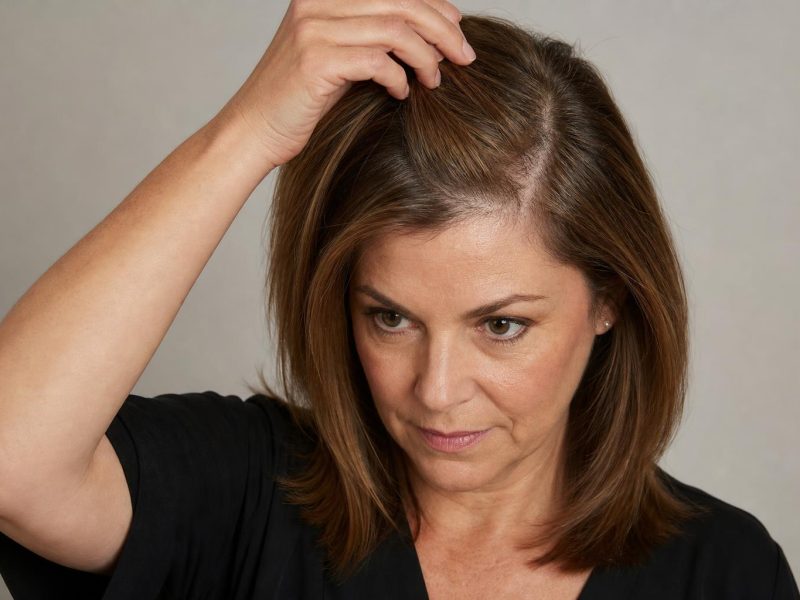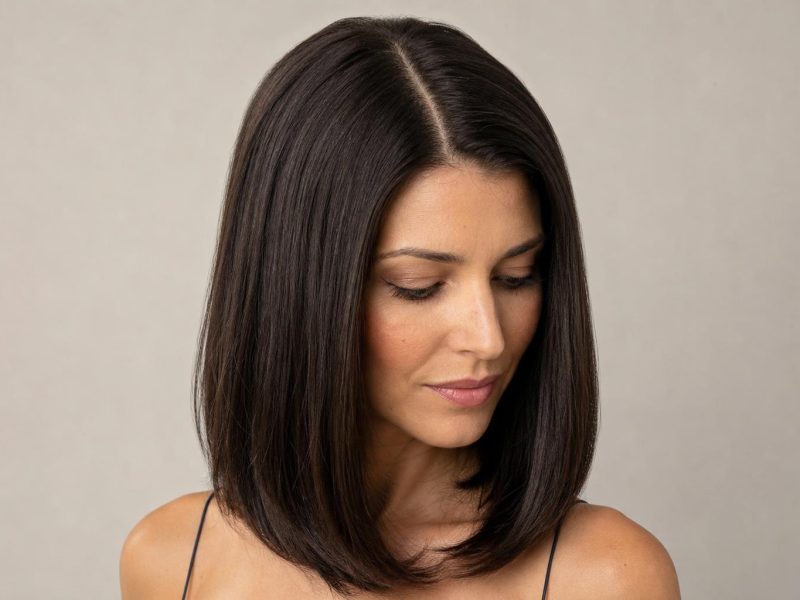


No shampoo regrows hair, but the right one keeps the hair you still have on your head longer, and that difference shows within about three months.
The best shampoos for thinning hair are the ones built around scalp-active ingredients such as ketoconazole, saw palmetto, caffeine, or salicylic acid, used with enough contact time to actually reach the follicle. A shampoo that only promises volume coats the strand and washes out by the next morning. A shampoo aimed at thinning works on the skin underneath, where hair density is decided.
This guide covers the difference between shedding and true thinning, which ingredients earn their price and which are mostly marketing, how long to leave a product on your scalp, how to match a formula to an oily or flaky scalp, and the exact words to bring to a stylist or dermatologist appointment.
| What a Shampoo Can Do | What It Cannot Do |
|---|---|
| Clear sebum and product buildup that blocks the follicle opening | Regrow a follicle that has already closed and scarred over |
| Calm the low-grade scalp inflammation that speeds up shedding | Replace a prescription treatment for pattern hair loss |
| Add temporary body so existing hair covers more scalp | Change the genetic diameter your follicles are producing |
| Reduce breakage so length is kept rather than snapped off | Work in under 8 weeks, no matter what the label says |
| Support a topical treatment by keeping the scalp clean | Fix thinning caused by iron deficiency, thyroid issues, or crash dieting |
Shedding and Thinning Are Two Different Problems
Most people shop for the wrong shampoo because they have not named the problem yet. Shedding is a volume issue: more hairs than usual leaving the scalp at once, usually after a stressor such as childbirth, illness, surgery, or rapid weight loss. Thinning is a diameter issue: the same number of follicles producing progressively finer, shorter strands until the scalp starts to read through. The shampoo aisle treats these as one condition. Your scalp does not.
Shedding Peaks Two to Three Months After the Trigger
Telogen effluvium runs on a delay. The stressor pushes a batch of follicles into their resting phase, and those hairs release roughly 8 to 12 weeks later, which is why the shedding always feels like it came out of nowhere. If you can point to a specific event that far back, a gentle sulfate-free wash and patience serve you better than an anti-thinning formula, because the follicles are intact and already rebuilding. Many people going through postpartum shedding around the hairline switch products three times in a panic when the timeline was always going to resolve on its own.
Hair Diameter Drops Before Hair Count Does
Pattern thinning starts as miniaturization. Each growth cycle produces a slightly finer strand with a slightly shorter anagen phase, so the ponytail circumference shrinks long before you can see scalp. A useful early check: compare a hair pulled from the crown against one pulled from the nape, where pattern thinning rarely reaches. If the crown hair is visibly finer, that is miniaturization rather than shedding, and a scalp-active shampoo is worth adding now rather than in two years.
Stylist tip: Photograph your part line in the same bathroom light on the first of every month, phone held at the same height. Density changes are invisible day to day and obvious across six photos, and it stops you from abandoning a product at week five because you cannot tell whether it is working.
The Ingredients Worth Paying For
A thinning-hair shampoo is judged on what it does to the scalp during the two or three minutes it is there. That rules out anything that works only by depositing on the strand. The shortlist below is what dermatologists and trichologists reach for, along with the honest limits of each. Concentration and contact time matter more than the length of the ingredient list, and a formula with two well-dosed actives beats one that names fourteen at trace levels.
| Ingredient | What It Does | Best For | Honest Limit |
|---|---|---|---|
| Ketoconazole 1-2% | Antifungal that also lowers scalp inflammation and sebum | Oily, flaky scalps with pattern thinning | Drying on the lengths, so condition mid-shaft down |
| Saw palmetto | Plant extract used for its mild anti-androgen effect | Early pattern thinning at the crown or temples | Evidence is thinner than for prescription options |
| Caffeine | Stimulates the follicle and supports local circulation | Anyone wanting a low-risk daily addition | Needs consistent use, and effects stay modest |
| Salicylic acid | Dissolves the flake and oil plug around the follicle | Scalps that feel waxy or tight between washes | Can irritate at high frequency on dry scalps |
| Zinc pyrithione | Controls the yeast behind seborrheic dermatitis | Itchy, inflamed scalps that shed when scratched | Treats the scalp condition, not the thinning itself |
| Hydrolyzed protein | Patches weak points along the cuticle to limit breakage | Fine hair that snaps mid-shaft rather than falling out | Builds up and stiffens hair if used at every wash |
Ketoconazole carries the strongest research of anything sold without a prescription. A frequently cited trial published in the journal Dermatology found that 2% ketoconazole shampoo improved hair density and the proportion of growing follicles in men with androgenetic alopecia, on a scale comparable to a topical minoxidil routine. Later reviews note that results across studies are not uniform, so treat it as a strong supporting player rather than a cure.
Ingredients That Get Marketed Harder Than They Perform
Three claims dominate the front of thinning-hair bottles and none of them do much in a product you rinse off. Biotin is the loudest: it matters enormously if you are deficient, and true biotin deficiency is rare outside of specific medical situations. Applied to the scalp and washed away 90 seconds later, it has no meaningful route to the follicle. Collagen has the same problem in reverse, since the molecule is far too large to travel anywhere useful from a shampoo.
The third is the word “volumizing” on its own. Volumizing formulas usually work by leaving a light polymer film on the cuticle so strands hold apart from each other. That genuinely helps hair look fuller in a photograph, and it does nothing for density. Use one for the styling benefit if you like it, and keep your expectations separate from the actives above. Anyone choosing between a sulfate-free formula and a traditional cleanser should know that neither choice changes hair count on its own.
Contact Time Matters More Than the Product You Choose
This is where most routines fail. A scalp-active shampoo applied and rinsed in 30 seconds delivers almost nothing, because the active never has time to move through sebum and reach the follicle opening. Give it three to five minutes on the scalp before rinsing, every single wash. Set a timer the first few times, since three minutes in the shower feels much longer than it is.
Double cleansing solves the other half of the problem. The first application lifts oil and product residue, and the second one is the treatment application you leave on. Massage with fingertips rather than nails, in small circles across the whole scalp, not just where you can see thinning. Follicles at the perimeter respond to the same actives, and a scalp treated in patches thins unevenly.
Wash frequency matters less than most people fear. Sebum, dead skin, and styling residue sitting on the scalp for a week do more harm than a well-formulated cleanser used three or four times a week. If you have been stretching washes to reduce shedding, remember that the hairs collecting in the drain on wash day were already released; they were only waiting for the water. A structured scalp care routine built around regular cleansing beats the avoidance approach almost every time.
Stylist tip: Apply your treatment shampoo to a dry or barely damp scalp before you step under the water. Water dilutes the active immediately, and a dry application keeps the concentration where you want it for the first minute of contact.
Matching a Formula to Your Scalp Type
Two people with identical thinning patterns can need opposite products, because the scalp environment differs. Choose the row that describes how your scalp behaves three days after washing, not how your ends feel. Getting this wrong is the most common reason people report that a well-reviewed shampoo did nothing for them.
| Scalp Behavior | Look For | Wash Frequency | Skip |
|---|---|---|---|
| Oily by day two, roots go flat | Ketoconazole or salicylic acid, lightweight conditioner on ends only | 4 to 5 times a week | Heavy oils and cream masks near the roots |
| Itchy with visible flakes | Zinc pyrithione or ketoconazole, alternated with a gentle cleanser | 3 to 4 times a week | Scrubs and physical exfoliants on inflamed skin |
| Tight and dry, no oil at all | Caffeine or peptide formulas with a mild surfactant base | 2 to 3 times a week | Daily salicylic acid, clarifying formulas back to back |
| Normal scalp, hair snapping mid-shaft | Hydrolyzed protein rotated with a moisture-focused wash | 3 times a week | Protein at every wash, which stiffens fine hair |
| Color-treated and thinning | Sulfate-free actives, plus a monthly clarifying wash | 2 to 3 times a week | Strong clarifiers within 72 hours of a color service |
If buildup is the issue rather than the scalp condition, one monthly reset does more than switching your daily bottle. A clarifying wash used once a month strips the silicone and mineral film that keeps actives from ever touching skin, and it makes the next four weeks of treatment work harder.
When a Shampoo Is Not the Right Tool
Being honest about the ceiling here saves money and months. Reach past the shampoo aisle in these situations:
- Thinning that appeared suddenly in round, smooth patches rather than gradually across a diffuse area. That pattern points to alopecia areata, which needs a dermatologist rather than a cleanser.
- A scalp that is red, painful, burning, or scarring. Inflammatory scalp conditions can destroy follicles permanently, and every week of self-treatment is a week of avoidable loss.
- Thinning alongside fatigue, cold intolerance, heavy periods, or unexplained weight change. Iron, ferritin, and thyroid testing answer the question far faster than trial and error.
- A receding front hairline with a clearly defined pattern. Topical or oral treatments are the evidence-backed route, and shampoo is the support act. Our overview of what regrowth treatments realistically deliver is a better starting point.
- Six months of consistent use with a good product and no change at all. That is enough of a trial. Escalate rather than repeat.
Common Thinning Hair Myths That Waste Money
Myth: A Shampoo That Makes You Shed Less Is Working
Reality: A shampoo that leaves conditioning agents on the scalp reduces the hairs you see in the drain by loosening fewer of them, and the released hairs simply come out on your brush the next day. Total loss is unchanged. Judge a product on part-line width and ponytail circumference at three and six months, not on drain count.
Myth: Sulfates Cause Hair Loss
Reality: Sulfates are strong cleansers that can irritate a sensitive scalp and strip color faster, which is a legitimate reason to avoid them. They do not reach the follicle or affect the growth cycle. Swapping to sulfate-free is a comfort and color decision, and treating it as a hair loss fix delays the treatments that would help.
Myth: Frequent Washing Makes Thinning Worse
Reality: The opposite is closer to the truth for most thinning scalps. Sebum and yeast build up in the follicle opening between washes and drive the inflammation that shortens the growth phase. Unless your scalp is genuinely dry, washing three to five times a week with a well-chosen formula supports density rather than threatening it.
What to Tell Your Stylist or Dermatologist
Walk in with observations rather than a diagnosis. Say how long it has been happening, whether it is diffuse or patchy, whether the strands themselves feel finer, and what you have already tried and for how long. A useful script: “Over the last eight months my part has widened and my ponytail is noticeably thinner, but I am not seeing more hair in the drain. I have used a ketoconazole shampoo three times a week for four months with no change.” That sentence gives a professional more to work with than a photograph.
Ask your stylist for a density check at the crown and temples with a comb-parted look at the scalp, and ask them to note it on your file so the next appointment has a comparison point. Ask a dermatologist directly whether they recommend bloodwork, and which topical they would pair with your shampoo. In the chair, request cuts that work with reduced density rather than against it. Blunt perimeters and shorter lengths look fuller, and there are specific cuts built for thinning hair that beat any product for immediate visual coverage.
FAQ
How Long Before a Thinning Hair Shampoo Shows Results?
Give it a minimum of three months, and judge properly at six. Hair grows about half an inch a month, and a follicle that starts producing a thicker strand today needs a full cycle before that strand is long enough to affect how your part looks. Anyone claiming visible density change in four weeks is describing a styling effect, not a growth one.
Can I Use a Thinning Shampoo Every Day?
Most scalp-active formulas are fine three to five times a week, and daily use is usually more than the scalp needs. Ketoconazole and salicylic acid formulas in particular can leave the lengths dry if used every single day, so alternate with a gentler cleanser and keep conditioner from mid-shaft down. If your scalp starts feeling tight or itchy, cut back a wash rather than switching products.
Does Cold Water Help With Thinning Hair?
Cold water closes the cuticle slightly and adds shine, and it has no effect on follicle activity or hair count. Lukewarm water is the practical choice because very hot water increases scalp irritation and strips more oil than most thinning scalps can spare. Save the cold rinse for the final few seconds if you like how it looks.
Should I Switch Shampoos or Stick With One?
Stick with one active formula for a full six months before judging it, but rotate a second product alongside it. A common setup is a scalp-active shampoo three times a week, a gentle cleanser once, and a clarifying wash monthly. Constantly switching hero products is the fastest way to spend a lot and learn nothing, because nothing gets a fair trial.
Is Thinning Hair Reversible?
It depends entirely on the cause. Shedding from stress, illness, or postpartum hormones usually reverses on its own within six to twelve months. Pattern thinning can often be slowed and partially improved with consistent treatment, but follicles that have fully closed do not come back. That is the practical argument for starting early rather than waiting for the change to become obvious.
Do Rosemary Oil and Similar Natural Options Work?
Rosemary oil has a small evidence base suggesting it performs comparably to low-strength minoxidil over several months, and it is inexpensive and low-risk to try. Treat it as a reasonable addition to a routine rather than a replacement for a scalp-active shampoo or a prescription option. Dilute it in a carrier oil, apply to the scalp, and wash out, because undiluted essential oils irritate skin easily.
Will Cutting My Hair Shorter Make It Grow Back Thicker?
No, cutting changes nothing at the follicle, where diameter is decided. Short hair looks and feels thicker because you are seeing the widest part of each strand rather than tapered, worn ends, and because less weight lets the roots lift. That is a genuine visual gain worth having, and it works alongside treatment rather than instead of it. Several other habits build the same fullness illusion without a length change.
Choosing the best shampoo for thinning hair comes down to three decisions: name the problem correctly, pick a formula with a real scalp active rather than a volume claim, and give it three to five minutes of contact time at every wash for at least six months. Take a part-line photo today so you have a starting point, and book a dermatologist appointment now rather than after another year of guessing.
Hair results vary based on your natural hair type, texture, density, and condition. Always consult with a licensed hairstylist before making significant changes, especially with chemical treatments or dramatic length changes. Photos may show styled results that require professional tools and products to replicate.