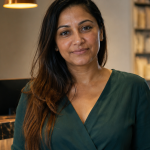

Fine hair over 70 responds best to cuts that work with reduced density rather than fighting it, and the right choice can look fuller and more polished with five minutes of morning effort than a longer style that needs constant product work to hold its shape.
These 20 hairstyles for women over 70 with fine hair include pixie cuts, layered bobs, soft lobs, and medium-length styles that add the illusion of volume without over-layering or razor work that thins already-sparse ends. The gallery also covers color and texture strategies that make fine hair look denser without a cut change.
A guide to understanding fine versus thinning hair follows the gallery, along with a face shape table, salon language, a maintenance comparison, and a limiting section on cuts that consistently underperform on fine hair over 70 despite being frequently recommended.
| Factor | Details |
|---|---|
| Best cuts | Blunt or point-cut bobs, tapered pixies, soft lobs with internal layers; avoid razor cuts and excessive layering |
| Maintenance | Short cuts: trim every 5-7 weeks; bobs: 6-8 weeks; lobs: 8-10 weeks with regular blowout for volume |
| Key products | Root-lifting spray or mousse; lightweight volumizing shampoo; leave-in conditioner (avoid heavy creams) |
| Avoid | Heavy blunt ends with no layering on thick-density fine hair; razor cuts; excessive thinning shears; very long styles |
| Color tip | Face-framing highlights or babylights add dimension; single-process flat color flattens fine hair further |

Short Pixie Styles for Fine Hair Over 70
Short pixie cuts are among the strongest options for fine hair over 70 because the reduced length eliminates the weight that pulls flat-lying hair even flatter. With less hair to manage, the crown and roots lift more naturally, and the cut requires far less daily styling product than longer styles that need hold and lift simultaneously. The key is choosing a pixie with enough length on top to allow some flexibility in styling direction, rather than a uniform crop that locks in one look.
1. Tapered Pixie with Soft Crown Layers
Internal layers at the crown create lift without thinning the top section further, which is the balance fine hair needs most at this length. The taper at the nape and sides blends gradually rather than creating a sharp contrast, so the cut grows out naturally over 6-8 weeks without an awkward in-between stage. Ask for the top to be kept at least 2 inches long so there is enough length to style in different directions based on the day’s needs.
2. Tapered Pixie for Round and Heart Face Shapes
A slightly longer top section styled with height at the crown creates vertical emphasis that balances a round or heart-shaped face without requiring side volume that fine hair struggles to maintain. Keeping the sides tapered close means less density is needed to hold the shape, since the close sides create the illusion of proportion rather than relying on actual hair mass. Women exploring short cuts suited to their face shape often find this combination more flattering than they expected from a photo alone.
3. Fine Texture Pixie with Lifted Roots
Apply a root-lifting spray to damp hair at the crown, then use a small round brush or fingers to blow-dry in an upward direction from the roots before any other styling. Fine hair over 70 tends to lie flat within an hour without this root-setting step, so the sequence of lifting before styling rather than after is what makes the difference in longevity. The lifted roots maintain themselves through the day better when set on warm air and locked with a brief cool blast before releasing the brush.
4. Pixie Bob with Side-Swept Fringe for White or Silver Hair
A side-swept fringe section on a pixie bob adds face-framing movement that draws the eye to the face rather than the hair’s texture or density. White and silver hair benefits particularly from a pixie bob because the shorter length concentrates the color’s brightness and intensity rather than dispersing it through longer strands where it can read as flat. Pair the side sweep with a small amount of lightweight pomade or finishing cream worked through fingertips only, not palmed and applied as a coating.
5. Piece-y Textured Pixie with Matte Finish
A light matte clay applied to completely dry hair creates texture and separation between individual strands, which makes fine hair visually appear denser than a smooth, product-free finish allows. Emulsify a very small amount between fingertips before working through the mid-lengths and ends, avoiding the roots where product weight is most likely to flatten lift. The piece-y result looks most natural on a pixie that was point-cut at the tips rather than blunt-trimmed, since point-cut ends separate more easily.
6. Layered Pixie for Oval Faces and Very Fine Hair
Oval face shapes have the most flexibility with pixie styling because the proportions stay balanced regardless of where the weight or volume falls. For very fine hair where density is genuinely sparse, a pixie cut is the most low-maintenance option in this gallery: less hair to manage daily, a trim schedule of 5-6 weeks that keeps the cut looking clean, and minimal product required once the morning styling routine is established. The styling window is 3-5 minutes once the technique is practiced.
Bob and Lob Variations for Fine Hair Over 70
Bobs and lobs are the most versatile category for fine hair over 70 because the length range allows for significant variation in maintenance commitment and styling approach. A chin-length bob needs the least daily effort to hold its shape; a collarbone-length lob allows more styling flexibility but requires more product and blow-dry work to look intentional on fine hair. Within each length, the cutting technique, specifically whether the ends are blunt, point-cut, or internally layered, changes the volume result dramatically.
7. Blunt Chin-Length Bob with Rounded Back
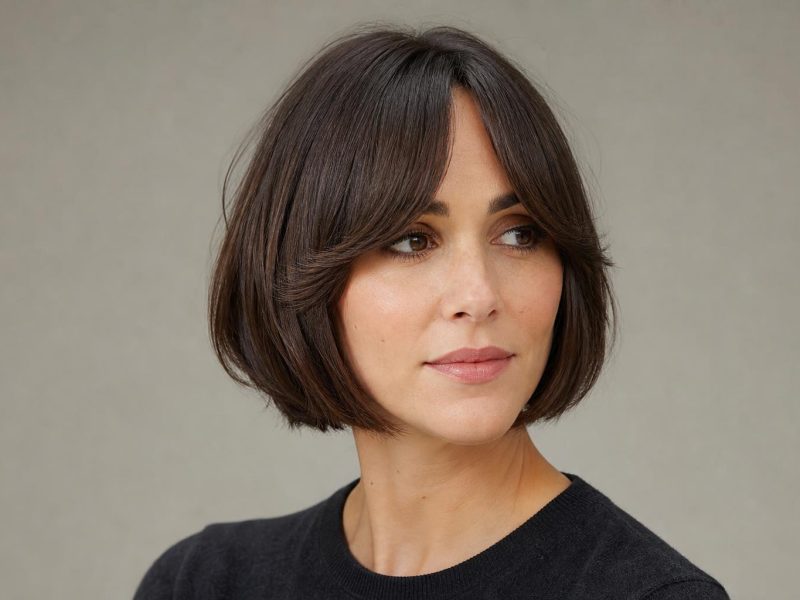
On fine hair, a blunt perimeter at chin length creates the illusion of more density at the ends than a layered or point-cut perimeter, because the weight line concentrates all the strand ends at one level rather than dispersing them. The rounded back keeps volume at the nape rather than tapering it away, which is where fine hair most often appears flat or thin. Trim every 6 weeks; a blunt bob loses its clean line faster than a layered style because there are no internal layers to absorb the visual impact of grow-out.
8. Bob with Internal Layers for Volume at the Crown
Internal layers remove weight from the mid-shaft of each strand while leaving the perimeter line intact, which creates lift at the roots and crown without thinning the ends. This is different from heavily layered bobs where the layering continues through the perimeter: on fine hair over 70, keeping the outside length intact while only layering internally gives volume benefit without sacrificing end density. Ask your stylist specifically for “internal layering only, no perimeter layering” to ensure the distinction is made in execution.
9. Soft A-Line Bob for Fine Silver-Blonde Hair
The A-line bob is slightly longer in the front than the back, which creates a diagonal line that adds visual interest and movement without requiring curls or waves to look styled. Silver-blonde hair takes on dimension in an A-line because the light hits the angle differently at the front than at the back, creating natural tonal variation. Women whose hair has transitioned fully to silver often find that an A-line bob reads as more contemporary than a blunt cut at the same length.
10. Feathered Bob with Lifted Crown
Tell your stylist: “I want a chin-length bob with soft feathering at the ends only, not through the mid-shaft. I want the crown lifted with internal layers and a round brush blowout rather than flat layers that fall. Please use scissors only, no razor or thinning shears on fine hair.” The feathered ends on a fine-hair bob over 70 need to be subtle, since too much feathering creates wispy ends that look sparse rather than textured. A round brush blowout sets the crown lift and the feathered ends in one pass without requiring a second styling tool.
11. Fine Hair Bob for Square and Long Face Shapes
Square faces carry a chin-length bob well because the horizontal line of the ends emphasizes the jaw width, balancing strong angular features. Long face shapes benefit from a bob with soft bangs or a side-swept fringe that introduces a horizontal break at the forehead, which shortens the visual length of the face. In both cases, keeping the bob between chin and jaw length rather than extending to the collarbone gives fine hair enough weight at the perimeter to hold the shape without daily blow-drying.
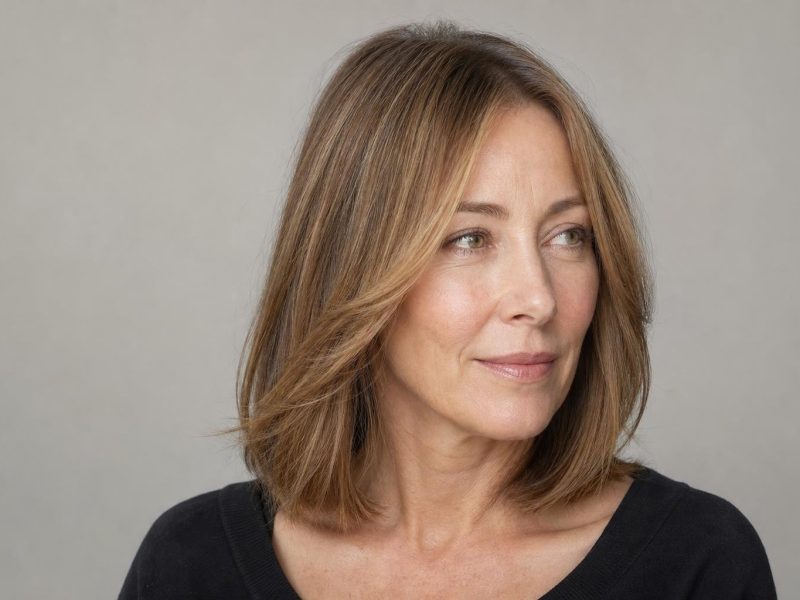
12. Textured Lob with Lived-In Wave
Use a 1.25-inch curling iron on sections of shoulder-length fine hair, wrapping each section and holding for 8-10 seconds (shorter than the standard 12-15 for thicker hair), then release without brushing and let cool fully before touching. The lived-in wave creates the appearance of volume and density that fine straight hair lacks, and at this length it holds through most of the day without additional product. Fine hair over 70 often holds a curl slightly better than younger fine hair because age-related changes to the hair shaft can alter its texture.
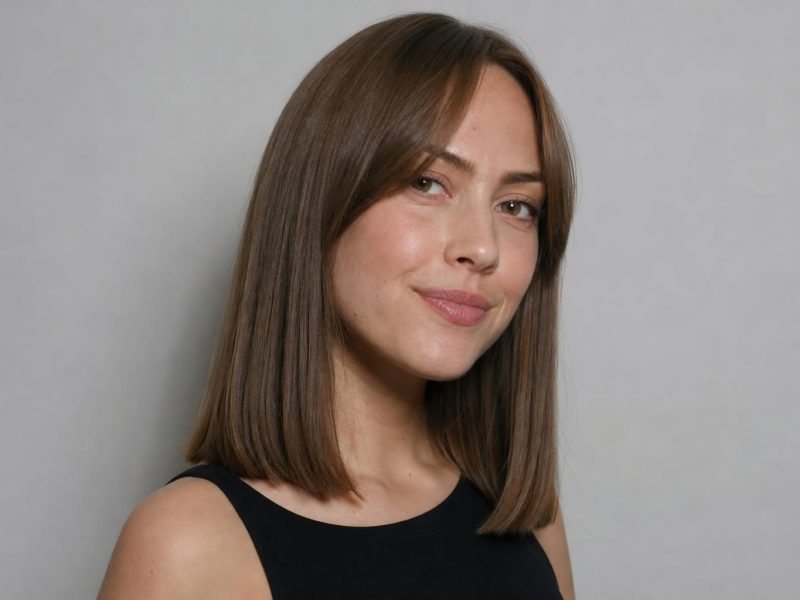
13. Soft Lob with Face-Framing Highlights
Babylights or fine highlights placed through the top section and around the face add dimensional color that makes fine strands look denser by creating light-and-shadow variation across the surface. A single-process all-over color on fine hair, especially silver or light gray, can make the hair look flat because it removes the tonal variation that creates depth perception. The highlights don’t need to be dramatic: a two-shade lift near the face framing and a half-shade lift through the interior is enough to add dimension without reading as high-contrast color.
Soft Medium-Length Styles
Medium-length hair at the collarbone to shoulder range is the most challenging length for fine hair over 70 because it is long enough to show every lack of density but short enough to limit the styling options that longer hair provides. The styles in this section work because they use specific cutting techniques (internal layering, weight lines, soft graduation) that give medium-length fine hair enough structure to hold a shape without daily curling or volumizing effort.
14. Graduated Bob at Collarbone Length
Graduation builds a stacked back section that creates volume at the upper back and crown where fine hair falls flattest, while the front lengths remain longer and frame the face. Unlike a full stack cut that works best on thicker hair, a soft graduation on fine hair over 70 produces a modest lift that photographs well and feels more polished than a flat blunt cut at the same length. Pair with a diffuser on low heat for 5 minutes at the roots after shampooing to reinforce the lift without adding product weight.
15. Layered Shag for Fine Wavy Hair
Women over 70 with naturally wavy fine hair often find that a layered shag cut at medium length enhances their wave pattern rather than requiring them to create or maintain it. The layered shag works on fine wavy hair specifically because the layers allow each wave section to spring up and curl rather than being weighed down by the length above it. Scrunch a light curl-enhancing cream into damp hair and air-dry for a result that needs no heat tools and holds movement through the day.
16. Soft Curtain Bangs with Medium Length on Fine Gray Hair
Curtain bangs that are point-cut to a low density at the tips sit more naturally on fine hair than blunt-cut bangs, which can look thin and sparse when the individual strand count at the fringe is low. Gray and white hair shows the scalp more readily through sparse bangs, so a curtain style that opens at the center and sweeps to each side distributes the fringe across more surface area than a straight across style. Ask for the curtain to start no higher than the top of the forehead to avoid a very short fringe that reveals scalp at the part.
17. Side-Parted Medium Style with Volume Spray
A deep side part on fine hair creates a concentration of volume on the heavier side that makes the overall hair appear thicker than a center part, which divides the already-sparse density in half. Apply a root-lifting spray specifically to the hair between the part line and the crown on the fuller side before blow-drying, focusing the diffuser or round brush at the roots rather than the lengths. This technique produces a consistent lift with 5-7 minutes of effort that holds for most of the day on fine hair without additional product.
Color and Texture Strategies
Color is one of the most underused tools for creating the appearance of volume on fine hair over 70. Strategic placement of highlights, lowlights, or toning can make hair look denser without a single change to the cut, and the effect is visible in all lighting conditions, not just in styled photos. The following three entries address specific color approaches that work on fine hair at this stage of life, including options for women whose hair has fully transitioned to silver or white.
18. Babylights on Fine Silver Hair for Dimension
Babylights are very fine, closely spaced highlights that mimic the natural variation of hair that has grown with sun exposure over time. On fine silver or white hair, babylights in shades of warm platinum, pearl, or cool white create enough tonal variation to make individual strands appear more distinct, which reads visually as more density. The application takes 90-120 minutes in the salon but the result lasts 8-12 weeks before the color boundary becomes noticeable, making it one of the better maintenance-to-impact ratios in color work.
19. Low-Contrast Root Shadow for Thinning Hairlines
Women over 70 who experience some hairline thinning, particularly around the temples or part line, can use a root shadow technique to minimize the contrast between the scalp and the hair. Applying a slightly darker toner at the roots reduces the stark scalp-versus-hair contrast that makes fine hair look sparse in bright lighting. The technique does not add density, but it reduces the visual evidence of thinning, and it requires no significant commitment since the toner fades gradually rather than creating a hard grown-out line.
20. Warm-Toned Color to Add Perceived Fullness
Cool, ashy, or flat gray tones on fine hair over 70 can make the hair appear flatter because cool tones absorb light rather than reflecting it. Warm golden, honey, or caramel tones through the mid-lengths and ends reflect light outward and create the perception of more body and fullness. This is most relevant for women who are coloring their natural gray and choosing between warm and cool shades: a warm shade in the same brightness level as the chosen cool shade will consistently look fuller in person, not just in photographs.
Fine vs Thin: Understanding Your Hair Before Choosing a Cut
The terms fine hair and thin hair are frequently used interchangeably, but they describe different properties that call for different cut strategies. Getting this distinction wrong is one of the most common reasons a recommended haircut fails to deliver what it promised.
Fine hair refers to the diameter of each individual strand. Fine hair strands are physically narrow, which means they have less structural strength and lie flatter than medium or coarse strands. Fine hair can exist at any density level; a person can have very fine hair and a full head of it.
Thin hair refers to density: the number of follicles per square inch of scalp. Someone with thin hair has fewer actual hairs, regardless of each strand’s diameter. Most women over 70 experience some degree of density reduction due to hormonal changes after menopause, which means many are dealing with both fine texture and reduced density simultaneously.
Stylist tip: Before your next cut appointment, describe your hair in two dimensions: texture (fine, medium, or coarse) and density (low, medium, or full). A stylist who knows you have fine texture and low density will make different decisions about layering, razor use, and end treatment than one who is working from a general impression. Most stylists appreciate clients who have done this thinking in advance because it reduces the guesswork in the consultation.
Face Shape Guide for Women Over 70 with Fine Hair
Face shape recommendations for women over 70 need to account for one additional factor that younger guides rarely address: facial volume changes with age. The face becomes somewhat less wide at the cheeks and jaw in the 70s and beyond, which means some of the classic “add width for long faces” advice needs modification. Use this table alongside an honest assessment of your current facial proportions rather than the face shape you identified at 40.

| Face Shape | Best Cut | Fine Hair Consideration | Avoid |
|---|---|---|---|
| Oval | Most cuts work; tapered pixie or chin-length bob are classics | Focus on volume technique over cut shape; any length works | Over-engineering; your proportions don’t require compensation |
| Round | Pixie with crown height; A-line bob; side-parted lob | Height from lifted roots is more reliable than side volume on fine hair | Chin-length center-part bobs that frame and widen the face |
| Heart | Chin-length bob with soft bangs; curtain fringe; textured lob | Curtain bangs on fine hair need point-cutting at tips to avoid sparse fringe | Very short pixies exposing a wide forehead with a narrow chin |
| Square | Soft layered lob; textured shag; side-swept pixie bob | Soft layers on fine hair add movement that breaks up sharp jaw angles | Blunt jaw-length cuts that emphasize the angular jaw line |
| Oblong/Long | Bob with curtain bangs; full fringe; width at the sides | Bangs on fine hair benefit from a blunt cut for weight; curtain style if sparse | Very short pixies with no fringe that emphasize the face’s vertical length |
| Diamond | Volume at forehead and jaw; bobs with face-framing layers | Face-framing layers on fine hair should start at cheekbone, not higher | Styles with maximum volume at the cheekbone, which is already the widest point |
What to Tell Your Stylist
The most important thing to communicate before any cut on fine hair over 70 is whether you want the cut to work with low-effort daily styling or whether you are willing to spend 10-15 minutes with a blow-dryer each morning. The maintenance commitment changes which cut is actually the right recommendation.
If you want truly low maintenance: “I have fine hair and want a cut that looks reasonably polished air-dried, with no more than 5 minutes of styling. Please no layering that creates pieces I need to style separately. A textured pixie or blunt bob that falls into place on its own would work.”
If you are willing to blow-dry: “I have fine hair and I’m willing to spend 10 minutes with a brush and dryer each morning. I want the cut structured so that a round-brush blowout gives me the most volume and shape. Please tell me the brush size I should use and which section to start with.”
On thinning shears: “Please do not use thinning shears or a razor on my ends. I have fine hair and these tools remove weight from sections that need it to look full. Use scissors and point cutting where texture is needed.”
Cuts That Underperform on Fine Hair Over 70
Several haircuts are marketed as flattering for mature women that consistently disappoint on fine hair specifically. Knowing what to avoid saves a trim cycle of regret.
- Heavily layered cuts with many length levels: each layer removes hair from the overall density. On thick hair this creates movement; on fine hair it creates wispiness. The result looks sparse rather than textured.
- Very long hair kept in a blunt one-length style: long fine hair over 70 hangs flat and thin without daily styling. It requires the most daily product and tool work of any option in this gallery, and provides the fewest returns for the effort.
- Razor cuts throughout: a razor removes weight from the ends of fine strands, which makes them wispy and prone to flyaways. Scissor cutting preserves the blunt end weight that fine hair needs to appear denser.
- Very short crops with no styling direction: a uniform crop that leaves hair the same length all over provides no variation that creates dimension. A slightly longer top section with shorter sides, even a modest difference, gives the eye a directional cue that reads as a styled result.
Stylist tip: If you have been told that layers will add volume to your fine hair and the result has repeatedly disappointed you, ask for a demonstration of the difference between internal layering (which keeps perimeter weight) and perimeter layering (which removes end weight). They produce very different results on fine hair, and clarifying which approach is planned before scissors touch your hair avoids a recurring frustration.
FAQ
What Is the Best Short Haircut for Fine Hair Over 70?
A tapered pixie cut with soft internal layers at the crown is the most consistent performer on fine hair over 70 because it removes the weight that holds fine hair flat while leaving enough length at the top to style in multiple directions. The taper at the sides is more forgiving to grow out than a blunt cut or an undercut. Women who want more length than a classic pixie can try a pixie bob, which adds 2-3 inches of length at the front while keeping the back short and lifted.
Should Fine Hair Over 70 Be Layered?
Yes, but only with internal layers that do not reach the perimeter. Internal layers remove weight from the mid-shaft and create crown lift without thinning the ends. Avoid perimeter layering, razor cuts, and thinning shears, which all reduce the end density that fine hair needs to appear full. The difference between these approaches is something to discuss specifically with your stylist before the cut begins, since “adding layers” can mean very different things depending on the technique.
How Often Should Fine Hair Over 70 Be Trimmed?
Short cuts including pixies need a trim every 5-7 weeks to maintain their shape. Chin-length bobs can go 6-8 weeks before the line becomes visibly round rather than sharp. Longer styles at collarbone or shoulder length can stretch to 8-10 weeks, but fine hair shows split ends and fraying ends earlier than thicker hair, so err toward the shorter end of whatever range your cut calls for. Split ends on fine hair look sparse and reduce the perceived density of the ends.
Does Coloring Fine Hair Make It Look Thinner?
Chemical coloring does not directly thin the hair shaft, but repeated bleaching or high-developer color processes weaken the hair and can increase breakage over time. Single-process color at a low developer volume (20 volume or lower) is low-risk on fine hair. The color choice has more visual impact than the process: warm, dimensional color creates the perception of more volume; cool, flat single-process color can make fine hair look more sparse. Highlights and babylights add dimension that flatters fine hair more than a single-process formula.
What Products Should Women Over 70 Use on Fine Hair?
A root-lifting spray or volumizing mousse applied at the roots before blow-drying is the most impactful single product for fine hair at this age. A lightweight, sulfate-free volumizing shampoo prevents buildup that weighs fine hair down. A leave-in conditioner in a spray or light serum form adds moisture without weight. Avoid heavy creams, thick serums, or multi-product layering; fine hair over 70 shows product buildup quickly, and too much product makes even a well-cut style look limp by midday.
Can Fine Hair Over 70 Still Look Stylish at Longer Lengths?
Yes, but the effort required increases significantly with every inch past the collarbone. Fine hair at shoulder length or longer needs daily product and heat styling to appear styled rather than limp. If you prefer longer hair, invest in a good round brush and root-lifting spray, and consider babylights or dimensional color to add visual density. A chin to collarbone range bob is typically the most flattering maximum length for fine hair at 70 and beyond, since the weight line at the ends adds the illusion of more hair than longer styles provide.
The best hairstyles for women over 70 with fine hair share one principle: they work with the hair’s natural behavior rather than against it. A well-chosen cut on fine hair over 70 should require less daily effort than your current approach, not more. Bring two or three images from this gallery to your next appointment and describe your actual morning routine to your stylist so the cut recommendation fits your real life rather than the ideal conditions in the photo.
Hair results vary based on your natural hair type, texture, density, and condition. Always consult with a licensed hairstylist before making significant changes, especially with chemical treatments or dramatic length changes. Photos may show styled results that require professional tools and products to replicate.