
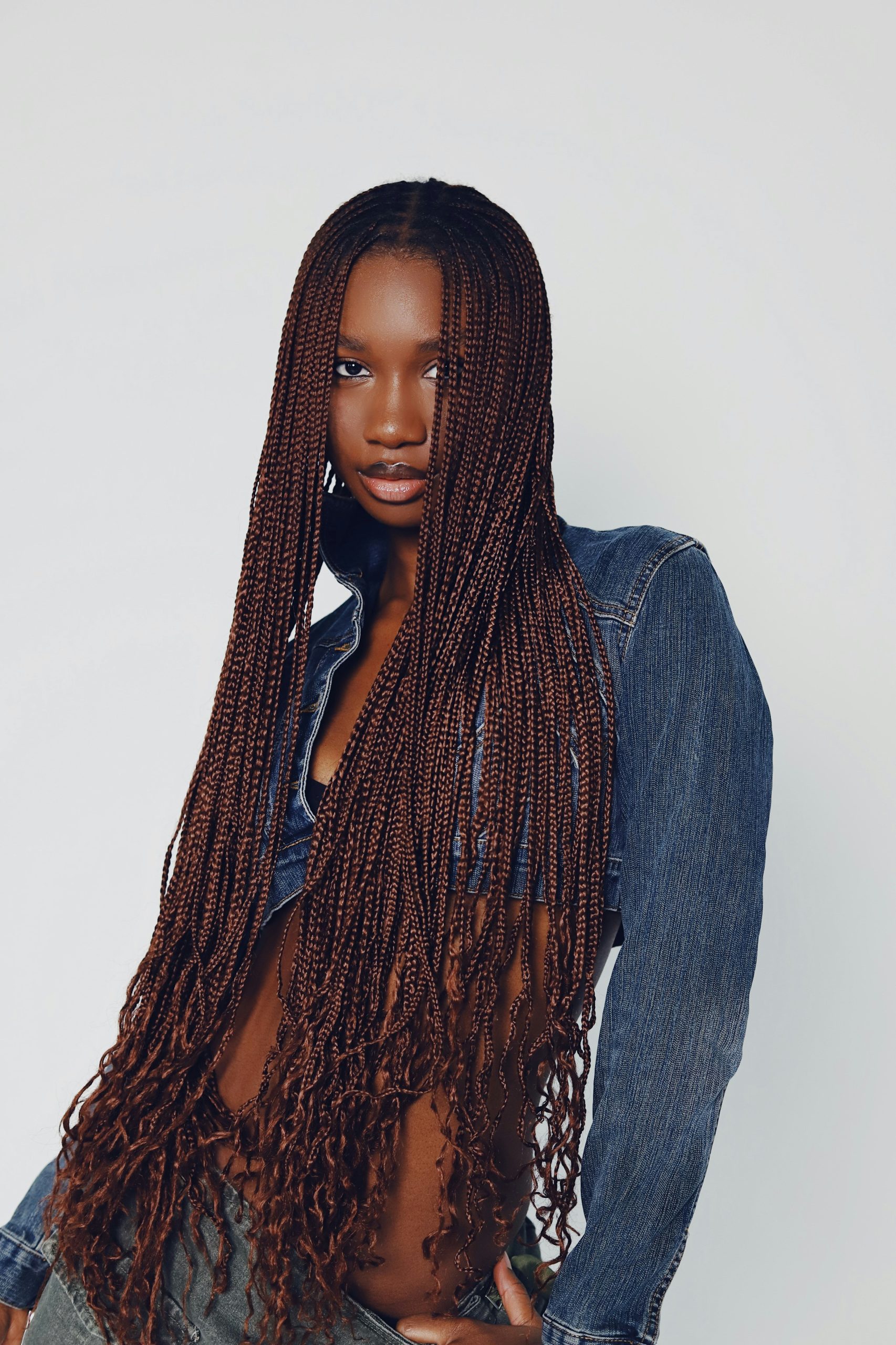

Small box braids are thin braids sectioned from small square parts, prized for lasting up to two months and giving the most styling freedom of any braid size, with the trade-off of a long install.
The 30 ideas below sort by length, color, and styling, since the small size is the most versatile base for updos, half-up looks, and detailed styles. Each entry names the detail that defines it and how it affects wear and styling, so you can match a photo to the result you want from a long appointment.
Small box braids are the longest-lasting, most detailed braid size, sitting at the opposite end from jumbo braids and pairing with many of the finishes covered in the medium knotless and boho knotless guides. After the gallery, this article covers install time, what to tell your braider, and how to protect your edges over the long wear.
| Factor | Details |
|---|---|
| Braid size | Thin; small square parts across the scalp |
| Install time | 5 to 8 hours; often booked across two braiders |
| Lasts | 6 to 8 weeks, the longest-wearing braid size |
| Best for | Type 3 to 4 hair; anyone wanting maximum styling range |
| Night care | Satin bonnet to control frizz and protect edges |
Small Box Braids by Length
Length changes the weight and the styling range of small braids, from a sharp bob to a dramatic waist-length sweep. These entries run from short to long.
1. Bob-Length Small Box Braids
A small-braid bob keeps the detailed parts in a light, low-tension shape that frames the face. The short length cuts the install time and the weight on the edges. It suits anyone wanting the small size without the commitment of length.
2. A-Line Small Box Braids
An A-line shape keeps the back shorter and the front longer for a sleek, modern braided bob. The angle reads polished and intentional. It is a fresh alternative to a one-length braided bob.
3. Shoulder-Length Small Braids
Shoulder-length small braids balance detail with manageable weight for everyday wear. The mid-length is easy to gather and style. This is a practical length for a first small-braid set.
4. Mid-Back Small Box Braids
Mid-back small braids give dramatic length while showing off the fine, detailed parts. The length adds weight, so the braider should keep the roots light. It is a popular length for its balance of drama and wearability.
5. Waist-Length Small Braids
Waist-length small braids create a flowing, elegant sweep that exudes grace. The significant weight and high braid count mean a long install and careful tension control. This is one of the most striking versions of the style.
6. Hip-Length Small Braids
The longest option reaches the hips for maximum drama and movement. It demands the most extension hair, the longest install, and the most diligent edge care. It suits anyone committed to the upkeep long small braids need.
7. Mid-Length Small Braids for First-Timers
A mid-length set that stops around the bra strap balances the small size with comfort for a first install. The moderate weight is forgiving on the scalp. It is long enough to style yet manageable.
Small Box Braids with Color
Color personalizes small braids using extension hair, and the fine size shows blended tones beautifully. These entries cover the most popular color approaches.
8. Honey Blonde Small Braids
Honey blonde extension hair warms the look and shows the detailed braid pattern clearly. The lighter tone flatters a wide range of skin tones. A darker root keeps the regrowth area natural.
9. Ombre Small Box Braids
An ombre fades from a dark root to lighter ends for dimension without an obvious line. The gradient suits longer small braids. It is a low-commitment way to wear color since your natural hair stays untouched.
10. Burgundy Small Braids
Deep burgundy extension hair reads rich against a dark base and shows beautifully in the light. The cool red tone flatters most complexions. It is a popular fall and winter choice.
11. Caramel Highlight Small Braids
Caramel pieces woven through a dark base mimic highlighted natural hair for subtle warmth. The fine braids blend the tones smoothly. It suits anyone wanting color that reads natural.
12. Jet Black Small Braids
A sleek jet black set keeps the focus on the precise parts and the sheer detail of the small size. The dark tone reads classic and polished. It is the most timeless color choice.
13. Money Piece Small Braids
Two lighter face-framing braids brighten the complexion with minimal color commitment. The contrast draws light to the face. It is the easiest way to test color on braids.
Styling Small Box Braids
The real reward of the small size is styling range, since the fine braids gather and shape into almost anything. These entries cover the most popular ways to wear a set.
14. High Braided Ponytail
Small braids gather into a sleek, full high ponytail that shows their length and detail. The fine size keeps the ponytail from feeling bulky. A loose tie protects the hairline.
15. Half-Up Half-Down Small Braids
Gathering the top half up while leaving the rest down shows length while keeping hair off the face. It is versatile for casual or formal settings. The small size makes a neat half-up knot.
16. Braided Bun Updo
Small braids coil into a smooth, substantial bun for an elegant, protective look. The fine braids pack into a clean shape. A loose gather protects the roots.
17. Braids-on-Braids Updo
The small size is ideal for braiding the braids themselves into larger braids or twisted updos. The detail allows intricate styling other sizes cannot. It is a favorite for events.
18. Small Braids with Beads
Beads or cuffs along the length or ends personalize small braids and add movement. The fine braids hold smaller beads neatly. Space them out so the braids stay comfortable to sleep on.
19. Side-Swept Small Braids
Sweeping all the braids over one shoulder creates a soft, asymmetrical frame. The side sweep suits round faces. It is an effortless way to wear them down.
20. Top Knot Small Braids
Piling small braids into a high top knot is a quick, clean style for hot days. The knot contains the length fully. A satin scrunchie reduces friction.
21. Fulani-Inspired Small Braids
Adding a few cornrows and beads in a Fulani-inspired pattern at the front dresses up a small-braid set. The mixed technique reads detailed and cultural. It pairs the small braids with a styled crown.
22. Goddess Small Braids
Adding curly human-hair pieces at the ends or midsection softens the fine braids into a goddess finish. The curls give body and movement. It is a dressed-up version of the style.
Small Box Braids by Pattern and Finish
The parting pattern and end finish change how a small-braid set reads. These entries cover the structural choices a braider can build in.
23. Center-Part Small Braids
A clean center part sends small braids back symmetrically, the most classic pattern. It suits oval and oblong face shapes. It is the default most braiders produce without other direction.
24. Side-Part Small Braids
A deep side part shifts the braids asymmetrically for a face-framing finish that adds length to round faces. The heavier side adds drama. Request it specifically, since braiders often default to center.
25. Triangle-Part Small Braids
Triangle parts instead of squares give a modern, geometric scalp pattern that reduces visible scalp. The triangle base helps the braids lie fuller. Ask for triangle parts specifically.
26. Small Braids with Curly Ends
Leaving the ends loose and curling them with a flexi-rod set softens the fine braids with bounce. The curly ends read playful. It suits anyone who dislikes blunt or sealed ends.
27. Small Braids with Sealed Ends
Dipping or sealing the ends keeps the fine braids from unraveling over the long wear. Sealed ends are the lowest-maintenance finish. This suits anyone who wants the set to stay neat for two months.
28. Small Knotless Box Braids
Using a knotless feed-in start on small braids removes the root knot for a flatter, more natural and lower-tension result. The knotless technique is gentler on the edges. It is the most comfortable way to wear the small size.
29. Small Braids with a Curved Hairline
A feed-in curve on the front braids gives the most natural-looking perimeter. The curve frames the face better than a straight-back start. This detail separates a skilled install from a basic one.
30. Small Braids with a Bun Refresh
As the set ages, gathering the braids into a bun or wrap refreshes the look without redoing them. This stretches the time between installs. It hides loosening edges while keeping the set wearable.
Install Time and What to Expect
Small box braids take the longest of any braid size to install, usually five to eight hours and sometimes more, because of the high number of fine braids. Many people book two braiders working together to cut that time roughly in half.
The payoff is longevity and versatility: small braids last six to eight weeks, the longest of any size, and give the widest range of styling. Going in with detangled, freshly washed, blow-dried hair speeds the install, and eating beforehand and bringing entertainment makes the long session more comfortable. The cost runs higher than larger braids because of the time and skill involved.
Stylist tip: Book the appointment for a day when you have nowhere to be afterward, and ask whether the salon offers a two-braider option. A small-braid install can run past eight hours, and a second braider not only halves the time but reduces the fatigue that leads to inconsistent braid sizes near the end of a long solo session.
What to Tell Your Braider
Be specific about three things: the small braid size, the length by body landmark, and the parting pattern or any color. Saying “small knotless box braids to mid-back, triangle parts, with sealed ends” gives a braider the full picture.
Stylist tip: Speak up about tension at the hairline early, because small braids put fine sections under tension across many braids. The small size can pull harder at delicate edge hair than larger braids, so a knotless start and a comfortable tension at the front are the biggest factors in protecting your hairline over the long wear.
Maintenance and Edge Care
Small box braids reward good care with up to two months of wear, but the long lifespan makes edge and scalp care essential. Wear a satin bonnet or sleep on a satin pillowcase nightly to control frizz and protect the edges.
Cleanse the scalp every one to two weeks with a diluted shampoo or a cleansing applicator, and keep it moisturized with a light oil along the parts. Take the braids down by eight weeks rather than pushing longer, since the fine braids trap more shed hair and matting becomes harder to remove. Refreshing the frizziest front braids around week four buys extra time without a full reinstall.
Stylist tip: Resist the urge to keep small braids in past eight weeks just because they still look acceptable. The fine size traps significantly more shed hair than larger braids, and an over-worn small-braid set can mat at the roots and cause painful, damaging takedowns.
When Small Box Braids Are Not the Right Choice
Small braids suit many people, but a few situations point to a larger size or different style.
- You want a fast install: small braids take the longest of any size. Medium or jumbo braids cut the chair time significantly.
- A fragile or thinning hairline: the high braid count can stress delicate edges. A larger, lower-tension size or a knotless start protects the hairline better.
- You want a short-term style: the long install is best amortized over weeks of wear. A twist gives a quicker, more temporary option.
FAQ
How Long Do Small Box Braids Last?
Small box braids last six to eight weeks, the longest of any braid size, because the fine braids hold up well over time. Taking them down by eight weeks prevents matting and shed-hair buildup at the roots. Good edge and scalp care is what gets them through the full lifespan looking fresh.
How Long Do Small Box Braids Take to Install?
Most small-braid installs take five to eight hours, sometimes more, because of the high number of fine braids. Booking two braiders working together can cut that roughly in half. Going in with detangled, freshly washed, blow-dried hair also speeds the process.
Are Small Box Braids Bad for Your Edges?
Small braids can stress delicate edges because the high braid count puts many fine sections under tension, but a knotless start and a comfortable tension at the hairline prevent damage. Speaking up if the front feels tight is the biggest protection. Taking them down on time also keeps the edges healthy.
How Much Do Small Box Braids Cost?
Small box braids cost more than larger sizes, often in the range of a couple hundred dollars or more, because of the time and skill the long install requires. Length, color, and a knotless technique raise the price further. Prices vary widely by region and braider, so confirm the cost for your specific length when booking.
What Is the Difference Between Small and Medium Box Braids?
Small box braids are thinner, take much longer to install, and last longer with more styling range, while medium braids install faster and balance detail with manageable weight. Small braids suit anyone wanting maximum versatility and longevity, whereas medium braids are the practical everyday middle ground. The trade-off is install time and cost.
Can You Get Small Box Braids Knotless?
Yes, small braids can be done with a knotless feed-in start, which removes the root knot for a flatter, more natural, and lower-tension result. Knotless is gentler on the edges, which matters given the high braid count of the small size. It is the most comfortable way to wear small braids.
Small box braids reward a long install with the longest wear and the widest styling range of any braid size, from sleek ponytails to intricate updos. Bring a reference photo, ask for a knotless start and a comfortable tension at your edges, and protect your hairline and scalp over the weeks of wear. Cared for well, small box braids are the most versatile and long-lasting protective style you can choose.
Hair results vary based on your natural hair type, texture, density, and condition. Always consult with a licensed hairstylist before making significant changes, especially with chemical treatments or dramatic length changes. Photos may show styled results that require professional tools and products to replicate.