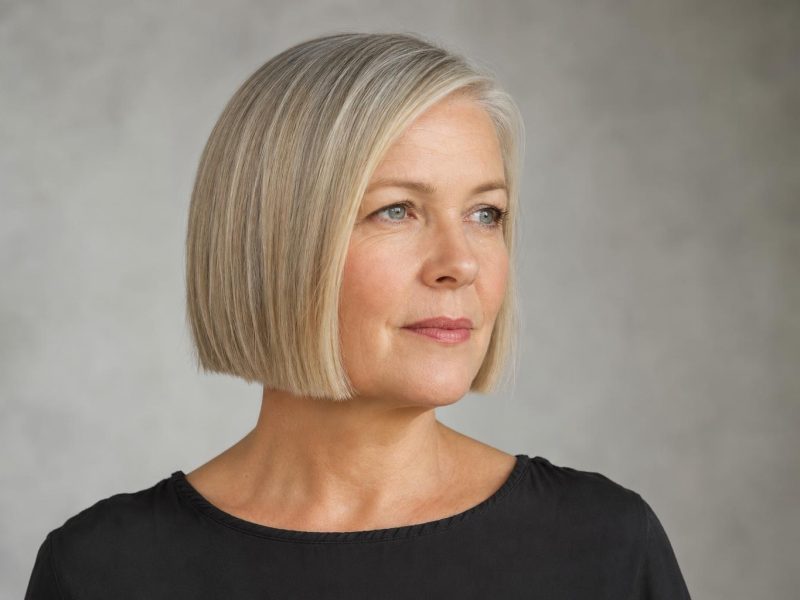


The undercut stacked bob combines two distinct cutting techniques into one shape: a graduated stack at the back that creates volume and movement, and a clippered or closely cut undercut section that creates a hard contrast line beneath it.
What separates an undercut stacked bob from a standard stacked bob is that hard line. A regular stacked bob uses graduation to build volume through layers that blend into each other. The undercut version removes hair below a defined boundary, which sharpens the shape, increases the volume contrast, and gives the overall look a deliberate edge that blended graduation alone cannot produce.
These 25 undercut stacked bob variations are organized by where the undercut sits and how much of the back section it occupies: nape-only undercuts that are subtle from the front, side and temple undercuts that restructure the silhouette more dramatically, full disconnect undercuts where the clipped section spans the full bottom half of the head, and color and texture combinations that amplify the shape’s graphic quality.
What Is an Undercut Stacked Bob?
An undercut stacked bob has two structural zones. The stacked zone runs from the occipital bone upward, where layers of progressively shorter hair are graduated to create a rounded, full shape at the crown and upper back. The undercut zone sits below that, where the hair is clippered close to the scalp or cut very short with scissors.
The relationship between these two zones is what determines the look. A shallow undercut that covers only the nape below the hairline is subtle and often invisible when the top hair falls naturally. A deeper undercut that climbs to mid-back creates a visible hard line and a more dramatic contrast. A full disconnect undercut that spans the entire lower section of the head, from nape to temples, is the most graphic interpretation of this cut.
Guard size on the undercut section controls how close the clip is. A 1 guard (about 3mm) gives a near-shaved effect. A 3 guard (about 10mm) leaves stubble that grows out more gradually. Most undercut stacked bobs use a 0 to 2 guard in the undercut zone and blend upward with longer guards before reaching the stacked section.
| Undercut Type | Placement | Visibility | Maintenance Frequency |
|---|---|---|---|
| Nape undercut | Below the hairline at the nape only | Hidden when hair falls down; revealed when pinned up | Every 4-6 weeks |
| Side/temple undercut | Extends from nape to behind the ear or to the temple | Visible on the sides from the front | Every 3-5 weeks |
| Full disconnect | Nape to temples on both sides, creating a full perimeter line | Fully visible all around; the defining feature of the look | Every 2-4 weeks |

Nape Undercut Stacked Bob
The nape undercut is the most versatile interpretation of this cut because it adds the structural contrast of an undercut without altering the visible silhouette from the front. The clipped section sits below the fall line of the stacked bob and only becomes visible when the hair is pulled up or pinned back. This makes it the right entry point for anyone who wants the feel and sharpness of an undercut stacked bob without committing to a look that is visible in every professional or formal context.
1. Classic Nape Undercut with Steep Stack
The graduation angle in a steep stacked bob creates the most pronounced volume buildup at the crown, because the layers are cut short at the nape and increase in length rapidly toward the top. Pairing that steep stack with a clean clippered nape undercut sharpens the bottom boundary of the shape, which makes the volume contrast between the clippered section and the stacked section above it more visible even when the hair falls naturally. Ask your stylist for a 1 guard on the nape, fading up to a 3 guard before meeting the graduated stack at the occipital bone.
2. Nape Undercut for Round and Square Face Shapes
Both round and square face shapes benefit from a stacked bob that keeps the weight high rather than wide, and the nape undercut reinforces that by removing bulk from the lowest section of the back. The clean nape line creates a vertical emphasis at the back that elongates the overall shape, which balances roundness or angular jaw width better than a blunt uncut nape. Women with square faces may want to avoid a very wide temple-to-temple stack line and instead ask for a more oval-shaped stack that rounds at the sides.
3. Nape Undercut on Fine Hair
Fine hair benefits from a nape undercut because removing the lower hair density allows the stacked section to sit higher and lighter without the weight of the bottom section pulling it down. The graduation creates the appearance of more hair than actually exists because the shorter layers beneath the longer top layers create a padded effect. Fine hair should use a shallow graduation angle rather than a steep one, since a steep stack on fine hair can look sparse at the nape transition zone even with an undercut.
4. Slicked-Back Styling on a Nape Undercut Stacked Bob
Smooth the top section of the stacked bob back from the face using a boar bristle brush and a light pomade or styling cream, directing the weight toward the crown rather than letting it fall forward. The slicked-back styling exposes the nape undercut section even when the hair is down, because the backward direction of the top section lifts the fall line above the clippered zone. This works best when the top length is at least 4-5 inches so there is enough hair to smooth back without pulling tension on the sides.
5. Low-Maintenance Nape Undercut Growth Plan
The nape undercut requires the least frequent touch-up of any undercut variation because the clipped section is hidden under the stacked hair and does not have a visible hard line at the perimeter. A 4-6 week salon visit maintains a clean nape undercut without the undercut growing out enough to create a noticeable bulk difference between the clipped and unclipped zones. Planning the nape undercut on the same schedule as the overall stacked bob trim means no additional salon visits, which is the lowest-effort maintenance tier of this cut style.
6. Caramel Highlight Placement on a Nape Undercut
Caramel or warm honey highlights applied to the stacked section of the bob create a tonal dimension that draws visual attention to the graduated volume rather than the clipped undercut. The color contrast between the highlighted stack above and the natural or darker undercut below emphasizes the separation between the two structural zones, making the undercut read as an intentional architectural feature rather than a hairline that was simply trimmed. Highlights that concentrate near the top of the stack and lighten toward the crown give the overall shape a lit-from-within quality that works well in side-profile photos.
7. Describing a Nape Undercut to Your Stylist
Tell your stylist: “I want a stacked bob with a clippered nape undercut. The undercut should start at the natural hairline and go no higher than the occipital bone. Use a 1 guard at the nape and fade up to a 3 guard at the transition. I want the stack above it to be a moderate graduation, not too steep, with the longest layer at chin length and the stacked section rounding from the top of the occipital bone up to the crown.” Providing these specific reference points eliminates ambiguity about how high the undercut should climb and how dramatic the stack angle should be.
8. Nape Undercut vs Standard Stacked Bob
A standard stacked bob uses graduation at the nape to taper the hair into the neck, which creates a smooth natural fade from the stack into the hairline. The nape undercut version replaces that smooth taper with a hard clippered line, which creates a visible contrast boundary between the stacked section and the skin below it. The practical difference is that a nape undercut requires a separate clipper pass at the bottom of the cut, needs touch-up separately from the rest of the bob if the nape grows quickly, and gives a more architectural finish that reads as a deliberate design choice rather than standard bob construction.
Side and Temple Undercut Stacked Bob
Extending the undercut from the nape around to the sides and temples changes the visible silhouette of the stacked bob from the front. The clipped sections now frame the face at the sides, which narrows the lower half of the head and creates a stronger contrast with the full stacked back section. This version of the undercut stacked bob reads as more editorial and is the most commonly photographed interpretation because the side undercut creates a visible design element in every angle and not just from the back.
9. Temple-to-Nape Clipper Line with Volume Stack
Carrying the clippered line from the temple down to the nape on both sides creates a horizontal reference line that runs all the way around the head at the same level. The stacked bob sits above that line, which frames the graduation as if it is sitting on a defined pedestal. This version requires precise clipper work at the temple corners to ensure the line is symmetrical from both sides; the temple-to-nape line is where any variation in technique becomes immediately visible from the front.
10. Side Undercut for Oval and Heart Face Shapes
Oval face shapes carry the side undercut stacked bob well because the proportional balance of an oval face means the reduced width at the sides from the undercut does not create imbalance. Heart-shaped faces, which are wider at the forehead than the jaw, benefit from the side undercut because it removes width at the lower half of the silhouette, which narrows the jaw area and creates a more even width from forehead to chin. Women with heart-shaped faces exploring cuts for their face shape often find that the side undercut’s width reduction at the lower head is one of the more flattering structural adjustments available in short hair.
11. Side Undercut on Thick or Coarse Hair
Thick and coarse hair benefits significantly from the side undercut because removing the lower sections by clipping eliminates the bulk that makes thick hair difficult to control at a bob length. Without an undercut, thick hair at a stacked bob length tends to push outward at the sides and bottom, creating a triangular silhouette instead of the rounded volume-at-crown shape that defines a stacked bob. Clippering the side sections allows the stacked top to hold its shape without constant product application to suppress the sides.
12. Styling the Side Section Reveal
Pin the top section of the stacked bob on one side using a small clip or bobby pins above the ear to expose the side undercut section while leaving the opposite side to fall naturally. This half-pinned styling creates an asymmetrical presentation that shows both the undercut and the full stacked length in the same look. Apply a small amount of edge control or water-based pomade along the clipped side section’s hairline to define the hard edge before pinning, which sharpens the contrast between the clippered skin and the pinned hair above it.
13. Side Undercut and the Grow-Out Gap
The side undercut on a stacked bob grows out faster than the nape undercut because the sides of the head have a higher hair growth rate than the nape in most people. At 3 weeks of growth, the clipped section begins to show a soft stubble that softens the hard line and makes the undercut look unintentional rather than designed. Women who want to maintain the architectural quality of the side undercut should plan a touch-up every 3-4 weeks, which is more frequent than the overall bob trim schedule of 6-8 weeks.
14. Two-Tone Color on Side Undercut Stacked Bob
A contrasting color applied to the stacked section while the undercut zone remains natural or a different shade creates a graphic two-tone effect that emphasizes the cut’s structural divide. Black stack above a natural dark undercut is the classic high-contrast version; a platinum or bleached stack above a natural medium brown undercut creates the same structural graphic effect with more tonal range. Bleaching the undercut section rather than the stack is the less common but equally dramatic alternative, where the clipped light section peeks beneath the darker full-length hair when styled.
15. Temple Fade Language for the Salon
Tell your stylist: “I want the side undercut to start at the temple, following the natural hairline down to behind the ear, then continue around to the nape. Use a 0 or 1 guard along the hairline edge, fading up to a 2 guard before reaching the stacked bob section. I want the transition line to sit about 2 inches above the ear on the sides. Please keep the line clean and crisp rather than a soft fade, because I want the undercut to read as a deliberate design element.” This language distinguishes a crisp undercut from a blended fade, which is important for achieving the graphic look rather than a softer tapered result.
16. Side Undercut Stacked Bob vs. Pixie Bob
A side undercut stacked bob and a pixie bob both use short clipped sides with longer top sections, but the construction and result are different. The pixie bob uses uniformly short sides that taper continuously from the top length, while the side undercut stacked bob uses a hard disconnected line where the graduation above is independent of the clippered section below. The stack section of the undercut bob creates a full rounded back shape that a pixie bob does not have, and the full stacked back is what gives the undercut bob its volume and silhouette from behind. Women considering both options can explore more short cut comparisons at THP’s short cuts guide.
Full Disconnected Undercut Stacked Bob
The full disconnect version of this cut is the most committed interpretation: the clippered undercut runs from temple to temple all the way around the perimeter of the lower head, creating a complete separation between the close-clipped bottom zone and the full stacked top section. There is no natural blending between the two zones; the disconnect is the point. This version reads most dramatically because the hard perimeter line is visible from every angle, front and back, and it requires the most frequent maintenance to keep the line from softening into an unintentional grow-out.
17. Deep Disconnected Stack with Shaved Line
Using a 0 guard or razor foil along the disconnection boundary creates a visible skin line at the base of the stacked section. The shaved line acts as a precise anchor for the graduation above it, which gives the stacked section an almost geometric precision that a clippered-but-not-shaved line cannot match. This technique requires a steady hand and is best executed by a stylist who has experience with fade lines in short hair; a line that wanders or varies in height around the perimeter undermines the precision that makes the full disconnect effective.
18. Full Disconnect for Long Face Shapes
Long or oblong face shapes need caution with the full disconnect undercut because a high horizontal perimeter line can further elongate the visible face by drawing the eye upward along the full stacked section. Placing the disconnect line low, just above the ear rather than mid-temple, limits the visual elongation while still creating the disconnect effect. Alternatively, a fringe or side-swept bang at the front can introduce a horizontal break at the forehead that balances the vertical reading of the stacked back. Women with long face shapes considering short cuts can also explore bob variations for their proportions.
19. Curly Hair Full Disconnect Stacked Bob
Curly hair naturally creates more volume in the stacked section than straight hair, which makes the contrast between the clippered undercut zone and the stacked top even more pronounced. On very curly or coily hair, the stacked section springs up and out rather than draping smoothly, which creates a mushroom-like volume that emphasizes the disconnect dramatically. Define the curls in the stacked section using a curl cream and diffuser while leaving the undercut section brushed clean and smooth for the maximum contrast between texture and structure. Women with curly hair exploring bobs can also read about curly bob options that pair well with graduation.
20. Styling the Full Disconnect for Formal Occasions
Smooth the stacked section with a light-hold styling cream using a flat brush, directing the top hair forward and to one side to create a side-swept presentation that covers the disconnect line at the temple. This brings the look closer to a conventional bob silhouette and makes the full disconnect undercut appropriate in formal settings where the clippered sides might read as too casual. Apply a clear edge gel along the hairline at the nape to keep the boundary clean and visible from the back, which maintains the graphic quality of the cut even when styled more conservatively from the front.
21. Maintenance Calendar for a Full Disconnect
A full disconnect undercut stacked bob needs a touch-up more frequently than any other variation in this gallery. The clippered perimeter line should be refreshed every 2-3 weeks; at 4 weeks of growth, the line softens enough to look like a grow-out rather than a design decision. The stacked bob section can wait 6-8 weeks between full trims, but the bob and the undercut will rarely be on the same schedule, which means this cut involves more salon visits per year than a standard bob. Factor 12-18 visits per year, compared to 6-9 for a standard bob, when choosing this variation.
22. Bleached Undercut Below Dark Stacked Bob
Bleaching the clippered undercut section to platinum or near-white while keeping the stacked top in a deep natural or dyed dark shade creates a reverse two-tone effect where the light section glows beneath the dark section. This color placement is more unusual than the standard approach of lightening the top section, and it creates a visual surprise when the hair is pinned up or the nape is exposed. The bleached undercut section is low-commitment to maintain from a color standpoint because the short growth cycle means you are bleaching only 2-3mm of new growth at each touch-up rather than a long stretch.
Color and Textural Combinations
The undercut stacked bob’s structural contrast makes it an ideal canvas for color and texture work that would be less visible on other cuts. The defined zones, the clipped undercut below and the graduated stack above, allow color placement and texture techniques to map directly onto the architecture of the cut rather than flowing across a single undifferentiated surface. These final three entries show the color and texture approaches that work best with this specific structure.
23. Salon Consultation for a Color-Enhanced Undercut Bob
Tell your colorist: “I want color that emphasizes the contrast between the undercut section and the stacked bob above it. If we are lightening the top, I want the brightest pieces concentrated at the crown and the top of the stack, not near the disconnection line, so the contrast is color on top and natural at the boundary. If we are adding color to the undercut section only, I want a saturated fashion color applied after the section has been pre-lightened to at least a level 9. Please do not blend the color across the disconnection line; I want each zone to be its own distinct shade.” This specificity prevents a colorist from instinctively softening the boundary when the goal is to keep the two zones visually separate.
24. Undercut Stacked Bob vs. Disconnected Bob
A disconnected bob uses an intentional length break somewhere in the bob itself, typically a long front section that does not connect to the back length, creating an unequal silhouette. The undercut stacked bob’s disconnection is different: it separates the bob from the scalp underneath it rather than separating two lengths of the bob from each other. Both cuts use disconnection as a deliberate technique, but the undercut stacked bob’s disconnection is structural and sits at the scalp boundary, while a disconnected bob’s break is within the hair length itself. The layered bob offers another related structure worth comparing before committing to the undercut version.
25. Peekaboo Color in the Undercut Section
Saturated fashion color applied to the clipped undercut zone, purple, red, blue, or any vivid tone, creates a peekaboo effect that is hidden when the stacked bob falls naturally and revealed when the hair is pinned up or blown back. The short length of the undercut section means fashion color fades within 3-5 weeks, which is shorter than on long hair but also means color corrections are cheaper and faster because so little hair is involved. Women who want to experiment with vivid color without committing to the risk of damage on long hair often start with undercut peekaboo color for exactly this reason. The short hair color guide covers additional placement options that work well with this structure.
Face Shape Guide for the Undercut Stacked Bob
The undercut stacked bob’s silhouette varies depending on which undercut variation you choose, and which variation flatters depends substantially on face shape. The table below matches each face shape to the most compatible undercut depth and notes which version to approach with caution.

| Face Shape | Best Undercut Type | Stack Angle | Caution |
|---|---|---|---|
| Oval | Any version works; full disconnect is most photogenic | Steep or moderate, both work | None; oval proportions balance this cut in all variations |
| Round | Side or full disconnect; volume at the crown elongates | Steep stack builds height above the face’s widest point | Nape-only undercut with wide stack line that adds side width |
| Heart | Side or nape undercut; the narrowing effect at the jaw flatters | Moderate graduation; avoid very steep stack that widens forehead | Full disconnect with very high line can push width to the forehead |
| Square | Side undercut with oval-shaped stack softens jaw angles | Moderate angle; rounded crown shape rather than flat top | Straight horizontal disconnect line that mirrors the jaw’s angularity |
| Oblong/Long | Nape undercut; keep width at the sides to break the vertical reading | Shallow graduation to keep width rather than height | Full disconnect with high line that adds vertical visual length |
| Diamond | Nape or side undercut; adds volume at the correct facial zones | Moderate stack that adds width at crown and chin level | Maximum volume at the cheekbone, which is already the widest point |
What to Tell Your Stylist
The technical specificity required for an undercut stacked bob means the salon consultation carries more weight than with a standard bob. Bring a reference photo and describe three key variables: where the undercut line sits, how high the undercut climbs, and how steep the graduation is above it.
For a nape undercut: “I want a stacked bob with a clipped nape undercut. The undercut should sit below the occipital bone, starting at the natural nape hairline. Use a 1 guard at the base and fade to a 2 guard at the top of the undercut before the stack begins. I want the disconnection line to be visible from the back when the hair is parted or pinned up.”
For a side or full undercut: “I want the undercut to extend from the nape around to the sides, reaching no higher than 1 inch above the ear. Please use a 0 or 1 guard and keep the disconnect line crisp rather than faded. I want a clear visual line between the clipped section and the stacked bob above it, not a soft blend.”
Stylist tip: Bring a photo of the back of your head taken at home before the appointment. Stylists rarely see detailed photos of the client’s specific nape hairline shape, which affects how the undercut line will sit. Some nape hairlines grow in an upward V-shape, some are horizontal, and some are irregular; knowing the shape before the cut helps the stylist decide whether to follow the natural hairline or create a new defined line above it.
When This Cut Is NOT Right for You
The undercut stacked bob delivers its best results within specific parameters. Outside of those, the cut is likely to underperform or require more effort to maintain than the result justifies.
- Very high-growth nape hairlines: if your nape hair grows rapidly and the hairline creeps upward quickly, the undercut line will grow out and lose definition within 2-3 weeks. This means the cut is in its most flattering state for only a brief window after each touch-up.
- Very thick or coarse hair with a naturally raised nape: thick hair sometimes grows at the nape in a way that makes the clippered section appear uneven because the hair density varies across the clipped area. A skilled clipper fade can address this, but it requires a stylist with specific fade experience, not every bob stylist.
- Anyone who cannot commit to the touch-up frequency: the full disconnect undercut requires a visit every 2-4 weeks to look intentional. If budget, schedule, or access to a stylist makes that frequency impossible, the cut will spend most of its time in a grow-out state. A standard stacked bob with no undercut gives a similar silhouette at a 6-8 week service interval.
- Work or lifestyle environments where the undercut is not compatible: a full side or temple undercut stacked bob is unmistakably an edgy cut, and some professional environments or personal circumstances may make this impractical. The nape-only undercut is the single exception that reads as a conventional bob in formal settings.
Stylist tip: If you are unsure which undercut depth to commit to on the first appointment, start with a nape undercut only. It is the most reversible choice: if you want to go deeper to the sides at your next visit, the grow-out from a nape undercut is not visible and does not create an awkward transition. Going directly to a full disconnect undercut and then deciding it is too dramatic means a 2-4 month grow-out period where the undercut zone is in an unmanageable in-between state.
FAQ
How Is an Undercut Stacked Bob Different from a Regular Stacked Bob?
A regular stacked bob uses graduation throughout the back to taper into the nape naturally. An undercut stacked bob replaces that natural taper with a clippered section that creates a hard disconnection between the stacked hair and the scalp below it. The result is a sharper, more architectural finish with a visible contrast boundary. The undercut version also requires more frequent touch-ups because the clippered line softens as the hair grows, unlike the natural taper of a standard stacked bob.
Is an Undercut Stacked Bob Good for Fine Hair?
Yes, particularly the nape undercut version. Removing the lower section by clipping reduces the hair weight that pulls the stacked graduation down, which helps the stack hold its volume shape longer between washes. Fine hair should use a moderate rather than steep graduation angle, and a nape-only undercut rather than a full disconnect, to avoid exposing too much scalp at the sides. Women with fine hair can find additional cut strategies in the full stacked bob guide.
How Long Does an Undercut Stacked Bob Take to Grow Out?
The stacked bob section grows out over 3-5 months before it loses its structured shape and transitions to a longer bob or lob. The undercut section grows out faster and becomes noticeable as soft stubble within 3-5 weeks. If you decide to grow out the cut, the undercut section will require the most styling adjustment during the transition, since it will neither be short enough to clip nor long enough to blend with the bob above it for approximately 2-4 months.
Can You Get an Undercut Stacked Bob with Curly Hair?
Yes, and curly hair creates a particularly dramatic version of this cut because the natural spring of curly hair in the stacked section amplifies the volume contrast against the smooth clippered undercut. The key is defining the curl in the stacked section after clipping the undercut, using a curl cream and diffuser to enhance the spring. Curly hair also benefits from the undercut removing the dense bottom section that can flatten curly hair at the nape when there is too much weight concentrated there.
How Often Does an Undercut Stacked Bob Need a Touch-Up?
The stacked bob section needs trimming every 6-8 weeks to maintain the graduation shape. The undercut section depends on the variation: nape undercut every 4-6 weeks; side undercut every 3-5 weeks; full disconnect undercut every 2-4 weeks. These schedules may not align, which means some months require two salon visits: one for the bob trim and a separate one for the undercut touch-up. Planning the full disconnect version means factoring in approximately 12-18 salon visits per year rather than the 6-9 a standard bob requires.
What Products Work Best on an Undercut Stacked Bob?
A lightweight volumizing mousse or root-lifting spray applied at the crown before blow-drying helps the stacked section maintain its volume through the day. A small amount of pomade or finishing cream at the ends of the stacked bob controls flyaways and adds definition. For the undercut section’s hairline edge, a clear edge gel applied with a small brush keeps the perimeter line sharp after styling. Avoid heavy styling products throughout the stacked section; the graduated layers need to move independently to show the shape, and heavy product collapses them together.
The undercut stacked bob works because the two techniques it combines, graduation and undercut clipping, each solve a problem that the other creates on its own. Graduation without an undercut can look blended but lack edge; an undercut without graduation can look severe but flat. Together, the undercut stacked bob offers volume at the top, architectural contrast at the boundary, and a silhouette that reads differently from every angle. Bring a reference photo, describe the three key variables clearly, and the result is one of the more technically specific short cuts available.
Hair results vary based on your natural hair type, texture, density, and growth patterns. The undercut section in particular is influenced by individual nape hairline shape and growth rate. Always consult with a licensed hairstylist or barber who has specific clipper experience before committing to the undercut component of this cut. Photos may show styled results that require professional tools and products to replicate.