
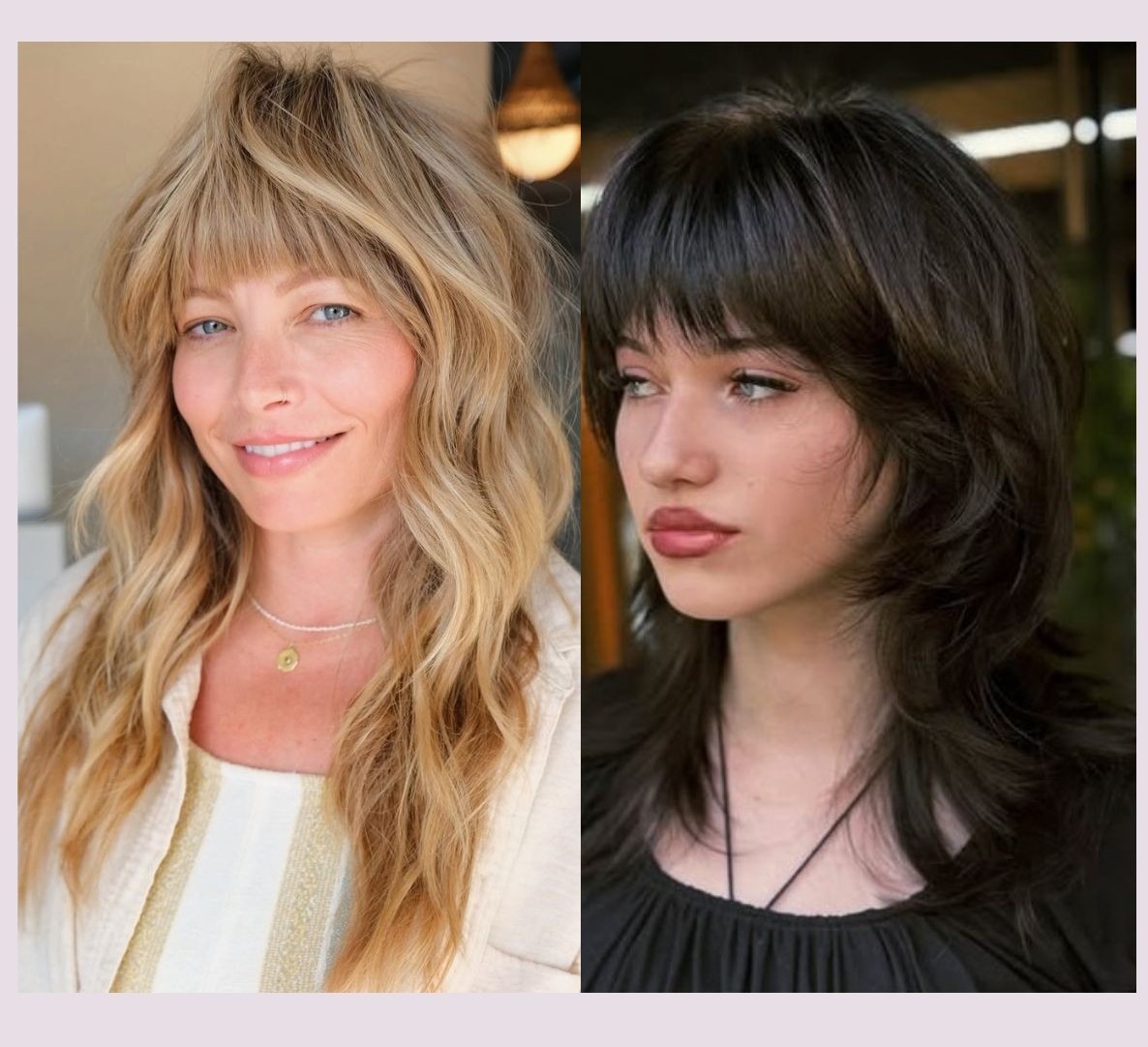
A stylist-led breakdown of what separates these two layered cuts — and how to choose the right one for your hair
A shag has soft, blended layers that graduate evenly from crown to ends, while a wolf cut uses sharp, disconnected layering that creates visible contrast between a voluminous top and a longer, thinner perimeter. Both cuts use heavy layering and texture, which is why social media constantly mislabels one as the other — but they produce different silhouettes, suit different hair types, and require different levels of maintenance.
This guide covers: the technical differences in how each cut is built, which hair types and face shapes each one flatters, realistic maintenance expectations and cost, how each cut grows out over time, what to tell your stylist to get the version you actually want, and a decision framework to help you pick between them.
Shag and Wolf Cut at a Glance
Before getting into the details, this comparison table covers the key differences. Use it as a quick reference — each point is expanded in the sections below.
| Feature | Shag | Wolf Cut |
|---|---|---|
| Layering style | Soft, blended, graduated — layers flow into each other | Sharp, disconnected — visible contrast between short crown and long perimeter |
| Silhouette | Rounded and full, with volume distributed evenly | Top-heavy with a mullet-adjacent taper toward the ends |
| Best hair type | Medium-to-thick; wavy-to-curly | Medium density; straight-to-wavy |
| Fine hair? | Yes — graduated layers add movement without removing too much density | Risky — heavy disconnection can look wispy unless your stylist keeps some bluntness in thinner areas |
| Bangs | Curtain bangs or soft arched fringe that blends into face-framing layers | Curtain bangs, choppy fringe, or micro bangs — often cut further back toward the ear |
| Maintenance | Low — grows out gracefully; trims every 8–12 weeks | Medium — loses its shape faster; trims every 6–8 weeks |
| Daily styling | 5–10 min with texturizing spray or air-dry | 5–15 min with texturizing spray, volume powder, or blow-dry at the roots |
| Grows out | Blends naturally — you can stretch time between trims | Crown layers start looking flat around week 6; contrast fades |
| Vibe | Effortlessly cool, retro-inspired, bohemian | Edgy, fashion-forward, K-pop- and grunge-influenced |
| Best for | Readers wanting texture with minimal daily effort | Readers wanting a bolder, more defined silhouette they’re willing to maintain |

How a Shag Is Actually Cut
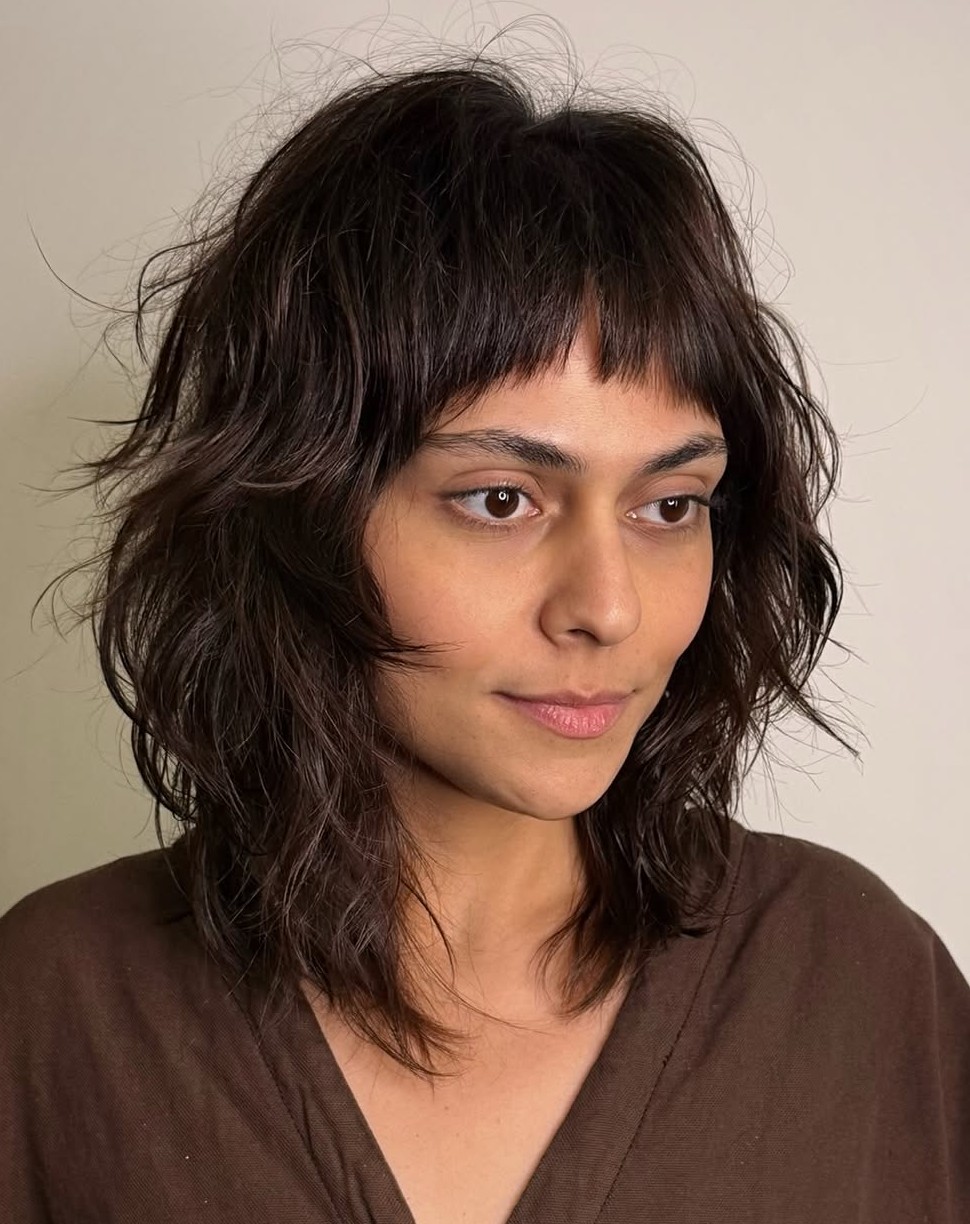
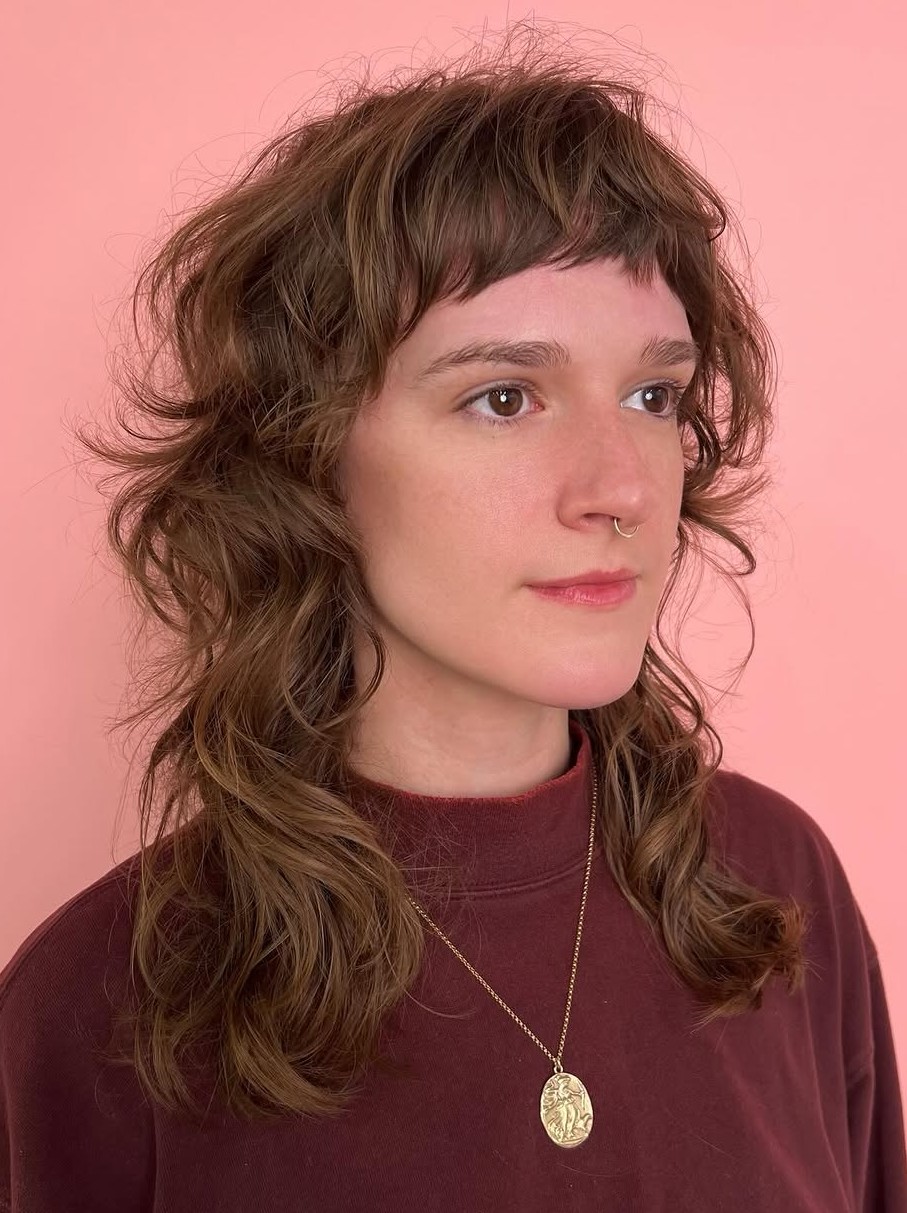
The modern shag is built on graduated layering — layers that transition smoothly from shorter at the crown to longer toward the ends without any abrupt change in length. A stylist typically uses point cutting or slide cutting to soften the ends, which is what gives the shag its signature “lived-in” texture. The heaviest concentration of layers sits around the cheekbones and jawline, framing the face with volume rather than pulling away from it.
Bangs are central to the shag’s identity. A curtain bang that splits at the center and sweeps toward the temples is the most common pairing, blending seamlessly into the face-framing layers below. The fringe is usually carved with a soft, textured arch — not a blunt line — so it grows out without an obvious awkward phase. This is one reason the shag has endured since the 1970s: the cut is engineered to look intentional even as it grows.
The perimeter of a shag stays relatively consistent in length. Unlike more dramatic layered cuts, the bottom edge isn’t drastically thinner or wispier than the rest — it maintains weight all the way around. This is what gives the shag its rounded, balanced silhouette and makes it so versatile across different hair types. Straight hair gets movement it wouldn’t otherwise have; wavy hair gets definition; curly hair gets bounce without losing volume. The shag’s ’70s origins (think Jane Fonda, Joan Jett) gave it a rock-and-roll reputation, but the modern version is softer and more adaptable to professional settings.
How a Wolf Cut Is Actually Cut
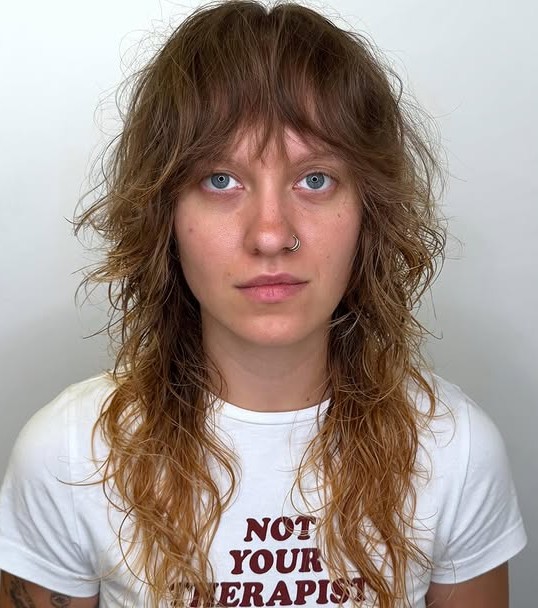
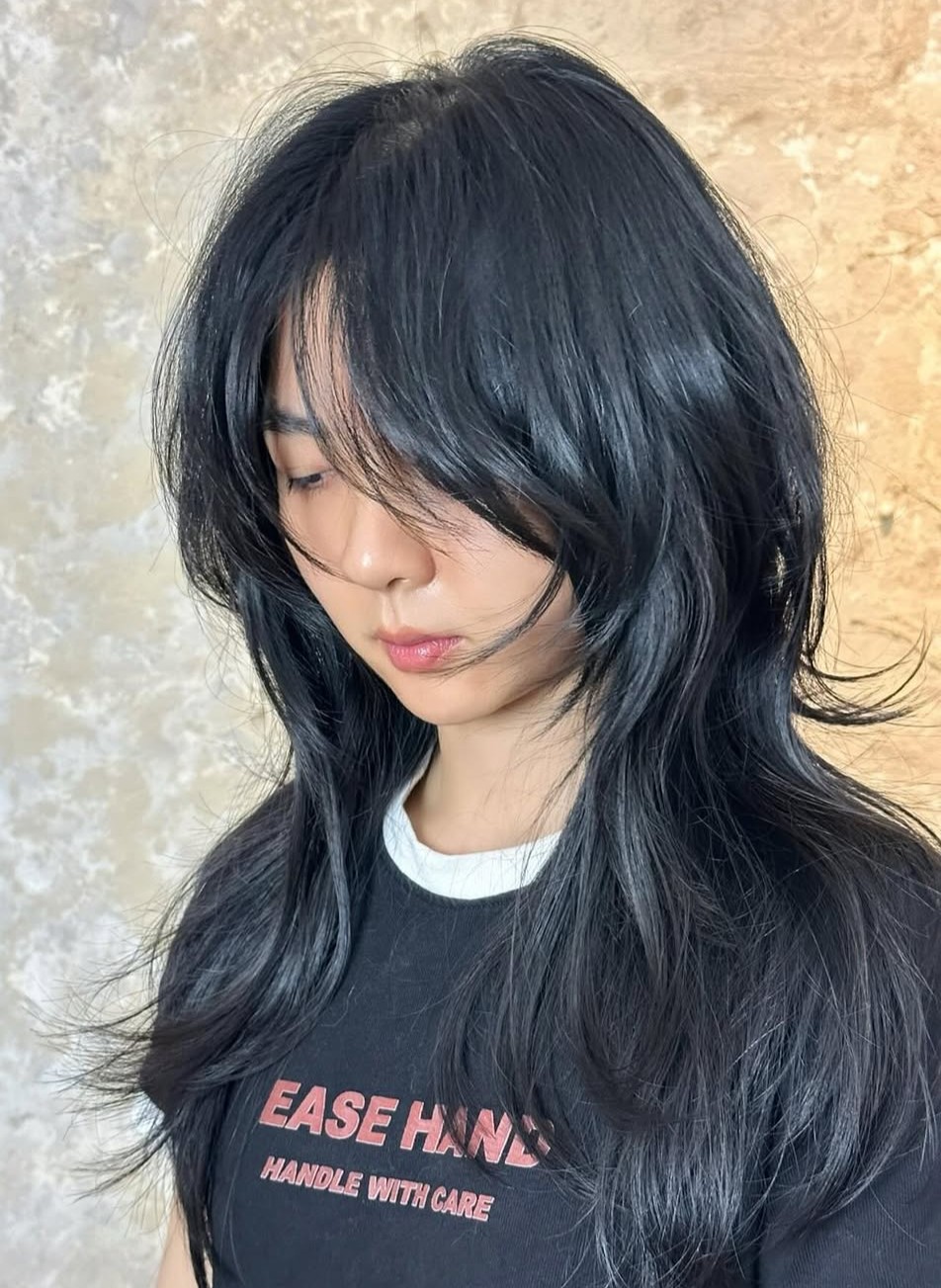
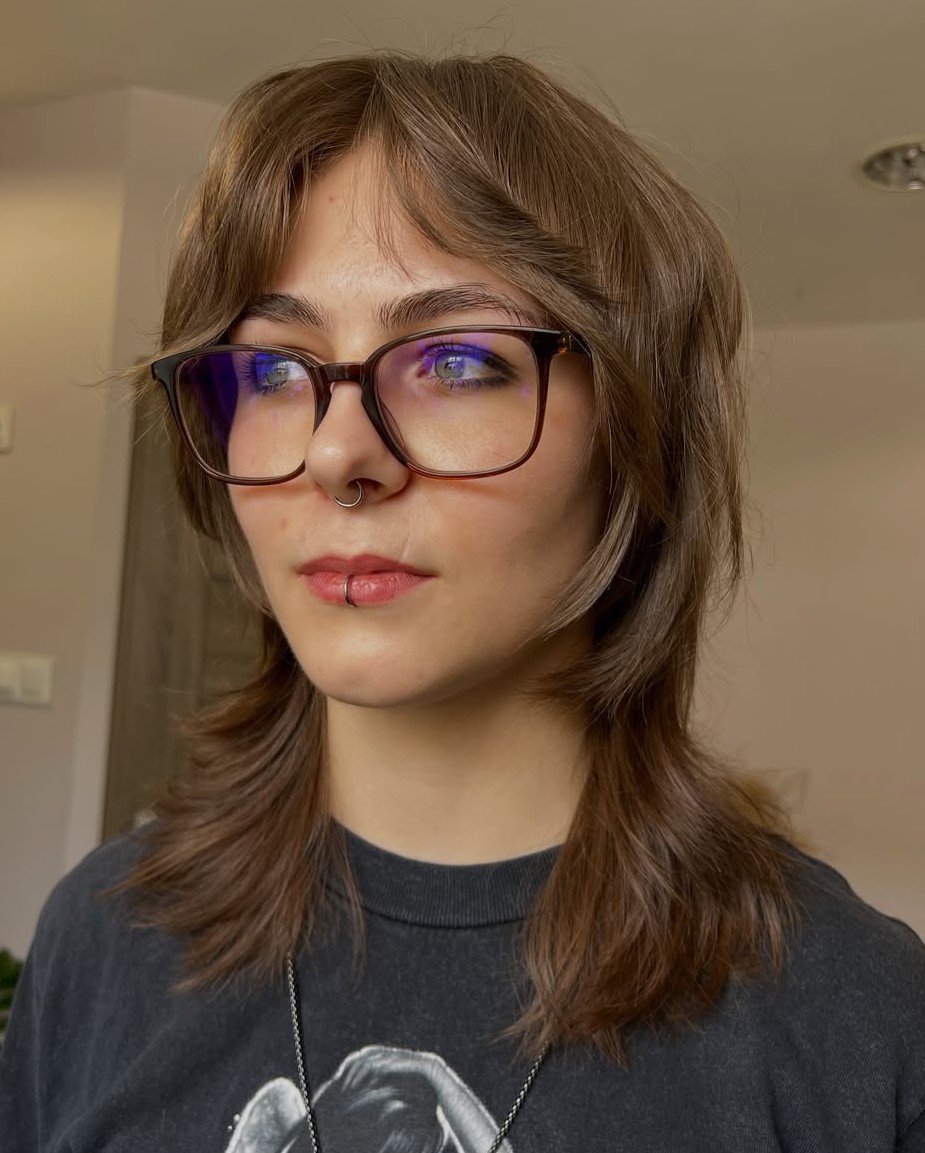
The wolf cut starts from the same toolbox as the shag — layers, texture, bangs — but applies them with a fundamentally different philosophy. Where the shag blends, the wolf cut deliberately disconnects. The crown layers are cut significantly shorter than the rest of the hair, creating a noticeable jump in length between the top of the head and the hair that falls past the shoulders. This is the defining feature: that visible contrast between a voluminous, rounded top and longer, thinner pieces below.
The result is a silhouette that leans closer to a mullet than a traditional layered cut. The front and top carry most of the visual weight, while the back and sides taper into longer, wispier sections. Bangs on a wolf cut often extend further back toward the ears, connecting to the short crown layers rather than sitting as a separate element. Some stylists use razor cutting rather than point cutting to achieve choppier, more textured ends — this amplifies the wild, undone quality that gives the wolf cut its name.
The wolf cut exploded on TikTok in the early 2020s, partly because it became a popular DIY pandemic haircut — the technique of pulling hair into a high ponytail and cutting straight across at the crown produces a rough approximation of the shape. The salon version is far more refined, but the cut’s identity is still rooted in that intentionally imperfect, “I don’t care but I look amazing” energy. It borrows the shag’s volume but adds the mullet’s drama, and it reads as distinctly contemporary in a way the shag (which cycles in and out every decade) doesn’t.
The Wolf Cut Is a Shag’s Bolder Cousin — Not a Different Species
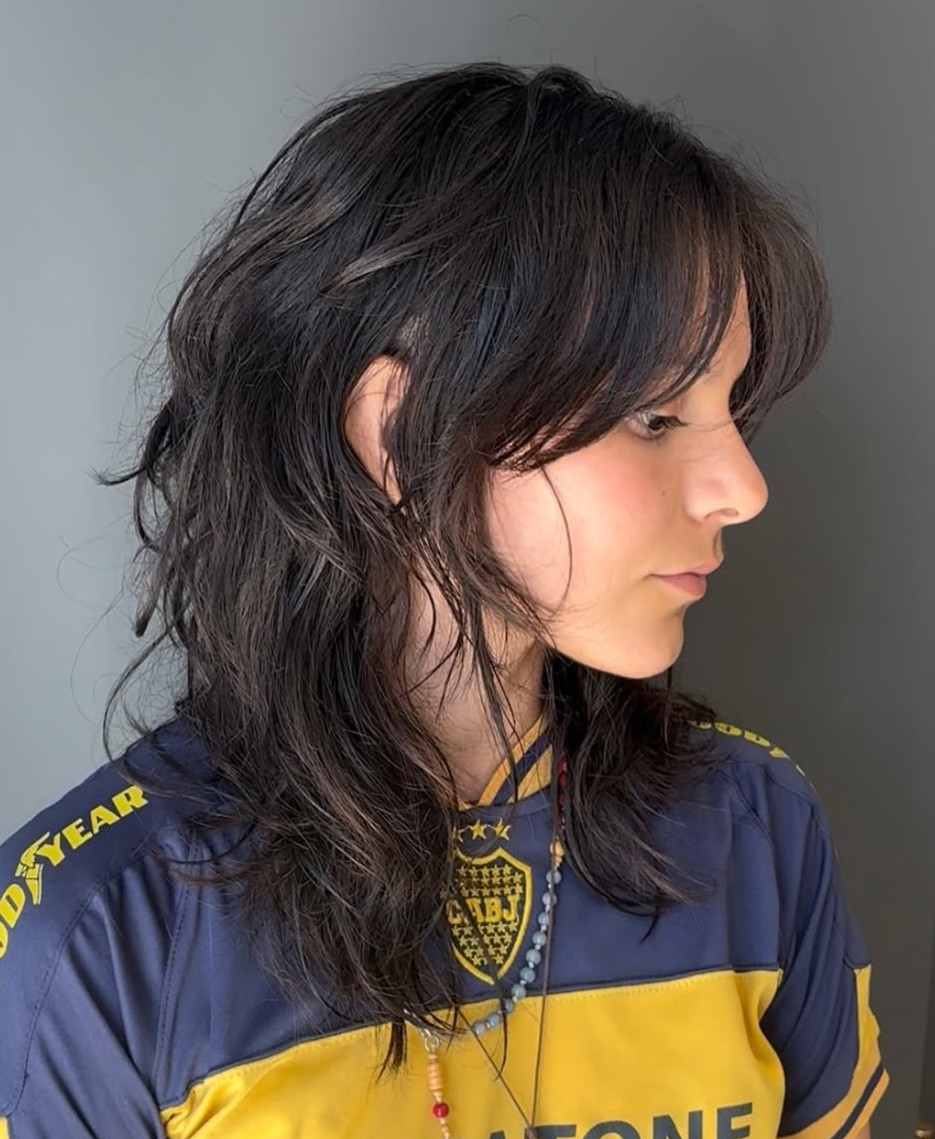
Here’s the part most comparison articles get wrong: these two cuts exist on a spectrum, not in separate categories. A soft wolf cut can look almost identical to an aggressive shag. A shag with very short crown layers starts crossing into wolf territory. The difference is one of degree — how much disconnection, how dramatic the contrast between top and bottom, how blended or choppy the layering technique.
If you imagine a sliding scale where a classic long layered cut sits on one end and a full mullet sits on the other, the shag occupies the softer middle zone and the wolf cut pushes toward the mullet side without fully committing. There’s also a third cut that sits between wolf cut and mullet — the shullet — which goes even shorter at the crown and more extreme in the back. Understanding this spectrum matters because it affects what you communicate to your stylist. Asking for a “wolf cut” without specifying where on the spectrum you want to land is how people end up with something more dramatic (or more tame) than they expected.
Which Hair Types Work Best with Each Cut
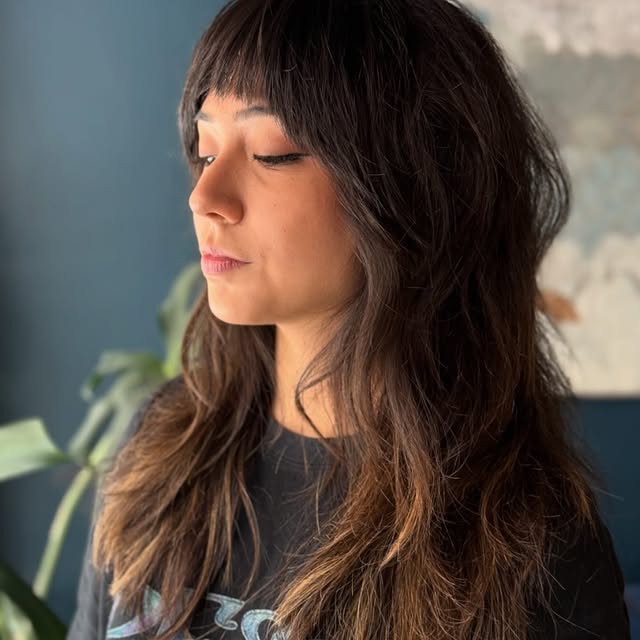
Hair type is where these two cuts diverge most in terms of practical results. The shag is the more forgiving option across the board. Its graduated, blended layers work with nearly every texture — straight hair gains movement, wavy hair gets definition, and curly hair (2B through 3B patterns) gets shape control without losing volume. Medium-to-thick hair is ideal because there’s enough density to support the layering without the ends looking thin, but fine hair also works because the graduated approach adds lift without removing too much bulk from any single section.
The wolf cut is pickier. It performs best on medium-density, straight-to-wavy hair (types 1B through 2B), where the disconnected layers create clear visual separation. On very thick hair, a wolf cut can do excellent work removing bulk and creating shape — but it requires a stylist who knows how to thin strategically rather than just chopping layers in. On fine hair, the wolf cut’s heavy disconnection is a gamble. Those dramatic short crown layers can look sparse and stringy when there isn’t enough density to support them. If you have fine hair and love the wolf cut aesthetic, ask your stylist for a “soft wolf cut” that keeps some bluntness in the thinner areas and uses the disconnection more subtly.
For naturally curly hair (3A and tighter), the shag is the safer bet. Curly wolf cuts exist and can look incredible, but the choppy disconnection interacts unpredictably with curl patterns — some sections may spring up dramatically while others hang flat, and the result requires more styling effort to keep consistent. A curly shag, by contrast, works with the curl pattern rather than against it because the blended layers don’t create competing lengths within the same curl clump.
Face Shape Compatibility
Both cuts flatter most face shapes, but they do it through different mechanisms — and the difference matters if you’re choosing between them specifically for face-flattering properties.
| Face Shape | Shag | Wolf Cut |
|---|---|---|
| Oval | Excellent — the balanced volume complements an already-proportional shape | Excellent — oval faces can handle the drama without looking unbalanced |
| Round | Good — but keep layers below the jawline to avoid adding width; curtain bangs help elongate | Strong choice — the crown volume adds vertical height, and the angular layering offsets roundness |
| Square | Strong choice — the soft, rounded layers counterbalance a strong jawline | Good — but avoid very choppy fringe, which can emphasize angular features; opt for curtain bangs |
| Heart | Excellent — layers starting at cheekbone level balance a wider forehead against a narrower chin | Good — the volume at the crown can exaggerate forehead width; face-framing pieces help redirect the eye |
| Oblong | Strong choice — side-swept bangs and cheekbone-level volume add width and shorten the visual line | Use caution — the top-heavy silhouette can elongate further; keep crown layers moderate |
The general principle: if you want to soften your features, lean toward the shag. If you want to sharpen or add angular definition, the wolf cut does that more effectively. But neither cut is off-limits for any face shape — it’s a matter of adjusting the layering placement and bang style to work with your proportions.
Maintenance: What Each Cut Actually Costs You
This is where a lot of salon regret comes from. People choose based on how a cut looks on Instagram but don’t consider the long-term time and money commitment. Here’s a realistic breakdown.
Shags Need Fewer Trims and Less Daily Effort
A shag can comfortably go 8–12 weeks between trims because the graduated layers blend into each other as they grow. There’s no dramatic contrast to lose — the cut just gradually softens, which many people actually prefer. Daily styling is minimal: a texturizing spray or sea salt spray, some scrunching, and air drying is enough for most textures. If you want more polish, a quick diffuse or a few passes with a 1.25-inch curling iron takes 5–10 minutes. Budget roughly $60–$100 per trim depending on your city, which translates to approximately $300–$600 annually for maintenance.
Wolf Cuts Demand More Frequent Upkeep
A wolf cut starts losing its defining shape around week 6. The short crown layers grow and flatten, the contrast between top and bottom fades, and the cut can start looking like an overgrown layered style rather than an intentional wolf cut. Trims every 6–8 weeks are standard for keeping the silhouette sharp. Daily styling is also slightly more involved: you’ll likely want a volumizing powder or mousse at the roots, texturizing spray through the mid-lengths, and possibly a quick blow-dry focused on lifting the crown. Expect the same $60–$100 per trim, but you’re going more often — roughly $450–$850 annually.
| Maintenance Factor | Shag | Wolf Cut |
|---|---|---|
| Trim frequency | Every 8–12 weeks | Every 6–8 weeks |
| Estimated annual cost | $300–$600 | $450–$850 |
| Daily styling time | 5–10 minutes | 5–15 minutes |
| Key products | Texturizing spray, light mousse | Volume powder, texturizing spray, possibly heat tools |
| Grow-out behavior | Graceful — layers blend as they lengthen | Loses shape around week 6 — crown flattens, contrast fades |
What to Tell Your Stylist
The number one reason people get the wrong version of either cut is miscommunication. “Wolf cut” and “shag” mean different things to different stylists — especially because social media has blurred the line between them. Bringing a reference photo is non-negotiable, but pairing it with specific language gives your stylist a much clearer target.
Salon Language for a Shag
Ask for: “A modern shag with graduated layers starting at cheekbone level, blended through to the ends. Soft curtain bangs that connect into the face-framing. I want the layers to transition smoothly — no disconnection or hard lines. Point-cut or slide-cut the ends for texture.” If you want a more conservative version, add: “Keep the shortest layers longer — I want movement, not volume explosion.” If you have fine hair, specify: “Don’t over-layer the crown — I need to keep density through the top.”
Salon Language for a Wolf Cut
Ask for: “A wolf cut with visible contrast between the crown and the perimeter. Shorter, choppier layers on top — I want them to lift and create volume — and longer, wispier pieces at the bottom. Curtain bangs that extend back toward the ear and connect into the crown layers.” For a softer version, add: “I still want the disconnection to be noticeable, but not extreme — more modern shag leaning toward wolf, not full mullet.” For the full effect: “Razor the ends and don’t blend the transition between the short and long sections. I want the contrast to be obvious.”
How to Decide: A Quick Decision Framework
If you’ve read this far and still aren’t sure, answer these four questions honestly. They tend to settle it faster than any comparison table.
How much daily styling are you willing to do? If the answer is “basically none — I want to air-dry and go,” the shag is your cut. It’s designed to look good with minimal intervention. Wolf cuts can also air-dry well on naturally textured hair, but on straight or fine hair, you’ll need to add volume at the roots to maintain the silhouette.
How do you feel about frequent salon visits? If 8–12 week intervals suit your schedule and budget, the shag works perfectly. If you’re comfortable with every 6–8 weeks and don’t mind a slightly higher annual cost, the wolf cut stays sharp with that cadence.
How bold a change do you want? The shag is a significant departure from a one-length or basic layered cut, but it reads as approachable and professional. The wolf cut makes a louder statement — it’s the choice when you want your haircut to be the first thing people notice about you.
Is this your first heavily layered cut? If yes, start with a shag. The transition from longer or less-layered hair is smoother, the grow-out is more forgiving, and you can always go more dramatic on your next visit. Going straight to a wolf cut without knowing how you feel about short crown layers is a higher-risk move — and once those layers are cut, you can’t undo them without growing them out.
Can You Combine Them?
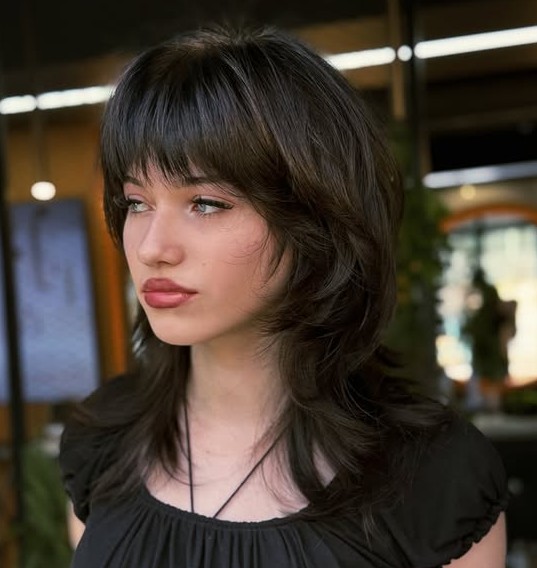
Yes — and many stylists are already doing this. The “shaggy wolf cut” or “soft wolf” sits between the two styles: it uses the shag’s blended layering technique around the face and through the mid-lengths but borrows the wolf cut’s crown volume and slightly more visible length contrast. This hybrid is worth considering if you love the wolf cut’s edgier silhouette but don’t want the full maintenance commitment or the risk of the grow-out awkwardness. Ask your stylist for “a shag base with wolf-cut-level volume at the crown — disconnected at the top but blended through the mids and ends.”
FAQ
Is a Wolf Cut Just a Modern Shag?
Not exactly. They share a common foundation — heavy layering, texture, and usually bangs — but the wolf cut adds deliberate disconnection between the crown and perimeter that a shag doesn’t have. A shag blends its layers smoothly; a wolf cut wants you to see the contrast. Think of the wolf cut as a shag pushed toward mullet territory, with shorter, choppier crown layers and a more dramatic silhouette.
Which Cut Is Better for Fine Hair?
The shag is the safer choice for fine hair. Its graduated layers create movement and the illusion of fullness without removing too much density from any one section. Wolf cuts can work on fine hair, but only if your stylist modifies the technique — specifically by keeping some bluntness in the thinner areas and reducing the disconnection so the ends don’t look wispy. Ask for a “soft wolf cut” if you have fine hair and want the wolf aesthetic.
Can I Get a Wolf Cut or Shag with Curly Hair?
Both cuts work on curly hair, but the shag is more predictable. Curly shags enhance bounce and define curl clusters because the blended layers work with the natural spring pattern. Curly wolf cuts can look incredible — the texture amplifies the volume at the crown — but the disconnected layers may interact unpredictably with curl clumps, creating sections that spring up higher than others. A stylist experienced with curly cutting techniques (like the Rezo cut or dry cutting) is essential for a curly wolf cut.
How Do I Grow Out a Wolf Cut If I Don’t Like It?
The awkward phase typically hits around months 2–3, when the short crown layers have grown enough to lose their volume but haven’t reached the mid-lengths yet. Your stylist can help bridge this by gradually trimming the longer sections to reduce the contrast as the crown catches up. Texturizing products and soft curling can disguise the in-between stage. Most people transition out of a wolf cut into a shag as it grows — the two cuts are close enough that a skilled stylist can reshape a growing-out wolf cut into an intentional shag within two or three trim sessions.
Do I Need Bangs with Either Cut?
Bangs aren’t technically mandatory for either style, but they’re a core part of what makes both cuts look finished. Without bangs, a shag can read as a generic layered cut, and a wolf cut loses the face-framing element that ties the short crown layers into the rest of the style. Curtain bangs are the most versatile option for both — they frame the face without committing to a full fringe, and they grow out gracefully if you change your mind.
Which Cut Looks More Professional?
The shag. Its blended, graduated layers read as polished and intentional even in corporate or client-facing environments. Wolf cuts can work in creative industries, but the choppy disconnection and mullet-adjacent silhouette may read as too casual in more conservative settings. If you need your hair to translate across both casual and professional contexts, the shag gives you more flexibility.
How Much Does Each Cut Cost for the Initial Appointment?
Both cuts typically fall in the $60–$120 range for the first appointment, depending on your city, the salon’s tier, and your hair length. Wolf cuts sometimes cost slightly more because the disconnected layering technique takes more precision and time. The bigger cost difference is in long-term maintenance: wolf cuts need more frequent trims (every 6–8 weeks vs. 8–12 for shags), so the annual cost divergence adds up.
Can I DIY Either Cut at Home?
Wolf cuts are the more DIY-friendly option in theory — the “ponytail method” (pulling all hair into a high ponytail and cutting straight across) creates a rough wolf-cut shape. However, the result is significantly less refined than a salon version, with blunt internal layers that lack the texturizing a stylist would add. DIY shags are harder to pull off because the graduated blending requires more skill and precision. For either cut, a professional first appointment followed by at-home maintenance trims (dusting the ends, cleaning up bangs) is the most practical approach.
Hair results vary based on your natural hair type, texture, density, and condition. Always consult with a licensed hairstylist before making significant changes, especially with chemical treatments or dramatic length changes. Photos may show styled results that require professional tools and products to replicate.