

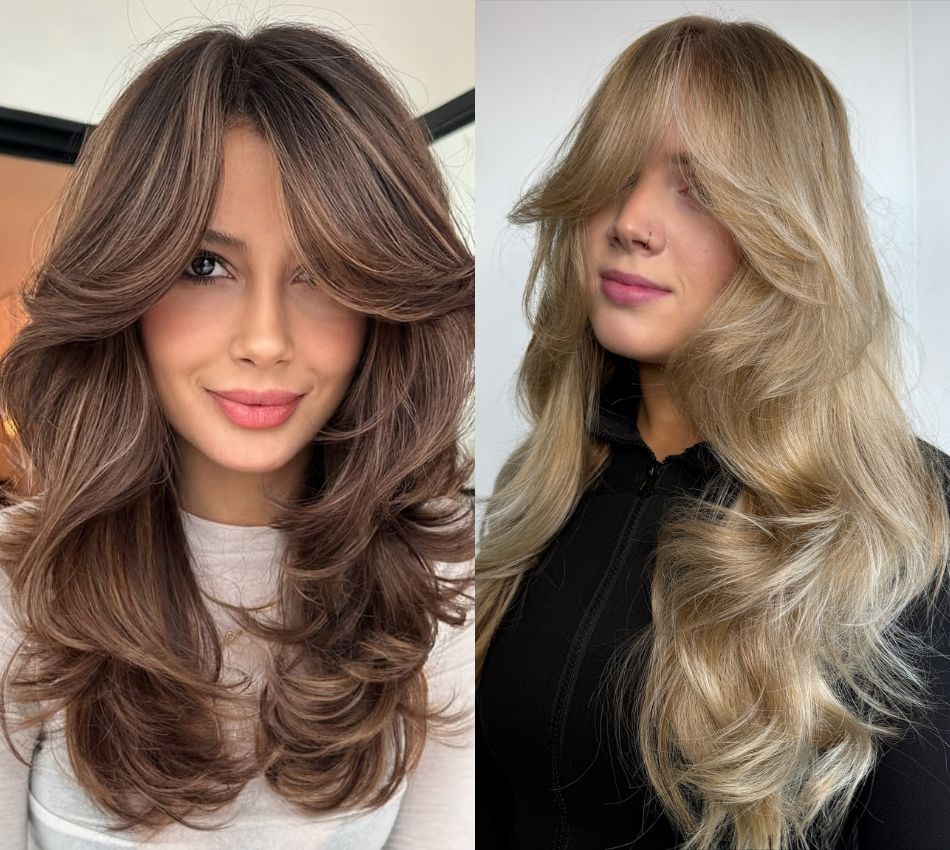
Thirty butterfly haircut variations sorted by length, texture, and bang style. Find face shape tips and salon phrases for your next appointment.
A butterfly haircut uses two distinct tiers of layers (shorter at the crown and jaw, longer from the mid-shaft down) to create a wing-like silhouette that adds volume without losing length. It borrows from the ’70s shag and the ’90s layered blowout but feels much more up-to-date. Below are 30 stylist-approved variations covering long layered hair, medium lengths, shorter crops, and textured options, each with notes on who it works for and how to recreate it.
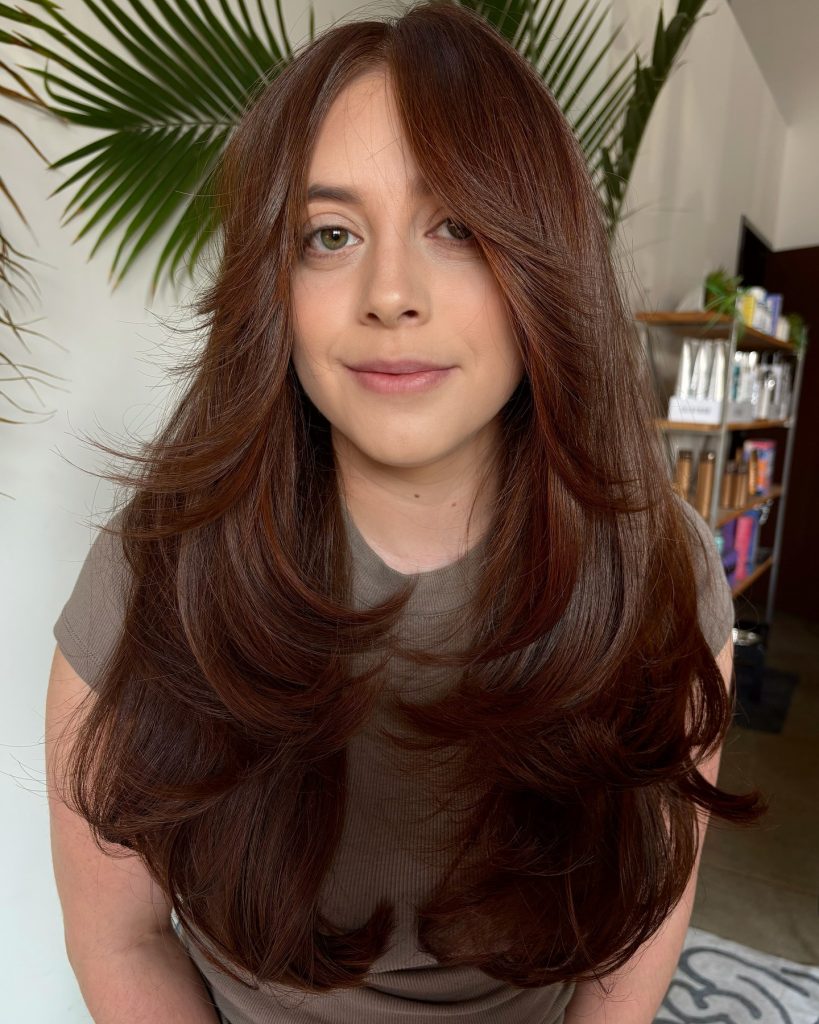
Options are organized by length and styling approach, followed by a face shape compatibility breakdown, maintenance notes, and exact phrasing to use at the salon. Whether you’re working with fine straight strands or thick wavy hair, there’s a butterfly cut here that fits.
| Feature | Details |
|---|---|
| Best Hair Types | Medium to thick; straight, wavy, or curly |
| Ideal Lengths | Mid-length to long (shoulder and beyond) |
| Maintenance Level | Low to moderate; trims every 8–10 weeks |
| Daily Styling Time | 5–15 minutes depending on texture |
| Avoid If | Very fine hair that can’t afford weight removal; very short hair (above chin) |
Classic Butterfly Haircuts on Long Hair
Long hair is where the butterfly cut originated and where it still looks most dramatic. The two-tier layering creates its signature shape best when there’s enough length for the bottom section to flow well past the shoulders. Expect 5–10 minutes of styling with a round brush or diffuser to bring the layers to life.
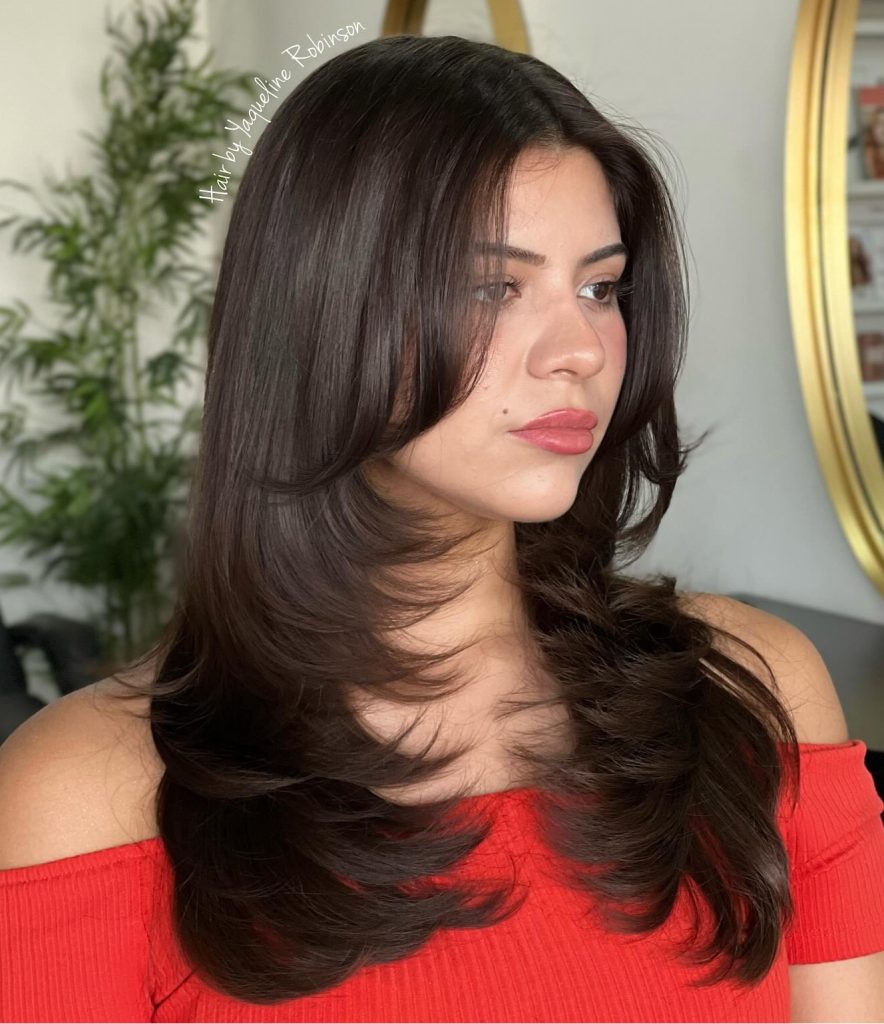
1. Classic Long Butterfly with Center Part
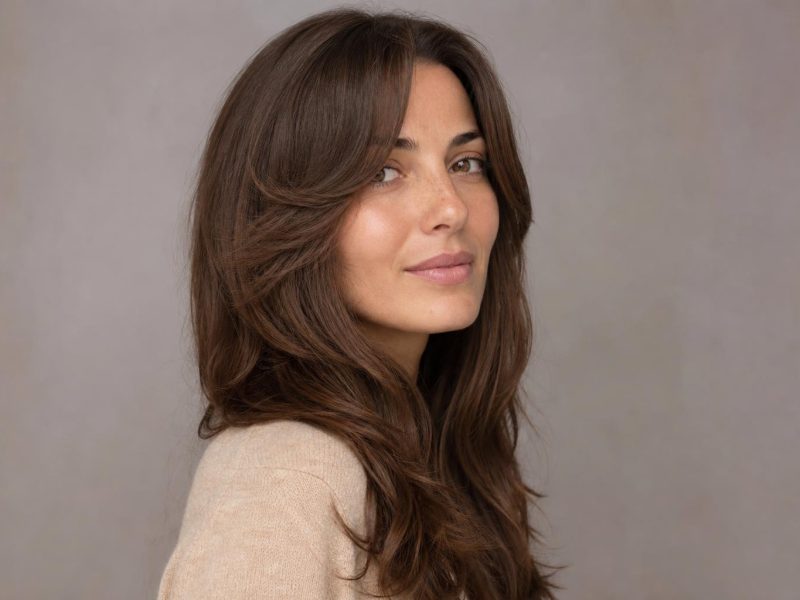
The definitive version: shorter layers hitting the collarbone fan outward while the remaining length falls past the ribcage. A center part keeps the silhouette symmetrical. Oval and heart-shaped faces wear this cleanly; round faces benefit from pushing the part slightly off-center.
2. Waist-Length Butterfly with Feathered Ends
Extra-long hair gets a lightweight lift from feathered layers that start at chin level and taper through the tips. Point cutting at the ends prevents blunt, heavy lines and gives the lower half a wispy finish. A lightweight smoothing cream defines the movement without weighing it down.
3. Voluminous Butterfly Blowout
Built for volume seekers, this version relies on a large-barrel round brush and medium heat to lift the crown layers up and away from the head. The result is a retro-inspired fullness that reads polished rather than puffy. Thick hair handles this best; on fine hair, the lifted crown can look disconnected from the bottom layer.
4. Soft Butterfly Layers on Straight Hair
Subtle, internal layers add movement to naturally straight hair without creating an obvious step between top and bottom sections. Stylists often use slide cutting, pulling the shears down the hair shaft to blend the transition gradually. It’s a low-effort haircut, just air-dry and go.
5. Butterfly Cut with Balayage Highlights
Hand-painted highlights placed along the shorter crown layers create dimension that makes the butterfly shape more visible. The color contrast emphasizes the layered silhouette — lighter tones at the face frame, richer depth underneath. Pair with balayage color techniques that complement your base shade for the most natural effect.
6. Long Butterfly on Thick Wavy Hair
Thick, wavy hair is arguably the ideal base for a butterfly cut. Natural texture fills out the layered shape without heat styling, and weight removal keeps the bottom half from feeling bulky. Scrunch with a curl-enhancing mousse and air-dry; the waves do the rest.
7. Sleek Butterfly with Minimal Layering
Not every butterfly cut needs dramatic contrast. A restrained version uses just two or three face-framing layers at cheekbone and chin level while keeping the rest uniform. It comes across as polished and is a far cry from a heavily layered throwback. Good for professional environments where you want movement without volume overload.
8. V-Shaped Butterfly with Long Layers
Viewed from the back, this variation tapers into a deep V instead of a blunt hemline. This angle adds visual interest and removes weight from the perimeter. The front layers still create the classic butterfly wing framing. Ask your stylist to point-cut the V-shape to avoid a harsh, geometric bottom line.
Butterfly Cuts with Bangs
Adding bangs to a butterfly haircut softens the forehead, draws the eye inward, and makes the face-framing layers feel more connected to the rest of the cut. Some bangs blend most naturally into the butterfly shape, some create a more editorial contrast.
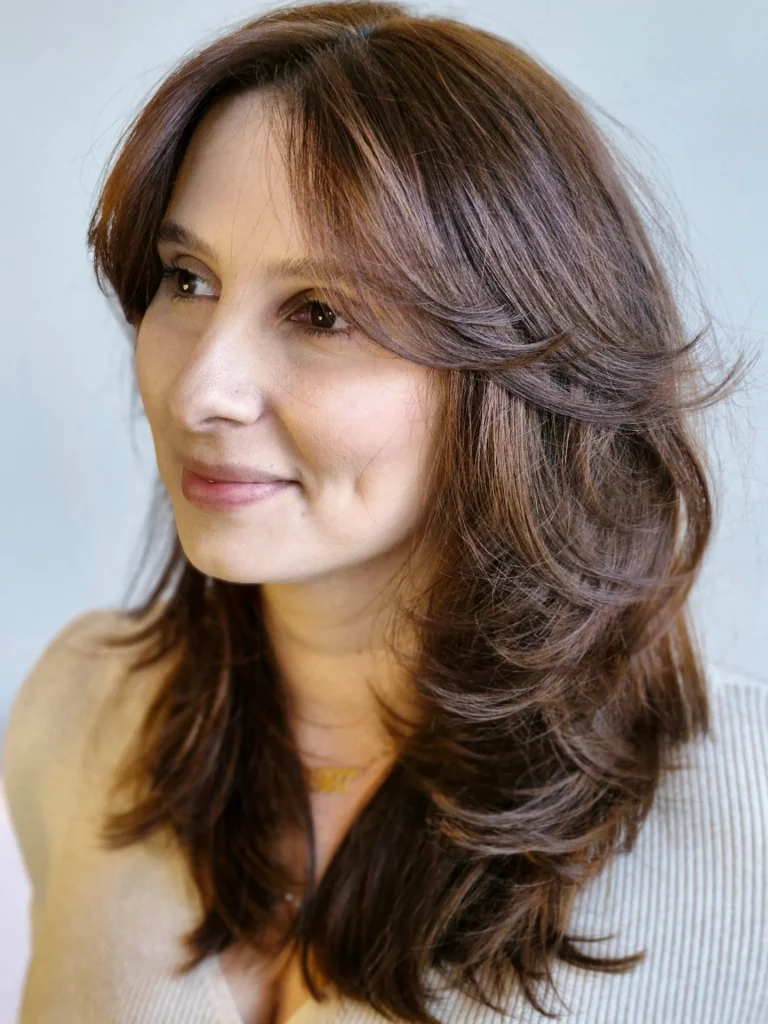
9. Butterfly Cut with Curtain Bangs
The most popular pairing for a reason: curtain bangs split at the center and sweep outward, flowing directly into the butterfly’s face-framing layers without a visible break. Oval, oblong, and heart-shaped faces all benefit. The parted bangs shorten a long forehead while the layers open up the mid-face.
10. Wispy Bangs with Layered Butterfly
Wispy, barely-there bangs add softness without a full fringe commitment. They sit just above the eyebrows and are thin enough to see through, so they don’t overwhelm a smaller face or fine-textured hair. A flat iron on low heat shapes them quickly each morning.
11. Bottleneck Bangs on a Butterfly Cut
Bottleneck bangs start shorter at the center of the forehead and lengthen toward the temples, creating a tapered frame that widens at the cheekbones. On a butterfly cut, they merge into the shorter crown layers for one continuous flow from fringe to face frame. Square and diamond face shapes benefit most from the softened angles.
12. Side-Swept Bangs with Butterfly Layers
A deep side part sends the bangs sweeping across the forehead at an angle, breaking up facial symmetry and adding visual interest. The direction works well with the butterfly’s layered body, especially on round faces where a center part emphasizes width. Blow-dry the bangs over a medium round brush, directing them away from the face.
13. Blunt Bangs with Soft Butterfly Layers
A strong, blunt fringe contrasts deliberately with the feathered softness of butterfly layers below and the juxtaposition is the whole point. Straight, thick hair wears this best. Trim the bangs every 3–4 weeks to keep the line clean; the layers can go 8–10 weeks between appointments.
14. Curly Butterfly Cut with Face-Framing Fringe
On natural curls, a butterfly cut with a shorter curly fringe creates a halo of volume at the top while longer curls cascade below. Stylists experienced with layered cuts on textured hair will cut dry and account for how much the layers bounce up once they spring into shape.
15. Micro Bangs with Long Butterfly Shape
Micro bangs — cut well above the eyebrows — paired with a long butterfly body create a bold, editorial look. The extreme contrast between short fringe and long layers registers as a fashion statement. Oval faces carry this best; round or square faces may find the short fringe emphasizes width.
Short and Medium-Length Butterfly Haircuts
A butterfly cut doesn’t require waist-length hair to work. Shoulder-length and even collarbone-grazing versions capture the same two-tier layering principle. You just lose some of the dramatic length contrast. The shorter the cut, the more the layers blend into a shape closer to a modern shag, so communicate clearly with your stylist about how much separation you want between the top and bottom tiers.
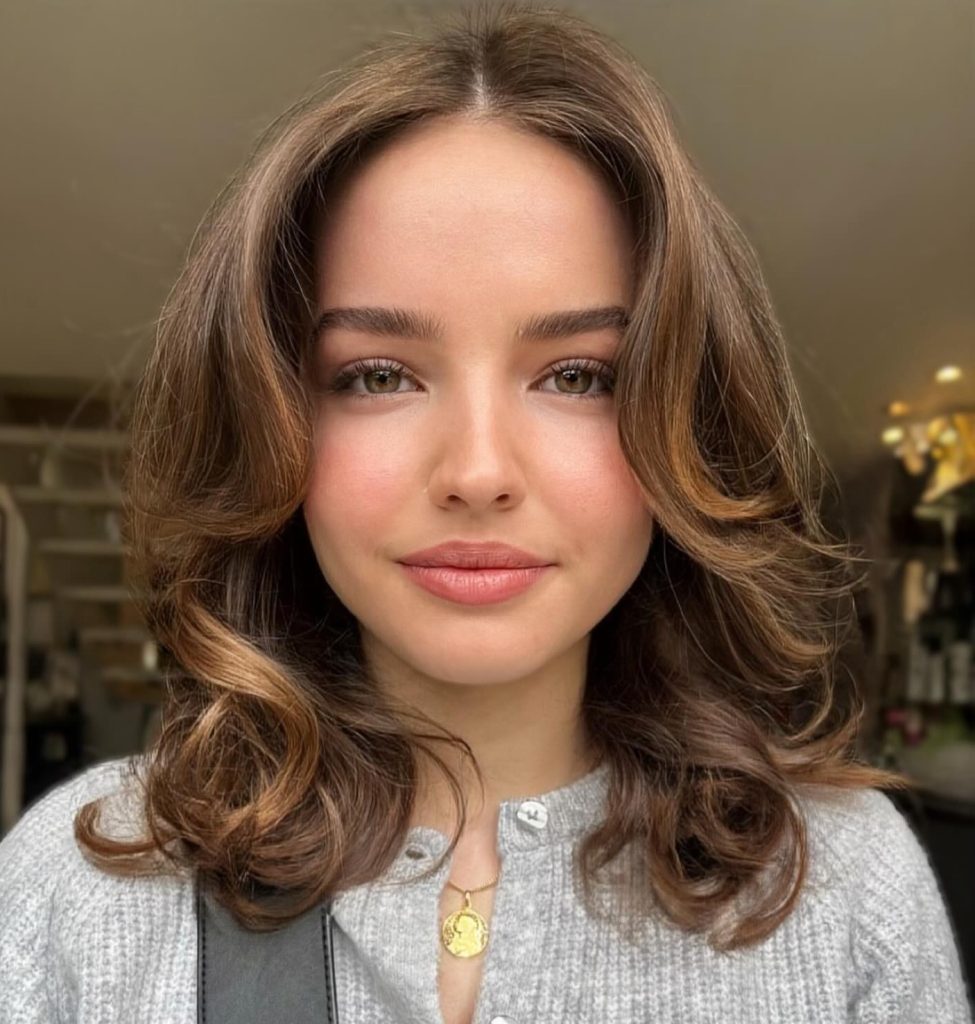
16. Collarbone-Length Butterfly Cut
The shortest crown layers hit around the jaw while the bottom length grazes the collarbone, creating a compact butterfly silhouette. It’s a manageable, everyday length that still shows the layered structure. Medium to thick hair holds this shape best; fine hair may need texturizing product at the roots for lift.
17. Medium Butterfly with Flipped Ends
Flipping the ends outward, either with a flat iron or large-barrel curling iron, exaggerates the winged shape on medium-length hair. The flipped styling gives a retro nod without going full vintage. Use a heat protectant spray before styling and a light-hold hairspray to keep the flip from dropping by midday.
18. Shoulder-Length Butterfly on Fine Hair
Fine hair can work with a butterfly cut if the layering is thoughtful. Ask for two or three long face-framing pieces around the chin — not all-over layers — and keep the interior length mostly one piece. A volumizing mousse at the roots and a round brush at the crown are enough to bring the shape to life.
19. Lob-Length Butterfly with Texture
A long bob with butterfly layering creates a dense, textured shape that is a cross between a bob and a shag. The shorter face-framing pieces are only a few inches above the main length, so the transition is subtle. Wavy and curly textures benefit most; straight hair may need a curling wand to create the movement.
20. Medium Butterfly with Deep Side Part
Shifting the part to one side sends more volume to the heavy side, creating asymmetric fullness that suits round and square faces. The shorter butterfly layers stack and fan out on the fuller side, giving a dramatic sweep without extra length. Pin the thinner side behind the ear for a stronger effect.
21. Choppy Medium Butterfly
Razor-cut ends on a medium-length butterfly create a rough, undone texture that’s the opposite of a polished blowout. Thick hair handles the choppiness well. It looks deliberate and edgy rather than sparse. Air-dry with a texturizing spray or sea salt spray, scrunching at the mid-lengths for definition.
22. Medium Butterfly for Wavy Hair
Natural waves between 2A and 2C patterns fill out the butterfly shape effortlessly at medium lengths. The shorter crown layers add height, while the wavy mid-lengths provide body without heat styling. A diffuser on low speed locks in the wave pattern and adds lift at the roots.
Textured and Statement Butterfly Styles
These variations push the butterfly cut into bolder territory: heavier layering contrasts, unconventional pairings, and textures that make the cut a visible focal point. Expect more maintenance and styling time in exchange for a stronger silhouette.
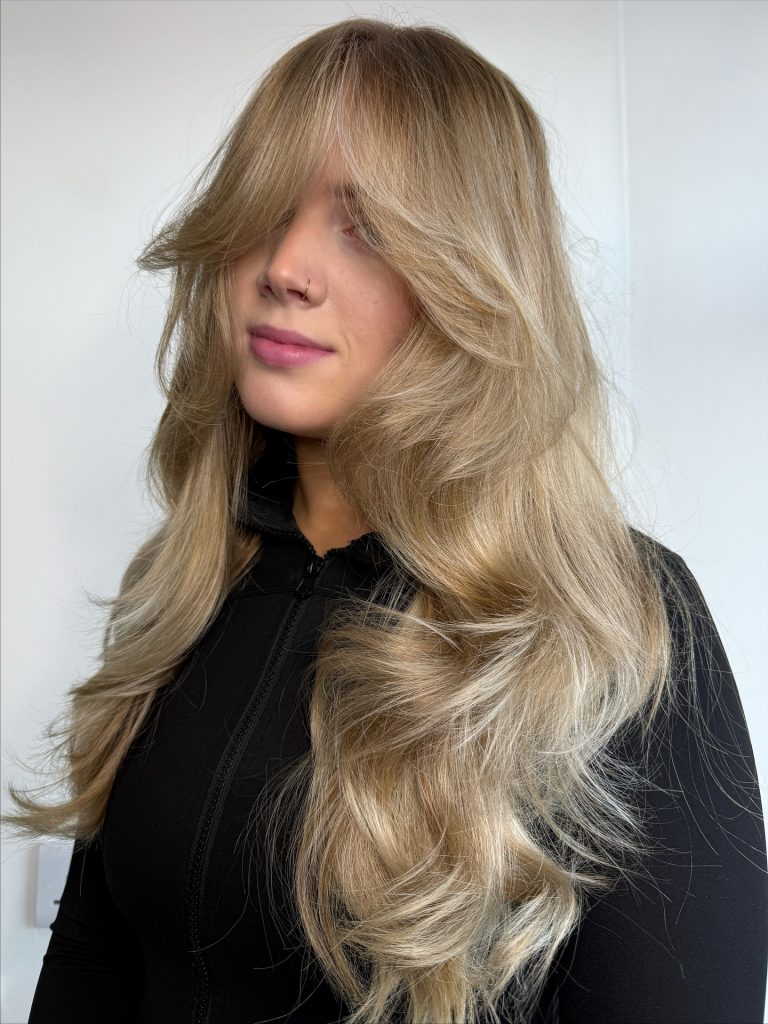
23. Butterfly Wolf Cut Hybrid
Blending the butterfly’s two-tier structure with the choppy crown layers of a wolf cut creates a mullet-like shape with serious attitude. The top is shaggy and heavily textured, the bottom is longer and smoother. Thick, coarse hair is ideal here. Fine hair risks looking stringy.
24. Butterfly Cut on Type 3 Curls
Type 3 curls (loose to tight spirals) respond well to the butterfly structure because the shorter crown curls spring upward for natural lift, while longer curls fall in defined ringlets below. Dry cutting is essential. A stylist who cuts curly hair wet will likely misjudge where the layers actually land once shrinkage kicks in.
25. Heavy Butterfly with Curtain Layers
Dramatically short crown layers — as short as cheekbone level — paired with length past the shoulders create the most extreme butterfly contrast. It’s essentially two haircuts in one: a shorter layered look from the front, a longer cut from the back. Bring reference photos, because the layering depth varies widely between interpretations.
26. Butterfly Shag on Medium-Thick Hair
Merging the butterfly framework with all-over shag layering produces a cut with constant movement and no clean lines. Every section blends into the next, creating a lived-in shape that looks better on day-two hair. Stylists generally recommend texturizing spray rather than serum or cream, which can flatten the intentional dishevelment.
27. Butterfly Cut with Money Pieces
Two bright, face-framing highlights on a butterfly cut draw attention to the shorter crown layers and maximize the visual contrast between tiers. Blonde money pieces on dark brunette hair are the boldest combination; caramel on medium brown is more understated but equally effective at highlighting the structure.
28. Textured Butterfly with Razored Ends
A razor blade instead of shears creates softer, more irregular ends across all the butterfly layers. The result is airiness that scissors can’t replicate — each layer blends with a wispy, feathered quality. Avoid this technique on damaged or overly processed hair, as the razor can worsen split ends.
29. Butterfly Cut with an Undercut
Shaving or closely cropping the nape underneath the longer butterfly layers removes bulk where thick hair accumulates most. The undercut is hidden when hair is down but visible in updos and ponytails. It’s practical for very thick hair in warm climates and requires buzzing every 4–6 weeks to maintain.
30. ’90s-Inspired Butterfly Blowout
A full blowout with layers curled away from the face replicates the voluminous, bouncy silhouette that made layered cuts iconic in the ’90s. A 1.5-inch curling iron or big round brush with a blow dryer creates the lift. Set each section with a clip while it cools, then shake everything out for flexible, touchable movement.
How to Choose a Butterfly Haircut by Face Shape
The butterfly cut is adaptable, but where the layers start and how dramatically they contrast with the length still needs to match your proportions. Here’s a breakdown by face shape.
| Face Shape | Best Butterfly Variation | What to Avoid |
|---|---|---|
| Oval | Any variation works; oval faces have balanced proportions | Extremely heavy bangs that hide the forehead |
| Round | Layers starting below the cheekbone; deep side part | Chin-length layers that emphasize width; center part |
| Square | Soft, feathered layers with curtain bangs to soften angles | Blunt bangs; heavy volume at the jawline |
| Heart | Layers starting at chin level to add width at the jaw | Too much volume at the crown, which exaggerates forehead width |
| Oblong | Side-swept or curtain bangs with wider layers at cheekbone level | Very long, flat layers that add vertical emphasis |
Stylist tip: Bring at least two reference photos to your appointment — one showing the front and one showing the side or back. Stylists interpret “butterfly cut” differently, and photos eliminate guesswork about layer depth, bang length, and overall volume.
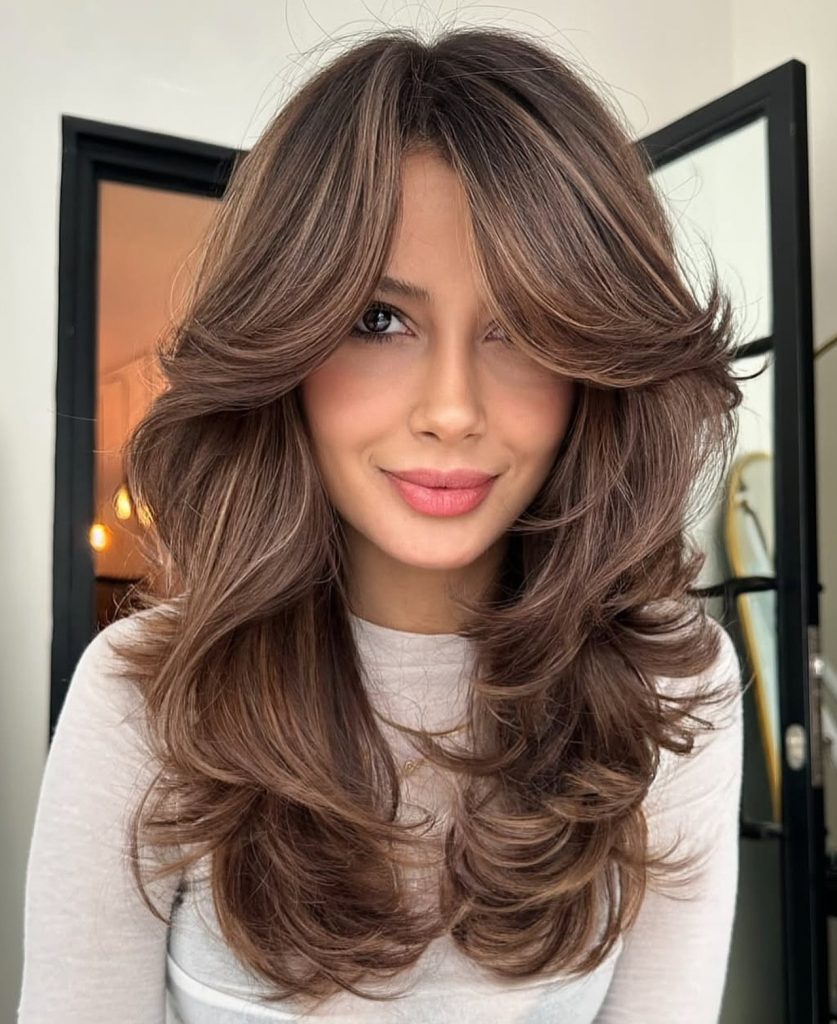
What to Tell Your Stylist
Most stylists are familiar with the butterfly haircut by now, but the term covers a wide range of looks. Giving your stylist specific direction prevents a result that’s technically a butterfly cut but not the one you pictured.
Start with: “I’d like a butterfly cut with the shortest layers starting at [cheekbone/chin/jaw] level and the longest length staying at [collarbone/mid-back/waist].” Specify whether you want the transition between layers to be blended and gradual or visible and dramatic. If you want bangs, name the type and mention whether they should merge into the face-framing layers or sit separately.
Stylist tip: Ask your stylist to cut the layers dry if you have wavy or curly texture. Dry cutting lets the stylist see exactly where each layer falls once the natural pattern sets, which prevents the common issue of layers ending up shorter than intended once curl shrinkage takes effect.
FAQ
What Is a Butterfly Haircut?
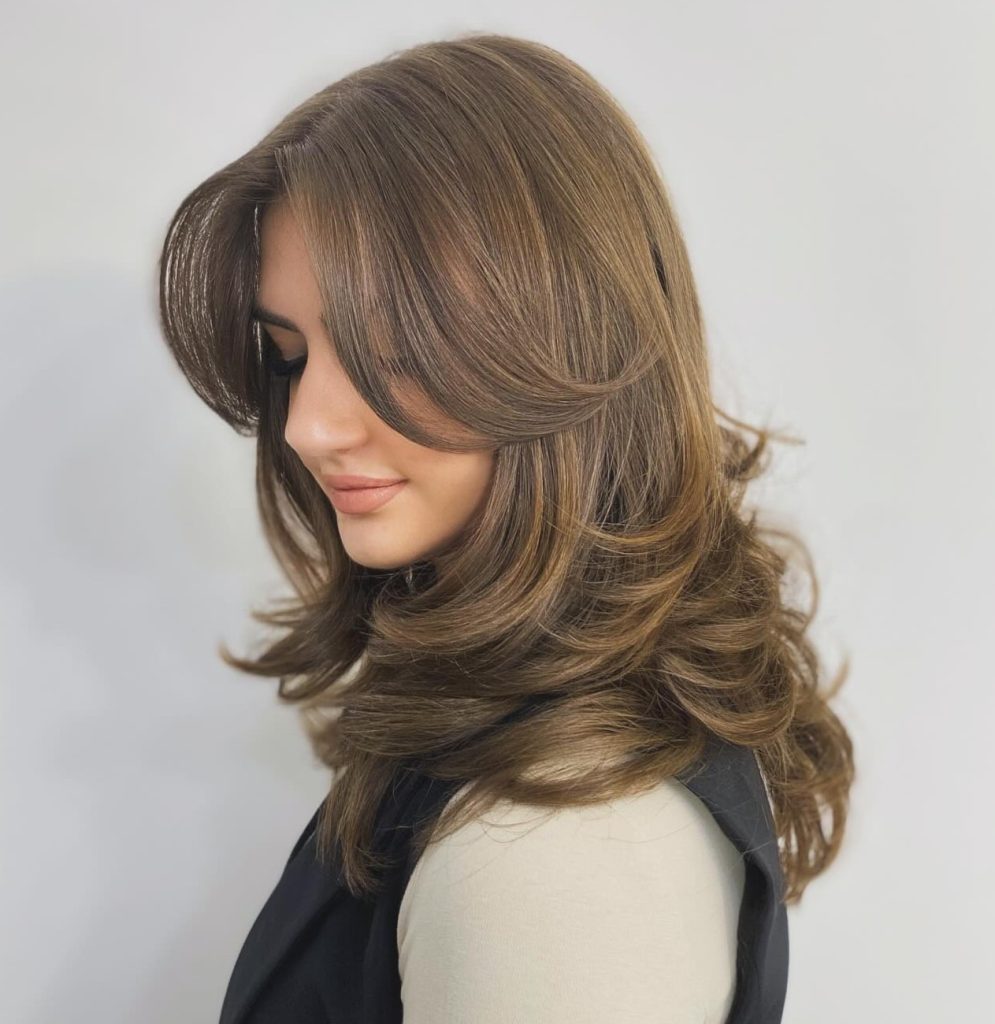
A butterfly haircut is a layered style with two distinct tiers: shorter layers at the crown and face frame, longer layers from the mid-shaft to the ends. The shorter layers fan outward to create a wing-like shape that adds volume at the top without sacrificing overall length. It works best on medium to thick hair that’s shoulder-length or longer.
Is a Butterfly Haircut Good for Thin Hair?
Heavily layered butterfly cuts can make thin hair look sparse, especially when the layers remove too much weight from hair that already lacks density. A modified version works better. Ask for just two or three face-framing layers instead of all-over layering, and keep the interior length one piece. Volumizing mousse at the roots and a round-brush blowout at the crown help create the silhouette without relying on the cut alone.
How Is a Butterfly Cut Different from a Wolf Cut?
Both are layered cuts, but they differ in structure. A butterfly cut maintains more length at the bottom and concentrates shorter layers at the crown and face frame, creating a two-tier shape. A wolf cut distributes choppier layers throughout the entire head, creating a shaggier, mullet-y shape. The butterfly is seen as polished and flowing; the wolf cut is edgier and more undone.
How Often Should I Trim a Butterfly Haircut?
Every 8–10 weeks maintains the layered shape well. The face-framing layers grow out faster visually because they’re shorter, and any length change is more noticeable. If you have bangs, those need trimming every 3–4 weeks. One advantage of the butterfly cut is that it grows out gracefully — the layers blend together over time and don’t create an awkward in-between stage.
Can I Get a Butterfly Cut on Curly Hair?
Yes, curly hair often enhances the butterfly shape because natural volume fills out the shorter crown layers without heat styling. The key is finding a stylist experienced with curly cutting who will cut dry and account for shrinkage. Expect the shortest layers to be 2–3 inches higher than where they’re cut once the curls spring into shape. Avoid thinning shears on curly hair, as they create frizz at the cut points.
Does a Butterfly Haircut Work on Short Hair?
The classic butterfly shape needs at least shoulder-length hair to create the two-tier contrast. On hair above the collarbone, the layers blend into something closer to a shag or heavily layered bob rather than a true butterfly silhouette. If you love the concept but prefer shorter hair, a modified version with face-framing layers on a lob captures some of the same movement.
The butterfly haircut continues to earn its popularity because it solves a common problem: adding volume and shape without losing length. Whether you’re drawn to a subtle version with two soft face-framing layers or a dramatic statement cut, the key is matching the layering depth to your hair type, face shape, and styling routine. Bring specific reference photos, name exactly where you want the layers to start, and tell your stylist how much time you spend on your hair each morning. That gets you from the search results to the salon chair with a plan that works.
Hair results vary based on your natural hair type, texture, density, and condition. Always consult with a licensed hairstylist before making significant changes, especially with chemical treatments or dramatic length changes. Photos may show styled results that require professional tools and products to replicate.
1 response