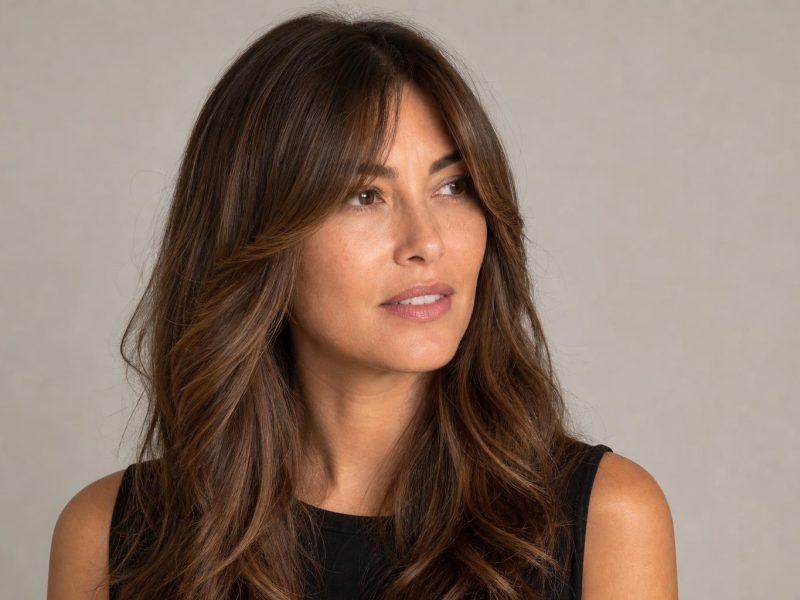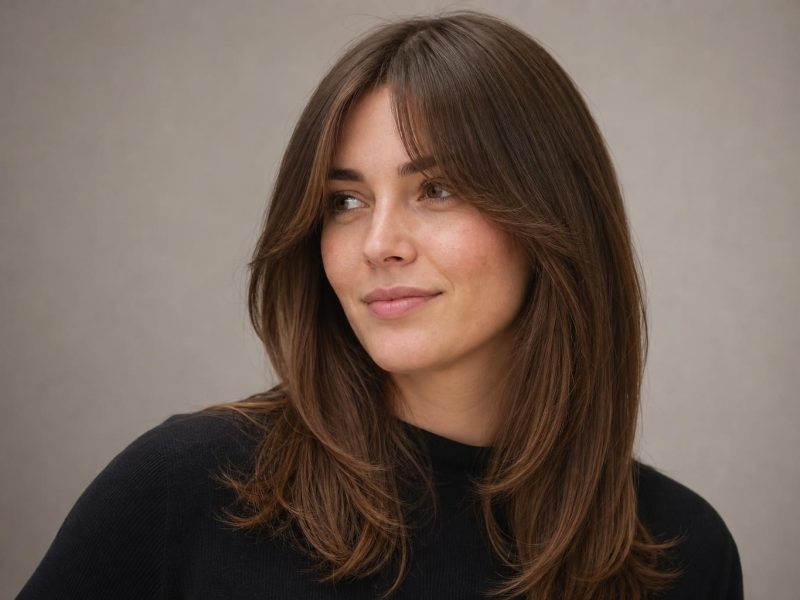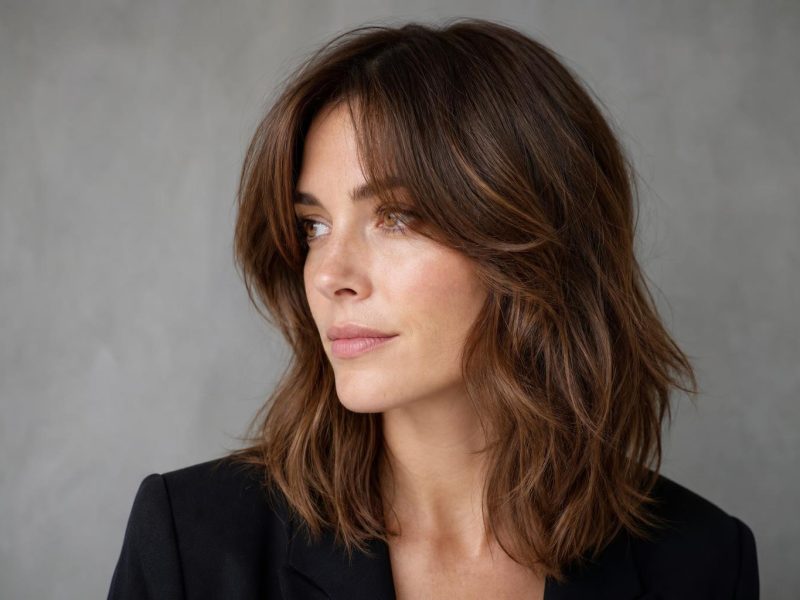


From wispy micro bangs to thick blunt fringe, these 35 stylist-approved pixie cuts prove that bangs and short hair are one of the most versatile combinations in the chair.
A pixie cut with bangs frames the face in a way no other short haircut can. The bangs direct the eye, soften angles, or sharpen features depending on how they’re cut and where they fall. This collection covers 35 variations across six bang styles and all major face shapes, with notes on who each cut flatters and what to tell your stylist to recreate it.
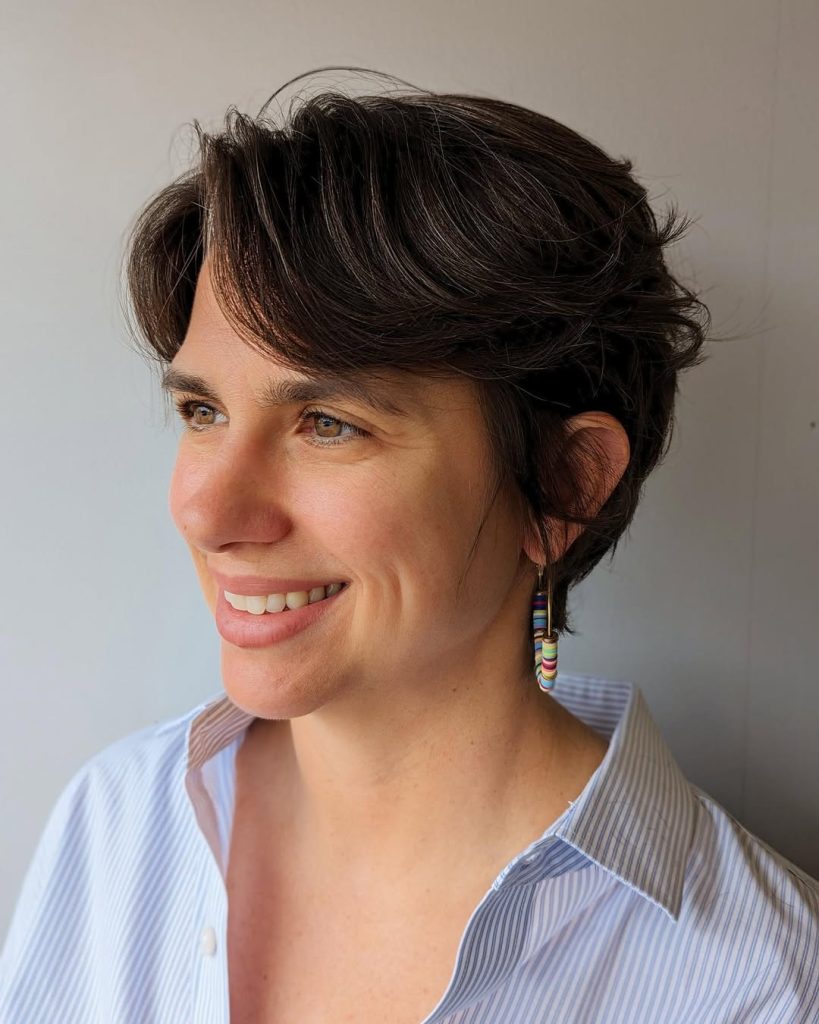
You’ll find options organized by bang type: classic full bangs, side-swept fringe, curtain bangs, choppy textured bangs, curly-friendly options, and edgier avant-garde styles. Below the gallery, there’s a face shape compatibility guide, salon communication tips, and a realistic maintenance breakdown so you know exactly what you’re signing up for before you sit down.
| Feature | Details |
|---|---|
| Best for | Oval, heart, and diamond face shapes (most variations); round and square faces with the right bang style |
| Hair types | Straight, wavy, and curly (with modified techniques for each texture) |
| Maintenance level | Trim every 3–5 weeks; bang trims every 2–3 weeks; daily styling 5–10 minutes |
| Avoid if | Strong cowlick at the front hairline, very coarse hair resistant to lying flat, or if you dislike frequent salon visits |
Classic Pixie Cuts with Full Bangs
Full bangs on a pixie cut create a polished, intentional look that reads as both modern and retro, depending on the finish. These options work especially well on straight to slightly wavy textures with medium density. Fine hair can pull them off with point-cut ends that prevent the fringe from looking heavy.
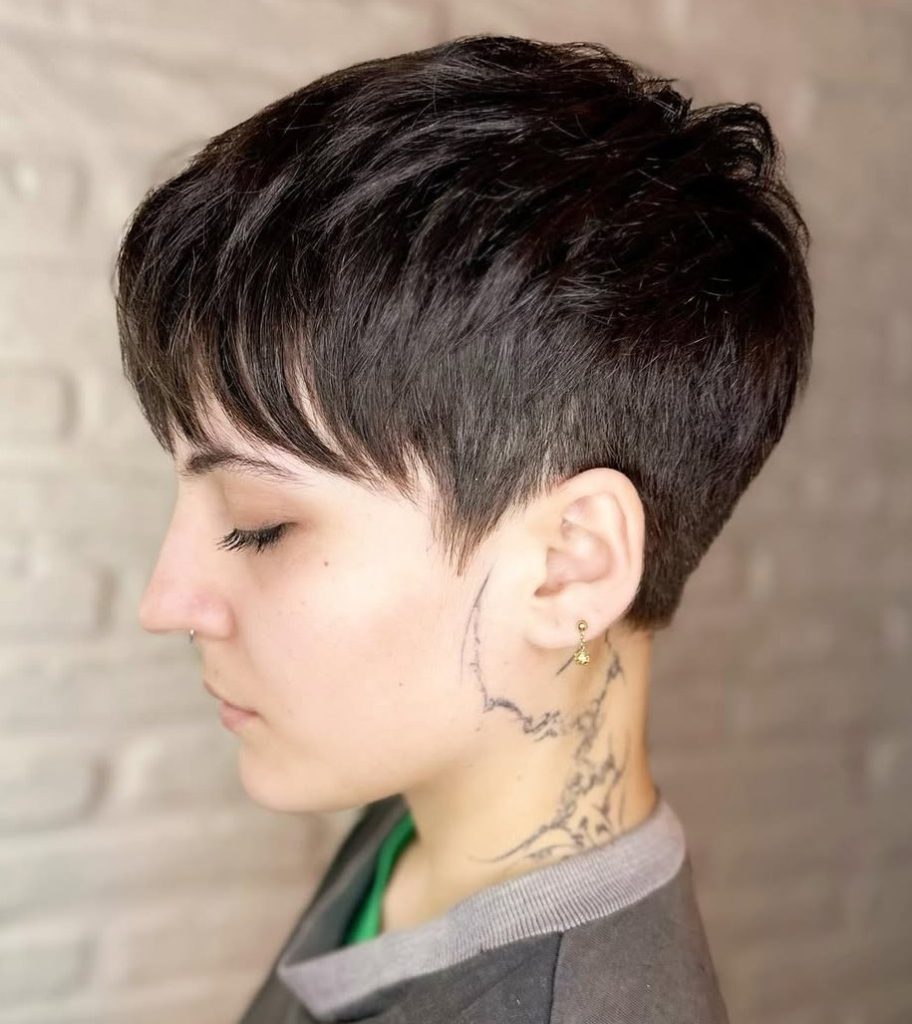
1. Cropped Pixie with Thick Blunt Bangs
The blunt fringe on this crop sits just above the eyebrows and creates a sharp horizontal line that draws attention straight to the eyes. It works best on straight, medium-to-thick hair where the bangs hold their shape without daily flat-iron work. If you have a smaller forehead, ask your stylist to start the fringe slightly further back to create the illusion of more space.
2. Soft Pixie with Feathered Bangs
Feathered bangs use point-cut or slide-cut ends to create a softer line across the forehead. They are ideal for anyone who wants bangs without the commitment of a harsh, blunt edge. Heart-shaped faces benefit from this variation because the wispy ends prevent the forehead from looking disproportionately wide. A lightweight texturizing spray is all you need to style these after blow-drying.
3. Tapered Pixie with Brow-Skimming Bangs
Brow-skimming length is the most universally wearable bang option on a pixie — long enough to soften the face, short enough to stay out of your eyes. Stylists often recommend this specific length for first-time pixie wearers because it’s easy to maintain and works with most face shapes. Trim frequency is on the higher side. Expect to snip the fringe every two to three weeks.
4. Elfin Pixie with Baby Bangs
Micro bangs that are cut an inch or more above the brows give a pixie a fashion-forward edge that works particularly well on oval and oblong faces. The short length opens up the forehead and emphasizes cheekbones and brows. If you’re considering short haircuts for women that make a statement, this one delivers without needing any color work.
5. French-Inspired Pixie with Full Fringe
A French pixie keeps the sides close to the head while leaving enough length on top to create a full, slightly tousled fringe. The overall silhouette is compact and chic. It’s more structured than a shaggy crop, but less severe than a buzzed side. Achieve the lived-in texture with a small amount of matte paste worked through the top with your fingers.
6. Layered Pixie with Graduated Bangs
Graduated bangs transition from shorter at the center to longer at the temples, blending seamlessly into the side sections. This technique is especially useful for square faces because the diagonal line softens a strong jawline without adding bulk at the sides. Your stylist will use thinning shears or a razor to keep the transition between lengths invisible.
7. Volume-Boosted Pixie with Lifted Bangs
Fine hair gets the most lift from this variation, which uses root-directed blow-drying and short internal layers to push the bangs up and away from the forehead. The result is a pixie that looks fuller than the hair’s natural density would suggest. A volumizing mousse applied at the roots before blow-drying is what makes this cut work day-to-day.
Pixie Cuts with Side-Swept Bangs
Side-swept bangs add asymmetry to a pixie, which makes them one of the best options for round and square faces. The diagonal line of the fringe creates visual length and breaks up symmetry — two things that work hard to balance wider face shapes. These cuts range from subtle sweeps to dramatic long fringes that nearly cover one eye.
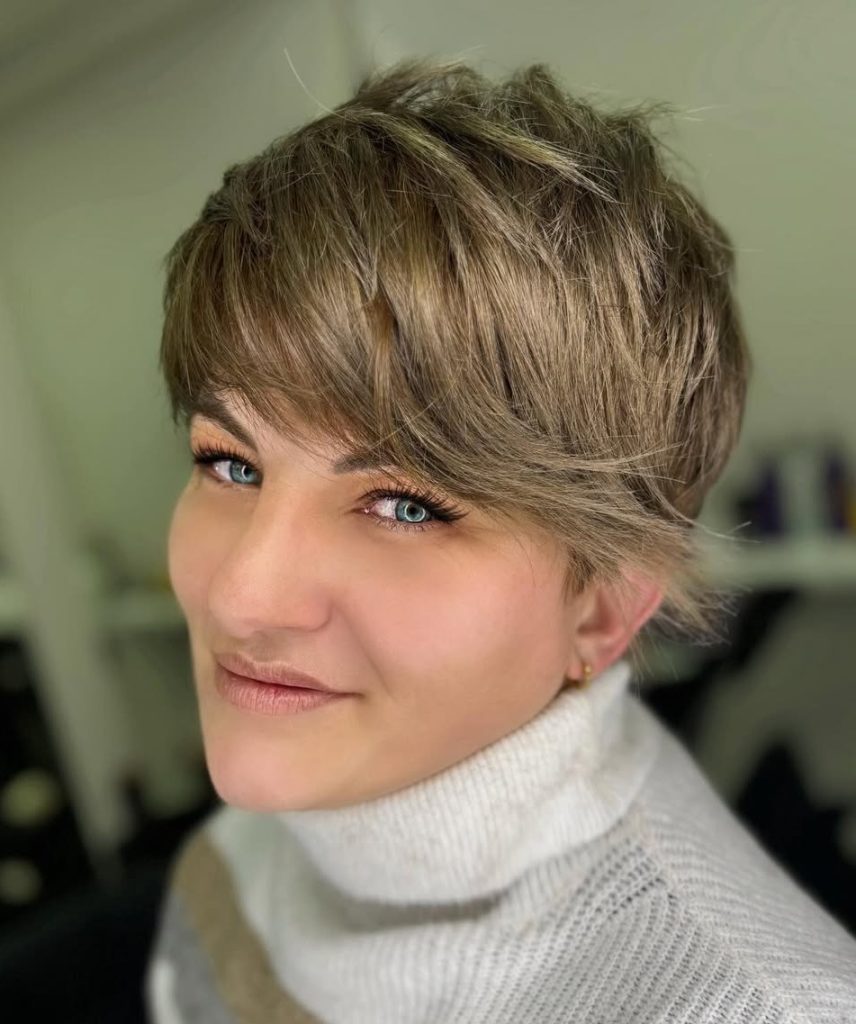
8. Classic Side-Part Pixie with Swooping Bangs
A deep side part anchors this cut and lets the bangs sweep across the forehead in a smooth arc. The weight of the fringe falls naturally to one side, making daily styling almost effortless — a round brush and five minutes of blow-drying is all it takes. Round faces particularly benefit from the diagonal line that this bang creates across the forehead.
9. Long Side Bangs on a Short Pixie
The contrast between the closely cropped back and sides and the longer sweeping fringe makes this cut striking without needing any color tricks. The long bangs can be tucked behind the ear for a cleaner look on workdays or left to fall forward for a softer off-duty feel. Expect the longest section to reach about cheekbone level.
10. Pixie with Wispy Side-Swept Fringe
Wispy texture in the fringe is achieved through point cutting or razor work, leaving soft, piecey ends instead of a solid curtain of hair. If your hair tends toward the thinner side, this approach actually works in your favor, as the transparency of the bangs looks intentional rather than sparse. A common issue clients face with wispy fringe is over-styling; air-drying or minimal heat gives the best result.
11. Asymmetrical Pixie with Dramatic Side Sweep
One side is buzzed or closely tapered while the other features a long, sweeping bang section that can reach past the chin. This is one of the most dramatic pixie variations, and it rewards faces with strong bone structure — prominent cheekbones and a defined jaw give the asymmetry something to work with. Ask your stylist to keep the long side’s weight line at cheekbone level or below.
12. Textured Pixie with Piecey Side Bangs
Piecey bangs are created by using a razor or texturizing shears to break up the fringe into individual strands with visible separation. Unlike a blunt or smooth side-sweep, this version looks deliberately undone. Style with a matte wax to define the pieces; avoid anything shiny or heavy, which would clump the strands together and kill the texture.
13. Tapered Pixie with Subtle Side Fringe
Not every side-swept bang needs to be long or dramatic. This variation keeps the fringe just past eyebrow length and gently angled to one side, making it one of the most low-maintenance options in this collection. Diamond-shaped faces look particularly balanced with this cut because the short, angled bangs draw attention to the eyes without adding visual width at the temples.
14. Pixie Bob with Side Bangs
A pixie bob, sometimes called a bixie, splits the difference between a pixie and a bob, sitting longer around the ears and nape. Adding side bangs to this hybrid shape gives you more styling versatility than a traditional pixie while keeping the wash-and-go ease of a short cut.
Pixie Cuts with Curtain Bangs
Curtain bangs have historically been associated with longer hair, but they work surprisingly well on a pixie, especially for face shapes that need framing at the cheekbones rather than across the forehead. The center part and outward-sweeping ends create a softer, less committed look than full or heavy side bangs.
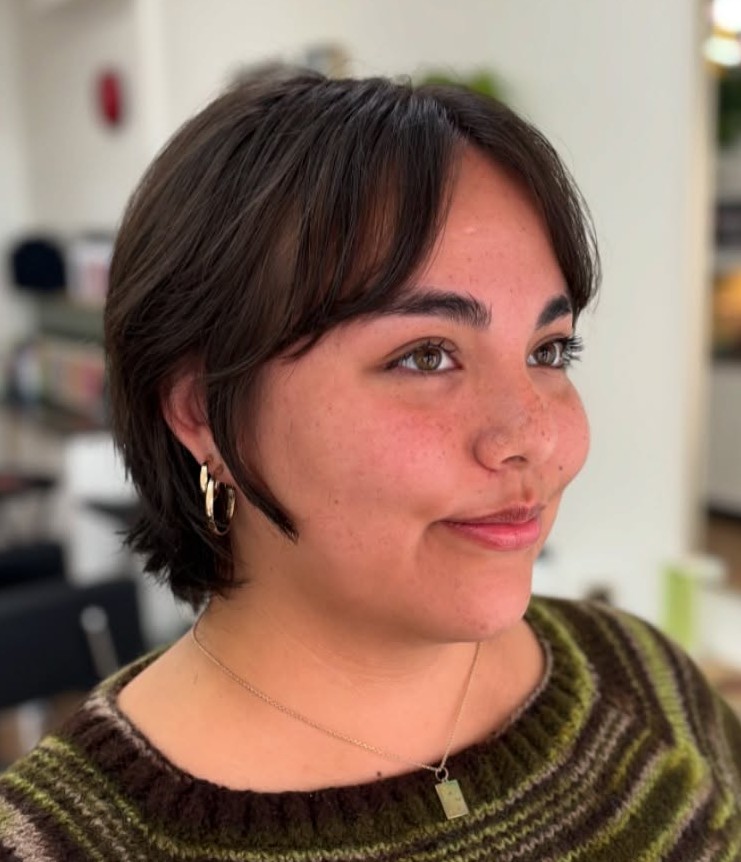
15. Short Curtain Bangs on a Textured Pixie
These curtain bangs are cut to cheekbone level and parted in the center, framing both sides of the face equally. The key to making them work on a pixie is keeping the rest of the top section textured so the bangs don’t look disconnected from the cut. Oval and heart-shaped faces get the most out of this combination because the framing sits exactly where the face is widest.
16. Grown-Out Pixie with Curtain Fringe
If you’re in the grow-out phase of a pixie, curtain bangs can be the transitional style that makes the awkward stage look thought-out. Your stylist can reshape what you already have, adding a center part and texturizing the front pieces, rather than cutting more length off. This is a smart move for anyone who loved their pixie but is ready to explore a longer short hairstyle without suffering through months of shapelessness.
17. Pixie with Long Curtain Bangs and Undercut
Pairing long curtain bangs with an undercut creates a play between softness at the face and edge at the nape and sides. The undercut reduces bulk for thick hair while the curtain fringe keeps the front feeling approachable. When sitting in the chair, ask your stylist to clipper the undercut to a number two or three guard for a clean contrast without going to the skin.
18. Wispy Curtain Bangs on a Close-Cropped Pixie
On a very short pixie, wispy curtain bangs provide just enough face framing to soften the overall look without overwhelming the proportions. The bangs are razor-cut to create sheer, almost transparent pieces that move with every head turn. This combination reads effortlessly cool on straight and fine hair; thicker textures may need thinning shears to achieve the right level of transparency.
19. Curtain-Banged Pixie with Dimensional Color
Dimensional highlights — babylights or fine balayage — amplify curtain bangs on a pixie by making the individual pieces catch light at different points. The color creates the illusion of even more texture and movement than the cut alone provides. Honey blonde or caramel tones placed through the bang section work particularly well on brunette base colors.
Textured and Choppy Pixie Cuts with Bangs
Choppy, textured pixie cuts rely on uneven layers and razor work to create a deliberately undone finish. The bangs in this category follow the same philosophy — rough, imperfect, and full of movement. These styles particularly suit thick hair that needs weight removed and fine hair that needs the illusion of more volume.
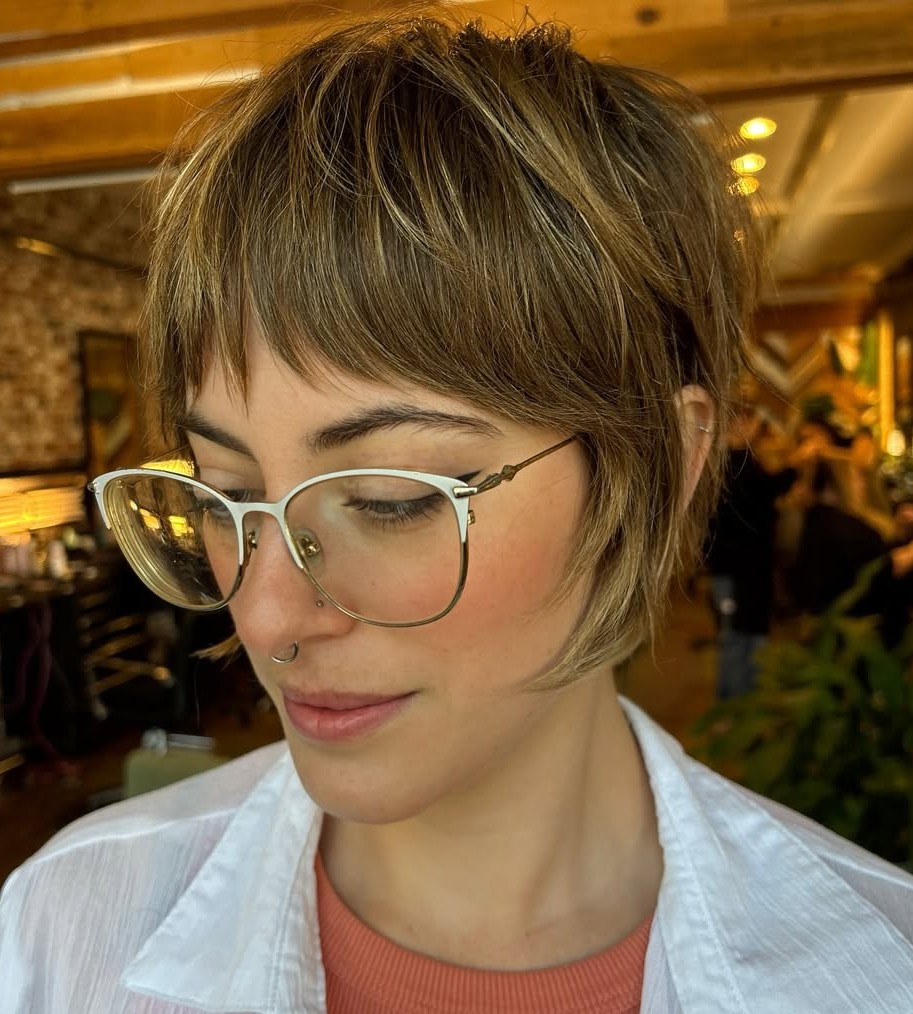
20. Choppy Pixie with Jagged Bangs
Jagged bangs are cut at varying lengths across the forehead, creating a zigzag effect that prevents the fringe from lying flat or looking too polished. Thick hair benefits from this treatment because the uneven lengths allow air to move through the fringe. A texturizing paste worked through damp hair is enough to let these bangs find their natural shape.
21. Razor-Cut Pixie with Shattered Bangs
A razor creates a different texture than scissors — softer, more diffused ends that blend into each other rather than stacking. Shattered bangs have this diffused quality, where the tips seem to dissolve rather than end. Specifically request razor cutting for both the top section and the fringe; scissor-cut ends won’t replicate the same effect.
22. Shaggy Pixie with Layered Bangs
A shaggy pixie borrows the layered, lived-in quality of a full shag cut but condenses it into short-hair territory. The bangs are layered rather than cut in a single length, which makes them fall in a natural, tousled pattern. This cut grows out more gracefully than most pixie variations. The layers disguise growth, so you can stretch trims to every five or six weeks instead of three or four.
23. Spiky Textured Pixie with Short Bangs
Short, spiky bangs create a sharp, angular silhouette that emphasizes facial features without covering them. The look requires a strong-hold styling product (a fiber paste or dry wax) to keep the pieces standing with definition throughout the day. Faces with delicate bone structure shine with this cut because the texture adds visual interest that the hair alone provides.
24. Deconstructed Pixie with Uneven Bangs
Deliberately uneven lengths across the top and fringe give this pixie a deconstructed, fashion-editorial quality. The asymmetry looks intentional because the weight distribution is carefully planned: shorter at one temple, longer at the other, with the crown section bridging the two. Stylists often use a combination of point cutting and slide cutting to achieve this layered unevenness.
25. Tousled Pixie with Piece-y Bangs
This is the “rolled out of bed looking great” version of a pixie with bangs. The tousled texture makes it look like you ran your fingers through your hair and walked out the door. In reality, it takes about five minutes of styling with a matte texturizing spray and finger-styling to separate the pieces. Medium-density hair in the straight-to-wavy range holds this look best without extra product buildup.
Pixie Cuts with Bangs for Curly and Wavy Hair
Curly and wavy pixies need a different cutting approach. Dry cutting is essential because wet curls shrink significantly as they dry, and what looks like brow-length fringe in the chair can bounce up to mid-forehead once styled. Every entry in this section accounts for curl shrinkage and texture-specific techniques.
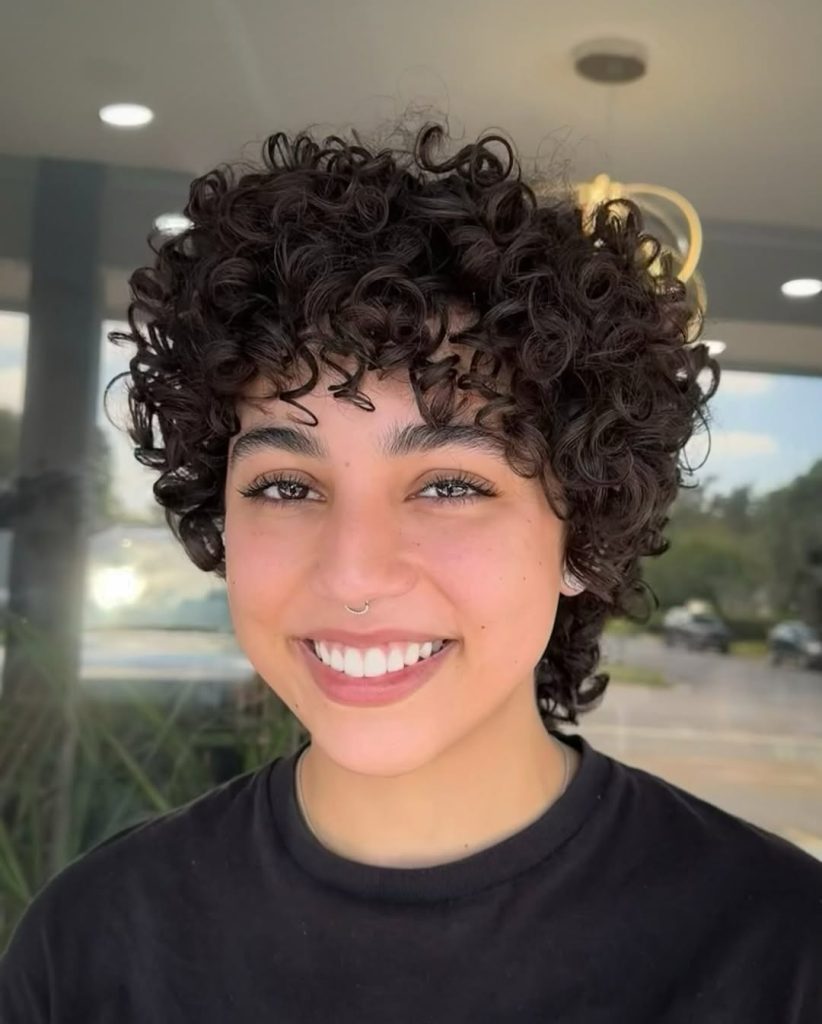
26. Curly Pixie with Defined Curly Bangs
Letting the natural curl pattern dictate the bang shape gives this pixie an effortless, authentic look. The bangs are cut dry, curl by curl, so each piece falls naturally without frizz or uneven shrinkage. A lightweight curl cream is the only product you need; anything heavier will weigh down the fringe and kill the bounce.
27. Wavy Pixie with Textured Fringe
Wavy hair sits in a sweet spot for pixie bangs. There’s enough texture to create visual interest, but not so much curl that shrinkage becomes a major factor. The fringe here is cut slightly longer than it would be on straight hair, allowing the wave pattern to pull it to the perfect length. Air-drying with a sea salt spray enhances the wave without creating crunch.
28. Tight-Curl Pixie with Short Natural Bangs
For type 3C to 4A curl patterns, short bangs sit close to the forehead and form a dense, sculptural frame around the face. The key is cutting each curl as an individual unit (a technique called curl-by-curl cutting), which your stylist should be specifically trained in. If you’re looking for short curly hairstyles that honor your natural pattern, this is one of the most flattering options.
29. Loose-Wave Pixie with Swooping Bangs
Loose waves (type 2A–2B) create a natural swooping motion in the bangs without any heat styling. The cut leverages the hair’s existing wave to produce a sweeping fringe that lands just above the brow. Stylists often recommend leaving slightly more length in the fringe than you think you need — the wave will do the shortening for you as it dries and contracts.
30. Coily Pixie with Finger-Shaped Bangs
On coily textures (type 4B–4C), finger-shaped bangs that are twisted or coiled into defined spirals at the front create a structured yet playful fringe. The shaping happens during styling rather than cutting; the cut itself leaves enough length for the coils to form. Apply a defining gel or cream section by section, twist each coil around your finger, and let them set naturally.
Bold and Edgy Pixie Cuts with Bangs
These are the pixie cuts that turn heads and start conversations. They play with extreme contrasts — buzzed versus long, structured versus messy, natural versus platinum — and they work best on people who want their haircut to be the outfit. Bold doesn’t have to mean high-maintenance, though; several of these are among the easiest cuts in this collection to style daily.
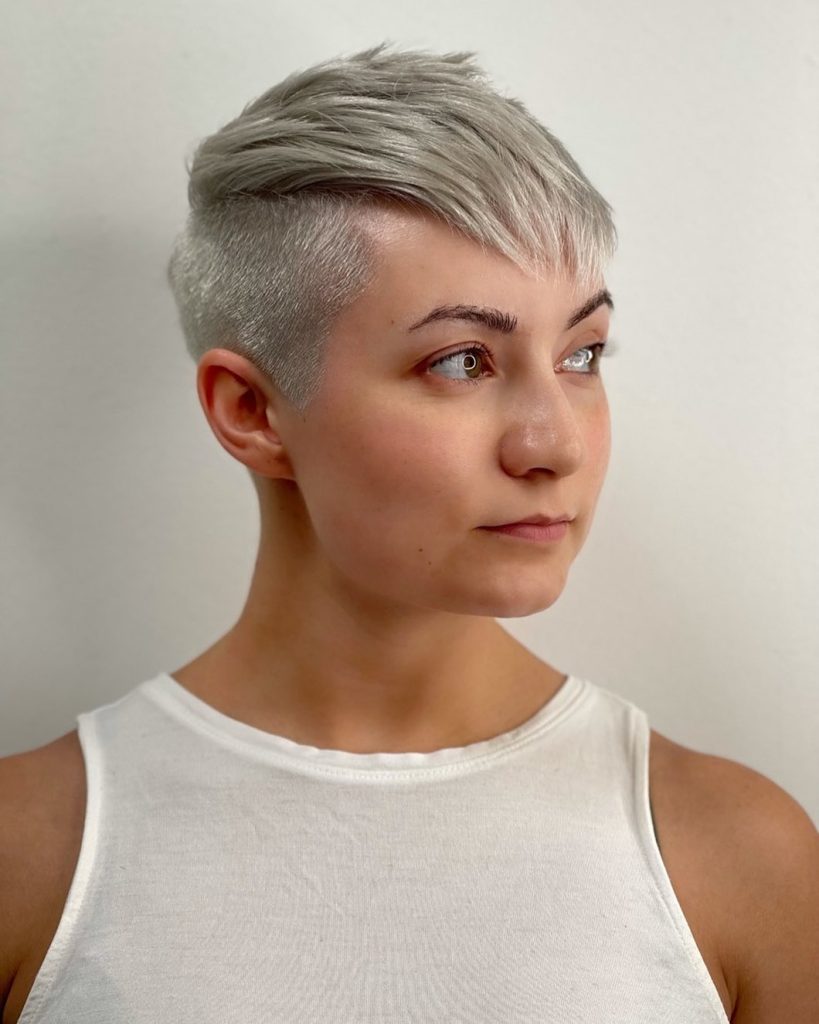
31. Undercut Pixie with Heavy Blunt Bangs
A shaved or buzzed undercut from the nape to the occipital bone paired with thick, blunt bangs that sit right at the brow creates a contrast that’s clean and impactful. The heavy fringe provides a strong frame for the eyes, while the undercut keeps the shape from feeling heavy overall. Maintenance is split: the undercut needs buzzing every two to three weeks, but the bangs only need trimming monthly.
32. Platinum Pixie with Micro Bangs
Platinum color amplifies every detail in a cut — every layer, every texture, every edge becomes more visible. Micro bangs in platinum read as deliberately avant-garde and look especially sharp on oval faces where the open forehead is a feature, not a problem. Be aware that achieving and maintaining platinum requires bleaching, which means more frequent deep conditioning treatments and a bond-repair product like a bonding oil or mask in your routine.
33. Disconnected Pixie with Contrasting Bang Length
A disconnected cut leaves visible “gaps” between lengths rather than blending everything smoothly. The bangs might be chin-length while the back is buzzed to half an inch. This deliberate contrast creates the most architectural silhouette of any pixie variation. When sitting in the chair, ask your stylist to leave the sections distinct rather than blending the transitions — the sharp lines are the whole point.
34. Edgy Pixie with Geometric Bangs
Geometric bangs are cut at precise, angular lines. Think diagonal, V-shaped, or notched rather than the standard horizontal or curved fringe line. The result is a graphic, almost sculpted look that reads as wearable art. This style demands a stylist who is comfortable with precision cutting and working with guides; bring multiple reference photos so they understand the exact angle you want.
35. Color-Blocked Pixie with Statement Bangs
Color blocking places a contrasting shade (vivid red on black, platinum streak on dark brunette, pastel pink on natural blonde) specifically in the bang section, while the rest stays a different tone. The bangs become the focal point of the entire cut. This technique works on any face shape because the color, not the cut, does the heavy lifting. Expect hair color touch-ups every four to six weeks to keep the contrast sharp.
How to Choose the Right Pixie Cut with Bangs for Your Face Shape
The right bang style can make any face shape work with a pixie. The key is matching the fringe direction, length, and density to what your face needs visually. Here’s a shape-by-shape breakdown with specific bang recommendations.
| Face Shape | Best Bang Styles | Why It Works | Avoid |
|---|---|---|---|
| Oval | Nearly all — blunt, side-swept, micro, curtain | Balanced proportions allow most bang lengths and styles | Very heavy, wide bangs that hide the forehead entirely |
| Round | Side-swept, asymmetrical, long diagonal fringe | Diagonal lines create visual length and break up roundness | Full blunt bangs that cut the face in half horizontally |
| Square | Wispy side-swept, curtain bangs, feathered, graduated | Soft, textured fringe offsets angular jaw and brow | Blunt, geometric bangs that echo the jawline’s sharp angles |
| Heart | Feathered, wispy, curtain bangs, brow-skimming | Soft fringe minimizes a wider forehead and balances a narrow chin | Very short micro bangs that emphasize forehead width |
| Oblong | Full blunt bangs, thick fringe, brow-length | Horizontal line shortens a longer face visually | No bangs, or very long vertical side-swept fringe that adds length |
| Diamond | Side-swept, curtain bangs, subtle fringe at brow level | Softens a narrow forehead without widening the cheekbones | Heavy full bangs that make the narrow forehead look even smaller |
Stylist tip: If you’re unsure about your face shape, pull your hair back tightly, stand in front of a mirror, and trace the outline of your face with a dry-erase marker or lipstick on the glass. The shape that remains — oval, round, square, heart, oblong, or diamond — tells you which column to follow in the table above.
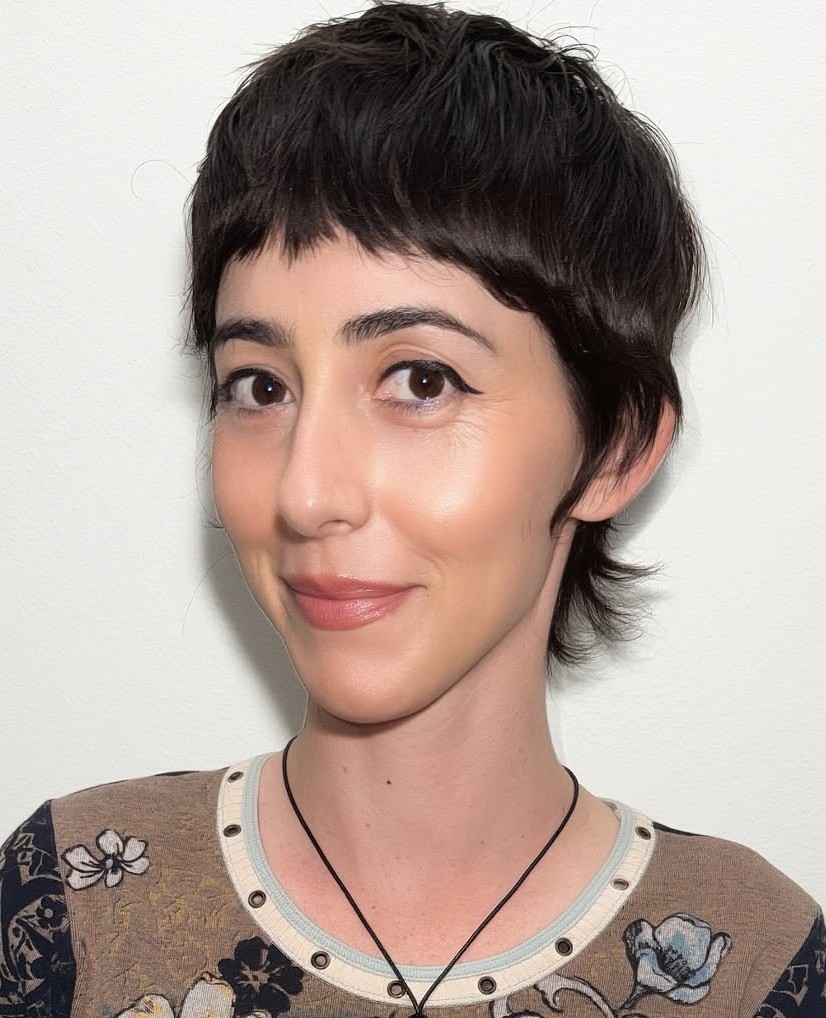
What to Tell Your Stylist
Walking into the salon with the right vocabulary makes a real difference in getting the pixie cut with bangs you actually want. Most miscommunications happen because clients use general terms like “short bangs” or “something edgy” without specifying what that means to them. And what it means to your stylist may be completely different.
Start with the bang style and length: “I want side-swept bangs that hit at cheekbone level” is much more useful than “I want bangs.” Then describe the overall pixie shape: “Tapered at the sides, textured on top, with the crown left long enough to push forward into the fringe.” Mention your daily styling reality. If you have five minutes in the morning and no interest in hot tools, say so. A good stylist will adjust the cut so it works within your routine.
Stylist tip: Bring at least two reference photos: one showing the front (bang length, density, part direction) and one showing the side or back (taper, nape length, ear coverage). A single photo rarely communicates the full 360-degree picture of a cut.
Here are some salon-ready phrases you can use directly when exploring different pixie cut styles:
| If You Want | Say This |
|---|---|
| Wispy, see-through bangs | “Point-cut or razor-cut the bangs so they’re sheer, not solid.” |
| Heavy, thick bangs | “Keep the fringe section thick, no thinning, cut blunt at brow level.” |
| Bangs that blend into sides | “Graduate the bang length into the side sections so there’s no hard line.” |
| A less-committal bang | “Start with a longer curtain bang I can push to the side if I change my mind.” |
| Choppy, undone texture | “Use a razor on the top and fringe. I want piecey, separated strands, not a smooth finish.” |
Maintenance and Styling
A pixie cut with bangs is one of the fastest cuts to style every morning (most take under ten minutes), but it’s also one of the most frequent salon commitments. Knowing the upkeep before you commit prevents regret three weeks in when the shape starts growing out.
Trim frequency: The overall pixie shape needs reshaping every three to five weeks. Bangs grow faster than you expect and will start falling into your eyes within two to three weeks, so plan for bang trims between full appointments. Most salons offer quick bang trims for a minimal charge or free between regular visits.
Daily styling: Most pixie-with-bang styles need five to ten minutes of morning work. Straight to wavy textures typically require blow-drying the bangs into shape with a round brush or flat brush, then applying a texturizing paste or wax to the top section. Curly textures can air-dry with a curl cream or defining gel — the styling time drops to about three minutes.
Products by hair type: Fine hair does best with volumizing mousse at the roots and a lightweight texturizing spray for the ends. Medium-density hair works well with a matte styling paste or wax. Thick hair benefits from a pomade or fiber paste that provides hold without making the hair look greasy. Curly pixies need a curl cream or gel, but nothing with silicone, which weighs down short curls.
Grow-out behavior: Pixie cuts go through an awkward phase around weeks six through ten, where the shape starts losing definition. Bangs are usually the first section to lose their intended shape. Scheduling a quick reshape at the six-week mark, even if it’s just the neckline, ears, and fringe, buys you another four weeks before a full haircut is needed. If you’re considering growing your pixie out entirely, your stylist can transition the shape into a short bob over two or three appointments.
FAQ
Can I Get a Pixie Cut with Bangs If I Have Fine Hair?
Fine hair actually works well with a pixie cut with bangs because short layers create the illusion of thickness and volume that longer lengths can’t provide. The key is asking your stylist for point-cut or textured ends rather than blunt edges, which can make fine hair look flat and shapeless. Avoid heavy blunt bangs that will lie flat against the forehead. Wispy or feathered bangs are more flattering and easier to maintain on fine textures. A volumizing mousse applied at the roots before blow-drying gives fine-hair pixies the lift they need.
What Face Shape Looks Best with a Pixie Cut with Bangs?
Oval faces have the most flexibility because their balanced proportions suit nearly every bang style: blunt, side-swept, curtain, or micro. Heart-shaped faces look great with soft, wispy bangs that reduce the visual width of a broader forehead. Round faces need side-swept or asymmetrical bangs that create diagonal lines to elongate the face, while square faces benefit from feathered or graduated fringe that softens a strong jawline. Every face shape can wear a pixie with bangs. The variable is which bang style creates the most flattering balance.
How Often Do I Need to Trim a Pixie Cut with Bangs?
The full pixie shape needs reshaping every three to five weeks, depending on how fast your hair grows and how precise the cut is. Blunt, geometric styles lose their shape faster than textured, lived-in cuts. Bangs specifically need trimming every two to three weeks because even a quarter-inch of growth changes how the fringe sits relative to your brows. Most salons offer complimentary or low-cost bang trims between full appointments, so ask about this when you book.
Will a Pixie Cut with Bangs Work on Curly Hair?
Curly pixie cuts can look incredible with bangs, but they require a stylist experienced in dry cutting curly hair. Wet cutting curly bangs almost always results in fringe that’s too short once the curls spring up. Shrinkage can remove half an inch or more. Ask for curl-by-curl cutting, which shapes each curl individually rather than cutting a straight line across. Use a lightweight curl cream rather than gel to keep the bang section soft and mobile.
How Do I Style Pixie Bangs in the Morning?
Start with damp hair and blow-dry the bangs first. They set faster than the rest of the cut, and drying them in the direction you want them to fall locks the shape in for the day. For side-swept bangs, direct the airflow from the part outward while using a small round or paddle brush. For full blunt bangs, dry them straight down and slightly under with a flat brush. Finish with a small amount of texturizing product on the top section, and avoid touching the bangs once they’re dry — handling adds oil and breaks the shape.
What’s the Difference Between a Pixie with Bangs and a Bixie?
A bixie is a hybrid between a pixie and a bob. It’s longer than a classic pixie, usually covering the ears and extending to the nape, but shorter than a traditional bob. A pixie with bangs can be any length in the classic pixie range (one to three inches on top), combined with any bang style. The bixie tends to have more length throughout and naturally accommodates longer bangs, while a true pixie is shorter and relies on the bang choice to create contrast with the cropped sides and back.
Can I Pull Off Micro Bangs on a Pixie?
Micro bangs (cut an inch or more above the eyebrows) are one of the most face-shape-dependent bang styles. They work best on oval and oblong faces where opening up the forehead adds visual balance. Round and square faces should approach micro bangs with caution, as the fully exposed forehead can emphasize width. If you’re unsure, ask your stylist to cut the bangs at brow level first. You can always go shorter, but you can’t add length back.
Is a Pixie Cut with Bangs High-Maintenance?
Daily styling is actually minimal. Most pixie-with-bang combinations take five to ten minutes to style in the morning, which is less time than most medium-length cuts require. The maintenance commitment is in the salon visits. You’ll need full reshaping every three to five weeks and bang trims every two to three weeks. If that frequency doesn’t fit your schedule or budget, opt for a textured or shaggy pixie variation that grows out more gracefully and can stretch to five or six weeks between cuts.
A pixie cut with bangs is one of the most adaptable short styles you can get — the fringe alone changes the entire feel of the cut. Save your favorites from this list, bring them to your consultation, and let your stylist fine-tune the details to your face shape and texture.
Hair results vary based on your natural hair type, texture, density, and condition. Always consult with a licensed hairstylist before making significant changes, especially with chemical treatments or dramatic length changes. Photos may show styled results that require professional tools and products to replicate.