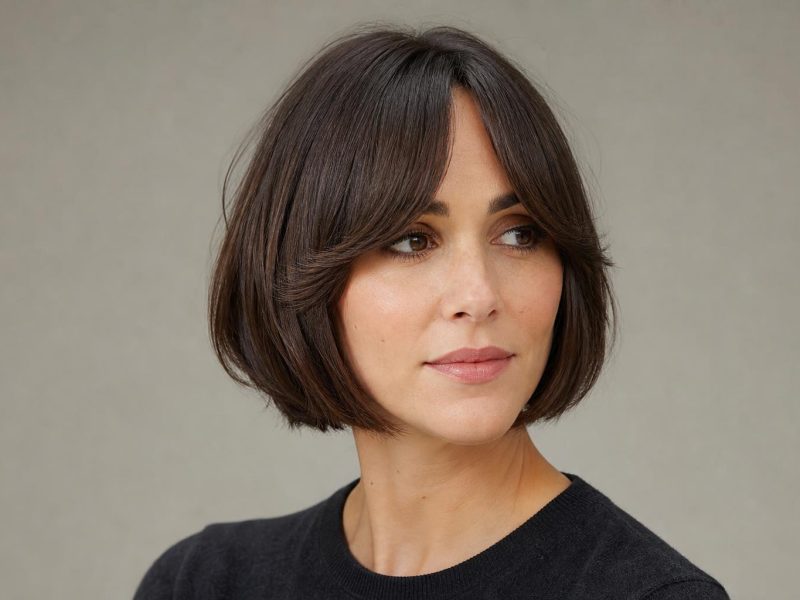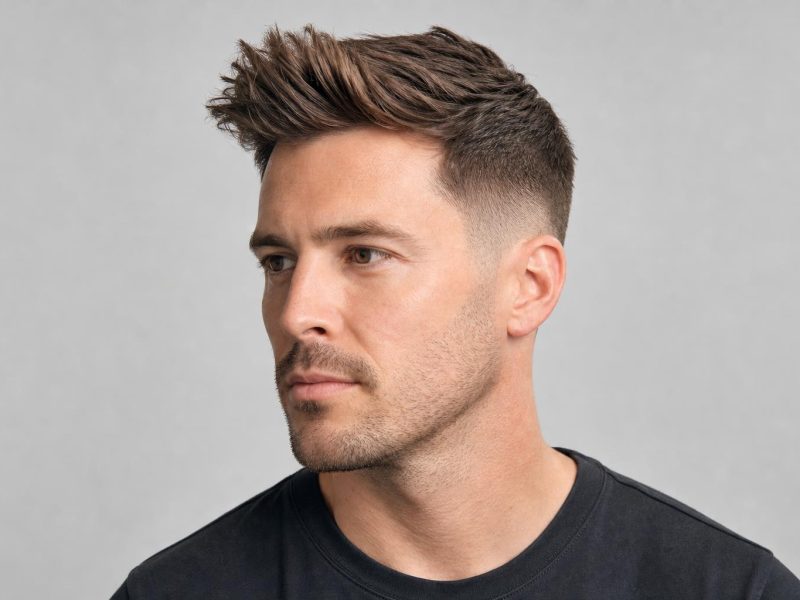



A prominent forehead is one of the most adaptable face features in hair styling — you can minimize it with a well-placed fringe, balance it with strategic face-framing, or lean into it with styles that wear the forehead confidently.
These 30 hairstyles for a big forehead cover every approach: bangs that partially or fully cover the forehead area, no-bangs styles that balance proportions through layering and volume placement, and bold cuts that leave the forehead completely visible. Each entry includes who it works best for, what to ask your stylist, and why the shape works for a higher or wider hairline.
Curtain bangs start at entry 1. Entries 11 through 20 cover no-bangs approaches for those who prefer not to deal with fringe maintenance. Entries 21 through 30 are for anyone ready to stop camouflaging the forehead entirely.
| Factor | Details |
|---|---|
| The goal | Reduce visible forehead height or width, OR balance face proportions through volume placement |
| Most effective options | Curtain bangs, side-swept fringe, face-framing layers, deep side parts |
| Hair types that suit bangs | All types; fine hair gets wispy or thin bangs; thick hair holds blunt fringe; curly hair works best with curtain bangs cut dry |
| Bangs maintenance | Trim every 3–7 weeks depending on style; blunt bangs need more frequent trims than wispy or curtain styles |
| No-bangs alternative | Face-framing layers starting at cheekbone level; deep side part; volume placed at the sides rather than crown |
Bangs and Fringe for Big Foreheads
Bangs work by shifting the visual boundary of the face upward, reducing the visible forehead area between the eyebrows and hairline. The key variable is how much coverage you want: a full blunt fringe maximizes coverage, wispy fringe provides soft partial reduction, and curtain bangs split the difference by covering the center while letting the natural hairline show at the temples. All three work on a big forehead; the right choice depends on your hair texture and how much upkeep you are willing to commit to.
1. Classic Curtain Bangs
Curtain bangs are cut to their longest point at the center of the forehead and graduated outward toward the temples, creating a parted fringe that frames both sides of the face rather than covering the brow in a single straight line. The shape draws the eye down and inward rather than across the full forehead width, which helps with foreheads that are wide rather than just tall. On thick hair, ask for point cutting throughout the fringe section to keep the weight soft rather than blocky at the tips.
2. Side-Swept Full Fringe
Oblong and oval faces with prominent foreheads get the most visual correction from a side-swept fringe because the diagonal line of the sweep creates an implied angle that shortens the vertical length of the face. The sweep should start just past the part and fall at the eyebrow, not above it; any shorter and the effect reverses, drawing more attention to the exposed hairline at the sweep’s origin. Ask for “a side-swept fringe that lies flat naturally without needing product to stay swept” if your hair has a strong natural growth direction.
3. Wispy Feathered Fringe on Fine Hair
Fine hair does best with a wispy fringe rather than a blunt one, since a heavy blunt fringe on fine strands looks flat and limp within hours of styling and thins out at the top where coverage matters most. Wispy fringe works from roughly 1.5 to 2 inches of bang length and thins out naturally at the edges to blend into face-framing pieces. A small amount of light-hold cream applied to damp fringe and combed forward gives texture without stiffness.
4. Textured Baby Bangs
Blow-drying the fringe forward and curving the ends slightly inward with a small round brush gives baby bangs (fringe that sits at or above mid-forehead) a more polished finish than letting them air-dry flat. This length is a bold choice because any gap between baby bang length and brow level can highlight the forehead rather than reduce it; the payoff is that they grow out faster than brow-level bangs, reaching the more forgiving curtain length in 4–6 weeks. Pair with a slightly longer cut at the back to balance the short, statement-making fringe in front.
5. Thick Blunt Fringe at the Brow
A full blunt fringe cut at brow level needs a trim every 3–4 weeks to stay at the coverage length where it works; let it grow to mid-forehead and the gap between fringe and eyebrow creates a band of exposed skin that can draw more attention than no fringe at all. On thick or coarse hair, this fringe lands with natural weight that holds its line through humidity and movement. On naturally wavy hair, ask your stylist to cut the fringe slightly longer than the target length when wet, then trim the final few millimeters dry so the natural wave falls exactly where you want it.
6. Curtain Bangs with Warm Money Piece
A warm honey or caramel money piece placed at the front sections of the curtain fringe adds a two-tone effect that draws the eye to the face-framing movement of the bangs rather than the forehead behind them. The tonal contrast between the lighter front pieces and darker roots behind creates depth at the part line, making the fringe look thicker and more layered even on medium-density hair. This combination works especially well on medium to dark brown base colors where the contrast between the natural shade and the warm front pieces is most visible.
7. Brow-Grazing Choppy Fringe
Ask for “a straight fringe with point cutting all the way through rather than a blunt cut across the full width, ending just at the top of the eyebrows.” Point cutting creates a jagged, lived-in edge that looks less heavy than a precision blunt fringe and grows out more gracefully, since the textured ends blend into the rest of the hair rather than separating into a sharp line. If you have a cowlick at the front hairline, flag it before any bang cutting begins; a cowlick changes the direction the fringe naturally falls and needs to be factored in before the length is set.
8. Bottleneck Bangs
Bottleneck bangs are wider at the center and narrow gradually toward the temples in an arc, covering more of the forehead than curtain bangs while still keeping the corners of the hairline visible. Unlike a full blunt fringe that runs edge to edge, the graduated width prevents the heavy coverage of a traditional fringe while offering more center coverage than a curtain style. For anyone who has tried full bangs and found them too dense or high-maintenance, bottleneck bangs offer a middle position with a slightly longer trim interval than blunt fringe.
9. Swept Fringe with Long Layers
The fringe section is cut at the front hairline in a soft arc and directed to one side, so it becomes the leading edge of a long layered cut rather than a separate bang section sitting on top of the hairstyle. This technique requires the stylist to cut the front layers and fringe in one connected motion rather than as two separate sections, which is why the result looks integrated rather than “bangs added to an existing cut.” The fringe covers the upper forehead at the front while long side layers fall forward along the jaw.
10. Micro Curtain Fringe
Heart-shaped faces with a naturally wide forehead and narrower jaw benefit most from a micro curtain fringe, where the center bang length starts at mid-forehead (shorter than a classic curtain bang) and graduates outward to the temples. The shorter center length draws the eye down to the eyebrows and narrows the perceived width of the forehead, while the longer temple-side pieces maintain the frame that distinguishes curtain bangs from a standard short fringe. On wavy hair, this fringe needs to be cut dry so the natural wave is accounted for in the final length.
No-Bangs Styles That Balance a Big Forehead
Not every hairstyle for a big forehead requires a fringe. Face-framing layers, volume placement, and part direction can reduce the visual impact of a prominent forehead without any bang maintenance. The key is to add mass at the sides of the face at temple and cheekbone level, which widens the midface and makes the forehead look narrower in proportion. Volume placed only at the top or crown achieves the opposite effect.
11. Deep Side Part on Shoulder-Length Hair
Type 1a to 2b hair gets the cleanest deep-side-part results because straight and gently wavy hair follows the part line cleanly and sweeps over the forehead in one uninterrupted fall. The part should start 1.5 to 2 inches from the center of the head to create a true deep side part rather than just an off-center one; the deeper the part, the more forehead the sweeping section covers. A small amount of flexible-hold pomade applied to the root section during the blow-dry holds the part in place and prevents it from migrating back toward center by midday.
12. Center-Parted Wavy Lob
Styling a center-parted lob with waves rather than straight-smooth hair creates width at the sides at cheekbone and temple level, which is exactly where a wider forehead benefits from added visual mass. Run a 1.25-inch barrel curling iron through sections, alternating direction on each one, then separate the waves with fingers rather than a brush to keep the width soft. A lob that falls between jaw and collarbone gives the waves enough room to spread at the sides without the ends flipping inward from being too short.
13. Face-Framing Layers from Cheekbone Level
Asking specifically for layers that start at cheekbone level rather than at the shoulders or mid-length places the most visual weight of the cut where it draws the eye across the cheekbones and jaw rather than upward toward the forehead. The cheekbone-starting layer is what defines face-framing as a deliberate haircut feature rather than just an overall layered look; the two front sections are cut shorter than the rest of the cut and angle forward toward the chin. On layered bob cuts, this creates the classic two-piece face-frame that photographs dramatically against angular bone structure.
14. Temple-Tucking Bob
Ask your stylist for “a chin-length bob with the front pieces cut long enough to tuck behind the ear and still fall forward at the jaw when released, with slight graduation from the back that keeps volume at the nape.” When the front pieces are tucked back, they frame the face at jaw level; released, they fall forward and add volume at cheekbone level. This version of the bob gives two distinct looks from the same cut depending on whether the front is tucked or released.
15. Voluminous Blowout with Side Part
A blowout that concentrates volume at the sides and mid-length rather than at the crown maintains itself better between washes than a lift-at-the-root style, since roots flatten first and crown volume disappears fastest by the second day. For a big forehead, the goal is to push volume outward toward the temples rather than upward, which means using a round brush to curl sections outward from the root rather than rolling them up and away from the face. A diffuser plus smoothing serum can approximate this at home in 20–25 minutes on most hair types.
16. Layered Shag with Long Face-Framing
A shag haircut naturally creates length at the front sections through its layering pattern, where the shortest layers are at the crown and the longest at the perimeter and front face-framing sections. Adding highlights or a warm balayage to the face-framing sections adds dimensional contrast that draws the eye to the cheekbone-level layers rather than to the forehead above. Keep the front face-framing pieces at least collarbone length so they have enough weight to fall forward and frame rather than flip outward.
17. Curtain-Effect Side Pieces without Bangs
Heart-faced and oval-faced people with prominent foreheads can achieve the visual effect of curtain bangs without a fringe by asking for “two front face-framing sections cut from cheekbone level, angled forward toward the chin, that sweep in toward the center of the face with a slight inward curve at the tip.” The inward curve at the ends creates the curtain effect; without it, the sections just frame rather than sweep. The key difference from traditional face-framing is the deliberate sweep direction of the tips toward the midface.
18. Angled Bob with Forward-Slanting Front
An angled bob cut so that the front pieces fall noticeably longer than the nape builds visual weight toward the jaw and chin through the cut angle itself rather than through layers or volume. The angle replaces the visual function of bangs by moving length forward. On square faces with a wide forehead, pairing the angled front with soft, rounded nape layers prevents the back from looking too angular, softening the overall silhouette while maintaining the forward-directing weight of the front pieces.
19. Braided Side Crown with Forward Pull
A loose French braid or Dutch braid that starts behind one ear, runs diagonally toward the top of the head, and is pinned across the crown creates a textured headband effect that brings visual interest to the upper head without a fringe. Style the loose hair on the opposite side to fall forward over the temple, so the overall shape moves hair from the sides down toward face level. On thicker hair, loosening the braid after securing it adds width at crown level, which redirects attention away from the forehead without requiring volume or product at the front hairline.
20. Half-Up Bun with Face-Framing Tendrils
A standard half-up bun pulls focus to the crown, which works against a big forehead, but leaving out two pieces at each temple to fall as loose tendrils redirects the visual attention to the sides of the face. The tendrils do the same work as face-framing layers: they place loose, softly curled pieces at temple level that break up the full width of the visible forehead above. Unlike face-framing layers styled into the cut, tendrils are a finishing step added after the bun is secured and can be adjusted to frame the face at any width.
Styles That Embrace a Prominent Forehead
Not every prominent forehead needs to be minimized. Several of the most striking hairstyles for a big forehead involve wearing it fully visible, treating it as a backdrop rather than a problem. The styles in this section work by drawing attention elsewhere: bold cuts, dramatic shapes, or confident styling that uses the forehead’s open space as part of the overall visual composition.
21. Sleek High Ponytail
On type 1 to type 2c hair, a high ponytail pulled tight and smooth at the crown leaves the entire forehead and face completely visible. Baby hairs smoothed with a soft brush and light-hold edge gel at the hairline create definition at the front that makes the exposed forehead look framed rather than bare. This look works best when hair health, edge clarity, and brow grooming are all dialed in, since the slicked-back style leaves no fringe or frame to redirect the eye.
22. Short Pixie Cut Worn Back
Square and oblong faces with big foreheads find that a short pixie cut with the top swept back and sides tapered tight creates a strong, clean silhouette that emphasizes facial structure rather than covering it. The face shape becomes the point of the look rather than a feature to offset. Pairing with defined brows and eye-level makeup shifts the focal point from the hairline down to the eyes, which is where the eye naturally travels when there is no fringe to stop it earlier.
23. Clean Fade with Textured Top
For men with a big forehead, a high taper fade paired with 2 to 3 inches of textured hair on top can be worn with product pushed forward to cover some of the forehead, or pushed back to expose it fully. The textured top is the variable: styling forward puts the cut in the balance category; styling up or back moves it firmly into the embrace category. The fade needs refreshing every 2–3 weeks regardless of how the top is worn.
24. Bold Color Contrast at the Hairline
Bleached, platinum, or vivid-toned roots on a darker base create a color break right at the hairline that functions as a visual accent rather than an exposure of bare skin. Color-blocking at the root line works because it signals a design choice rather than a styling default, which changes how the forehead appears in person and in photos. This is a high-maintenance commitment: lightened or vivid roots need toning every 4–6 weeks and base color refreshes to prevent the grow-out from looking faded rather than composed.
25. Natural Full Afro
On type 3c to 4c hair, a full afro builds volume outward at the sides in a way that naturally widens the midface and cheekbone area, changing the proportional relationship between the forehead and the rest of the face without covering the hairline. Picking the hair outward from the roots on dry hair rather than upward adds width at ear level and creates a rounded silhouette that balances a tall forehead by widening the visual field at face level. A slight taper at the edges rather than a hard perimeter line keeps the afro natural-looking rather than sculpted.
26. Textured French Crop
Ask your barber for “a French crop with the fringe cut to sit just below mid-forehead, with textured ends point-cut so the tips are not blunt, paired with a low to mid fade on the sides.” The crop fringe at this position covers part of the forehead rather than all of it, placing this style between the cover and embrace categories. The key distinction from a blunt baby bang is the textured, disconnected tip that makes the fringe look casual rather than precise, which works well for men who want some coverage without the strict maintenance schedule of a full fringe.
27. Slicked-Back Volume at Crown
Applying a medium-hold pomade or wax to dry hair and combing it straight back before pushing the crown upward creates a swept-back shape that exposes the entire forehead while adding height at the top. Blow-dry the roots upward first with a flat brush before applying product to help the crown volume stay up rather than collapsing flat within the hour. On type 2b wavy hair, the natural wave at the roots provides texture that prevents the slicked style from looking overly stiff or formal.
28. Dramatic Updo with Bare Forehead
A French twist, chignon, or sleek braided updo that pulls all hair away from the face is the most complete version of the embrace approach, exposing not just the forehead but the temples, full hairline, and nape simultaneously. Unlike a ponytail, an updo at the back does not add height above the forehead; the length is contained at the rear rather than elevated overhead. The exposed hairline benefits most from clean shaping, and bold earrings or face-level jewelry shift attention lower so the eye does not rest at the hairline.
29. Windswept Center-Parted Blowout
On medium to coarse hair types, a center-parted blowout where sections are directed outward and away from the face creates significant width at cheekbone and temple level. The windswept direction differs from a standard blowout in that the root lift is angled away from the face at the front sections rather than straight upward, so the silhouette widens at the sides rather than rises at the crown. This approach suits oval and long face shapes most, since the added width interrupts the vertical line that makes a long face with a big forehead feel even taller.
30. Wolf Cut Worn Pulled Back
A wolf cut worn with the top sections pulled back into a half-up style exposes the short crown layers as a textured, disheveled top while the longer perimeter layers fall forward and frame the lower face. The contrast between the short lifted crown and the long falling perimeter layers creates visual movement that keeps the eye traveling between crown and mid-length sections rather than stopping at the hairline. This is the “embrace plus redirect” version: the forehead is fully visible but the layered complexity of the wolf cut draws attention across the whole style.
Choosing Your Approach by Face Shape and Forehead Type

A big forehead can appear wide, tall, or both depending on your face shape. Understanding which dimension is most pronounced changes which technique delivers the most visual balance. A face shape guide can help you identify your shape if you are uncertain which category applies.
| Face Shape | Forehead Concern | Best Approach | Avoid |
|---|---|---|---|
| Heart | Wide at the forehead, narrow at chin | Curtain bangs, micro curtain fringe; add volume at jaw level to balance | Blunt full fringe emphasizing forehead width; volume only at crown |
| Oblong | Tall forehead adding to overall face length | Side-swept fringe, blunt bangs, face-framing layers with volume at sides | Center parts that extend the vertical line; long straight styles without width |
| Oval | Forehead slightly wider than jaw | Most styles work; curtain bangs or face-framing layers are the standard picks | Nothing specifically; oval faces can wear the embrace styles with confidence |
| Round | High hairline adds height to an already circular shape | Side-swept bangs, deep side part; styles with vertical movement at the front | Full center-parted blowout adding width; high buns that add height at crown |
| Square | Wide, angular forehead with strong horizontal hairline | Soft side-swept fringe, angled bob, curtain bangs with textured ends | Blunt straight-across fringe that emphasizes the horizontal hairline |
| Diamond | Narrow but prominent hairline shape | Volume at the forehead to add width; curtain bangs that widen the upper face | Styles that pull all volume to the widest cheekbone midpoint |
What to Tell Your Stylist
Describing a forehead concern is most effective when framed as a proportional goal rather than a flaw to fix. Say: “I have a prominent forehead and I want [the fringe / the face-framing / the length] to shift visual weight toward the [lower face / cheekbones / jaw level].” That framing gives the stylist a technical target rather than a general problem to interpret.
Stylist tip: Bring two reference photos: one showing the fringe or framing style you want, and one top-view or three-quarter shot that shows how the forehead appears in a photo. Seeing both what you want and what the challenge is lets the stylist design a specific cut adjustment rather than applying a generic solution.
For fringe specifically, tell the stylist your daily styling commitment honestly before the cut starts. A blunt fringe on fine hair that air-dries needs a round brush and blow dryer to lie flat; skip that step and the style will not look like the reference photo. A wispy or curtain fringe air-dries considerably more cooperatively and is a better match for a low-maintenance routine.
Stylist tip: If you have a cowlick or strong natural part direction at the front hairline, flag it before any bang decision is made. A cowlick that pushes hair against your desired fringe direction will fight any style that works against it. In those cases, a curtain bang that parts in the same direction as the cowlick usually works better than a side-swept style fighting the natural growth pattern.
Maintenance by Fringe Style
The biggest surprise for first-time fringe wearers is how often bangs need trimming compared to the rest of the cut. Hair grows roughly half an inch per month, and even a small amount of growth can shift fringe from the ideal coverage length to either too short (exposing more forehead) or too long (hanging into the eyes). Here is what to expect for each approach in this gallery.
| Fringe Style | Trim Frequency | Daily Styling Time | Grow-Out Behavior |
|---|---|---|---|
| Full blunt fringe | Every 3–4 weeks | 5–10 min; blow-dry essential for fine hair | Grows into a heavy sweep; awkward at mid-growth between brow and mid-forehead |
| Curtain bangs | Every 5–7 weeks | 2–5 min; air-dries reasonably, round brush improves result | Blends naturally into face-framing layers; one of the most graceful grow-outs |
| Wispy fringe | Every 5–6 weeks | Minimal; light texturizing spray or finger-styling only | Grows into longer wispy pieces; easy to push to the side or continue growing out |
| Side-swept fringe | Every 4–6 weeks | 3–5 min; must be directed during blow-dry to stay swept | Grows into a heavy side sweep that eventually tucks behind the ear |
| No bangs (face-framing layers) | Every 8–10 weeks | Varies by overall style; face-framing sections need no extra attention | Layers blend naturally; no awkward grow-out phase |
When Bangs Are Not the Right Solution
Bangs are the most frequently recommended fix for a big forehead, but there are real situations where they create more difficulty rather than less.
- Very fine or thinning hair at the temples: A fringe cut into hair that is already thin at the sides looks sparse rather than covering. Face-framing layers from cheekbone level are a better solution: they add visual structure without requiring density that is not there.
- Strong natural wave or curl you prefer to air-dry: A blunt straight fringe on wavy or curly hair that you plan to air-dry will curve and spring rather than lying flat. Curtain bangs cut dry are the safest fringe option for wavy and curly hair since they account for natural movement before the length is set. On tightly coiled hair, the spring factor means any fringe cut wet can come out an inch or more shorter than expected once the curl sets fully.
- Very active lifestyle or frequent swimming: Blunt fringe and daily exercise create a persistent upkeep cycle: sweat and humidity separate the fringe and flatten it. Face-framing layers are a lower-maintenance strategy for the same visual goal, since they move with the hair rather than sitting as a separate section that needs restyling after every workout.
- A forehead you have decided to stop apologizing for: Many people find that once they stop trying to hide a prominent forehead and start wearing styles that suit their actual face, the result looks considerably more confident and natural. The embrace styles in section three are not a compromise; they are a different approach with genuinely strong results on the right face.
FAQ
What Hairstyles Make a Big Forehead Look Smaller?
Curtain bangs, side-swept fringes, and face-framing layers starting at cheekbone level are the most effective options. Each works by creating visual mass at the sides of the face at temple or cheekbone level, which shifts the proportional balance away from the forehead. Volume placed at the sides is more effective than volume at the crown, which adds height and draws more attention upward to the hairline.
Can I Have Bangs If My Hair Is Curly?
Yes, but curly bangs need to be cut dry rather than wet to account for how much the curl springs up from the wet length. A blunt fringe cut wet on curly hair often comes out significantly shorter than intended once the curl sets. Curtain bangs are the easiest fringe style for curly hair because the gradual, parted shape works with rather than against most curl patterns. One appointment to establish the length and shape is enough to see how your specific curl responds before committing to a regular fringe maintenance schedule.
Are There No-Bangs Alternatives for a Big Forehead?
Face-framing layers cut from cheekbone level are the closest no-bangs equivalent to curtain bangs: they bring long pieces forward along the sides of the face without creating a fringe section at the hairline. A deep side part also sweeps hair forward across part of the forehead without any separate bang section. Both grow out cleanly and require no additional styling steps beyond what you already do for the rest of your cut.
Does a Big Forehead Mean I Have a Specific Face Shape?
A prominent forehead occurs across multiple face shapes; it is not a face shape category in itself. Heart-shaped faces naturally have a wider forehead and narrower jaw, so forehead width is part of the shape’s definition. Oblong faces have a tall overall structure that includes a tall forehead. Oval faces sometimes have a slightly wider forehead than jaw as part of the shape. Knowing your broader face shape helps choose the right technique, since the solution for a wide forehead differs from the solution for a tall one.
What Should I Avoid If I Have a Big Forehead?
Slicked-back styles that pull all hair away from the face and expose the full hairline are the most challenging choice for a big forehead. Very high buns or top knots that add height directly above the forehead extend the perceived vertical length further. Center-parted straight styles on oblong face shapes extend the dominant vertical direction without any interruption at the hairline. These are tendencies rather than absolute rules; the embrace styles in this article demonstrate that all three can work confidently with the right approach and face structure.
How Do I Tell My Stylist I Want to Balance a Big Forehead?
Frame it as a proportional goal: “I want the fringe or framing to shift visual weight toward the lower face and away from the forehead.” If you want bangs, specify the style by name (curtain, side-swept, wispy) and bring a reference photo showing the length and texture. If you want a no-bangs approach, say “face-framing layers starting at cheekbone level, angled forward toward the chin.” Specifics give the stylist a technical target rather than a vague problem to interpret.
Whether you choose curtain bangs that soften the forehead’s width, face-framing layers that redirect the eye toward the cheekbones, or a bold style that wears the big forehead hairstyles approach with full confidence, the best result comes from matching the technique to your actual hair texture, lifestyle, and styling routine. Bring reference photos from this collection to your next appointment and tell your stylist which dimension you want to address; the right framing choice for a prominent forehead is always the one that fits your hair and your life.
Hair results vary based on your natural hair type, texture, density, and condition. Always consult with a licensed hairstylist before making significant changes, especially with chemical treatments or dramatic length changes. Photos may show styled results that require professional tools and products to replicate.