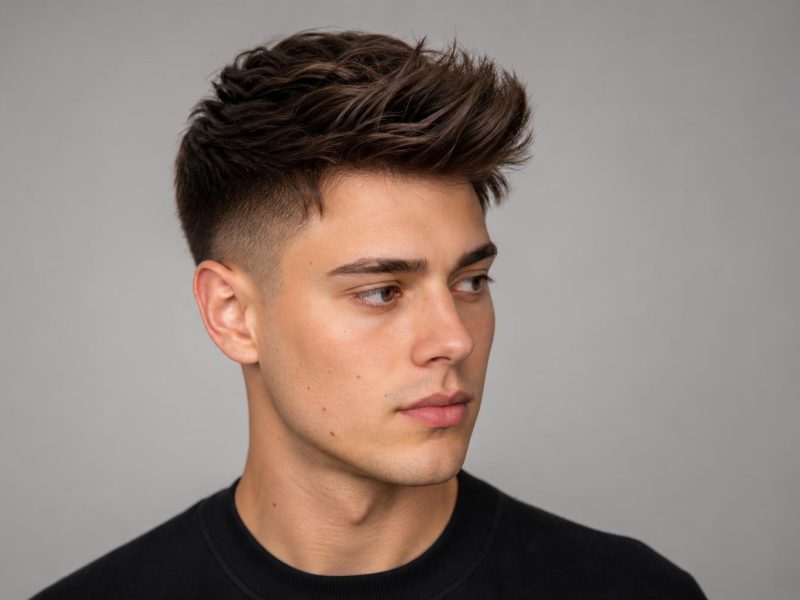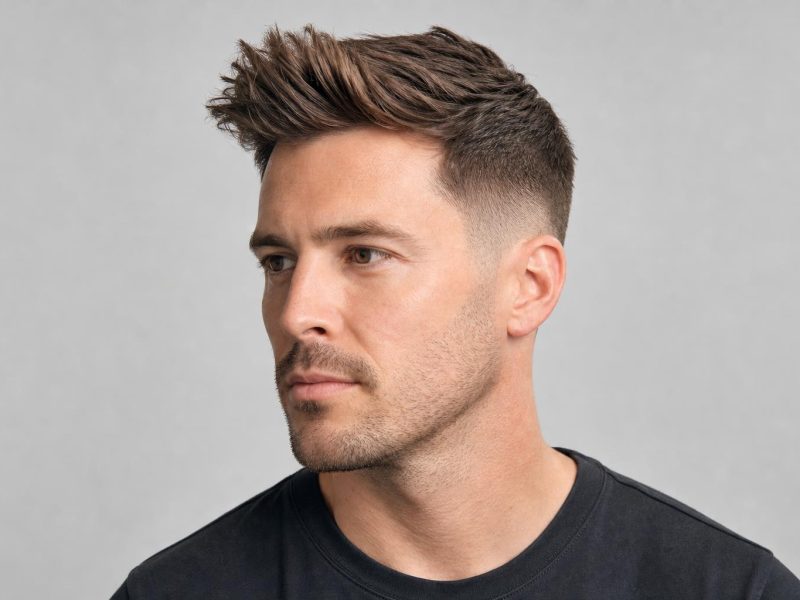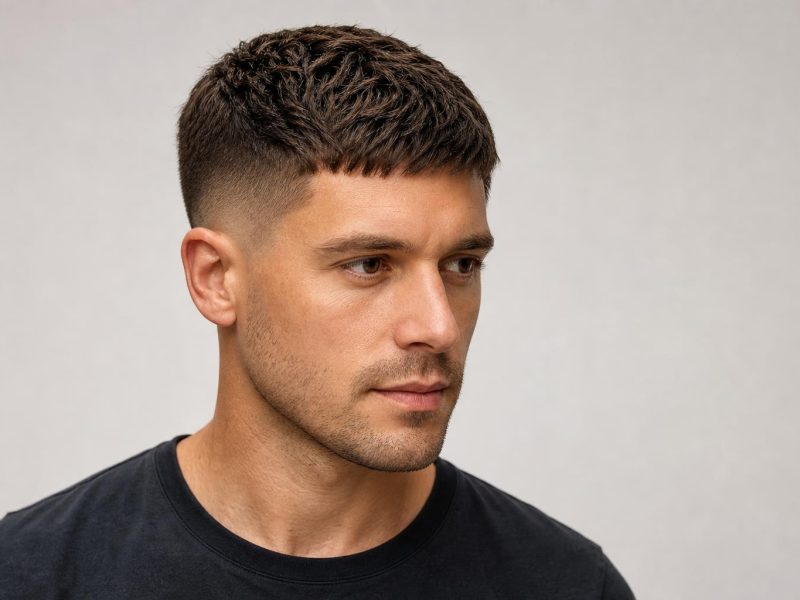

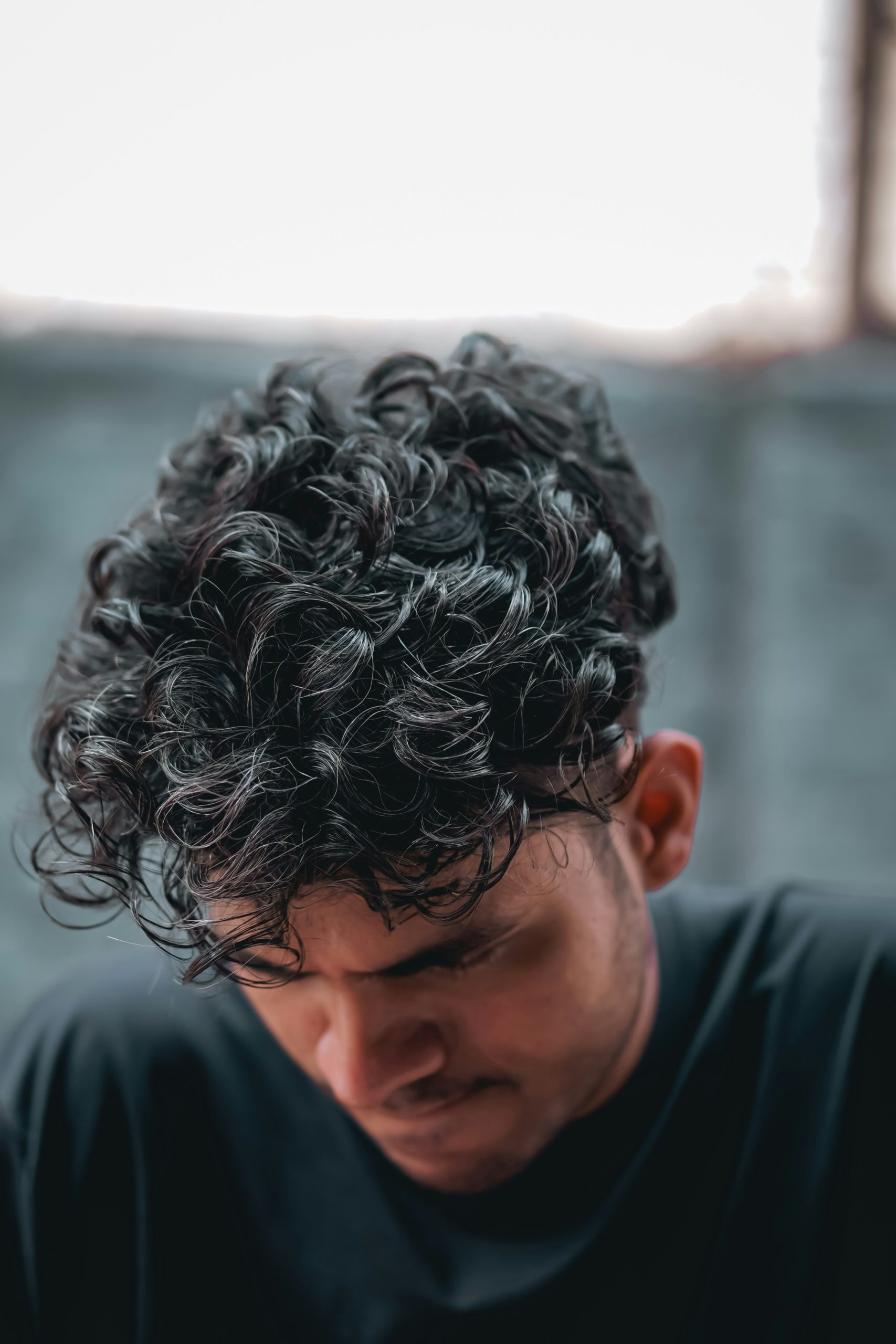
The curly mullet works because natural curl texture solves the structural problem that gives straight-hair mullets their dated look: the curls create volume and movement at the back that reads as a deliberate shape rather than an afterthought.
A curly mullet keeps the front and top shorter and more controlled while leaving the back and sides longer to showcase the curl pattern. The specific length ratio between front and back varies. Some clients want a 2-to-1 length difference, others want a more extreme contrast, but the defining principle stays the same: the front is a workday haircut and the back is where the personality lives. The 30 ideas here cover the full range from tight, taper-faded modern versions to loose, shaggy curly mullets for every curl pattern from 2C to 3C.
For context on fade variations that pair well with this cut, the guide to burst fade mullets covers the specific fade shapes that suit longer back sections most effectively.
| Factor | Details |
|---|---|
| Best curl patterns | 2C through 3C; works across wavy to curly with proper dry-cutting technique |
| Cutting approach | Dry cut preferred; wet cutting misrepresents shrinkage and produces uneven results |
| Maintenance | Shape trim every 8 to 12 weeks; fade touchup every 3 to 4 weeks if faded sides |
| Best for | Most face shapes with appropriate length ratio; oval and oblong face shapes especially |
| Styling time | 5 to 15 minutes with diffuser and curl cream; or air dry for a looser, lower-effort result |
Textured and Classic Curly Mullet Variations
These eight entries cover the foundational curly mullet shapes, from the most traditional length-contrast approach through modern textured versions that add shag-influenced layering to the classic structure.
1. The Disconnected Curly Mullet
A disconnected curly mullet uses a hard line between the shorter top section and the longer back rather than blending the two lengths gradually, which creates a cleaner, more contemporary look than the soft transition of the original 1980s version. The barber clips or shears a defined perimeter at the occipital bone, below which the longer curls hang freely. This approach suits clients who want the mullet silhouette to read as a deliberate cut rather than a grow-out.
2. The Round-Face Length Ratio
Round face shapes benefit from keeping the top of the curly mullet relatively short and tightly defined while allowing more length at the back and nape, which draws the eye downward and adds apparent vertical length to the face. Avoid building too much width at the sides with large, unpinned curls, as this can visually widen the face rather than elongate it. A taper or slight fade at the sides combined with longer back length produces the most flattering result for round proportions.
3. The Fine-Curl Curly Mullet
Clients with fine 2C to 3A curl patterns get the best mullet results from a cut that leaves slightly more length overall, since finer curls lose visual density quickly when taken too short. A barber who over-removes length on fine curly hair at the top and sides creates a limp, flat result rather than the voluminous shape the mullet depends on. Ask for the perimeter to be shaped with scissors rather than clippers to preserve the weight that fine curls need to hold their pattern.
4. The Diffuser-Dried Curly Mullet
A diffuser attachment on a blow dryer enhances natural curl definition on the mullet’s back section while adding volume at the top and crown without creating the frizz that direct heat airflow causes. Apply a curl-enhancing cream or lightweight leave-in conditioner to soaking-wet hair before diffusing, working in sections from the nape forward. Diffuse at medium heat on low airflow to encourage the curl pattern to clump naturally rather than separating into individual strands.
5. The 10-Week Shape Maintenance
Curly mullets maintain their shape longer than straight mullets because the curl texture conceals irregular growth at the edges more effectively than straight hair does. A shape trim every 10 to 12 weeks is realistic for most clients with defined curl patterns, provided they are managing frizz and definition at home with consistent product use. The neckline is the most visible area of grow-out; ask your barber to clean up the neckline outline only between full shape appointments if the neck area grows faster than the rest.
6. The Dark Natural Curl Curly Mullet
Dark natural curls at level 2 to 4 on the color scale create the highest contrast between the shorter top and longer back because the depth of the curl color emphasizes the shadow where the lengths separate. No color treatment is needed to make dark curly mullets look dimensional — the natural variation in curl tightness across the head creates enough texture variety on its own. Adding a glossing treatment every 8 to 10 weeks keeps dark curls from looking dull and enhances the natural depth without changing the color.
7. Asking for a Disconnected Top at the Barbershop
When requesting a curly mullet with a clearly separated top section, tell your barber: “I want the top to be its own defined section, separated from the sides and back rather than blended into them. Keep the transition line clear rather than fading it, so the top reads as shorter and contained while the back hangs long.” This framing distinguishes the cut from a shag or wolf cut, where the layers blend progressively rather than disconnect.
8. The Modern Curly Mullet vs the 1980s Original
The 1980s mullet relied on a feathered, straight-hair silhouette with a sharp divide between flat top sections and a long, straight back. The modern curly mullet has nothing to do with that shape — it uses the curl pattern to create volume throughout, shorter textured top layers, and a back that flows rather than hangs flat. The connection to the 1980s version is structural (front shorter, back longer) but not visual; most modern curly mullet reference photos would not be recognizable to someone expecting the classic style.
Curly Mullet with Fade Styles
Adding a fade to the sides and temples creates a cleaner, more barber-shop-defined version of the curly mullet that works well for clients who want the longer-back shape without the unkempt quality that unstyled curly sides can produce. These seven entries cover taper fades, skin fades, and drop fades specific to the curly mullet structure. The fade options compatible with longer back sections are also covered in the guide to high taper fades.
9. The Taper Fade Curly Mullet
A taper fade on the sides of a curly mullet progressively shortens the hair from the parietal ridge down to the ear, leaving the top and back at full length to maintain the mullet silhouette. The taper creates a clean boundary between the shaped sides and the longer back section without the hard disconnect of a skin fade, which makes the overall cut look deliberately contemporary rather than aggressively styled. Request a medium taper rather than a skin fade if you want the sides to remain visibly textured.
10. The Fade Curly Mullet for Square Faces
Square face shapes with defined jaw angles benefit from a fade that pulls the visual weight upward and away from the jaw rather than leaving full-density sides that frame and emphasize the angular bone structure. A mid to high fade on a square face, combined with volume through the top curl section, softens the overall outline by redirecting attention from the jaw to the crown. Ask your barber to blend the fade slightly higher at the temples to further lift the visual focal point.
11. The Thick-Hair Skin Fade Curly Mullet
Thick, high-density curly hair creates substantial width at the sides if left at full length, which can overwhelm the overall mullet shape and make the back section look proportionally shorter than it is. A skin or bald fade through the sides removes the density issue entirely, making the top and back sections appear more voluminous and dramatic by contrast. On thick curly hair, a skin fade also reduces the styling time required to control the sides between appointments.
12. The Curl-Defined Fade Mullet Styling Routine
Applying a medium-hold curl cream from the mid-shaft to the ends of the back section, then scrunching upward toward the scalp, encourages the curl pattern to clump into defined coils rather than expanding into a wide, undefined shape. Apply the product on wet or damp hair and avoid touching the hair while it dries, since contact during drying breaks the curl clumps and creates frizz. A final light-hold hairspray over the dry back section holds definition through the day without making the curls feel hard or crunchy.
13. The Fade Touchup Schedule for Curly Mullets
A curly mullet with faded sides requires two different maintenance visit types: a full shape appointment every 8 to 10 weeks that addresses the top and back length, and a shorter fade touchup appointment every 3 to 4 weeks to keep the sides clean. The fade touchup takes 15 to 20 minutes and costs significantly less than a full cut, but skipping it allows the sides to grow from a clean taper into a heavy, dense band of hair that changes the proportional look of the entire cut.
14. The Two-Tone Curly Mullet with Fade
Bleached or color-treated ends on the back section of a curly mullet, combined with natural or darker roots and faded sides, creates a two-tone depth effect that makes the back section’s length more visually prominent. The contrast between the natural-colored top and lighter-tipped curls in the back draws the eye specifically to the mullet’s length, which emphasizes the structural point of the cut. Ask your colorist to bleach only the ends of the back section rather than doing a full head application, which limits damage to the sections most affected by chemical treatment.
15. Requesting the Right Fade Height for a Curly Mullet
The fade height on a curly mullet changes the character of the cut significantly. A low fade that stops at the ear level preserves more textured length and produces a softer, less aggressively shaped look. A high fade that extends to the parietal ridge creates a more defined contrast and a cleaner overall silhouette. Tell your barber: “I want a [low/mid/high] fade on the sides. Keep the top curls full and leave the back long enough to show clear length contrast from the front.” Specifying the fade height prevents the most common version of this cut going wrong.
Curl Pattern-Specific Curly Mullet Ideas
Curl patterns from 2C through 3C all suit the mullet structure, but each pattern requires a different approach to length, layering, and dry-cutting technique. These seven entries address the specific considerations that apply to each major curl family in the context of this cut.
16. The 2C Wavy Curly Mullet
2C waves have a loose S-pattern that creates natural texture through the back section of a mullet without needing heavy product or heat. The wave pattern distributes unevenly with length — the longer the hair grows, the less defined the wave pattern typically becomes due to its own weight. Keep the back of a 2C mullet at a length where the waves still hold their pattern naturally (typically no longer than 4 to 5 inches past the neckline) or use a sea-salt spray and diffuser to encourage definition at longer lengths. Clients with 2B wave texture will find this approach most relevant.
17. The Oval-Face Curly Mullet Freedom
Oval face shapes have the most flexibility of any face shape for a curly mullet, supporting both soft and dramatic length contrasts, high or low fades, and any curl volume level at the back. The balanced proportions of an oval face do not require the cut to compensate for or minimize any specific feature, which means the length ratio and fade height decision is purely about personal style preference rather than face shape correction. If you have an oval face, the only wrong choice is a length ratio you do not actually like.
18. The 3A Ringlet Curly Mullet
3A curls form large, defined ringlets with a clear coil shape that produces excellent visual impact at the back of a mullet. The ringlet pattern on 3A hair needs to be cut dry to avoid the shrinkage miscalculation that causes wet-cut mullets to end up significantly shorter than expected after the hair dries and coils up. Ask your barber specifically for a dry cut, and request that they check the length mid-cut while the hair is still in its natural state rather than stretched.
19. The 3B Curl Mullet Definition Routine
3B curls have a medium-tight spiral pattern that creates the most visually dramatic back section of any common curl type on a mullet, with defined coils that hold shape well throughout the day. Rake a curl-enhancing gel through the back section on wet hair, then diffuse at low heat with your head tilted forward to encourage the coils to form downward rather than spreading outward. A microfiber towel blot rather than a terry cloth towel between washing and diffusing reduces the frizz that disrupts 3B coil formation.
20. The 3C Shrinkage Management Curly Mullet
3C curl patterns have significant shrinkage (typically 40 to 60 percent of the stretched length), which means a dry-cut mullet on 3C hair needs to leave substantially more length at the back than the desired finished visual length. A back section that appears 3 inches long in its natural state may be 5 to 7 inches when stretched. Tell your barber the length you want to see when the hair is in its natural coiled state, not the stretched length, to ensure the dry result matches the goal.
21. The Color-Treated Curly Mullet
Highlights placed through the top section of a curly mullet add visual separation from the back, which makes the length contrast between the shorter top and the longer back appear more defined. Balayage or partial highlights work better than all-over color on this cut because the hand-painted placement creates natural variation through the shorter top without requiring the back and sides to be treated as well. Keep chemical services confined to the sections that need the most emphasis rather than treating the entire head.
22. The Curly Mullet vs the Straight Mullet
Curly and straight mullets use the same length structure but produce entirely different visual results. A straight mullet depends on a clean, geometric separation between the flat top and the hanging back, which can look dated if the front section is too flat. A curly mullet relies on texture variation rather than flat geometry, where the natural curl movement at the back creates a shape that fills in the visual space rather than draping downward. Clients who find the straight mullet too harsh often find the curly version immediately more wearable for the same reason.
Short, Modern, and Statement Curly Mullet Ideas
These eight entries cover the more defined, shorter-top variations as well as bolder styling choices including women’s and unisex curly mullet interpretations that have gained presence through 2025 and into 2026.
23. The Short-Top Curly Mullet
Keeping the top section very short, around 1 to 2 inches, while leaving the back at 3 to 5 inches creates the most pronounced length contrast of any curly mullet variation. The short top section appears nearly cropped when the curl pattern is tight, which makes the longer back section look more dramatically longer by comparison. This version suits clients who want the mullet shape to be immediately obvious rather than subtle or interpretable as a standard curly cut.
24. The Heart-Face Curly Mullet Placement
Heart-shaped faces have a wider forehead and narrower chin, which means building volume at the top of the curly mullet can amplify the forehead width rather than flatter it. Keep the top section’s curl volume minimal by taking it slightly shorter and using a light hold product rather than a volumizing cream, while allowing the back section’s length and curl to draw the eye downward. The visual weight of the longer back section naturally balances the narrower chin area when the front is kept proportionate.
25. The Coarse 3C Curly Mullet
Coarse 3C hair produces the most voluminous and densely textured mullet back section of any curl pattern, which can easily overpower the shorter top if the length contrast is not dramatic enough. On coarse 3C hair, the back needs to be noticeably longer than it would on finer textures to establish the visual division clearly, since the density of the coils fills the space and reduces the apparent length contrast. A barber experienced with Type 3 and Type 4 curl textures will know to account for density as well as length when shaping this version.
26. The Women’s Curly Mullet Interpretation
Women’s curly mullets typically use a softer length gradient than men’s versions, with the transition from shorter front to longer back handled through layering rather than a sharp disconnected perimeter. The front sections are often kept at face-framing length with curtain-style layers, while the back grows progressively longer through the nape. Request: “I want a curly mullet with a soft transition — keep face-framing layers at about chin level and let the back grow to mid-neck or longer without a hard disconnected line.”
27. The Dry-Cut Requirement for Curly Mullets
Your stylist needs to see the curls at their natural resting length before making any cuts, because wet-cutting curly hair produces a result that shifts unpredictably as the hair dries and shrinks. A barber or stylist who insists on cutting your curly mullet wet has likely not specialized in curly texture work. The dry cut allows the cutter to see exactly where each curl section falls naturally, ensuring the length contrast is accurate in the finished wearable state rather than in the inflated, stretched wet state.
28. The Bleached-Tip Curly Mullet
Bleaching the last inch or two of the back section’s curl ends creates a visible ombre effect that emphasizes the length and movement of the longer back. The bleached tips catch light differently than the natural base, making the back section appear to have additional dimension and depth. Apply a toning treatment with a violet or blue undertone after bleaching the tips to prevent the ends from pulling orange or yellow, which reduces the quality of the contrast effect significantly.
29. Communicating the Curly Mullet to a New Barber
When visiting a new barber for a curly mullet, bring a reference photo and lead with the structural description rather than just the style name. Tell them: “I want a curly mullet — shorter on top and at the sides, with the back left significantly longer to show the curl pattern. I want it cut dry, not wet, so the length accounts for my curl’s shrinkage. The top can be [faded/tapered/disconnected], and here is the look I am going for.” This gives the barber the structural brief before they see the photo, which prevents the most common misinterpretation of the style name.
30. The Curly Mullet vs the Wolf Cut
The curly mullet and the wolf cut are often confused but use different structural principles. A wolf cut distributes layers progressively throughout the entire head, with shorter pieces through the crown blending into longer layers at the perimeter — the texture is layered throughout, not concentrated at the back. A curly mullet has a genuine front-to-back length disparity, with the top kept distinctly shorter than the back. The contrast in a mullet is geometric and obvious; the layering in a wolf cut is gradual and diffused. For more on the wolf cut’s specific structure, the guide to wolf cut styles for men covers the differences in detail.
Face Shape Compatibility
The curly mullet works across most face shapes when the length ratio and curl volume are adjusted appropriately. The table below covers the key recommendations per shape, with the front-to-back length contrast as the primary variable.
| Face Shape | Best Approach | Avoid |
|---|---|---|
| Oval | Any variation; most length ratios work | Nothing inherently problematic |
| Round | Short top, longer back, taper or fade at sides | Full-volume sides with no fade (adds width) |
| Square | Mid or high fade, softer curl volume at top | Hard-line disconnect at jaw level (emphasizes jaw) |
| Heart | Minimal crown volume, longer back to draw eye down | Heavy top volume (amplifies wider forehead) |
| Oblong / Long | Add width with curl volume at sides, keep back moderate | Very long back with no side volume (further elongates) |
| Diamond | Volume at temples and back to balance narrow forehead and chin | High fade with no side texture (exposes narrow forehead) |
What to Tell Your Barber
The curly mullet requires a more specific brief than most cuts because both the structural concept and the cutting technique need to be communicated clearly. Showing a reference photo alone is not enough if your barber cuts curly hair wet by default.
For a clean modern curly mullet: “I want a curly mullet with a [low/mid/high] fade on the sides. Keep the top at around [1 to 3 inches] and leave the back noticeably longer so the curl pattern shows through. Cut it dry — I want the length to be accurate to how the curl sits naturally, not stretched out. Disconnected transition from the top to the back rather than a blend.”
For a softer women’s or unisex version: “I want a curly mullet with a soft gradient rather than a hard disconnect. Face-framing layers at about chin length, longer through the nape and back, and the transition through layers rather than a sharp line. Cut dry so the curl length is accurate.”
For a bold, maximalist curly mullet: “I want maximum length contrast. Very short on top and faded at the sides — as high as the top of the ear or above. The back as long as possible while still looking controlled. I want it to be obviously and unapologetically a mullet.”
When the Curly Mullet Is Not the Right Choice
The curly mullet has broad appeal but specific circumstances where it does not work well.
Straight or very minimally wavy hair. The curly mullet depends on natural curl texture to create the back section’s volume and movement. On straight or 1A to 2A hair, the back section hangs flat and thin rather than filling out into a shaped curl mass. A straight mullet is a distinct cut that requires a different approach; calling it a curly mullet and expecting curly-hair results from straight hair is not realistic.
Professional environments with strict grooming standards. A well-executed curly mullet is a visually distinct hairstyle that is not universally accepted in conservative professional settings. The cut is read as a statement rather than a neutral choice. Clients who work in environments with formal appearance requirements should assess whether the cut is appropriate for their context before committing to the length contrast.
Oblong face shapes pursuing the most dramatic length ratios. Very long back sections on oblong or long face shapes can exaggerate the vertical appearance of the face. The curly mullet works on oblong face shapes, but the back length should be kept moderate, with additional curl volume through the sides to add width. A dramatic back with minimal side volume on an oblong face moves in the wrong direction structurally.
Maintenance and Styling
A curly mullet that is well-shaped is one of the lower-maintenance cuts in the textured haircut category, since the curl texture conceals minor grow-out and the back section’s length means each trim removes less hair than a shorter cut would. The styling routine matters more than the cut frequency.
Use a curl-defining product on the back section every wash day. A cream or gel applied to damp hair before diffusing keeps the curl pattern consistent and prevents the back from expanding into a frizzy, undefined mass that loses the mullet’s structural point. The front and top sections can be styled with a lighter product or no product, since they are shorter and the curl definition is visible at shorter lengths without heavy product.
Stylist Tip: Sleep on a satin or silk pillowcase to reduce friction-based frizz in the back section overnight. Cotton pillowcases pull at the curl pattern and create frizz along the length of the back section that takes 10 to 15 minutes of restyling to correct in the morning. A satin pillowcase reduces that significantly with no effort.
Avoid brushing the back section when dry. Brushing breaks the curl clumps and expands the back into a triangle shape that obscures the mullet silhouette. Use a wide-tooth comb or your fingers on wet hair only, and let the curl pattern reform before the hair dries. If the back section needs refreshing on a non-wash day, apply a small amount of water or a curl refresh spray to the palms, scrunch it through the back, and diffuse briefly to reactivate the curl.
Stylist Tip: A deep conditioning treatment every 2 to 3 weeks maintains the elasticity of the curl pattern in the longer back section. Long curly hair loses moisture faster than short sections because the ends are older and more subject to damage from friction, UV, and styling. Elastic, well-moisturized curls hold the mullet shape much better than dry, brittle ones.
Frequently Asked Questions
What is a curly mullet haircut?
A curly mullet is a haircut that keeps the front and top sections shorter and more controlled while leaving the back and sides longer to showcase a natural curl or wave pattern. The defining characteristic is the front-to-back length contrast, where the shorter front creates a presentable everyday look and the longer back displays the curl’s natural texture and volume. The cut suits curl patterns from 2C through 3C and works for both men and women.
Is a curly mullet the same as a wolf cut?
No, though they are often confused. A wolf cut distributes layers progressively throughout the entire head, blending from shorter crown pieces into longer perimeter layers without a clear length separation between front and back. A curly mullet has a genuine, defined length disparity between the shorter front and the longer back, with the contrast more geometric than the wolf cut’s gradual layering. The mullet’s front-to-back division is structural; the wolf cut’s texture is distributed throughout.
Does a curly mullet need to be cut dry?
Yes, for accurate results. Curly and wavy hair shrinks significantly when it dries from its wet, stretched length to its natural coiled state. A barber who cuts a curly mullet while the hair is wet will be working with a length that no longer represents the actual finished result. Dry cutting allows the barber to see exactly where each section falls in its natural state, ensuring the front-to-back length contrast looks the way it is intended after the hair dries and the curl pattern forms.
How long does it take to style a curly mullet?
Daily styling takes 5 to 15 minutes depending on the approach. An air-dry routine with curl cream applied to wet hair takes minimal active time, with 20 to 40 minutes of passive drying time depending on length. A diffuser routine takes 5 to 15 minutes of active styling and produces more defined, voluminous results. On non-wash days, a refresh with a curl spray and 5 minutes of diffusing is typically sufficient to reactivate the back section’s curl pattern.
What curl pattern works best for a curly mullet?
All curl patterns from 2C through 3C work well, each producing a distinct version of the cut. 2C waves create a soft, textured back with natural movement. 3A and 3B ringlets produce the most visually defined and dramatic back section. 3C coils create the highest volume and densest texture but require the most precise length management to account for shrinkage. The best pattern is the one you already have — the cut adapts to the curl rather than the other way around.
Can women get a curly mullet?
Yes. Women’s curly mullets typically use a softer transition between the shorter front and longer back, often with face-framing layers at chin level blending into a longer nape and back rather than a hard disconnected perimeter. The fundamental structure is the same as the men’s version, but the interpretation tends to be less abrupt in the length contrast and more integrated with the face frame. Request a curly mullet with a “soft gradient rather than a disconnected line” to communicate the women’s interpretation clearly to your stylist.
The curly mullet works because it makes the curl pattern do the structural work the cut depends on. No straight-hair mullet produces the volume and movement in the back section that natural curl texture creates automatically, which is why the curly version of this cut looks contemporary where the straight version can look dated. Whether you choose a tight skin-fade version with maximum length contrast or a soft-layered women’s interpretation, the principle is the same: let the curl carry the back, and keep the front in check.
Hair results vary based on your natural curl pattern, texture, density, and condition. Always consult with a licensed barber or stylist experienced in curly hair before making significant cuts, especially if requesting a dry cut or fade combination. Photos shown may represent results after professional styling with products.