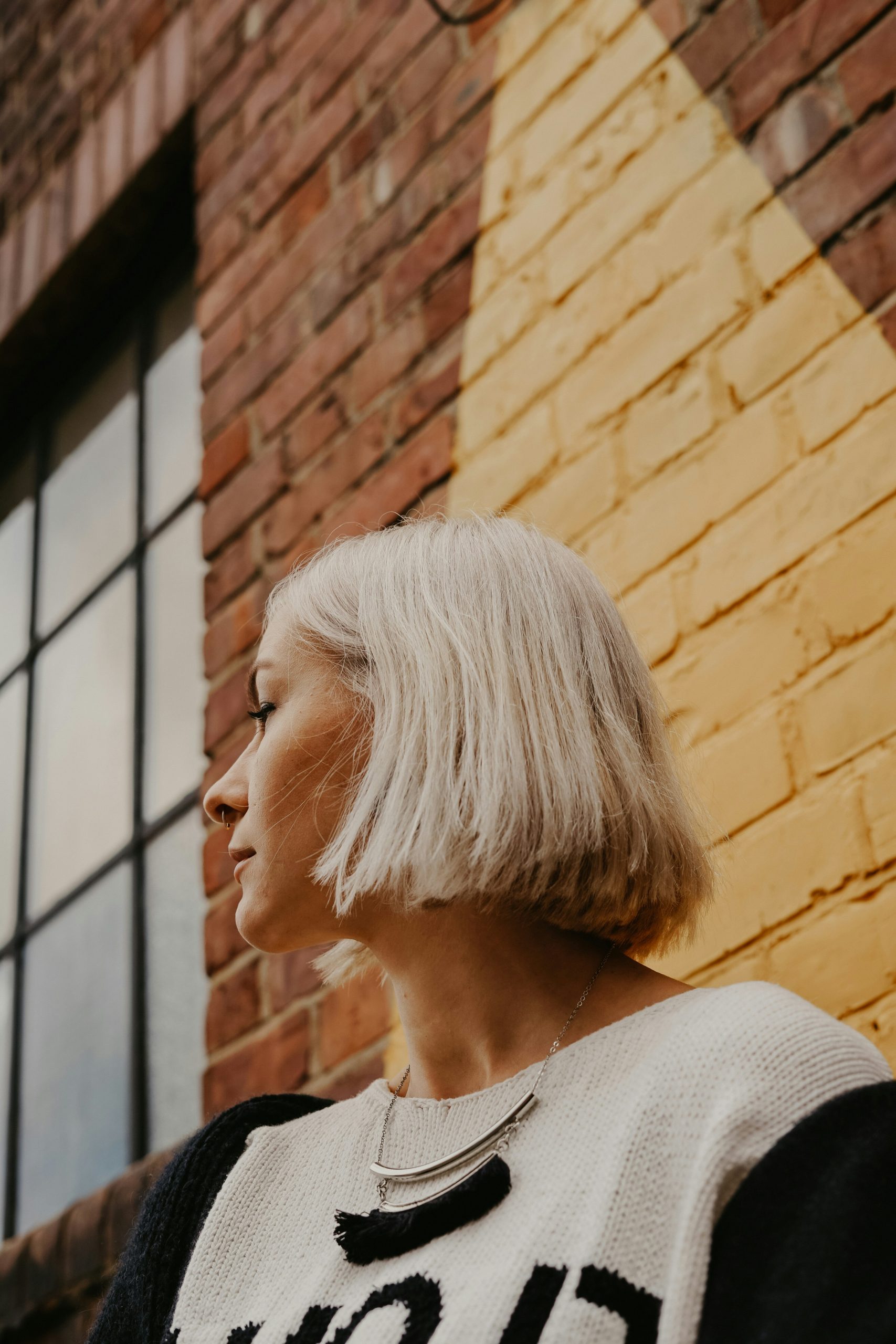
The Karen haircut is a short, steeply angled inverted bob with stacked layers at the back, side-swept angled bangs, and chunky blonde highlights, and it carries a meme reputation that has more to do with the styling choices than the cut itself.
The shape became internet shorthand for a certain attitude, but the underlying cut, an inverted bob, is a genuinely useful style when it is updated with softer layers and blended color. This guide explains exactly what defines the original look, where the name came from, why it keeps resurfacing in searches, and the precise language to use so you walk out with a modern angled bob rather than the dated version.
You will also find a side-by-side comparison of the dated and updated versions, the features to skip if you want to avoid the stereotype, and which face shapes the modern shape actually suits.
What the Karen Haircut Actually Is
At its core, the Karen haircut is an inverted bob: shorter and stacked at the back, gradually longer toward the front, cut at a steep angle so the front pieces fall well below the jaw while the back sits high on the neck. The original version pairs that shape with three specific styling choices that define the stereotype: heavily teased volume at the crown, blocky high-contrast blonde highlights, and angled bangs swept hard to one side. Remove or soften those three elements and you are left with a sharp, flattering angled bob that has nothing to do with the meme.
Stylist tip: The cut is rarely the problem. What dates the look is the styling: the teased crown, the chunky two-tone color, and the stiff angled fringe. A stylist who hears “inverted bob, soft and blended” will give you a completely current result from the same basic shape.
Where the Name Came From
The style is widely traced to the chunky, stacked, highlighted bob worn by reality TV personality Kate Gosselin around 2010, which became a visual reference point as the look spread. The “Karen” name itself grew separately as internet shorthand for a demanding, entitled stereotype, and over the following years the two merged: the specific stacked-and-highlighted bob became the haircut the meme attached to. By the late 2010s, the pairing was fixed in popular culture, and the cut picked up a reputation its actual wearers never intended.
It is worth separating the cultural baggage from the hair. The inverted bob is a decades-old salon staple that flatters a wide range of faces. The meme is about a moment in styling, not about short stacked bobs as a category, which is why the same silhouette reads as completely modern when the color and finish are updated.
Why the Karen Haircut Keeps Trending
Search interest in the term stays high for two opposite reasons: some people want to know how to ask for the look, and many more want to know how to avoid accidentally getting it. The phrase has become a shorthand people use at the salon as a warning, telling a stylist “nothing too Karen” to signal they want softness and blending rather than sharp angles and blocky color. The term also resurfaces whenever a celebrity or show revives an early-2010s aesthetic, since the stacked bob is tied to that specific period.
The Features That Define the Dated Version
Four specific choices, not the bob shape itself, create the stereotyped look. Knowing them lets you ask for or steer away from each one individually.
The Steep, Stacked Back Builds Sharp Volume
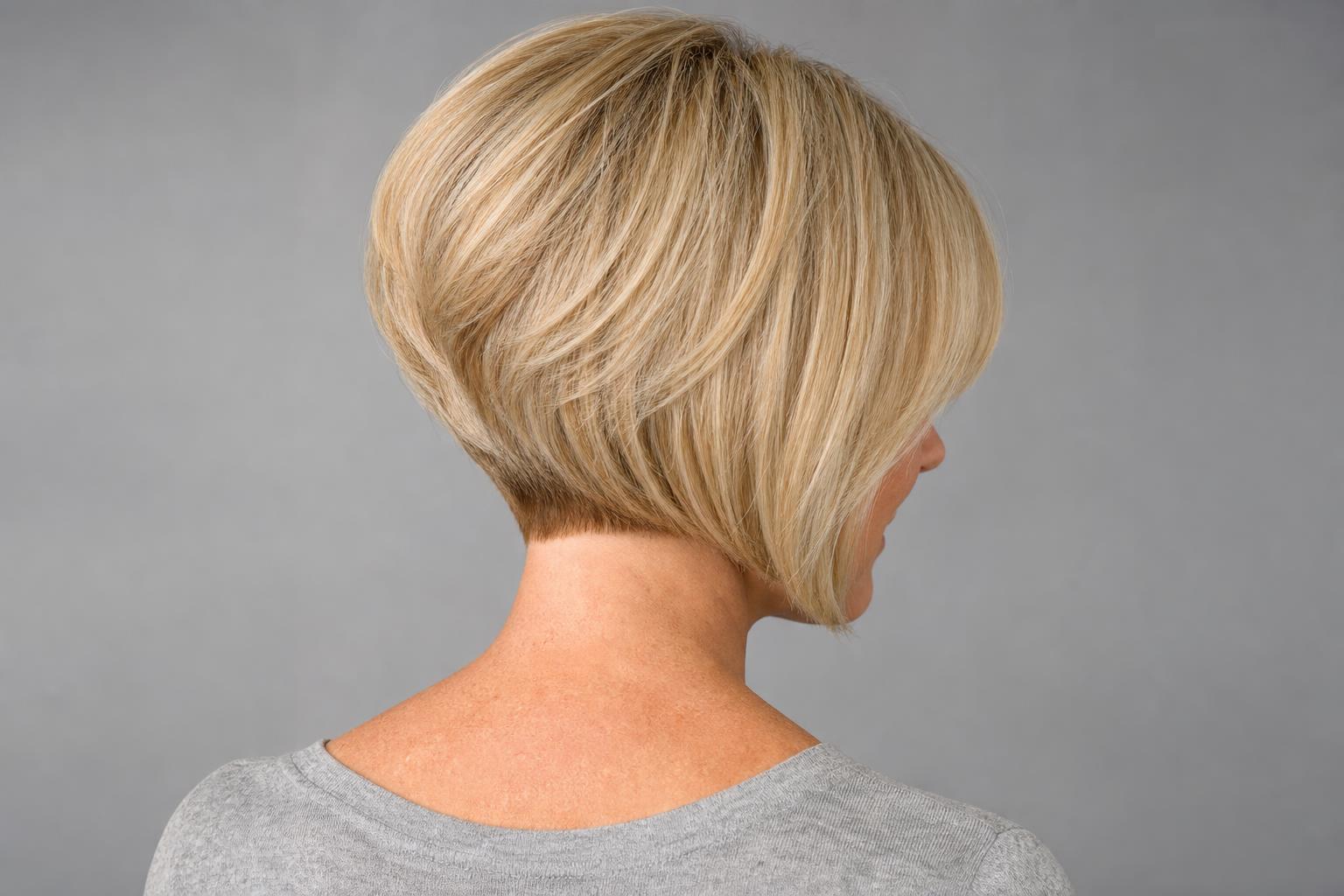
The original relies on aggressively stacked layers at the back that pile volume high on the crown, creating a steep angle from the short back to the long front. A modern stacked bob softens this by graduating the layers more gradually, so the back has shape and lift without the rigid, piled silhouette.
Chunky High-Contrast Highlights Date the Color
Thick, blocky blonde highlights against a darker base, with hard lines between the two, are one of the strongest signals of the dated version. Current color does the opposite, blending lighter pieces through the base so the transition is soft. Techniques like balayage and babylights create a sun-grown effect instead of stripes, and the THP comparison of balayage versus ombre covers how the blending works.
Hard-Angled Side Bangs Frame the Face Stiffly
Bangs cut at a steep diagonal and swept rigidly to one side give the front a dated, structured frame. Softer, longer face-framing pieces or curtain bangs replace that hard line with movement, keeping the angled shape while losing the stiffness. The difference is whether the front pieces look cut-and-set or whether they fall naturally.
A Teased Crown Adds Dated Height
Heavy backcombing at the crown to build height is the styling habit most associated with the look. The same shape worn with smooth, natural volume reads as current. Skipping the teasing is the single fastest way to modernize the finish without changing the cut at all.
How to Ask for the Modern Version
If you like the angled bob shape, you can absolutely have it, you just guide the stylist away from the four dated elements. Bring a reference photo of an updated inverted bob and name what you want softened.
The four things worth saying at the consultation:
- Shape: “An inverted or angled bob, with a soft graduated back rather than a steeply stacked one.”
- Layers: “Soft, blended layers with textured ends, not sharp stacked layers or a teased crown.”
- Bangs or framing: “Long face-framing pieces or curtain bangs, not hard-angled side bangs.”
- Color: “Blended balayage or babylights, kept soft, not chunky blocky highlights.”
Stylist tip: Say “a modern bob, not too angular” if you want a single phrase that communicates the whole brief. Most stylists know exactly what the Karen reference means and will steer toward softness when you flag it, so naming what you want to avoid is as useful as naming what you want.
“I’d like a soft angled bob, longer at the front and graduated at the back, with blended balayage rather than chunky highlights and long face-framing pieces instead of hard side bangs.”
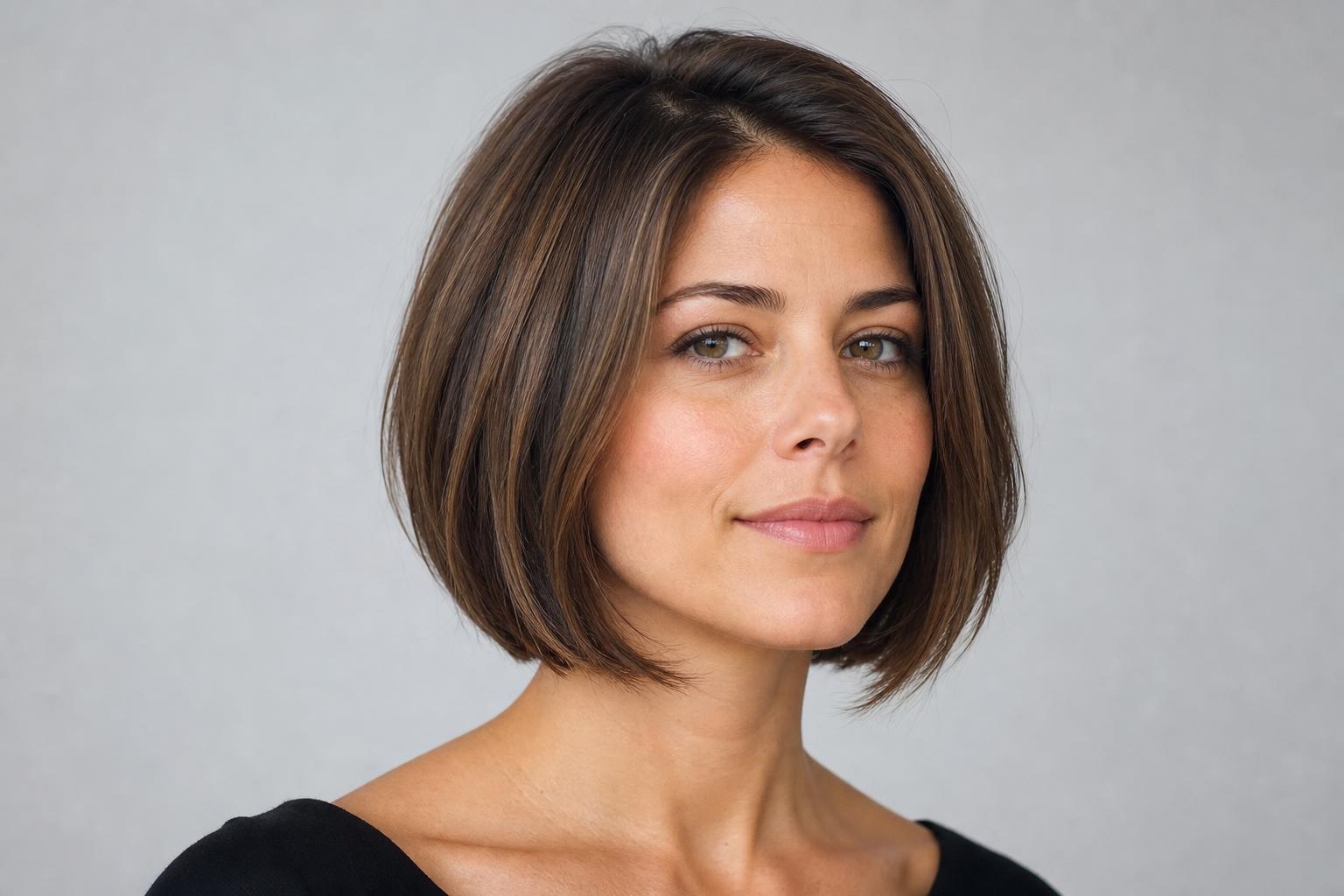
The Dated Version Versus the Modern Update
The same inverted bob shape reads completely differently depending on four choices. This comparison shows what changes between the stereotyped look and the current one.
| Element | Dated Version | Modern Update |
|---|---|---|
| Back layers | Steeply stacked, piled high on the crown | Softly graduated with shape but no rigid pile |
| Color | Chunky high-contrast blonde over dark, hard lines | Blended balayage or babylights, soft transition |
| Bangs | Hard-angled, swept stiffly to one side | Long face-framing pieces or soft curtain bangs |
| Finish | Teased crown, stiff and set | Smooth natural volume, textured ends |
How to Avoid Accidentally Getting a Karen Haircut
Most people who end up with the stereotyped look did not ask for it, they asked for a short stacked bob and got the dated styling by default. Avoiding it is about flagging the four elements before the cut starts.
- Skip the steep stack: Ask for graduated rather than heavily stacked layers at the back, which keeps shape without the piled crown.
- Keep color blended: Choose balayage, babylights, or a soft money piece over blocky highlights, and ask for the lighter pieces to melt into the base rather than sit in hard sections.
- Choose soft framing: Replace hard angled bangs with longer face-framing layers or curtain bangs, which the THP guide to curtain bangs with layers covers in detail.
- Finish smooth, not teased: Style with a round brush for natural volume instead of backcombing the crown, and use a light texturizing spray on the ends rather than stiff hairspray.
Who the Modern Angled Bob Suits
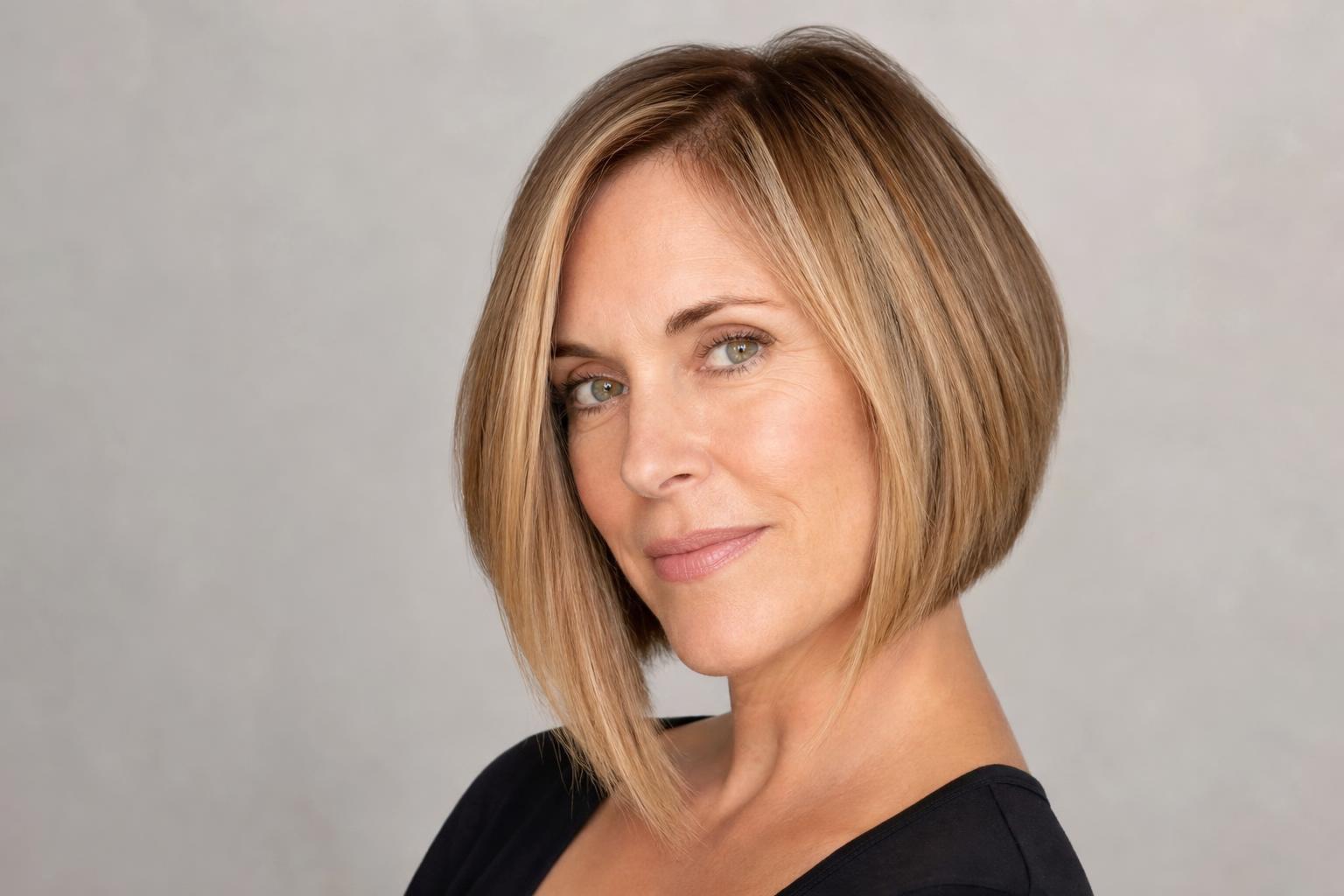
The updated inverted bob flatters most face shapes when the angle and length are adjusted to the individual. The shape itself, longer at the front and shorter at the back, is naturally slimming because the front pieces draw a vertical line along the jaw.
Round faces benefit from a longer front that falls below the jaw, which creates length and breaks up width. Square faces suit a version with soft, textured ends that round off the angle and avoid adding to a strong jawline. Heart-shaped faces carry the shape well when paired with face-framing pieces that add width at the jaw to balance a wider forehead. For round faces specifically, the THP guide to bob haircuts for round faces covers the length and angle adjustments that work best. If you want the full range of angled and stacked shapes to compare, the THP galleries of inverted bobs and asymmetrical bobs show how the silhouette varies.
Maintenance and Upkeep
An angled bob needs a trim every five to eight weeks to hold its shape, since the precise back line grows out faster than longer cuts and loses definition quickly. The shorter the stack at the back, the more often it needs maintaining. Daily styling takes five to ten minutes with a round brush to smooth the line and add the natural volume that replaces teasing. If you add balayage or babylights, the blended color is lower maintenance than blocky highlights, stretching to three or four months between appointments because the soft regrowth does not create a hard line.
FAQ
What Is a Karen Haircut?
A Karen haircut is a short, steeply angled inverted bob with stacked layers at the back, hard-angled side bangs, and chunky blonde highlights. The name combines the specific stacked-and-highlighted bob popularized around 2010 with the internet stereotype of an entitled attitude. The underlying inverted bob is a flattering, mainstream cut; the meme attaches to the dated styling, not the shape itself.
Why Is It Called a Karen Haircut?
The cut is associated with the chunky stacked bob worn by reality personality Kate Gosselin around 2010, and the “Karen” name grew separately online as shorthand for a demanding stereotype. Over the following years the two merged, and the specific bob became the haircut the meme attached to. The label is cultural rather than technical; stylists call the actual cut an inverted or angled bob.
How Do I Ask for an Angled Bob Without It Looking Like a Karen?
Ask for a soft angled or inverted bob with graduated layers, blended balayage instead of chunky highlights, and long face-framing pieces rather than hard side bangs. Telling your stylist “a modern bob, not too angular” communicates the whole brief in one phrase. The shape stays the same; softening the layers, color, and bangs is what keeps it current.
Is the Inverted Bob Outdated?
No, the inverted bob is a long-standing, flattering cut that is current when styled with soft layers and blended color. Only the specific early-2010s version, with a teased crown and blocky highlights, reads as dated. The same silhouette with modern color and a smooth finish is one of the more universally flattering short cuts available.
What Face Shape Suits an Angled Bob?
An angled bob suits most face shapes because the longer front creates a slimming vertical line along the jaw. Round faces do best with a front that falls below the jaw, square faces with softened textured ends, and heart shapes with face-framing pieces that add width at the jaw. The angle and length are adjusted to the individual face rather than applied identically.
How Often Does an Angled Bob Need Trimming?
An angled bob needs a trim every five to eight weeks to keep the back line sharp, since the short, precise back grows out and loses definition faster than longer cuts. The shorter the back stack, the more frequent the upkeep. Blended color added to the cut is lower maintenance than blocky highlights and can stretch to three or four months between refreshes.
The Karen haircut is less a specific cut than a specific moment in styling, and the angled inverted bob underneath it is a genuinely flattering shape once the teased crown, blocky highlights, and hard bangs are softened. Bring a reference photo of an updated version, ask for graduated layers and blended color, and the same silhouette reads as completely modern. Whether you want the look or want to steer clear of it, knowing the four elements that define it is what puts you in control at the chair.
Hair results vary based on your natural hair type, texture, density, and face shape. Always consult a licensed hairstylist before significant length or color changes, especially when adding highlights or balayage to previously colored hair. Individual results, styling time, and maintenance will vary. Photos may show styled results that require professional tools and products to replicate.