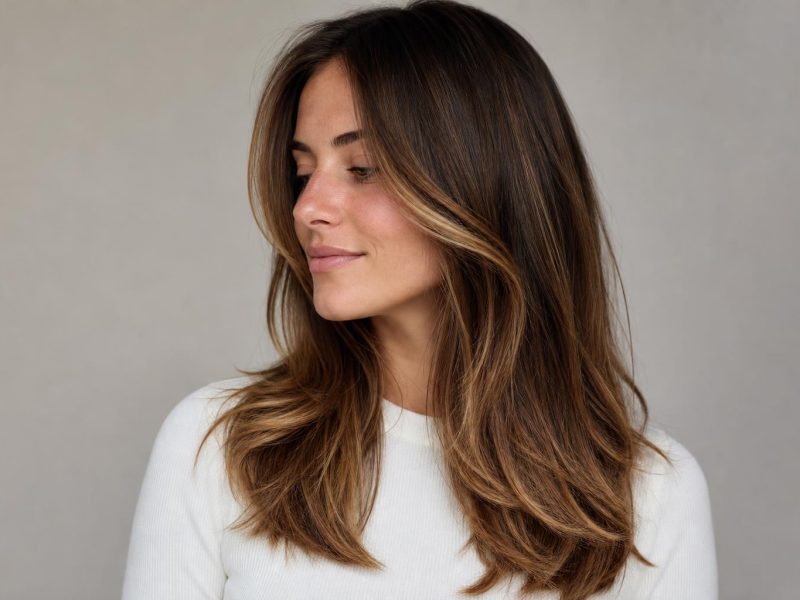
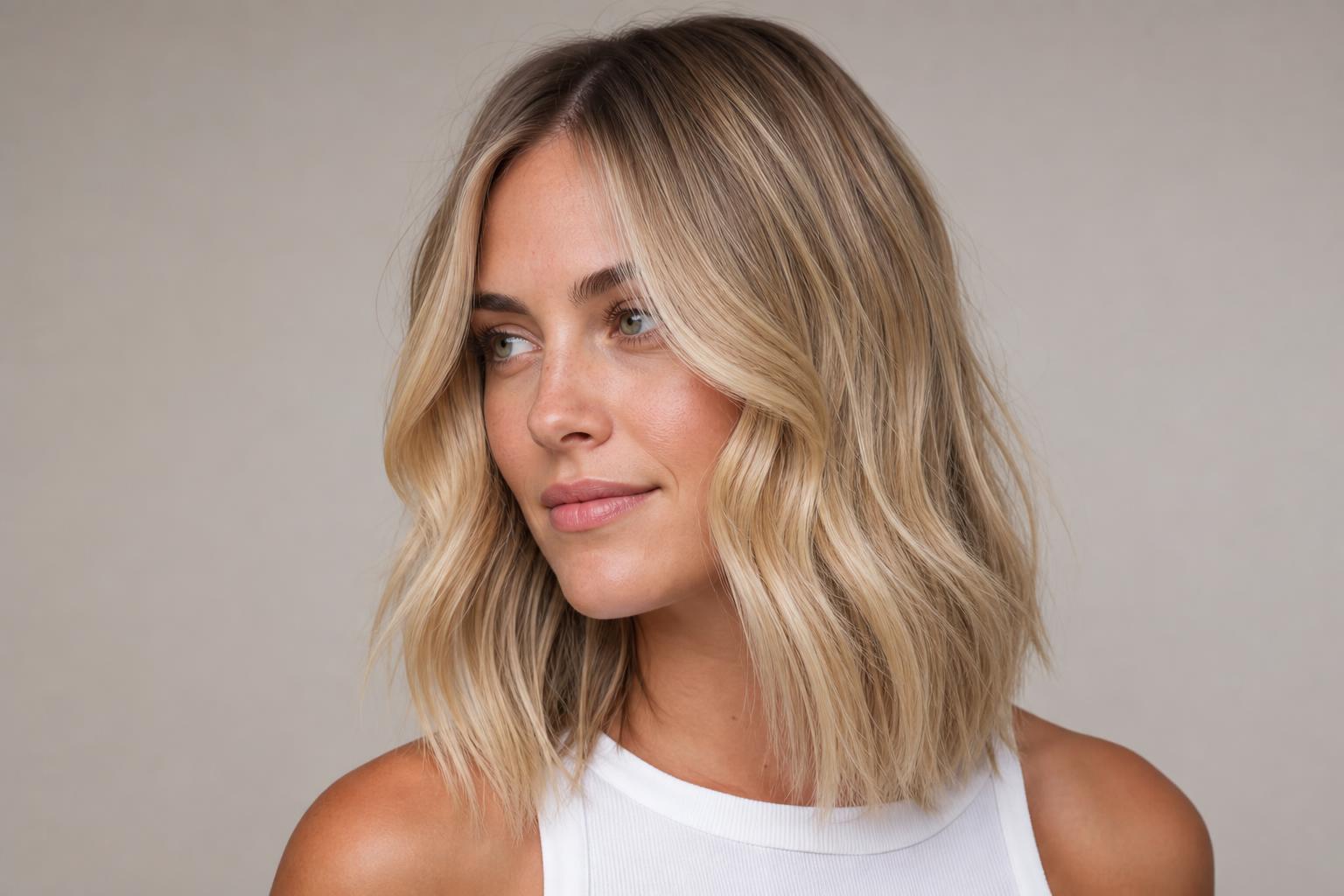
Soft brushed blonde is the low-contrast, root-shadowed blonde that looks hand-painted rather than foiled, and it is the shade behind Taylor Swift’s most-copied hair moment.
Soft brushed blonde is a diffused, seamless blonde that sits around a level 8, with a softly shadowed root and hand-painted dimension that blends beige, buttery, and cool tones into one another with no hard lines. The name describes the finish: color that looks brushed onto the hair instead of packed into foils, so the grow-out is gentle and the overall effect reads lived-in rather than done. It is the blonde stylists point to when a client shows a recent photo of Taylor Swift and asks for something expensive-looking but low-key.
This spotlight covers what separates soft brushed blonde from platinum and from standard balayage, which skin tones and natural bases it flatters, the exact language to bring to your colorist, and a realistic maintenance schedule. There is also a section on when this shade is the wrong call, because a soft, low-contrast blonde does not do what a bright, high-contrast one does.
| Factor | Details |
|---|---|
| Depth | Around level 8, with a level 6 to 7 root shadow |
| Tone | Neutral to soft beige, cool in shadow and warmer in light |
| Best for | Natural level 6 to 9 bases; fair to medium skin with neutral or cool undertones |
| Technique | Hand-painted balayage or foilyage plus a root melt and gloss |
| Maintenance | Gloss every 6 to 8 weeks; full paint every 3 to 4 months |
| Avoid if | You want bright, high-contrast blonde or a stark platinum finish |
What Makes a Blonde “Soft Brushed”
Three things separate soft brushed blonde from a regular blonde: the low contrast, the shadowed root, and the diffused placement. Instead of bright ribbons of lightness sitting against a much darker base, the lightest pieces are only two to three levels brighter than the root, so the eye reads the whole head as one soft, glowing color. Colorists build it by melting a slightly deeper root into hand-painted mid-lengths and ends, then finishing with a sheer gloss that knocks out any brass and unifies the tone.
The finish matters as much as the formula. A soft brushed blonde is glossed, not left raw, and the placement follows the way hair naturally catches light around the face and through the ends. That is what gives it the airbrushed, brushed-on quality that reads as quiet luxury. Compared with a bright, chunky highlight, this look trades drama for dimension, which is why it photographs as effortless. If you like the warmth-forward version of this idea, a honey beige blonde pushes the same soft blonde into golden territory.
Stylist tip: Ask for a root shadow that is only one to two levels deeper than your lightest pieces. Go any darker and you lose the soft part; the contrast sharpens and the look starts to read as a standard balayage instead.
Soft Brushed Blonde Flatters Neutral and Cool Undertones Best
Because the tone leans neutral to cool beige, soft brushed blonde is most flattering on fair to medium skin with pink, neutral, or olive undertones. On very warm or deeply golden complexions it can look slightly ashy unless your colorist keeps a touch of warmth in the mid-lengths. Eye color is flexible here, since the shade is muted rather than bright, but it tends to make light eyes look clearer and softer.
| Skin Undertone | How to Wear It | What to Adjust |
|---|---|---|
| Cool (pink) | The most natural match; keep the gloss neutral-beige | Avoid an icy toner that can look gray against pink skin |
| Neutral | Very versatile; both beige and soft golden reads work | Let your colorist choose warmth based on your wardrobe |
| Warm (golden) | Wearable with a warmer, sandy version of the shade | Keep a hint of gold in the ends so it does not go flat |
| Olive | Beautiful with a neutral beige; olive skin holds soft blonde well | Steer away from very ashy tones that can green off olive |
The natural base you start from decides how much work the color takes. If you are already a level 6 to 9, soft brushed blonde is a lightening-and-glossing job that can happen in a single appointment. Coming from a deeper brunette base, you are looking at a gradual lift over two or more sessions so the blonde stays soft and the hair stays healthy. For a lower-lift entry point to this family of color, a dirty blonde with lived-in roots gets you the muted, low-maintenance feel without going as light.
How to Ask Your Colorist for Soft Brushed Blonde
Bring two or three reference photos in natural light, not filtered selfies, and be specific that you want low contrast. The single most useful sentence you can say is that you want the grow-out to be soft. Colorists hear blonde and often default to brightness, so naming the finish and the contrast level up front changes the whole plan.
Ask for: “A soft, brushed-on blonde around a level 8 with a shadowed root, hand-painted so the pieces blend instead of stripe. Keep it neutral to beige, gloss out any brass, and I want the regrowth to look seamless, not lined.” That one request tells your colorist the depth, the tone, the technique, the finish, and the grow-out you are after. If your hair has old highlights or box color in it, say so, because existing color changes how evenly new lightener takes.
Stylist tip: If you have never gone blonde before, ask your colorist to keep this session slightly deeper than your goal photo. Soft brushed blonde is easy to brighten at the next gloss, but pulling warmth back out of over-lightened hair is harder on the strand and on your budget.
Maintenance Is Lower Than Bright Blonde, but Not Zero
The shadowed root is what makes this shade forgiving. Because there is no stark line between your regrowth and the color, you can stretch four to six weeks longer between full appointments than you could with a face-framing bright blonde. What you cannot skip is toning. Soft blonde lives and dies by its gloss, and once the gloss fades the beige turns brassy and the expensive quality disappears.
| Task | Frequency | Why |
|---|---|---|
| Gloss or toner refresh | Every 6 to 8 weeks | Keeps the beige neutral and stops brass |
| Full paint and root melt | Every 3 to 4 months | Refreshes dimension as roots grow |
| Purple shampoo | Once every 1 to 2 weeks | Controls yellow between glosses; overuse turns hair dull |
| Bond or protein treatment | Weekly to biweekly | Lightened ends need reinforced strength and shine |
Day to day, the shade needs very little styling to look right, which is part of its appeal. Air-dried with a light cream, it reads soft and undone; blown out smooth, it looks polished. A sulfate-free, color-safe shampoo protects the gloss, and a heat protectant keeps the lightened mid-lengths from turning dry and dull. If you want the same easy, sun-softened feeling with more visible warmth, compare it against a boho blonde with a 70s-inspired glow.
When Soft Brushed Blonde Is Not the Right Choice
- You want bright, high-impact blonde. This shade is deliberately low contrast. If your goal is a bright, sunlit blonde that stands out, ask for a lived-in balayage with brighter face-framing pieces instead.
- You are starting from a very dark natural base and want it in one visit. Lifting a level 3 or 4 to a soft level 8 in a single session risks damage and brass. Plan for a multi-session lightening path, or choose a deeper blended color like a bronde that sits between blonde and brunette.
- You will not commit to glossing. Without a toner refresh every six to eight weeks, soft beige drifts warm and brassy fast. If salon visits are not realistic, a warmer shade hides fade better.
- Your hair is already compromised. Heavily bleached or box-dyed hair may not lift evenly, and pushing it can cause breakage. A strand test and a strengthening plan come first.
Common Soft Brushed Blonde Myths
Myth: A Soft Blonde Means No Salon Upkeep
Reality: The grow-out is soft, but the tone is not permanent. Glossing every six to eight weeks is what keeps soft brushed blonde looking neutral instead of yellow. You save on root touch-ups, not on toning.
Myth: It Only Works on Naturally Blonde Hair
Reality: Brunettes get this shade all the time; it just takes longer. The difference is the number of sessions needed to lift safely, not whether the look is possible.
Myth: Purple Shampoo Alone Keeps It Fresh
Reality: Purple shampoo manages yellow at the surface, but it cannot rebuild a faded gloss. Leaning on it too heavily leaves hair looking flat and slightly gray. It is a between-visit helper, not a replacement for a professional toner.
FAQ
What Level Is Soft Brushed Blonde?
Soft brushed blonde usually sits around a level 8, with a root shadow one to two levels deeper. That mid-blonde depth is what keeps it looking natural and soft rather than bright or platinum. Your colorist can nudge it a shade lighter or deeper to suit your skin and base.
Is Soft Brushed Blonde the Same as Taylor Swift’s Hair Color?
It is the shade most often used to describe her recent low-contrast, root-shadowed blonde. Her version reads neutral beige that shifts cooler or warmer with the light, which is the defining trait of soft brushed blonde. Any colorist can adapt the idea to your own base and undertone.
How Is It Different from Balayage?
Balayage is the painting technique; soft brushed blonde is the specific low-contrast, glossed result you can create with it. You can have a bright, high-contrast balayage or a soft brushed one. The difference is the level of contrast and the shadowed root, not the tool.
Will It Work on Fine Hair?
Yes, and it often flatters fine hair because the blended dimension creates the illusion of depth and movement. Ask for a gentler lightening approach and a bond treatment, since fine strands show damage faster. A weekly protein or bond mask keeps the ends from looking wispy.
How Much Does It Cost to Maintain?
Costs vary widely by region and stylist, but plan for a gloss every six to eight weeks plus a full paint every three to four months. Because you stretch the full appointments, soft brushed blonde is generally more affordable to keep than a bright, foil-heavy blonde. Ask your salon to quote gloss and full-color pricing separately so you can budget the year.
Can I Go Back to My Natural Color Easily?
Growing out is easy because the shadowed root already blends with your regrowth. If you want to speed it up, your colorist can add lowlights to reintroduce depth. Avoid a single flat all-over color to cover it, since that removes the dimension that made the blonde look soft.
Soft brushed blonde earns its quiet-luxury reputation by trading contrast for dimension: a level 8 shade, a shadowed root, and a gloss that keeps everything neutral and seamless. Bring a natural-light reference photo, tell your colorist you want low contrast and a soft grow-out, and commit to the gloss schedule, and this is one of the most forgiving ways to wear blonde. If you are still weighing warm against cool, sit soft brushed blonde next to a warmer honey blonde before you decide.
Hair results vary based on your natural hair type, texture, density, and condition. Always consult with a licensed hairstylist before making significant changes, especially with chemical treatments or dramatic length changes. Photos may show styled results that require professional tools and products to replicate.