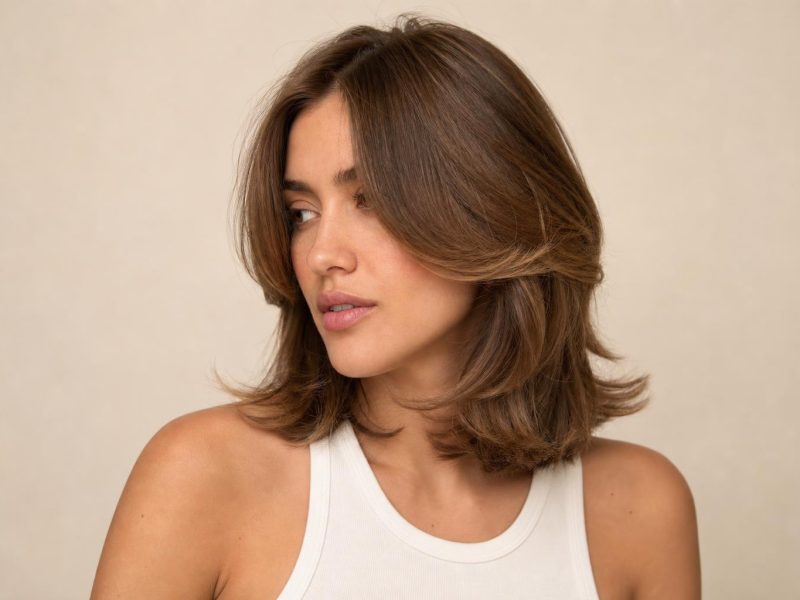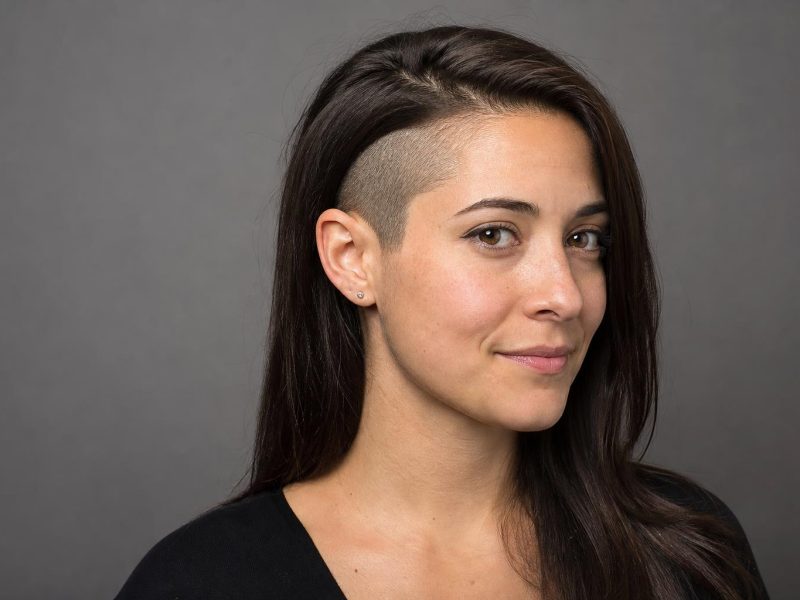

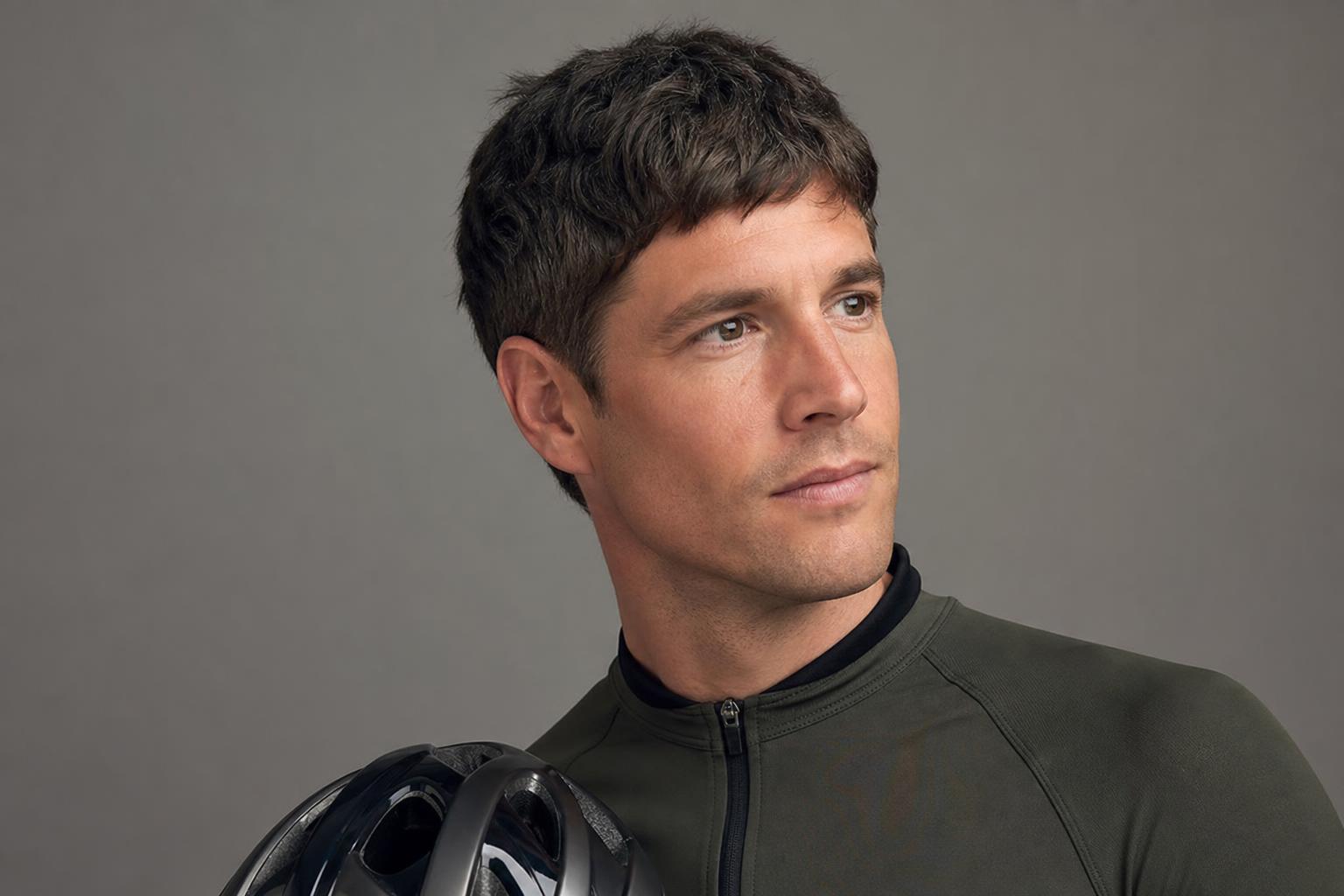
Helmet hair is a root problem, not a length problem, and the cut you choose decides whether it takes five seconds or a full rewash to fix.
A helmet does two things to hair: it presses the roots flat under the shell and it traps heat, so the hair dries into whatever shape the padding left behind. Cuts that survive it either have no root lift to lose, or enough weight below the helmet line that the compressed section is hidden. Below are 20 haircuts that come out of a helmet wearable, sorted by length, plus what changes between a vented road cycling helmet, a full-face motorcycle lid, and a ski helmet worn with goggles.
Each entry names the cut structure, who it suits, and how it behaves after an hour under a shell. After the gallery you will find a helmet type breakdown, the wording to bring to your next appointment, a realistic five-minute fix for the days a rewash is not an option, and the cases where a helmet-friendly cut costs more than it is worth.
| Factor | Details |
|---|---|
| Best for | Commuter and road cyclists, motorcyclists, skiers, snowboarders, climbers, trades workers in hard hats |
| Maintenance | Buzzed and cropped shapes every 3 to 4 weeks, mid-length every 8 to 12 weeks |
| Works with | Any texture, though the ideal length shifts with density |
| Avoid if | Your everyday style depends on crown volume, a sharp side part, or a fixed blow-dried direction |
| Salon time | 25 to 40 minutes for clipper work, 45 to 70 minutes for a mid-length restructure |
Short Cuts That Come Out of a Helmet Unchanged
Below about two inches, hair has too little length to hold a bend, so the shell has nothing to press into a shape. That is the whole trick behind every short helmet cut. What separates a good one from a bad one is the hairline: a hard, freshly lined-up edge shows a sweat ring where the helmet padding sat, while a softly tapered one does not. Anyone moving into clipper lengths for the first time will find the guard length comparison here useful before booking.
1. Uniform Buzz Cut at a Number Three
Run at a single guard length over the whole head, this cut has no direction to lose and no part line to flatten. Ten seconds with a towel and it is exactly as it was before the ride. Thick, coarse hair benefits most, since a uniform buzz removes the density that would otherwise trap heat under the shell.

2. Classic Crew Cut with a Tapered Back
Expect a trim every three weeks with this one, because the crew cut lives on the gradient between a longer front and a shorter crown. Past that point the top gets heavy enough to flatten under a helmet and the gradient disappears. The tapered back is what keeps a sweaty neckline from showing a hard line where the shell ended.
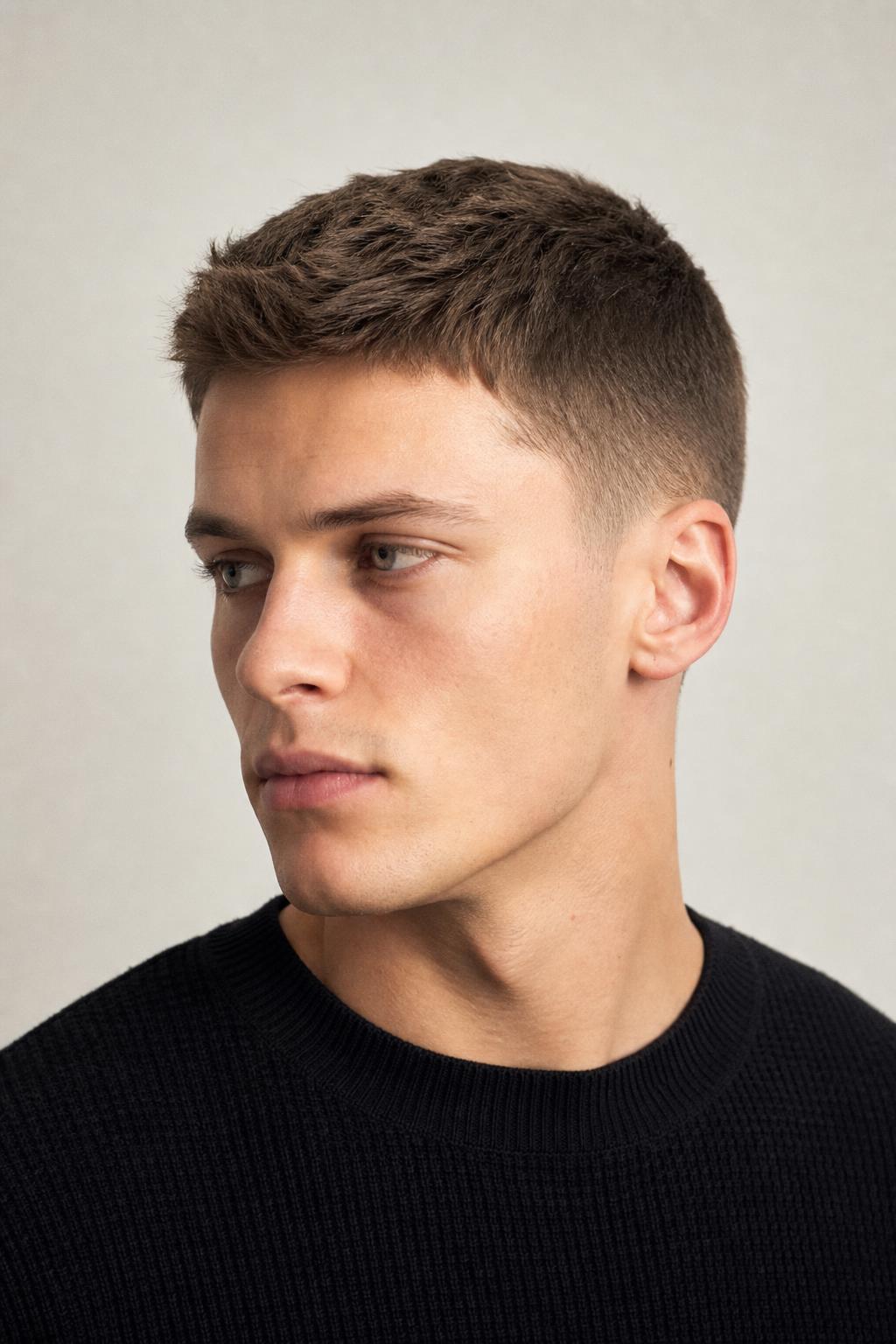
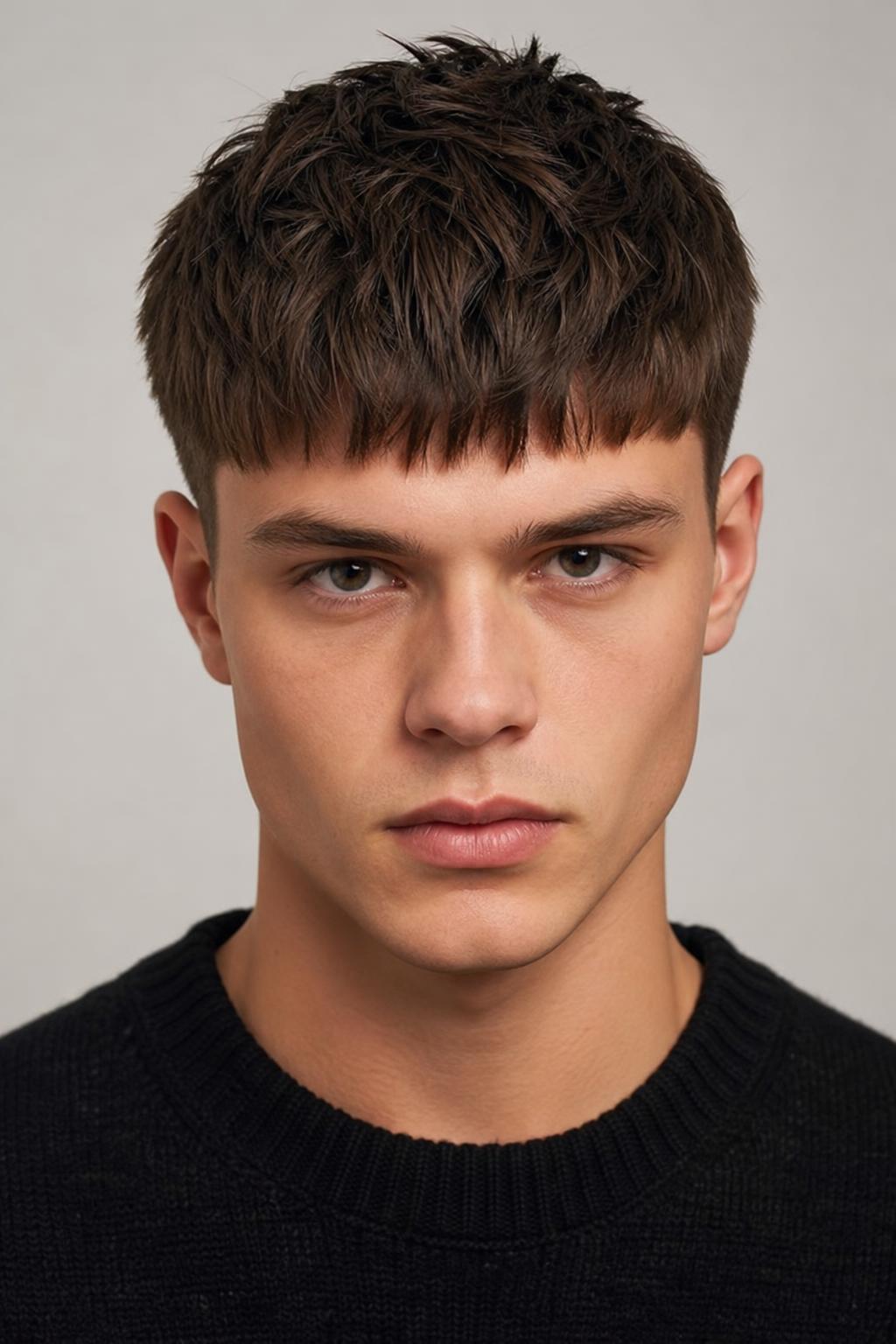
3. Textured French Crop
Point cutting through the top leaves separated pieces that fall back into a wearable shape when you rake fingers through them, even after an hour of compression. The short fringe sits forward rather than up, so there is no height for the shell to crush. Straight to slightly wavy hair holds this best, since heavy curl fights the forward direction.
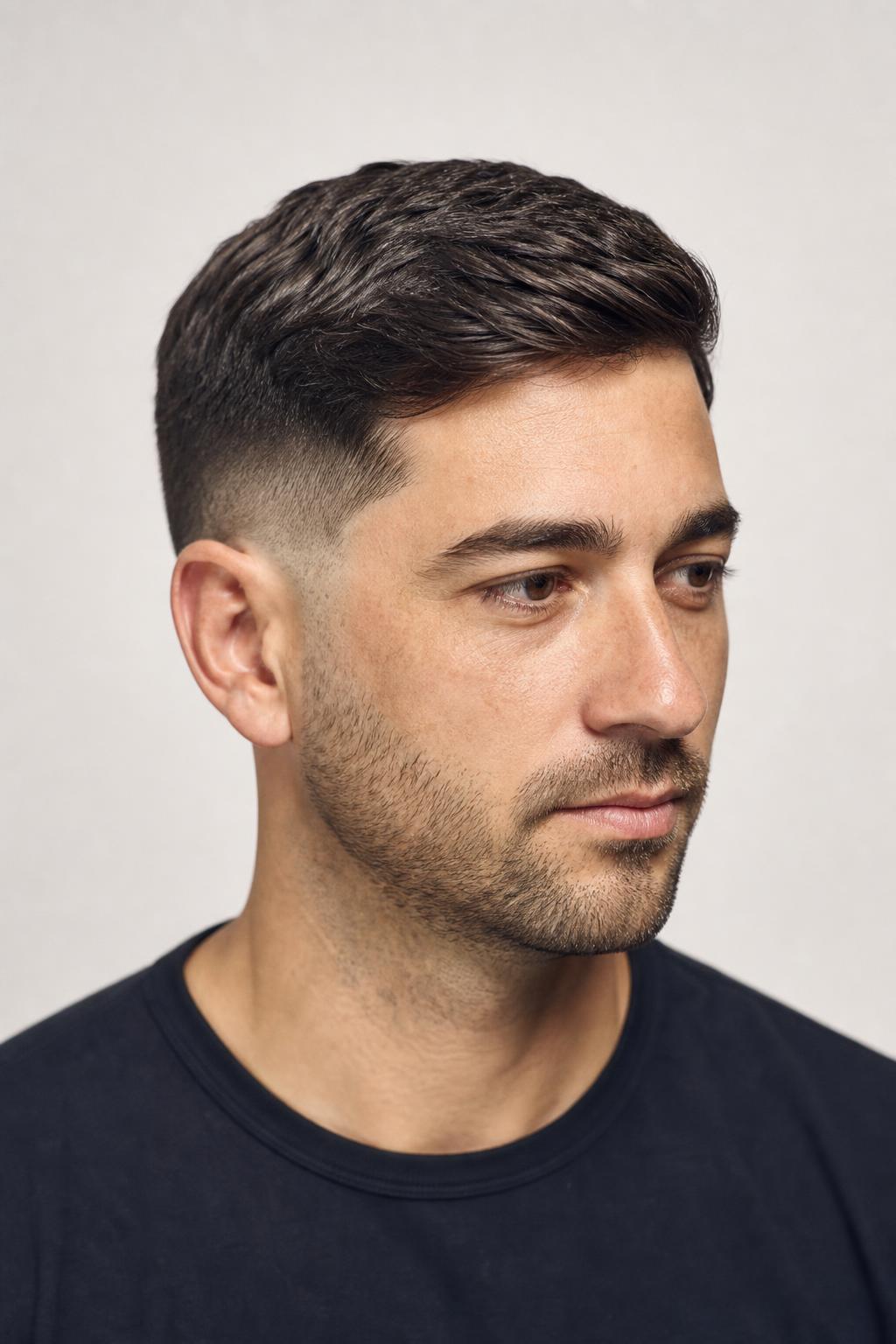
4. Low Fade with a Scissor-Cut Top
Round and square faces get a useful lift from a low fade, because keeping the graduation down near the ear leaves visible width higher up where a helmet has not touched it. The scissor-cut top stays around an inch and a half, short enough to avoid a dent but long enough to comb. If you want more contrast in the same shape, the mid taper fade collection covers where else the fade line can sit.
5. Tapered Pixie with a Softened Hairline
Fine hair does better in a pixie under a helmet than almost any other texture, because there is not enough weight for the shell to press into a visible dent. Ask for the perimeter around the ears and nape to be softened rather than cut to a hard edge. That single detail is what keeps a sweat line from appearing where the padding sat.

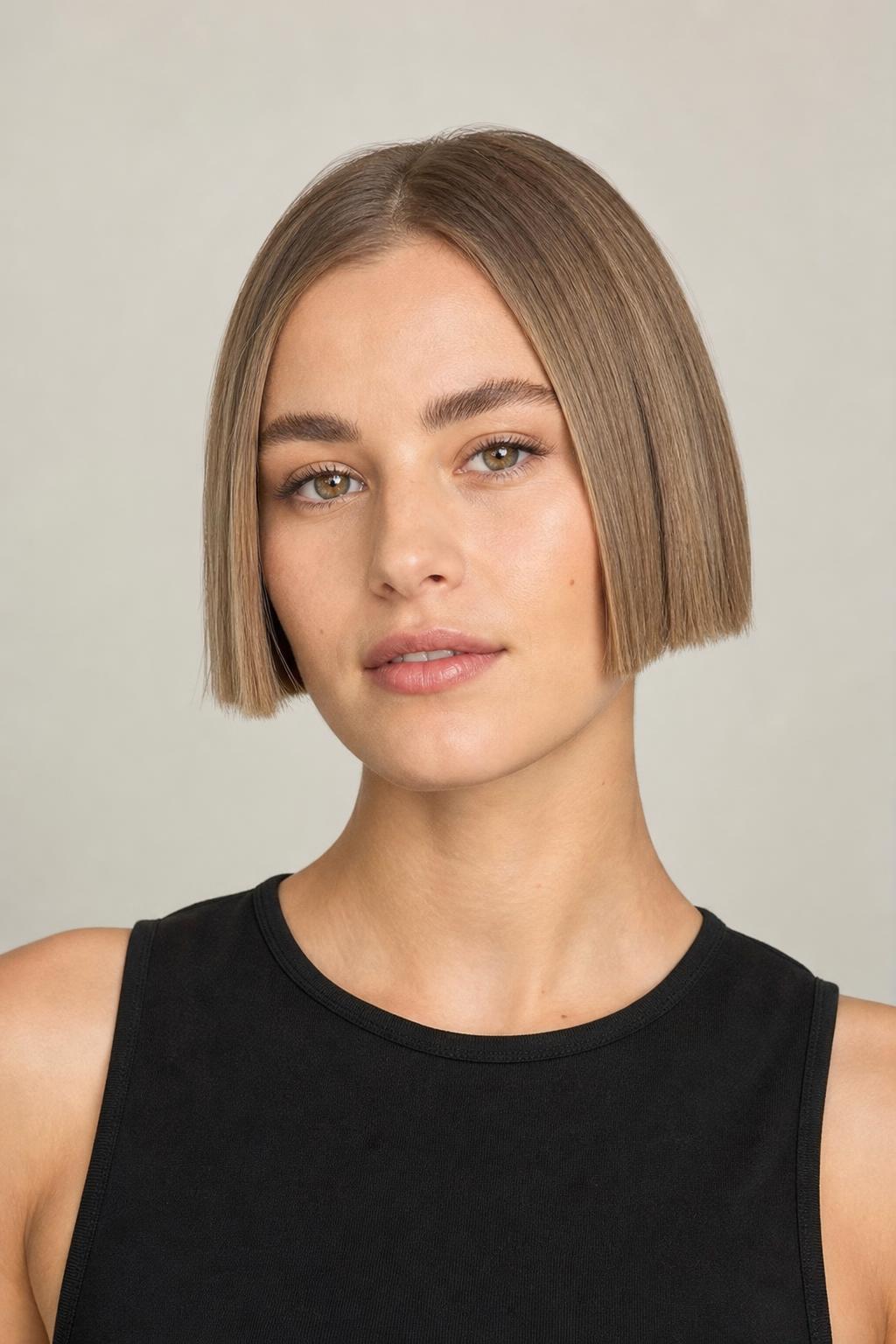
6. Ear-Length Bob with Blunt Ends
Where a chin-length bob catches under a helmet strap and kinks, an ear-length version stops above the shell entirely. Nothing gets trapped, nothing bends, and the blunt edge means the ends still hang in a clean line when you pull the helmet off. It is the shortest women’s cut here that still reads as a hairstyle rather than a crop.
7. Grown-Out Buzz at One Inch
Tell your barber you want an inch left all over, cut with scissors over comb rather than clippers, and shaped slightly rounder at the crown. That instruction gets you the softest version of a buzz, one that looks intentional in an office and still ignores a helmet completely. It is also the easiest length to maintain yourself between appointments.

Mid-Length and Long Cuts That Recover From Compression
Keeping length means accepting that the top four inches of your hair will be flat when the helmet comes off. The cuts here work around that instead of fighting it: weight sits below the helmet line, there is no hard part to reset, and the shape depends on the ends rather than the roots. That last point is the one most people miss. A cut whose whole silhouette comes from crown volume will never survive a shell, no matter how good the stylist is.
8. Chin-Length Bob with Internal Weight Removal
Bulk taken from inside the cut lets a chin-length bob compress and then fall back open, rather than sitting in a solid flattened slab. The outline stays blunt so the ends still look sharp when the helmet comes off. Medium to thick straight hair gets the clearest result, and the shape holds for the six to eight weeks a bob normally runs between trims.

9. Collarbone Lob Cut for a Low Braid
Long enough to braid at the nape, short enough that the braid sits below the helmet rather than inside it. A low braid is the only long-hair option that does not create a pressure point under the shell, which matters on rides over an hour. Cut the perimeter blunt so the braid does not taper into a thin tail.

10. Long Layers Starting Below the Helmet Line
Wavy and medium-density hair keeps its movement here because every layer begins below the ear, well outside the area the shell touches. The compressed section at the crown stays unlayered, so it simply falls back down instead of separating into flat panels. Anything cut shorter at the top will fluff out sideways the moment the helmet comes off.

11. Curtain Bangs Long Enough to Sweep Aside
Push damp bangs to one side with your fingers as soon as the helmet is off and they set that way in about a minute, no tools involved. Cut to the cheekbone or below, they never sit in the sweat zone at the center of the forehead. Cut shorter and they will dry in whatever direction the padding pushed them.
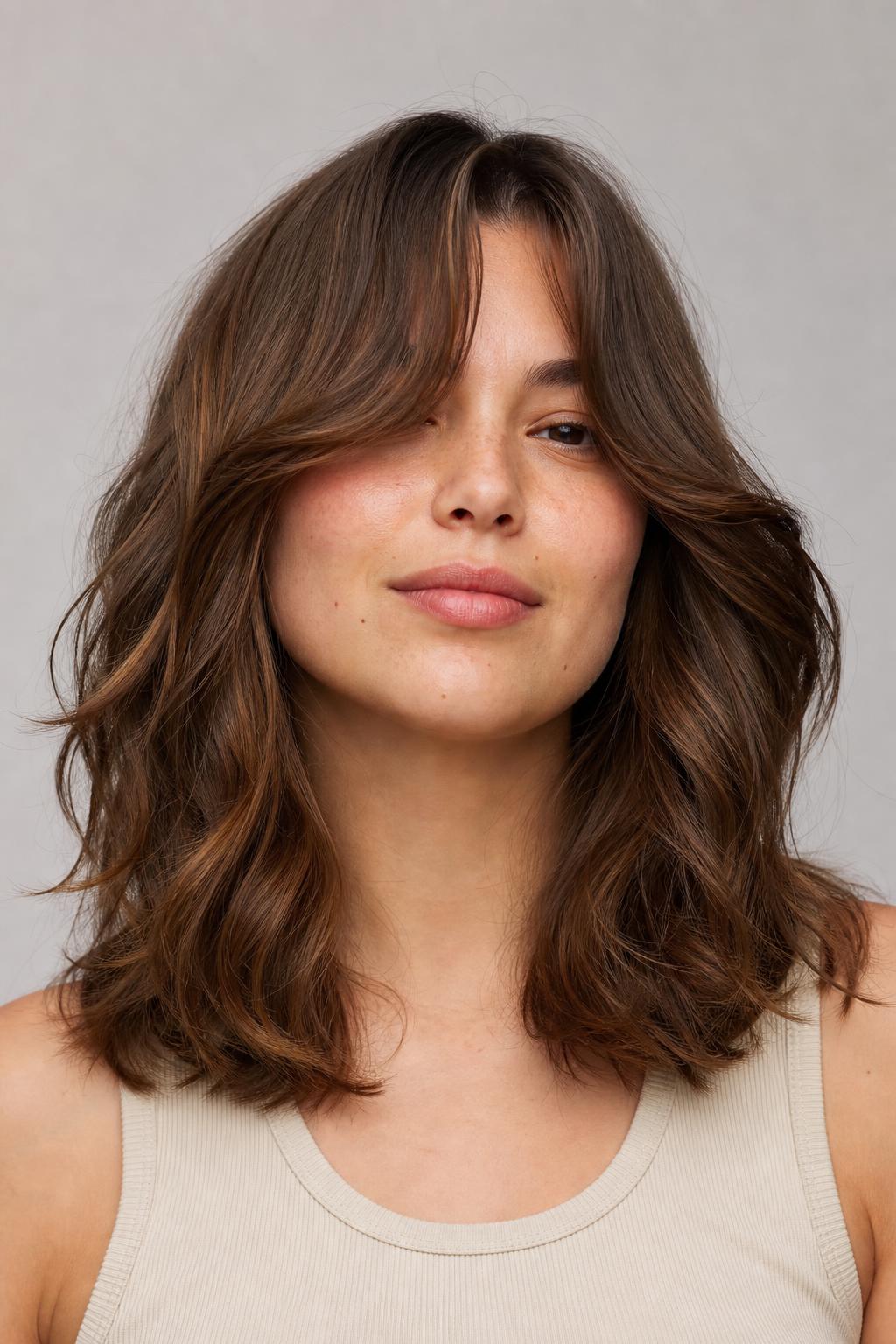
12. Mid-Length Cut with No Fixed Part
A hard side part is the single most helmet-hostile feature a haircut can have, because the shell pushes it flat and it will not stand back up without water. Cutting the front sections to the same length on both sides means the hair can fall either way and still look correct. Ask for the front to be cut with the head upright and no part in place.

13. Long Bob with a Hidden Nape Undercut
Unlike a solid long bob, this version clears a section of bulk at the nape so the helmet retention strap sits against skin rather than compressed hair. The top layer covers it completely when the hair is down. Riders with very thick hair notice the difference most, since that nape bulk is what makes a helmet feel a size too small.
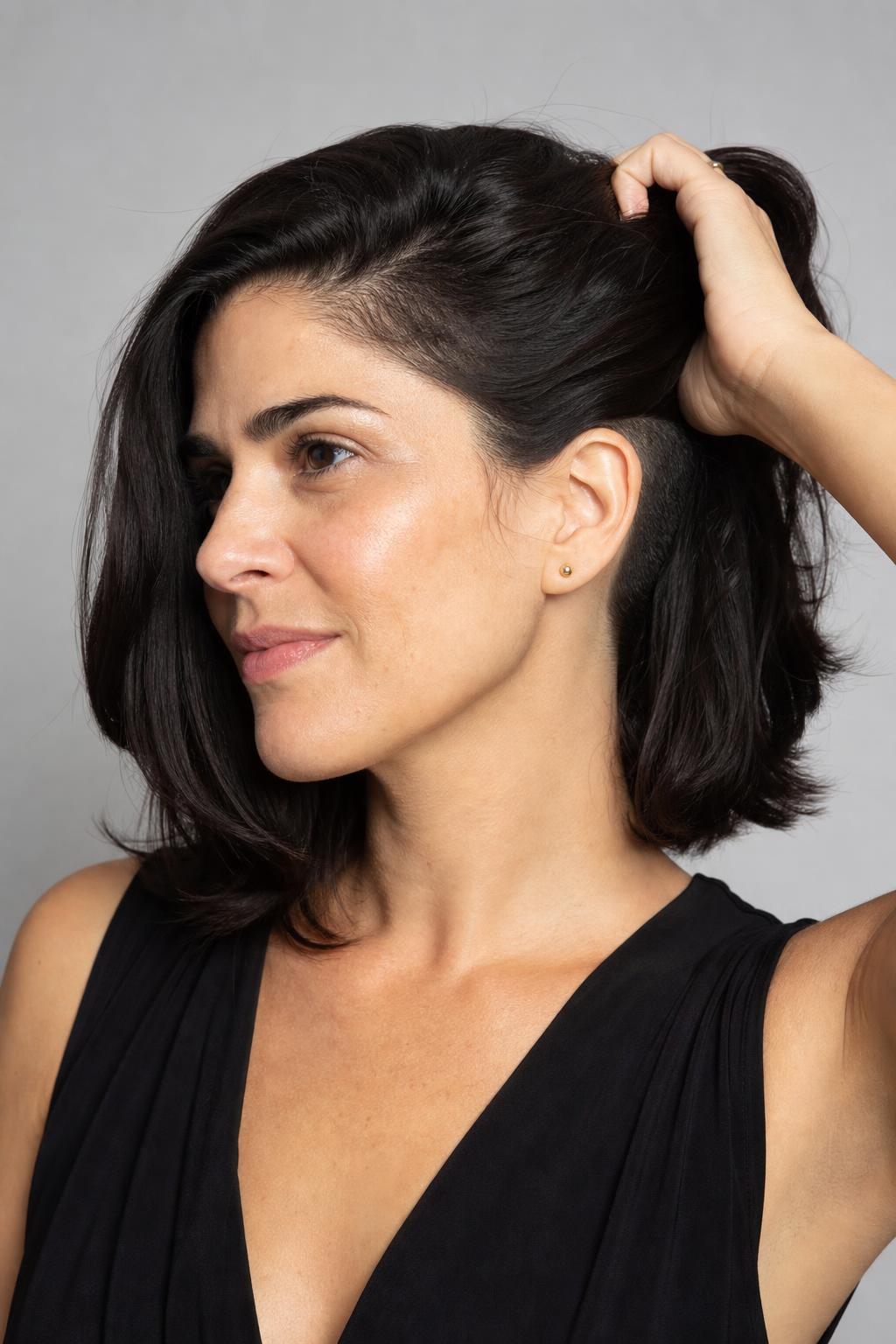
14. Shoulder-Length Cut with Root-Level Texture
Small amounts of weight removed close to the root, sometimes called root texturizing, give flattened hair something to push against as it dries. The effect is subtle in the salon and obvious after a helmet. Fine hair gains the most, though a light hand matters here, since too much removal at the root creates frizz rather than lift.

Curly and Textured Cuts Under a Helmet
Curls have the opposite problem to straight hair. They do not go flat so much as get crushed on one side and stay springy on the other, which is why an asymmetric crush is the classic curly helmet complaint. Sweat helps, because damp curl reforms, but only if the cut has enough internal shape to spring back into. Every entry here works best cut dry, and the same principle applies whether your pattern sits at 3C or looser.
15. Tapered Coily Cut Under Two Inches
Keeping coils under two inches means a helmet compresses them without deforming the outline, and a pick restores the shape in about thirty seconds. The taper at the sides also removes the bulk that makes a shell sit high and unstable on the head. Cut on dry, unstretched hair so the rounded shape is accurate.
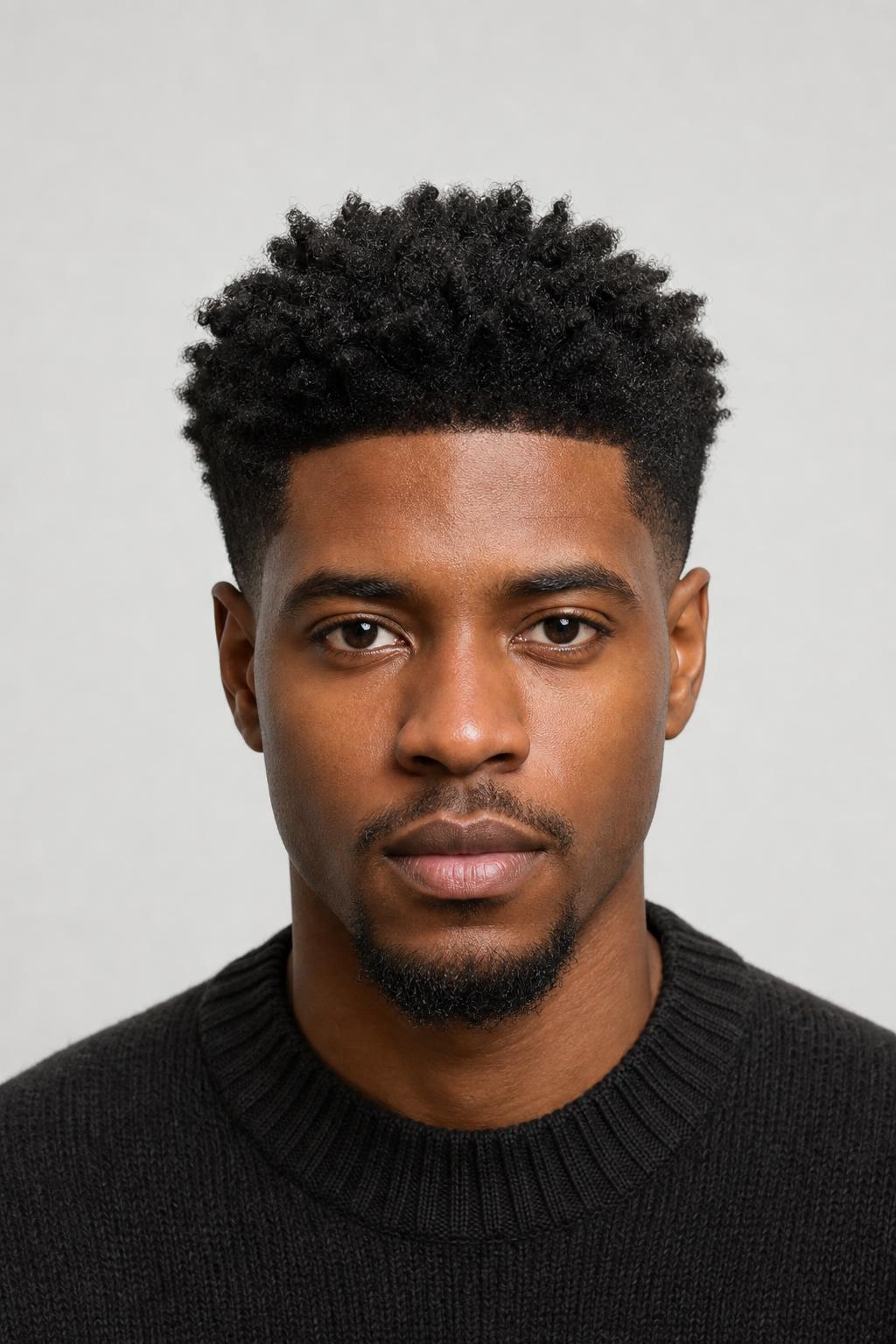
16. Curly Bob Cut Dry at the Jaw
Cut curl by curl on dry hair, a jaw-length curly bob sits at exactly the length where compression is shallow and recovery is fast. A wet cut at the same length usually lands two inches shorter than expected once it dries, which is why the dry-cutting technique behind the DevaCut matters more than the length here. Spraying water at the roots after a ride resets the crushed side in under a minute.

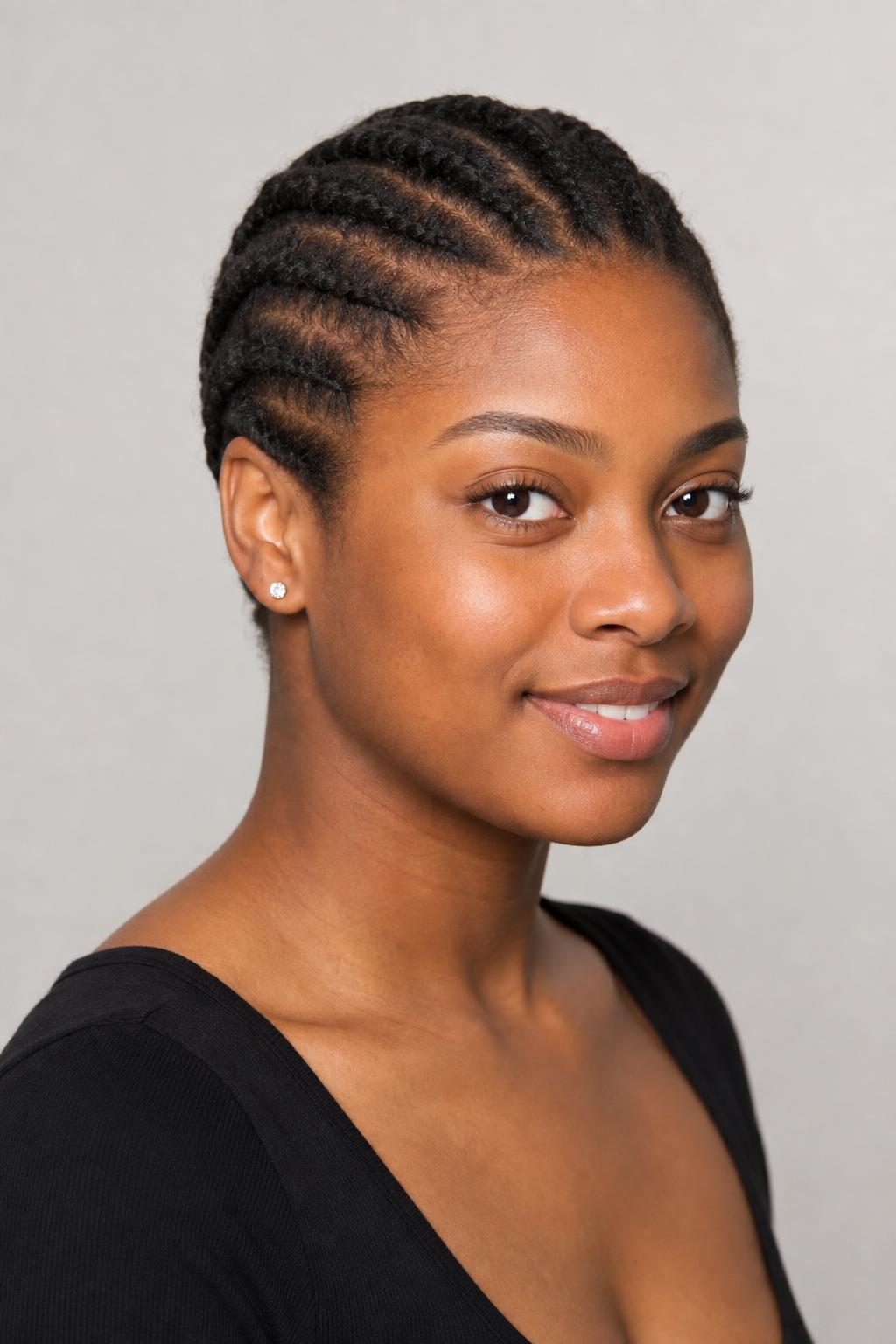
17. Flat Twists Worn Under the Shell
Twisting hair flat to the scalp before a ride removes the compression problem entirely, since there is no loose volume for the helmet to crush. The twists come out into defined waves afterward, which makes this a two-for-one on long ride days. Plan on a fresh set every five to seven days rather than trying to stretch one further.
18. Wavy Shag with Layers Starting Below the Ears
Scrunch a light mousse into damp waves, let them dry under the helmet, and the shag comes out with the piecey separation the cut is designed for. Because every layer starts below ear level, the crushed crown section has no short pieces to stick out at odd angles. Riders with 2b to 2c waves get the most usable result.

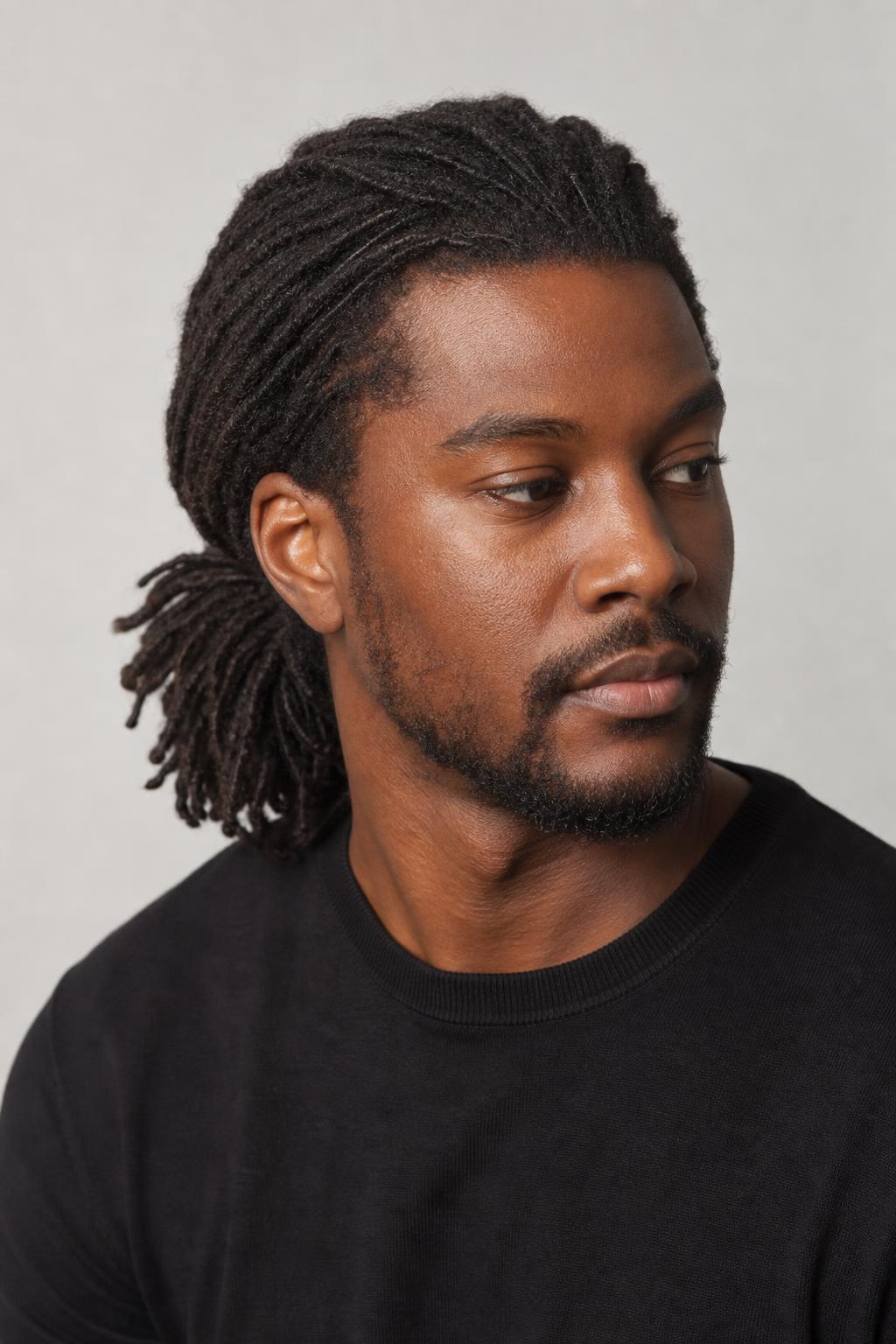
19. Shoulder-Length Locs Gathered Low
Locs at shoulder length are heavy enough to stay where you put them and short enough to gather into a low tie without a bulge under the helmet. Never gather them high, since a knot on the crown stops a helmet from seating correctly and creates a genuine fit problem rather than a styling one. Retwist every four to six weeks to keep the roots even under the strap.
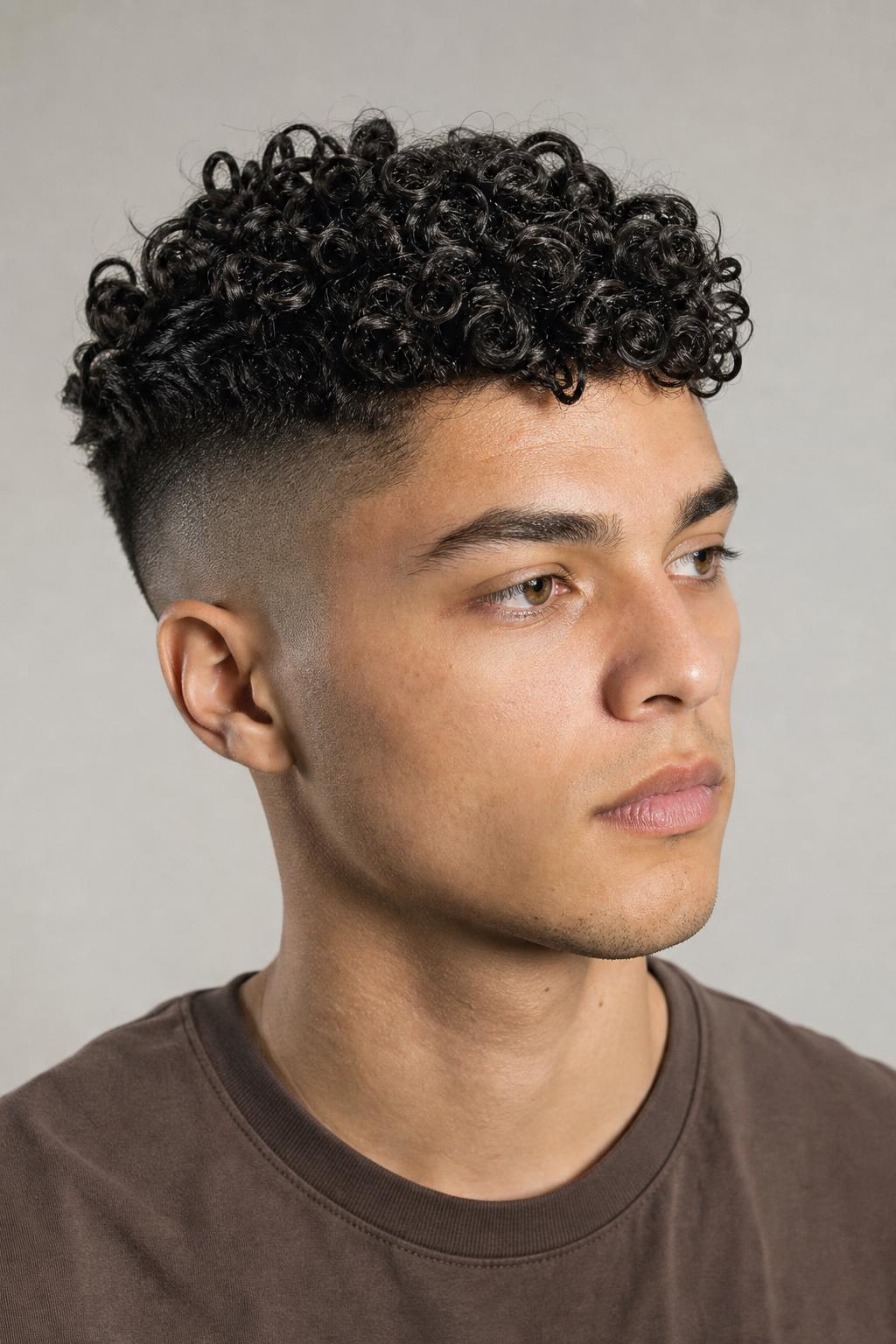
20. Curly Undercut with Volume Kept on Top
Where a full curly cut traps heat all the way around, this one clears the sides and nape to skin and leaves three inches of curl on top. The shell presses that top section down, but with no bulk at the sides there is nowhere for it to spread, so it lifts straight back up. It is the most forgiving option for anyone whose helmet has never quite fit over their curls.
How Helmet Type Changes the Right Cut
Not all helmets flatten hair the same way. A vented road cycling helmet presses in strips and leaves the gaps alone, a full-face motorcycle lid compresses evenly and adds friction at the temples from the cheek pads, and a ski helmet worn with goggles creates a hard line across the forehead that a fringe will follow. Match the cut to the shell you actually wear.
| Helmet Type | What It Does to Hair | Best Cut Response |
|---|---|---|
| Vented road cycling | Presses hair in strips, leaves ridges through the vent gaps | Textured or point-cut tops that hide uneven compression |
| Full-face motorcycle | Even compression plus friction at the temples from the cheek pads | Uniform buzz, crew cut, or length long enough to tie low |
| Ski or snowboard with goggles | Hard horizontal line across the forehead where the strap sits | Curtain bangs or no fringe at all, never a blunt one |
| Climbing or hard hat | Suspension cradle leaves pressure points at the crown | Short crops, or hair braided flat before the shift |
What to Tell Your Stylist or Barber
Bring the helmet. It sounds excessive, but a stylist who sees where the shell actually sits on your head can shape the cut around that line instead of guessing. Failing that, put a finger where the front rim rests and say “everything under here gets crushed for two hours a day.” That is more useful than any amount of describing your hobby.
Three requests do most of the work. Ask for weight removed from the interior rather than the perimeter, so the compressed section has room to recover. Ask for a soft hairline instead of a lined-up edge, which stops the sweat ring from being visible. And ask for the cut to be checked with your head tipped forward, because that is the angle a helmet holds you at, not the upright pose the salon mirror encourages.
Stylist tip: Say what you do between the ride and the rest of your day. A commuter who arrives at an office needs a cut that recovers without water, while a weekend rider who goes straight home does not. Those two people should walk out with different haircuts even if their hair is identical.
Fixing Helmet Hair in Under Five Minutes
Water is the only thing that genuinely resets a flattened root, because hair holds its shape through hydrogen bonds that reform as it dries. Dry shampoo adds grip and absorbs sweat, but it cannot rebuild lift on its own, which is why spraying it onto crushed roots and expecting volume rarely works. Wet the roots only, not the lengths, then rough dry with fingers or let air do it while you walk. Between rides, the same logic behind reviving second-day hair by cut type applies here.
- Spray plain water at the roots of the flattened section only, about six pumps, and rake it through with your fingers against the direction of growth.
- Rough dry for sixty seconds with a dryer on medium heat, head tipped forward, or simply let it dry while you change.
- Apply a matte paste or a light texture spray after drying, never before, since product on wet flattened hair sets the flatness in place.
- For curls, mist water only where the shell crushed one side, then scrunch upward toward the scalp and leave it alone.
Stylist tip: Put the helmet on before your hair has fully dried rather than after. Damp hair reforms as it dries under the shell, so it will set into a smooth compressed shape you can revive, instead of drying free and then being crushed into a broken one you cannot.
When a Helmet-Friendly Cut Is Not Worth It
Cutting your hair around a helmet is only sensible if the helmet is a daily fixture. These are the cases where it costs more than it saves.
- You ride twice a month. Reshaping your everyday hair around an occasional activity means compromising on the other twenty-eight days. A silk-lined helmet liner solves the same problem for the price of one coffee.
- You have very fine, low-density hair and rely on crown volume. Removing weight at the root makes the flat section flatter, and a taper will show scalp. Keep length and weight, and reset with water instead.
- Your work requires a formal, smooth finish immediately after commuting. No cut recovers from a shell without at least water and a minute of effort. Change your commute, not your haircut.
- You are growing out a fringe. A helmet strap will push a mid-length fringe into the exact awkward direction you are trying to train it out of, and cutting it shorter to fix that resets months of growth.
FAQ
What Is the Best Haircut to Avoid Helmet Hair Completely?
A uniform buzz cut under half an inch is the only cut that is genuinely unaffected. At that length there is not enough hair to hold a bend, so the shell has nothing to press into shape. Everything longer will show some compression, though textured crops and cuts with layers below the helmet line recover fastest.
Does Wearing a Helmet Cause Hair Loss?
A correctly fitted helmet does not cause hair loss, but a badly fitted one can contribute to breakage. The mechanism is friction and tension at the temples and hairline rather than anything to do with the scalp being covered. If you are seeing thinning at the exact points where the strap or cheek pads sit, the fit is too tight or the lining is too coarse, and a smooth liner is worth trying before anything else.
Should I Tie My Hair Up Before Putting On a Helmet?
Yes, but low and flat rather than high. A bun or high ponytail sits inside the shell, which stops the helmet seating correctly and turns a styling issue into a safety one. A low braid or a loose gather at the nape, below the helmet rim, is the only placement that keeps the fit correct.
How Do I Stop the Line Across My Forehead from Goggles?
Wear a fringe long enough to sweep sideways, or none at all. A blunt fringe follows the strap line exactly and dries into a horizontal kink that needs water to fix. Curtain bangs cut to cheekbone length fall around the strap rather than under it, and they push back into place with fingers.
Is a Fade a Good Idea for Motorcycle Riders?
A low or mid fade works well, a high skin fade less so. The graduated area itself is unaffected by a helmet, but a very high fade leaves all the length concentrated on top, which is exactly the area the shell compresses. Keeping the fade lower and the top under two inches gives you the shape without the flattening.
Can I Keep Long Hair If I Ride Every Day?
Yes, provided the layers start below the helmet line and you tie it low. Long hair actually hides compression better than mid-length hair, because the flattened crown section is covered by the weight falling around it. The real daily cost is drying time and the tangle where the strap rubs, which a leave-in conditioner at the nape handles.
Does Sweat Under a Helmet Damage Hair?
Sweat itself is mostly water and salt and does not damage the hair shaft. The problems come from the salt drying on the scalp, which can cause irritation and flaking, and from the friction of damp hair moving against padding. Rinsing the scalp after long rides and letting the helmet lining dry fully between uses solves most of it, and the same wash logic applies to the cuts built for training days.
What Length Is Worst for Helmet Hair?
Anything between three and six inches, which covers most grown-out short cuts. It is long enough to hold a crushed bend but too short to have weight pulling it back down, so it sets in whatever direction the padding left it. If you are in that range and unhappy, cutting shorter or growing past the shoulder both work better than staying put.
The best haircuts for helmet hair share one quality: their shape comes from the ends or from clipper work, never from lift at the roots. Decide first whether you are cutting short enough to ignore the problem or keeping enough length to hide it, then take the helmet itself to your next appointment. Riders who cut around the shell instead of around the mirror stop thinking about their hair on the way in to work.
Hair results vary based on your natural hair type, texture, density, and condition. Always consult with a licensed hairstylist before making significant changes, especially with chemical treatments or dramatic length changes. Photos may show styled results that require professional tools and products to replicate.