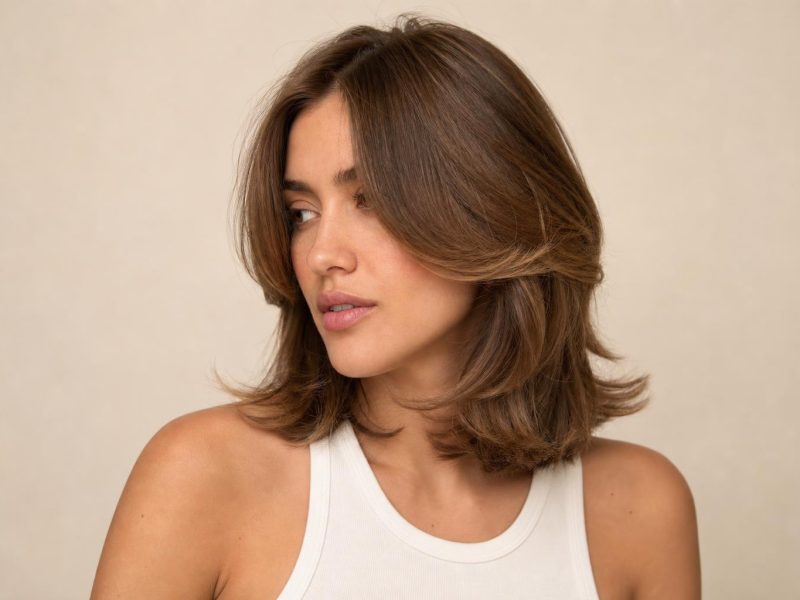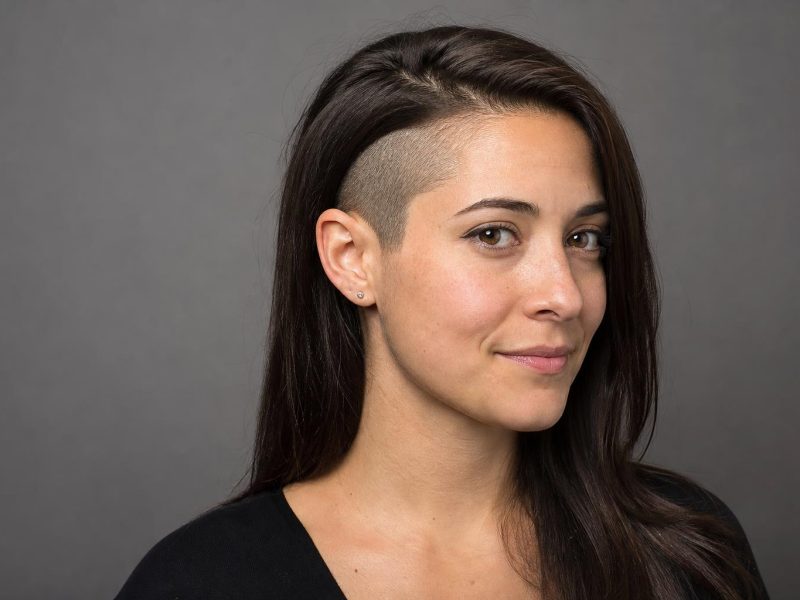

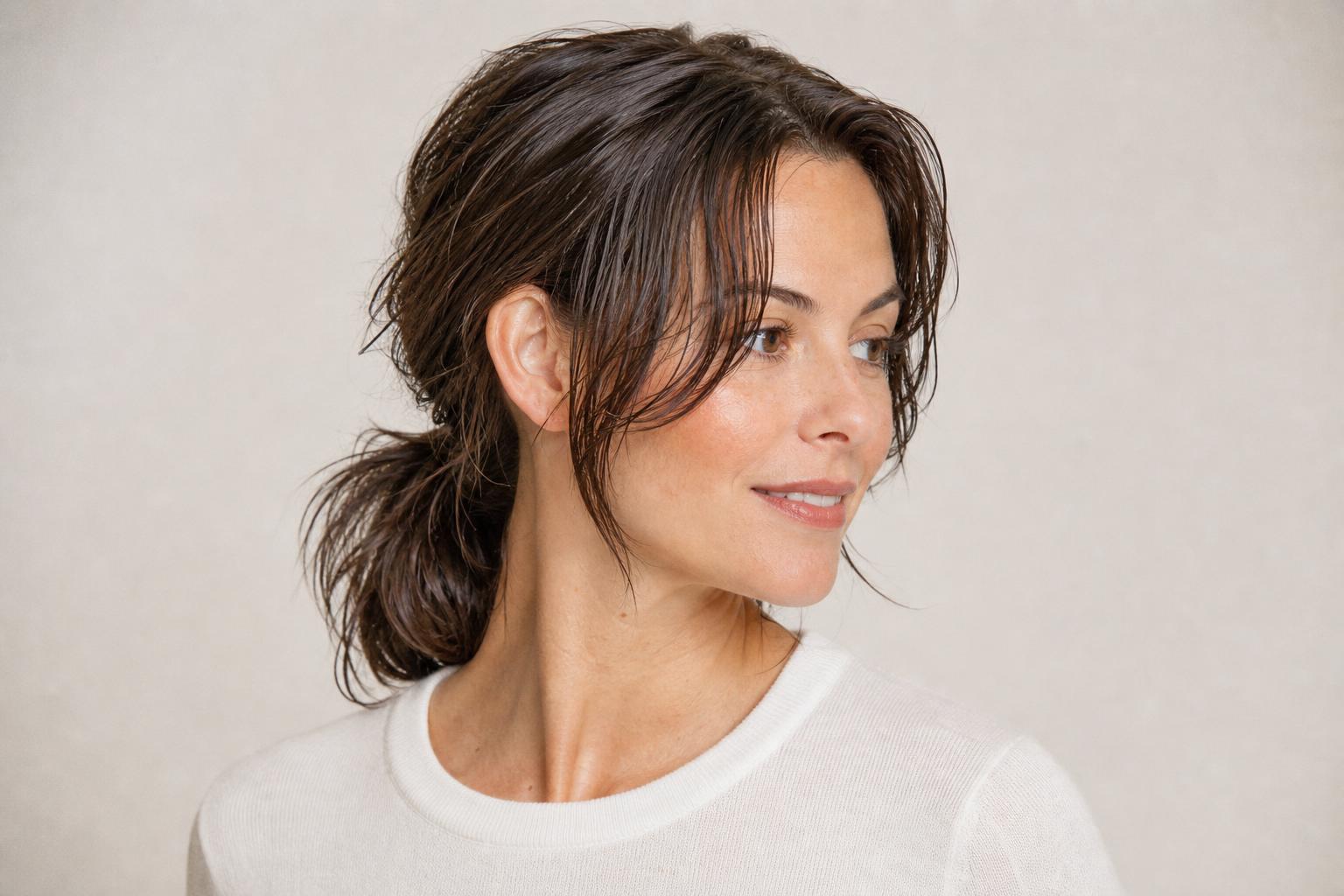
The right gym haircut is not about the ponytail you put in afterward, it is about where the layers land and how fast the hair dries.
Haircuts for gym-goers need to do three things a regular cut does not: hold a ponytail without shorter pieces escaping, dry fast enough that you can leave the locker room, and look presentable when sweat has flattened the roots. Below are 20 cuts that manage all three, grouped by whether you tie your hair back, wear it short enough to skip the ponytail, or work with natural texture.
Each entry names the specific cut structure, who it suits, and what changes when you train four or five days a week. After the gallery you will find a face shape breakdown, the exact language to use at your next appointment, an honest wash-and-trim schedule, and the situations where a gym-friendly cut is the wrong call.
| Factor | Details |
|---|---|
| Best for | Anyone training 3+ days a week who washes hair more often than average |
| Maintenance | Short crops every 4 weeks, mid-length every 8 to 10 weeks, 0 to 10 minutes daily |
| Works with | Straight, wavy, curly and coily textures at any density |
| Avoid if | You need a polished blowout daily, or your hair only behaves after 20 minutes of heat styling |
| Salon time | 45 to 75 minutes for a cut, longer if a nape undercut or color is added |
Long and Mid-Length Cuts That Tie Back Cleanly
The most common complaint about long hair at the gym is not length, it is the short layers that slip out of a ponytail and stick to a damp neck within ten minutes. The fix happens at the cut, not with more bobby pins: layers need to start below the height of your usual ponytail, and the perimeter needs enough weight to stay in the elastic. These seven cuts are built that way. Most also work under a helmet or a headband without denting, which matters if you cycle or run outdoors, and several pair well with the between-wash refresh methods that let you skip a full shampoo after a light session.
1. Collarbone Cut with a Blunt Perimeter
Cut in one strong line at the collarbone with no visible layering, this length gives a ponytail the most grip per strand. The blunt perimeter means the elastic catches every piece rather than letting thinner ends slide free during burpees or sprints. Ask for the ends to be point cut only slightly, since heavy texturizing at the bottom is what creates the wispy pieces that escape.

2. Long Layers Starting Below the Ponytail Line
Fine to medium hair keeps movement without sacrificing ponytail security when the shortest layer begins at chest level rather than at the cheekbone. Anything cut above the crown will fall out of a high ponytail the moment you start moving. This works especially well on hair that reaches mid-back, where there is enough length below the elastic for the layers to still read as layers.

3. One-Length Mid-Back Cut
There is no cut that survives a five-day training week with less effort than a single-length mid-back cut. Every strand is the same length, so nothing escapes, nothing needs pinning, and grow-out is invisible for three months. The trade-off is honest: without layers, thick hair carries a lot of weight and takes longer to dry after a post-workout shower.
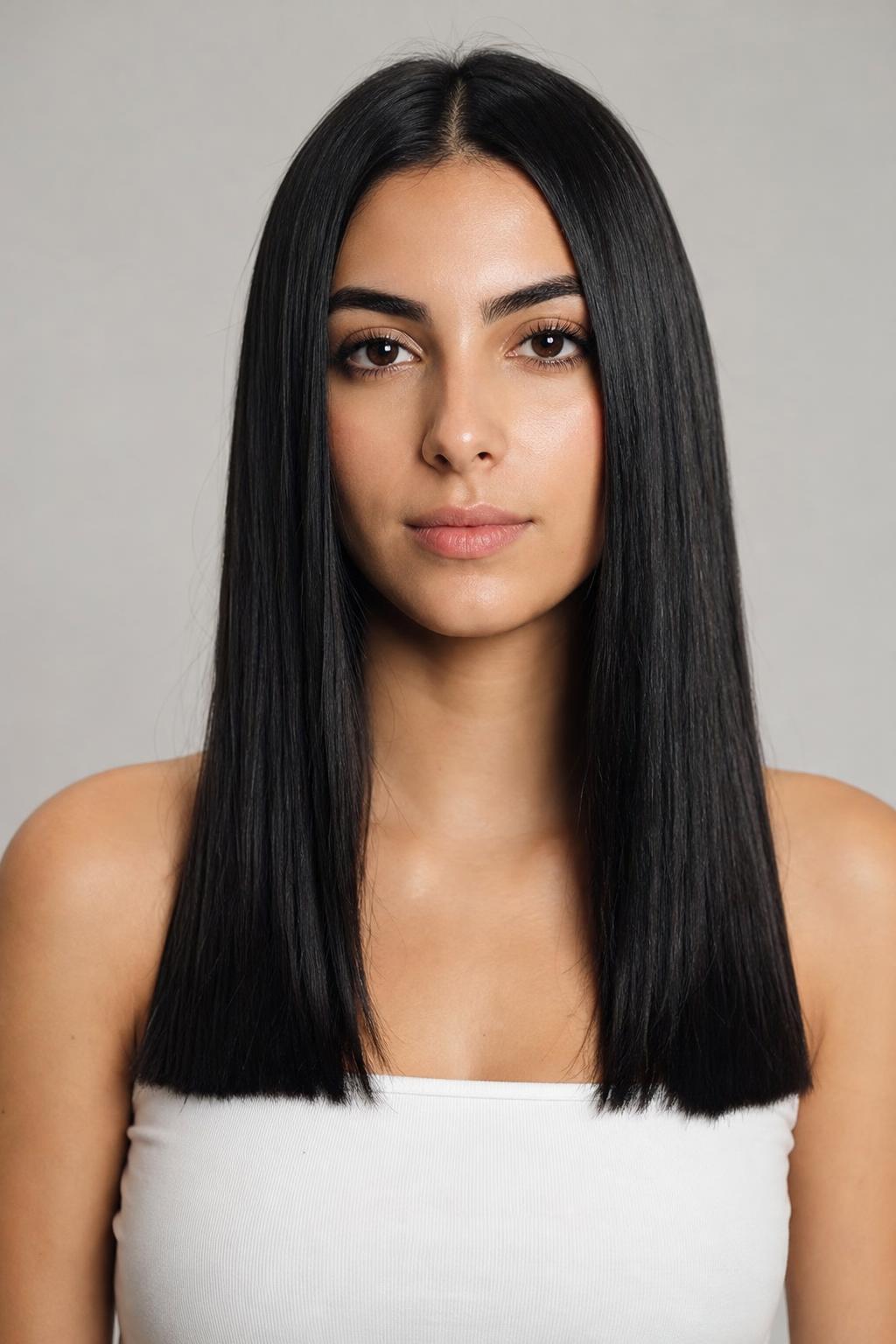
4. Shoulder-Grazing Lob with Internal Layers
Round and square faces get the most from a lob that stops just past the shoulder, because the length keeps a vertical line going while the internal layers stop the hair from widening at the jaw. All the weight removal happens inside the cut, so the outline stays clean enough for a low ponytail. The difference between internal layers and visible layers is worth understanding before your consultation, since asking for the wrong one changes how the cut behaves in an elastic.

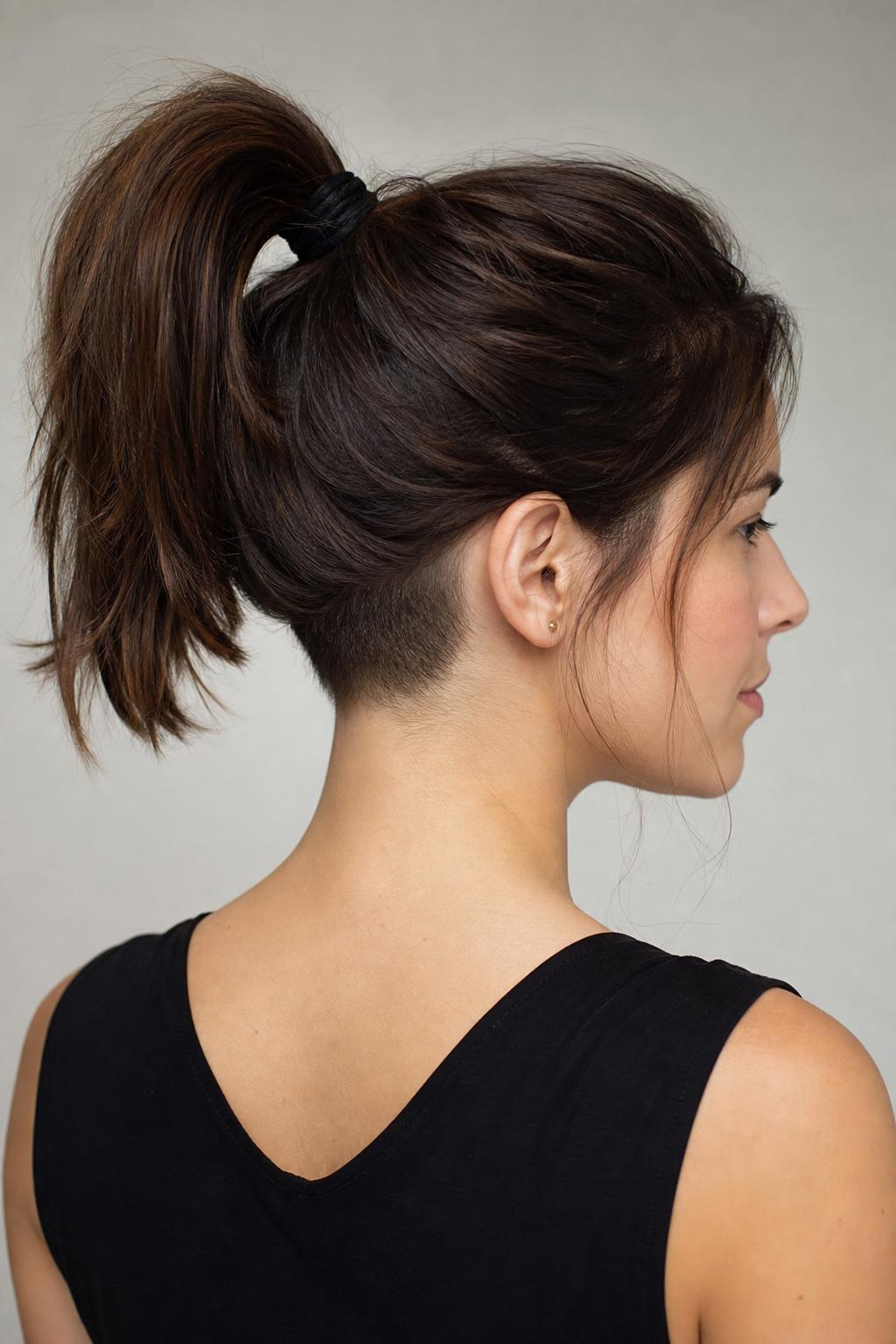
5. Long Hair with a Hidden Nape Undercut
Unlike a standard long cut, this one removes a palm-sized section of bulk at the nape and hides it entirely under the top layer. The neck stays cooler, a high ponytail sits flatter against the head, and nobody sees the undercut when hair is down. Thick, heavy hair benefits most here, and drying time after a shower drops noticeably.
6. Curtain Bangs Cut to Cheekbone Length
Bangs and cardio are usually a bad match, but curtain bangs cut no shorter than the cheekbone can be twisted back and pinned flat for a session, then dropped afterward. Cut them any shorter and they will stand up in a sweaty halo you cannot fix without rewashing. Keeping the fringe long enough to clip is also the single easiest way to stop bangs from going greasy mid-week.

7. Grown-Out Shag with a Weighted Base
Ask for a shag where the shortest pieces sit at the jaw and the base stays thick to the collarbone, and you get a cut that looks deliberately messy whether it is freshly washed or three days deep. Tell your stylist you want the layers concentrated above the ear line and nothing removed from the bottom two inches. That single instruction is what separates a shag that ties back from one that sheds pieces all session.

Short Cuts That Skip the Ponytail Entirely
Cutting above the shoulder removes the ponytail problem completely, and it cuts post-shower drying from fifteen minutes to about three. The catch is that short hair shows sweat differently: instead of frizzing, it goes flat at the roots and separates at the hairline. Every cut in this section is built with enough internal texture that flattened roots still look like a shape rather than a helmet.
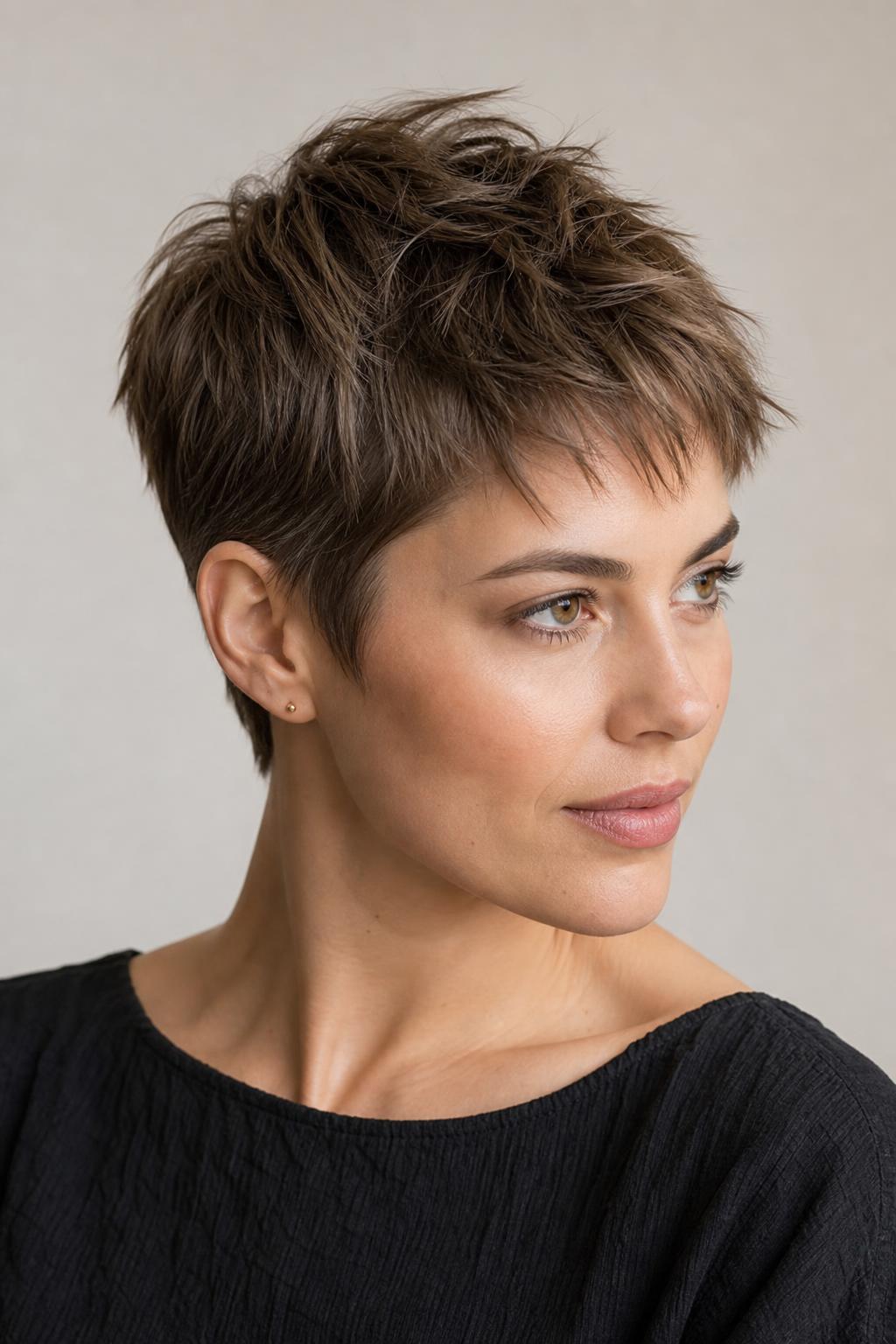
8. Classic Tapered Pixie
Tapering the sides and nape close while leaving two to three inches on top gives you a cut that towel-dries in about ninety seconds. Sweat actually helps here, adding grip that a dry pixie normally needs paste to achieve. Thick hair does particularly well, since the taper takes out the density that makes short hair puff at the sides.

9. Textured Crop with a Tight Nape
This crop keeps three inches of choppy, point-cut length through the top and crown while the nape is taken down almost to the skin. Plan on a trim every four weeks, because the whole shape depends on the contrast between top and nape staying sharp. Past week five the nape grows into the top and the cut starts reading as an accidental bowl.
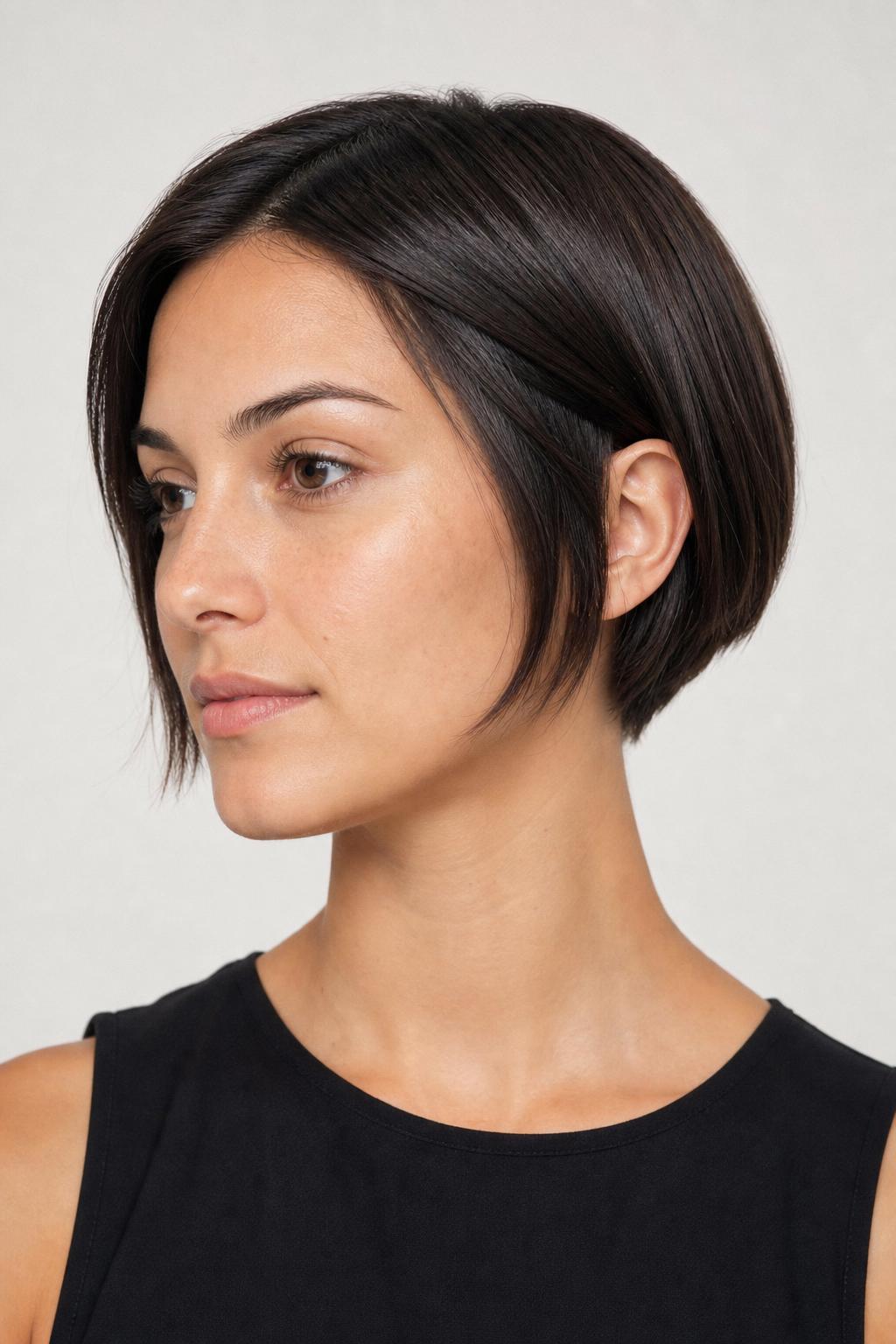
10. Chin-Length Blunt Bob
Straight to slightly wavy hair with medium density gets the cleanest result from a blunt chin-length bob, because the weight of an unlayered line reforms itself as the hair dries. Fine hair struggles more here, since a flattened root plus a blunt edge can read as limp by mid-afternoon. If that is your texture, there are specific fixes for keeping a blunt bob from falling flat that do not require a full restyle.

11. Ear-Length Micro Bob with a Cropped Nape
Oval and heart-shaped faces carry this length best, since ending the cut at the ear draws attention up toward the cheekbones instead of down toward the jaw. The nape is cropped shorter than the sides so nothing sits on the neck when you are sweating. On anyone with a strong square jaw, the same length can emphasize width, so a slightly longer front piece is worth asking for.
12. Side-Swept Pixie with a Longer Top
Rake a pea-sized amount of matte paste through damp hair, push everything to one side with your fingers, and this cut is finished in under a minute with no dryer involved. The four inches of length left on top means it still looks styled when it flattens under a headband. It also sits under a beanie or cap without denting into a visible line.

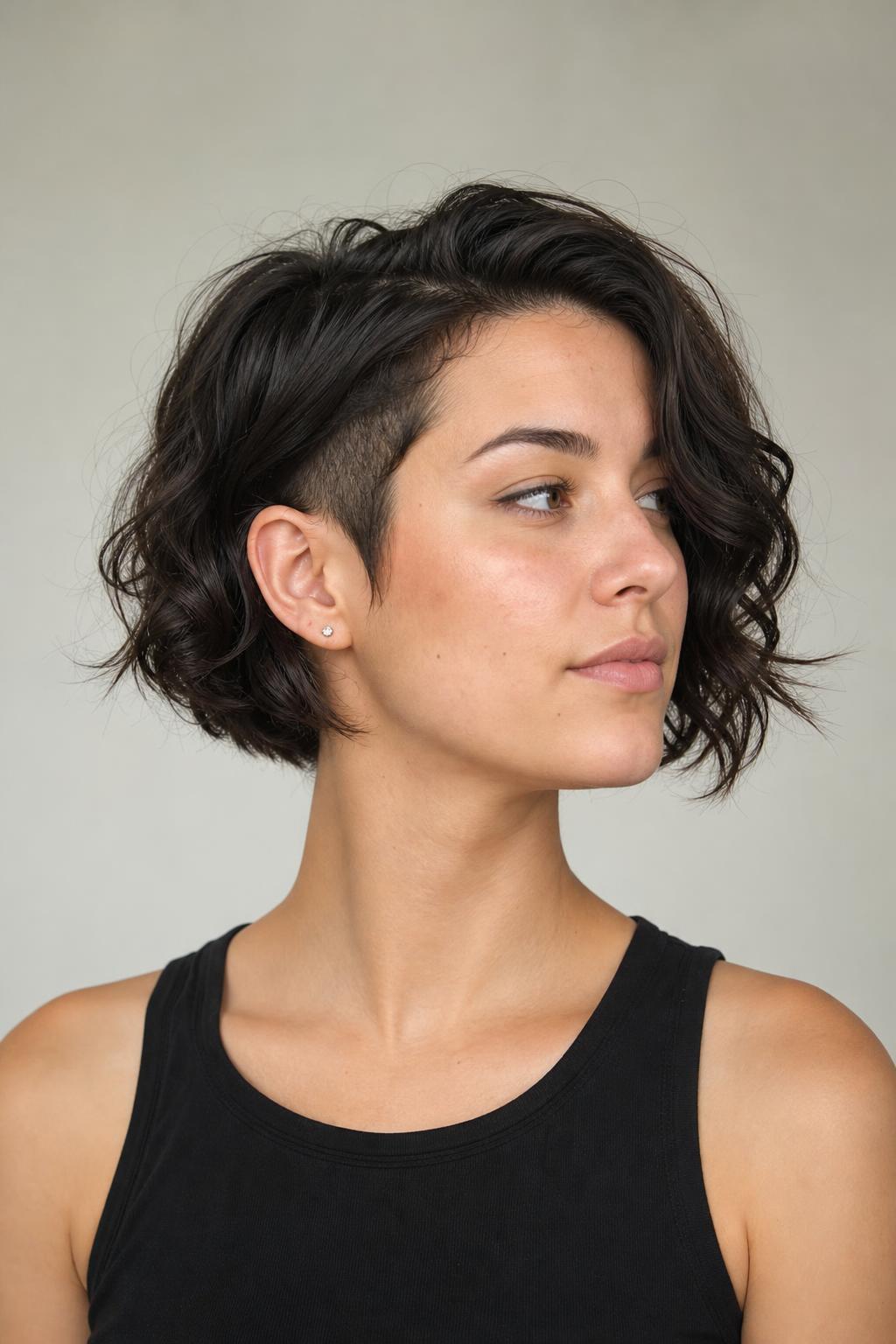
13. Buzzed Nape Bob
Where a standard bob keeps weight all the way around, this version buzzes the bottom two inches of the nape with a clipper and leaves the top layer full. Neck sweat has nothing to cling to, and the bob still looks conventional from the front. It is a good middle step for anyone curious about short hair but not ready to lose overall length.
14. Silver-Blended Crop
Growing silver reads as deliberate in a short crop because the natural contrast between white and darker strands does the work that highlights would otherwise do. Frequent washing fades salon color fast, so a cut that relies on your own grey holds its look between appointments better than any toned blonde will. Keep the crop around two inches through the top so the mixed tones stay visible.

Curly and Coily Cuts That Handle Sweat
Sweat is water, and water reactivates curl. That works in your favor if the cut has enough shape to fall back into place, and against you if the curls were cut wet by a stylist who did not account for shrinkage. Every cut here is designed to be dry cut, so what you see in the chair is what you get on the treadmill. Readers with looser waves will find more shape options in the 2C haircut collection, while tighter patterns are covered in the 4A cut guide.
15. Shoulder-Length Curly Cut with Weight at the Ends
Medium-density 3a to 3b curls hold their shape through a workout when the ends keep weight instead of being thinned into wisps. Removing bulk from the interior while leaving the perimeter dense gives curls something to spring back toward once sweat dampens them. The result is a shoulder-length shape that looks the same before and after a class.

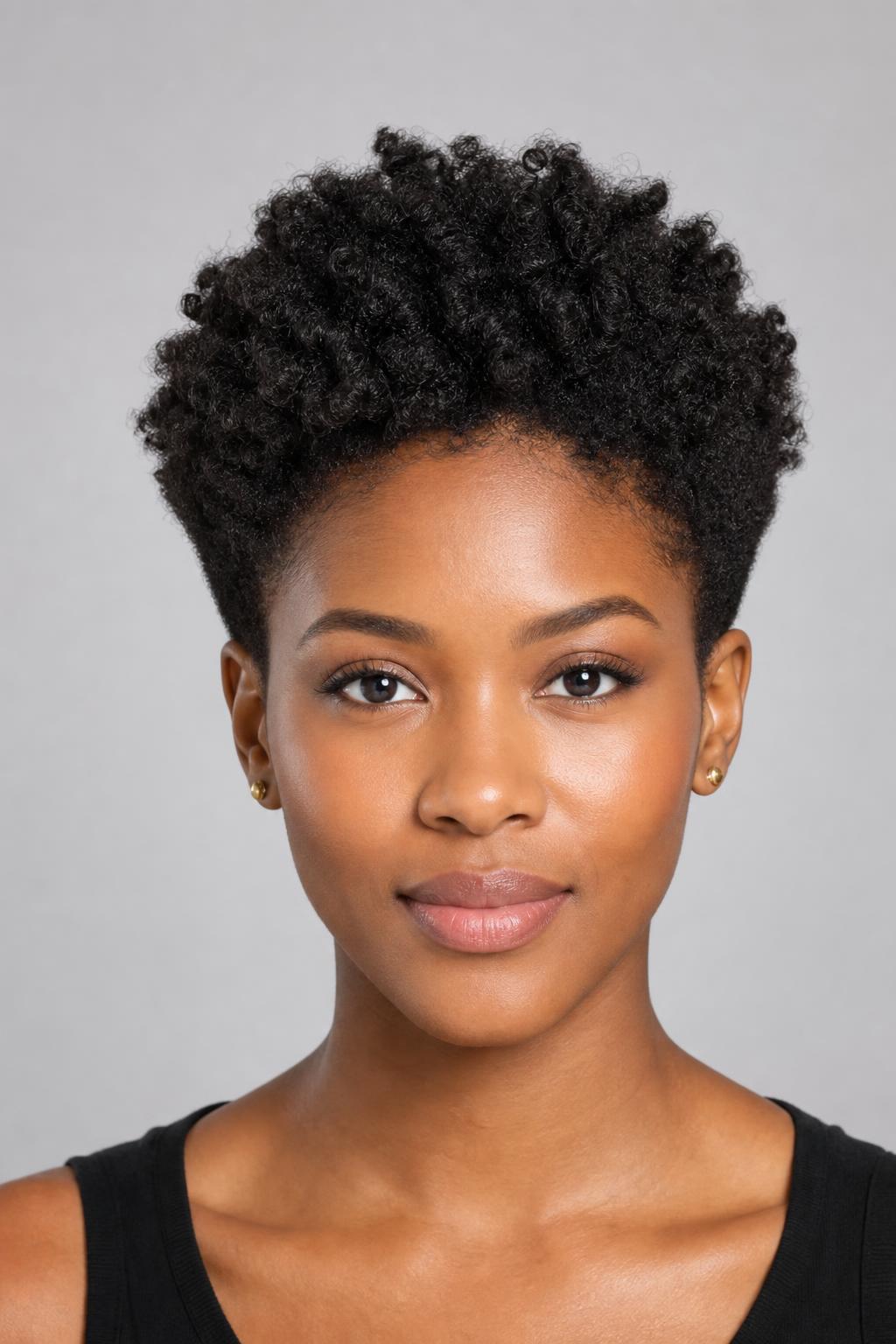
16. Tapered Coily Cut
Cutting coils progressively shorter from crown to hairline builds a rounded shape that holds without product. Because the sides taper close, there is no bulk to trap heat at the temples during a session. Ask for the taper to be cut on dry, stretched hair so the stylist can see where the coil actually lands.
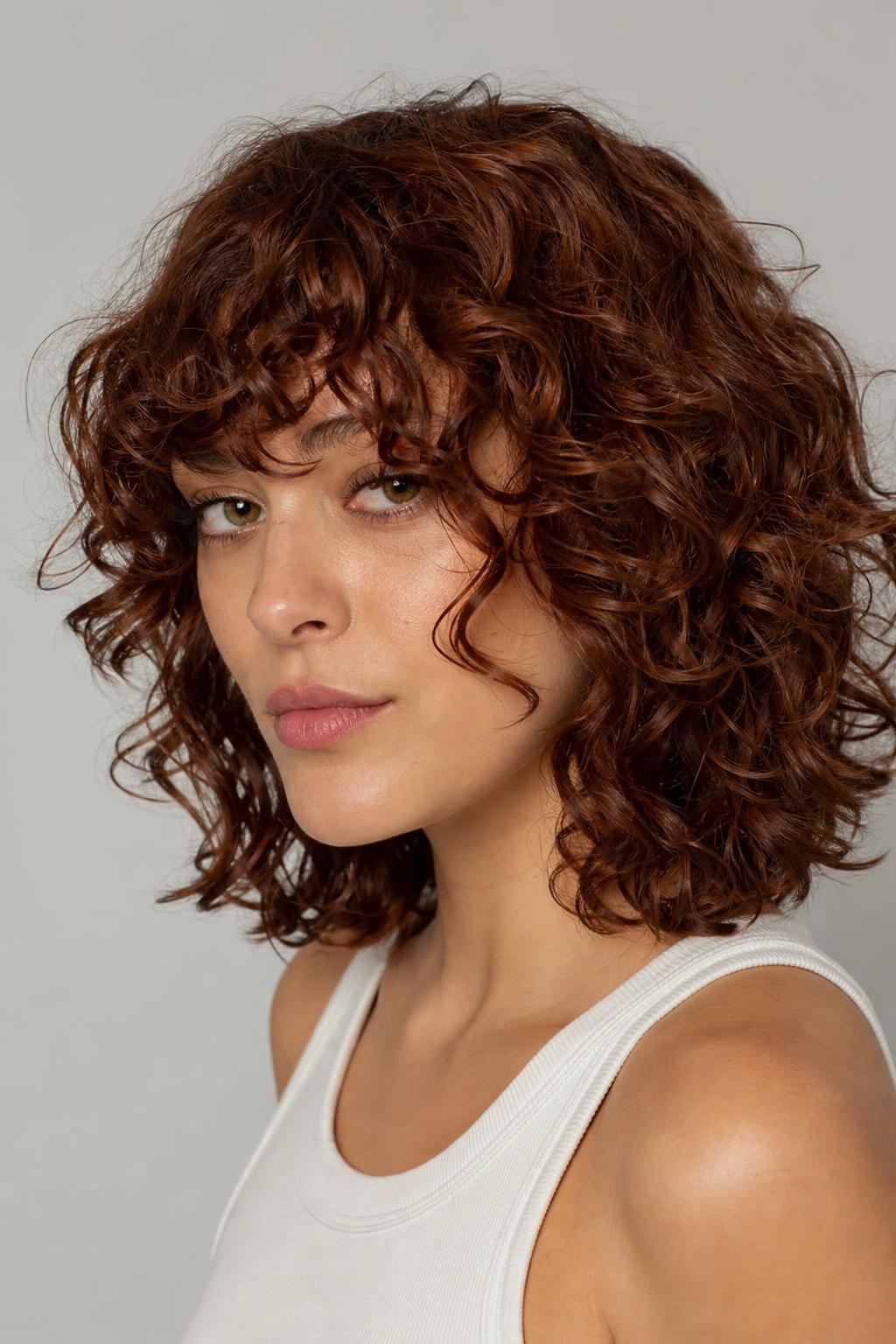
17. Curly Shag with Long Face-Framing Pieces
Scrunch a curl cream into soaking wet hair, plop for ten minutes in a cotton tee, then let it finish drying on the drive home and this shag needs nothing else. The face-framing pieces are cut long enough to tuck behind an ear once they get damp. Sweat at the hairline reactivates those front curls rather than flattening them, which is why the shape survives a class better than a blowout does.
18. Twist-Out Length Cut Just Past the Shoulders
Cutting to just past the shoulder keeps a twist-out at the length where it can be retwisted in about twenty minutes rather than an hour. Expect to refresh the twists every three to four days if you are training regularly, and plan on a shape-up trim every ten to twelve weeks. Longer than this and the retwist time doubles, which is what makes most people abandon the style.

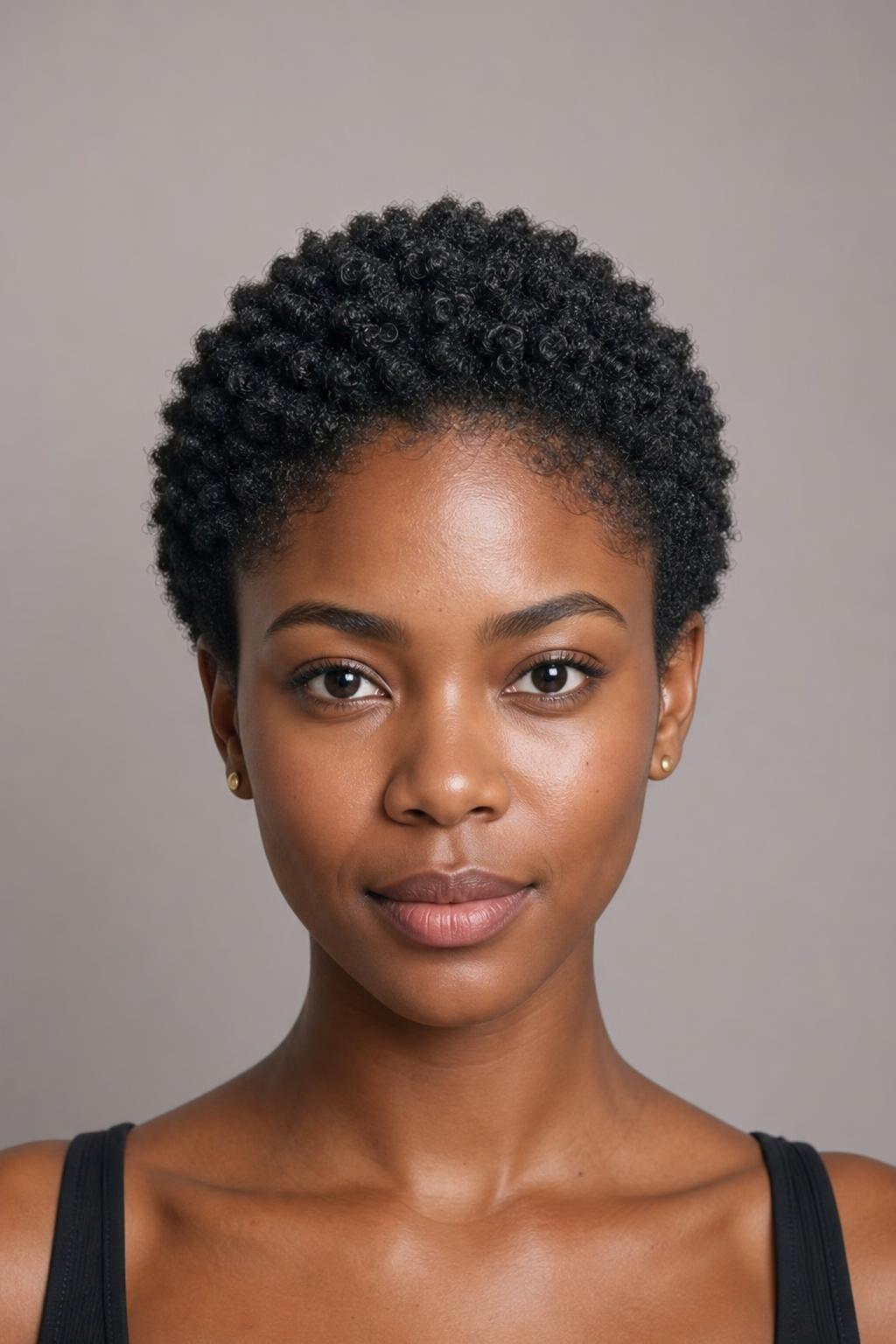
19. TWA with a Sponge-Coil Shape
Ask for roughly an inch and a half kept even across the whole head, with the hairline shaped softly rather than lined up sharply. That instruction gives you a teeny weeny afro that can be sponge-coiled in two minutes and rinsed in the shower without losing its shape. Bring a photo of the outline you want, because “short” means something different to every barber.
20. Wavy Lob Cut for Air-Drying
Where most lobs are cut with a blow-dry finish in mind, this one is cut dry on natural waves so the stylist can see exactly where each wave bends. The result falls into place on its own, which matters when your hair is drying in a car rather than under a dryer. Anyone still fighting frizz on the drive home will find the air-drying methods compared here worth testing.

How to Choose a Gym-Friendly Haircut for Your Face Shape
Sweat changes the silhouette of a haircut, which is why face shape matters more here than it does for a cut you always blow-dry. Damp hair sits closer to the head, which narrows the top and can make a jaw look wider by contrast. The table below accounts for that flattened state rather than the styled version you see in a salon mirror.
| Face Shape | Best Gym Cut | Ideal Length | Avoid |
|---|---|---|---|
| Oval | Almost anything, including a tapered pixie | Ear length to mid-back | Heavy blunt bangs that stick to a damp forehead |
| Round | Lob past the shoulder with internal layers | Below the collarbone | Chin-length bobs, which widen further when flattened |
| Square | Weighted shag or side-swept pixie | Jaw length or well past the shoulder | Blunt jaw-length lines that mirror the jaw |
| Heart | Micro bob or curly cut with weight at the ends | Ear length to shoulder | Slicked-back ponytails that expose a narrow chin |
| Oblong | Collarbone cut with cheekbone curtain bangs | Collarbone | One-length mid-back cuts, which add visual length |
| Diamond | Textured crop or tapered coily cut | Two to four inches through the top | Very tight high ponytails that flatten the temples |
What to Tell Your Stylist If You Train Most Days
Most stylists cut for the version of you sitting in the chair with dry, product-free hair, not the version leaving a spin class. You have to say the training part out loud, and you have to be specific about how many days and what kind. “I lift four days a week and my hair goes up every time” gives a stylist far more to work with than “I want something low maintenance.” It also helps to think through how you describe the maintenance level you want, since that phrase means something different in every salon.
Bring these three sentences to your consultation. First: “I want the shortest layer to sit below where my ponytail lands, which is here.” Then physically hold your hair where the elastic goes. Second: “Please take weight out of the interior but leave the perimeter dense.” Third: “I need this to look right air-dried, so cut it dry if that changes anything.”
Stylist tip: Show up to the appointment with hair styled the way it usually looks after a workout, not freshly blown out. A stylist who sees your natural fall pattern and your real root lift will cut a shape that works on your worst hair day, which is the only day that matters for this decision.
Washing, Drying, and Trim Reality
Training four or five days a week means washing more often than the standard advice assumes, and more washing means faster color fade and faster grow-out visibility. The good news is that sweat itself is mostly water and salt, not oil, so a scalp rinse with conditioner only is enough after a moderate session. Save shampoo for days when the scalp actually feels coated rather than just damp, and build the rest of your hair care routine around that rhythm.
| Cut | Trim Frequency | Post-Shower Dry Time | Grow-Out Behavior |
|---|---|---|---|
| Tapered pixie | 3 to 4 weeks | 2 to 4 minutes air-dried | Sides thicken first and puff by week 5 |
| Textured crop | 4 weeks | 3 to 5 minutes air-dried | Nape closes the gap with the top and the shape blurs |
| Chin-length bob | 6 to 8 weeks | 10 to 15 minutes air-dried | Line softens gradually and stays wearable |
| Collarbone or lob | 8 to 10 weeks | 20 to 30 minutes air-dried | Very forgiving, ends split before the shape fails |
| Tapered coily cut | 4 to 6 weeks | 5 to 10 minutes air-dried | Crown grows faster than the taper and rounds out |
Stylist tip: Tight high ponytails worn five days a week are a leading cause of hairline thinning in otherwise healthy hair. Rotate the height of your ponytail through the week, and use a spiral coil elastic rather than a fabric-covered band, which grips individual strands and snaps them at the temple.
When a Gym-Friendly Cut Is Not the Right Choice
Cutting for the gym is a real trade-off, and it is worth naming what you give up before you commit to the chair.
- Your job requires a polished, smooth finish every day. Short air-dry-friendly cuts read as casual, and you will end up heat styling anyway. A one-length collarbone cut worn down is the better compromise.
- You have very fine, low-density hair. Nape undercuts and heavy taper work remove density you cannot spare, and the result can look sparse. Keep the weight and choose a blunt line instead.
- You train once or twice a week rather than daily. Building an entire haircut around two sessions means living with a compromise cut for the other five days. A regular cut plus a better ponytail technique covers it.
- You are mid-way through growing out a pixie. Adding a taper or a nape crop restarts the clock on the awkward phase, and you will be back at the beginning for another four months.
FAQ
Do I Need to Wash My Hair After Every Workout?
No, a conditioner-only rinse handles most sessions. Sweat is largely water and salt rather than oil, so rinsing the scalp with warm water and applying conditioner from the mid-lengths down removes the residue without stripping. Reserve shampoo for two or three washes a week, or for days when your scalp feels genuinely coated rather than just damp.
What Is the Best Haircut Length for Someone Who Works Out Daily?
Either well above the shoulder or well below it, with the awkward middle avoided. Anything ear length or shorter dries in minutes and skips the ponytail entirely, while collarbone length and longer gives you enough to tie back securely. Shoulder-grazing lengths are the hardest to manage, since they are long enough to stick to a damp neck but too short to hold an elastic properly.
Will Cutting My Hair Short Stop It Getting Damaged from Sweat?
Partly, though the damage usually comes from friction and tension rather than the sweat itself. Short cuts remove the length that gets caught in elastics and rubs against collars, which is where most mechanical breakage happens. If you keep your hair long, a loose braid instead of a high ponytail cuts the same damage without cutting the length.
Can I Get a Pixie Cut If I Have Thick Curly Hair and Go to the Gym?
Yes, and a tapered version is often the easiest cut a curly gym-goer can have. The taper removes bulk at the sides where thick curls tend to expand, while leaving enough length on top for definition. Insist on a dry cut so the stylist can shape around your actual curl pattern instead of guessing at shrinkage.
How Do I Stop Short Layers Falling Out of My Ponytail?
Ask your stylist to raise the starting point of your shortest layer to below your usual ponytail height. Any layer cut above the crown will always fall out once you move, no matter how tightly it is tied. In the meantime, two small twisted sections pinned at the crown will hold the escaping pieces better than a headband will.
Does Sweat Make Hair Color Fade Faster?
Yes, mostly because of the extra washing rather than the sweat. Salt in perspiration does lift some pigment from the cuticle, but the bigger factor is that daily training doubles your shampoo frequency, which is what actually pulls color out. Cool water rinses and a color-safe cleanser slow it down, and shades close to your natural depth fade far less visibly than dramatic ones.
What Haircut Works Best Under a Cycling or Ski Helmet?
Cuts with no hard part line and no crown-height volume survive a helmet best. A textured crop, a tapered pixie, or hair long enough for a low braid at the nape all come out looking much the same as they went in. Anything relying on lift at the roots will be flattened into a visible ring within twenty minutes.
Should I Get Bangs If I Exercise Regularly?
Only if they are long enough to pin back, which means cheekbone length or longer. Blunt or micro bangs sit directly on the forehead where sweat collects, and they will separate into strips that cannot be fixed without rewashing. Curtain bangs cut to the cheekbone are the one fringe shape that genuinely works around training.
The best haircuts for gym-goers are the ones cut for damp, flattened, tied-back hair rather than for the version that only exists after a blowout. Decide first whether you want to tie your hair back or stop dealing with a ponytail altogether, then pick the cut from that section and take the exact wording above to your stylist. A cut that suits your training schedule is the difference between fixing your hair after every session and simply walking out.
Hair results vary based on your natural hair type, texture, density, and condition. Always consult with a licensed hairstylist before making significant changes, especially with chemical treatments or dramatic length changes. Photos may show styled results that require professional tools and products to replicate.