
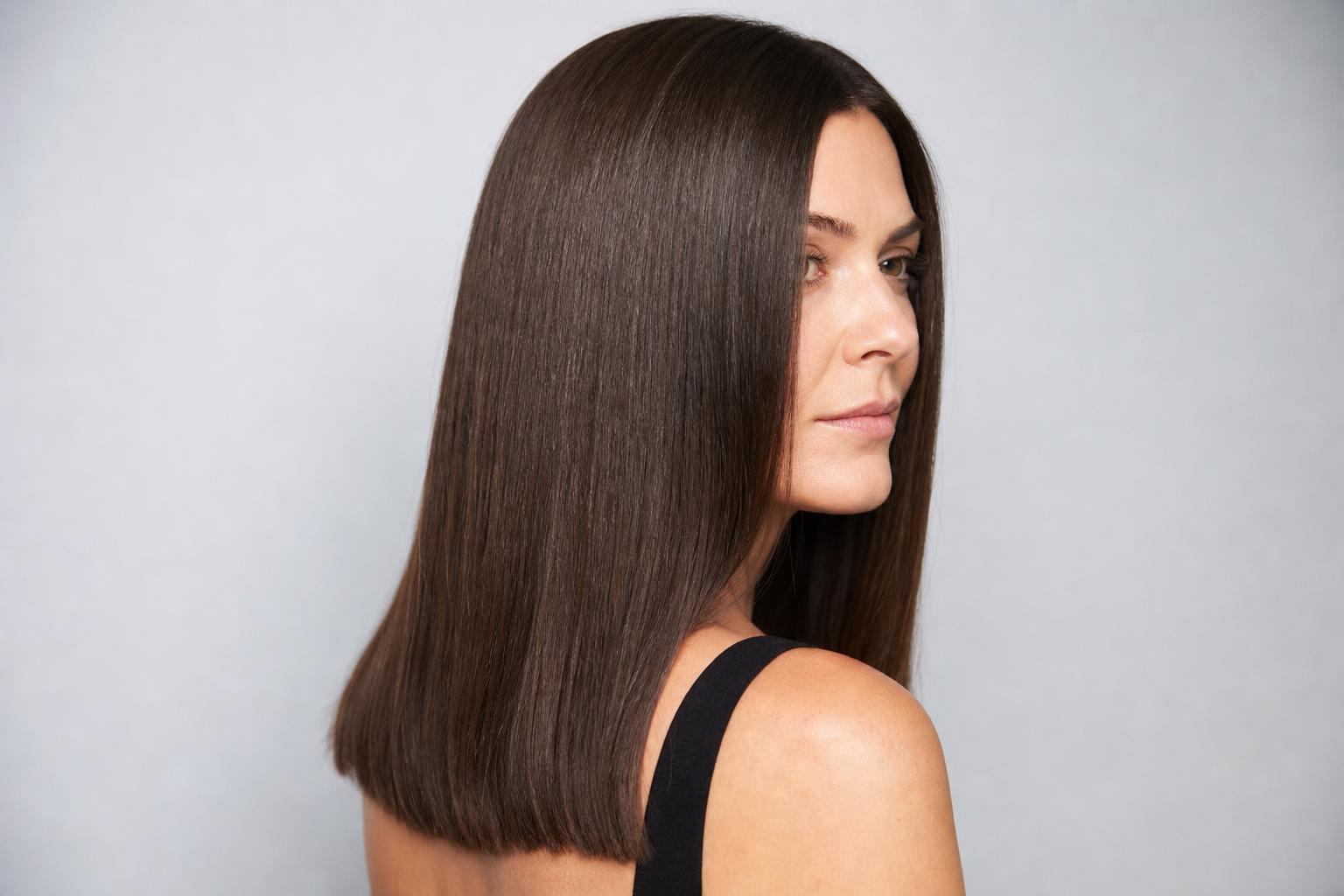
A keratin treatment does not straighten your hair permanently, and understanding what it actually changes is the difference between loving the result and feeling misled three weeks later.
A keratin treatment is a semi-permanent smoothing service that coats the hair shaft with a protein solution and seals it with a flat iron at high heat, cutting frizz and drying time for roughly three to five months. It loosens curl by about one stage rather than erasing it, so a tight curl becomes a soft wave and a wave becomes nearly straight. Expect to pay somewhere between $150 and $500 in a salon and to sit in the chair for two to four hours.
This guide covers what the treatment physically does to the hair, how it differs from a Brazilian blowout and a chemical relaxer, what the formaldehyde question really means for a client and a stylist, the aftercare window that decides how long results hold, and who should walk away from the service entirely.
| Factor | Details |
|---|---|
| Best for | Frizz-prone wavy to loosely curly hair, thick coarse textures, humid climates |
| How long it lasts | 3 to 5 months, fading gradually rather than growing out in a line |
| Salon time | 2 to 4 hours depending on density and length |
| Typical cost | $150 to $500, driven mostly by hair length and regional pricing |
| Daily styling after | Blow-dry time typically drops by half, often 10 minutes instead of 25 |
| Avoid if | Pregnant or nursing, heavily bleached hair, or you want to keep defined curls |
What a Keratin Treatment Actually Does to Your Hair
Hair is mostly keratin already. The treatment does not add missing protein back into a depleted strand the way the marketing suggests. What it does is lay a keratin-and-polymer solution along the outside of the hair, then use a flat iron at roughly 400 to 450 degrees Fahrenheit to drive off water and lock that layer into place. The result is a smoother, flatter cuticle surface that reflects more light, absorbs less humidity, and offers far less resistance to a brush.
The Treatment Coats and Seals Rather Than Rebuilding Bonds
This is the single most useful thing to understand before booking. A chemical relaxer breaks the disulfide bonds inside the cortex and re-forms them in a straighter position, which is why relaxed hair never reverts. A keratin treatment leaves those internal bonds alone and works on the surface, which is why the effect washes away over months instead of being permanent. It also means a keratin treatment is not a repair service. If your hair is damaged, the smoothness will hide it convincingly for a while, and the underlying condition is unchanged. Genuine structural work belongs to bond-building treatments that target the internal links, which do a different job entirely.
Results Fade Gradually Instead of Growing Out in a Line
Because nothing permanent happened at the root, there is no harsh demarcation line as new hair grows. The coating wears down a little with every wash, so month one feels glassy, month three feels smooth but touchable, and by month four or five your natural texture has quietly returned. That gradual fade is a genuine advantage over relaxers, since there is no awkward stage and no urgent touch-up deadline. It also means the treatment never fails suddenly, which makes it easy to overestimate how long yours actually lasted.
Stylist tip: Take a photo of your hair air-dried, with no product, the day before your appointment. Four months later that photo is the only honest way to judge whether the treatment is still working or whether you have simply adjusted to a slower fade.
Keratin Treatment, Brazilian Blowout, and Relaxer Are Three Different Services
These get used interchangeably in conversation and they are not interchangeable in the chair. The confusion causes real problems, because a client who asks for “a keratin” and means “permanently straight” walks out disappointed, and a client who books a relaxer expecting a keratin-level reversible result cannot undo it. The table below sorts out what each one does, how long it holds, and what it costs you in commitment.
| Service | How It Works | Curl Result | Duration |
|---|---|---|---|
| Keratin treatment | Protein solution sealed onto the cuticle with high heat | Loosens curl roughly one stage, kills frizz | 3 to 5 months, fades gradually |
| Brazilian blowout | Branded smoothing system, same coating principle, no waiting period | Similar smoothing, often keeps more body | 2 to 4 months |
| Japanese thermal straightening | Breaks and re-forms internal bonds, then irons them flat | Pin straight, no wave left at all | Permanent on treated hair, grows out with a line |
| Chemical relaxer | Alkaline chemistry breaks disulfide bonds to loosen coil | Straightens coily texture, degree is controlled by timing | Permanent, root touch-ups every 8 to 12 weeks |
| Glyoxylic acid smoothing | Formaldehyde-free alternative chemistry, also heat-sealed | Milder smoothing, better on fine hair | 6 weeks to 3 months |
What the Formaldehyde Question Means for You
Many smoothing formulas release formaldehyde gas when the flat iron heats them, whether the label says formaldehyde, formalin, methylene glycol, or nothing at all. The FDA is direct about this: hair smoothing products can release formaldehyde when heated, and the agency advises that only trained professionals apply them, with proper ventilation and protective equipment. The exposure risk falls hardest on stylists, who breathe it several times a week rather than twice a year.
The separate health question about straightening chemicals and hormone-related cancers is worth knowing but easy to misreport. A large NIH-funded analysis of the Sister Study cohort found that women who used chemical hair straightening products more than four times a year had a higher rate of uterine cancer, with lifetime risk by age 70 rising from about 1.6% to about 4% among frequent users. That research grouped straighteners and relaxers broadly and did not isolate keratin treatments, so it is not a direct verdict on this service. What it reasonably supports is a cautious approach: fewer services per year, formaldehyde-free chemistry where you can get it, and a salon that ventilates properly.
Stylist tip: Ask to see the product bottle and the safety data sheet before the service starts, not after. A salon that smooths hair regularly will have both within reach, and a hesitation to show you either tells you what you need to know about how the room is run.
The First 72 Hours Decide How Long Results Hold
Traditional keratin formulas need the coating to cure. That means no washing, no ponytails, no clips, no tucking hair behind your ears, and no sweaty workouts that leave a bend at the nape, for a full three days. Any crease you set during that window can hold. Some newer systems and most Brazilian blowout style formulas skip the waiting period entirely, so confirm which category yours falls into before you leave the salon rather than guessing.
After the cure, the fastest way to strip a keratin treatment is sodium chloride, which appears in a surprising number of ordinary shampoos as a thickener, and sulfates, which cut through the coating quickly. Switch to a cleanser without sulfates or added salt before your appointment, so it is already in the shower when you need it. Chlorine and salt water are the other two accelerants, and one unprotected week at a pool can cost you a month of results, as anyone dealing with chlorine damage on treated hair already knows.
Washing less often extends the treatment in a straightforward way, because fade is measured in washes rather than weeks. Two washes a week rather than five roughly doubles how long you keep the effect. Cool water, a gentle touch at the roots, and a wide-tooth comb through conditioner all preserve the surface a little longer.
Cost, Timing, and Where the Money Actually Goes
Salon pricing for a keratin treatment ranges widely, generally $150 to $500 in the United States, with length and density the biggest variables and metro location a close third. Longer hair uses more product and more ironing passes, which is a genuine cost rather than an upsell. Add-on charges usually cover a clarifying wash beforehand, which is not optional, since residue on the cuticle blocks the treatment from bonding evenly. A deep clarifying wash before a chemical service is one of the few times that step is genuinely required rather than nice to have.
On sequencing with color, book color first and the smoothing second, ideally in the same appointment or within a week. The treatment seals the cuticle, which makes it harder for color to deposit evenly afterward, and the high heat can shift tone on freshly deposited color. Most stylists will not do highlights and a keratin treatment on the same day on already-compromised hair, and that caution is worth respecting.
When a Keratin Treatment Is Not the Right Choice
This service suits a narrower range of hair than the marketing implies. Skip it, or choose a different route, in these cases:
- You are pregnant or nursing. Formaldehyde exposure is the concern, and every reputable salon will decline the service or postpone it, so plan around it rather than around a stylist who agrees too easily.
- Your hair is heavily bleached or already breaking. High heat on compromised strands is how a smoothing appointment turns into a haircut. Rebuild condition first over two or three months, then reconsider.
- You want to keep your curl definition. A keratin treatment loosens pattern, and on 3b to 3c hair it often lands in an undefined middle ground that neither curls nor lies straight. Frizz control through a good curl refresh routine keeps the pattern intact.
- Your hair is very fine and limp. Smoothing removes volume, and fine hair rarely has enough to spare. A milder glyoxylic acid formula is a safer test than a full keratin service.
- You cannot commit to the aftercare. Salt-free, sulfate-free products for months and fewer washes are part of the deal, and skipping them means paying full price for six weeks of results.
Common Keratin Treatment Myths
Myth: A Keratin Treatment Repairs Damaged Hair
Reality: It masks damage extremely well by smoothing the cuticle so light reflects evenly, and it adds no structural strength to a weakened cortex. Damaged hair after a keratin treatment looks healthier and is exactly as fragile as it was. Treat repair and smoothing as separate projects with separate products, and do the repair work first.
Myth: Formaldehyde-Free Means No Heat Risk
Reality: Formaldehyde-free chemistry removes the gas exposure concern, and the flat iron still runs at 400 degrees or higher through every section. Heat is a separate variable from chemistry. If your hair is porous or previously lightened, ask what temperature your stylist plans to use, and expect a lower setting with more passes rather than fewer passes at maximum heat. Our flat iron temperature breakdown by hair type is a useful reference for that conversation.
Myth: You Can Do It Properly at Home for $40
Reality: Home kits exist and they work at a fraction of the strength, which is the honest trade rather than a scam. What you lose is even section work, a professional iron holding a stable temperature, and ventilation. The most common home result is a patchy fade after three weeks, with the crown smoother than the underneath because the back sections never got consistent passes.
What to Tell Your Stylist
Come in with your goal described as a behavior rather than a look. Something like: “I want to cut my blow-dry time and stop the frizz in humidity, and I want to keep some wave, not go straight.” That sentence tells a stylist which strength of formula and how many ironing passes to use, while “I want a keratin treatment” tells them almost nothing. If you have colored, bleached, or henna-treated your hair in the last year, say so unprompted, because henna in particular reacts badly with some smoothing chemistry.
Three questions worth asking at consultation: which system are you using and is it formaldehyde-free, how many stages of curl will I realistically lose, and what does my hair look like at month four. A stylist who answers the last one honestly is the one to book. Ask about a strand test too, especially if you have any lightened pieces, and expect the result to change how the appointment gets priced. For anyone who mainly wants humidity control rather than a chemical service, there are cuts shaped specifically for humid climates that solve part of the same problem with no processing at all.
FAQ
How Long Does a Keratin Treatment Really Last?
Three to five months for most people, measured in washes rather than calendar time. Someone washing twice a week gets closer to five months; someone washing daily with a salt-containing shampoo can be back to baseline in six weeks. Swimming, salt water, and hard water all shorten it further, so a summer treatment fades faster than a winter one on identical hair.
Will a Keratin Treatment Make My Hair Straight?
It loosens curl by roughly one stage rather than straightening. A loose wave usually ends up close to straight, a defined curl becomes a soft wave, and a tight coil becomes a looser coil that still has pattern. If pin-straight is the goal, Japanese thermal straightening is the service that delivers it, with the permanence and regrowth line that come with it.
Can I Color My Hair After a Keratin Treatment?
Wait about two weeks, and expect color to grab less evenly than usual because the cuticle is sealed. The better sequence is color first, smoothing second, ideally within the same week. Talk to your colorist before booking either service so the calendar works in the right order rather than costing you a correction later.
Is a Keratin Treatment Safe for Fine Hair?
It is safe, and it is often disappointing, which is a different problem. Fine hair carries little volume to begin with, and smoothing removes some of what is there, so the result can read flat rather than sleek. A milder glyoxylic acid or a half-strength application through the mid-lengths only is a better first attempt than a full-strength service.
Why Did My Keratin Treatment Wear Off So Fast?
The three usual causes are sodium chloride in your shampoo, washing more than three times a week, and chlorinated or hard water. Check the ingredient list on every bottle in your shower, including the conditioner, since salt appears as a thickener in inexpensive formulas. A shower filter genuinely helps in hard water areas, and it also helps everything else you do to your hair.
Does a Keratin Treatment Cause Hair Loss?
The treatment itself does not attack the follicle, and breakage from high heat on fragile hair is commonly mistaken for loss. Look at where the hairs are separating: a strand that breaks mid-shaft with no white bulb at the end is breakage, not shedding. If your hair was already bleached or over-processed, that breakage risk is real and it is the strongest reason to postpone the service.
Can I Get a Keratin Treatment on Curly Hair?
You can, and the honest question is whether you want the result. On 2c to 3a hair it usually produces a soft, manageable wave people are happy with. On 3c and tighter, it frequently lands between textures, with too little curl to wear naturally and too much body to wear straight without daily ironing. Ask your stylist to show you photos of clients with your specific pattern before committing.
A keratin treatment earns its price when the goal is less frizz and faster styling on thick, wavy, humidity-sensitive hair, and it disappoints when the goal is straight hair, repaired hair, or curls that keep their shape. Bring an air-dried photo to your consultation, ask which system your salon uses, and buy the salt-free shampoo before the appointment rather than after.
Hair results vary based on your natural hair type, texture, density, and condition. Always consult with a licensed hairstylist before making significant changes, especially with chemical treatments or dramatic length changes. Photos may show styled results that require professional tools and products to replicate.