

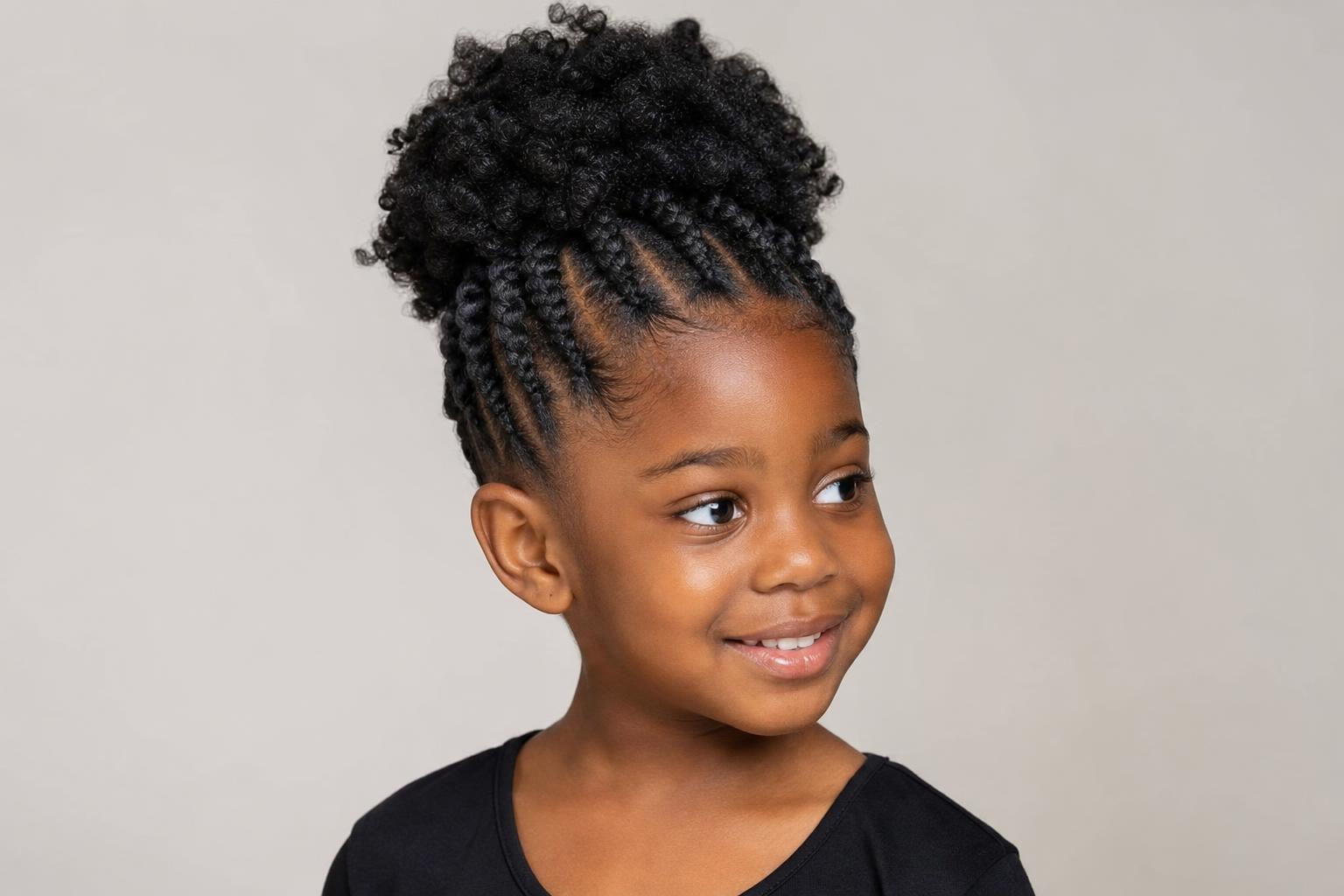
The useful way to sort hairstyles for a Black girl is not by how they look but by how many minutes they cost and how many days they buy.
A style that takes five minutes and lasts one day and a style that takes three hours and lasts three weeks solve completely different problems, and most style lists mix them together with no way to tell which is which. The 30 below are grouped into four bands: five-minute morning styles, styles that hold two to three days, week-long protective styles, and installs that run two weeks or longer. Every entry names its real time cost.
Alongside the styles you will find a time-and-wear table covering each style family, a night routine that decides whether a twist-out survives to day three, honest tension limits for growing hair, and the language to use with a braider so the install you booked is the install you get.
| Factor | Details |
|---|---|
| Best for | 3c to 4c natural hair, roughly ages 4 through 16 |
| Fastest useful style | A high puff on stretched hair, done in under three minutes |
| Longest sensible wear | Three weeks for a knotless install, then take it down |
| Avoid | Tight styles on a child who says it hurts, and any style worn past four weeks |
| Non-negotiable | A satin bonnet or pillowcase every night, whatever the style |
Five-Minute Styles for School Mornings
Morning styles only work if the hair was prepared the night before, so every option here assumes hair that was moisturized and either twisted or banded overnight. Trying any of them on dry, shrunken, unstretched hair is what turns a three-minute style into a twenty-minute struggle. Keep a spray bottle of water with a little leave-in beside the comb and dampen as you go.
1. Two-Strand Front Twists with the Back Left Loose
Twisting only the front two sections and leaving everything behind them loose takes about four minutes and keeps hair off the face without a single elastic. Because the twists are two strands rather than three, they lie flatter and undo in seconds at bath time.
2. High Puff with a Satin Scrunchie
The fastest style on this list works on any length past three inches and needs nothing but a satin scrunchie stretched twice around gathered hair. Skip the plain elastic, which grips individual strands at the gather point and snaps them. A puff can be re-gathered mid-week without redoing anything underneath.
3. Side-Parted Ponytail with Smoothed Edges
Part deeply from the outer corner of one eyebrow, smooth with a soft boar-bristle brush and a light gel, and gather low at the opposite side. Use the softest brush you own and stop at three passes, since repeated brushing at the hairline does more damage than any single style.
4. Three Chunky Braids to the Back
Unlike cornrows, which are braided flat against the scalp and take real skill, three free-hanging braids need no technique at all and can be done by a parent on the first try. They hold overnight and can be unraveled the next morning for waves, which makes them a two-in-one.
5. Half-Up Puff with the Rest Loose
Looser 3c textures that lose definition when fully gathered do better with the top half up and the bottom half hanging, because the loose section keeps its curl pattern visible. Denser 4c hair usually looks fuller with everything gathered instead.
6. Double Puffs
Splitting the hair down the middle into two puffs distributes the pull across two smaller gather points instead of one, which is measurably gentler than a single high puff worn daily. Alternate the parting line every few days so the same section of scalp is not always under tension.
7. Banded Ponytail Down the Length
Placing three or four satin-covered elastics at intervals down a ponytail stretches the hair as it dries and stops shrinkage from pulling the length up. Set it on damp hair at bedtime and the ponytail is both stretched and styled by morning.
8. Loose Afro Shaped with a Pick
Dampen lightly, apply a leave-in, and lift from the roots with a wide pick rather than combing through from the ends. Shape the outline last and only at the perimeter. This is the lowest-tension style available and a good default for any week when the scalp needs a break.
Styles That Hold for Two to Three Days
The middle band is where most of the value sits: an hour of effort on a Sunday evening covers Monday through Wednesday. All of these depend on a set-and-release principle, where hair is twisted or knotted damp, allowed to dry completely, and then unraveled. Releasing before the hair is fully dry is the single reason these styles fail.
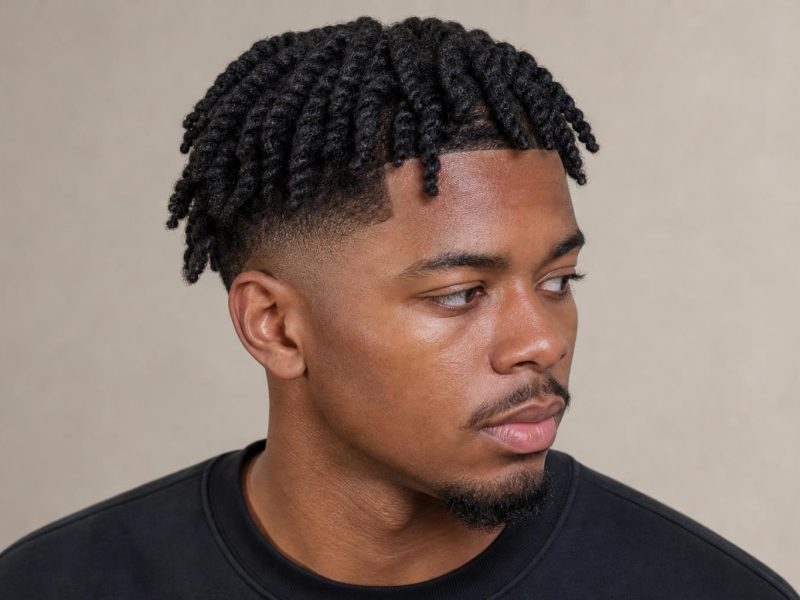
9. Two-Strand Twist Out
Twisting damp, product-coated sections and unraveling them once dry produces a defined wave pattern that lasts two to three days. Section size sets the result: finger-width twists give tight definition, thumb-width give loose waves. Unravel with oiled fingers rather than a comb.
10. Bantu Knots Worn as Knots
Worn as the finished style rather than as a set, bantu knots keep every end tucked away and survive a playground with no reshaping. Eight to twelve knots takes about twenty-five minutes and holds for three days.
11. Bantu Knot Out for Defined Waves
Where a twist-out gives an even wave down the whole length, a knot-out gives a tighter curl at the ends and looser roots, which suits hair that is already fairly stretched. Take the knots down only when bone dry, or the pattern collapses within an hour.
12. Flat Twists into a Back Puff
Flat-twist the front third straight back, then gather the remaining hair into a puff at the crown. Set the flat twists with a little gel and let them dry before gathering, so the front stays smooth while the back keeps volume.
13. Braid Out on Stretched Hair
Braid-outs give a crimped, elongated pattern rather than a spiral, so they suit 4b and 4c hair that reads as shorter than it is because of shrinkage. Three-strand braids stretch more than two-strand twists do, which is the whole reason to pick this over a twist-out.
14. Two French Braids for Sports
Nothing beats two braids running front to back for swimming, gymnastics, or a full school week of PE, because they stay put through anything and need no midweek attention. Braid them slightly looser than feels right, since they tighten as the hair dries.
15. Cornrowed Front with Twists Behind
Cornrowing only the front section requires far less skill than a full head and takes about fifteen minutes to learn on a willing child. The twists behind take another twenty and can be worn down or gathered.
16. Pigtail Puffs with Beaded Ends
Adding beads to the ends of two low puffs seals them and stops the ends from catching on collars and car seats, which is where most midweek fuzz comes from. Use a bead cuff rather than a rubber band and check the weight, since heavy beads on fine hair pull at the gather point.
Week-Long Protective Styles
A week-long style is the trade most families settle on: a real time investment once, then five to seven days of doing nothing but a nightly bonnet. The defining feature of everything in this band is that the ends are tucked away or braided down, since exposed ends are what force a restyle. None of these need extensions.
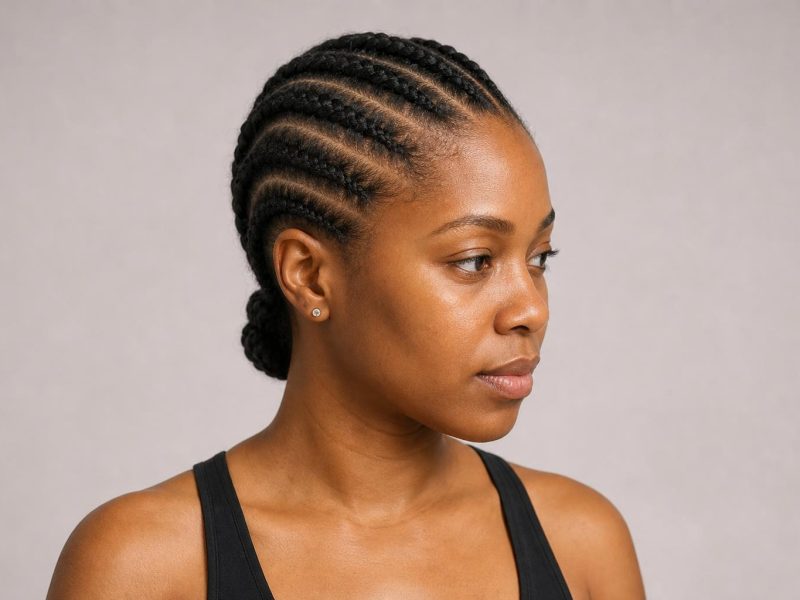
17. Six Cornrows Straight Back
Six wide rows braided flat to the nape is the classic school-week style, taking about forty-five minutes and holding a solid week. The width matters: wider rows spread tension across more scalp, which is why chunky beats fine for a child. Our guide to all back cornrow layouts by row count covers how many rows a given density can carry.
18. Cornrows into a Low Bun
Gather the finished rows into a low bun at the nape and pin with satin-covered pins to keep every end enclosed. Position the bun low rather than high, since a high gather pulls the front rows in the opposite direction to the braid.
19. Flat Twists in a Zigzag Pattern
Flat twists use two strands where a cornrow uses three, so they go in faster and sit with noticeably less tension, though they loosen a few days sooner. A zigzag parting hides the loosening better than straight rows do. Choose this when a child finds cornrows uncomfortable.
20. Chunky Two-Strand Twists All Over
Dense 4c hair holds chunky twists for a full week without frizzing, while finer textures see them unravel by day four. Twenty to thirty twists is the usual count, and the whole head takes about an hour. They also double as an overnight set whenever you want the twist-out.
21. Halo Braid Around the Head
A single braid running around the head keeps all the length off the neck and shoulders, which helps in hot weather and during sports seasons. It survives a week if wrapped at night and needs no midweek work.
22. Cornrow Design with Beads
When booking a patterned design, tell the braider the row count, the pattern direction, and that you want no braiding at the edges, in that order. Ask what the design costs in extra time before agreeing, since a pattern can double a plain install without changing the wear time at all.
23. Mini Twists on Shorter Hair
Small two-strand twists work from about two inches and hold their shape for a week or more, which makes them the most practical protective option for a shorter length. They take two hours to install and about forty minutes to take down. Keep them thick enough that each twist holds together on its own.
24. African Hair Threading
Threading wraps sections tightly in cotton thread rather than braiding them, stretching the hair with no heat at all and no tension on the follicle. It is a traditional West African method that has largely fallen out of use in favor of blow-drying, and it stretches 4c hair more effectively than a dryer does. Leave it in overnight for a stretch, or wear it for a week as the style itself.
Two-Week and Longer Installs
Long installs buy the most time and carry the most risk, because the same tension sits on the same follicles for weeks. They earn their place when a family is genuinely short on styling time, and they stop earning it the moment they are worn too long. Four weeks is the hard limit regardless of how good the braids still look.
25. Knotless Box Braids, Shoulder Length
Ask specifically for knotless rather than standard box braids, and say it at booking rather than in the chair, since it changes the technique and the time quoted. Knotless starts with the child’s own hair and feeds the extension in gradually, so there is no knot pulling at the root. Our breakdown of medium knotless braid sizing covers how thickness affects both weight and wear time.
26. Small Cornrows with Feed-In Extensions
Feeding extension hair in from an inch behind the hairline adds length without anchoring weight at the most fragile point on the head. The install runs two to three hours and holds three weeks. Say feed in from an inch back, nothing at the edge.
27. Senegalese Twists
Twists differ from box braids in using two strands instead of three, which gives a smoother rope-like finish and, more usefully, a faster and gentler takedown. They frizz sooner than braids, typically looking undone around week two rather than week three.
28. Passion Twists
Passion twists use pre-curled water-wave hair, so the texture reads closer to natural curl and the overall weight is lighter than Senegalese hair of the same length. That lightness makes them a better fit for finer density. Expect about two weeks before the curl pattern flattens.
29. Stitch Braid Design
Each stitch is pulled flat and tight to create the ridged, ribbon-like look, which photographs sharply but sits under noticeably more tension than a regular cornrow. Reserve stitch work for older children who can tell you clearly if it hurts, and see our stitch braid styles and what to ask for before booking one.
30. Crochet Braids for Low Manipulation
Crochet installs loop pre-made hair through a cornrow base, so the natural hair underneath is braided once and then untouched for the whole wear. Takedown is the fastest of any long install, usually under thirty minutes. Wash the cornrow base underneath weekly with a diluted shampoo in a bottle.
What Each Style Family Actually Costs
The numbers below are the ones worth comparing before choosing anything, because a style that saves twenty minutes a morning but takes four hours to install only pays for itself if it lasts. Tension level is the column most lists leave out, and it is the one that matters most for a child whose hairline is still developing.
| Style Family | Install Time | Wear Time | Tension Level |
|---|---|---|---|
| Puffs and ponytails | 2 to 5 minutes | 1 day | Low, but daily repetition adds up at the gather point |
| Twist-outs and braid-outs | 30 to 60 minutes the night before | 2 to 3 days | Very low |
| Cornrows, no extensions | 45 to 90 minutes | 1 week | Moderate; drops as rows get wider |
| Two-strand twists, no extensions | 1 to 2 hours | 1 to 2 weeks | Low |
| Knotless braids and twists | 3 to 5 hours | 3 weeks maximum | Moderate; rises sharply with extension weight |
| Crochet installs | 2 to 3 hours | 2 to 3 weeks | Low once installed; all tension is in the base rows |
Stylist tip: Judge an install by how the scalp looks the next morning, not by how it feels in the chair. Small white bumps along a parting mean the braid was too tight, and they appear within twelve hours. That is the point to take the front rows out, well before soreness or shedding shows up.
The Night Routine That Decides Everything
Almost every style on this list lives or dies on what happens at bedtime, and the routine is short. Cover the hair in satin, either a bonnet, a scarf, or a pillowcase, every single night. Cotton wicks moisture straight out of the hair and creates the friction that turns a clean twist-out into a frizzy one by day two.
For a set style like a twist-out, pineapple the hair by gathering it loosely at the very top of the head with a satin scrunchie before the bonnet goes on, which keeps the curl pattern from being crushed flat. For braided styles, wrap rather than gather. On a moisture night, apply a leave-in to damp hair and seal with a light oil, and keep the product routine for curly and coily hair to two or three products rather than a long layered stack, which weighs down a child’s finer strands.
Tension Limits Worth Holding To
A child’s hairline takes years to establish, and edges lost to repeated tension in childhood often do not come back. Three rules cover most of the risk. First, a style should never sting or produce bumps; discomfort on day one is a signal to loosen, not something to wait out. Second, no style stays in past four weeks, however good it still looks, because matting at the roots costs more length at takedown than the style ever saved.
Third, give the scalp at least a week of loose, low-tension styling between back-to-back installs, and rotate the direction of partings and gather points so the same follicles are not always pulled the same way. Also worth saying plainly: listen when a child says it hurts. They are describing the exact sensation that precedes traction damage, and no style is worth overriding it.
Stylist tip: Book braiding appointments in the morning and feed the child first. Nearly every install that ends badly ends badly because it ran into hour four with a tired, hungry child, and a braider working against a squirming client braids tighter, not looser. Two shorter sessions beat one long one for anyone under about eight.
What to Tell a Braider or Stylist
Give specifications in a fixed order and very little gets lost: style name, size or row count, length if extensions are involved, and how the ends finish. A complete booking sounds like medium knotless box braids, shoulder length, no knots at the root, ends sealed rather than curled. Ask for the price and the time by that description rather than by a photo.
Add one instruction before work begins: please do not braid the edges in, and please stop if she says it is too tight. Braiders hear this constantly and it is not read as a complaint. For younger children specifically, our parent guide to kids hair appointments covers timing, seating, and what to bring, and the range of options narrows usefully once you have seen braided styles for Black girls by age.
FAQ
How Often Should a Black Girl’s Hair Be Washed?
Once a week to once every two weeks suits most 4-type hair, since coily textures dry out faster than they get oily. Wash more often during sports seasons or hot weather, when sweat accumulates at the scalp. In a long protective style, wash the scalp weekly with diluted shampoo in an applicator bottle rather than taking the style down.
What Is the Easiest Style for a School Morning?
A high puff on hair that was twisted or banded the night before, done in under three minutes with a satin scrunchie. Everything fast depends on the night before rather than the morning itself. If mornings are consistently rushed, move to a week-long cornrow or twist style and stop styling daily altogether.
Are Braids with Extensions Safe for a Child?
They can be, provided the extension weight is light, the braids are not small, the install is knotless, and the style comes out at three weeks. Weight is the factor people underestimate, since a child’s follicles are supporting hair that may weigh more than their own. Skip extensions entirely on a child under about six or on anyone with thinning edges.
How Do I Stop Twist-Outs from Frizzing by Day Two?
Make sure the twists were bone dry before unraveling, which is the cause about half the time, then pineapple the hair under a satin bonnet each night. Re-twist only the front four or five sections before bed rather than the whole head, since the front is what shows and what frizzes first. Avoid touching the style during the day.
What Is the Difference Between Twists and Braids for Wear Time?
Braids use three strands and hold roughly a week longer than twists of the same size, because the extra strand locks the section more securely. Twists install faster and take down far faster with much less breakage. For a child, twists are usually the better trade despite the shorter wear.
Can Protective Styles Make Hair Grow Faster?
They cannot change the growth rate, which happens at the follicle, but they do reduce the daily breakage that stops length from showing. That is why hair often seems longer after a few months of protective styling. The benefit disappears entirely if the style is too tight or worn too long.
How Should Hair Be Prepared Before a Braiding Appointment?
Wash, deep condition, detangle fully, and stretch the hair, then arrive with it completely dry. Braiding damp hair traps moisture at the scalp for days and produces a sour smell within a week. Stretching with bands or threading beforehand also cuts the install time noticeably, since the braider is not fighting shrinkage.
The best black girl hairstyles are the ones that match the time you actually have on a given week rather than the ones that photograph best. Pick a band first, five minutes or three days or a full week, then choose within it, and hold the tension rules whatever you pick. A loose style worn happily beats a tight one that costs edges.
Hair results vary based on your natural hair type, texture, density, and condition. Always consult with a licensed hairstylist before making significant changes, especially with chemical treatments or dramatic length changes. Photos may show styled results that require professional tools and products to replicate.
1 response