50 stylist-approved haircuts for women over 50 with honest guidance on what works for your hair texture, face shape, and daily routine.
Haircuts for women over 50 work best when they match how your hair behaves now, not how it behaved ten years ago. Texture shifts, density changes, and gray transition all affect which cuts hold their shape and which ones fight you every morning. This collection covers 50 variations — from cropped pixies to shoulder-length layers — each with notes on who it flatters and what the maintenance reality looks like.
You’ll find styles grouped by length: short pixies and crops, bobs and lobs, medium-layered cuts, longer styles, and textured shags. After the gallery, there’s a face-shape compatibility guide and specific salon language to help you walk in with confidence.
Short Pixies and Crops
Short cuts are the most requested category for women over 50. They’re fast to style, they showcase facial features, and they work with thinning hair. The key is choosing the right short cut for your texture and face shape, because a pixie that’s wrong for your hair is harder to fix than a longer mistake.
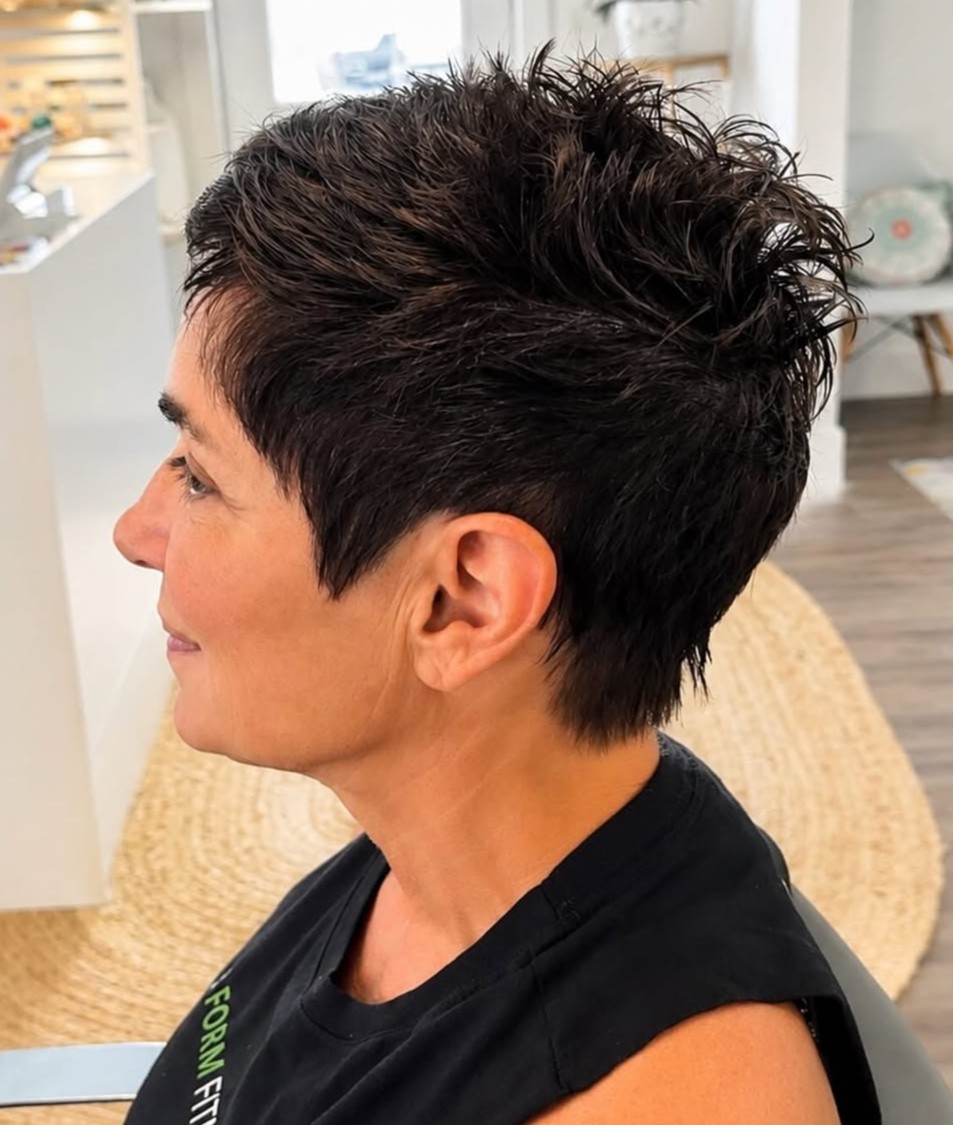
1. Classic Tapered Pixie
Graduated sides that taper into the neckline keep this pixie polished without looking severe, and the slightly longer top gives you something to work with when styling. Fine hair looks fuller here because the close sides create contrast with the textured crown.
2. Textured Pixie with Side-Swept Bangs
Side-swept bangs soften the forehead and draw attention to the eyes, making this version especially good for rounder or wider face shapes. The bangs should skim the brow to create diagonal movement across the face.
3. Cropped Pixie for Thick Hair
Thick hair needs internal weight removal to keep a pixie from ballooning at the sides. Ask your stylist to use thinning shears or razor texturizing through the crown and temples. Expect trims every 4–5 weeks; thick pixies lose their shape faster than fine-hair versions.
4. Soft Feminine Pixie with Longer Top
If a buzzed-short pixie feels too bold, this version keeps 2–3 inches on top for softness while the sides stay cropped. Heart-shaped and oval faces look particularly balanced with this silhouette.
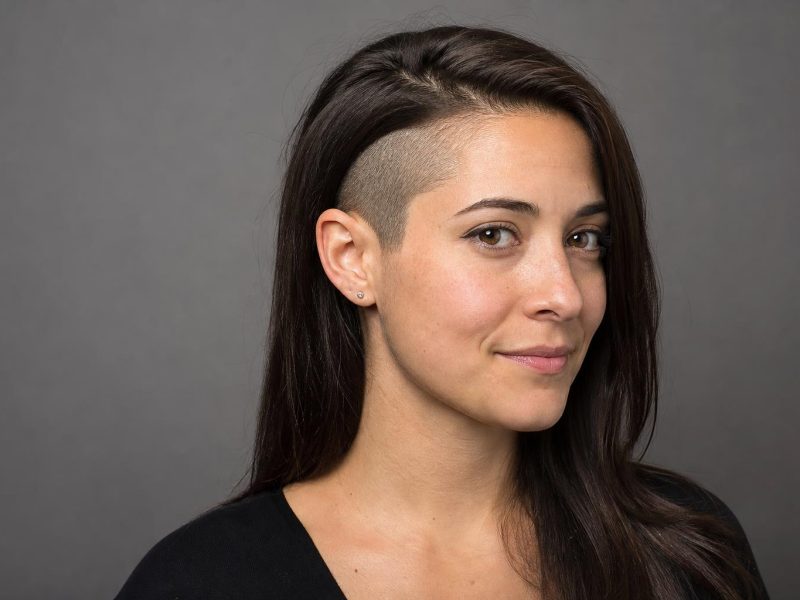
5. Pixie with Undercut Detail
A hidden undercut at the nape removes bulk without changing the visible silhouette. Your stylist buzzes the lower two inches beneath the top layers. The undercut grows out cleanly over 6–8 weeks, so it’s lower maintenance than it sounds.
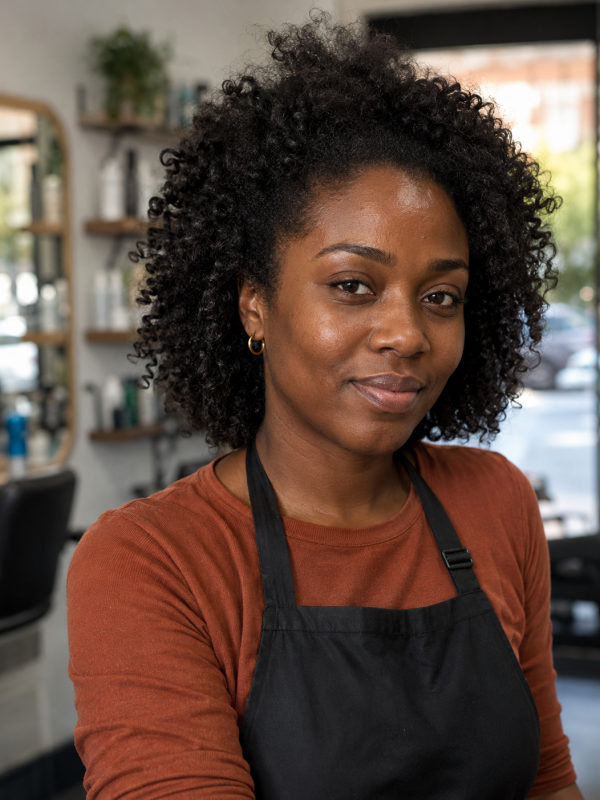
6. Curly Pixie for Natural Texture
Curly and coily textures need a pixie cut dry by a stylist who understands shrinkage. Wet cutting leaves you shorter than you wanted when curls spring back. Leave enough length on top (3–4 inches stretched) for curls to form their natural pattern.
7. Layered Crop with Volume at the Crown
Strategic layering at the crown gives lift exactly where women over 50 typically lose it first. The longest layers sit at 2–3 inches and graduate shorter toward the nape, creating a rounded shape that works well on oval and oblong faces.
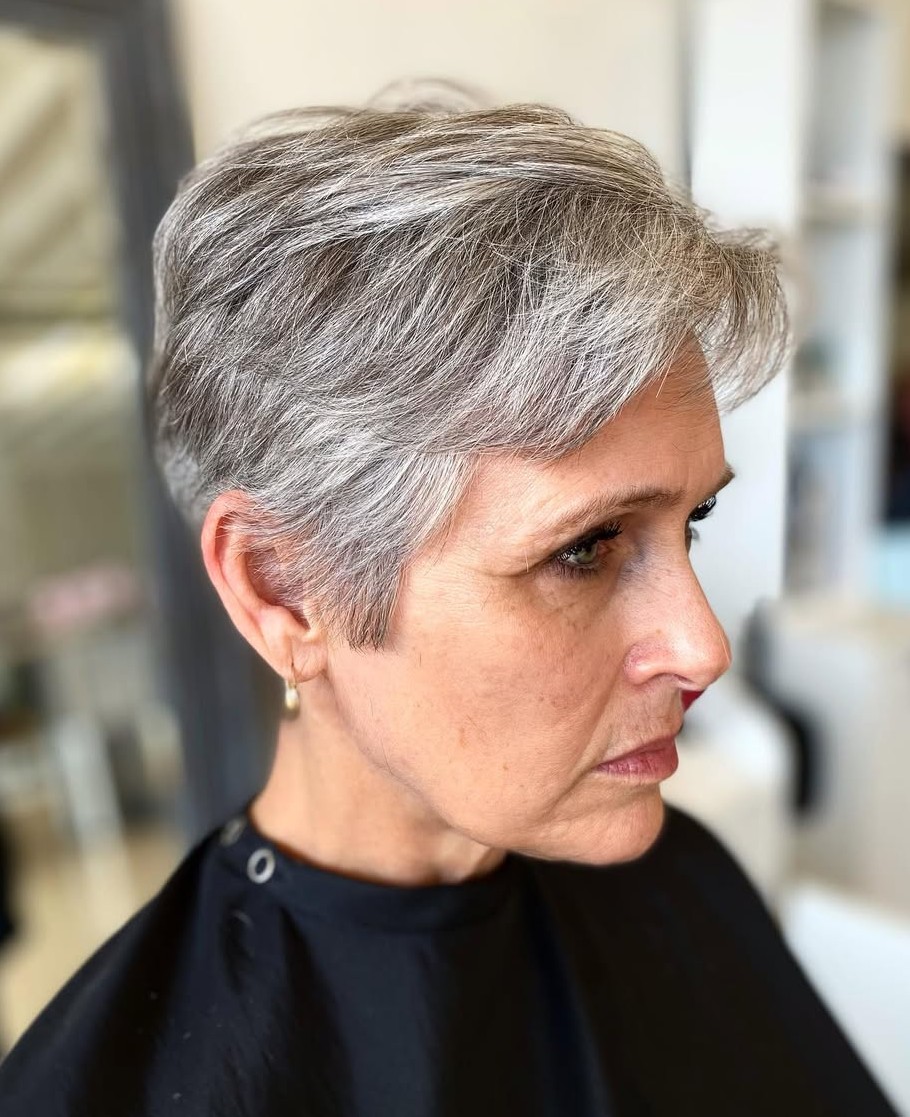
8. Disconnected Pixie with Long Fringe
The contrast between the cropped back and ears and the longer swooping fringe creates visual drama without a lot of daily effort. Square faces benefit from the diagonal line the fringe creates across the forehead.
9. Spiky Textured Crop
Point-cut ends and a matte-finish styling paste give this crop its edge. Rub a pea-sized amount between your palms and pinch the ends upward for separation. Salt-and-pepper hair looks particularly striking because the texture highlights the natural contrast between dark and silver strands.
10. Ear-Length French Crop
This French-inspired crop lands right at ear level with a short, straight-across micro bang. On straight-to-slightly-wavy hair, it practically styles itself with just a flat iron touch-up at the bangs. Not ideal for very round faces, as the horizontal fringe can add visual width.
Bob and Lob Variations
Bobs are the most versatile cut category for this age group because they work across almost every hair texture and density. The difference between a bob that takes five years off and one that ages you is usually in three details: where the length falls relative to your jaw, how the ends are finished, and which direction you part it.
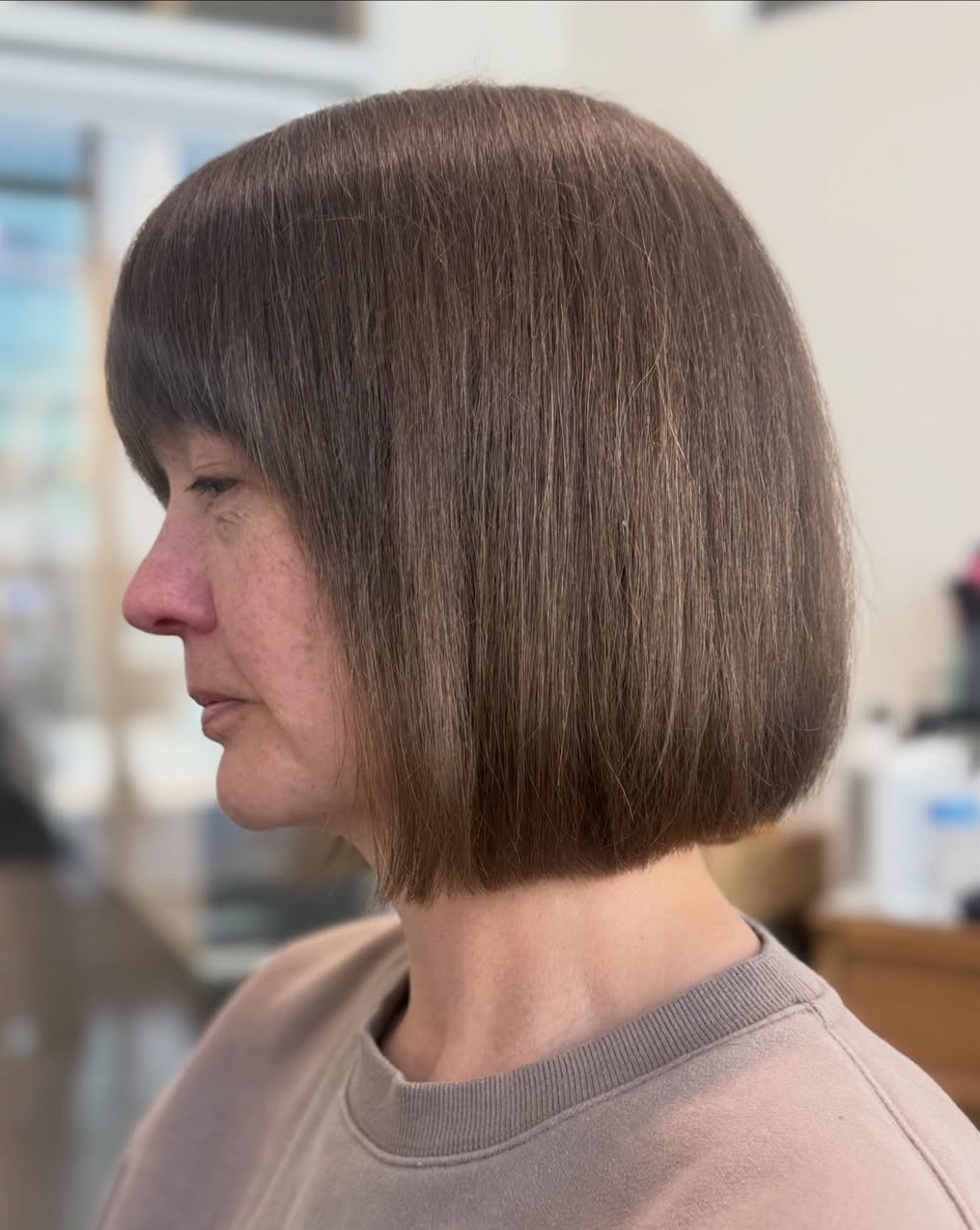
11. Chin-Length Blunt Bob
A one-length blunt cut at chin level works best on straight to slightly wavy hair with medium or better density; fine hair tends to look flat without some internal texture. Trim every 5–6 weeks to keep the bottom edge clean.
12. Angled Bob with Deep Side Part
Shorter in the back, gradually longer toward the front, this angle creates a natural slimming line from jaw to collarbone. A deep side part at a 70/30 ratio adds the asymmetry that round and square faces need.
13. Stacked Bob for Fine Hair
Graduated layering at the nape builds a rounded, lifted shape exactly where fine hair falls flattest. The front is longer at jaw level for face framing while the back gets volume from the stacking, not from product.
14. Textured Jaw-Length Bob
Point cutting at the perimeter creates a lived-in, piecey finish that looks relaxed without looking messy. Wavy and gray hair both respond well because the texture prevents the ends from looking heavy. Scrunch a salt spray into damp hair and air-dry.
15. French Bob with Bangs
A true French bob hits right at or slightly above the jawline with a full, straight-across fringe grazing the eyebrows. Oblong faces get the most balance from this cut because the bangs shorten the visual length while the bob widens it at the jaw.
16. Layered Bob for Thick Hair
Thick hair in a bob without layering tends to puff outward like a helmet. Internal layers remove weight while keeping the outside line smooth. Have your stylist use thinning shears or slide cutting through the interior.
17. Inverted Bob
The dramatic angle from a short, stacked back to longer front pieces draws the eye forward, elongating the neck and sharpening the jawline. Bring a side-view reference photo so you and your stylist agree on how steep the angle should be.
18. Lob with Curtain Bangs
A lob landing at the collarbone gives you enough length to pull back, and curtain bangs that split around the face soften the forehead without the commitment of a full fringe. The bangs need a separate trim every 3–4 weeks because they grow into your eyes faster.
19. A-Line Bob
Slightly shorter at the back with clean, gradually lengthening sides — more subtle than a full inverted bob but still creating forward movement. The A-line grows out gracefully, so it’s good for 7–8-week stretches between trims.
20. Wavy Tousled Bob
If your hair has natural wave, leaning into it with a slightly choppy jaw-length bob means almost zero styling effort. The texture hides grow-out better than straight bob styles. Diffuse on low heat or wrap sections around a 1.25-inch iron and shake loose.
21. Asymmetrical Bob
One side sits about an inch longer than the other, creating a purposeful unevenness that feels modern without being extreme. The asymmetry naturally draws the eye to one side of the face, which helps balance uneven features or a strong jawline.
22. Graduated Bob with Face-Framing Layers
Face-framing pieces starting at cheekbone height redirect attention to the center of the face, softening the temples and jawline simultaneously. On copper and auburn shades, these shorter pieces catch light differently from the base length, adding dimension without a separate color service.
Medium-Length Layered Styles
Medium-length cuts are the sweet spot for women who want versatility without the weight that drags fine or thinning hair down. The right layering approach makes all the difference: too many layers thin out the ends, too few make the cut look shapeless.
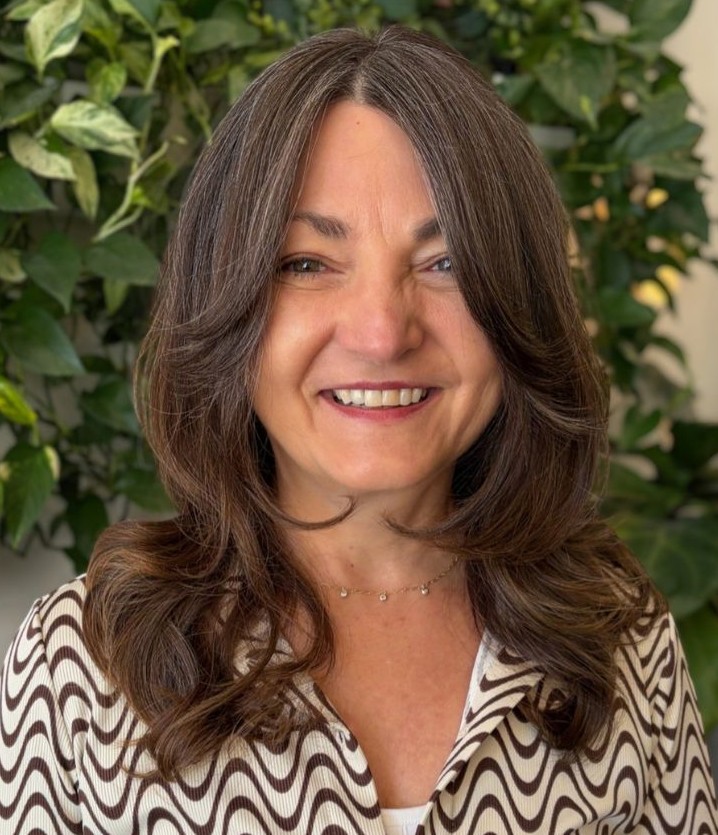
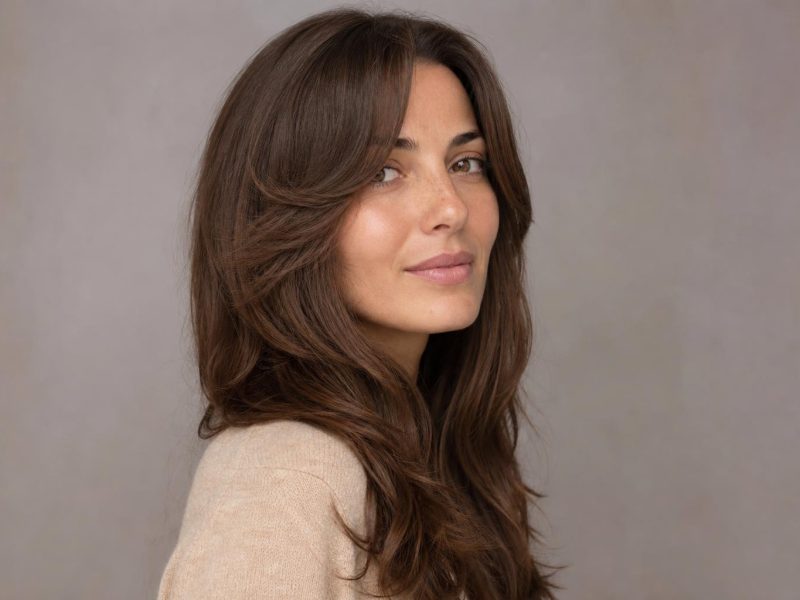
23. Classic Long Layers at Shoulder Length
Long layers starting 3–4 inches from the ends give movement without sacrificing density at the bottom. Blow-dry with a large round brush, wrapping ends under for a polished finish that lasts with minimal daily touch-ups.
24. Feathered Medium Cut
Feathered ends, created with razor cutting or deep point cutting, give a wispy, airy finish that works in favor of fine hair by creating the illusion of more movement. If your hair is very coarse, skip this one, as razor-cut ends can frizz on thicker textures.
25. Layered Collarbone Cut with Side Part
Hitting right at the collarbone, this length is long enough to tie back but short enough to hold volume at the roots. A side part adds lift at the crown on the heavier side and creates a flattering diagonal across the face.
26. Medium Shag with Curtain Bangs
A modern shag with layers starting at cheekbone level and graduating down gives thick hair the movement it needs to avoid looking blocky. On gray or silver hair, the layering separates lighter and darker tones for natural-looking dimension.
27. Face-Framing Layers on Medium Hair
Instead of layering through the entire head, this approach concentrates shorter pieces around the face (from temple to jaw) while the back stays one length for density. Heart-shaped faces especially benefit from the added width at the jaw.
28. Blunt Medium Cut with Side-Swept Bangs
A one-length blunt cut at shoulder level paired with side-swept bangs gives a clean foundation with enough softness at the forehead to avoid looking harsh. The blunt ends read as thick and healthy. Trim every 6 weeks to prevent scraggly ends.
29. Textured Medium Cut for Curly Hair
Curly hair at medium length needs shape-specific cutting. A stylist trained in curl-by-curl cutting shapes each curl individually to account for varying shrinkage across your head. The result is defined, bouncy curls that frame the face evenly, not a triangle shape.
30. Layered Midi with Flipped Ends
Ends that flip outward at shoulder level give a playful energy that works against the “my hair just sits there” problem. Use a flat iron to bend the last inch outward — the flip adds width at the shoulders, which balances narrow or long face shapes.
31. Thinned-Out Layered Cut for Density
If your hair is still very thick and dense past 50, you need profound internal thinning to keep medium-length cuts from looking bulky. Ask your stylist for channel cutting or deep thinning shears through the mid-shaft. The outside shape remains full while the interior lets air through.
32. Wispy Layered Bob for Transitioning Gray
Growing out color into natural gray is easier with a medium layered cut because the layers blend the demarcation line where dyed ends meet natural roots. A color-blending gloss every 8–10 weeks can smooth the transition until the old color is fully grown out.
33. Italian Bob
Longer than a French bob but shorter than a lob, the Italian bob falls between jaw and collarbone with voluminous, outward-swept layers and a center part. Blow-dry upside down first, then flip and shape with a round brush. This style works beautifully on medium-density hair and oval faces.
34. Choppy Medium Layers
Razor-cut choppy layers look edgier than traditional soft layers and give fine-to-medium hair a sense of thickness through texture. Air-dry with a texturizing spray and scrunch for the most effortless result.
Long and Shoulder-Length Styles
Keeping longer hair past 50 works well as long as the cut has structure. Length without layers tends to pull the face downward, but the right layering keeps long hair looking intentional. The number one rule: your ends must be healthy because thin, wispy ends on long hair age the overall look faster than almost anything else.
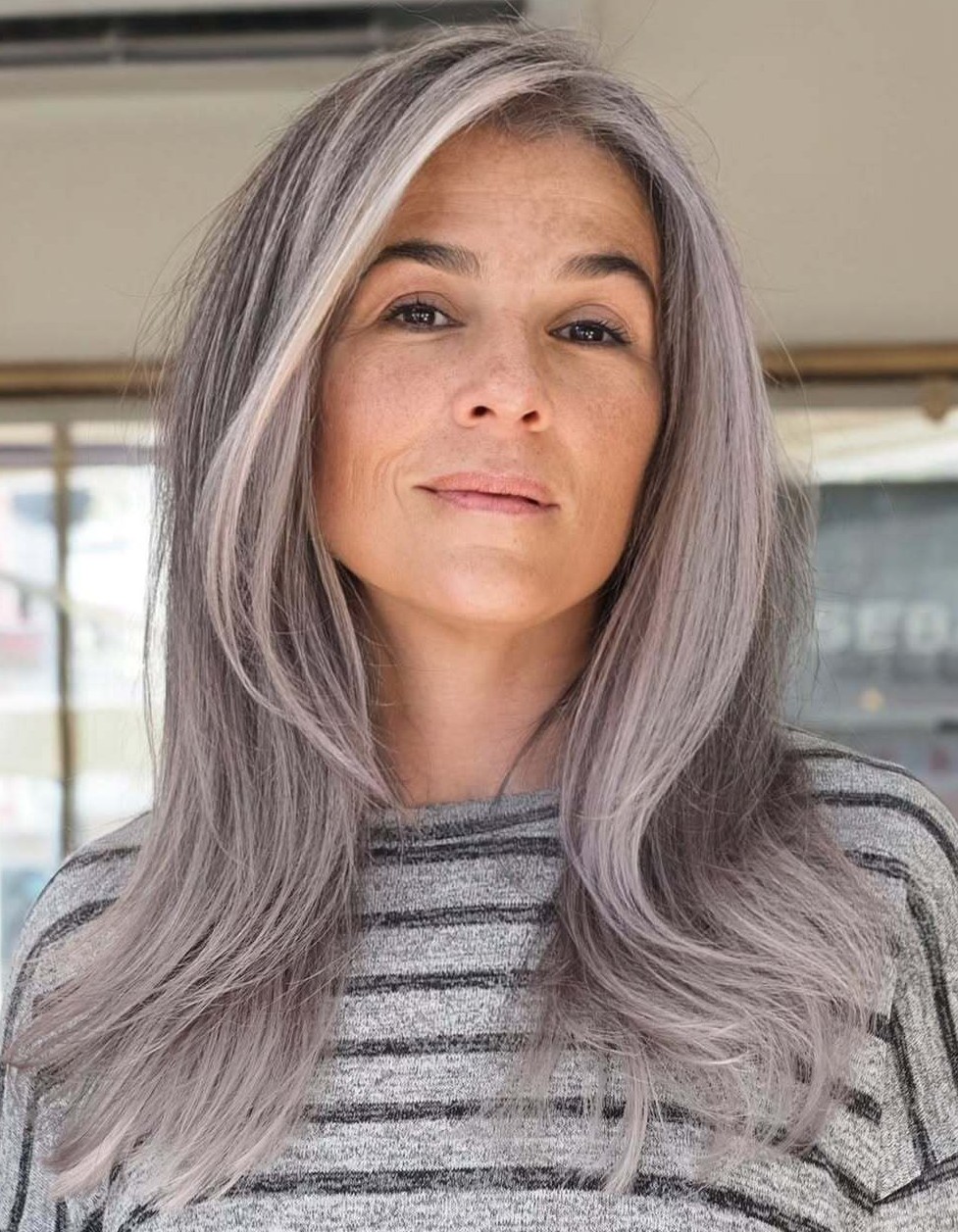
35. Long Layers with Face-Framing Pieces
Layers starting at chin level and graduating to the ends give long hair the movement it needs to avoid looking heavy. The face-framing pieces lift the cut visually and create a natural frame around the cheekbones and jaw.
36. Soft Waves on Long Hair
Loose, large-barrel waves give long hair body and movement without tight curls that can read as dated. Use a 1.5-inch curling iron and leave the ends straight for a modern finish — the waves create the illusion of more volume.
37. Blunt Long Cut with Middle Part
A one-length blunt cut on long hair communicates polished, well-maintained hair. Demands regular trims every 6–8 weeks. Best on straight to slightly wavy hair with good density; fine hair can struggle to fill out the weight at the bottom.
38. Long Butterfly Cut
The butterfly cut places the shortest layers at chin to cheekbone level, creating a dramatic frame around the face while the back length stays long. Tell your stylist you want the shortest layer at cheekbone level and the longest to stay within 2 inches of the overall length.
39. Layered Long Hair with Side Bangs
Side bangs on long layered hair offer forehead coverage without the maintenance of a full fringe. They blend naturally into the first layer when pushed back, so you’re never stuck with bangs on days you don’t want them.
40. Long Textured Cut for Wavy Hair
Wavy hair at long lengths benefits from texturizing that removes weight from the interior while keeping the outside shape full. Slide cutting through the mid-shaft gives each wave room to move independently. Air-dry with a wave-enhancing cream for a beachy look.
41. Long V-Cut
Instead of a straight bottom line, the V-cut tapers to a point at center back, removing weight from the sides while keeping maximum length. The shape gives straight hair movement it wouldn’t have with a blunt cut.
42. Sleek Shoulder-Length Cut
A clean, minimal shoulder-length cut with zero layering gives straight hair a sophisticated, editorial look. Flat-iron for a glass-smooth finish, or let it air-dry if your texture is already straight. This is the definition of a wash-and-go cut.
Shags, Wolf Cuts, and Textured Styles
Shags and textured cuts are having a major moment in 2026, and they work surprisingly well on women over 50. The heavy layering adds volume at the crown, the choppy ends create movement, and the overall vibe reads as effortless. The trade-off: these cuts need texturizing product daily.
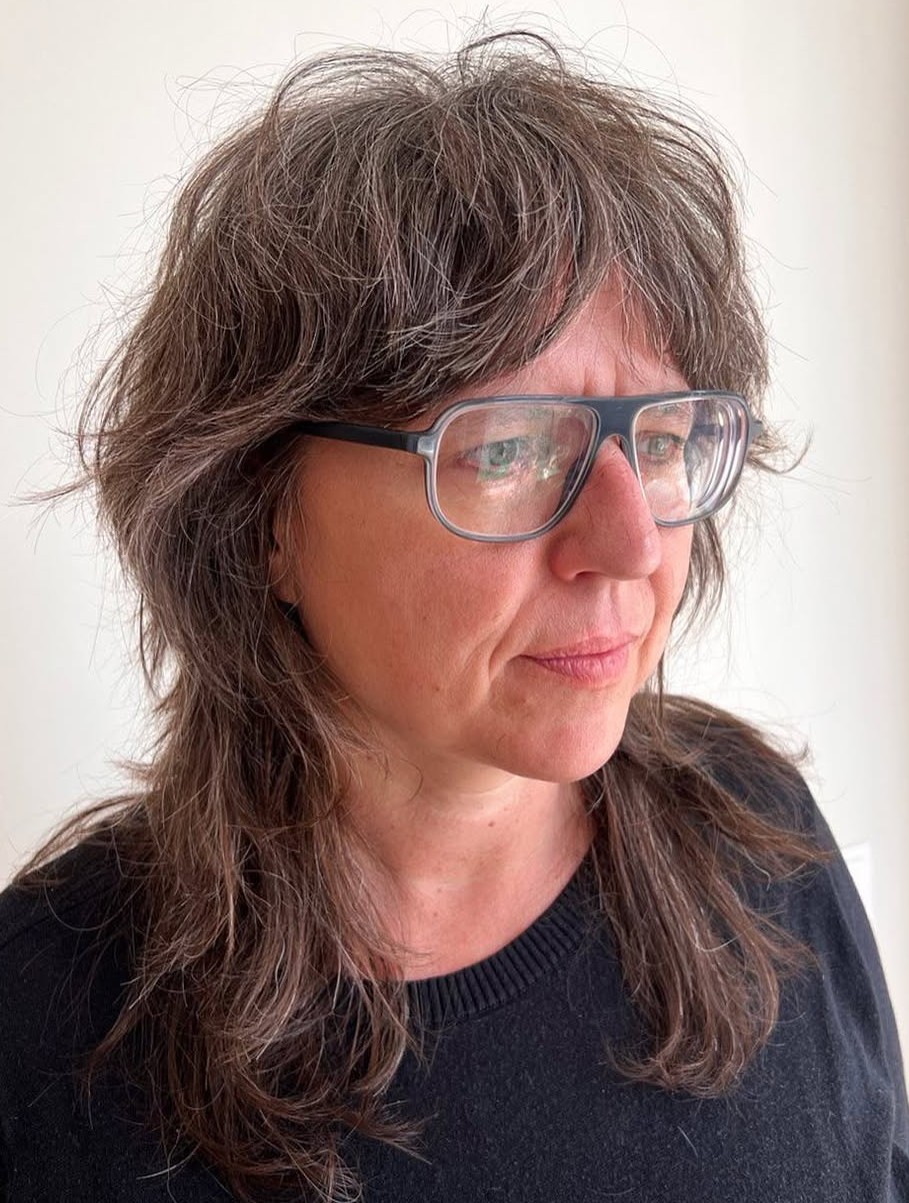
43. Modern Shag for Medium Hair
Softer than the ’70s original, this shag keeps heavy layering at the crown for volume but blends more gradually toward the ends. On medium-density hair, the layers create natural body without needing a blow-dryer every morning.
44. Short Shag for Fine Hair
Fine hair gets its best volume boost from a short shag because the closely spaced layers create lift through structural support, not just product. Apply a volumizing powder at the roots and shake, and the cut does the rest.
45. Wolf Cut
More contrast between the short top layers and the long bottom length than a standard shag — that sharp disconnection is what makes it a wolf cut. Best on medium-to-thick wavy hair; very fine hair can’t support the disconnected shape well.
46. Layered Shaggy Lob
Combining shag layering with lob length gives you volume benefits of short layers without actually going short. The longest pieces still hit the collarbone, so there’s enough length for a low ponytail.
47. Choppy Pixie-Bob
Longer than a pixie, shorter than a bob, the pixie-bob sits right at ear-to-jaw length with heavy texture throughout. Salt-and-pepper color looks dynamic in this cut because the razored texture creates shadows and highlights naturally.
48. Textured Crop with Micro Bangs
Micro bangs paired with a textured crop are bold but striking. Bring a clear reference photo; the difference between micro bangs that look intentional and micro bangs that look like a mistake is about half an inch.
49. Edgy Undercut Bob
A bob with a buzzed undercut beneath the occipital bone gives you the tailored look of a classic bob on top with a shaved section underneath. Pull hair up to show it off, or wear it down for a traditional silhouette. The undercut needs buzzing every 3–4 weeks.
50. Textured Mullet-Inspired Cut
Not the ’80s hockey mullet, the modern version softens the concept with feathered sides and blended layering. On fully gray hair, this cut makes a confident, fashion-forward statement. Show your stylist a current photo reference — saying “mullet” without one risks a misunderstanding.
Choosing the Right Haircut for Your Face Shape After 50
Face shape matters more with shorter cuts because there’s less hair to compensate for proportions. Pull your hair back, stand in front of a mirror, and trace the outline of your face to identify your shape.
| Face Shape | Best Cuts | Why It Works | Avoid |
|---|---|---|---|
| Oval | Most cuts — blunt bobs, pixies, long layers | Balanced proportions suit a wide range | Very heavy bangs that hide the forehead |
| Round | Angled bobs past the jaw, side parts, layered lobs | Vertical and diagonal lines elongate | Chin-length bobs with center parts |
| Square | Layered bobs with soft face-framing, shags, side bangs | Soft layers at the jaw reduce angularity | Blunt one-length bobs at jaw level |
| Heart | Chin-length bobs, lobs with bottom volume, curtain bangs | Width at the jaw balances a narrower chin | Volume at the crown without jaw-level width |
| Oblong | French bobs with bangs, chin-length cuts, side volume | Horizontal elements shorten a long face | Very long hair with no layers |
| Diamond | Side-swept bobs, soft textured cuts, chin-length layers | Adds width at forehead and chin | Slicked-back styles exposing narrow forehead |
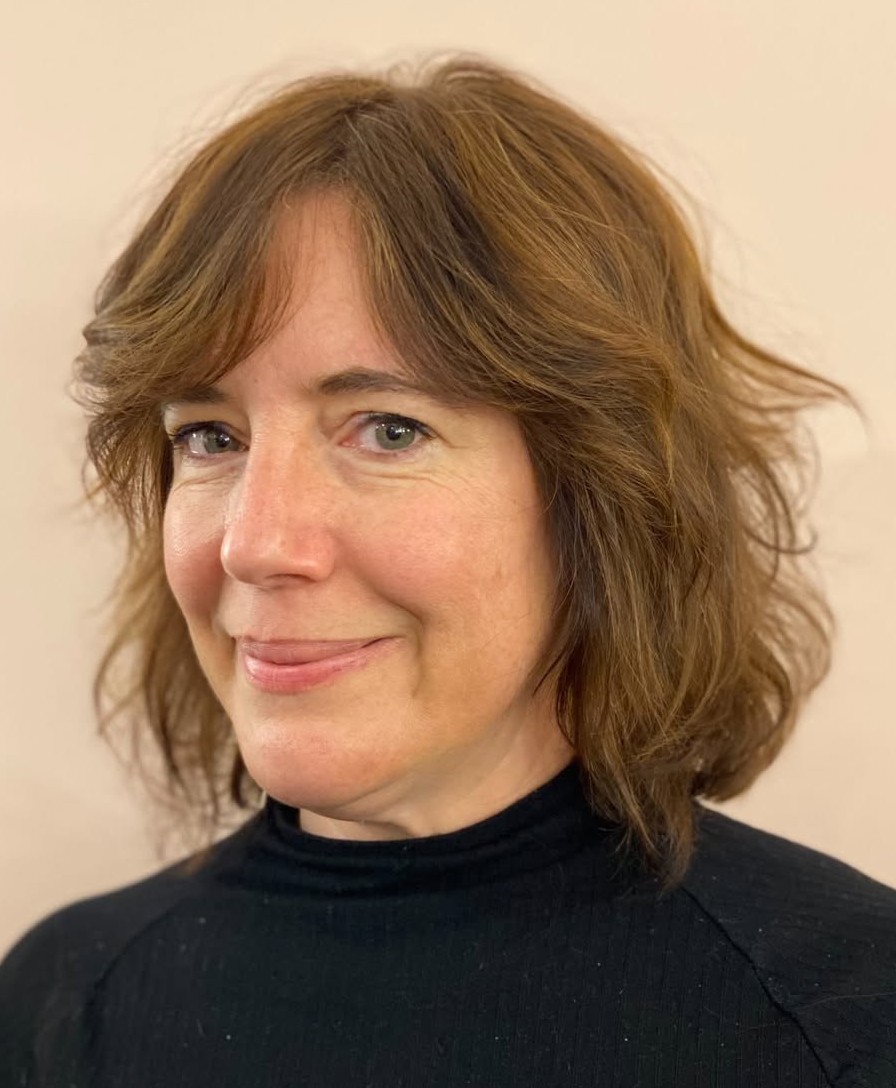
Stylist tip: Bring a front-facing selfie with your hair pulled back and ask your stylist to confirm your face shape before deciding on a cut. What you see in the mirror can be misleading. A professional assessment takes ten seconds and prevents the wrong choice.
What to Tell Your Stylist
The difference between a good salon experience and a disappointing one often comes down to communication. Bring at least two reference photos from this collection: one showing the overall shape and one showing the detail (bangs, layering, texture) that matters most to you.
Use specific language when describing what you want. Instead of “I want something shorter,” say “I want it to hit right at the jawline, with some layering starting at the cheekbones.” Instead of “make it look fuller,” say “I’d like internal layers that give volume at the crown without losing length at the bottom.”
Stylist tip: Always mention your daily styling routine and how much time you spend on your hair each morning. A cut that looks incredible with 20 minutes of blow-drying is a problem if you’re a wash-and-go person. Your stylist can adjust the cut to match your actual life.

FAQ
What is the most flattering haircut for a woman over 50?
There’s no single answer because it depends on your face shape, hair texture, and density. That said, layered bobs and textured lobs are the most universally flattering because they add movement where hair is thinning, frame the face softly, and grow out gracefully. A chin-to-jaw-length bob with subtle layers is the safest starting point.
Should women over 50 cut their hair short?
Short hair can look incredible at any age, but it’s not mandatory. The idea that women must go short after a certain age is outdated. Choose the length that works for your hair’s current texture and density. If your ends have thinned, shorter cuts look fuller, but strong density supports long styles just fine.
How often should women over 50 get haircuts?
Short cuts (pixies, crops) need trimming every 4–6 weeks. Bobs need attention every 5–7 weeks (blunt bobs sooner, layered bobs later). Medium and long layered cuts can stretch to 8–10 weeks. Bangs need a separate trim every 2–4 weeks regardless.
What haircuts make women over 50 look younger?
Cuts with movement and softness around the face tend to look the most youthful — face-framing layers, side-swept bangs, and textured ends all create visual energy. Conversely, very blunt, severe cuts with no movement can look harsher on aging skin. The goal isn’t to look 30; it’s to look like the best version of your current self.
Are bangs a good idea for women over 50?
Bangs are excellent for concealing forehead lines and bringing attention to the eyes. Curtain bangs and side-swept bangs are the most versatile because they blend into the length when you want them out of the way. Full straight-across bangs need trimming every 2–3 weeks, which is a real commitment.
How do I add volume to thinning hair over 50?
Start with the cut: stacked bobs, short shags, and layered pixies create structural volume that doesn’t depend on product. Then add a volumizing mousse to towel-dried roots before blow-drying upside down. Avoid heavy serums and oils that weigh fine hair down and use lightweight spray formulas instead.
Can women over 50 wear long hair?
Absolutely — with the right shaping. Long hair past 50 needs layers to prevent it from pulling the face down, and the ends must be healthy and trimmed regularly. Split, thin ends on long hair are the fastest way to make a style look neglected.
What’s the lowest-maintenance haircut for women over 50?
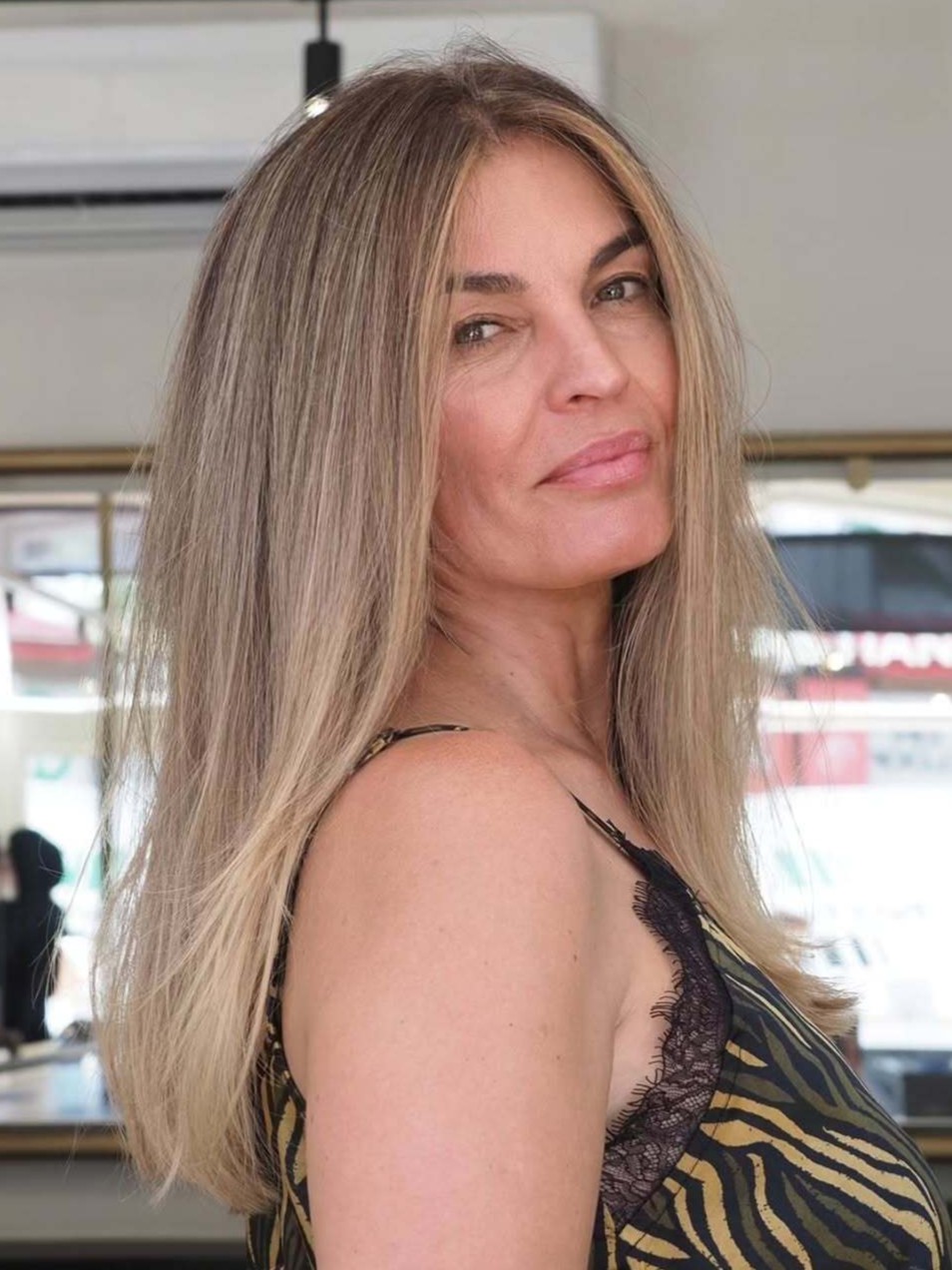
A textured bob at jaw length or a wavy layered lob at collarbone length are the two lowest-maintenance options that still look styled. Both can be air-dried, need trims every 6–8 weeks, and don’t require daily heat tools.
Finding the right haircut for women over 50 starts with understanding your hair as it is right now, not how it used to be. Pick two or three reference photos from this gallery, bring them to your next appointment, and have an honest conversation with your stylist about your texture, density, and how much time you want to spend styling each morning. The best haircuts for women over 50 are the ones that work with the hair you have and fit into the life you actually live.
Hair results vary based on your natural hair type, texture, density, and condition. Always consult with a licensed hairstylist before making significant changes, especially with chemical treatments or dramatic length changes. Photos may show styled results that require professional tools and products to replicate.