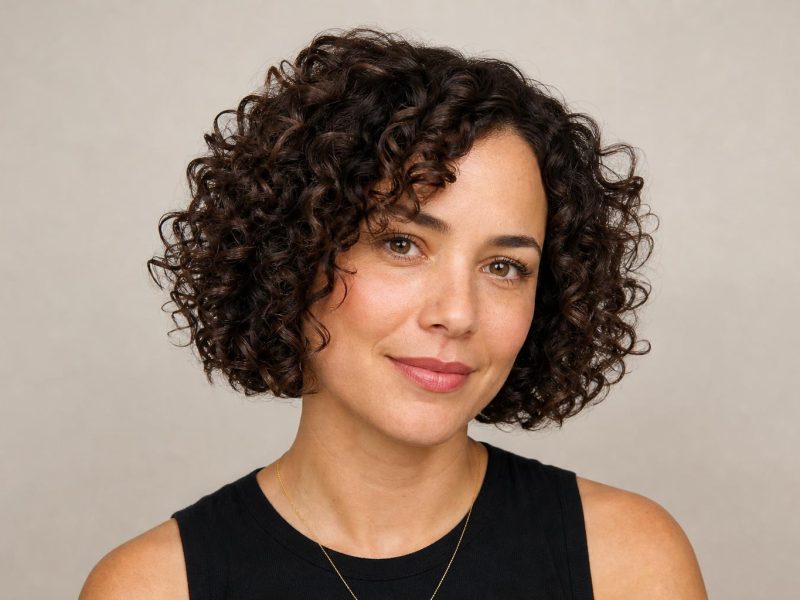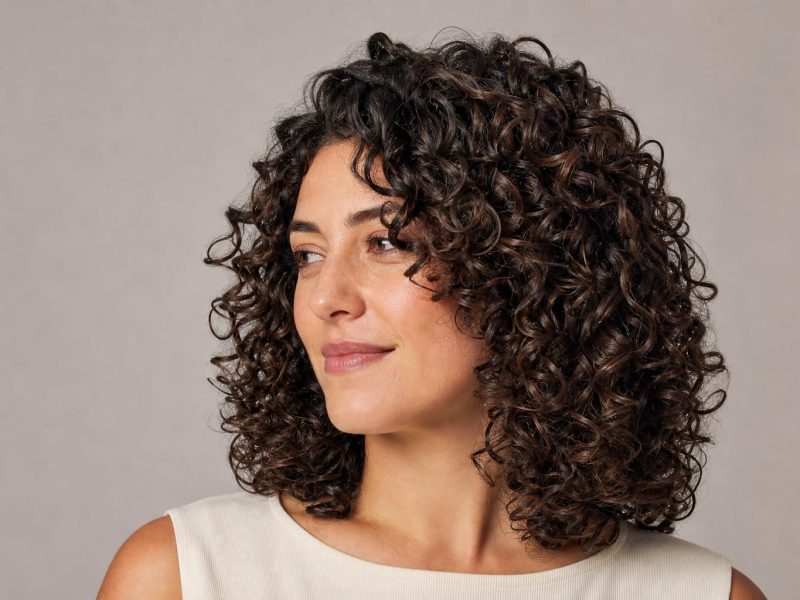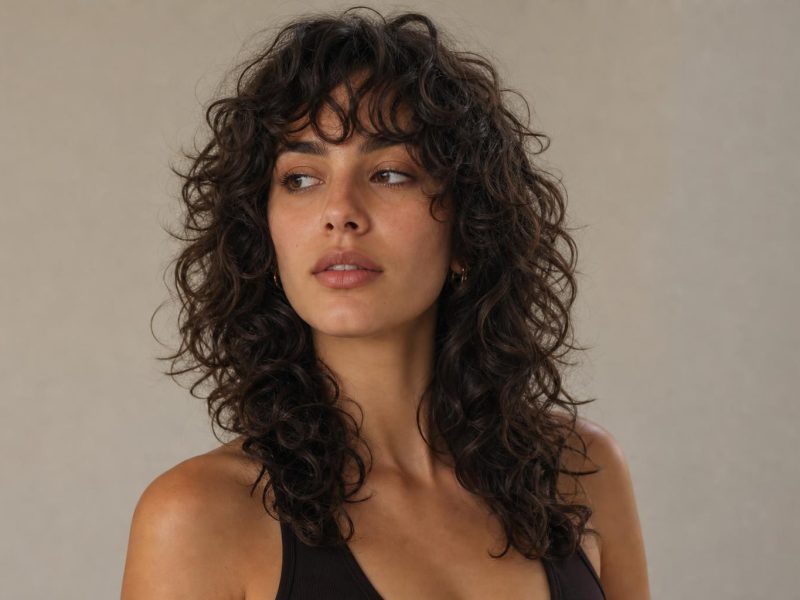

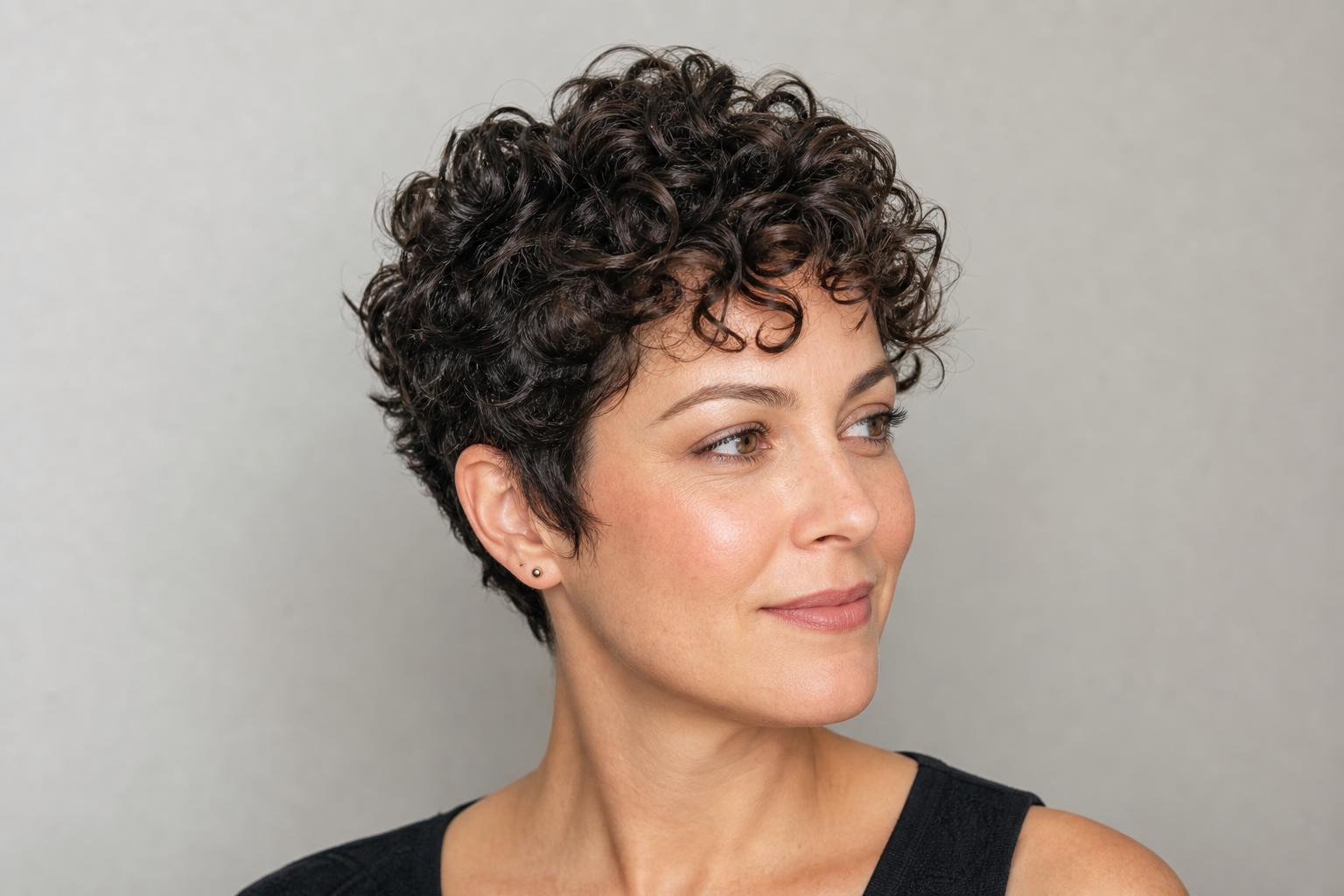
The right curly pixie depends on your curl pattern, so these 24 styles are grouped by 3A, 3B, and 3C to match how your hair actually behaves.
A curly pixie cut works best when the layers are shaped around your specific curl pattern, because a 3A loose spiral, a 3B springy ringlet, and a 3C tight corkscrew each fall differently once they dry and shrink. This collection sorts 24 curly pixie styles into those three curl types so you can see how the same short shape looks on hair like yours before you sit in the chair.
Each section covers the cut structure, who the variation suits, and how to keep it looking defined rather than flat. After the gallery you will find a face-shape guide, the exact language to give your stylist, a realistic maintenance schedule, and an honest look at when a curly pixie is the wrong call. Curl typing here follows the common 3A to 3C scale, where the number climbs as the curl gets tighter and the diameter gets smaller.
| Factor | Details |
|---|---|
| Best for | 3A to 3C curls, oval, round, heart, and square faces with the right variation |
| Maintenance | Trim every 6 to 10 weeks; 5 to 10 minutes of styling on wash days |
| Works with | Dry cutting, curl creams, light gels, diffusing, finger coiling |
| Avoid if | You want zero styling effort or plan to wear hair straight most days |
| Salon time | 45 to 75 minutes for a dry cut and shape, longer with color |
Curly Pixie Cuts for 3A Curls
3A curls form loose, open spirals about the width of a piece of sidewalk chalk, so they carry length and movement well in a short cut. A pixie on this pattern needs enough weight left on top to keep the spirals defined, since over-thinning turns loose curls into frizz. These eight variations show how far a 3A pixie can stretch, from soft and rounded to closely tapered.
1. Rounded 3A Pixie with Soft Crown Volume
Layers cut in a curved line around the crown let loose spirals stack into a rounded shape instead of falling flat on top. The result keeps two to three inches of curl up top while the sides stay shorter, which suits anyone who wants shape without a severe crop. Point cutting the ends keeps the curl clumps intact rather than blunt.

2. Side-Swept 3A Pixie with a Longer Fringe
A fringe left long enough to sweep across the forehead softens a wide forehead and draws the eye down toward the cheekbones. This variation flatters heart and round faces because the diagonal line breaks up width at the top of the face. If you like the framing here, our roundup of pixie cuts with bangs shows how fringe length changes the whole look.
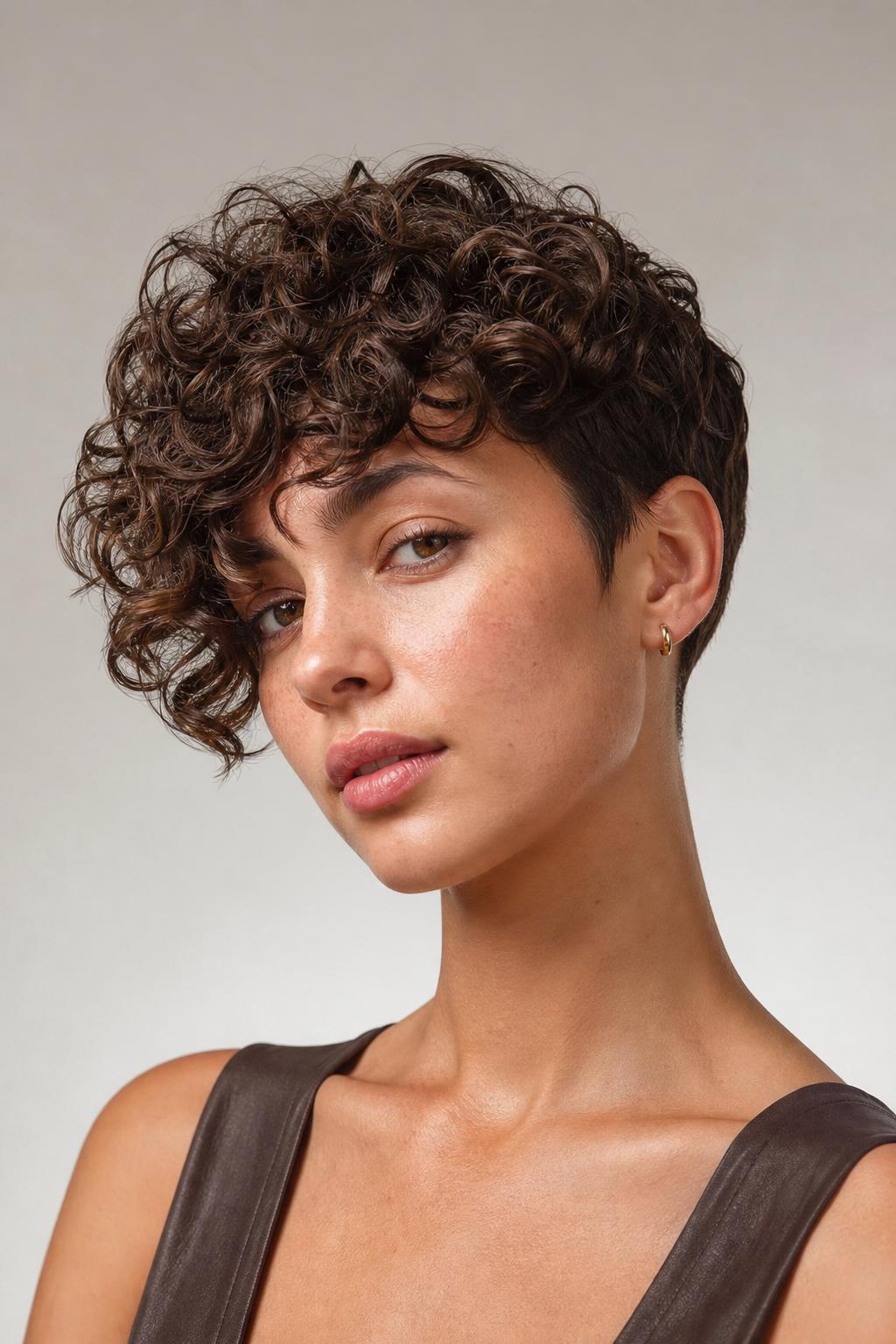
3. Tapered 3A Pixie for Fine Curly Hair
Fine 3A hair keeps its bounce best when the sides are tapered close and the top holds most of the length, concentrating the curl where it shows. A steep taper at the nape removes the wispy, stringy look that fine curls can take on when left long underneath. Keep product light here, since heavy cream drags fine spirals into limp pieces.
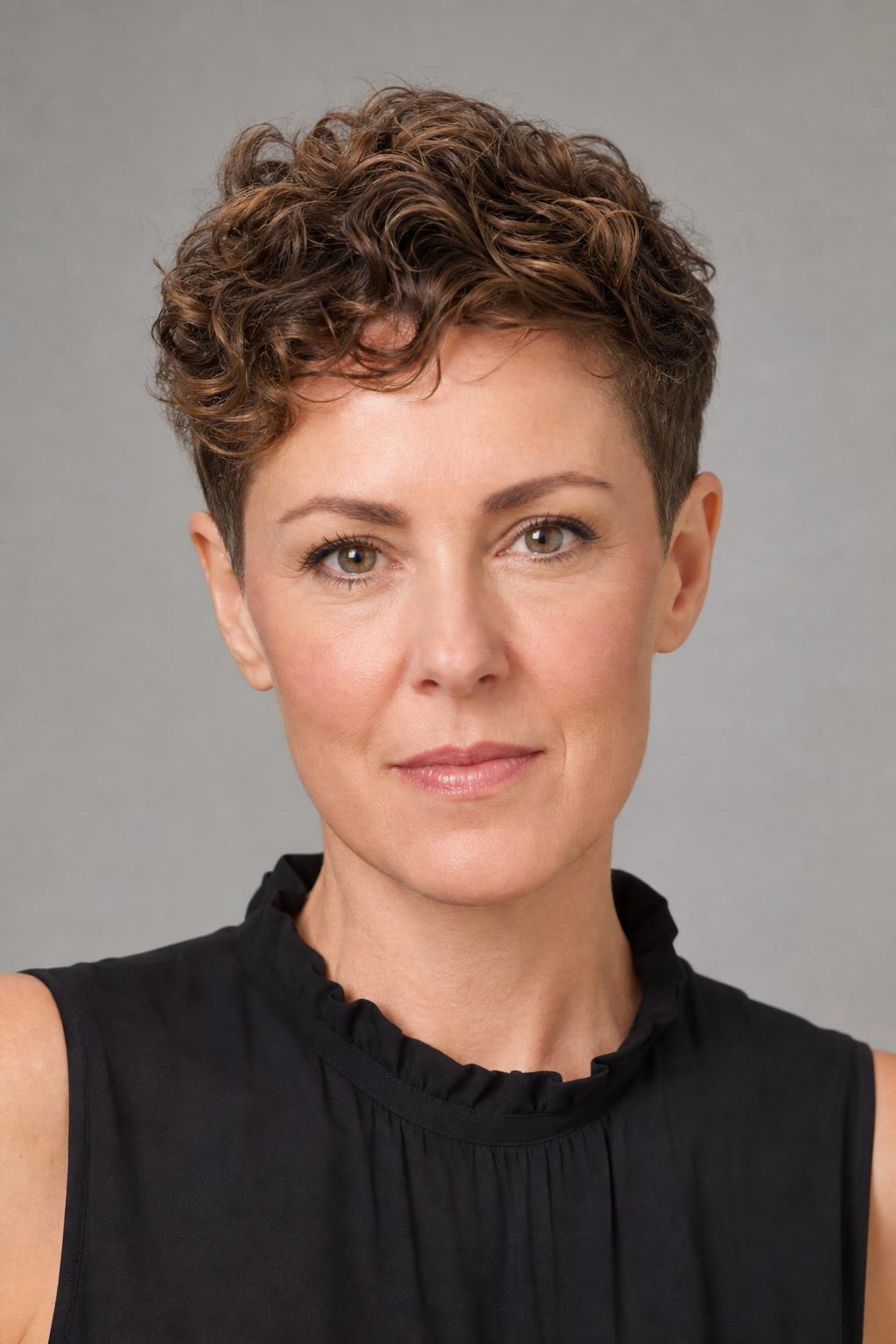
4. Air-Dried 3A Pixie with Piecey Ends
Rake a curl cream through soaking-wet hair, then let it air-dry untouched for separated, piecey ends that never look overworked. This styling approach fits a low-effort routine and a lived-in finish, and it plays well with the natural drop of a 3A spiral. Scrunch out any dried cast with your palms once the hair is fully dry.

5. Low-Maintenance 3A Pixie with a Grown-Out Nape
Cut a fraction longer through the nape and this pixie stretches to ten or twelve weeks between trims without looking shaggy. The slightly grown-out underneath blends into loose curl rather than sticking out, which is what makes 3A one of the more forgiving patterns for a pixie. For a full plan on stretching your appointments, see our guide to pixie cut maintenance.
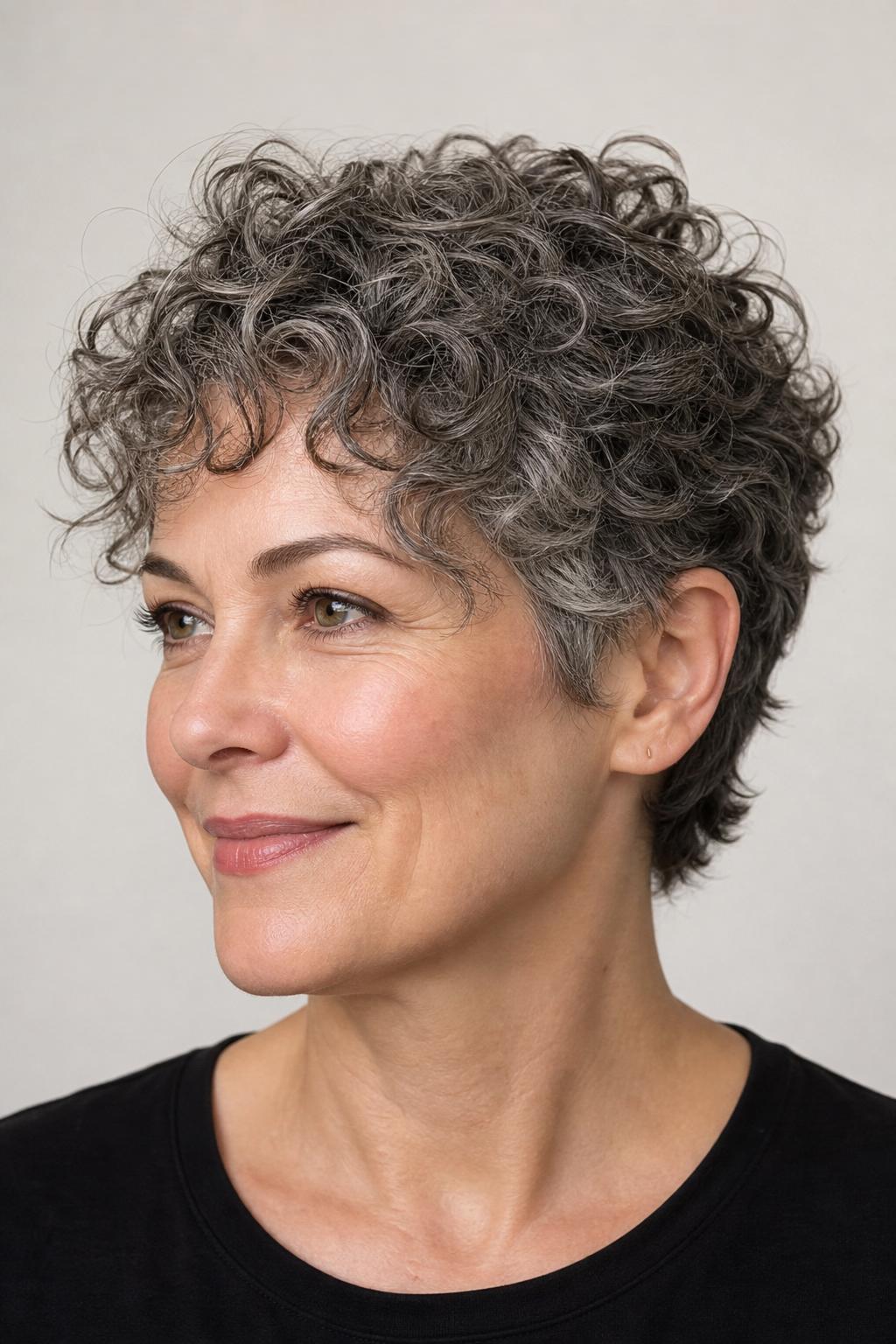
6. Honey-Balayage 3A Curly Pixie
Painting honey-toned balayage through the top curls makes each loose spiral catch light and look fuller than a single flat color. On a short cut the lighter mid-lengths and ends define the curl edges without the upkeep of an all-over lift. Book a gloss refresh every eight weeks or so to keep the honey from turning brassy.
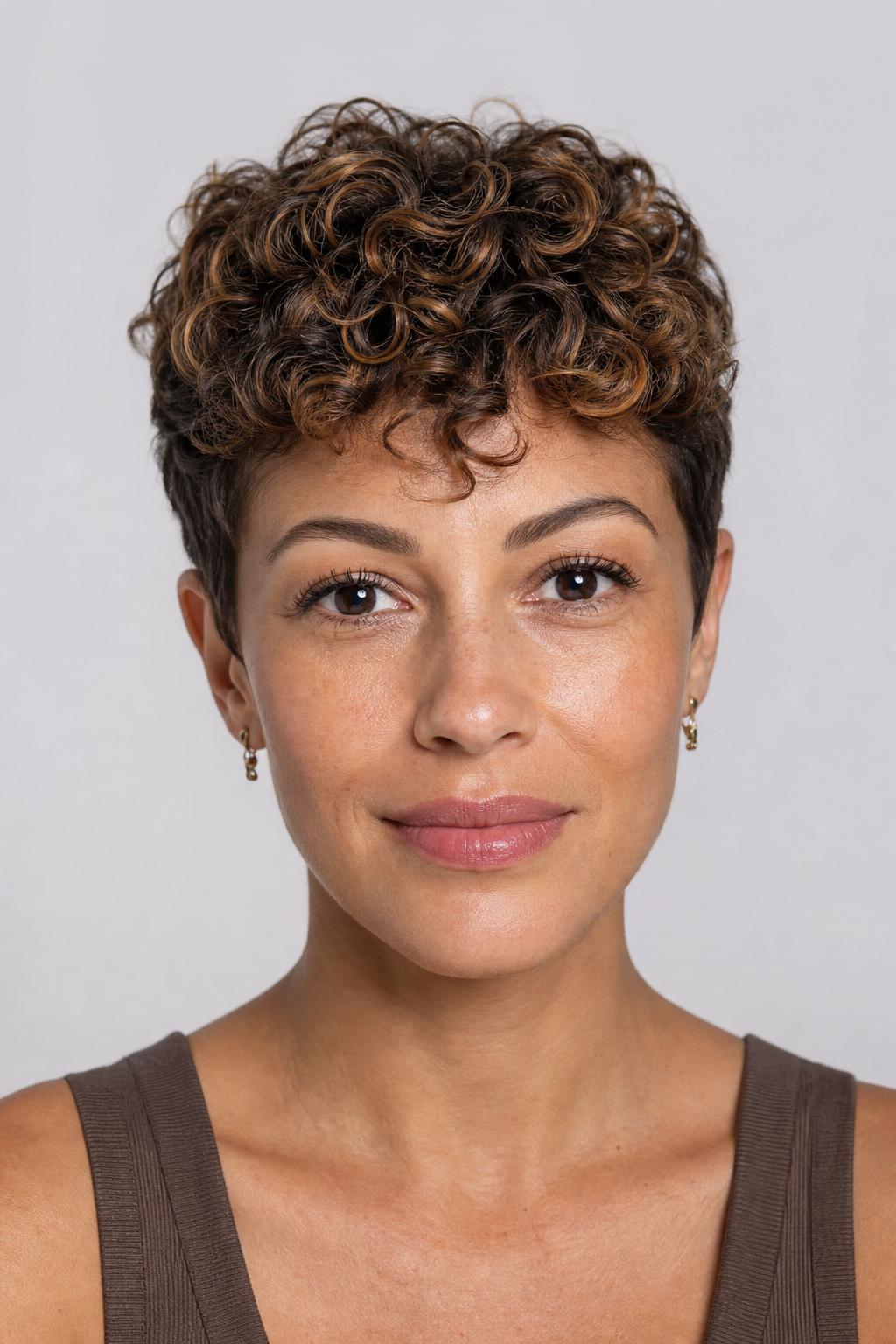
7. 3A Pixie with an Undercut You Can Ask For
Ask for a disconnected undercut through the lower sides and back, leaving the curl on top to fall over the shorter section for contrast. This works when your curls have enough weight to cover the undercut cleanly, and it lets you tuck the top back on hot days. The feminine pixie with an undercut gallery covers how much to take off underneath.
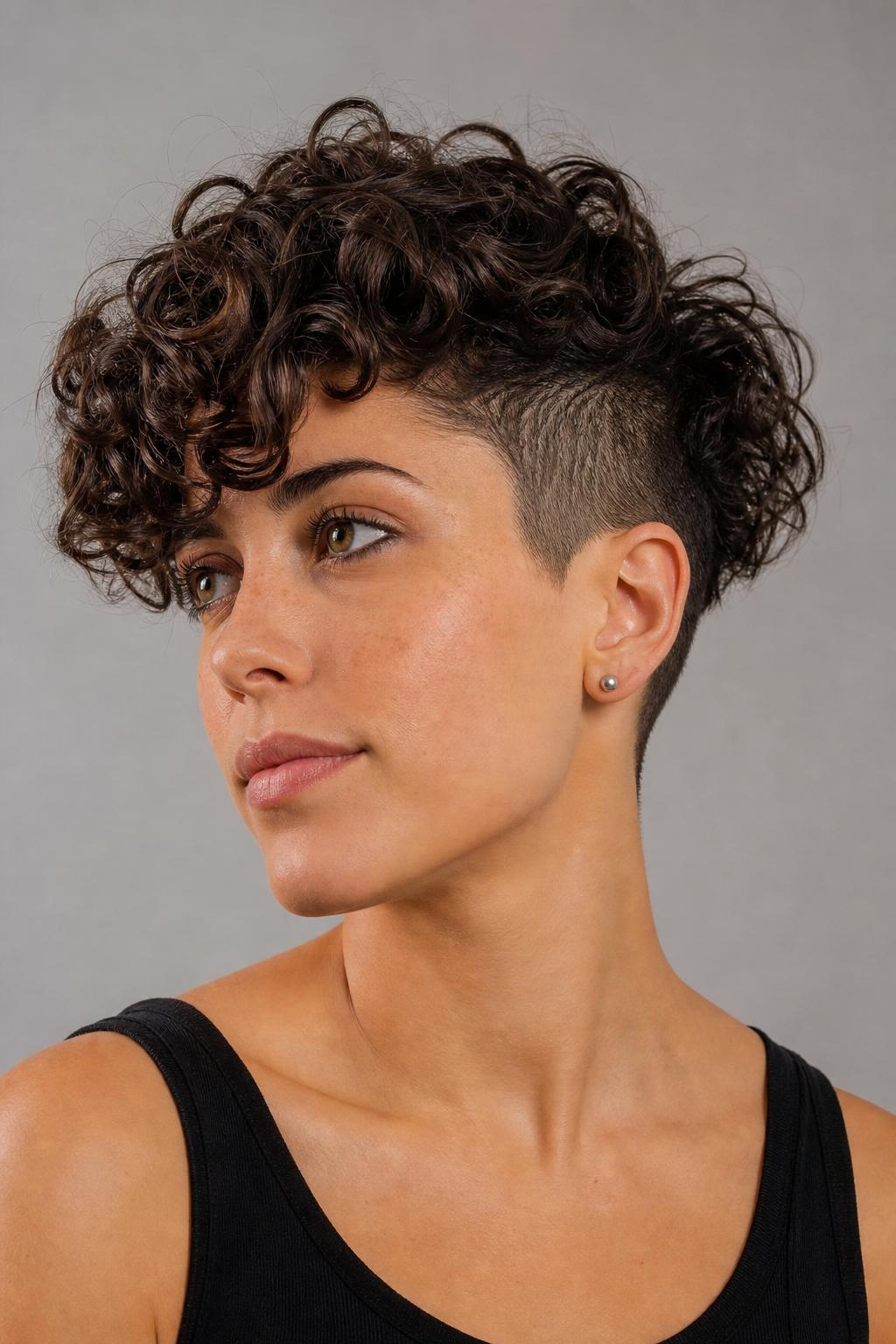
8. Soft 3A Crop with Feathered Layers
Where a blunt short cut can look boxy on straight hair, this feathered crop leans into the loose spiral for a light, airy shape. Feathered internal layers thin the interior just enough to stop the curl from puffing wide at the sides. The overall silhouette stays close to the head while the top keeps its lift.

Curly Pixie Cuts for 3B Curls
3B curls spring into ringlets about the width of a marker, with more volume and shrinkage than 3A. That density is an advantage in a pixie because the curls hold shape on their own, but it also means the cut has to control bulk so the head does not look wider than it is tall. These next eight styles balance that spring against a clean silhouette.
9. Voluminous 3B Pixie with Defined Ringlets
Cutting with the curl and leaving three to four inches on top lets 3B ringlets stack into a full, defined crown. Vertical layering shears remove interior weight while keeping each ringlet intact, so the shape holds as controlled volume rather than a round puff. Define with a dime of gel over curl cream for a crisp set.
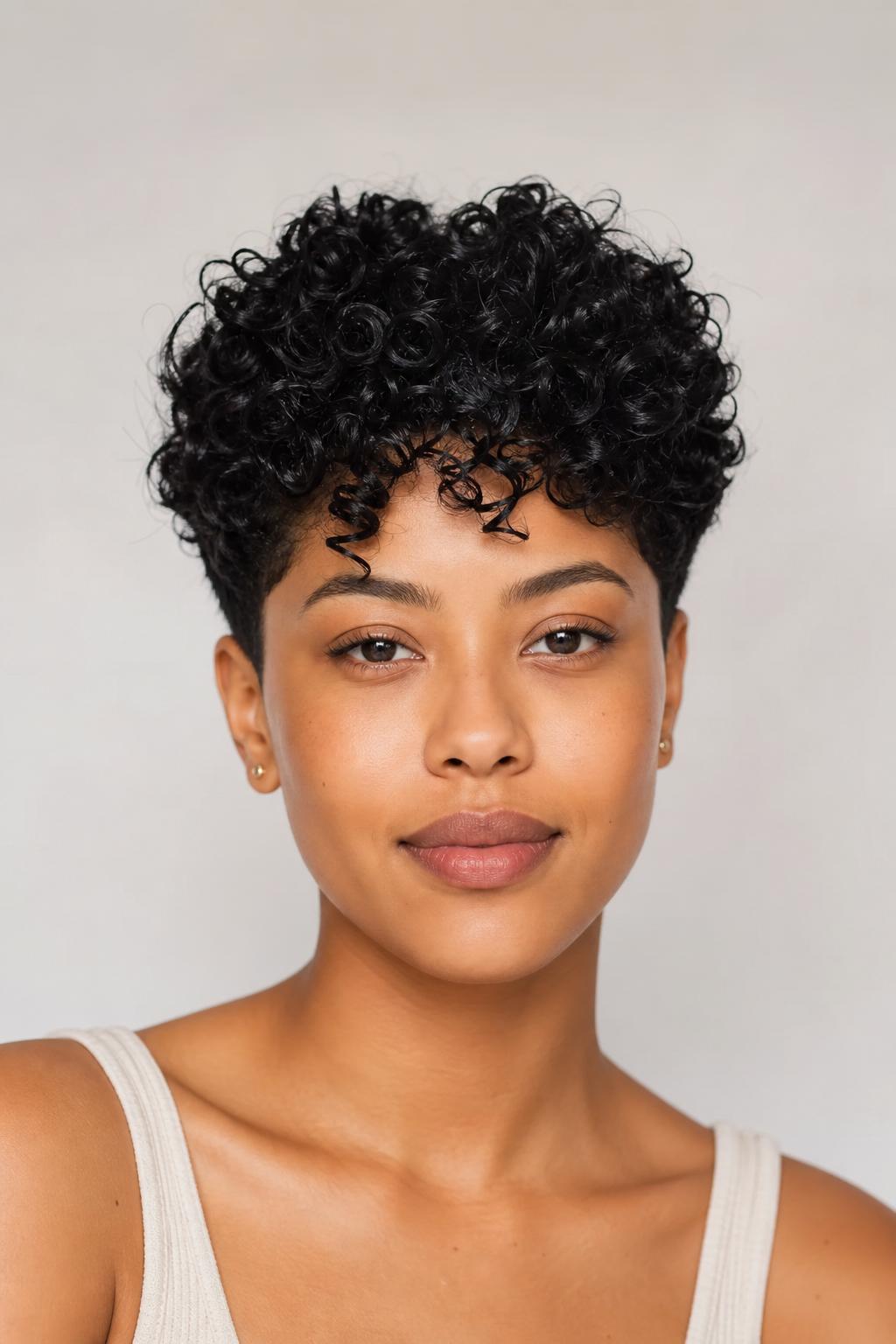
10. 3B Curly Pixie for Round Faces
Height at the crown and shorter, closer sides give a round face the vertical line it needs to look longer and more balanced. Keeping the curl tucked in at the cheeks rather than blooming wide is the key move here. A pixie shaped for round faces follows the same logic across other textures.

11. Dense 3B Pixie for Thick Curly Hair
Thick 3B hair needs internal weight removed or a pixie turns into a solid dome, so this cut relies on interior layering rather than surface thinning. The perimeter stays defined while the bulk underneath is carved out, letting the ringlets spring without piling up. Coarse, dense curls hold this shape for weeks with almost no daily fuss.

12. Diffused 3B Pixie with Root Lift
Diffuse upside down on low heat and clip the roots to build lift that a short 3B cut can otherwise lose at the crown. This styling method takes five minutes and turns flat morning curls into a rounded, buoyant shape. Finish with a light mist of hairspray only at the roots so the ends stay soft.
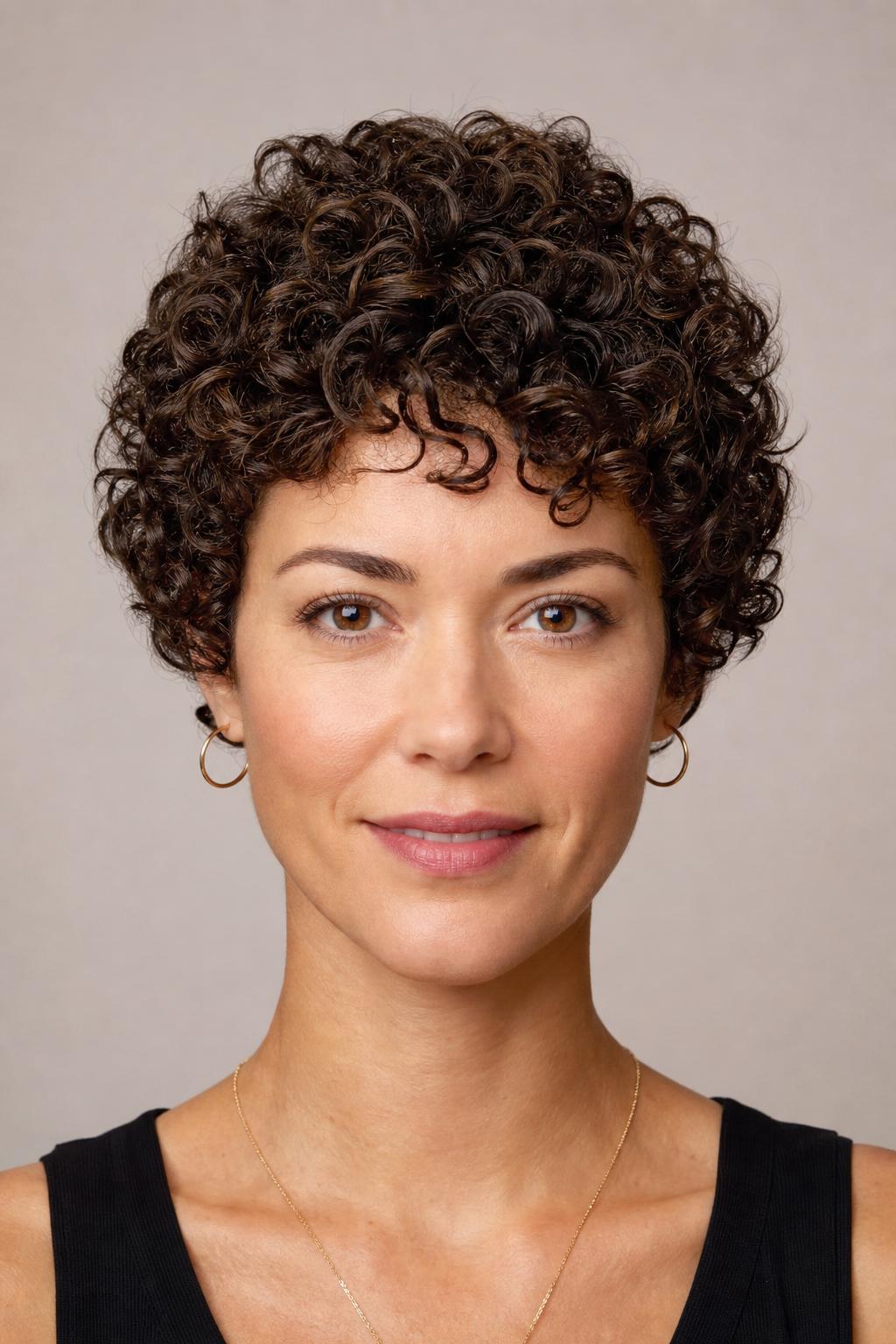
13. 3B Pixie That Grows Out Gracefully
Longer top layers and a soft, blended perimeter let a 3B pixie drift into a curly crop as it grows rather than sprouting awkward corners. That built-in grace buys you eight to ten weeks between shape-ups. When you are ready to keep the length, our notes on growing out a pixie cut map the in-between stages.
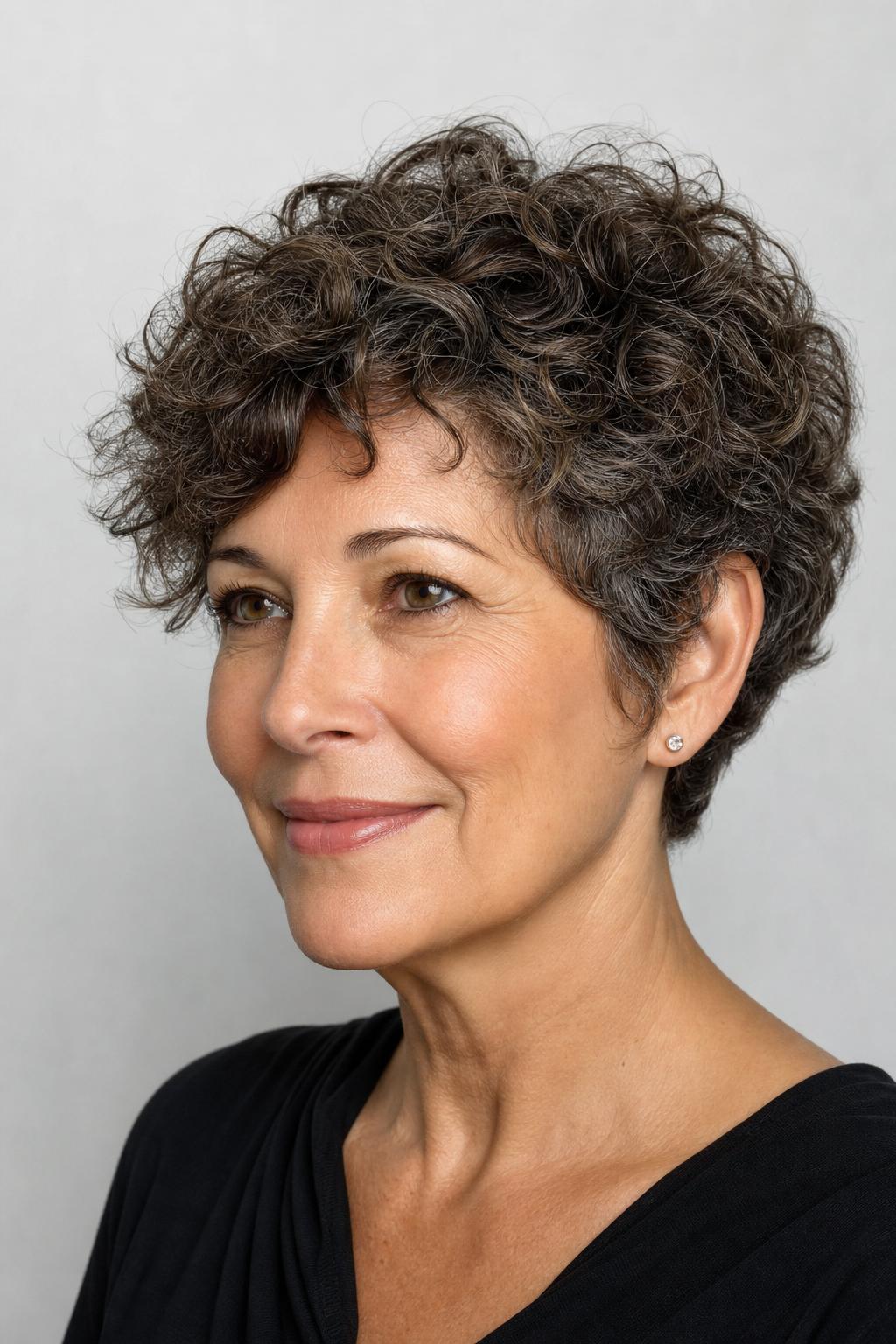
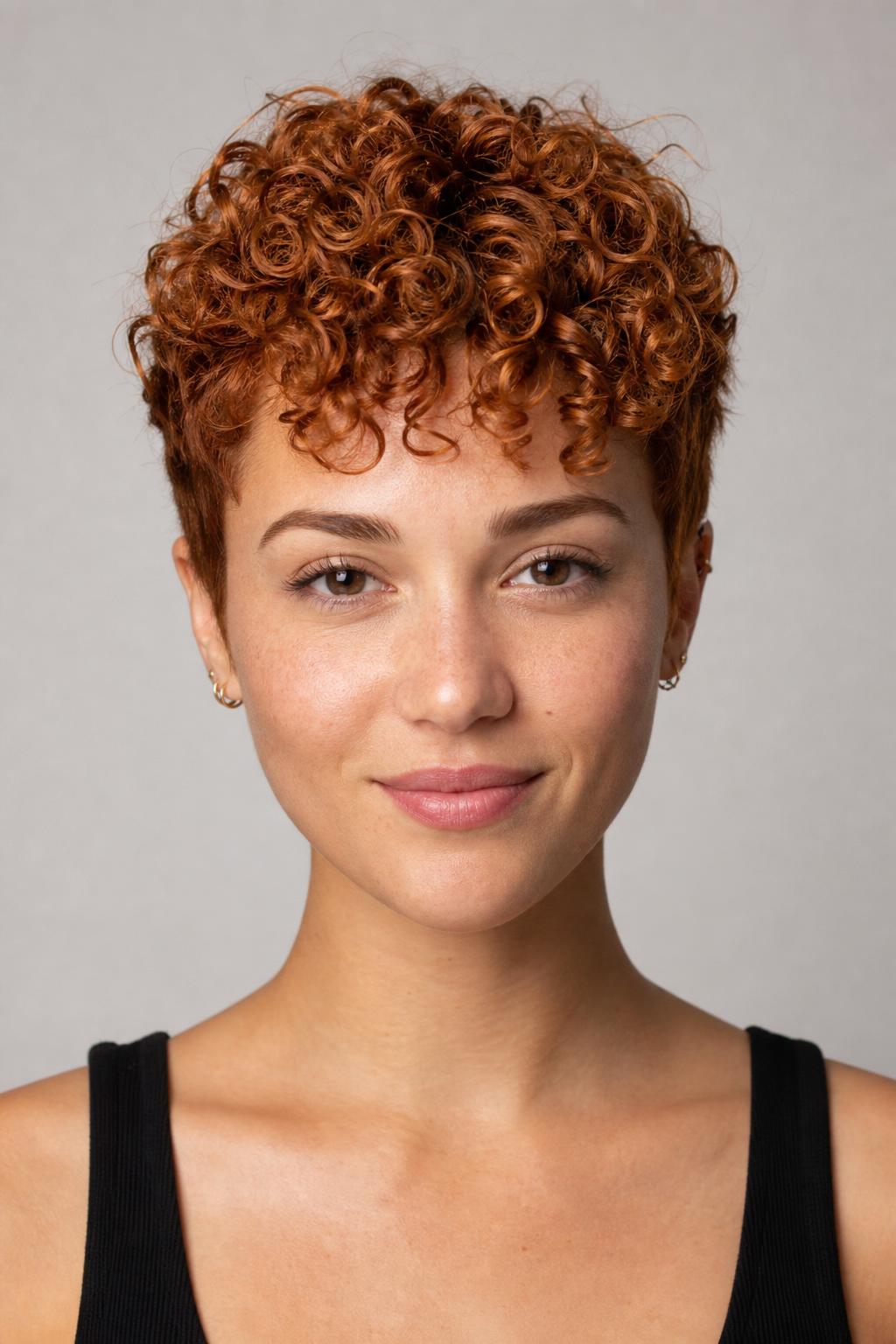
14. Copper 3B Curly Pixie
A warm copper wash over 3B ringlets throws the curl edges into relief and gives a short cut real dimension. Copper coats the outside of the strand, so it softens after a few weeks, which is worth planning for if low upkeep matters to you. A color-depositing conditioner between visits stretches the tone.
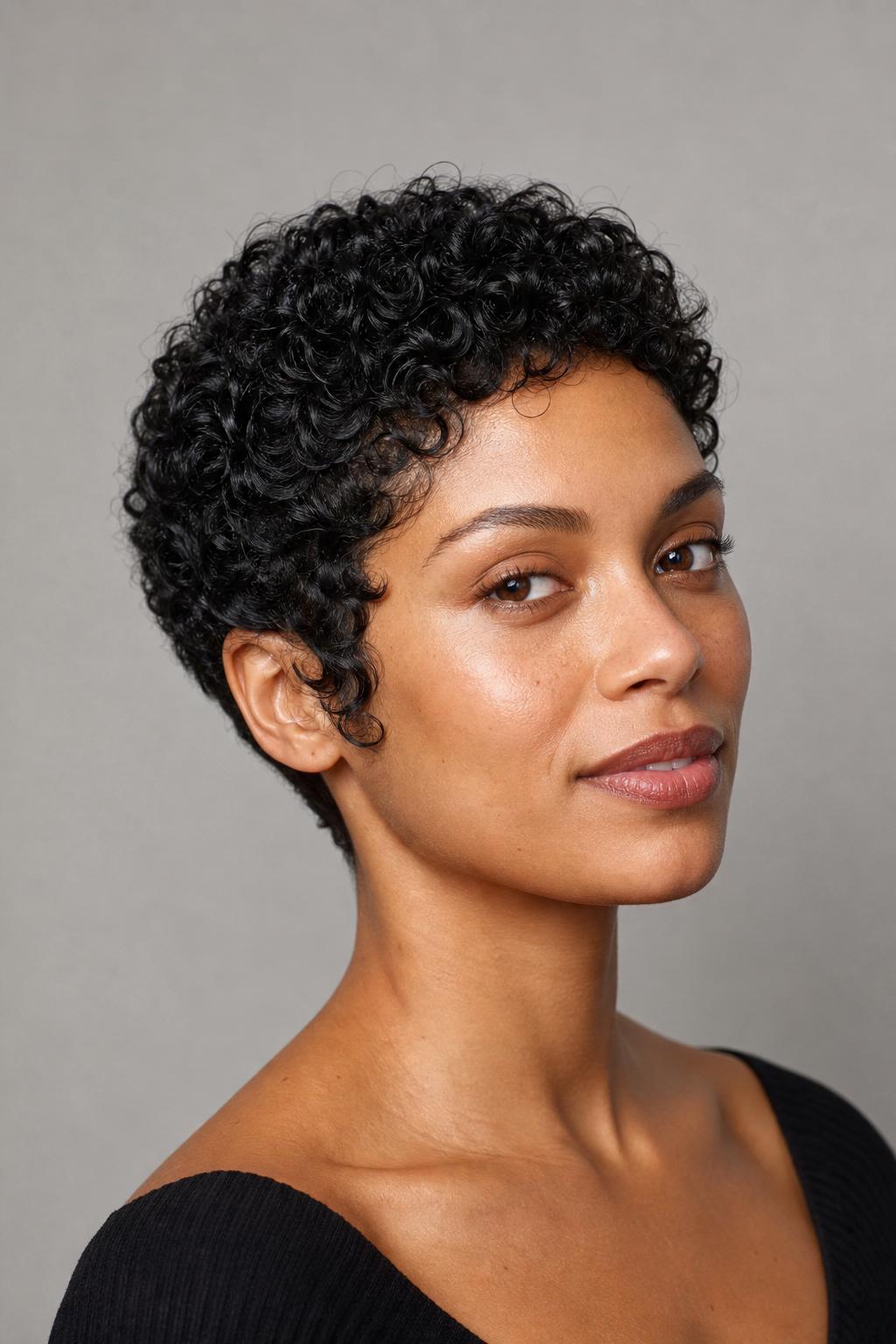
15. 3B Pixie with Curled Sideburns to Request
Tell your stylist to leave the sideburn curls intact rather than trimming them flat, since those small spirals frame the ear and finish the shape. Ask for the phrase “keep my natural sideburn curl and clean up the outline around it.” This one detail separates a soft, deliberate 3B pixie from a generic short crop.
16. Sculpted 3B Pixie with a Defined Perimeter
A cleanly outlined perimeter around the ears and nape gives springy 3B curls a sculpted, put-together edge for people who want polish over a wash-and-go look. The interior stays curly and free while the outline is shaped with the tip of the shears. It photographs sharp and holds its lines for the first few weeks after a cut.

Curly Pixie Cuts for 3C Curls
3C curls coil tight as corkscrews, roughly the width of a pencil, with dense packing and dramatic shrinkage that can hide half the true length. A pixie suits this pattern beautifully because the coils build their own height and the shrinkage works in your favor on a short cut. The final eight styles cover cropped shapes, defined edges, and the salon language that keeps 3C coils even.
17. Cropped 3C Pixie with Layered Corkscrews
Short internal layers let dense 3C corkscrews sit in a light, tousled cloud instead of packing into a heavy block. Cutting each coil to roughly the same visual length keeps the shape balanced once shrinkage pulls everything up. A choppy pixie shape uses similar layering to add this kind of movement.
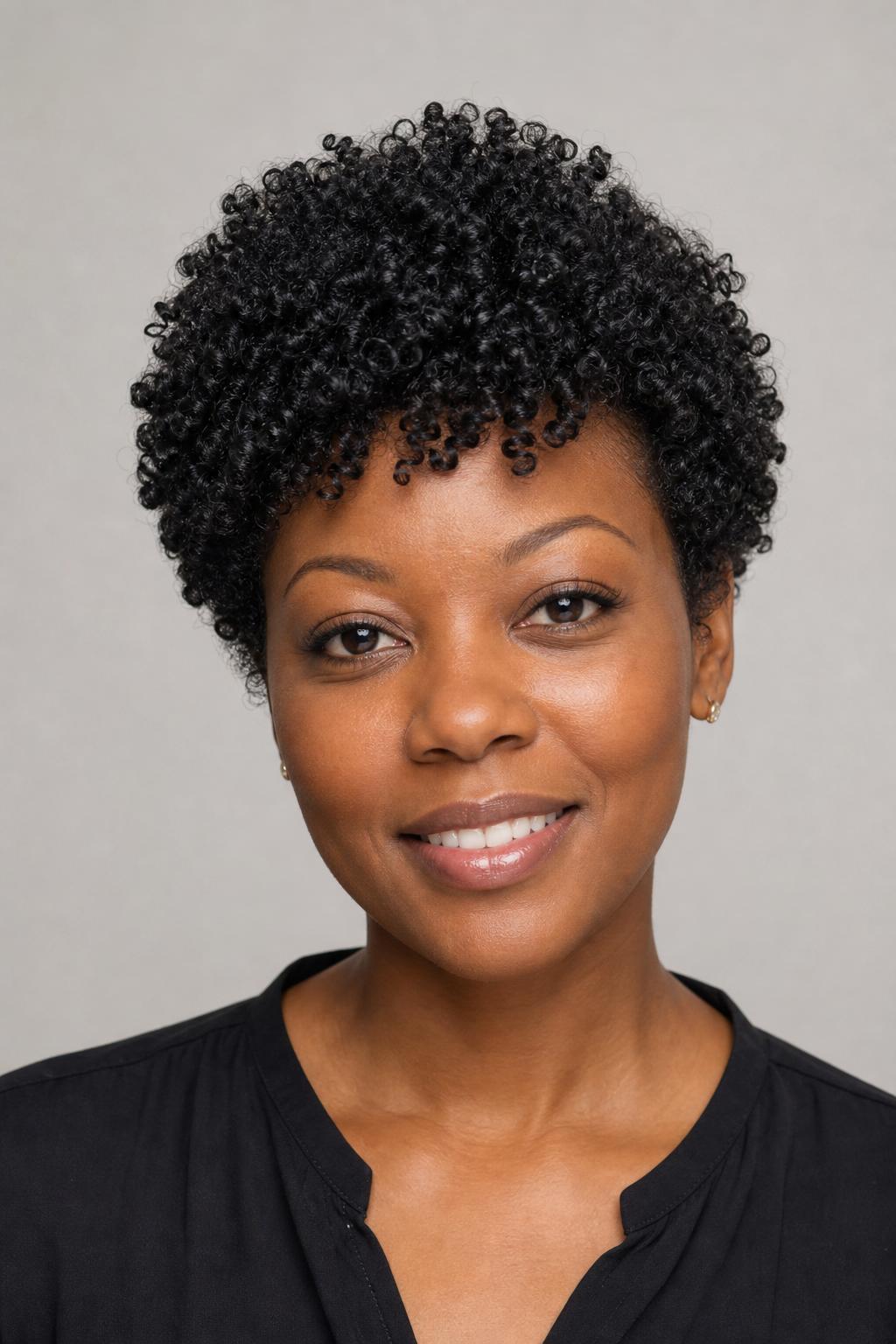
18. 3C Pixie with Wispy Bangs for Heart Faces
A soft, wispy coil fringe over the forehead balances the wider top of a heart-shaped face and points attention toward the cheekbones and eyes. Keeping the fringe airy rather than dense stops it from reading heavy on tight coils. The rest of the cut stays close so the fringe leads the shape.
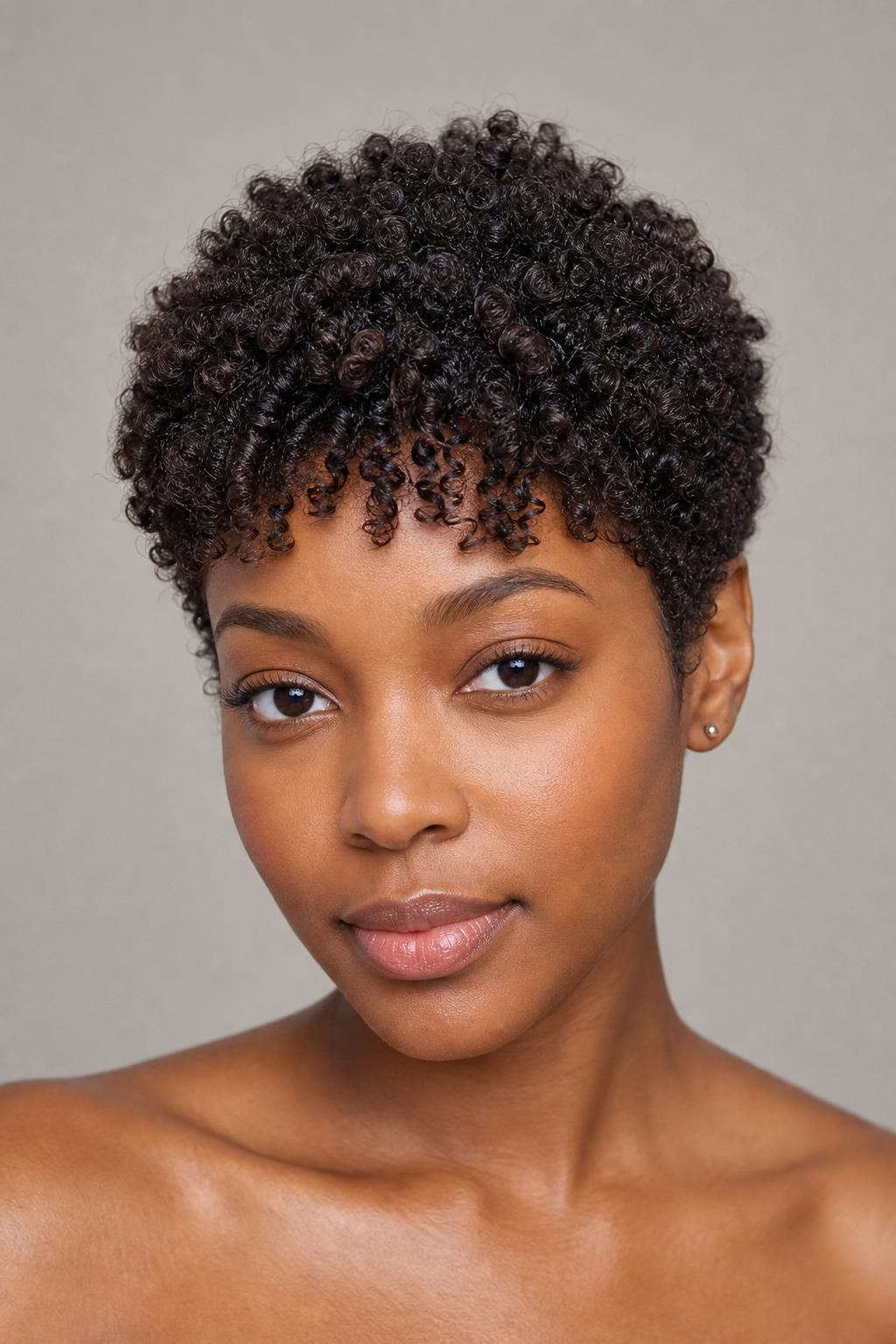
19. 3C Pixie for Coarse, Dense Coils
Coarse, densely packed 3C hair carries a short shape with almost no product because the coils stand up on their own. The cut leans on that density, taking length down evenly so the crown looks round and full. This is one of the most durable curly pixies for anyone who wants structure without daily styling.
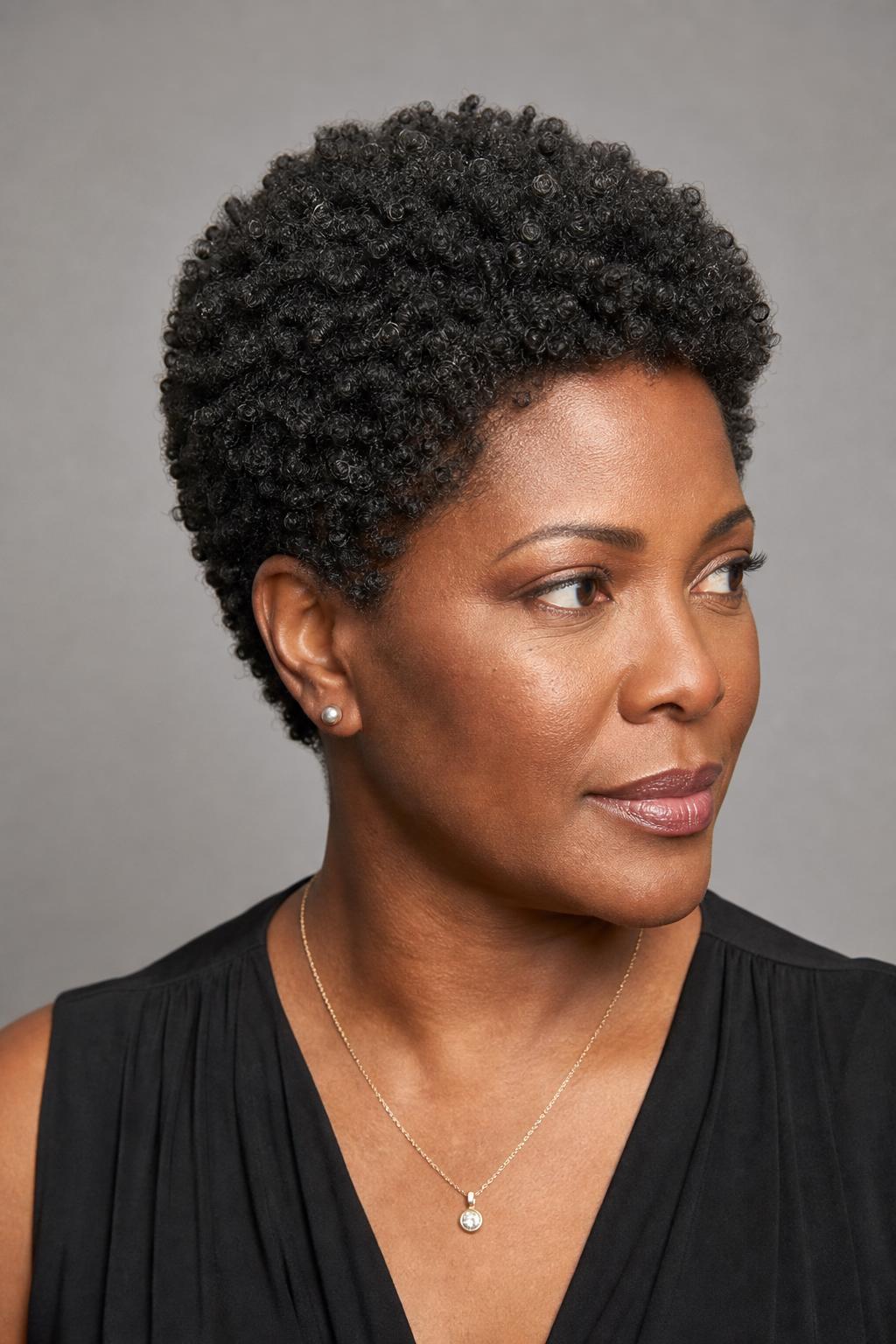
20. Finger-Coiled 3C Pixie with Height
Finger coil damp sections with a curl custard, then diffuse to lock in defined, elongated coils that stand tall at the crown. This styling step takes longer than a wash-and-go but delivers uniform definition and real height on a short cut. Sleep in a satin bonnet to keep the coils from flattening overnight.
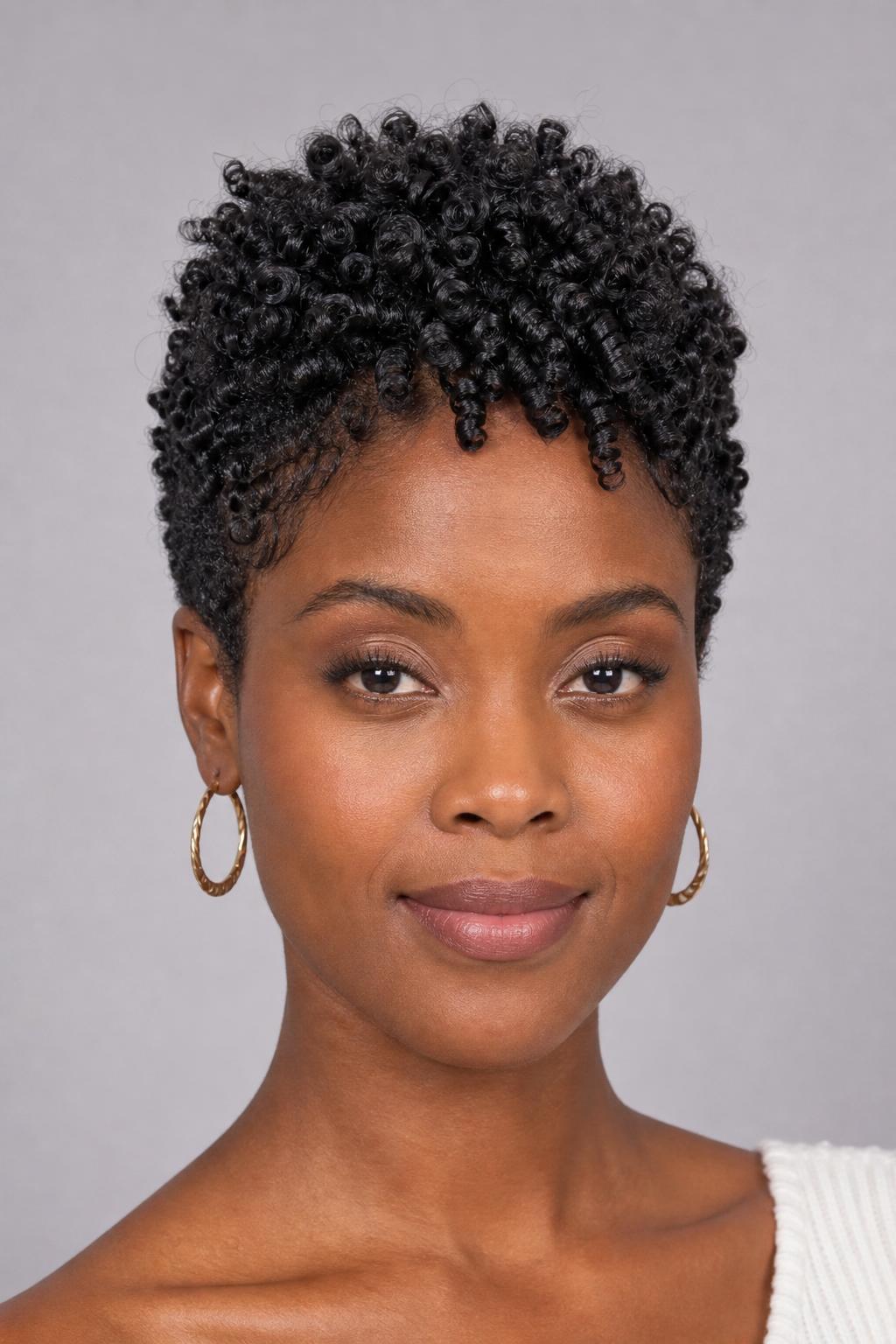
21. 3C Pixie with a Clean Neckline Between Trims
A softly rounded neckline, rather than a hard shaved line, keeps a 3C pixie looking sharp even as the edges fill in over six to eight weeks. The rounded finish grows out as coil instead of stubble, which buys time between salon visits. A quick edge tidy at home with small scissors stretches it further.
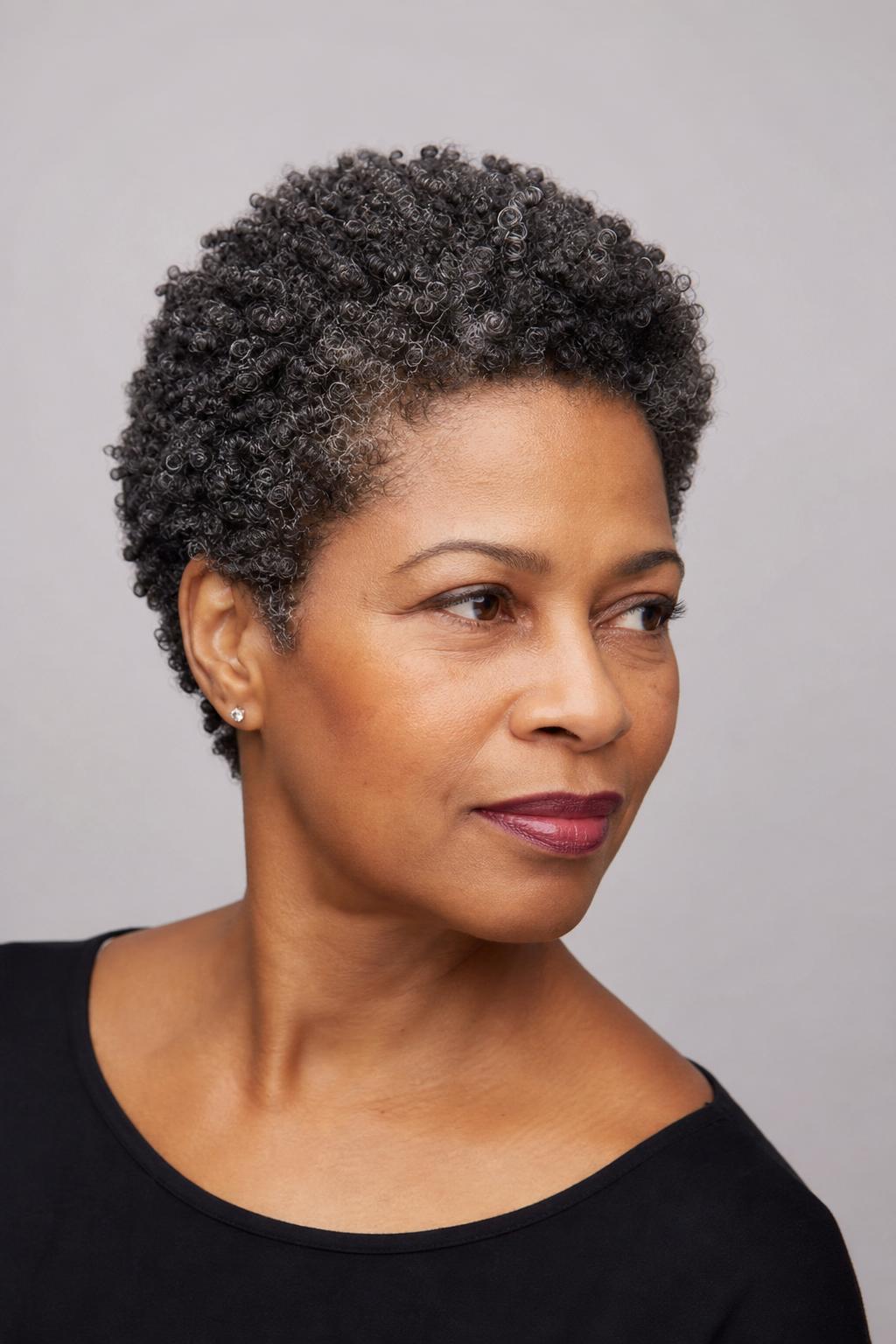
22. Caramel-Highlighted 3C Curly Pixie
Fine caramel highlights threaded through tight coils catch light at the curl peaks and add depth that a solid dark color can flatten on 3C hair. Keeping the highlights sparse protects the coil pattern from the dryness that heavy lightening can cause. A weekly deep conditioner keeps the lightened coils springy.
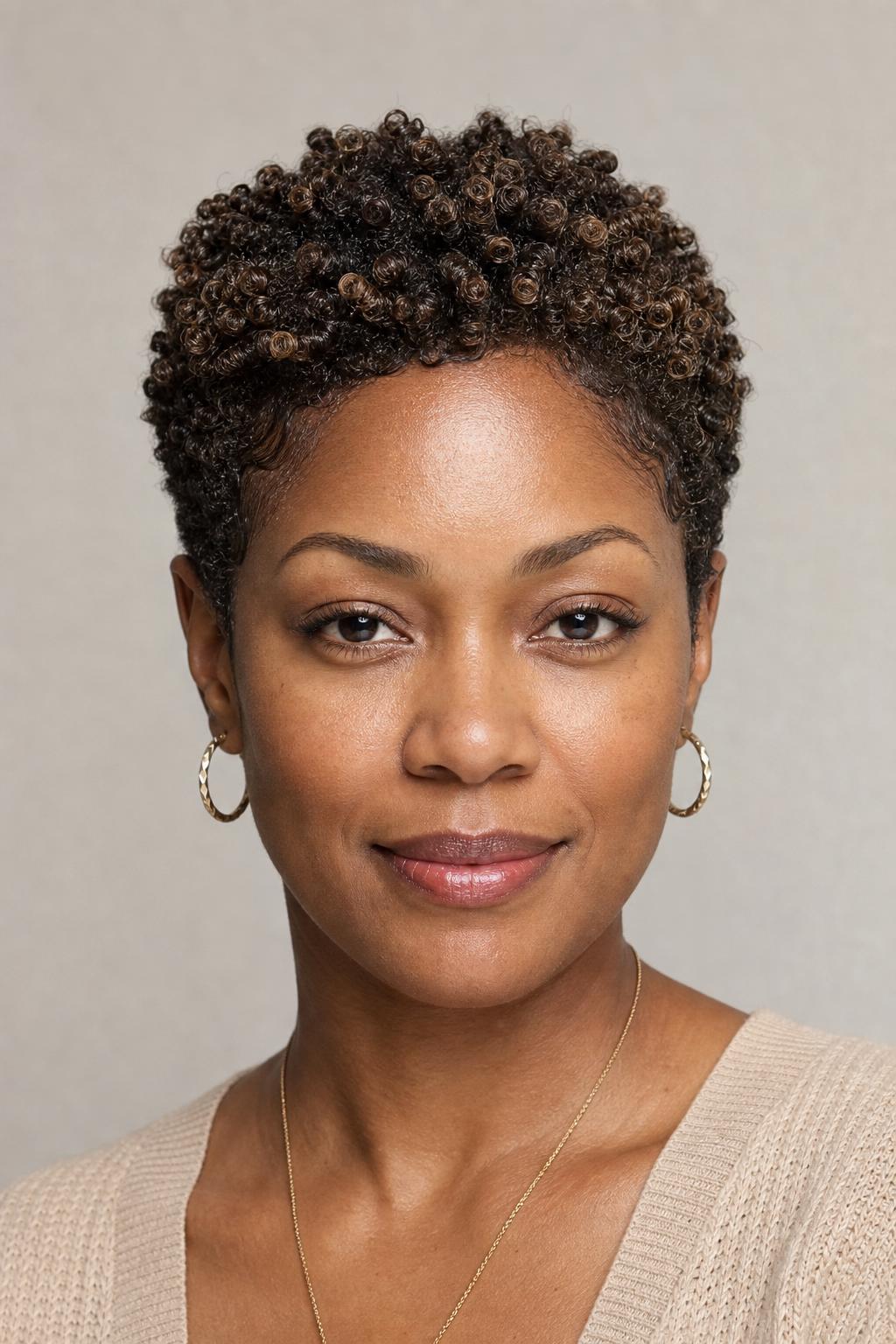
23. 3C Tapered Pixie with Defined Edges to Ask For
Request a taper through the sides with the outline shaped by hand, using the words “taper the sides into my coils and shape the edges soft, no hard line.” That phrasing tells the stylist to blend rather than carve a sharp part, which suits coily hair better. The defined but soft edge keeps the shape crisp without looking severe.
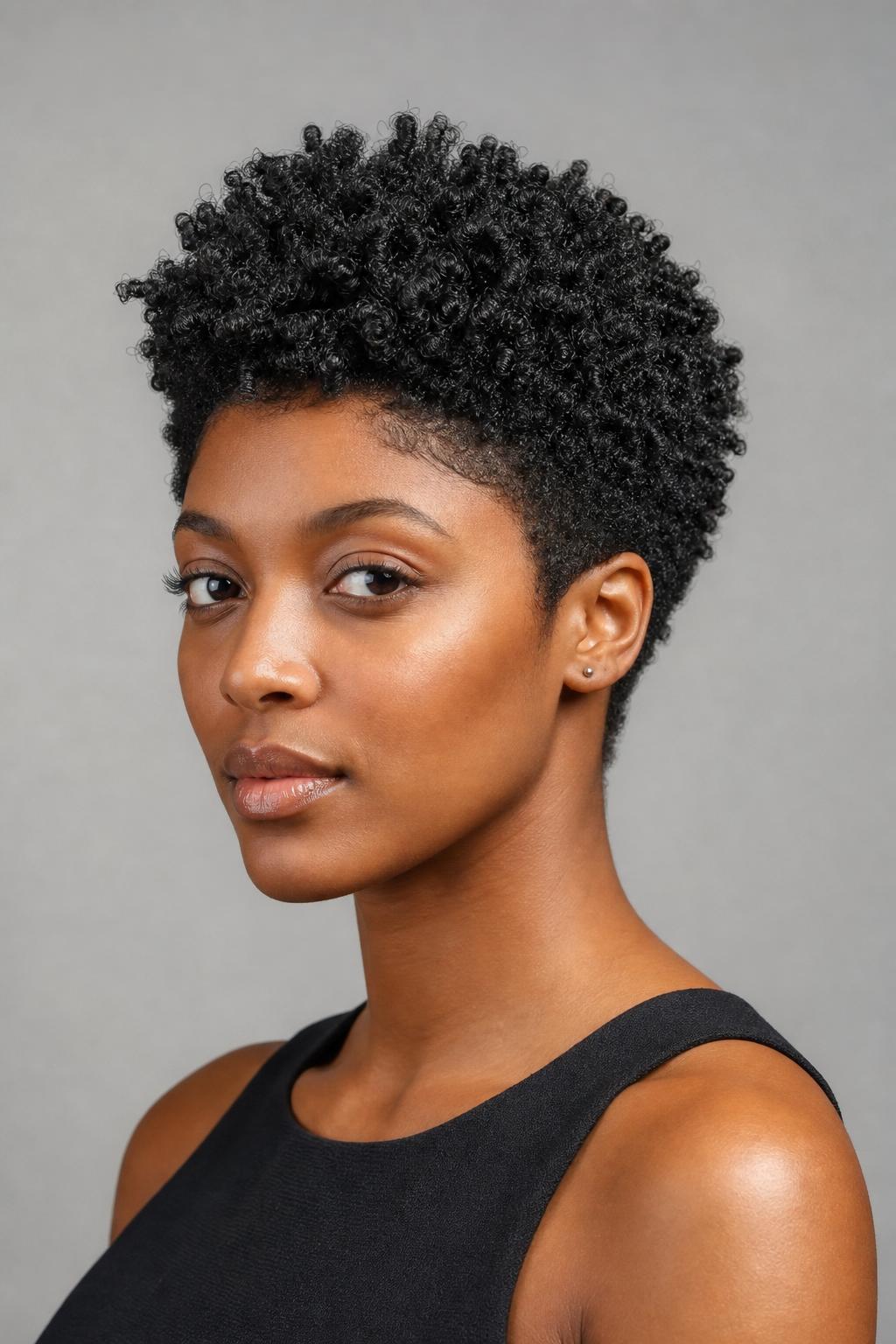
24. Compact 3C Coil Crop
Taken down to a short, even coil all over, this compact crop is the lowest-effort version in the collection and the easiest to keep sharp. Unlike a longer coily shape that needs defining product, the tight even length holds its form straight out of a shower. Coily, Afro-textured hair reads full and structured at this length, and our gallery of pixie cuts for Black women covers more of these short coil shapes.
How to Choose a Curly Pixie for Your Face Shape
Curl pattern decides how a pixie behaves, but face shape decides where the volume should land. Because curly hair adds width at the sides on its own, the goal for most shapes is controlling that width and placing height where it balances your proportions. Use the table below to match a variation to your face, then bring a reference from the curl-type section that matches your texture.
| Face Shape | Best Variation | Ideal Focus | Avoid |
|---|---|---|---|
| Oval | Almost any curly pixie | Balanced height and moderate sides | Nothing structural; most shapes work |
| Round | Crown-height pixie with close sides | Vertical lift at the top | Wide side volume at the cheeks |
| Heart | Wispy coil or curl fringe | Softness across a wider forehead | Heavy top volume with bare sides |
| Square | Side-swept fringe, rounded shape | Soft curves near the jaw | Blunt, boxy perimeters |
| Long | Fuller sides, lower crown height | Width to shorten the face | Tall crown volume that elongates |
What to Tell Your Stylist for a Curly Pixie
The single most important request is a dry cut. Cutting curly hair dry, with the coils at their natural resting length, lets the stylist see exactly where each spiral lands so nothing shrinks up shorter than you wanted after the first wash. Book with someone who cuts curls regularly and ask to see their curly pixie work before you commit.
Bring a photo that matches your curl type, not just a look you like, and say your pattern out loud: “My hair is 3B, cut it dry, and keep three inches on top.” Name the parts you want protected, such as sideburn curls or a soft fringe, and the parts you want cleaned up, such as the neckline. Specifics prevent the stylist from defaulting to a generic short cut.
Stylist tip: Ask for point cutting or curl-by-curl cutting rather than heavy texturizing with thinning shears. Over-thinning removes the weight that holds a curl clump together, and on tight patterns it creates a halo of frizz that no product fully tames.
Maintenance and Styling for a Curly Pixie
A curly pixie asks for less daily time than a long curly style but more frequent salon visits, since a short shape shows growth faster. Most curl types need a shape-up every six to ten weeks, with tighter patterns holding a little longer because new growth shows as coil rather than length. Daily upkeep on wash days runs five to ten minutes.
| Curl Type | Trim Frequency | Key Products | Styling Method |
|---|---|---|---|
| 3A | 8 to 10 weeks | Light curl cream, leave-in | Rake and air-dry or scrunch |
| 3B | 6 to 8 weeks | Curl cream plus light gel | Diffuse with root lift |
| 3C | 6 to 10 weeks | Curl custard or gel, oil seal | Finger coil then diffuse |
Sleep on a satin or silk pillowcase, or wear a satin bonnet, to keep coils from flattening and frizzing overnight. Between washes, refresh with a light mist of water and a pea-size dab of curl cream, scrunched in rather than raked. A weekly deep conditioner keeps shorter curls springy, since a pixie has fewer inches to hide dryness.
Stylist tip: Apply your styling products to soaking-wet hair, not damp, and rake them through before you touch a diffuser. Curls define best when the product distributes through water, and adding cream to half-dry hair is the most common reason a curly pixie ends up patchy.
When a Curly Pixie Is Not the Right Choice
A short curly cut suits most curl patterns, but it is honestly wrong for a few situations. Knowing that upfront saves you a grow-out you did not plan for.
- You wear your hair straightened most days: repeated heat on a pixie fries the tight ends fast, and a straightened curly pixie loses the shape that makes it work. A longer cut handles frequent heat better.
- You want a true wash-and-go with zero product: looser 3A curls can manage this, but 3B and 3C usually need at least a curl cream to stay defined at short lengths.
- You are growing your hair out: a pixie adds months to that timeline. If length is the goal, a longer pixie bridges the gap without a full crop.
- Your curls sit around a very strong cowlick at the crown: a short cut can expose it, so ask your stylist whether your growth pattern will cooperate before you cut.
FAQ
Can Any Curl Type Pull Off a Pixie Cut?
Yes, 3A, 3B, and 3C curls all suit a pixie when the cut is shaped for the pattern. Looser 3A curls give a softer, airier pixie, while tighter 3C coils build more height and structure. The trick is a stylist who cuts to your curl type rather than treating all short hair the same.
Should a Curly Pixie Be Cut Wet or Dry?
Dry, almost always. Cutting curly hair dry lets the stylist see where each coil rests after shrinkage, which prevents the cut from turning out far shorter than planned. Wet cutting is how curly clients end up two inches shorter than they asked for, so confirm a dry cut when you book.
How Often Does a Curly Pixie Need Trimming?
Most curly pixies need a shape-up every six to ten weeks. Tighter 3C coils can stretch toward the longer end because new growth shows as coil, while looser 3A hair shows a grown-out neckline sooner. A quick home edge tidy between visits helps hold the shape.
Will a Pixie Make My Curls Look Frizzy?
Frizz usually comes from over-thinning, not from the short length itself. Ask for point cutting or curl-by-curl cutting and skip heavy thinning shears, which break up the curl clumps that keep frizz down. The right product on soaking-wet hair also seals the cuticle for a cleaner finish.
What Products Work Best on a Short Curly Cut?
Match the product weight to your curl type: a light curl cream for 3A, a curl cream plus light gel for 3B, and a richer custard or gel with an oil seal for 3C. Use less than you would on long hair, since a pixie is easily weighed down. Build up slowly rather than starting heavy.
How Do I Style a Curly Pixie in the Morning?
On non-wash days, mist the hair lightly with water, add a pea-size dab of curl cream, and scrunch to revive the coils, which takes about five minutes. A satin bonnet overnight means you often only need to fluff the roots. Full styling with a diffuser happens on wash days, not daily.
Is a Curly Pixie High Maintenance?
It trades daily effort for salon frequency. You spend less time styling than you would on long curls, but you visit the salon more often because a short shape shows growth quickly. If you dislike regular trims, a slightly longer curly shape is more forgiving between appointments.
A curly pixie cut rewards a shape built around your real curl pattern, so figure out whether you fall closer to 3A, 3B, or 3C, pick two references from that section, and book a stylist who cuts curls dry. Match the variation to your face shape, keep your product light and your pillowcase satin, and a short curly cut becomes one of the lowest-fuss ways to wear your natural texture.
Hair results vary based on your natural hair type, texture, density, and condition. Always consult with a licensed hairstylist before making significant changes, especially with chemical treatments or dramatic length changes. Photos may show styled results that require professional tools and products to replicate.