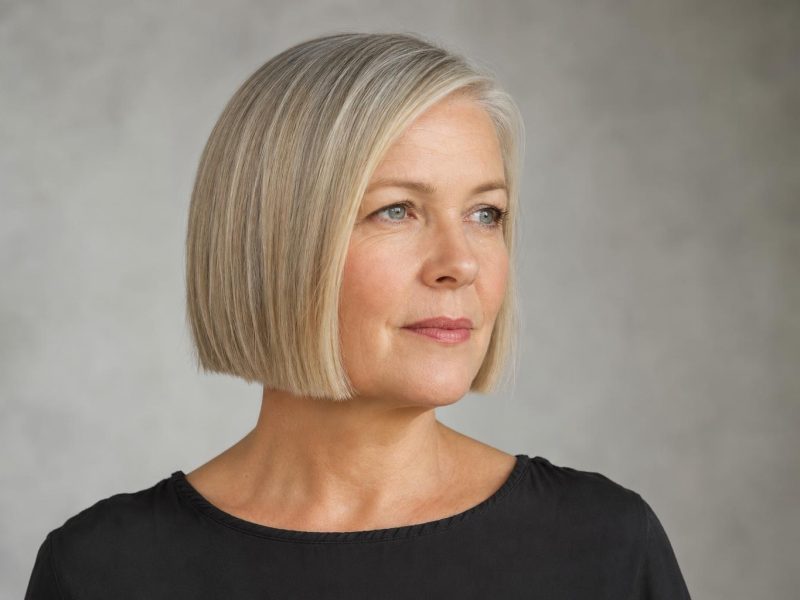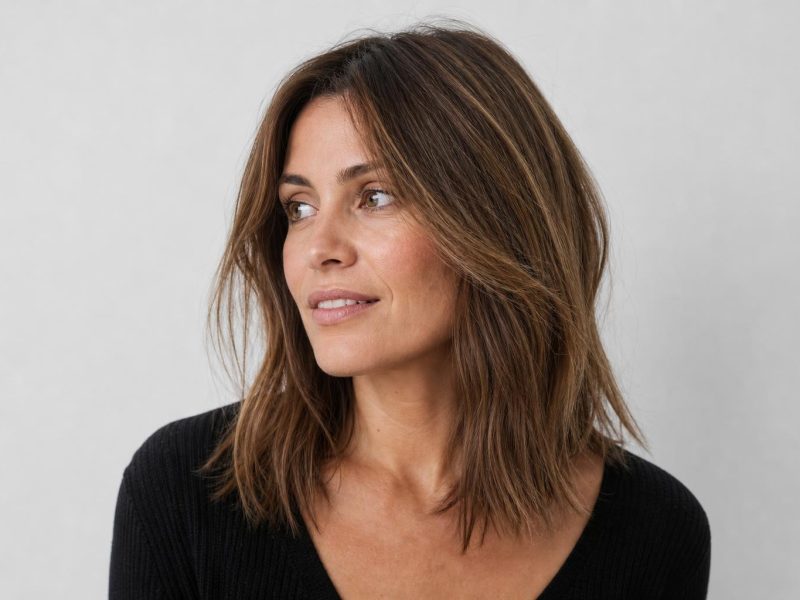

25 pixie cuts specifically chosen for round face shapes — grouped by variation, with stylist notes on why each one works and what to ask for at the salon.
The right pixie cut for a round face creates vertical lines, adds height at the crown, and avoids widening the cheeks. That means not every pixie variation works — but the ones that do can actually make a round face appear slimmer and more angular than most longer cuts. This collection covers side-swept pixies, textured crops, long pixies, undercut variations, and pixie bobs, each with specific notes on cut structure, hair type compatibility, and styling approach.
Round faces are roughly equal in width and length, with soft jawlines and full cheeks. The goal with a pixie isn’t to hide these features — it’s to balance them. Volume at the crown elongates, diagonal fringes create asymmetry, and tapered sides reduce width at the temples. Below, every cut is selected with these principles in mind.
| Quick Reference | Details |
|---|---|
| Best pixie types for round faces | Side-swept, asymmetrical, long pixie, textured crop with height, pixie bob |
| Avoid | Very short all-over buzz pixies, round-shaped pixies with equal volume at the sides, blunt micro bangs |
| Maintenance | Trims every 4–6 weeks to keep shape; daily styling 5–10 minutes |
| Works with | Fine, medium, thick, straight, wavy, and curly hair — with adaptation |
| Key principle | Height at the crown + diagonal lines + tapered sides = visual elongation |
Side-Swept Pixie Cuts for Round Faces
A deep side part and a sweeping fringe create a strong diagonal line across the forehead — the single most effective trick for elongating a round face with short hair. These cuts keep length through the top and fringe while tapering the sides and nape.
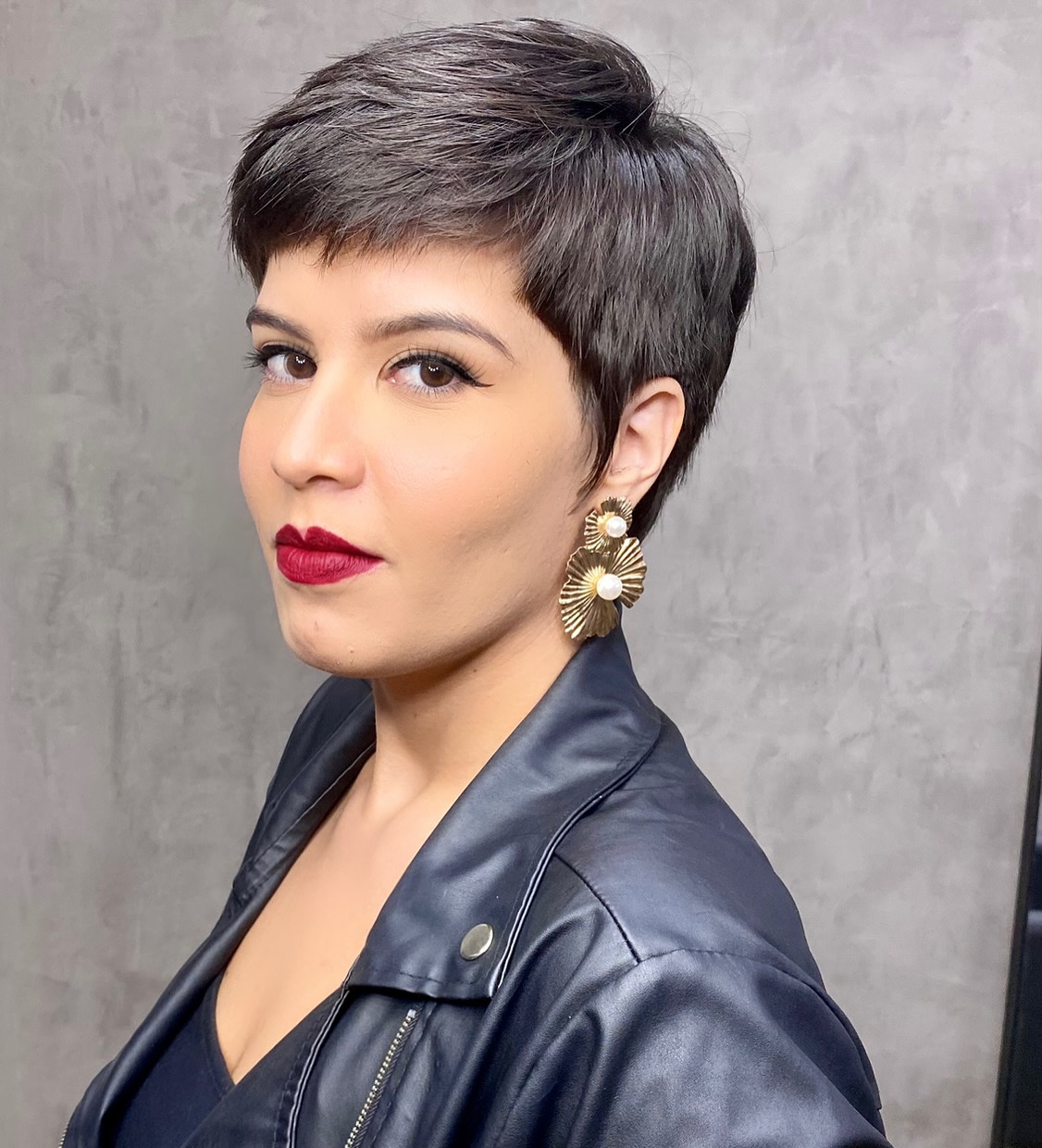
1. Classic Side-Swept Pixie with Tapered Nape
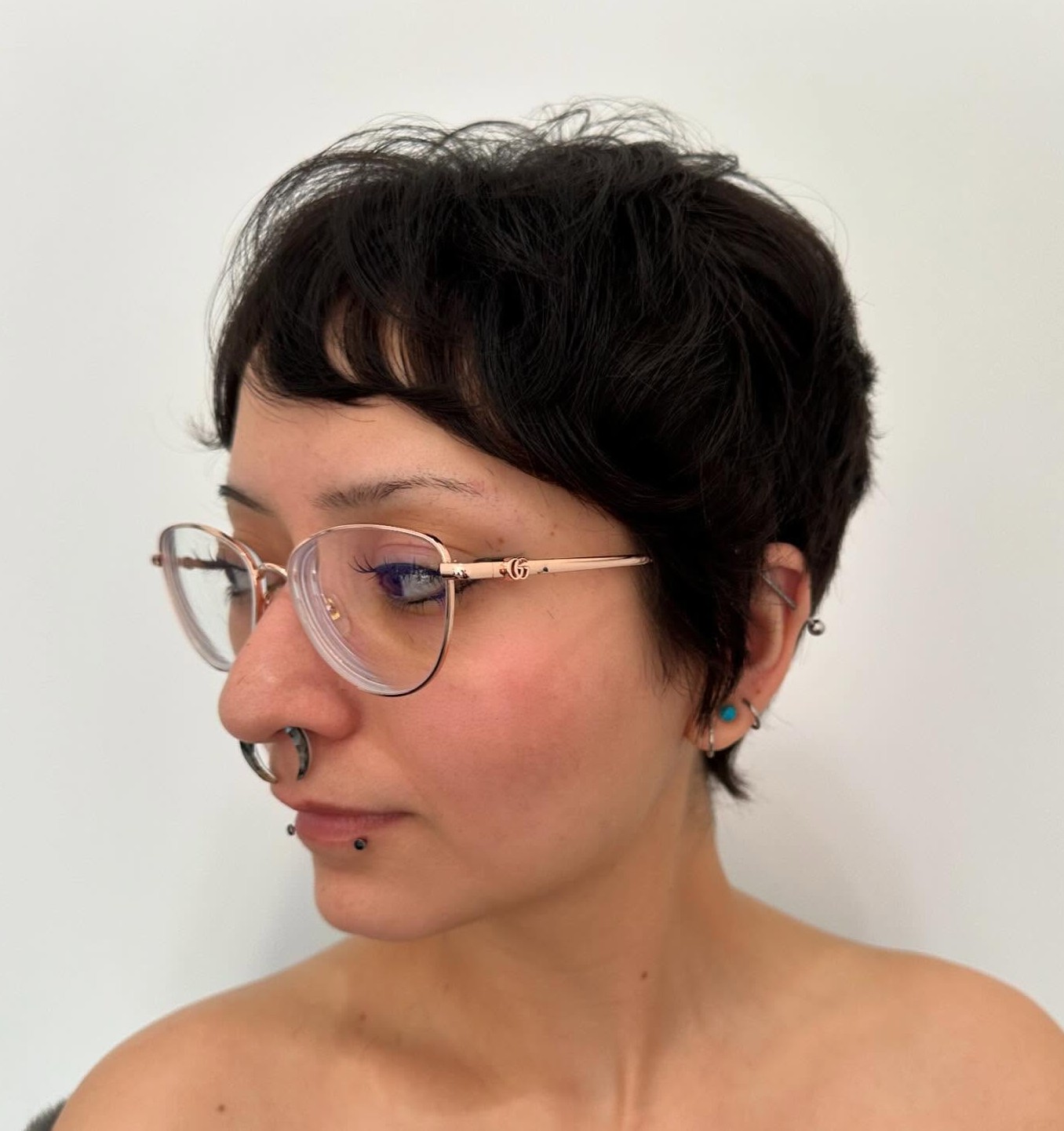
The fringe sweeps from a deep side part all the way past the cheekbone, drawing a diagonal line that visually narrows the face. The nape is tapered close but not shaved, keeping the silhouette clean without going too severe. This version works particularly well on straight to slightly wavy hair with medium density, where the fringe holds its sweep without getting bulky. Expect trims every 4–5 weeks to keep the nape shape defined.
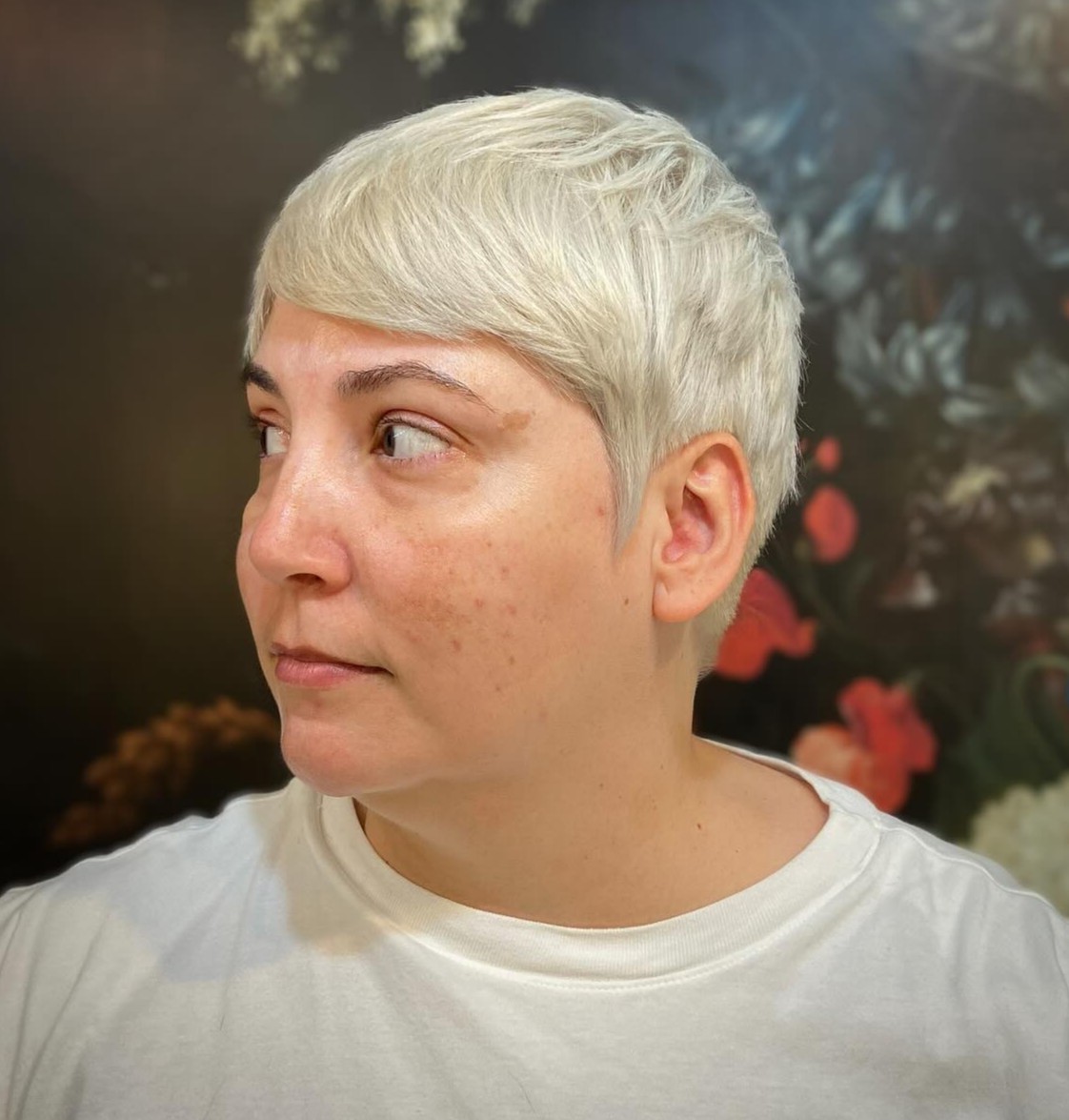
2. Feathered Side-Swept Pixie on Fine Hair
Point-cut ends give this pixie a feathered, airy texture that prevents fine hair from looking flat against the scalp. The side-swept bang is kept light — no heavy, blunt fringe that would weigh down already-sparse strands. Fine-haired clients benefit from a volumizing mousse worked into damp roots and a quick blast with a round brush at the crown to lift the top section. The lightness of this cut offsets the fullness of round cheeks without adding width.
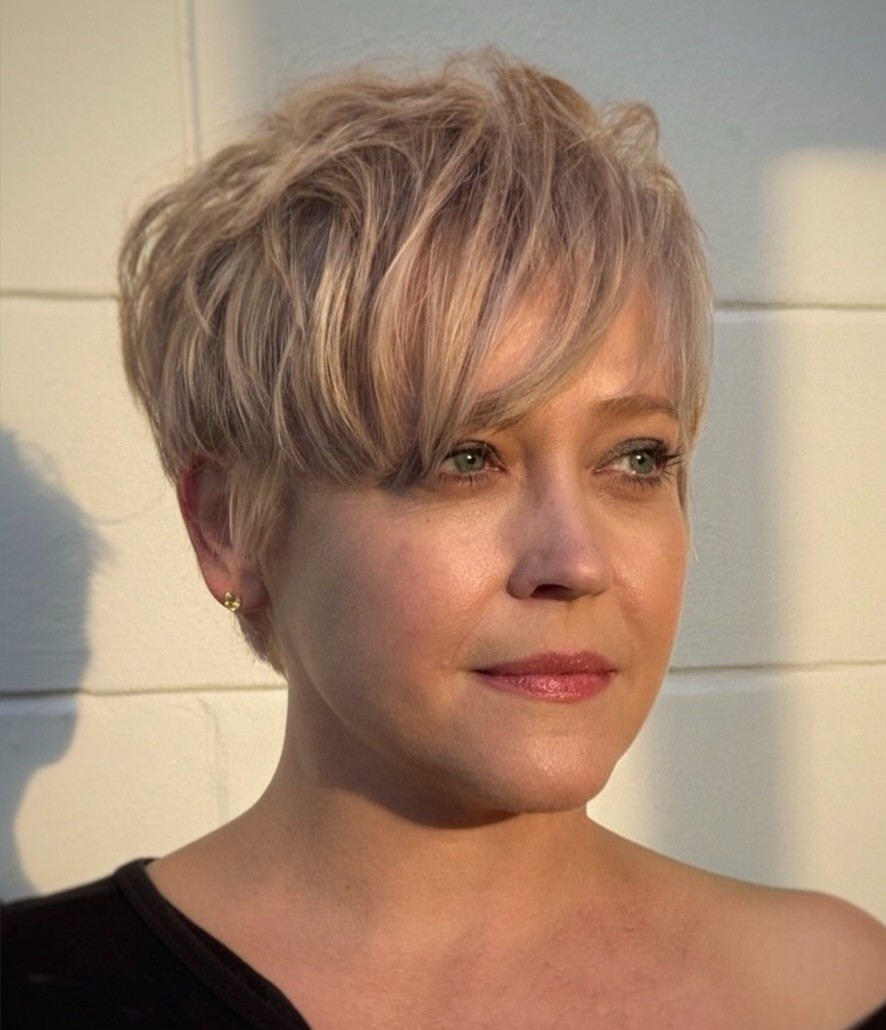
3. Deep Side Part with Disconnected Lengths
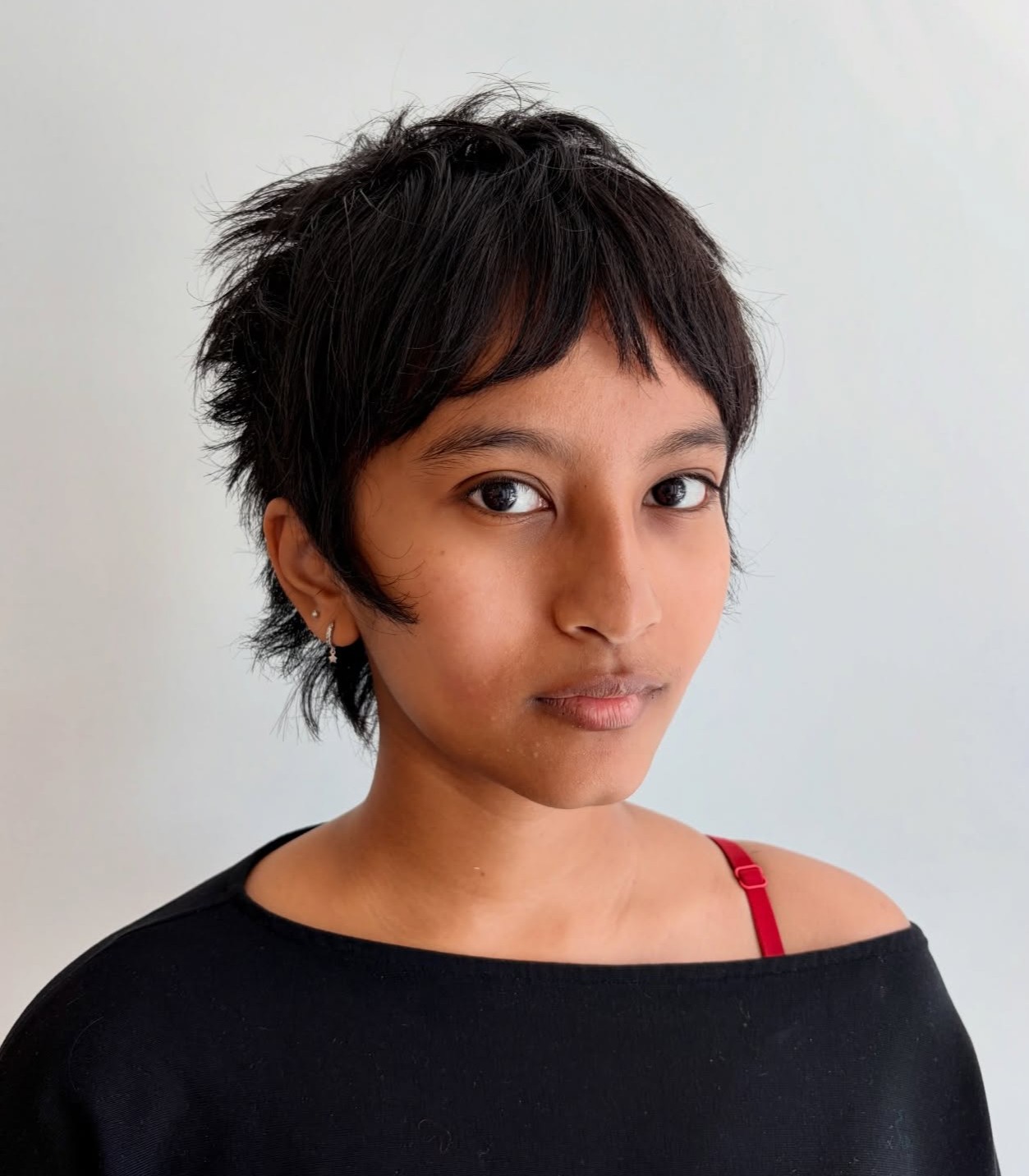
The dramatic difference between the long, sweeping side and the cropped opposite temple creates strong asymmetry — a visual shortcut to making a round face appear more angular. Ask your stylist for a disconnected cut where the top length doesn’t blend gradually into the sides but instead drops off sharply. This version suits medium to thick hair best, since the longer side needs enough density to hold its shape without looking stringy.
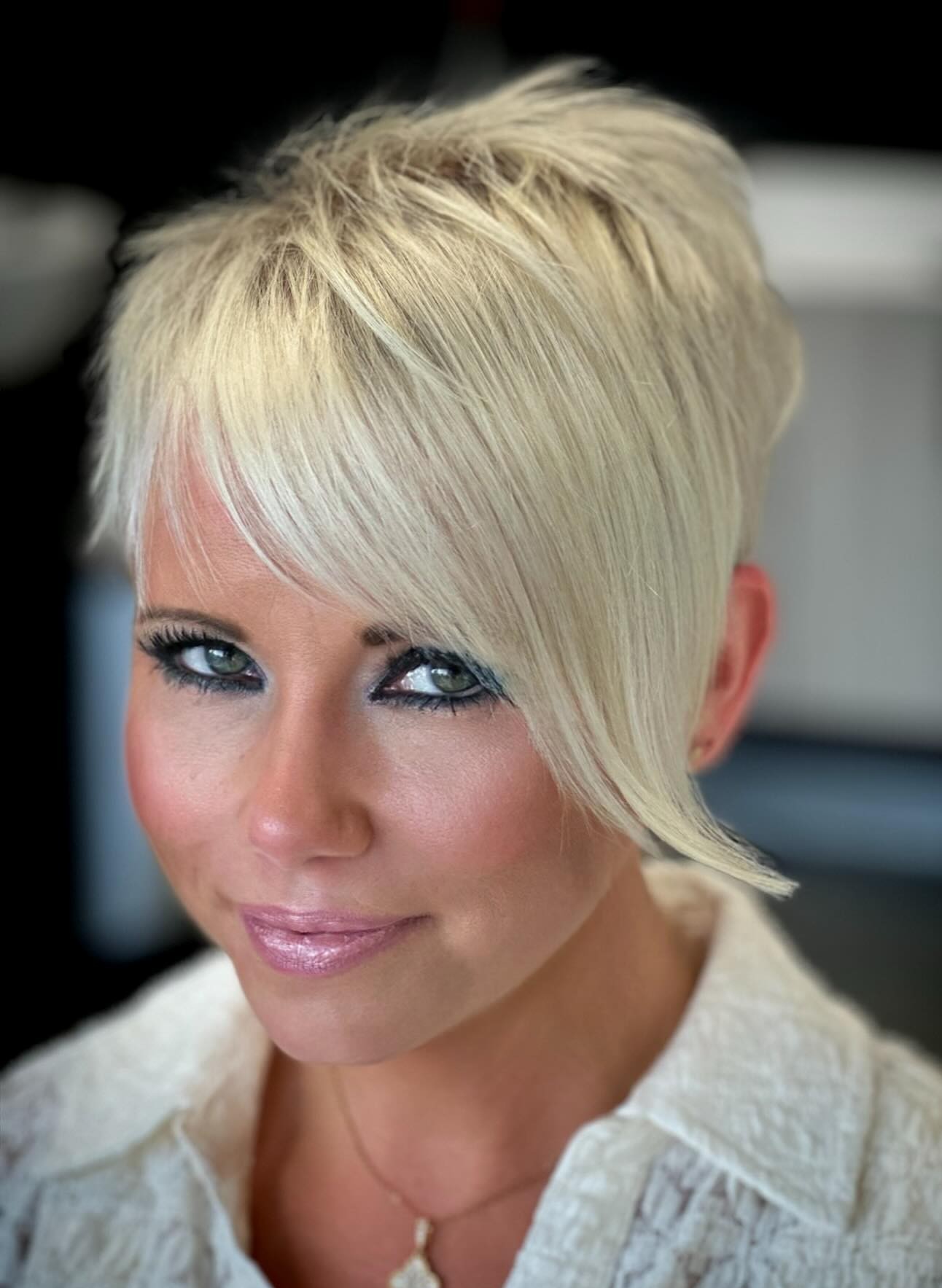
4. Soft Side Sweep with Ear-Length Sideburns
Leaving slightly longer pieces in front of the ears softens the transition from the pixie into the face and covers the widest point of the cheekbones. Dimensional highlights — like caramel tones through the top and fringe — add the illusion of depth and movement. When styling, direct the blow-dryer upward at the roots and then sweep the fringe to one side with a light-hold texturizing spray.
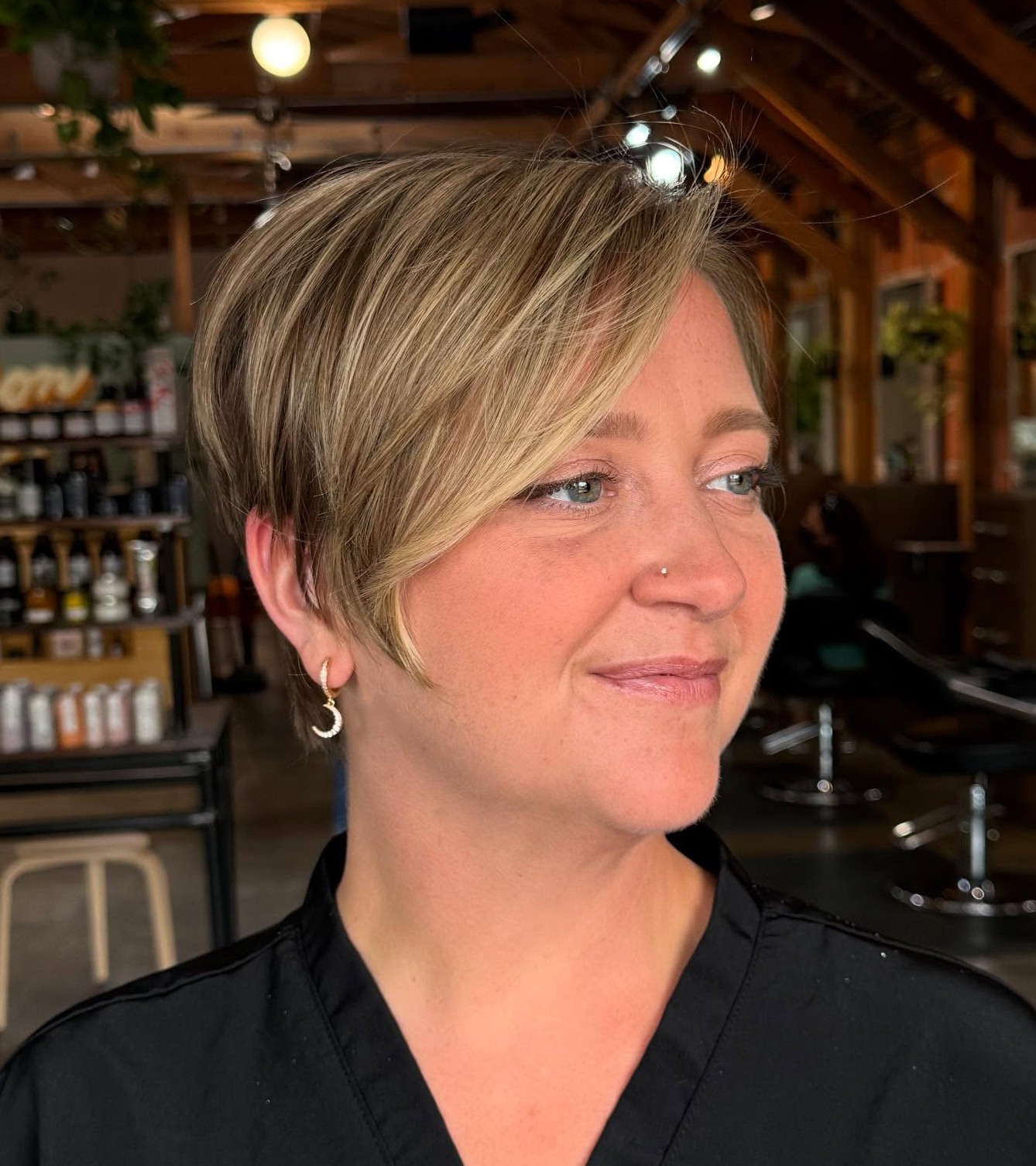
Textured and Choppy Pixie Cuts
Texture is a round face’s ally. Choppy, piecey layers break up the outline of the cut, preventing the smooth, rounded shape that can mirror and emphasize a round face. These pixies rely on razoring, point cutting, or texturizing shears to create irregular edges and movement.

5. Razor-Cut Textured Crop with Lifted Crown
Razor cutting removes weight from the interior of each section, creating a shattered texture that adds visual height without bulk at the sides. The crown is left deliberately longer — about 3–4 inches — and styled upward with a matte clay or texturizing powder. On round faces, this vertical lift at the top is what creates the elongation. Platinum or cool-toned color emphasizes every textured strand individually.
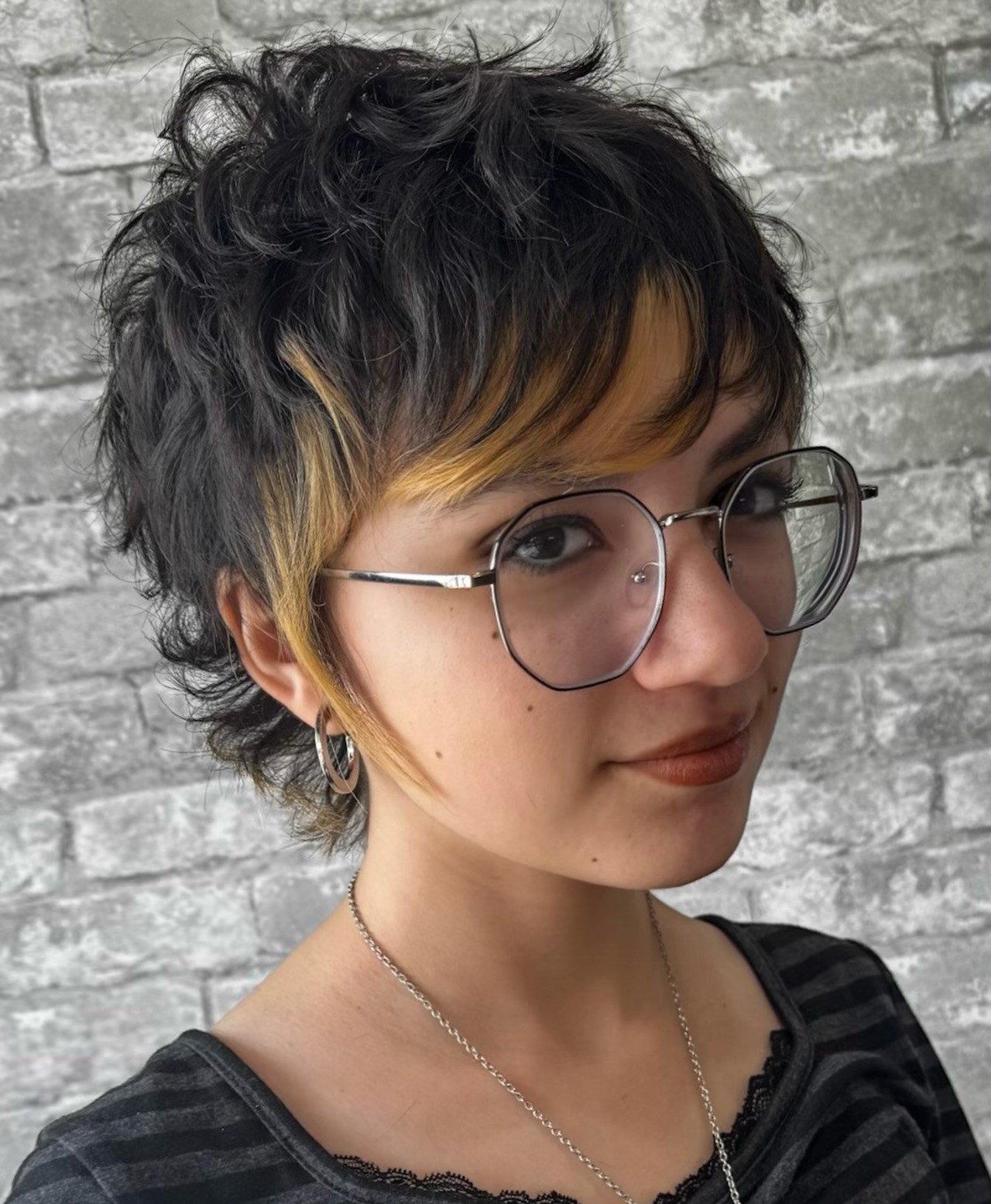
6. Choppy Pixie with Piece-y Fringe
Instead of one solid fringe line, this cut breaks the bangs into separate, uneven pieces that sit at slightly different lengths across the forehead. The irregular edges prevent the fringe from creating a horizontal line — which would widen the face — and instead draw the eye in multiple directions. A pea-sized amount of fiber paste worked between your fingertips and pinched through the fringe keeps the separation defined all day.
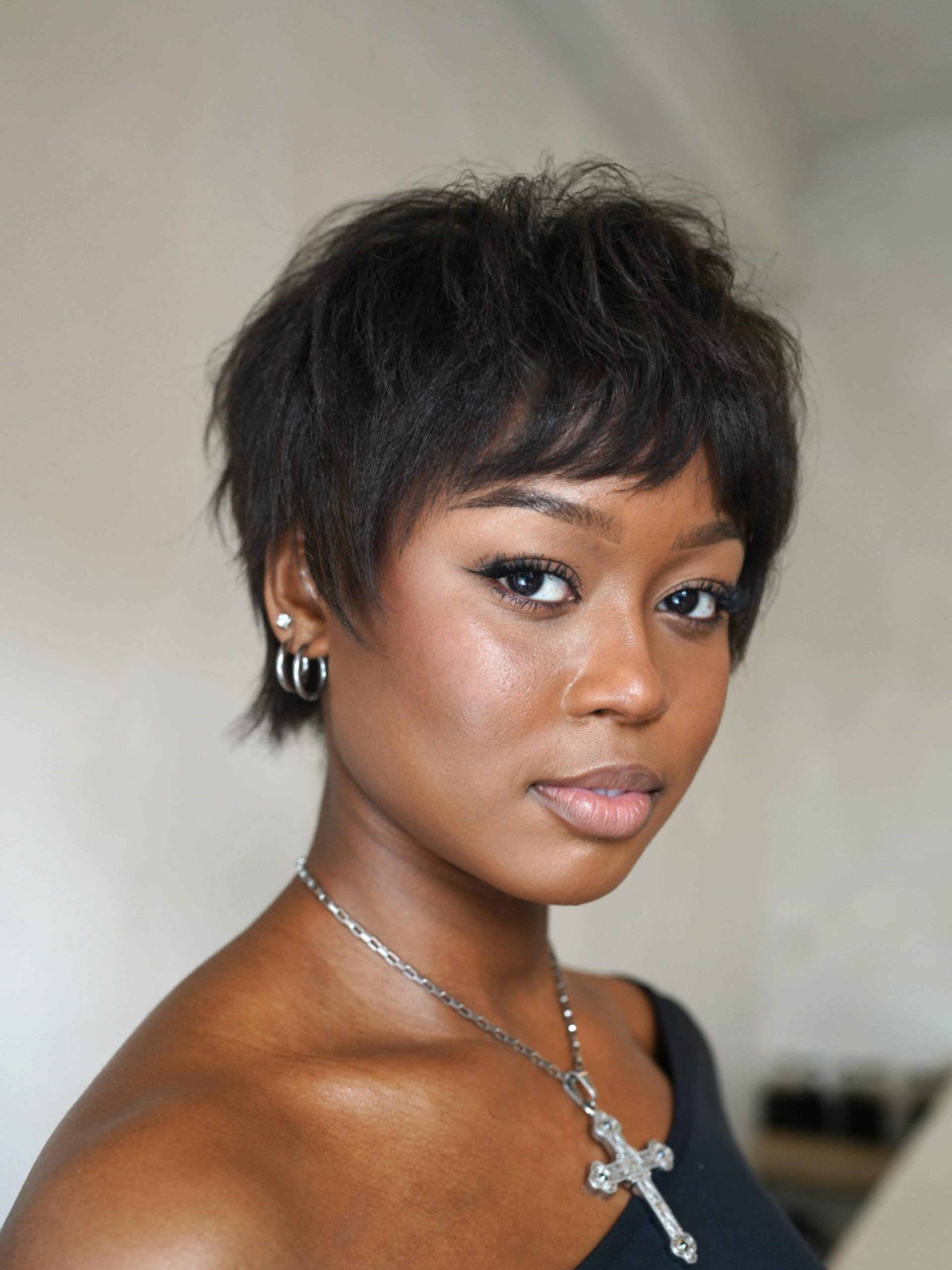
7. Messy Textured Pixie with Volume at the Top
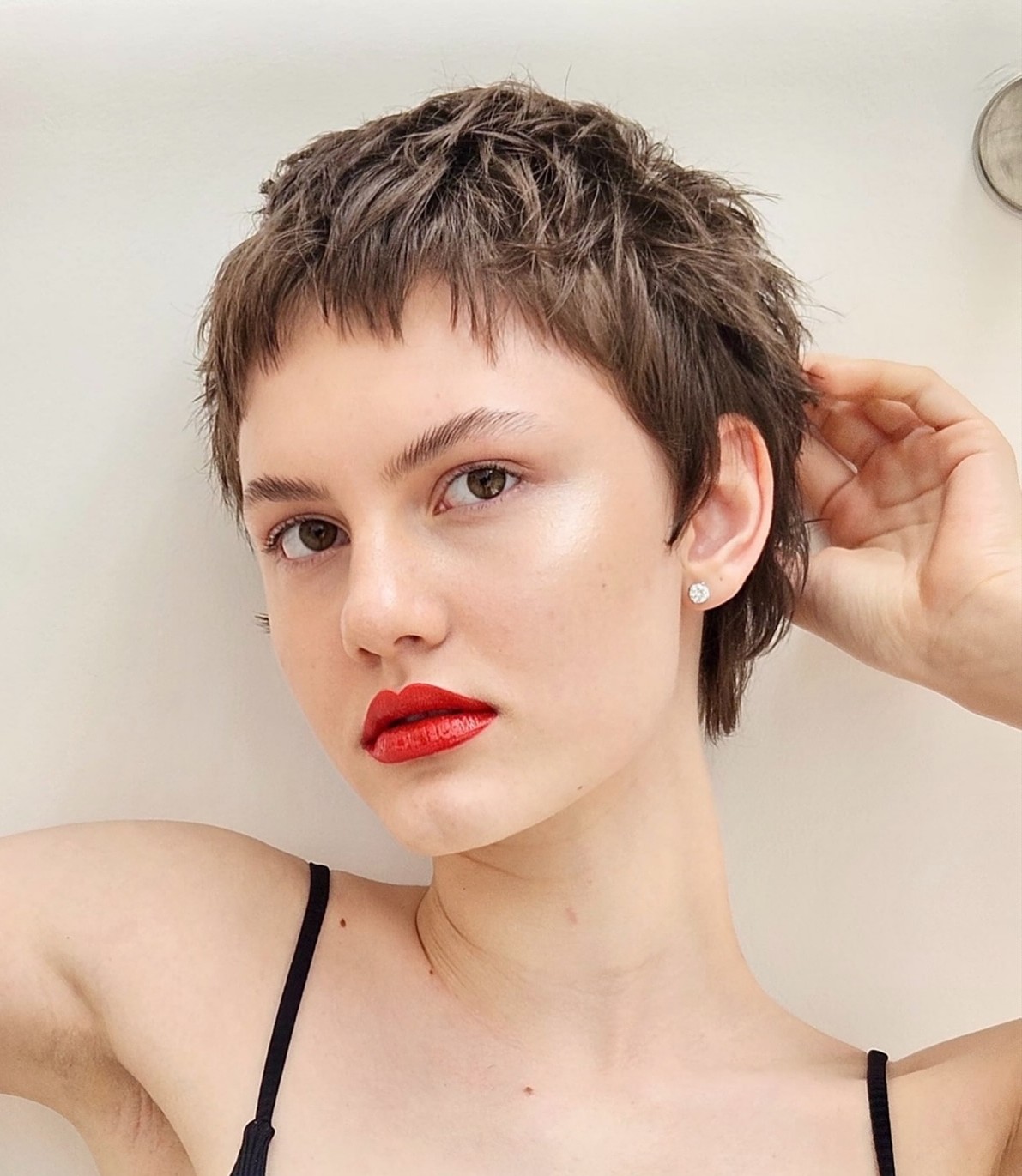
The “just rolled out of bed” texture here is entirely intentional — and entirely strategic for a round face. The tousled volume sits at the crown and slightly forward, adding height exactly where round faces need it, while the sides are kept close and textured rather than smooth. Wavy hair has an advantage with this cut because the natural texture does most of the styling work. A sea salt spray on damp hair, scrunched and air-dried, is often all it takes.

8. Spiky Textured Pixie with Clean Sides
Spiking the top section upward creates maximum vertical dimension — this is the most overtly elongating pixie variation in this collection. The sides are clipper-tapered to sit flat against the head, which narrows the silhouette at the temples. This cut demands thick or medium-thick hair; fine hair doesn’t have the rigidity to hold spikes without significant product. A strong-hold wax or pomade is non-negotiable for maintaining the lift through the day.

Long Pixie Cuts for Round Faces
If you want the edge of a pixie without going ultra-short, a longer pixie keeps more length through the top and fringe while still cropping the nape and sides. This category is ideal for round-faced clients who are nervous about going too short — the extra length around the face provides security while the overall shape still creates the elongating effect.
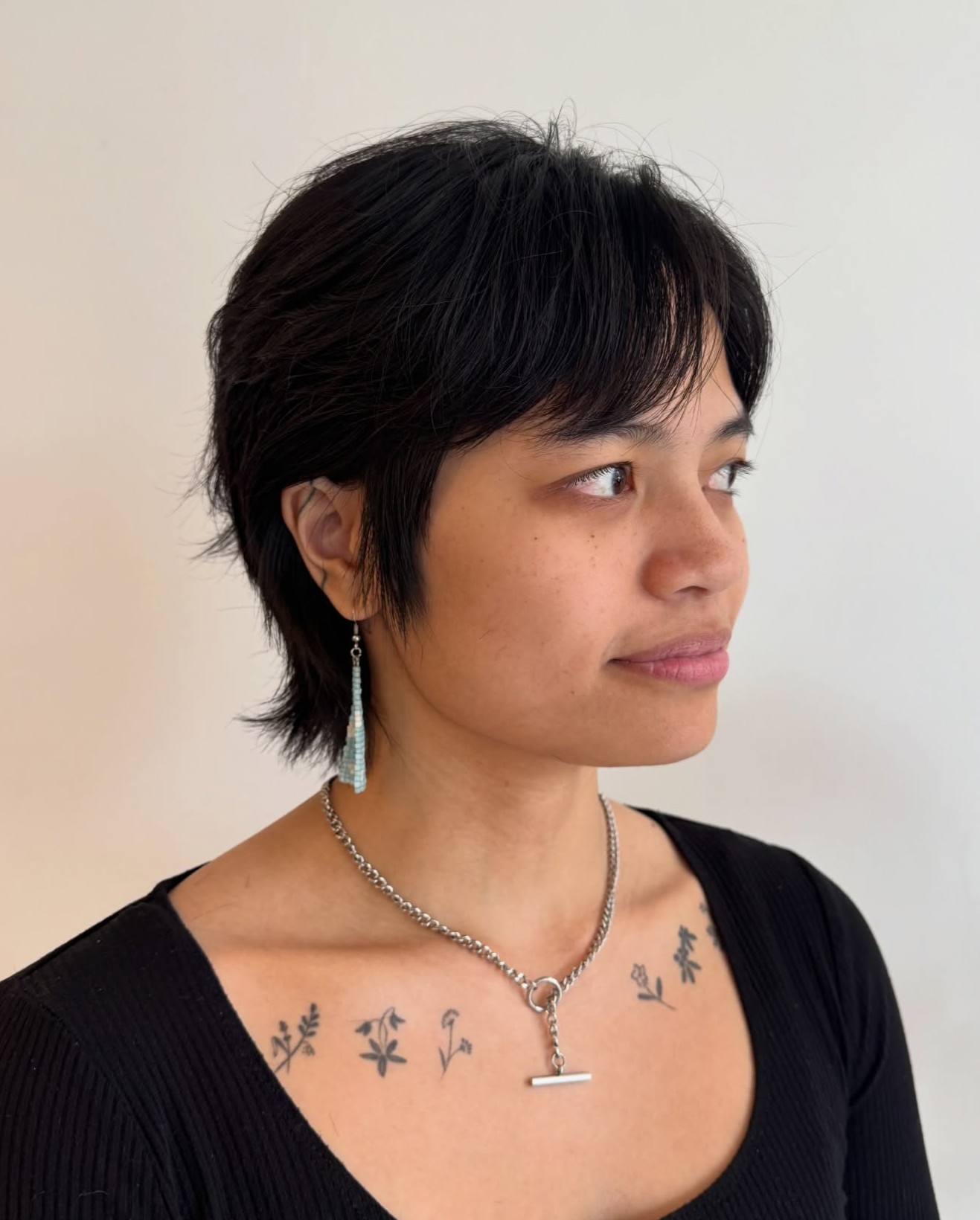
9. Long Pixie with Curtain Fringe
Curtain bangs parted at the center sweep outward along the cheekbones, creating two diagonal lines that frame and visually narrow the face. The top is layered for movement, and the nape stays tapered. This is one of the most versatile pixie shapes for round faces because the curtain fringe works across hair types — straight, wavy, or loosely curly. Stylists often recommend this as a first pixie for clients who’ve never gone short, since the face-framing pieces provide a sense of length.
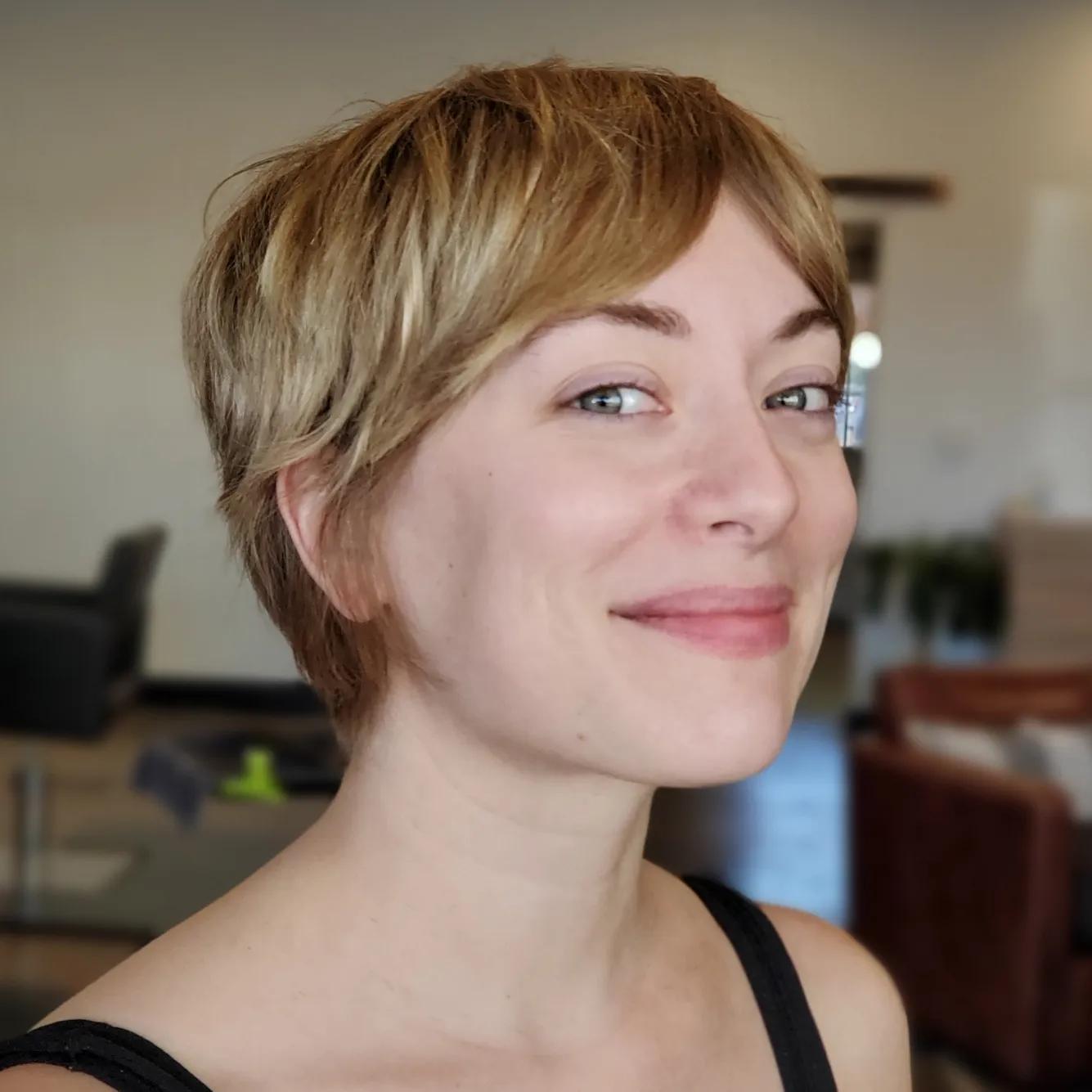
10. Grown-Out Pixie with Jaw-Grazing Front Pieces
This “in-between” length captures the pixie’s tapered back and short sides while letting the front grow past the chin line. The jaw-length pieces skim the widest part of a round face and visually extend it downward, which is exactly why this length is so flattering. If you’re growing out a shorter pixie, ask your stylist to shape the back and sides while leaving the front and top alone — this preserves the elongation during the grow-out phase.
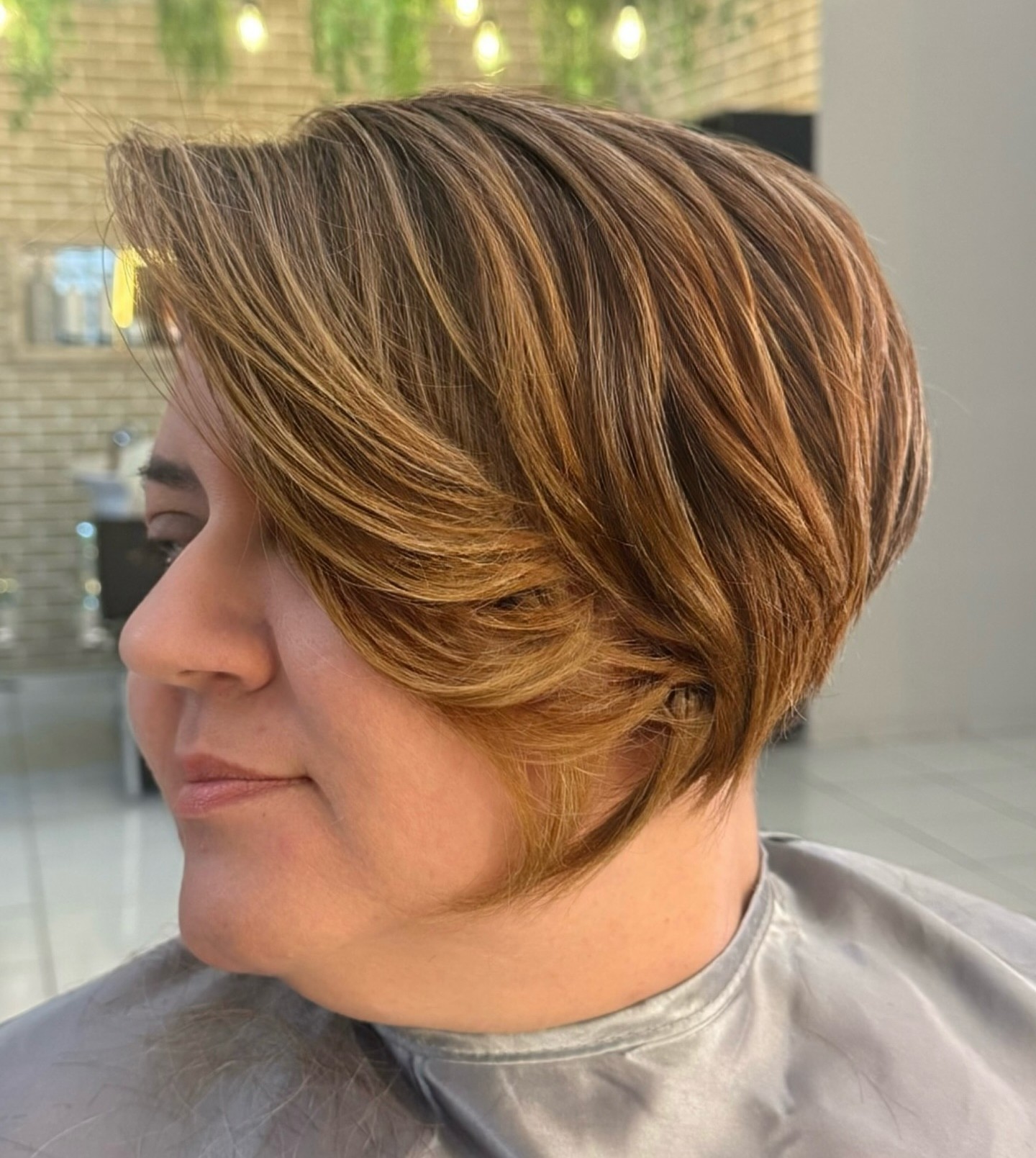
11. Longer Textured Pixie with Side Part
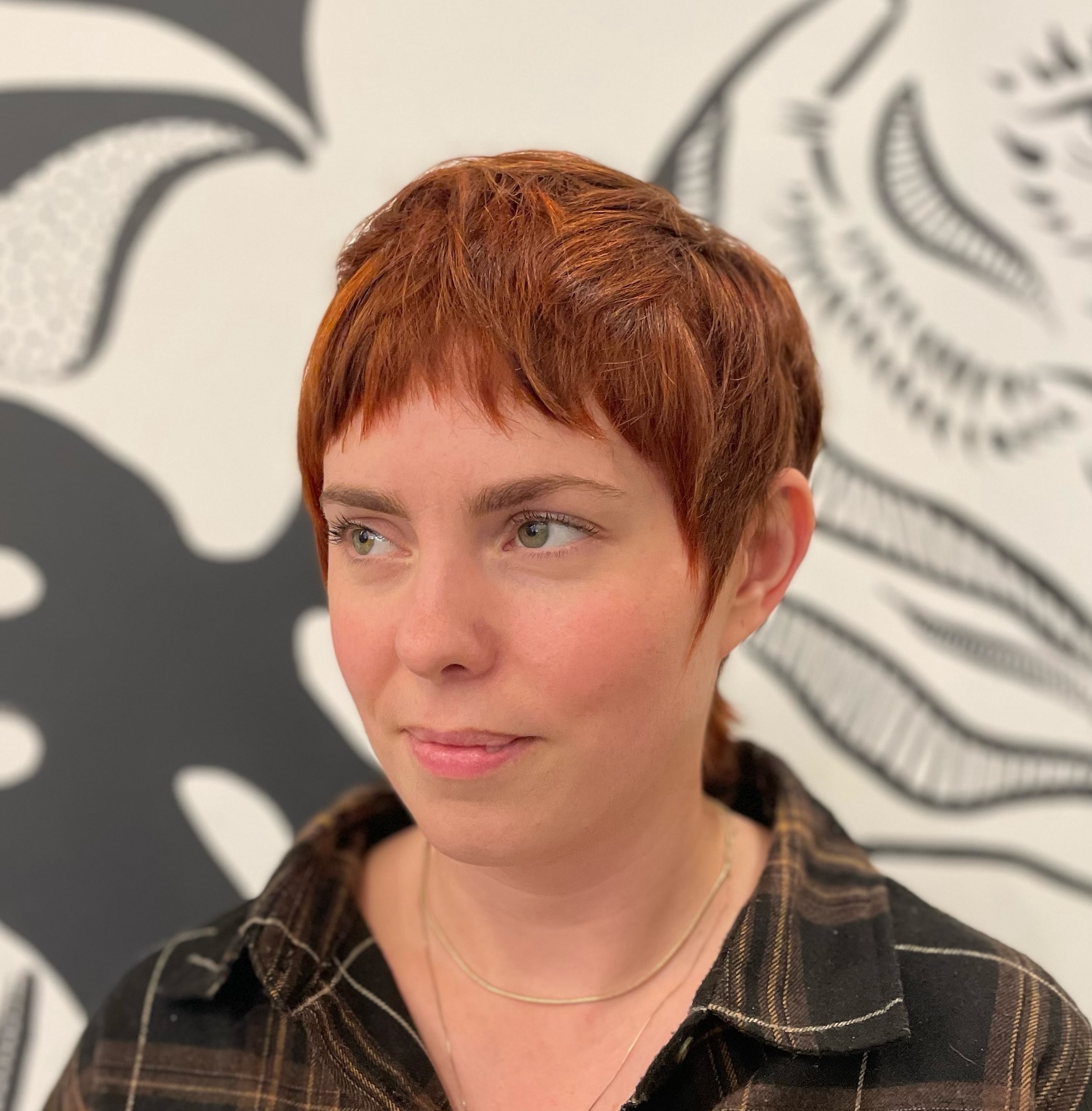
At 3–4 inches through the top and sides, this sits right at the border between pixie and short bob territory. The side part creates asymmetry while the textured layers prevent the cut from looking like a helmet — a real risk with longer pixies on round faces if the hair sits too uniformly. Auburn and copper tones add warmth and highlight the texture, making each layered strand visible. Use a lightweight volumizing spray at the roots before blow-drying to keep the top lifted.
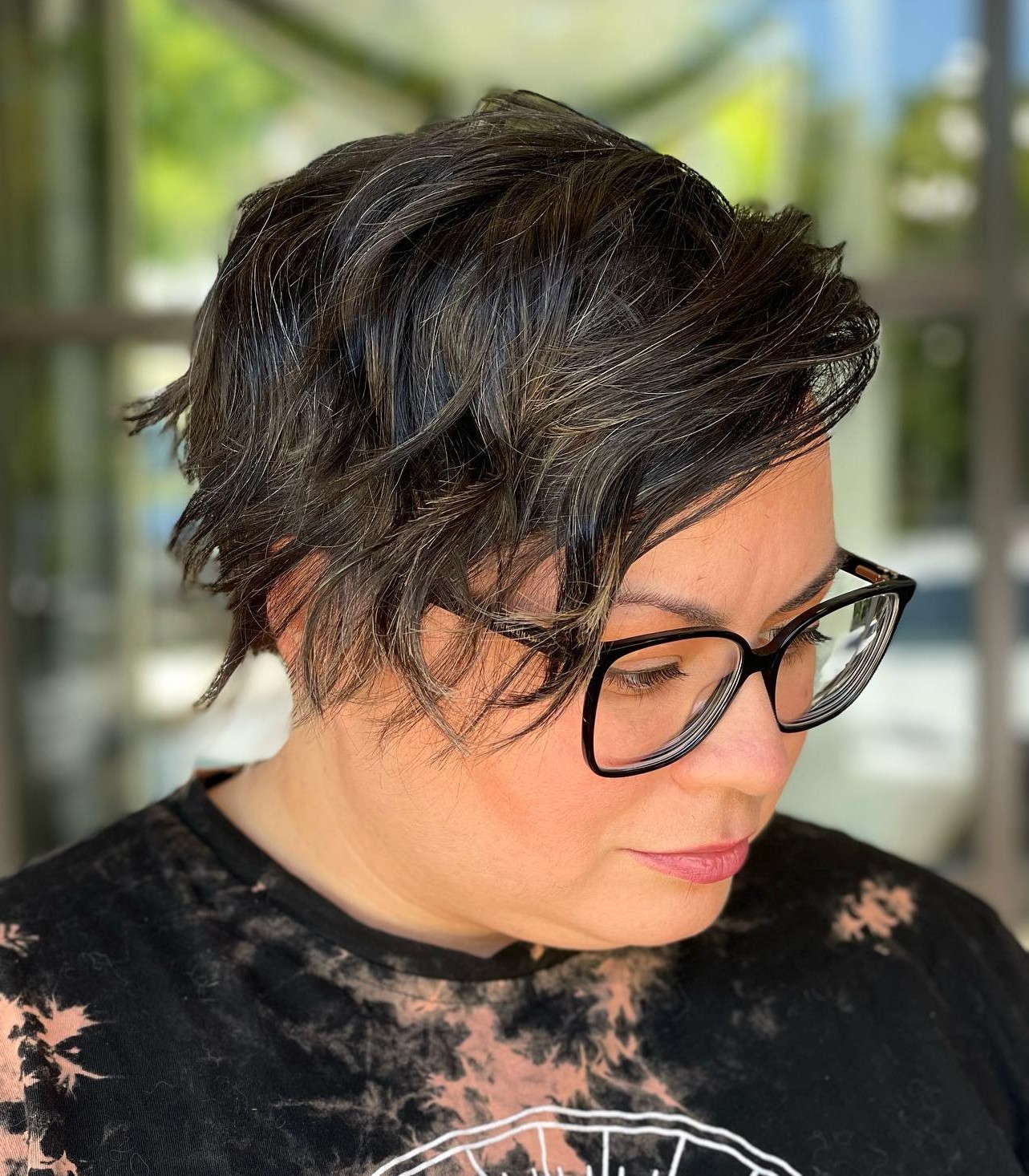
12. Swept-Back Long Pixie
Styling a longer pixie completely off the face is a bold choice — and a surprisingly flattering one for round faces. The fully exposed forehead adds vertical real estate, and without any fringe covering the brow line, the eye perceives the face as longer. This works best on thick, straight hair that holds its swept-back shape, typically with the help of a medium-hold gel or mousse applied to damp hair and blow-dried backward. Thin or fine hair won’t hold this style without constant product buildup.
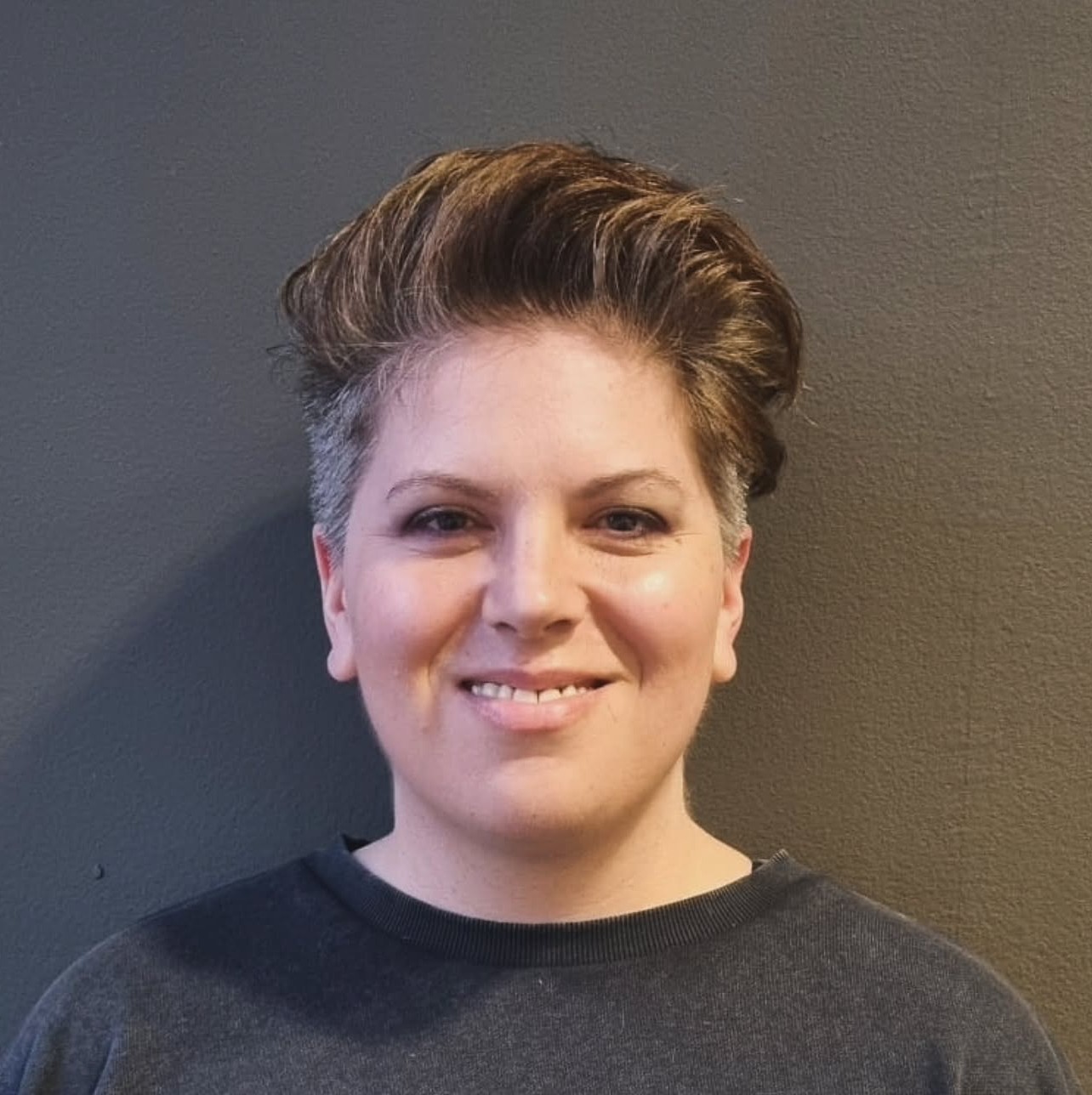
Undercut and Edgy Pixie Cuts
An undercut removes weight and volume from the sides and nape, which directly benefits round faces by reducing width where it matters most. These cuts create contrast between the longer, styled top and the close-cropped or shaved lower sections.

13. Pixie with Side Undercut
Shaving or clipper-cutting one side while leaving the opposite side long creates a dramatic asymmetry that breaks up the round face’s natural symmetry. The long side provides a diagonal sweep across the forehead, while the undercut side eliminates all volume at the temple. This is a high-contrast, editorial look — bring reference photos to the salon so your stylist can gauge exactly how short you want the undercut and how dramatic the length difference should be.
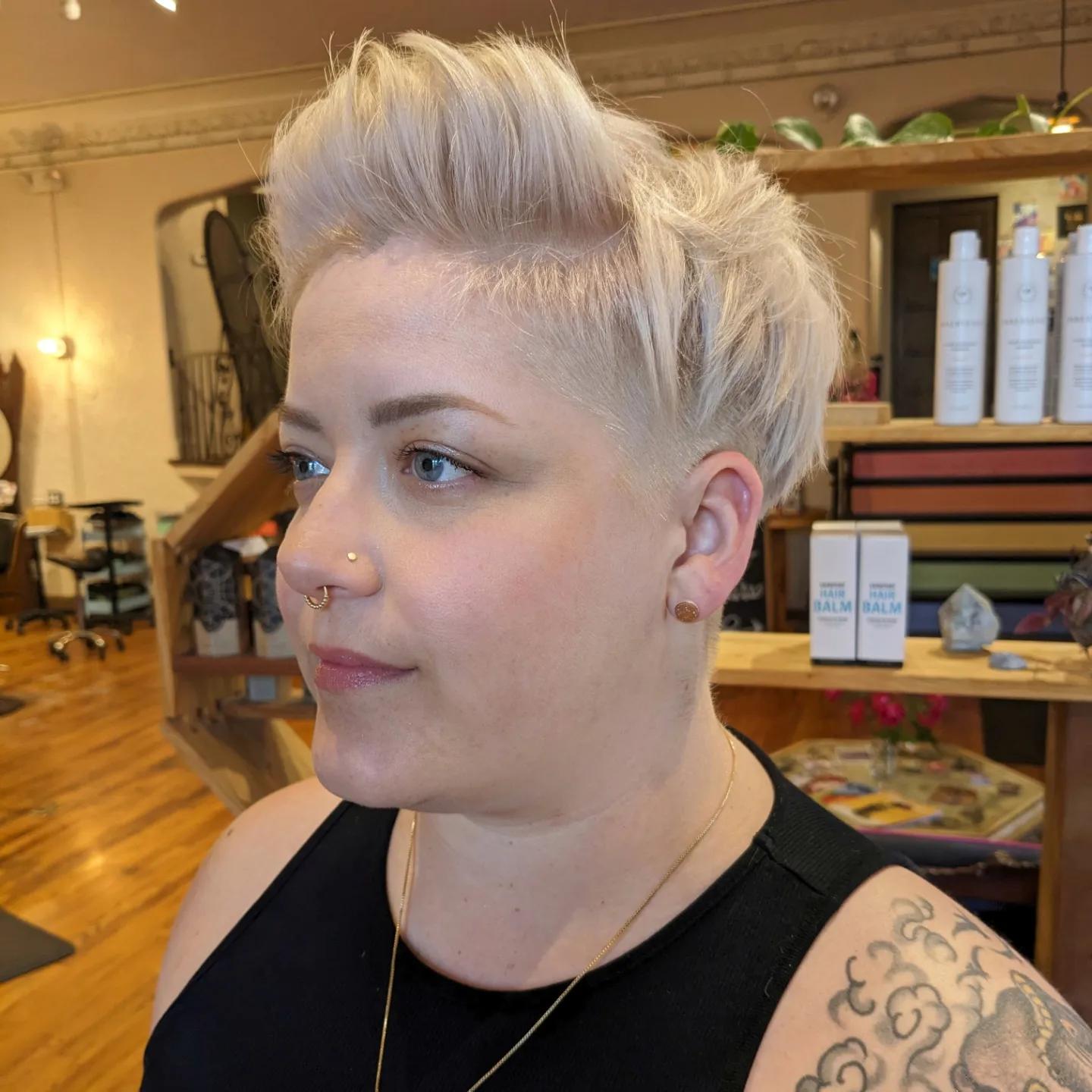
14. Nape Undercut with Textured Top
From the front, this reads as a standard textured pixie. The surprise is at the back: a buzzed nape that elongates the neck line and creates a clean, sharp silhouette from behind. For round faces, the exposed neck adds vertical length to the overall profile. This undercut style requires trims every 3–4 weeks to keep the nape clean, making it one of the higher-maintenance options in this collection. A texturizing paste through the top keeps the contrast between the sleek nape and the tousled crown.
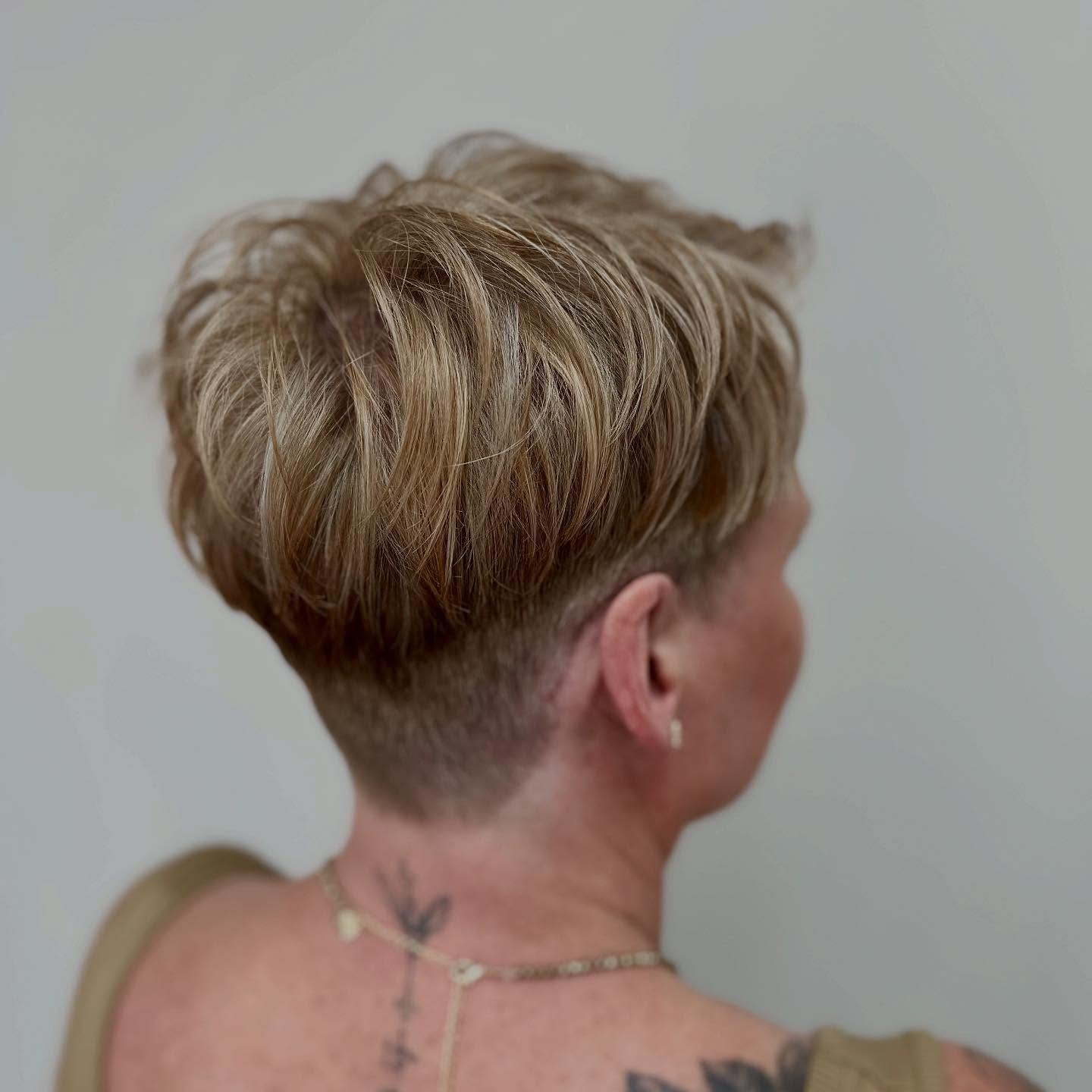
15. Edgy Disconnected Pixie with Shaved Temple
A shaved temple — with or without a design etched in — removes volume from the side of the head entirely, narrowing the face more aggressively than any other pixie variation. The remaining hair is styled over to the opposite side for a dramatic sweep. Coarse, thick hair handles this cut best because there’s enough density on the long side to create a full, swept shape. If your hair is fine, the swept side can look sparse and struggle to cover the transition point.
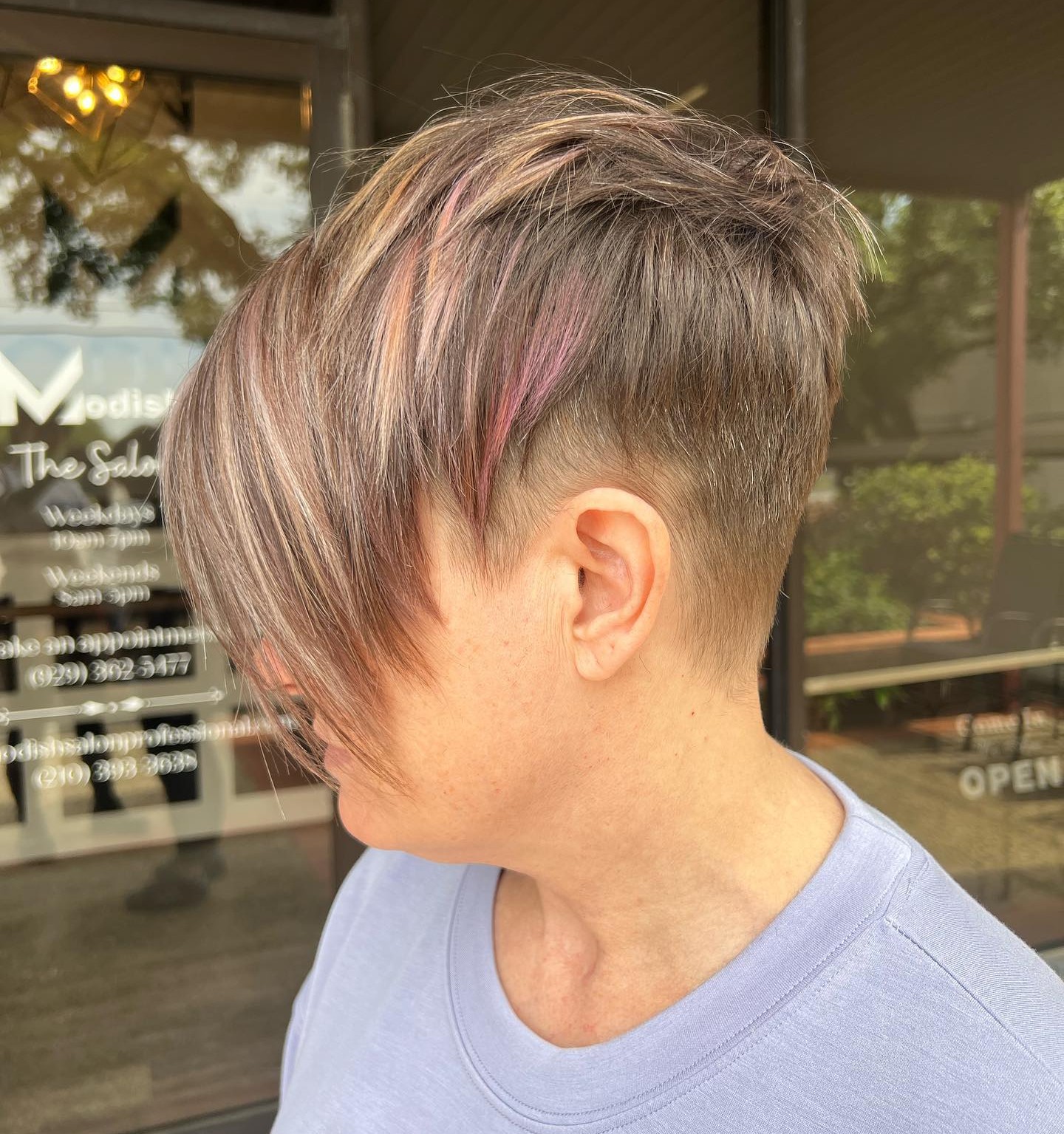
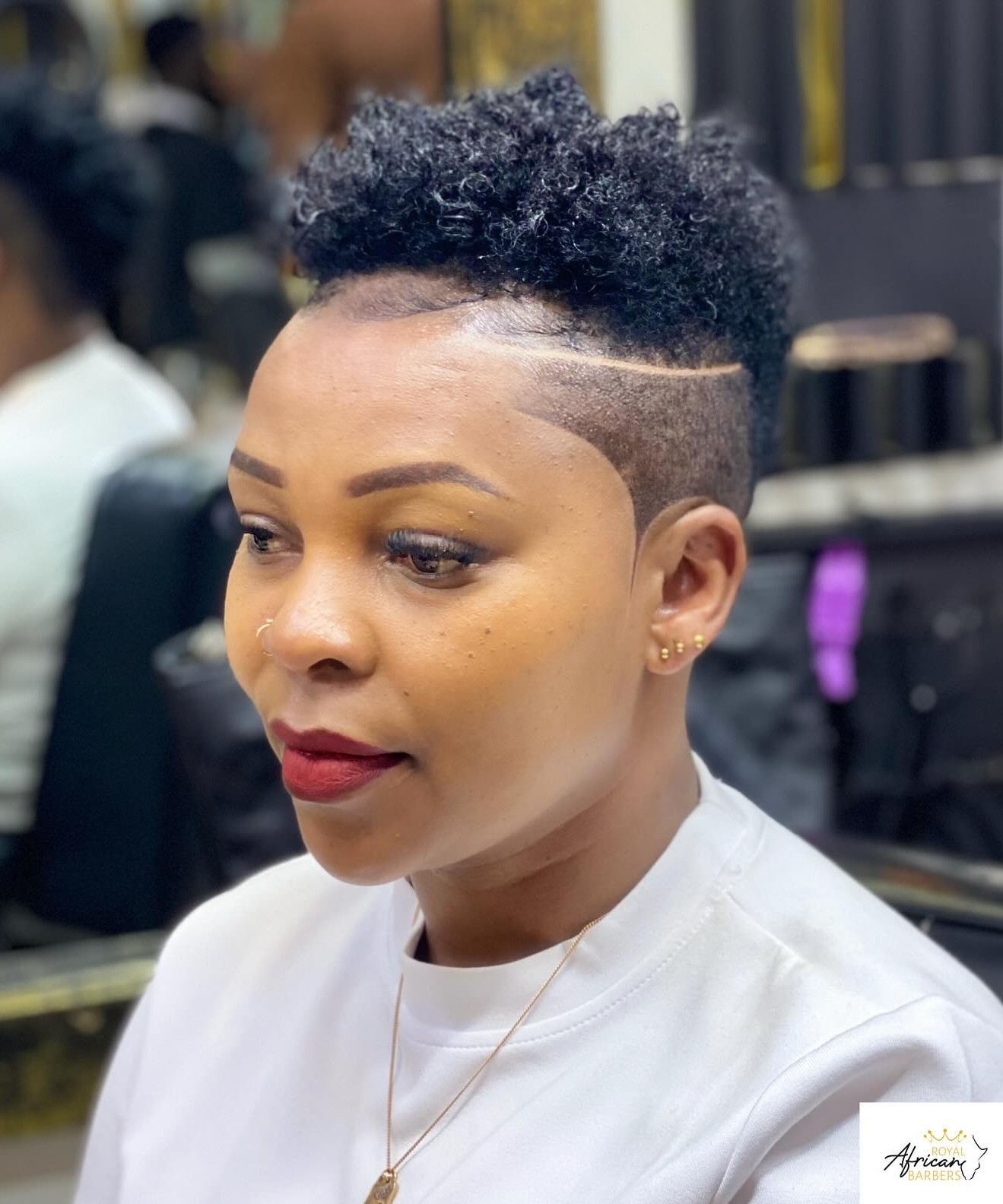
16. Tapered Fade Pixie
Borrowing from barbershop technique, a fade gradually transitions from longer hair at the crown to very short hair at the temples and nape. On round faces, the fade creates a narrowing effect from top to bottom. Ask your stylist for a low or mid fade — a high fade can expose too much of the round temple area and work against the elongation. The top is left 2–3 inches long with enough texture to style forward, upward, or to the side depending on your mood.
Pixie Bob (Bixie) Cuts for Round Faces
The pixie bob — or bixie — sits at the sweet spot between a pixie and a bob, keeping enough length to cover the ears and graze the jaw while maintaining the cropped nape and layered crown of a pixie. For round faces, this hybrid length is forgiving and flattering.
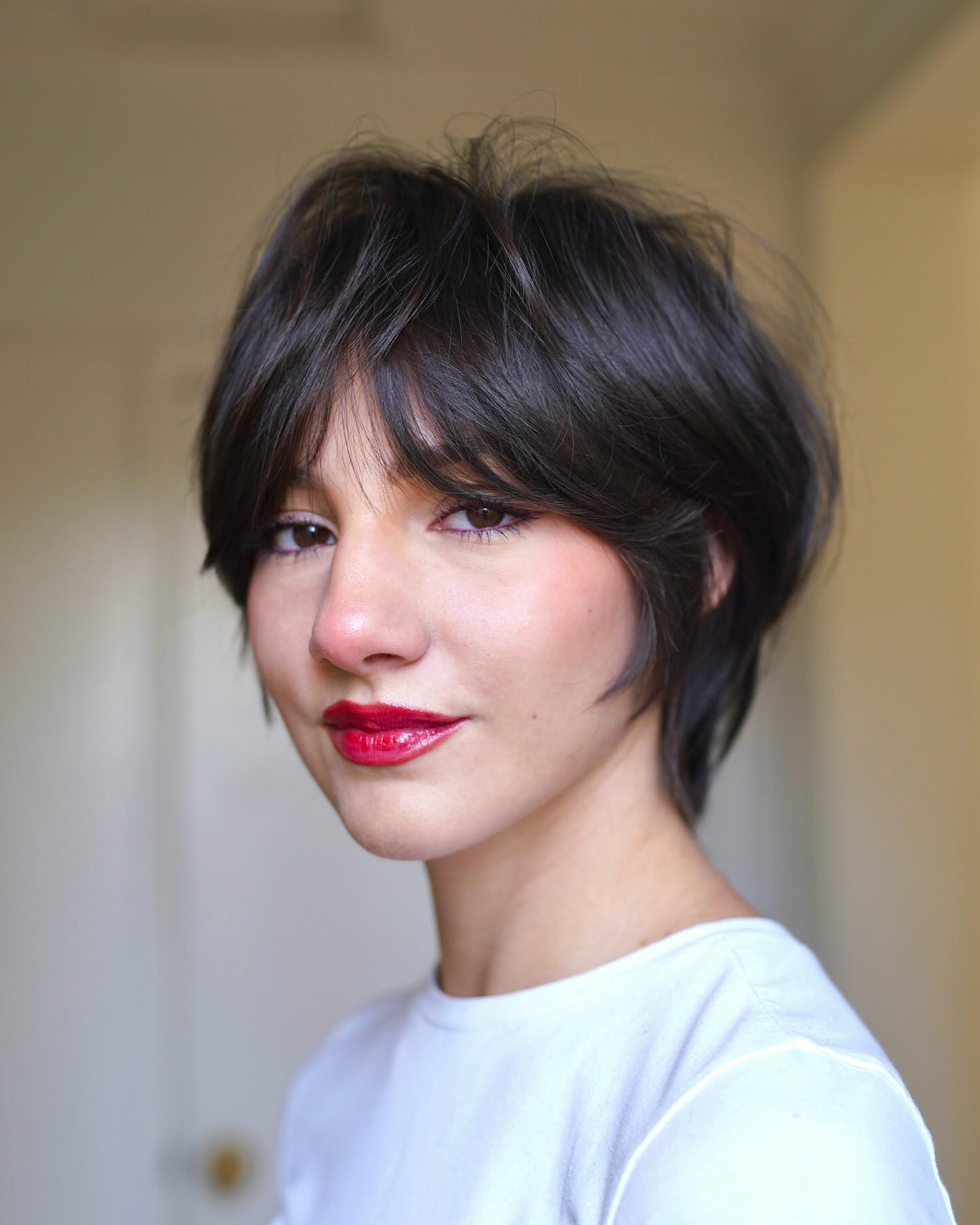
17. Jaw-Length Pixie Bob with Side Part
The front pieces fall to jaw level and create a framing effect that draws the eye downward past the cheeks. The back is stacked and graduated, adding shape and volume at the crown. Fine hair works well here because the stacked back creates fullness where a standard pixie might fall flat. Ask for point-cut ends to avoid a blunt bottom line that would widen the jawline on a round face.

18. Textured Bixie with Wispy Ends
Wispy, piece-y ends — achieved through razor cutting or heavy point cutting — give this bixie an effortless, undone quality that softens the overall shape. The irregular ends prevent the cut from forming a smooth circle around the head, which is exactly what round faces need to avoid. Honey-toned highlights through the top and fringe add dimension that makes fine-to-medium hair look fuller. Style with a dime-sized amount of lightweight styling cream worked through damp hair, then air-dry.
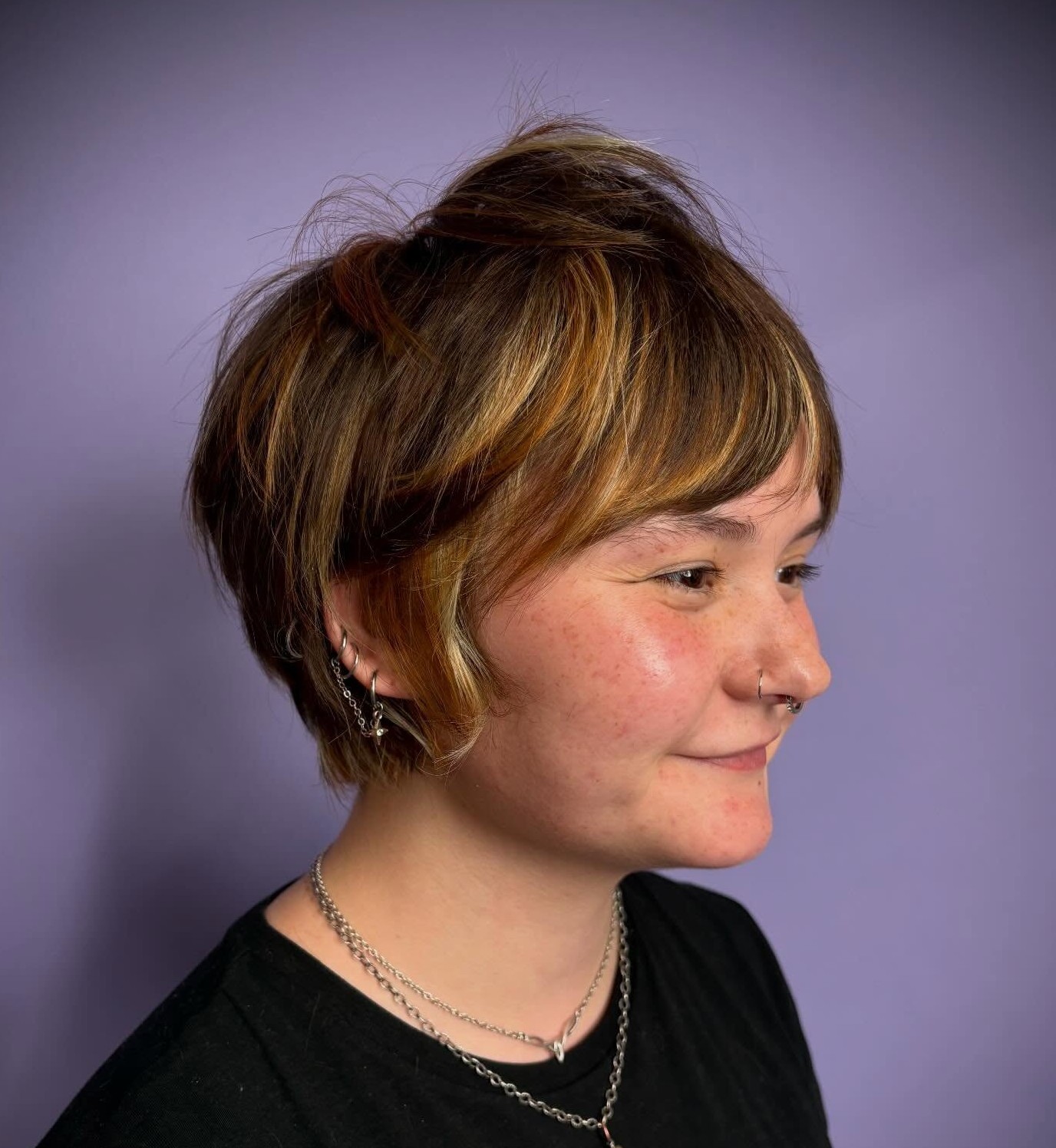
19. A-Line Pixie Bob
The A-line shape — shorter in the back, longer in the front — creates a forward-falling line that directs attention downward rather than outward. This is one of the most reliably flattering shapes for round faces because the angled line automatically creates the diagonal that elongates. Medium to thick straight hair shows the A-line shape most cleanly. If your hair is wavy, the angle gets softened by curl, which still looks good but creates a different, less geometric effect.
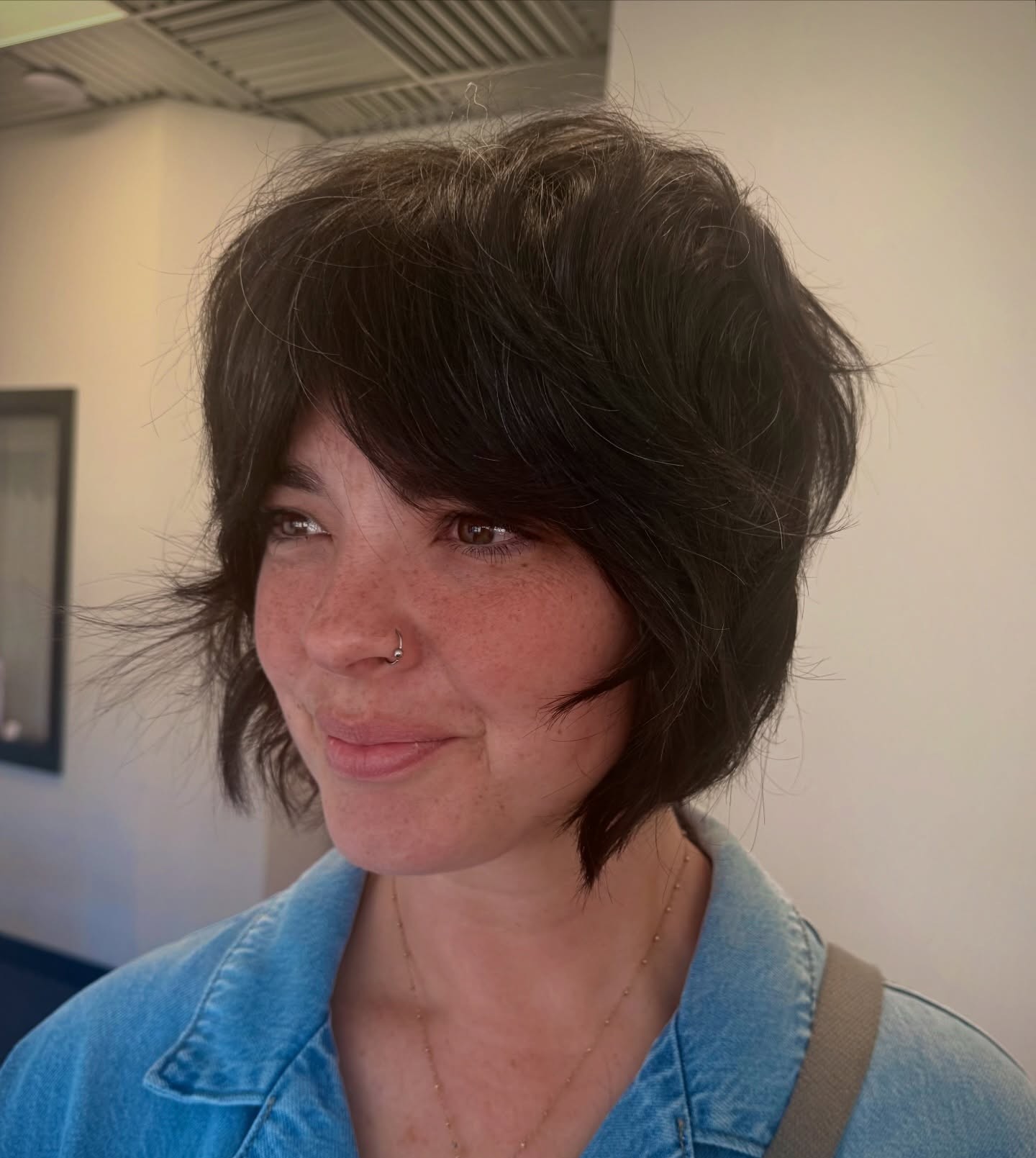
Curly and Wavy Pixie Cuts for Round Faces
Curly and wavy textures bring built-in volume — which is a double-edged sword for round faces. The key is controlling where that volume sits. Height at the crown flatters; width at the sides doesn’t. Every cut in this section manages natural texture by directing volume upward and keeping the sides compact.
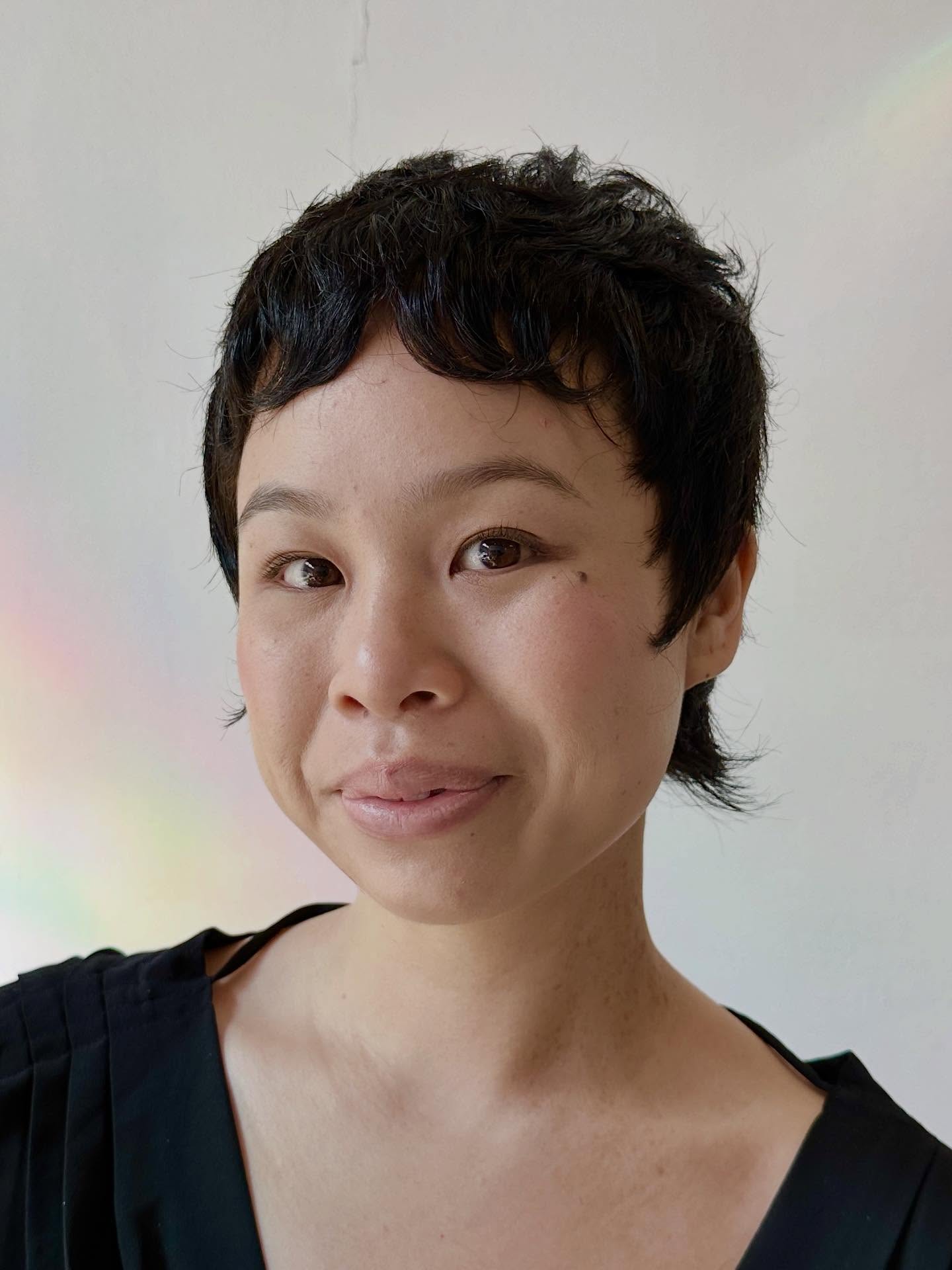
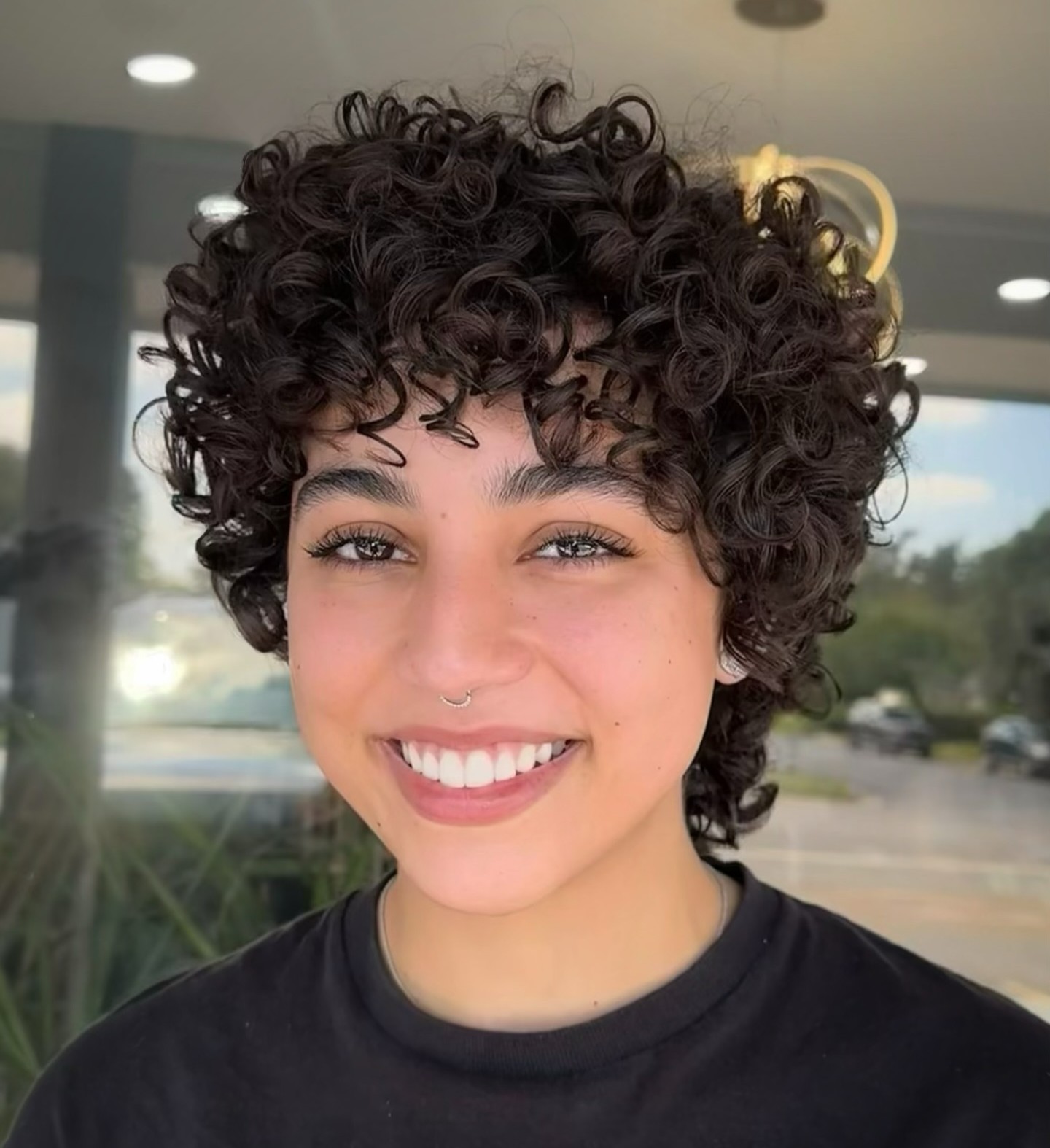
20. Curly Pixie with Elongated Top
Leaving the curls longer at the crown (3–5 inches before curl shrinkage) while tapering the sides close creates a silhouette that’s tall and narrow — the opposite of what a round face naturally presents. Dry cutting is essential here; stylists who cut curly hair wet risk removing too much length once the curls spring up. A curl-defining cream worked through wet hair and diffused upside down concentrates volume at the top where it benefits the face shape most.
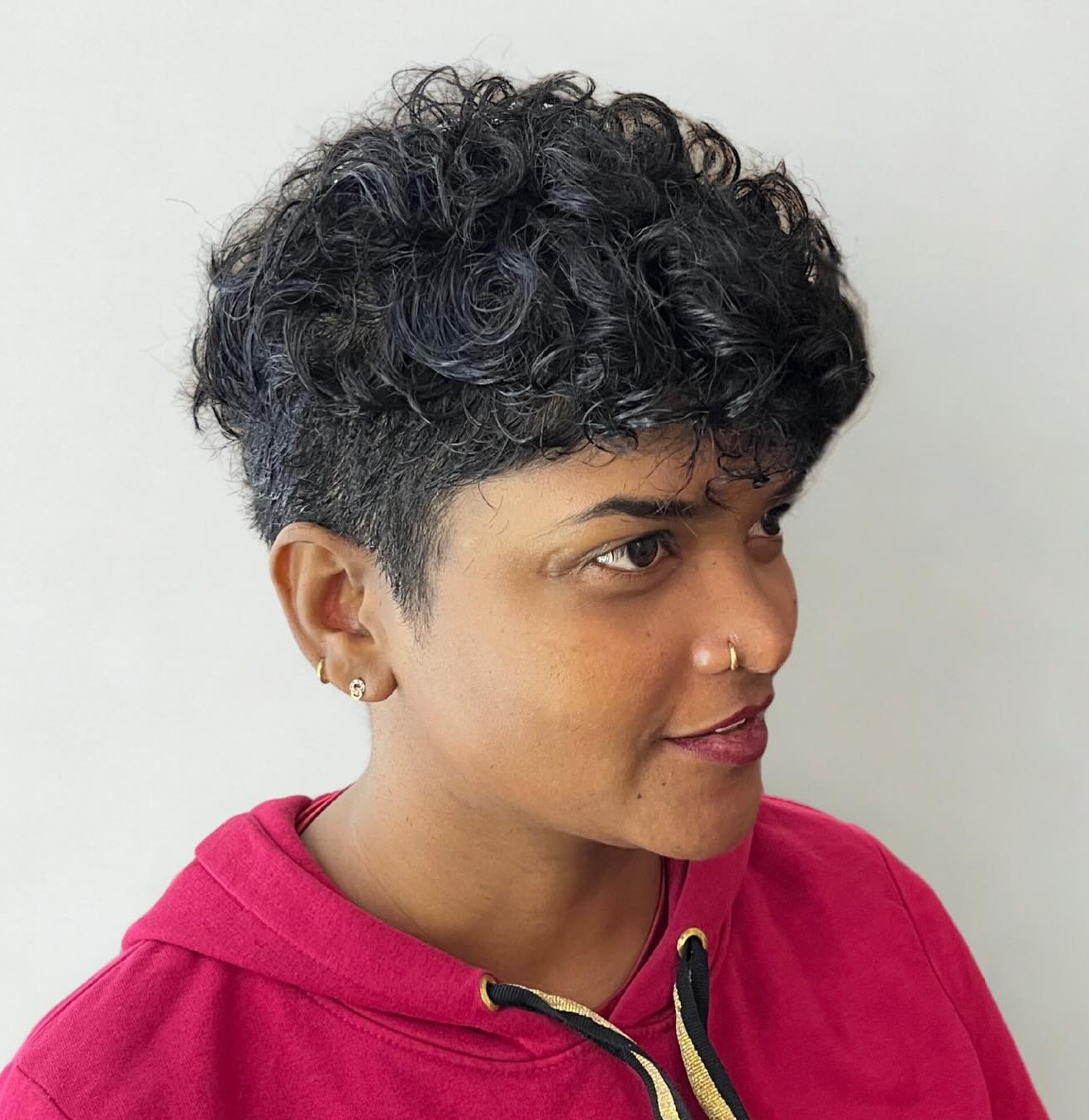
21. Wavy Pixie with Side-Swept Fringe
Natural wave gives the side-swept fringe a relaxed bend that lies close to the forehead without needing much heat styling. The wave pattern adds texture through the top automatically, which means less product and less time with a blow-dryer. For round faces, the key detail is keeping the sides short enough that the wave doesn’t puff outward at the temples — ask your stylist to taper the sides so the wave sits flat rather than expanding horizontally.
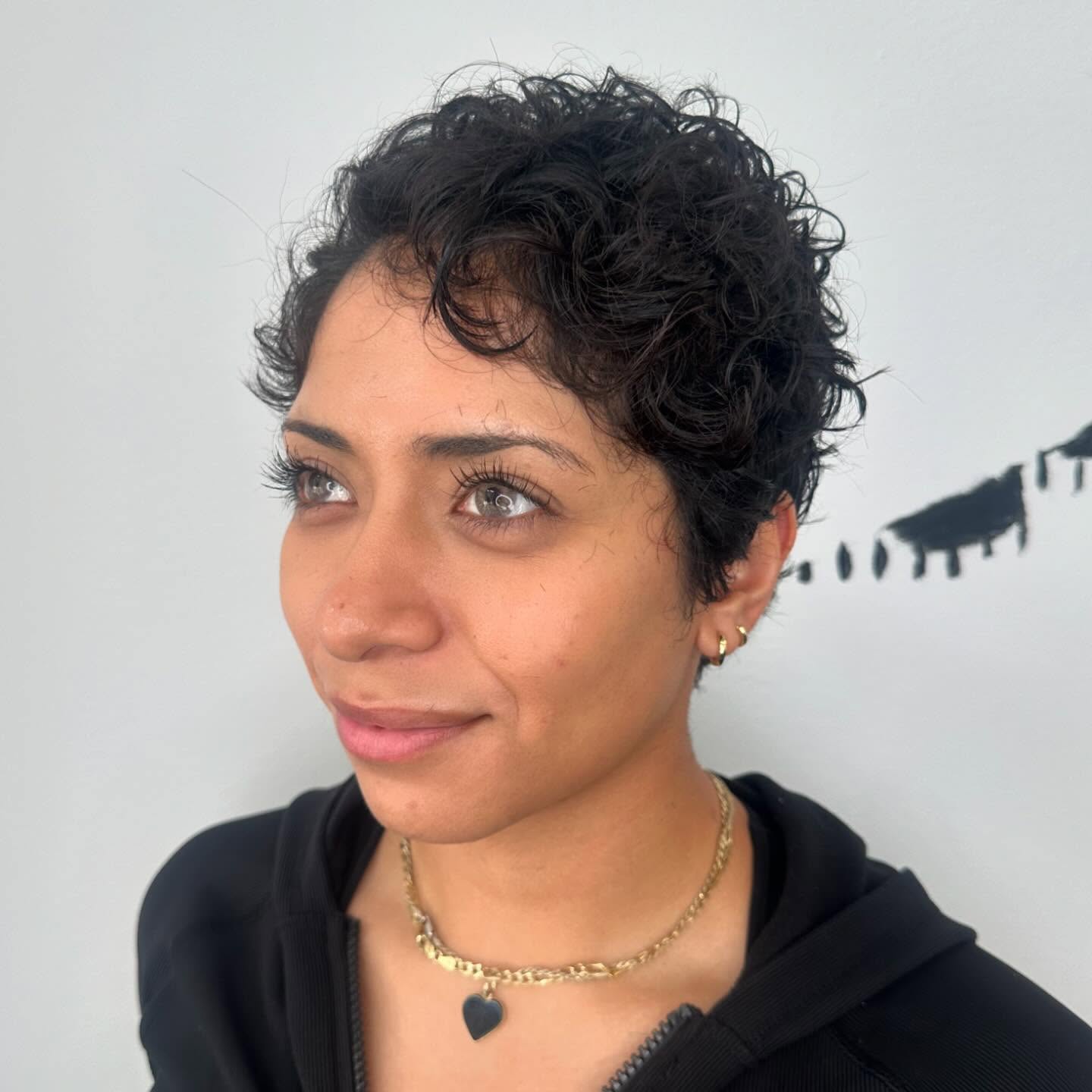
22. Tight Curl Pixie with Defined Shape
On tighter curl patterns (3c–4a), a well-shaped pixie creates a naturally sculpted silhouette. The round face benefits from the stylist building height at the crown by leaving curls slightly longer there while shaping the sides closer to the head. Avoid asking for an all-over uniform length — on round faces with tight curls, that creates a halo effect that adds width everywhere. A light hold gel or curl cream keeps definition without crunchiness.
Pixie Cuts with Color That Flatters Round Faces
Color placement can enhance the face-elongating effects of a pixie. Strategic highlights at the crown and through the fringe draw the eye upward, while deeper tones at the sides can optically recede and narrow.
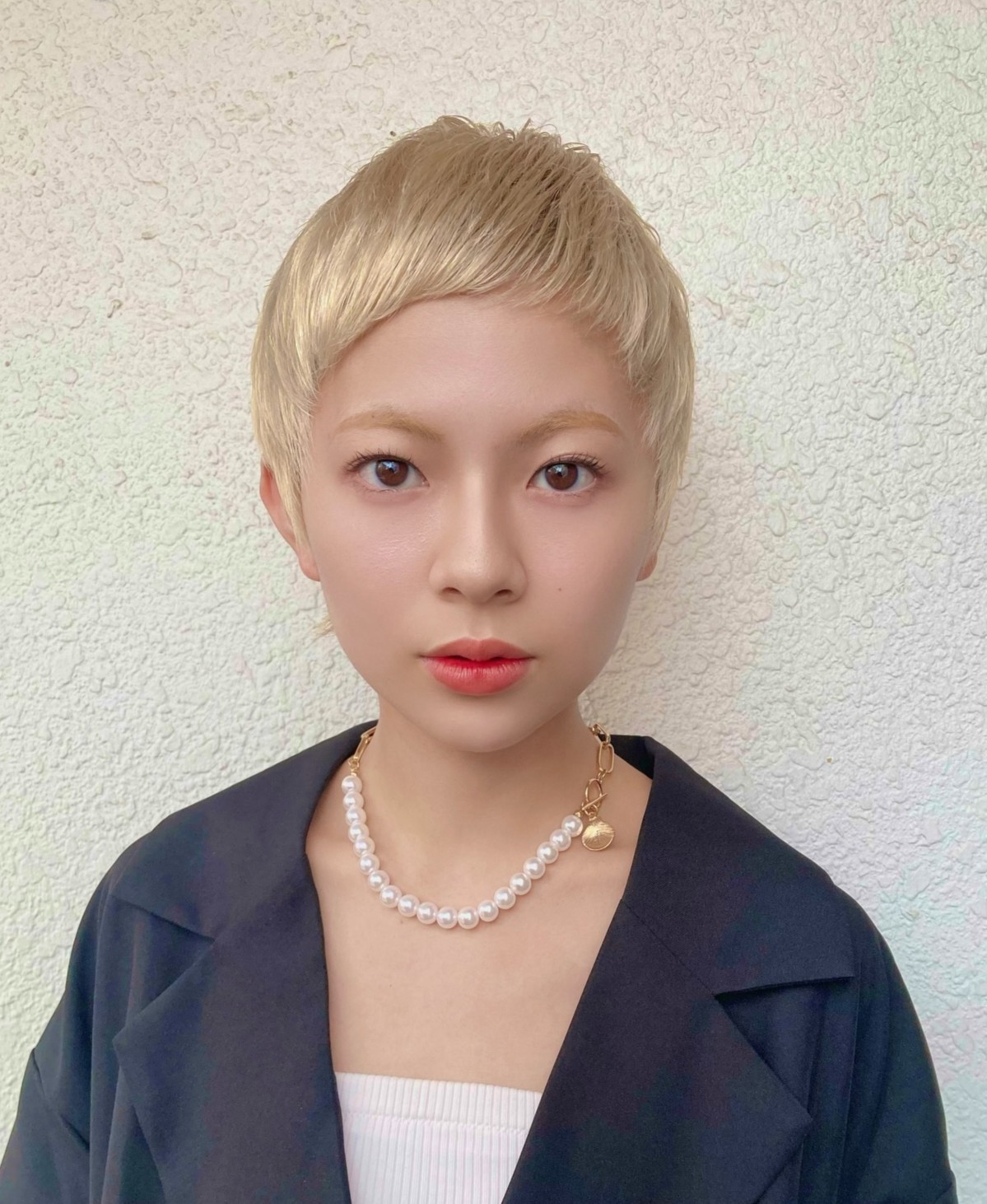
23. Platinum Pixie with Dark Root Shadow
The contrast between a dark shadow root and platinum lengths creates vertical depth at the crown. On a round face, this high-contrast color placement acts like built-in contouring — the darker root recedes while the bright top reflects light and draws the eye upward. Maintaining platinum requires toning every 4–6 weeks to prevent brassiness, plus a purple shampoo once or twice weekly at home.
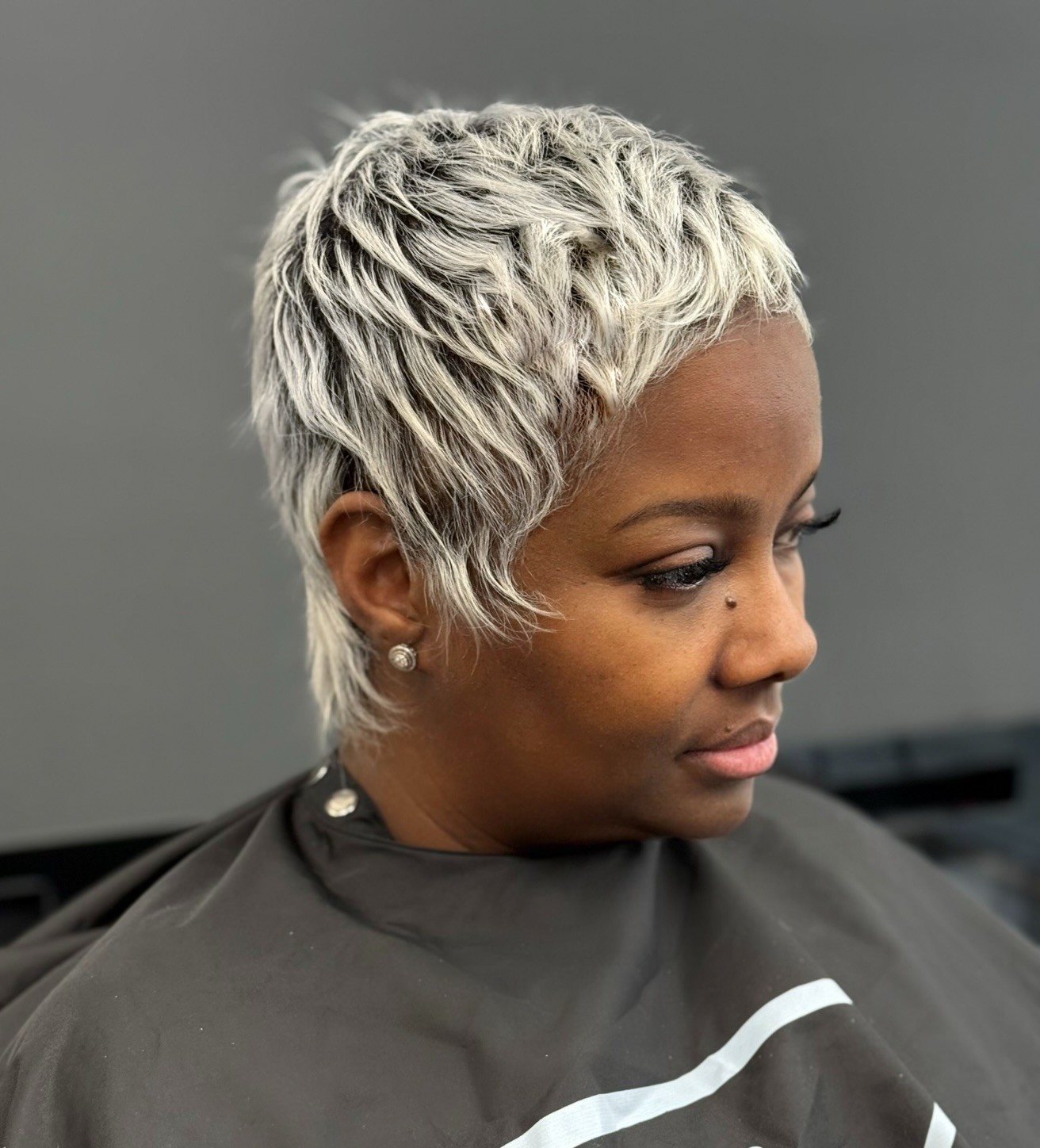
24. Face-Framing Highlights on a Textured Pixie
Placing the lightest pieces specifically through the fringe and top — while keeping the sides and nape darker — creates a lightness-and-brightness map that directs attention to the center of the face rather than its width. This technique works with the same principle as face-framing money pieces on longer hair, adapted for pixie lengths. The darker sides recede optically, narrowing the face’s apparent width.
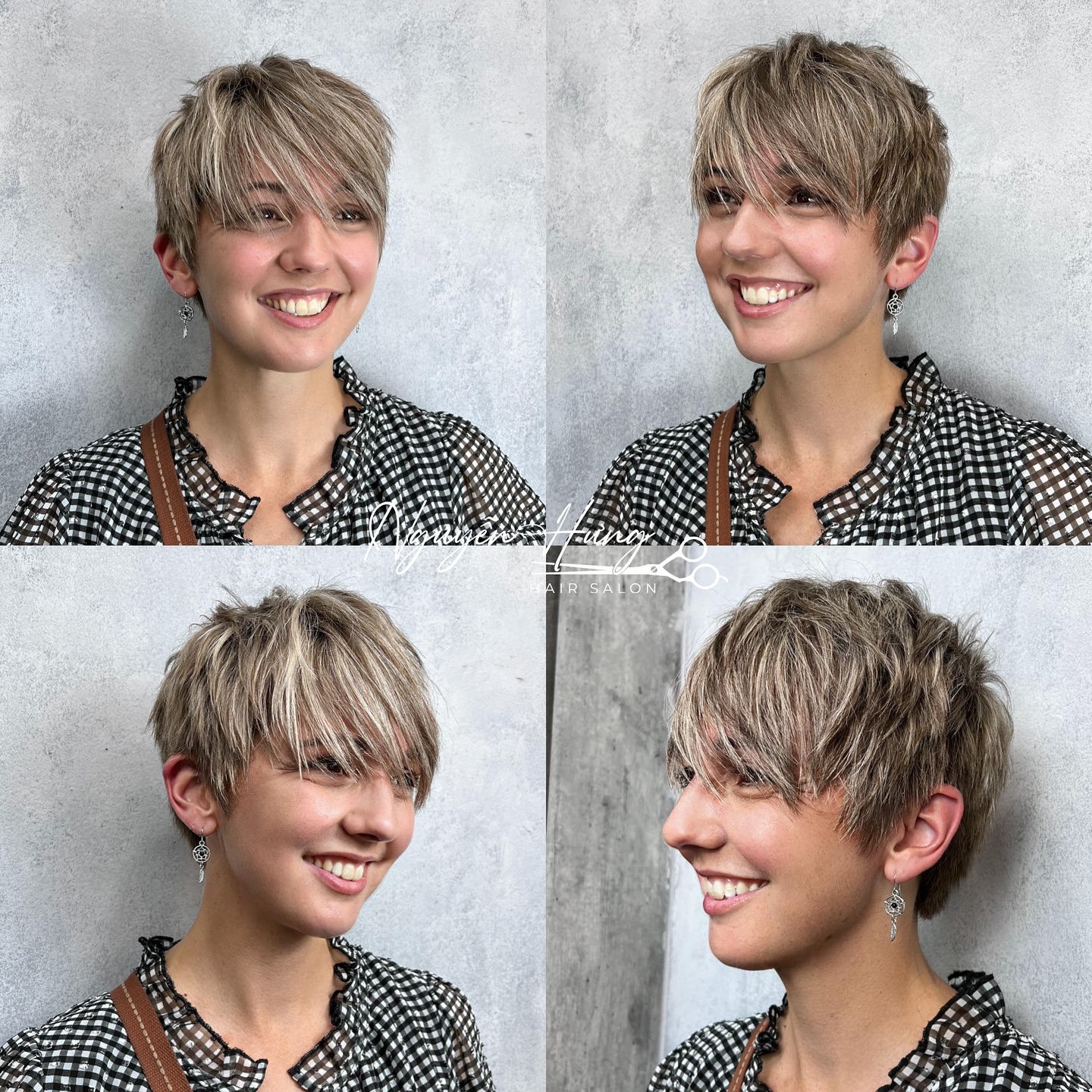
25. Copper Pixie with Warm Dimensional Tones
Warm copper and auburn tones reflect light in a way that highlights individual strands, making textured pixie cuts look multidimensional and full of movement. For round faces, the warmth draws attention forward to the face and fringe area rather than outward to the sides. This shade sits well on fair to medium skin tones with warm undertones — cool-toned skin can look washed out by strong copper. Maintaining vibrancy requires a color-depositing conditioner in a copper tone every few washes, since red-family pigments fade faster than any other color family.
What to Tell Your Stylist
Getting a pixie is a significant commitment, and the margin for error is smaller than with longer cuts. Clear communication at the consultation prevents the two most common round-face pixie mistakes: too much volume at the sides, and a shape that mirrors the roundness rather than contrasting it.
Start with the face shape conversation: “I have a round face and I want the pixie to elongate rather than widen. Can we keep the crown elevated and the sides tapered?” This signals to your stylist that you understand the shaping principles and want them prioritized.
Describe the fringe: “I’d like a side-swept fringe rather than a straight-across bang” or “I want a broken, piece-y fringe — nothing blunt.” Straight-across micro bangs on a round face create a horizontal line that shortens the forehead and makes the face look wider.
Clarify the sides: “I want the sides to lie flat — no volume or puffiness at the temples.” If you’re open to it, mention whether you’d consider an undercut or a fade to remove weight at the sides entirely.
Ask about texture: “Can you use point cutting or texturizing shears to break up the edges?” Smooth, uniform lines on a pixie can create a helmet-like shape that rounds off the head — texture disrupts this.
Bring 3–5 reference photos showing the cut from the front, side, and back. One photo alone doesn’t communicate what the nape looks like or how the sides are shaped — and those details matter more for round-face flattery than the front view does.
Stylist tip: “Watch for cowlicks and natural growth patterns at the crown and hairline before committing to a parting direction. On round faces, the part placement determines where the volume sits — a cowlick that pushes hair outward at the temple will fight the flat-side silhouette you’re trying to create. A good consultation identifies these growth patterns and works with them.”
Maintenance and Styling
Pixie cuts are low on daily styling time but high on salon visit frequency — that’s the trade-off most clients don’t anticipate.
Plan for trims every 4–6 weeks. A pixie loses its shape faster than any other cut because even a quarter-inch of growth changes the proportions. The nape and sides grow out first, which means a round face starts losing the tapered effect within 3–4 weeks. Some clients stretch to 6 weeks by learning to clean up the neckline themselves with a trimmer, but the overall shape still needs professional maintenance.
Daily styling takes 5–10 minutes on most pixies. The product depends on the finish you want: a texturizing paste or matte clay for piecey, separated texture; a volumizing mousse plus blow-dryer for smooth lift at the crown; a lightweight cream or serum for a sleeker, more polished look. Round faces benefit from directing volume upward during blow-drying — aim the nozzle upward at the roots of the crown section, then finish the sides by drying them flat against the head.
If you’re considering a pixie but worried about commitment, keep in mind that growing one out takes 12–18 months to reach bob length. The most challenging phase is months 3–5, when the shape gets shaggy before enough length exists for a new style. An experienced stylist can reshape the cut during this period to avoid the awkward stage — book standing trims every 5–6 weeks during the grow-out.
FAQ
Do pixie cuts make round faces look fatter?
Only if the cut is the wrong shape. A pixie with volume at the sides and no height at the crown will mirror the roundness of the face and emphasize it. But a well-shaped pixie with tapered sides, crown height, and diagonal fringe lines actually makes round faces appear slimmer and more angular than most longer styles. The key is the cut’s silhouette, not the length itself.
What is the most flattering pixie cut for a round face?
A side-swept pixie with a deep part, tapered sides, and volume concentrated at the crown is the most universally flattering option for round faces. The diagonal fringe creates asymmetry, the tapered sides reduce width, and the crown height elongates. It works across fine, medium, and thick hair types with minor adjustments.
Should round faces avoid bangs on a pixie cut?
Not at all — but the type of bang matters. Side-swept, diagonal, and broken piece-y fringes are excellent for round faces because they create vertical or diagonal lines. Straight-across blunt bangs are the one fringe style to avoid, because the horizontal line shortens the visible forehead and makes the face look wider. Wispy or curtain-style bangs are safe choices that frame without widening.
Can thick hair get a pixie cut for a round face?
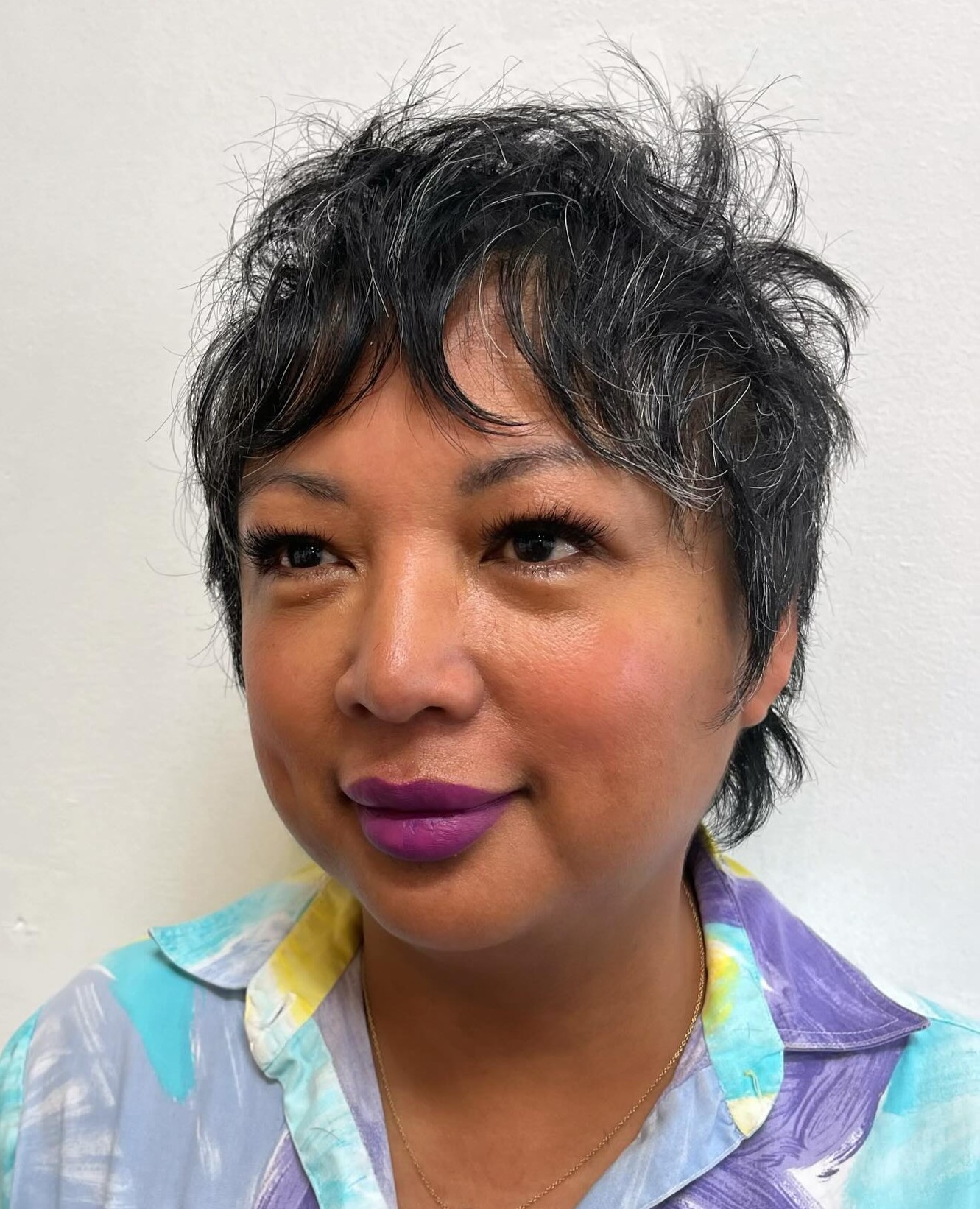
Thick hair is actually ideal for many round-face pixie variations. The density provides enough weight to hold styles like a swept-back look, a textured crop, or an asymmetrical cut. The stylist may use thinning shears or razor cutting to remove bulk from the interior layers — particularly at the sides and nape — while keeping enough density on top for height and texture. Avoid all-one-length pixies on thick hair with a round face; the volume will expand in every direction.
Is a pixie cut high-maintenance for round faces?
Daily styling is actually quick — 5–10 minutes with the right product. The maintenance cost is salon frequency: pixie cuts need trims every 4–6 weeks to keep their shape, and round faces are less forgiving of grow-out because the tapered sides lose their slimming effect as hair grows. Factor in roughly 8–12 haircuts per year when budgeting for a pixie.
What pixie cut styles should round faces avoid?
Avoid very short buzz-style pixies with uniform length all over — they follow the shape of the skull and offer no elongation. Also avoid round, bowl-cut–shaped pixies where the hair curves smoothly around the head, as this mirrors the face shape. Symmetrical cuts with a center part and equal volume on both sides can also emphasize roundness. Instead, always introduce asymmetry, height, or texture to break up the circular silhouette.
How do I style a pixie cut to slim a round face?
Direct volume upward at the crown using a blow-dryer aimed at the roots from below. Keep the sides flat by drying them downward against the head or using a small amount of smoothing cream at the temples. Sweep the fringe diagonally across the forehead rather than letting it fall straight down. A matte-finish product through the sides prevents them from catching light and appearing fuller than they are.
Hair results vary based on your natural hair type, texture, density, and condition. Always consult with a licensed hairstylist before making significant changes, especially with chemical treatments or dramatic length changes. Photos may show styled results that require professional tools and products to replicate.