
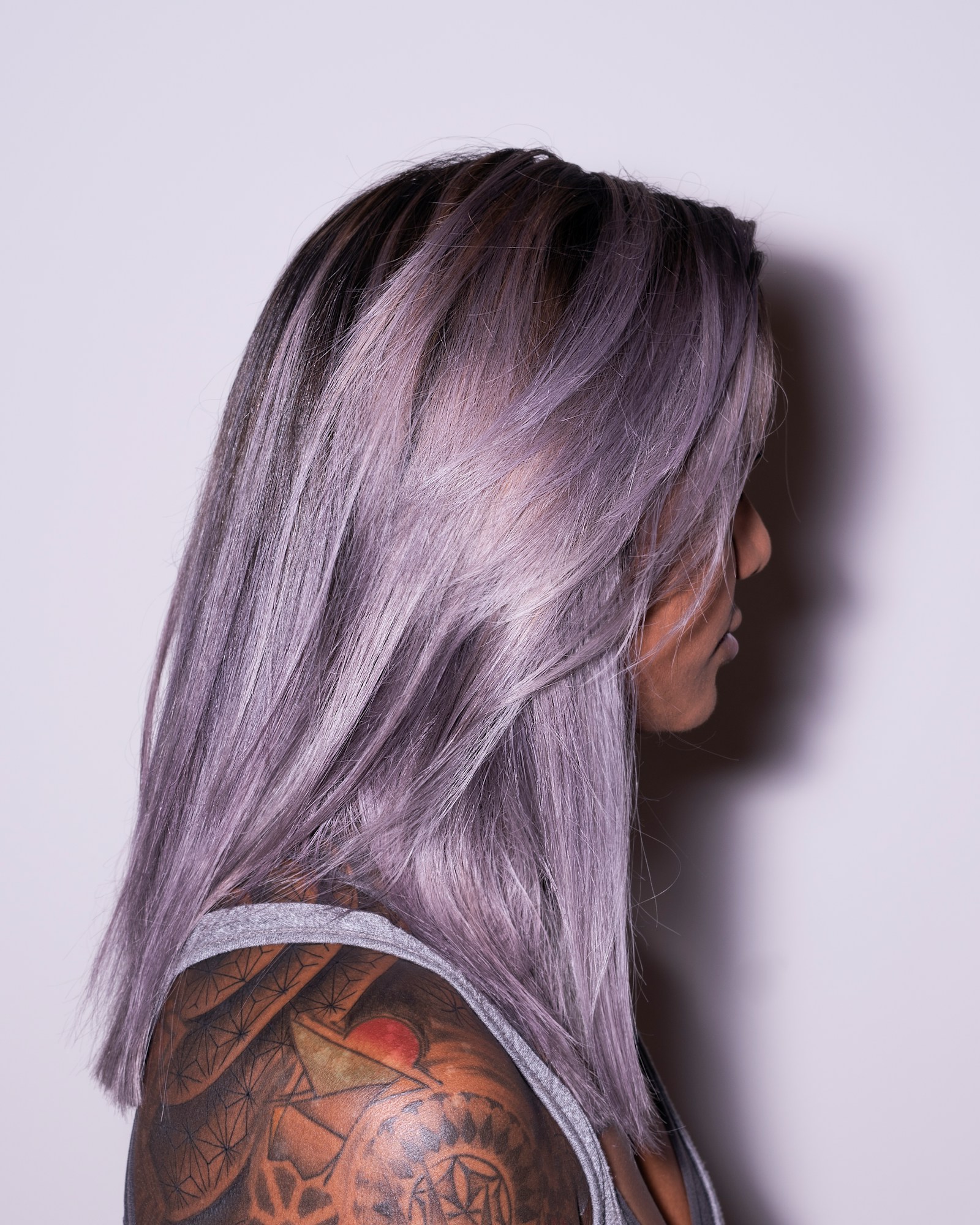
Purple hair runs from a barely-there lavender wash you can wear to the office to a saturated electric violet, and the shade you can actually achieve depends almost entirely on how light your base is before the color goes on.
Purple is one of the most flexible bold colors because it spans both pastel and deep territory, which means there is a wearable version for nearly every starting point and lifestyle. Soft lilacs and smoky mauves need a pale blonde base to read true, while plums and eggplants sit happily over darker hair with far less lifting. These 30 ideas are sorted from subtle to statement, with notes on what base each shade needs, how it fades, and which undertones it flatters, so you can pick a purple you will still love at week four.
If you are weighing purple against another fashion shade, our gallery of pink hair ideas covers a color with similar upkeep, which makes the maintenance trade-offs easier to compare side by side.
| Factor | Details |
|---|---|
| Base needed | Pastels need level 9 to 10 blonde; deep plums work over level 4 to 6 brown |
| Color longevity | 2 to 6 weeks of true vibrancy; deeper purples hold longest, pastels fade first |
| Best undertones | Cool skin loves true violet and lilac; warm skin suits plum and eggplant |
| Upkeep | Cool-water washes, color-safe sulfate-free shampoo, color-depositing conditioner |
| Avoid if | Hair is fragile from prior bleaching, or you cannot commit to color-care washing |
What Purple Hair Actually Takes
Before the inspiration photos, it helps to know what your colorist is working with. Purple is a direct dye, which means it sits on top of the hair rather than lifting it, so the lightness of your starting canvas decides how the final shade reads. A lilac applied over yellow-blonde turns muddy; the same lilac over a clean level 10 reads clear and soft.
Deep purples like plum and eggplant are the forgiving end of the family. They carry enough pigment to show over a level 4 to 6 brown with light or no lifting, which is why they make the lowest-commitment entry into purple. Pastels and bright violets are the opposite: they need the hair lifted to a pale, even blonde first, and that bleaching step is where most of the cost, time, and potential damage live.
Stylist tip: Ask your colorist what level your hair will be after lifting before you commit to a pastel. If your hair only lifts cleanly to a level 8, a smoky mauve or a deeper orchid will look far better on you than a true lilac, which needs that level 10 to avoid pulling gray or muddy.
Soft and Wearable Purples
These eight shades stay close to neutral, reading as a tint or a hint rather than a full commitment. They suit anyone testing purple for the first time or working somewhere that frowns on bright color.
1. Smoky Lavender
A grayed-off lavender mutes the pigment with a touch of ash, so it reads sophisticated rather than candy-bright. The smoke in the formula helps it fade gracefully into a soft silver instead of a patchy lilac. It needs a clean level 10 base to keep the gray from turning dingy.
2. Lilac Money Piece
Keeping the rest of your hair natural and lightening just the two front sections to lilac is the lowest-stakes way to wear purple, since the color frames your face but grows out without a harsh line. The pale front pieces brighten the complexion the way a highlight does. This is the version to ask for if you want out easily.
3. Mauve Rose
Mauve sits between purple and dusty pink, a muted, grown-up shade that flatters warm and neutral skin without the commitment of a true violet. Because it carries warmth, it fades softer and less obviously than cool pastels. It works over a slightly less pristine base than lilac does.
4. Lavender Babylights
Threading fine lavender babylights through blonde hair gives a wash of color that catches the light only when the hair moves, ideal for a hint of purple rather than a statement. The fineness of the placement makes grow-out almost invisible. Pair it with a cool toner so the blonde and the lavender stay in the same family.
5. Dusty Periwinkle
Periwinkle leans slightly toward blue, a cool, soft shade that suits people who find true purple too warm. The blue cast keeps it looking fresh and a little unexpected. It reads best on cool and neutral undertones, where the skin does not fight the blue.
6. Silver-Lilac Blend
Melting a silver root into lilac lengths gives a dimensional, almost iridescent finish that looks expensive and hides regrowth well. As the lilac fades it simply blends further into the silver, which stretches the time between salon visits. This blend is a favorite for anyone already going gray who wants to lean into it.
7. Soft Orchid
Orchid is a touch deeper and pinker than lilac, which makes it more forgiving on a base that did not lift to a perfect level 10. The extra pigment covers minor unevenness and holds its color a little longer. It flatters a wider range of skin tones than a true cool lilac.
8. Pastel Purple Balayage
Hand-painting pastel purple only through the mid-lengths and ends keeps your roots natural, so grow-out is soft and salon visits are rare. The technique borrows from classic balayage, and our explainer on balayage versus ombre covers how the two placements differ. Sweeping the pastel low also keeps the most fragile, over-lightened sections off your scalp.
Rich Plum and Eggplant Purples
These seven shades are the deep, low-maintenance end of the purple family. Most show beautifully over brown hair with little or no lifting, which makes them the easiest purples to live with.
9. Classic Eggplant
Eggplant reads near-black indoors and flashes deep purple in sunlight, a quiet, wearable shade that needs little to no bleaching over dark brown hair. Because it sits so close to natural depth, regrowth is subtle and upkeep is minimal. This is the gateway purple for anyone nervous about bold color.
10. Rich Plum
Plum carries a red-violet warmth that glows against medium and tan skin, sophisticated enough for professional settings while still clearly purple. It shows over a level 5 to 6 brown without a full lift, which keeps damage low. The red note does mean it can fade toward a warm brown, so a color-depositing conditioner helps hold the purple.
11. Mulberry
Mulberry blends plum with a berry-red undertone for a juicy, dimensional depth that looks richest on dark hair. The berry warmth makes it one of the most flattering purples for warm skin. It pairs especially well with a glossing treatment to keep the depth from going flat.
12. Deep Violet Brunette
A brunette base with a violet tone running through it gives a barely-there purple that only reveals itself in certain light, perfect for a workplace that bans bright color. The effect is dimension more than color. It washes out gradually into your natural brown with no awkward grow-out.
13. Blackberry
Blackberry is the darkest member of the family, a black base shot through with cool purple that suits deep skin tones and people who want shine over brightness. It needs zero lifting on already-dark hair. The cool tone keeps it from looking like it is just black.
14. Plum for Warm Skin
Warm and olive complexions get the most natural-looking purple from a plum or eggplant rather than a cool lilac, because the red-violet base harmonizes with the warmth in the skin. A cool pastel on the same person can wash them out, the same warmth principle that makes shades like honey blonde flatter warm complexions. When in doubt, warmer skin should reach for the deeper, warmer purples.
15. Wine-Purple Melt
Melting a dark wine root into a slightly brighter plum length gives depth at the scalp and a flash of color through the ends, a low-upkeep way to wear a rich purple. The seamless transition means no hard regrowth line. It is a flattering, dimensional choice for long hair.
Vivid and Statement Purples
These seven shades are the full commitment, saturated and bright, and they all require a pale, even blonde base to read true. Expect the most upfront lifting and the most diligent aftercare.
16. True Violet
True violet is the purest, most saturated purple, equal parts blue and red with no leaning, and it makes the boldest statement of the family. It demands a clean level 10 base and fades into a soft lavender, which at least keeps it pretty on the way out. Cool and neutral undertones wear it best.
17. Electric Purple
A neon-leaning electric purple is the highest-impact, highest-maintenance shade here, glowing almost under its own light on a platinum base. It fades fast, often within two weeks, so it suits an event or a season more than a year-round look. Plan to refresh it constantly or enjoy the fade into pastel.
18. Magenta-Purple
Pushing the violet toward pink gives a magenta-purple that flatters warm skin better than a true cool violet while keeping the brightness. The pink warmth also makes it slightly more forgiving on a base that is not quite platinum. It is the natural crossover shade for anyone torn between a bold pink and a bright purple.
19. Royal Purple
Royal purple is a deep, jewel-toned saturated violet, slightly darker than true violet, so it holds its color a little longer while staying unmistakably bold. The depth makes it one of the more flattering bright purples across skin tones. It still needs a pale base to keep the jewel clarity.
20. Purple Peekaboo
Hiding bright violet underneath a natural-colored top layer lets you flash the color when you move or tie your hair up, then conceal it for work. Because only the under-layer is lifted, the damage and upkeep are contained to a smaller section. It is the smartest way to wear an electric purple on a corporate schedule.
21. Two-Tone Purple and Blue
Splitting bright violet with an electric blue, whether side to side or as a melt, plays on purple’s blue neighbor for a high-drama, multi-tonal finish. The two cool tones blend where they meet instead of clashing. This is a statement look that photographs strikingly under good light.
22. Holographic Purple
A holographic finish blends lilac, periwinkle, and silver in fine ribbons so the hair shifts color as it catches the light, the most editorial purple in the set. It takes a skilled colorist and a flawless platinum base to pull off. Maintenance is high, but the iridescent payoff is the reason people choose it.
Dimensional and Placement Purples
These eight ideas are less about a single shade and more about where the purple lands, which controls both the drama and the upkeep. Smart placement is how you wear purple without committing your whole head or your whole calendar to it.
23. Purple Balayage on Brown Hair
Hand-painted plum or violet swept through brown lengths gives movement and a sun-caught flash of purple without lifting the roots. The freehand placement grows out softly, so you can stretch months between appointments. It is the most low-maintenance way to add real purple to dark hair.
24. Purple Ombre
An ombre fades a natural or dark-purple root down into a brighter violet at the ends, concentrating the boldest color where it does the least damage to keep. The gradient keeps regrowth invisible. Sweeping the brightness low also protects your scalp from the heaviest lifting.
25. Shadow-Root Violet
Keeping a deliberately dark root and blending it into violet lengths, a shadow root, stretches grow-out for months and adds depth. The technique is the same low-maintenance approach covered in our guide to the shadow root. It is the single best trick for wearing bright purple without a monthly root touch-up.
26. Purple Money Piece
Brightening only the face-framing sections to a vivid violet draws the eye to your features while keeping the bulk of your hair low-upkeep. The contained color means contained bleaching. It delivers most of the impact of a full purple for a fraction of the maintenance.
27. Underlights in Violet
Coloring only the under-layer violet leaves the top natural, so the purple shows in glimpses when you move and disappears when you want it gone. The look reads subtle from the front and bold from behind. It contains the lifting to a hidden section, which spares your visible hair.
28. Purple Root Smudge on Blonde
Smudging a soft purple at the roots of blonde hair and letting it melt down gives a reverse-ombre, color-at-the-top effect that is unexpected and grows out cleanly. The smudge blurs any regrowth line. It is a fresh way to wear purple if you are already blonde.
29. Color-Block Purple Streaks
Bold, deliberate chunks of violet placed against natural hair give a graphic, color-block look that nods to the early-2000s streak revival. The placement is intentional and editorial rather than blended. Keep the streaks thick enough to read as a design choice, not grow-out.
30. Purple and Silver Dimensional
Weaving silver and violet through one another creates a cool-toned, dimensional finish that looks especially modern on long hair and flatters gray-blending. As both tones fade they stay in the same cool family, so the grow-out never turns brassy. This is a polished choice for anyone leaning into silver.
How to Choose Purple for Your Skin Tone
Purple flatters almost everyone, but which purple matters. The rule of thumb is to echo your undertone: cool skin loves cool violets and lilacs, warm skin glows under plum and eggplant, and neutral skin can wander between them. The table below makes the match concrete.
| Undertone | Best Purples | Approach | Go Easy On |
|---|---|---|---|
| Cool | True violet, lilac, periwinkle, smoky lavender | Lean into blue-based purples that match your skin | Warm red-plums that can clash |
| Warm | Plum, eggplant, mulberry, magenta-purple | Choose red-violet shades that harmonize with warmth | Icy lilacs that wash you out |
| Neutral | Orchid, mauve, royal purple, wine-purple | Most purples work; pick by lifestyle and upkeep | Nothing structural to avoid |
| Deep skin | Blackberry, royal purple, eggplant, vivid violet | Saturated and deep shades read richest | Muted pastels that can disappear |
What to Tell Your Colorist
Purple goes wrong most often when the reference photo and the base do not match, so the consultation matters more than usual. Bring a photo and ask the honest question first: “What level will my hair lift to, and will this shade actually work over that?” A good colorist would rather redirect you to a flattering plum than send you home with a muddy lilac.
Be specific about warmth. Say whether you want a cool, blue-based purple or a warm, red-based one, since “purple” covers both and they photograph very differently. If you need the color to be hideable for work, ask about a peekaboo, an under-layer, or a money piece rather than an all-over application.
Stylist tip: If you are going from dark hair to a pastel purple, accept that it is a multi-session process, not a single appointment. Lifting dark hair to a clean level 10 in one day risks serious damage; a colorist who spreads it across two or three visits protects the hair the bright pastel depends on.
Maintenance and Fading
Every purple fades, the only question is how fast and into what. The schedule below keeps the color truer for longer and makes the fade work in your favor rather than against it.
| Task | How Often | Why |
|---|---|---|
| Wash in cool water | Every wash | Hot water opens the cuticle and rinses pigment out faster |
| Wash less often | 2 to 3 times a week max | Every wash pulls color; dry shampoo stretches the days between |
| Color-depositing conditioner | Weekly | Re-deposits purple pigment to refresh vibrancy between salon visits |
| Sulfate-free, color-safe shampoo | Always | Sulfates strip direct dye quickly |
| Heat protectant and lower heat | Every hot tool use | High heat speeds fading and stresses lifted hair |
When Purple Is Not the Right Choice
Purple is demanding, and it is not the right call for everyone right now. Being honest about these situations saves your hair and your money.
- Hair already fragile from bleaching: reaching a pastel base means more lifting, and over-processed hair can break rather than brighten. Repair the hair first, or choose a deep plum that needs little to no lift.
- No time for color-care washing: direct dyes fade fast, and if you cannot commit to cool water, sulfate-free shampoo, and a depositing conditioner, the color will look dull within a week. A deeper, more stain-like purple holds up better to neglect than a pastel.
- A strict workplace and an all-over bright shade: if visible bright color is a problem, an all-over violet is the wrong format. A peekaboo, under-layer, or eggplant gives you purple you can hide or that simply reads as dark.
- You want true lilac but only lift to level 8: a pastel over a too-warm base turns muddy or gray. Wait for a cleaner lift across sessions, or pick an orchid or mauve that flatters a level 8.
FAQ
Does Purple Hair Require Bleaching?
It depends entirely on the shade. Deep plums and eggplants show over dark brown hair with little or no lifting, while pastels and bright violets need the hair bleached to a pale, even blonde first. The lighter and more pastel the purple, the more bleaching it takes to read true.
How Long Does Purple Hair Last?
True vibrancy lasts about two to six weeks, with deeper purples holding longest and pastels fading first. Washing in cool water, using sulfate-free shampoo, and adding a color-depositing conditioner stretches that timeline. Most purples fade prettily, lilac into pastel and plum into a warm brown, so the grow-out rarely looks harsh.
What Skin Tones Does Purple Hair Suit?
Nearly all of them, as long as you match the purple to your undertone. Cool skin suits blue-based violets and lilacs, warm skin glows under red-based plums and eggplants, and deep skin tones look richest in saturated shades like blackberry and royal purple. Neutral undertones can wear almost any purple.
How Do I Keep Purple Hair from Fading Fast?
Wash less often and only in cool water, since heat and frequent washing are what pull the pigment out. Use a sulfate-free, color-safe shampoo and top up with a weekly color-depositing conditioner in your purple shade. Keep hot tools on a lower setting and always use a heat protectant.
Will Purple Hair Turn My Hair Green or Brassy as It Fades?
Cool, blue-based purples can fade toward a soft blue or gray rather than green, while warm plums fade toward a warm chocolate brown. The muddy or off fades usually come from applying purple over a base that was too warm or uneven. A clean lift and a color-depositing conditioner in the right tone keep the fade attractive.
Can I Get Purple Hair Without Damaging It?
Choosing a deep plum or eggplant over your natural dark hair adds purple with little to no bleaching and very little damage. Pastels are harder on the hair because they require lifting to a pale base, but spreading that lift across multiple sessions and using bond-building treatments keeps the damage manageable. The deeper the shade, the gentler the process.
Is Purple Hard to Maintain Compared to Other Colors?
Bright and pastel purples are higher maintenance than natural shades because direct dye fades with every wash. Deep plums and placement techniques like balayage or a shadow root are much lower upkeep, often stretching months between salon visits. Your maintenance load depends far more on the shade and placement than on purple itself.
The right purple hair color comes down to honesty about your base and your routine: a deep plum if you want low upkeep over dark hair, a placement like balayage or a peekaboo if you want the color contained, or a bright violet if you are ready for the lifting and the aftercare. Bring a reference photo, ask your colorist what level your hair will actually reach, and match the shade to both your undertone and your washing habits. Get that right and purple is one of the most flattering and flexible bold colors you can wear.
Hair results vary based on your natural hair type, texture, density, and condition. Always consult with a licensed colorist before chemical lightening or color changes, especially on previously bleached hair. Photos may show styled and professionally colored results that require salon tools and products to replicate.