

A high taper fade starts fading at the temple, not the ear — that single structural difference separates it from every other taper variation and produces the cut’s distinctly modern, high-contrast silhouette.
A high taper fade keeps hair full on top while the sides transition from longer guard numbers down to skin, with the fade beginning just above the ear at temple level. That starting point — higher than a mid or low taper — creates sharper contrast and a cleaner silhouette. Here are 25 stylist-approved variations, organized by top style, hair texture, and face pairing.
The gallery covers four categories: classic and textured styles, curly and coily hair, Black men’s variations with shape-ups and waves, and high taper fades paired with beards. Each entry includes the specific barber instruction or maintenance detail that changes how the cut actually works in practice. Guidance sections follow the gallery on face shape compatibility, exact barber communication language, and when this cut works against you.
| Factor | Details |
|---|---|
| Best for | Oval, round, and square faces; all hair types including coily |
| Maintenance | Barber visit every 2–3 weeks; fade line blurs fastest at the temple |
| Works with | Straight, wavy, curly (3a–3b), coily (4a–4c); all densities |
| Avoid if | Very long or oblong face; prominent ears; receding temple hairline |
| Salon time | 30–50 minutes for cut; 15–20 min extra if blending into a beard |
Classic and Textured High Taper Fade Styles
Straight and slightly wavy hair gets the most dramatic result from a high taper because the contrast between clean faded sides and the styled top is unobstructed by natural volume. A textured crop, comb-over, or pompadour all look visually taller when the sides are faded from the temple down — the clean sides draw the eye upward. Most of these styles work on medium to thick hair; fine hair needs more careful product selection to hold shape above fully faded sides.
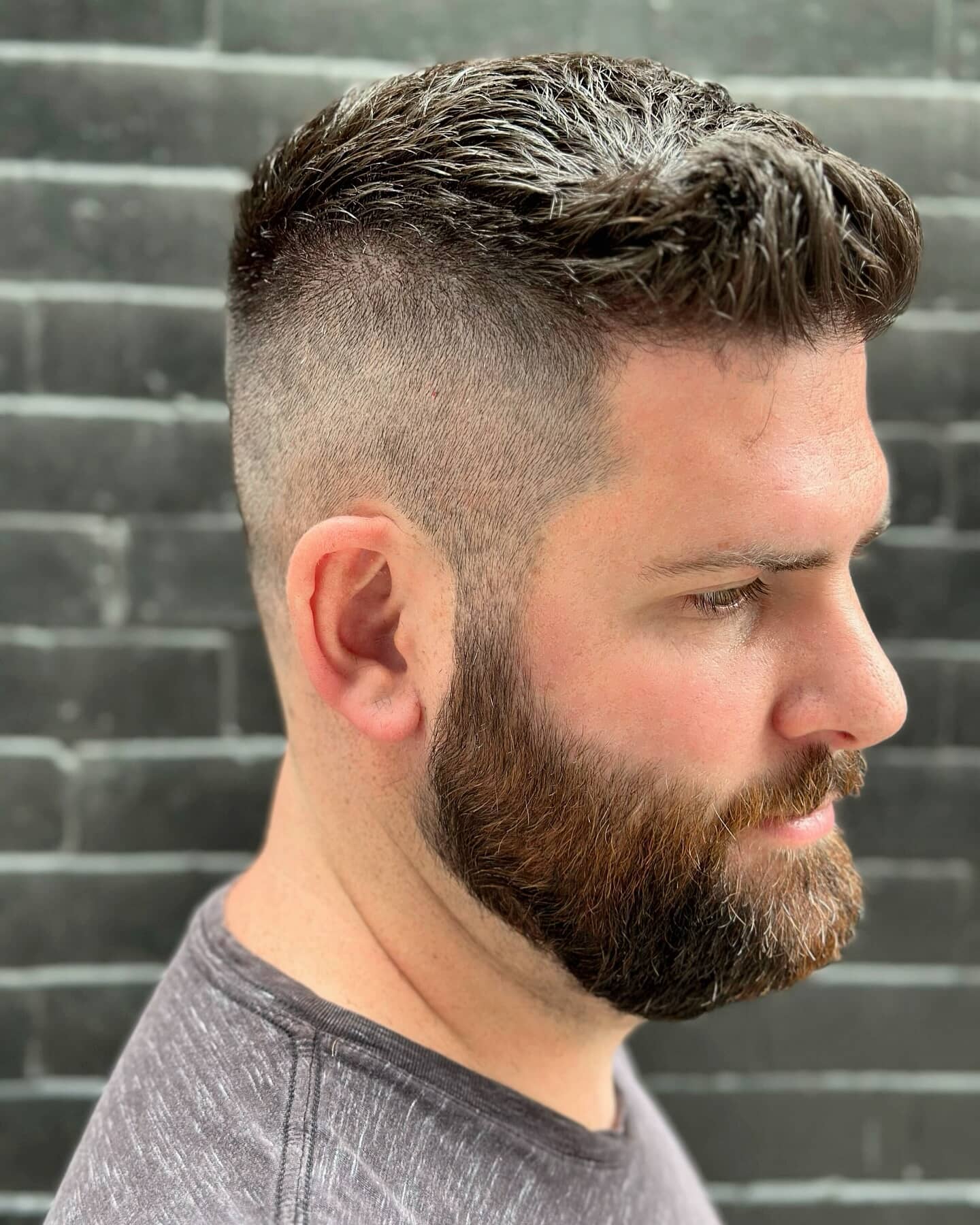
1. Skin Taper Fade with Textured Crop
A zero-fade starting at the temple leaves bare skin from that point down, while the top is cut to 2–3 inches and point-cut for a choppy, low-effort finish. Works best on straight to slightly wavy hair with medium density that holds shape without heavy product throughout the day. Ask your barber for a zero taper from the temple down, a high top line, and point-cut texture on the crown — specify “no razor on the perimeter.”
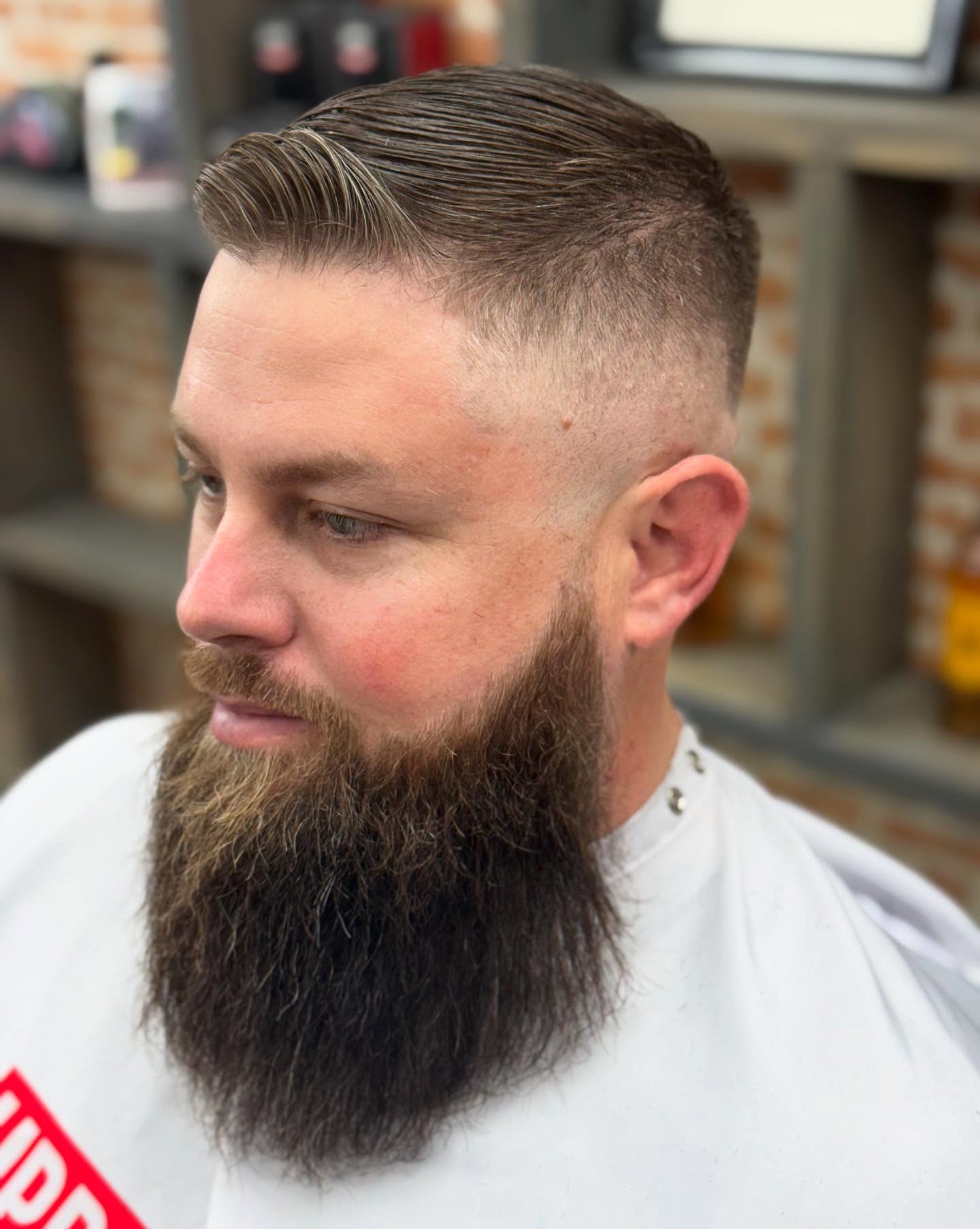
2. High Taper Comb-Over
Thick hair that naturally falls to one side gets the most from this cut — the directional comb-over emphasizes the contrast with the faded sides rather than fighting the hair’s natural growth pattern. Barbers typically use a clipper-over-comb technique to blend the fade line, working from the temple down through progressively shorter guards to skin. Men with a strong cowlick at the crown often find this cut works with their growth pattern rather than requiring product to override it.
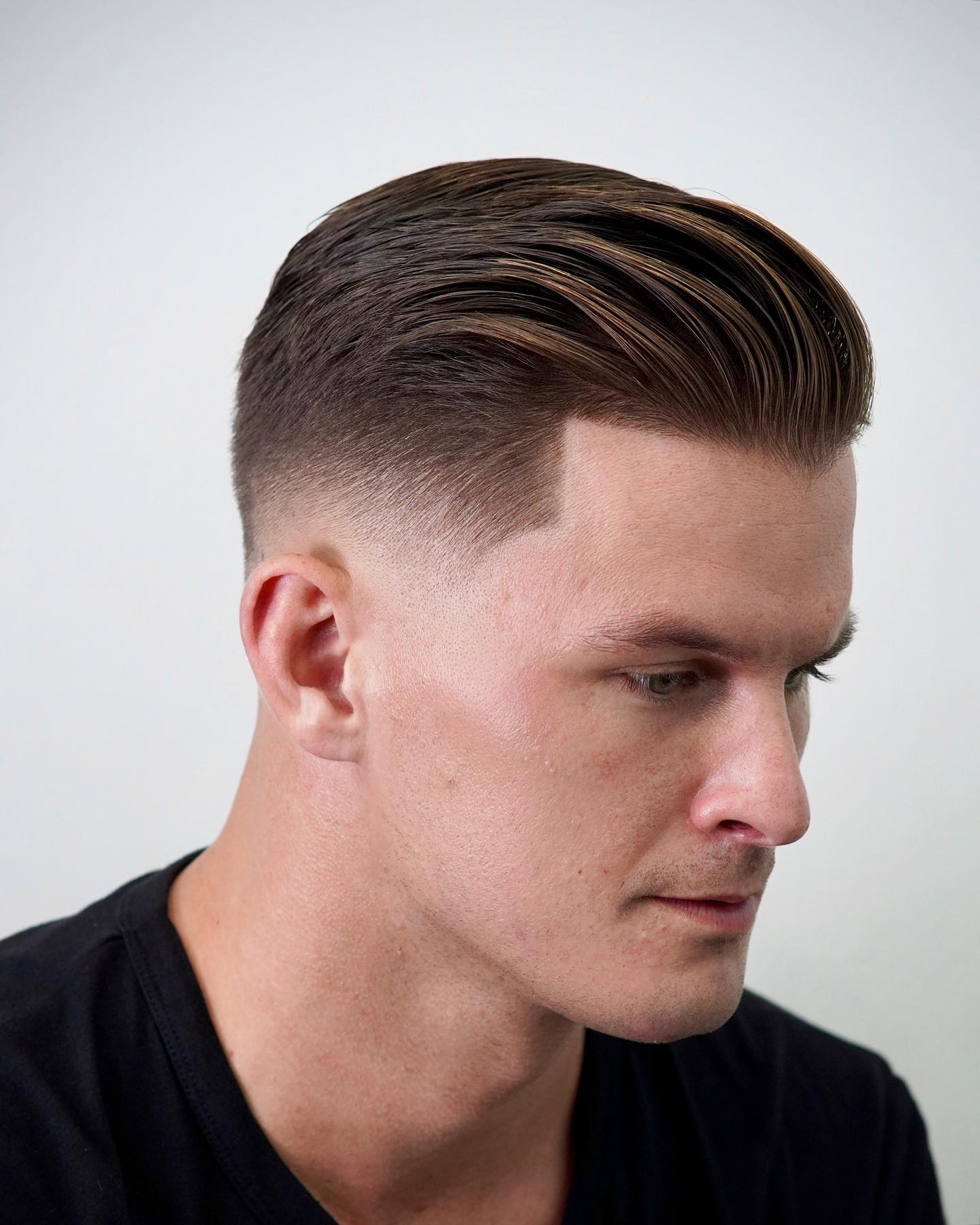
3. Pompadour with High Taper Fade
Blow-drying the top section back with a medium round brush before applying pomade locks in height that looks proportionately taller above fully faded sides than it would above a mid or low taper. Square faces benefit from keeping the pompadour narrower at the sides and fuller toward the front — this draws the eye upward rather than outward across a strong jaw. Tell your barber you want a hard part lined up just above the temple precisely where the skin fade begins.
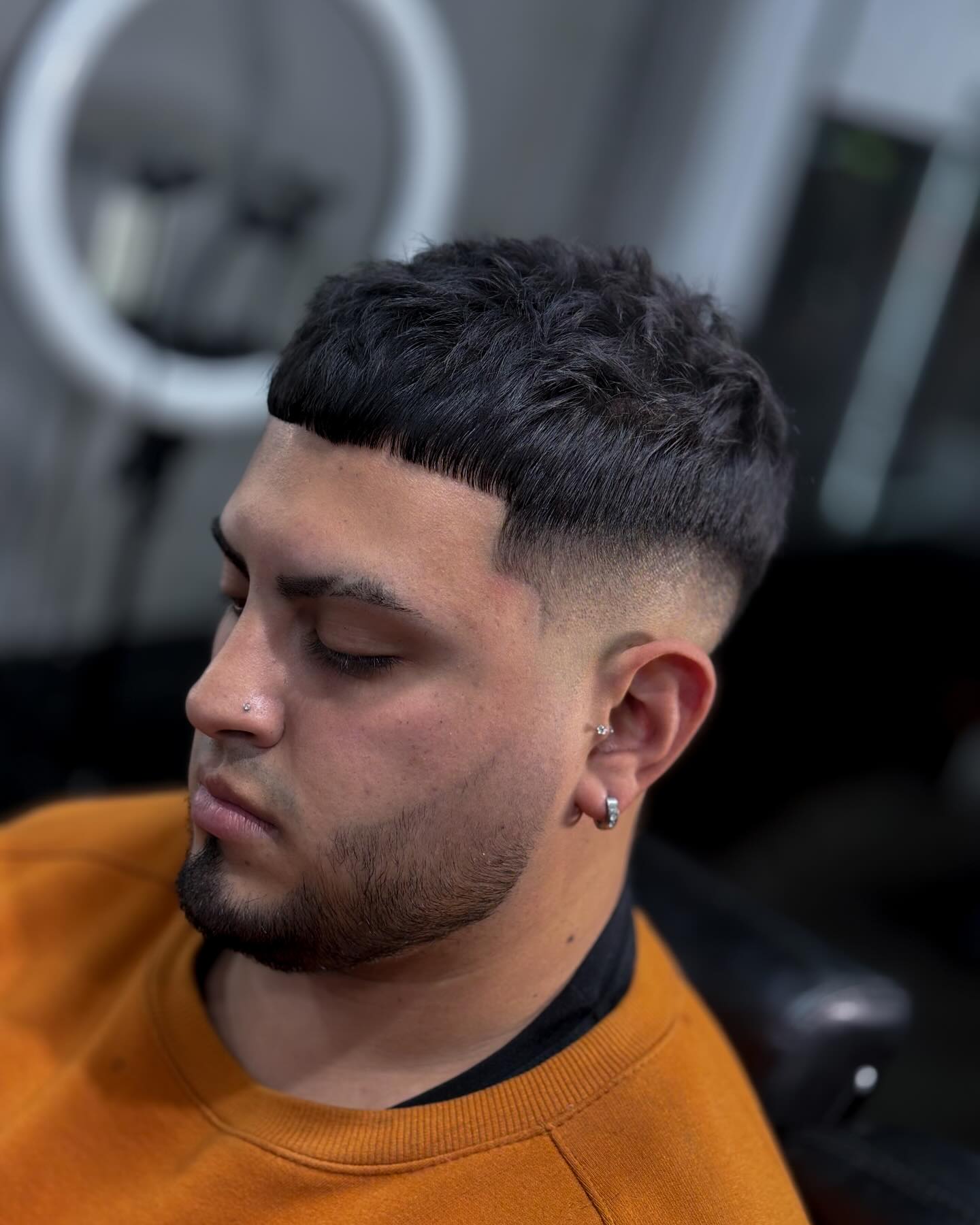
4. French Crop with High Skin Taper
The deliberate contrast here — faded to skin above the ear while the fringe sits flat across the forehead — is one of the sharpest looks in men’s barbering and currently one of the most requested variations. Fine, limp hair struggles with this; the fringe needs enough weight to hold forward throughout the day, which typically requires medium to thick density. Specify a blunt (not texturized) fringe line for the cleanest result; a textured edge softens the contrast that makes the cut distinctive.
5. High Taper Quiff
Fine hair can actually pull this off more easily than thick hair — a lightweight volumizing mousse worked into the roots before blow-drying forward-and-up provides enough lift without weighing down the quiff’s natural bounce. The faded sides make even modest quiff volume look proportionately substantial, because the eye reads the contrast between bare skin and styled top before it registers how much height is actually there. Maintain the fade every 2–3 weeks or the quiff loses its architectural contrast.
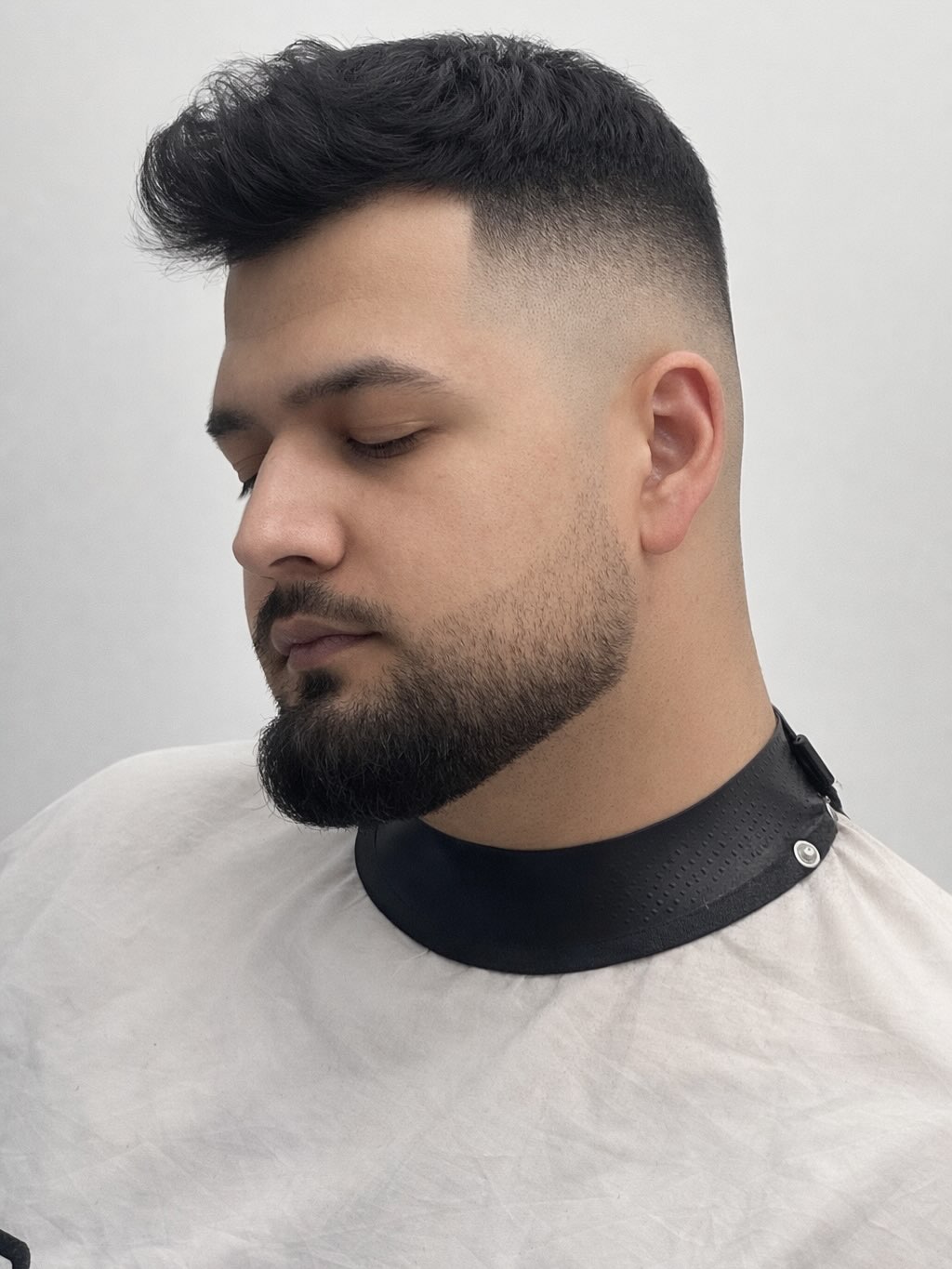
6. Hard Part Skin Fade
A razor-shaved hard part — a deliberate line separating top from sides — is most striking when it falls exactly where the skin fade begins at the temple, turning the natural transition zone into a design element. Round faces benefit from a hard part placed slightly above center, which adds asymmetry alongside the faded sides to add elongation; avoid a center hard part on a round face, as it emphasizes horizontal width. Barbers shave the hard part after the taper is complete, using the fade line as a reference point for placement.
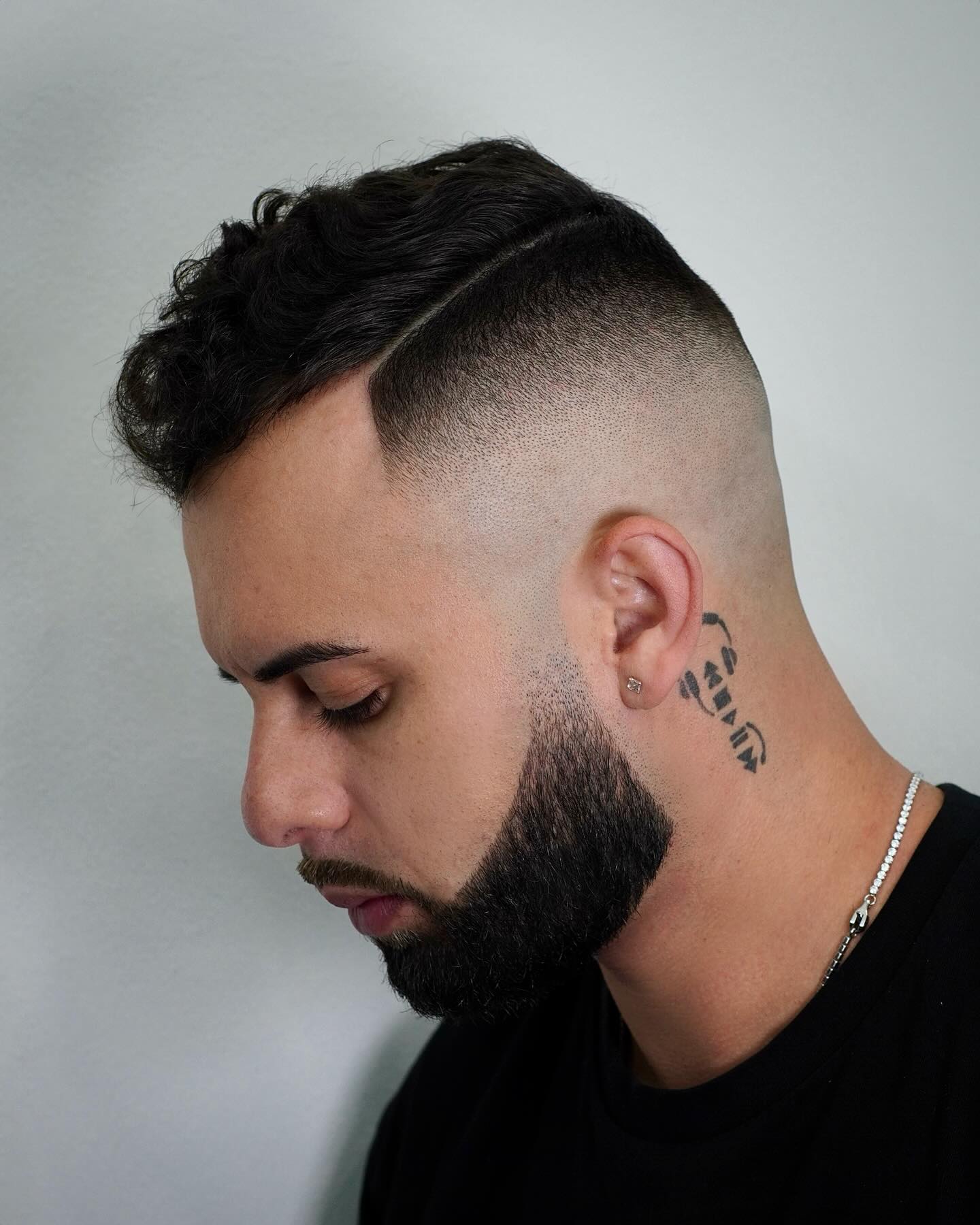
7. Skin Fade Faux Hawk
Strip the sides to skin, leave 2–3 inches through the center from forehead to crown, and the result is a faux hawk built entirely on contrast rather than length — the effect doesn’t require the center strip to be tall, just distinct. Medium to thick hair handles this well; fine hair tends to flop through the center section and needs daily product work to keep the strip visible from the side. Unlike a mohawk, the faux hawk’s center section connects to the back at the nape rather than being separated all the way down — it’s a softer commitment.
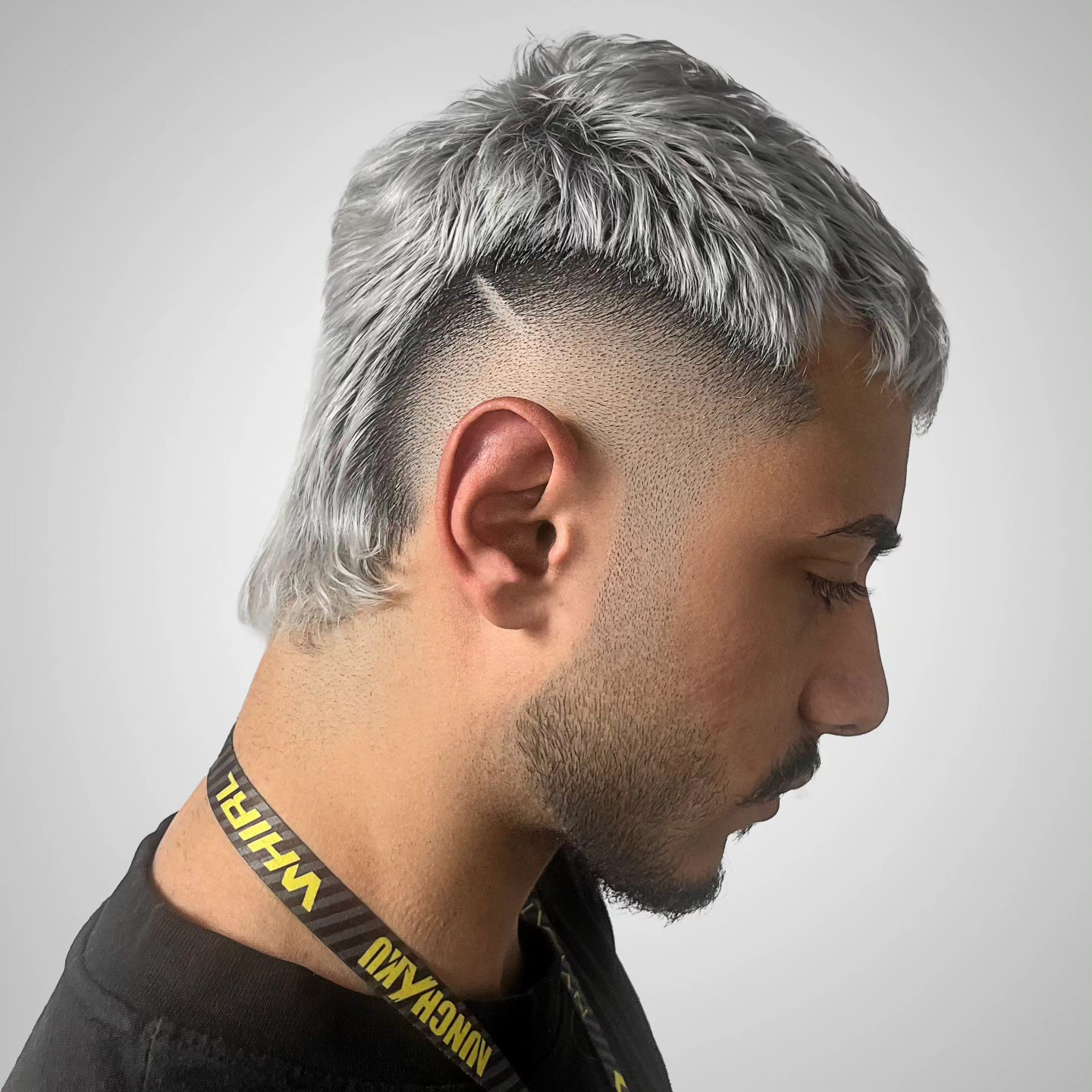
8. Slick Back with High Taper
Applying strong-hold pomade to damp hair and combing straight back creates a polished, formal finish that contrasts sharply with fully faded sides — the contrast between slick and bare is starker than any other top-style pairing. Thick hair with at least 3 inches on top handles the slick-back best; fine hair often shows scalp through slicked sections, making the effect look sparse rather than deliberate. This is the most maintenance-intensive variation on this list — the slick back needs daily resetting and the fade needs a fresh barber visit every 2 weeks to stay sharp.
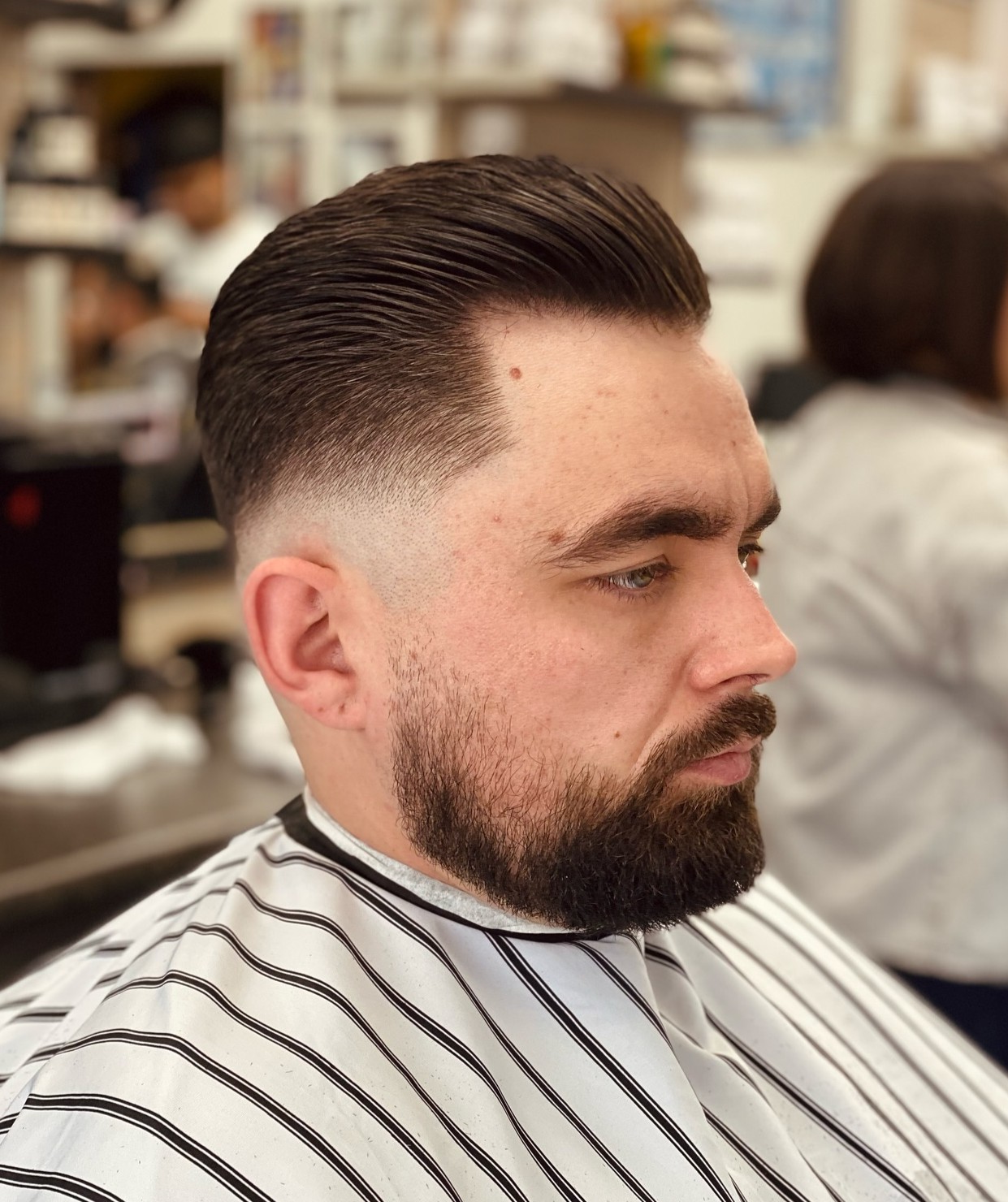
High Taper Fade for Curly and Coily Hair
Curly and coily hair on top of a high taper fade delivers a result that straight hair simply can’t replicate — the natural texture creates movement and volume that’s self-defining, while the clean fade acts as a sharp frame. The one non-negotiable: ask your barber to cut the top section dry, not wet. Curls shrink up to 50% when wet, and a wet cut risks removing far more length than intended. Confirm the dry finished length before any scissors come out. If your barber insists on cutting curly hair wet, that’s useful information about their experience level with curly textures.
9. Curly Crop High Taper
Cutting 3a–3b curls dry at roughly 2 inches on top creates a dense, rounded shape that sits naturally above faded sides — the curl pattern itself defines the silhouette without needing product. Round faces should keep the top slightly taller and narrower to add vertical proportion, while oval faces have the most flexibility with width and density. A curl-defining cream applied to slightly damp hair after washing and left to air-dry maintains the shape between barber visits with minimal daily effort.
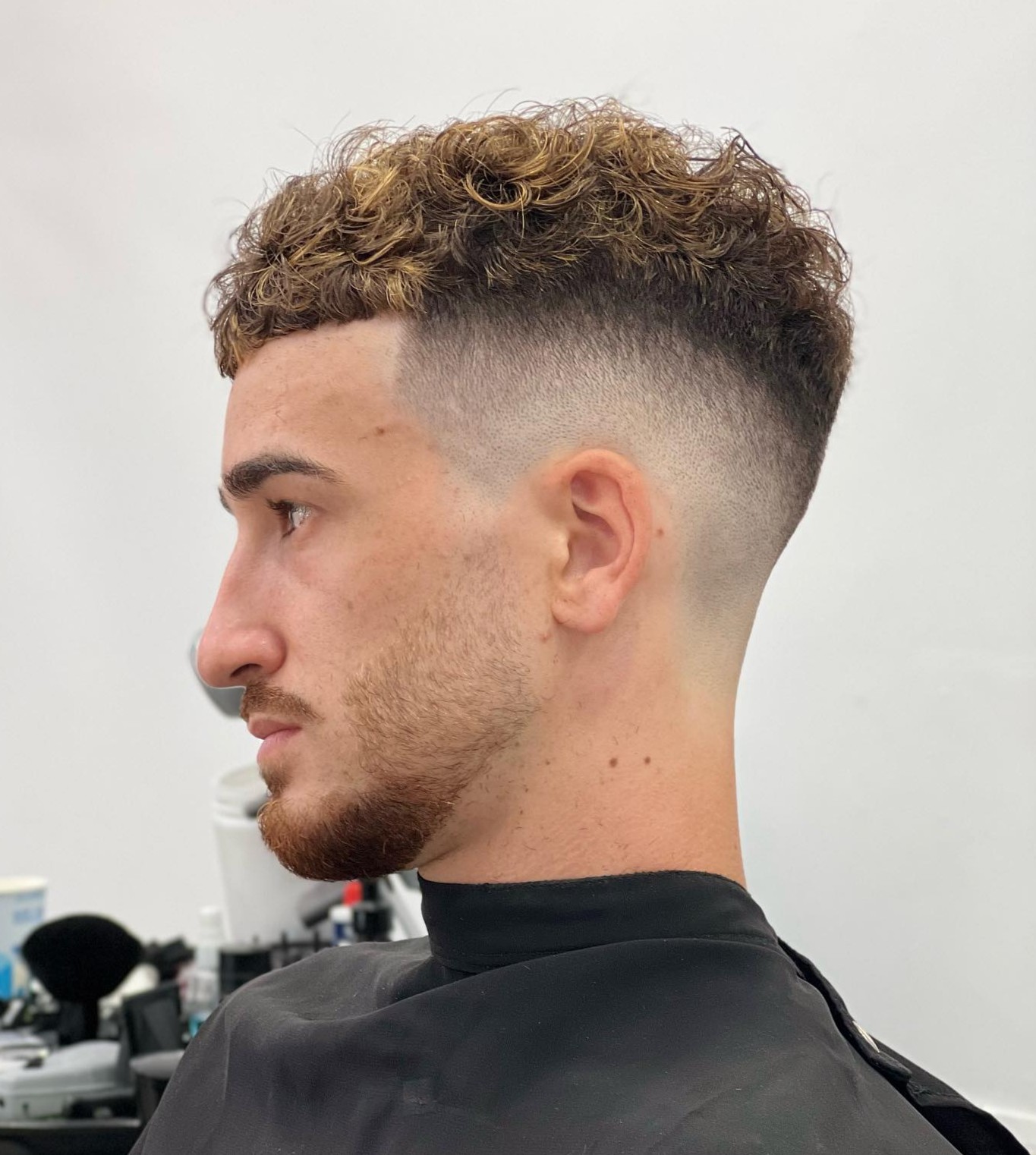
10. Afro with High Bald Taper
Coily 4a–4c hair faded at the temples creates a shaped afro that looks modern and deliberate rather than like a grow-out. Before fading the sides, the barber picks the top section to its full height so both elements — full natural volume and clean skin — are clearly defined against each other. Daily shaping requires a pick or wide-tooth comb plus a light oil or curl butter to maintain moisture and prevent the afro from drying flat between washes.
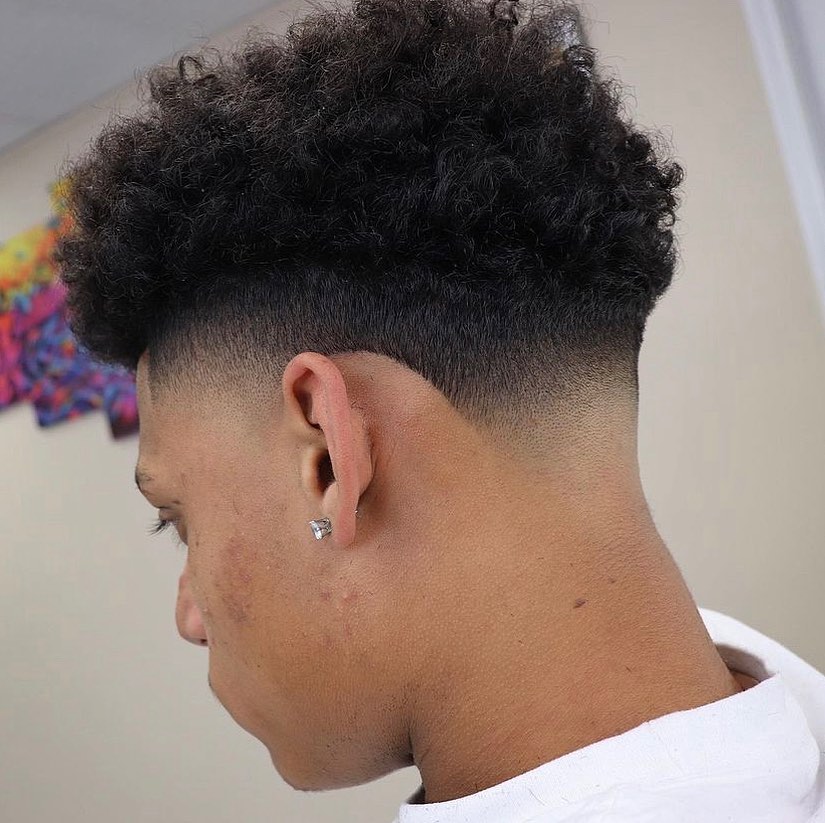
11. Twist-Out High Taper Fade
Two-strand twists unraveled after drying produce a texture between wavy and curly that holds its definition far longer than a traditional blowout and requires minimal morning effort. The fade starting at the temple provides framing that makes the twist-out look considered from every angle, not just front-on. Refresh the twist-out every 2–3 days; the high taper below needs a touch-up around the 3-week mark before the temple line starts blurring into the natural hairline.
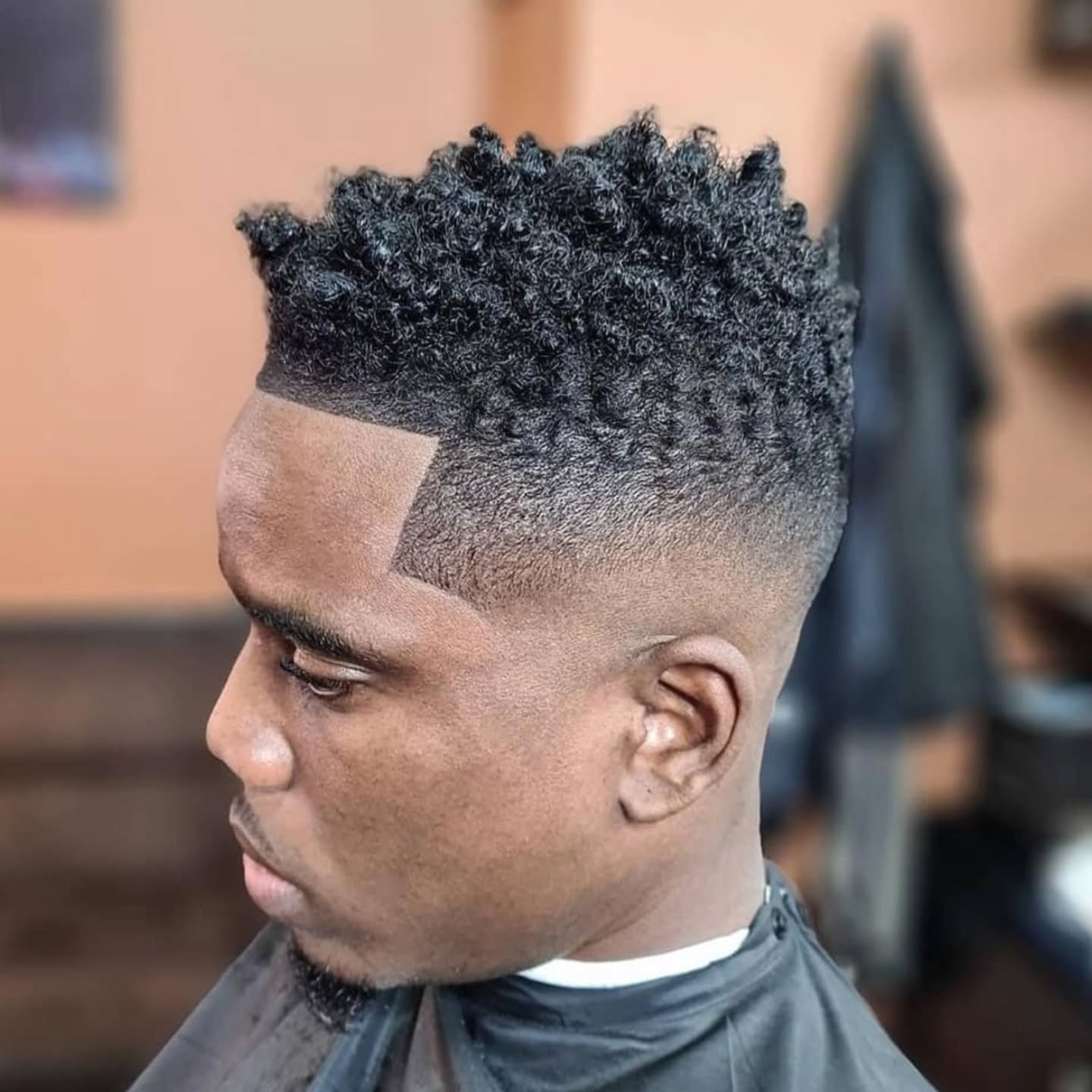
12. Loose Wave High Taper
Wavy to loosely curly 2c–3a hair on top of a high taper sits somewhere between a textured crop and a full curly top — the waves are visible but don’t dominate the silhouette. Unlike tighter curl patterns, 2c hair can be cut slightly damp without major shrinkage risk, though confirming the finished dry length is still good practice before committing. This texture handles both air-dried natural styling and a diffused blowout, making it genuinely versatile compared to coarser patterns that need more active moisturizing.
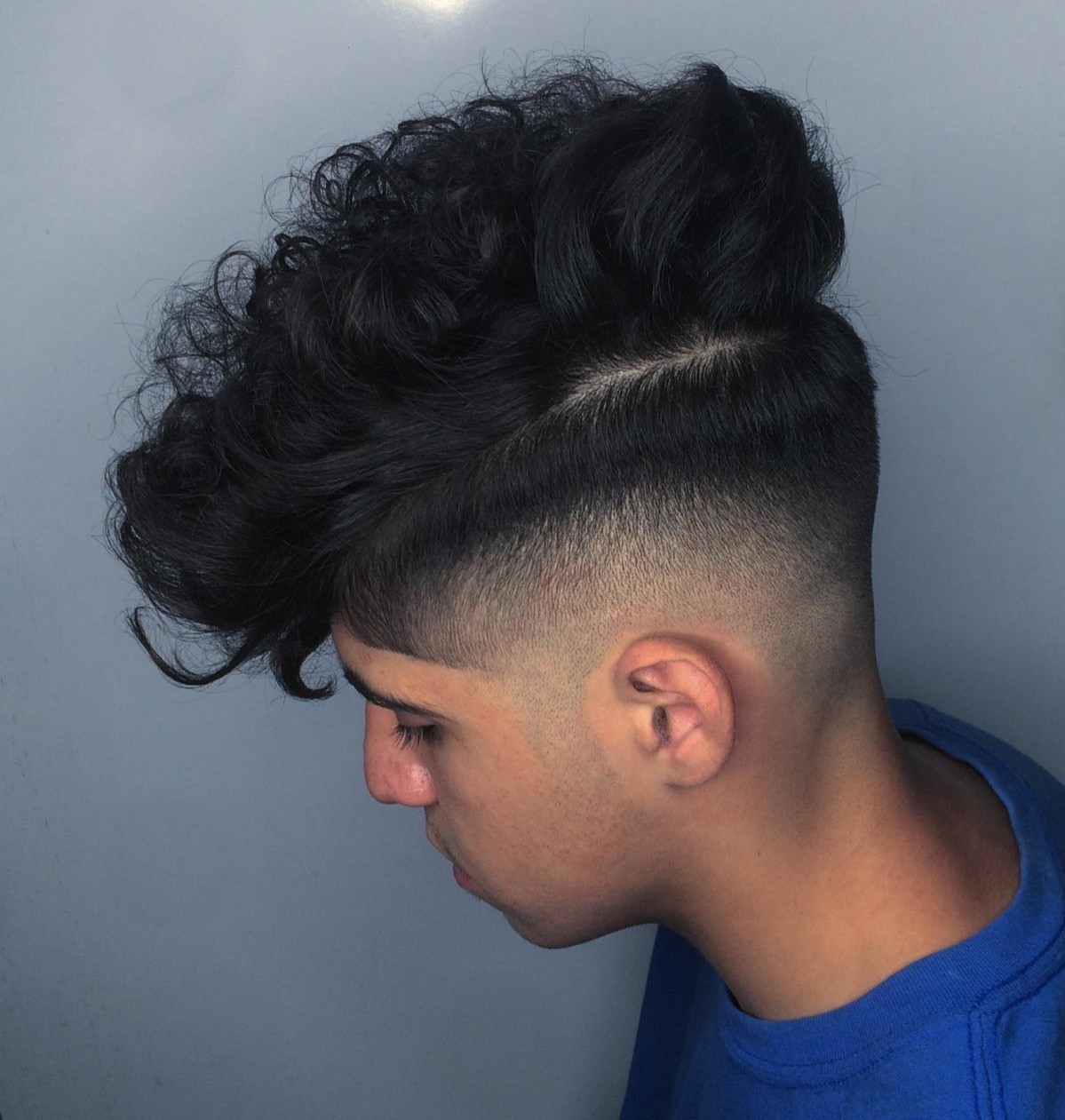
13. Coily Comb-Over with High Taper
Coily 4a hair combed to one side and held with a light styling cream creates a structured comb-over that looks noticeably different from a straight-hair version — the texture breaks up the flat, slick appearance and gives the style a natural, modern edge. Heart-shaped faces benefit from the side-swept direction, which narrows the visual width at the temples. The comb-over direction should go opposite the dominant crown cowlick for a result that doesn’t require constant re-combing throughout the day.
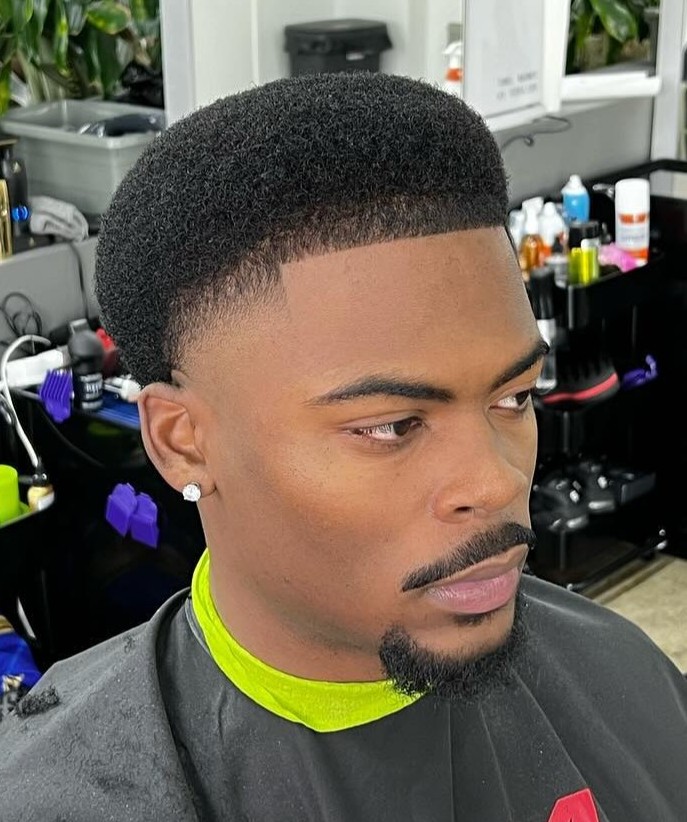
14. Textured Puff with Defined Taper Line
Ask your barber to edge the taper line using a detail trimmer rather than clipper guards — this creates a crisp horizontal arc where skin fade meets natural hair, turning the transition zone into a deliberate design boundary. The defined line is particularly effective for heart-shaped faces, where the wider natural puff on top and the narrowed sides create a balanced silhouette. Keep the puff moisturized with a light leave-in conditioner; dry, compressed coils flatten the visual volume that makes this cut work.
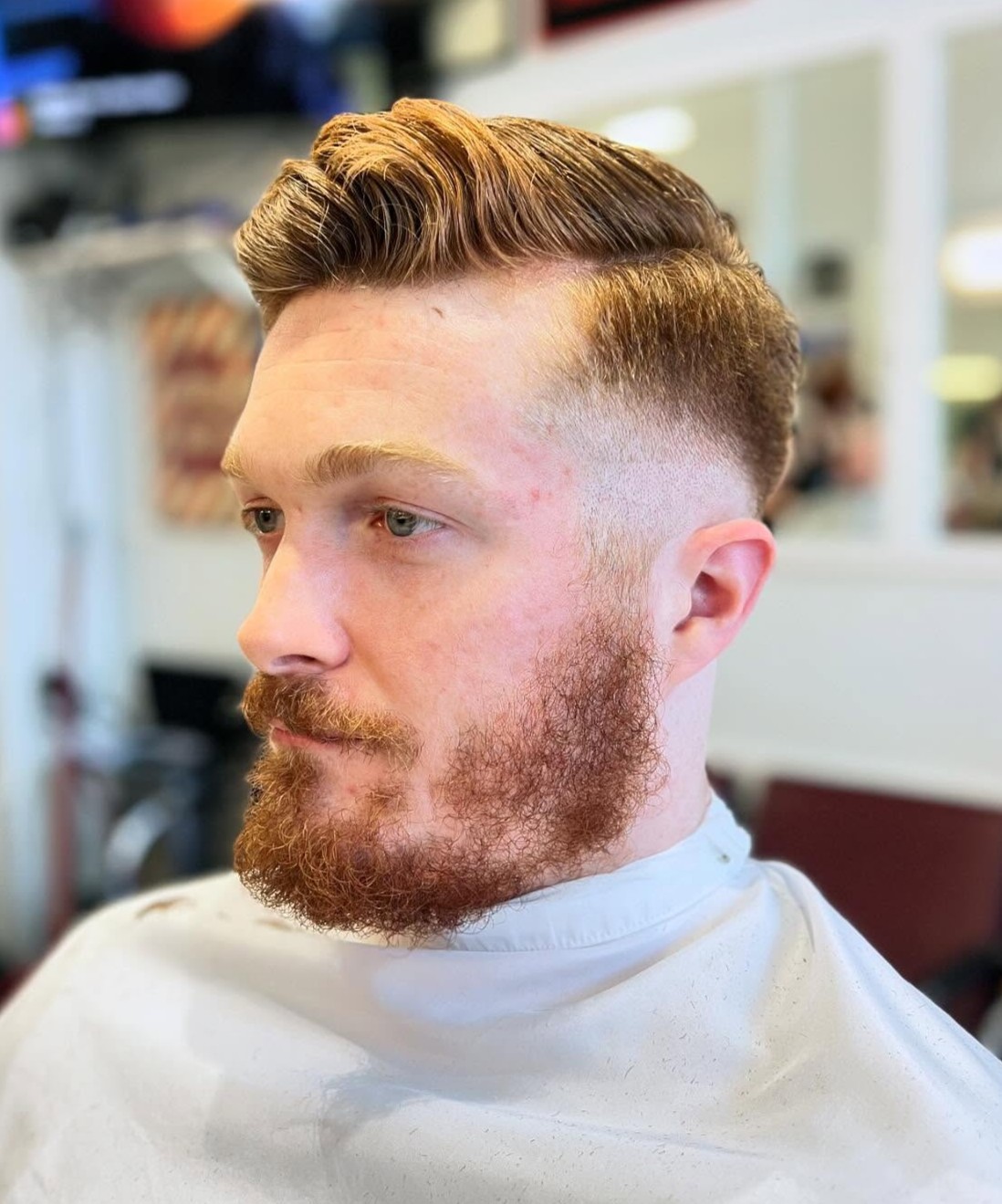
High Taper Fade for Black Men
The high taper fade has deep roots in Black barbering culture — the shape-up, the temp fade, and the 360-wave cut all use the same high-taper principle. Black hair’s natural density and coil pattern makes the contrast at the fade line especially pronounced: skin against a full 4a–4c texture creates a sharper visual boundary than the same cut on straight or wavy hair. A skilled barber adjusts the fade’s starting height to the individual hairline rather than applying it at a fixed point — some naturally high or pointed hairlines need the taper moved to look balanced rather than mechanically placed.
15. Box Fade with Squared Lineup
The box fade squares off the hairline across the forehead, temples, and nape using a detail trimmer while the sides fade to skin at a high taper — the result is a clearly defined top section with sharply geometric perimeter lines. This is one of the most foundational cuts for 4a–4c hair in Black barbershops and is the version most men mean when they simply ask for “a fade.” Tell your barber: “box fade, high taper, clean lineup all around.”
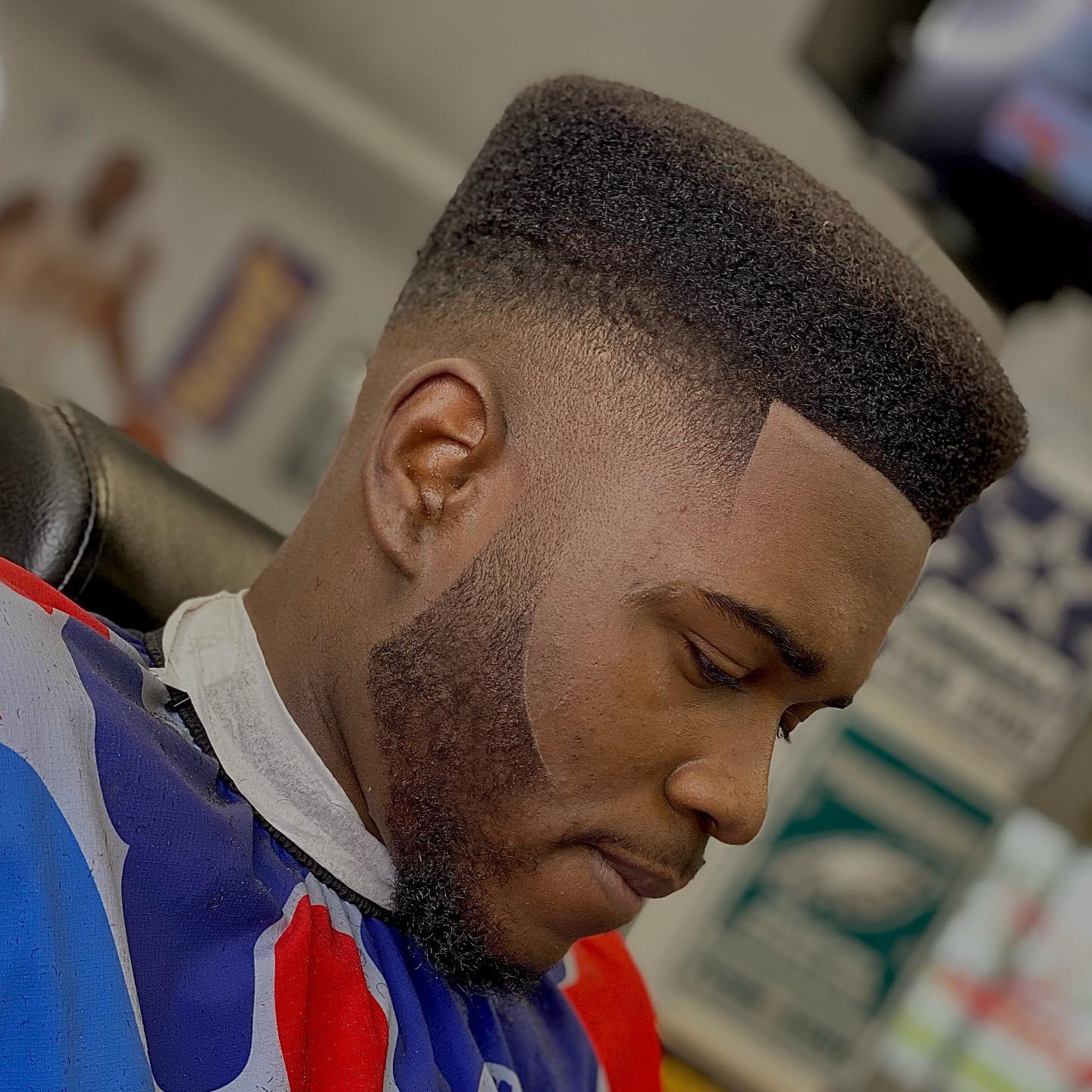
16. 360 Waves with High Taper
Wave patterns need fully faded sides to show their geometry — any hair on the sides interrupts the visual flow of the wave pattern and reduces its impact. Maintaining waves requires brushing 100–200 strokes daily with a medium wave brush and wearing a durag or wave cap overnight to set the pattern. The high taper keeps the sides clean enough that the wave pattern shows clearly from all angles, not just from directly overhead.
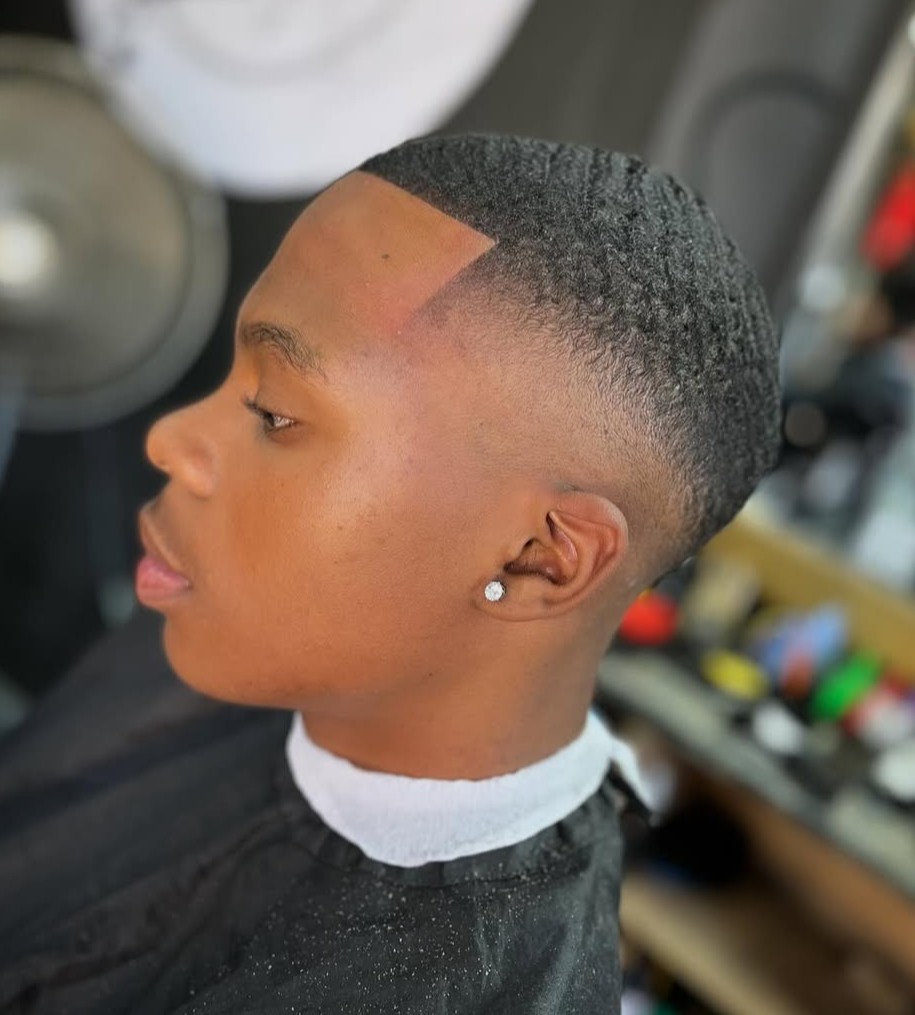
17. Temple Fade (Temp Fade) with High Taper
A temp fade follows the curve of the natural hairline at the temple rather than imposing a horizontal line — the barber blends along the arc, which makes the result look carved from the client’s individual hairline rather than applied uniformly. On diamond and triangle face shapes, following the natural hairline arc balances proportions more precisely than a hard straight taper line. The difference between a temp fade and a standard high taper is visible primarily in profile: the temp fade follows contour, the standard taper maintains a more uniform angle.
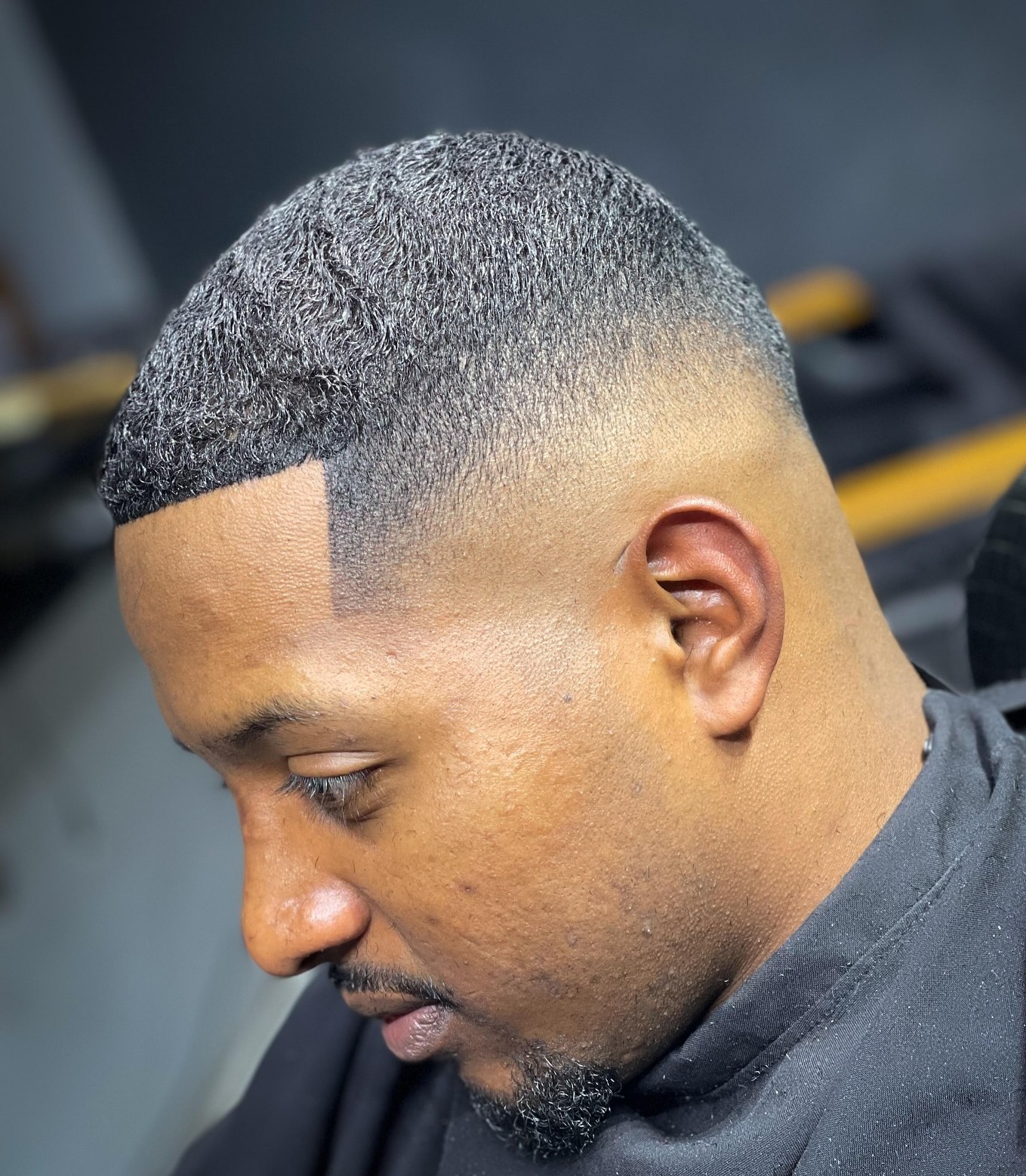
18. High Taper with Lineup and Design
A razor-etched design at the transition zone — a geometric line, wave, or lightning bolt — personalizes the cut and turns the fade boundary into a statement. Designs in this zone fade out quickly (5–7 days) because temple hair grows fastest; budget for a lineup touch-up every 2 weeks if the design matters to you. Stick to one side — bilateral symmetry in cut designs can look more mechanical than organic and reduces the hand-crafted feel of a hand-cut design.
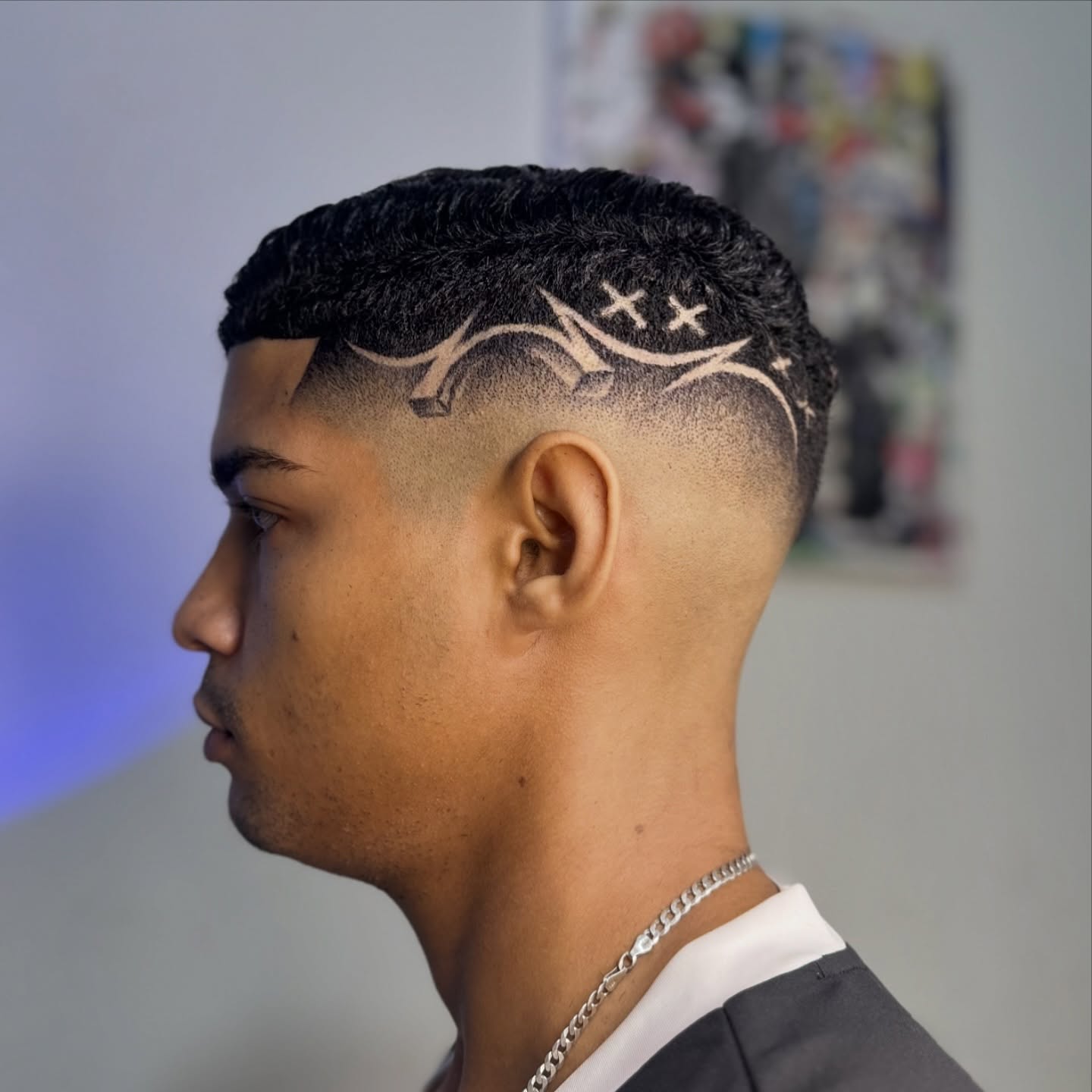
19. Short Afro with Bald Taper
A bald (zero) fade at the temple with 1–1.5 inches of afro on top creates maximum contrast with minimum top length — a sharp, low-effort daily look without committing to longer natural hair. This is one of the more maintenance-intensive variations on this list: the bald line at the temple needs re-edging every 10–14 days before it starts looking grown-out. Keep the crown moisturized with a leave-in conditioner to prevent the afro from drying and flaking directly above the clean skin fade.
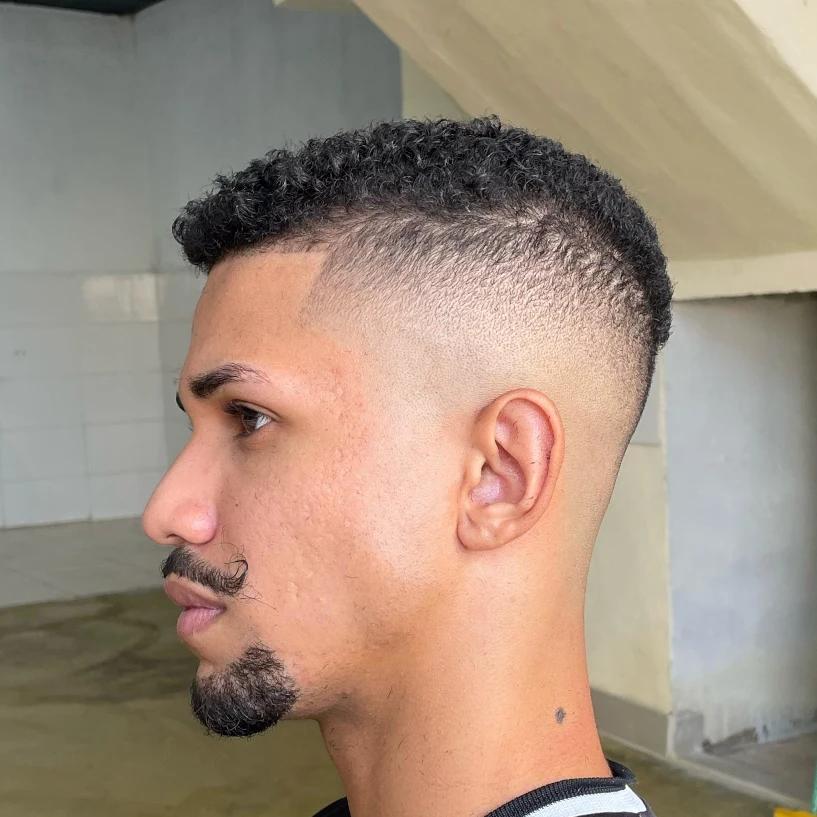
20. Natural Mohawk with High Taper Sides
Coily type 4 hair standing naturally through the center without gel or product creates a sculptural mohawk effect that looks nothing like the gel-and-spray punk version — the texture does the work on its own. Oval and oblong head shapes carry this best; round faces should avoid it because the tall center strip paired with narrow sides can look top-heavy on an already-wide face. The center strip needs monthly trims to maintain consistent density as the sides are kept faded.
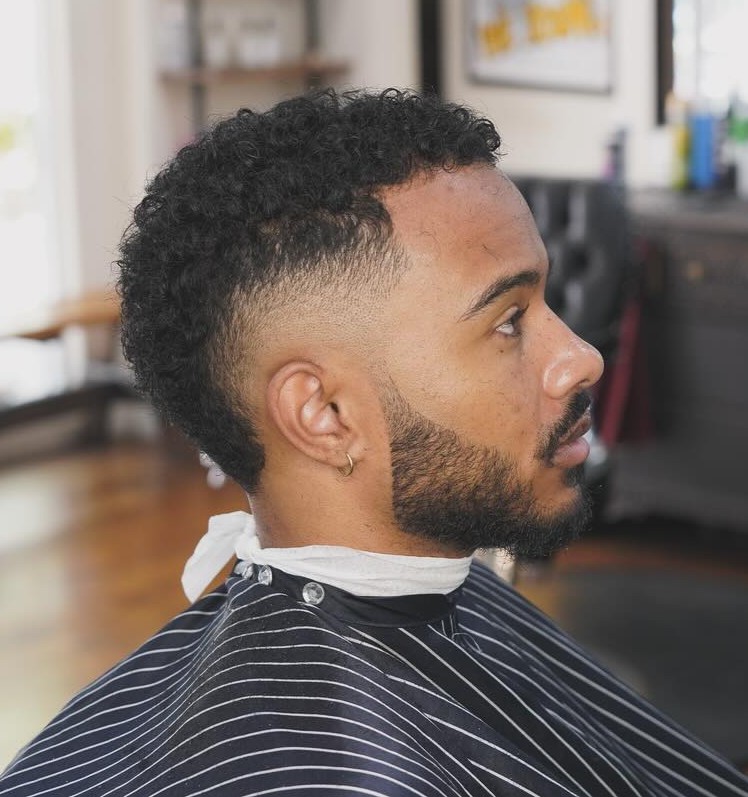
High Taper Fade with Beard
A high taper and a beard are complementary when the barber blends the sideburn zone from skin fade into the beard, rather than leaving a visible gap between the two. This “fade into beard” technique — using progressively longer clipper guards at the sideburn to bridge skin to stubble to full beard — is the detail that separates a polished result from a disconnected one. Mention it specifically when booking, because not all barbers do it by default, and it adds 10–15 minutes to the service.
21. High Taper Fade into Full Beard
The blend uses guard progression at the sideburn zone: a #0 at the peak of the temple fade transitioning through #1, #2, and #3 into the full beard. The barber effectively fades the sideburn twice — down from the top section, and up from the beard — meeting in the middle of the cheek to create a seamless gradient. This is what most men picture when they search for “high taper fade with beard” and don’t describe specifically; name the sideburn blend explicitly or you may get a disconnected line instead.
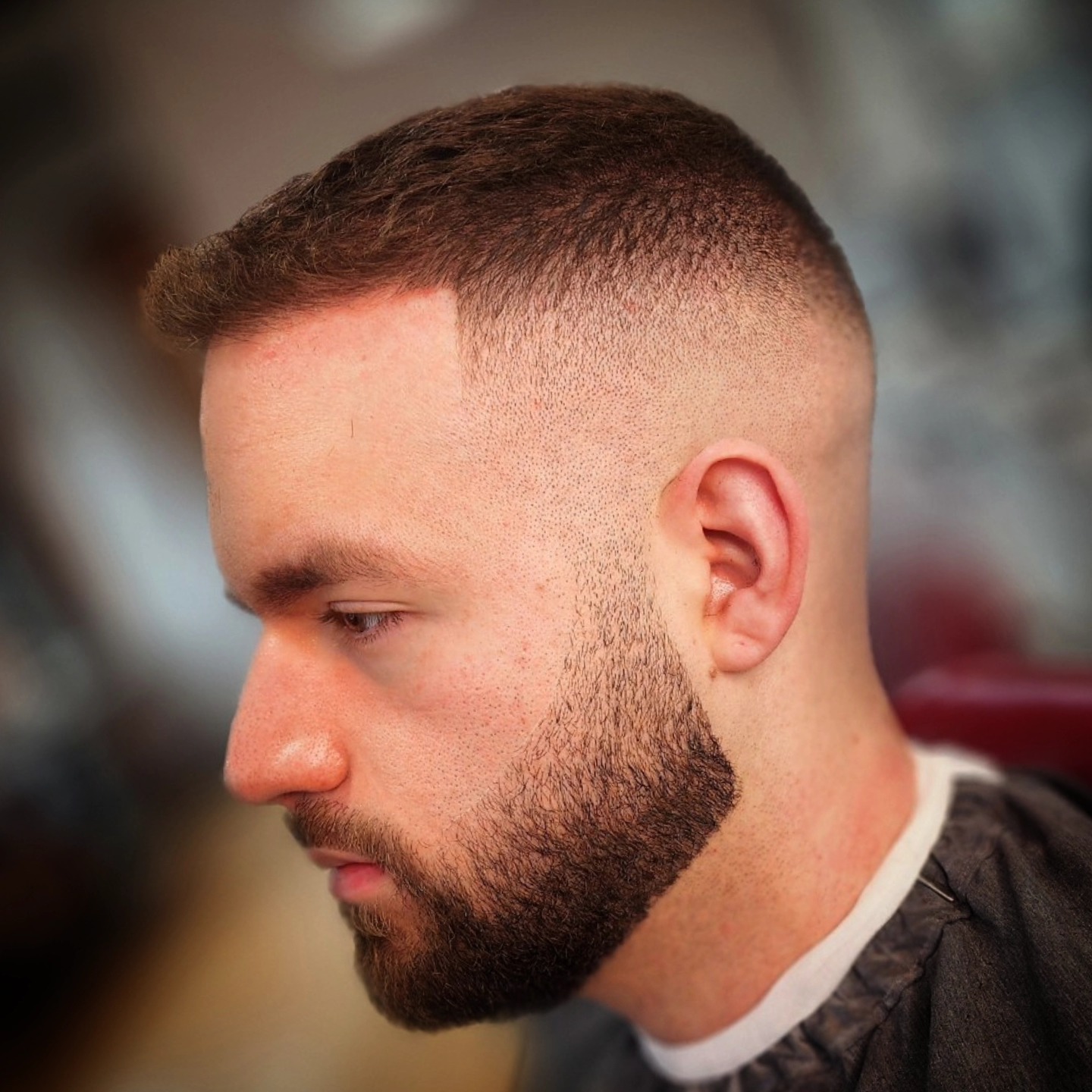
22. High Taper with Short Stubble
Three-to-five-day stubble paired with a high fade needs no blending at the sideburn — the transition from skin at the temple to light stubble growth looks clean and deliberate rather than unfinished. Square faces benefit most from this pairing: the stubble softens a strong jawline while the high taper adds height above it, balancing strong horizontal lines with vertical emphasis. Trim the stubble every 2–3 days with a detail trimmer at #1 guard to keep the density even across the jaw.
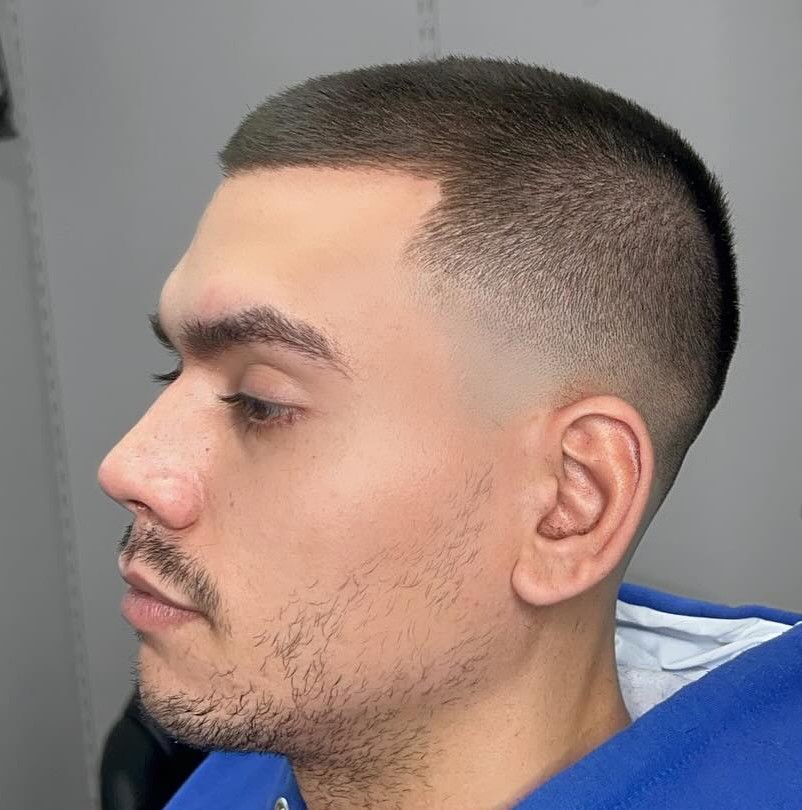
23. High Taper with Shaped Goatee
Oblong and rectangular faces benefit specifically from the goatee in this combination — the beard’s horizontal emphasis at the chin counteracts the additional vertical length that a high taper adds, keeping the face in better proportion than a clean shave would. The goatee’s cheek lines grow faster than the fade and start looking undefined after 7–10 days, so plan for a barber or home touch-up mid-cycle to keep the cheek boundary crisp. Keep the goatee width aligned with the natural edge of the mouth for a proportionate result.
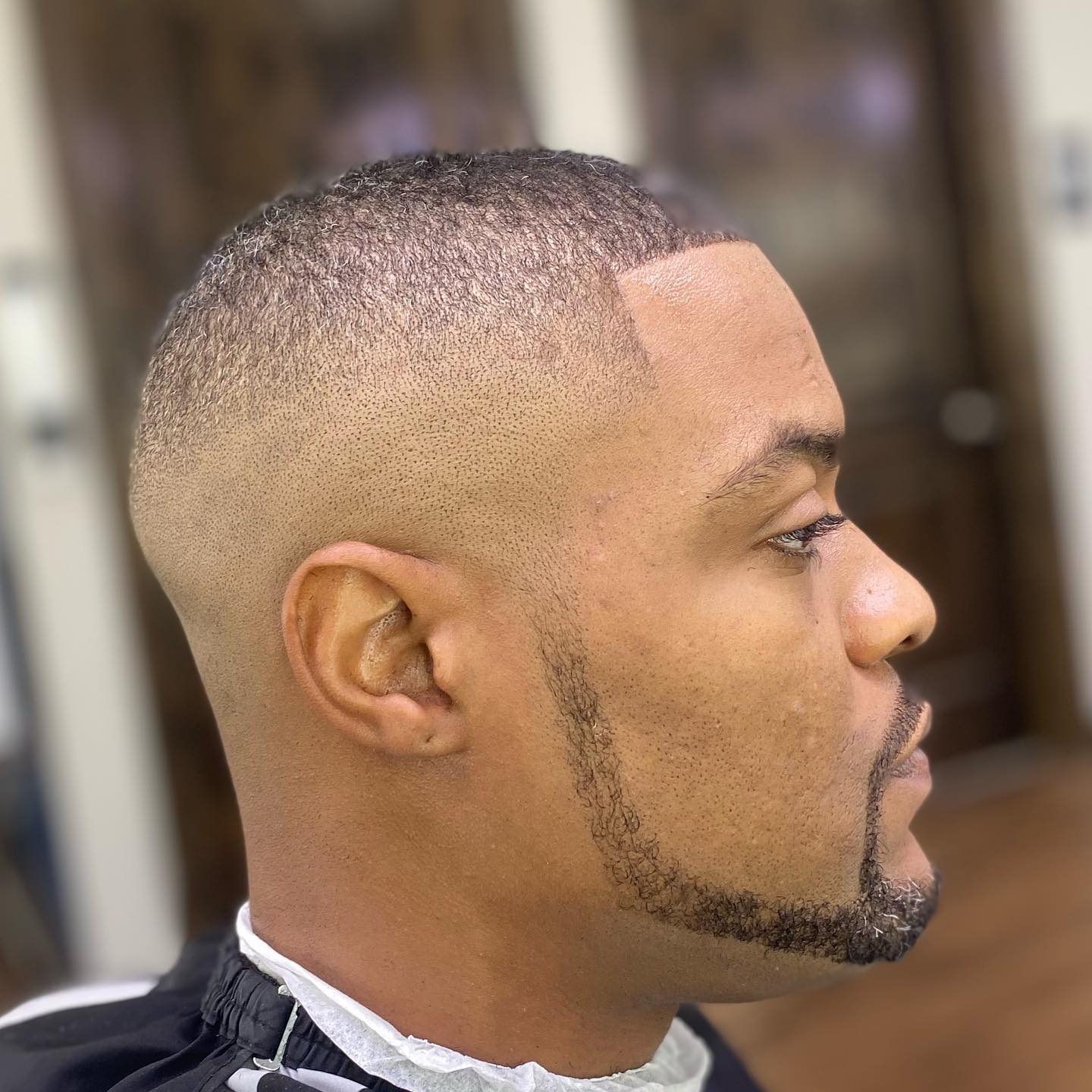
24. Textured Crop and Beard Combination
Matching the density of the top section and the beard creates visual balance — a very full beard with a closely-trimmed crop tips the proportions toward the lower half of the face, while a longer crop with a short beard does the opposite. Round faces benefit from this pairing when both the beard (adding chin length) and the crop (adding crown height) work together to elongate the face from both ends. Ask your barber to assess the relative densities of both elements and trim them to match before you leave the chair.
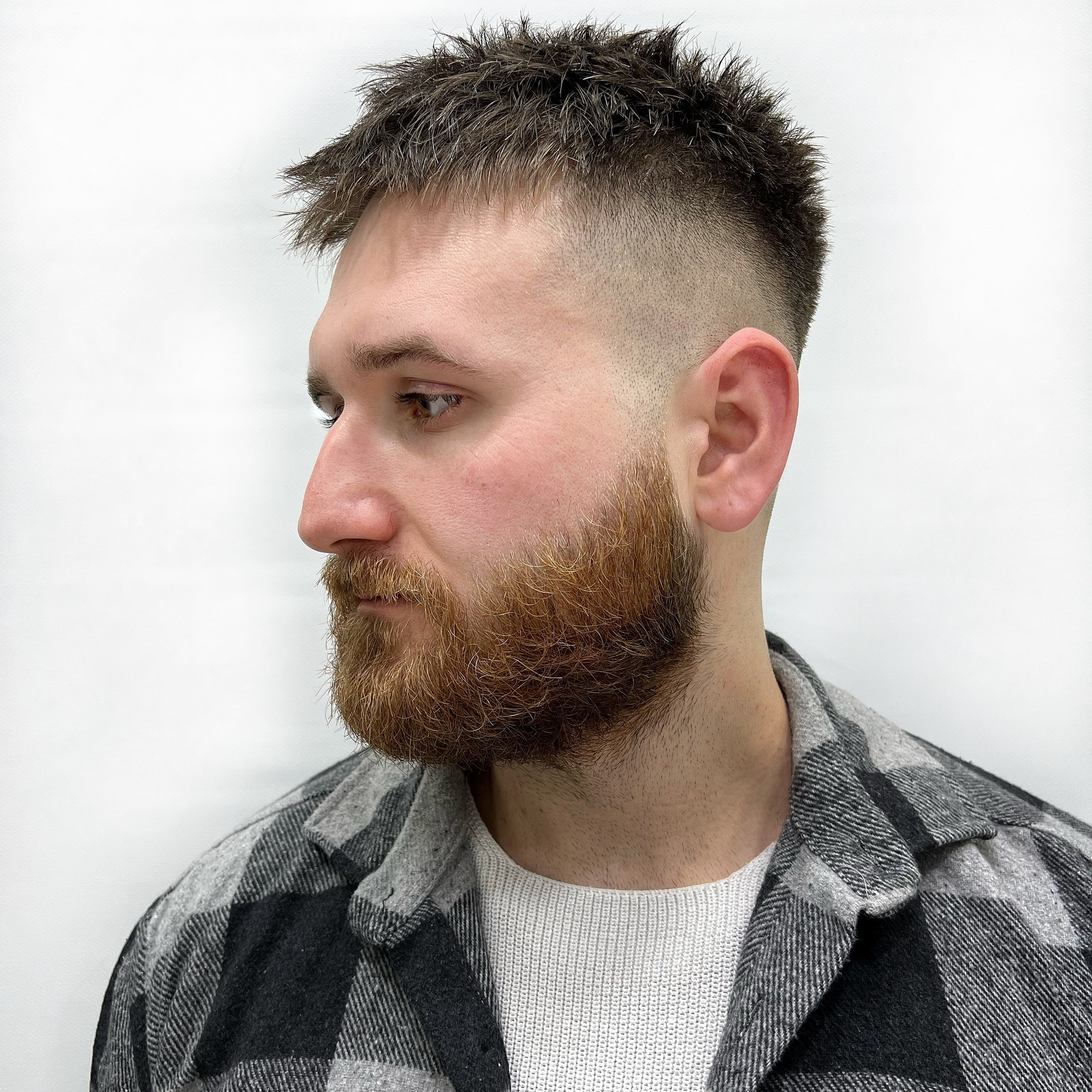
25. Bald Taper Fade with Long Beard
At the extreme end of the contrast spectrum: a zero-to-skin fade from the temple combined with a beard grown to 3–4 inches creates a look where the entire face is framed by hair from the chin up, with the upper portion clean. Oval and round faces carry this best — the long beard adds chin definition that round faces often benefit from. Heart and diamond face shapes should be cautious: a very long beard can make an already-pointed chin more prominent rather than balancing the face’s natural narrowness at the jaw.
What a High Taper Fade Actually Is
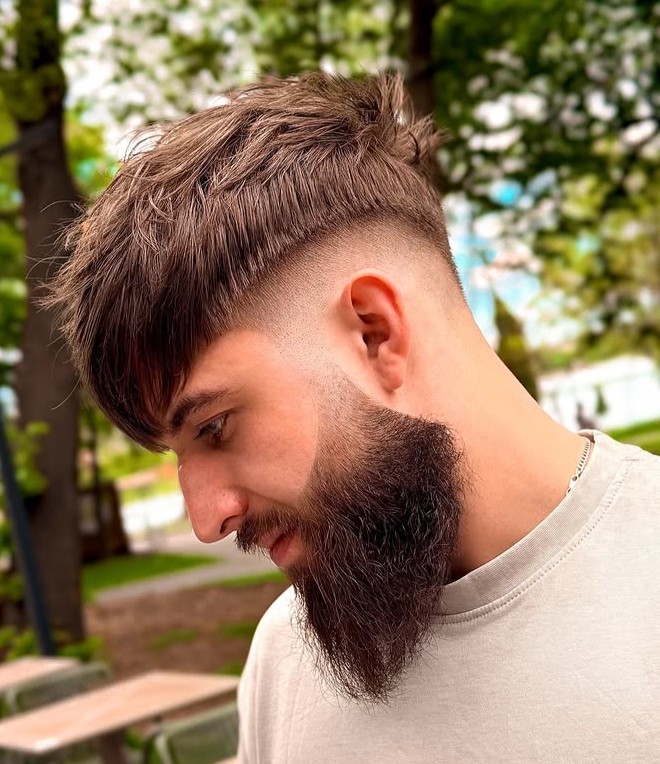
A high taper fade is a men’s haircut where the gradual fade from full-length hair to skin begins at the temple — roughly at the level of the forehead’s outer corners, just above the ear. The “high” in the name refers to where this transition starts, not to how tall the top section is or how dramatic the contrast looks.
Every fade haircut shortens the hair from crown to sides using a gradient. The difference is where that gradient begins. A low taper starts at the ear or below; a mid taper fade starts between the ear and the temple; a high taper starts at or above the temple. The higher the starting point, the more of the head is faded, and the more side-head coverage is traded for contrast.
Stylist tip: “The most common error clients make when asking for a high taper is pointing to the ear and saying ‘start here’ — that’s a mid taper. For a true high taper, point to just above the outer corner of your eyebrow. That’s the temple zone, and that’s where the fade should begin,” explains Ryan Whitfield, THP contributor and licensed barber.
High Taper Fade vs. High Fade: The Key Difference
These terms are used interchangeably in barbershops, but they describe two distinct cuts. Understanding the difference helps you ask for exactly what you want — and know whether the result is correct when you’re in the chair.
A High Taper Fade Blends Gradually over the Full Side of the Head
The gradient spans the full height of the sides — from whatever guard number sits just under the top section down to zero at the natural hairline above the ear. On most men this is a 3–4 inch span that the barber blends across multiple guard numbers. The sides never look abruptly short; they flow downward, which makes the cut more forgiving on irregular scalp shapes and more flexible on grow-out. A mid taper follows the same principle but the gradient starts lower, producing less contrast.
A High Fade Transitions Abruptly Near the Temple
The full-to-skin transition in a high fade happens in a much narrower span — sometimes just 1–2 centimeters — leaving the sides mostly bare rather than progressively shorter. This creates harder contrast and a more modern silhouette, but it’s also less forgiving on scalp asymmetry and head shape, which the taper’s gradual blend tends to hide. If a barber says they look the same, they’re describing the starting point (the temple) rather than the blending approach — the two cuts look noticeably different from the side.
Which Face Shape Suits a High Taper Fade
The high taper adds visual height and reduces apparent width at the temples. That combination works well for some face shapes and creates problems for others — knowing your face shape before you book saves you from leaving the barbershop with a cut that emphasizes what you’d rather minimize.
| Face Shape | Best Variation | Avoid | Why |
|---|---|---|---|
| Oval | Any variation | Nothing significant | Balanced proportions work with nearly every top style |
| Round | Pompadour or quiff on top; bald taper | Flat tops; center-parted comb-overs | Faded sides slim the face; height on top adds elongation |
| Square | Textured crop or soft comb-over | Slick back with sharp hard part | Texture softens the angular jaw the high fade exposes |
| Heart | French crop; medium beard if worn | Very high pompadour or quiff | Volume at the top widens an already-wider forehead |
| Oblong | Textured crop with moderate height; goatee if worn | Very tall quiff or pompadour | Long faces gain nothing from extra height — a lower starting point is more flattering |
| Diamond | Comb-over or pompadour with moderate width | Extremely narrow, tightly faded sides | Some top volume balances the narrowest points at forehead and chin |
What to Tell Your Barber
Most miscommunications in barbershops happen because clients use style words (“modern”, “clean”, “fresh”) rather than structural instructions. Here is a template that removes ambiguity:
“High taper fade — start the fade at the temple, take it down to skin at the natural hairline. [Guard: #2 or #3 on the sides just under the top section, fading to zero.] [Top style: textured crop / comb-over / pompadour — name it.] [Hard part: yes or no, and which side.] [Beard: blend the sideburn into the beard, or I’ll handle the beard myself.]”
Related cuts that overlap with the high taper fade territory: the blowout taper adds volume through the top section rather than just leaving it flat, and the edgar cut pairs a blunt horizontal fringe with a high or mid fade for a distinctly sharp look. Knowing which you actually want prevents leaving the chair with something adjacent to, but not exactly, what you had in mind.
Stylist tip: Bring two reference photos — one clear side profile showing where the fade starts, and one showing the top from a slightly elevated angle. A single front-on photo misses half the cut’s structure, and barbers work from multiple angles simultaneously.
Maintenance and Styling
The temple is where hair grows fastest on the head — faster than the nape or ear-level zones. A high taper that looks sharp on day one shows visible regrowth at the fade line by day 10–14 on most men with average growth rates. Budget for a barber visit every 2 weeks if keeping the fade line crisp matters to you; slower-growth individuals can stretch to 3 weeks without the cut looking noticeably grown-out.
Compare this to a mid or low taper, where the fade starts lower — growth is slower in those zones, and the cut’s shape holds for 3–4 weeks. The high taper trades longevity for sharpness.
| Hair Type | Product | Technique | Daily Time |
|---|---|---|---|
| Straight, medium | Light clay or matte paste | Work into slightly damp hair; finger-comb or comb through | 3–5 min |
| Thick, coarse | Medium-hold pomade | Apply to towel-dried hair; blow-dry before setting direction | 5–10 min |
| Curly (3a–3b) | Curl cream or light styling gel | Scrunch into dry or slightly damp hair; air-dry | 2–3 min active, 20–30 min dry |
| Coily (4a–4c) | Leave-in conditioner and light oil | Apply to freshly washed damp hair; pick or shape when dry | 5–10 min active, air-dry |
When a High Taper Fade Is Not the Right Choice
The high taper fade isn’t universally flattering. Several specific conditions where it works against you:
- Oblong or very long faces: The faded sides and height on top together add vertical length to a face that doesn’t need it. A mid taper or a low drop fade is the better option — both create less contrast and add less apparent height.
- Prominent ears: The high fade fully exposes the ear and the area above it. Ears that sit away from the head become more visible, not less. A mid taper that keeps some hair over the upper ear is more flattering.
- Receding temple hairline: If your natural hairline is receding above the temple, the high taper begins the fade exactly where the recession is most visible. A mid taper starting below that zone can work around early-stage temple recession; a high taper draws a frame around it.
- Irregular scalp or head shape: Any asymmetry, scarring, or lumps between the temple and crown becomes visible when hair is faded to skin at a high starting point. A barber can sometimes work around this with careful blending, but the high taper offers less coverage than lower starting points provide.
FAQ
What is the difference between a high taper fade and a high fade?
Both begin the transition to skin at the temple, but the blending approach is different. A high taper fade blends gradually from full length near the crown through multiple guard numbers down to skin — the gradient spans the full height of the sides. A high fade transitions abruptly, leaving the sides mostly bare rather than progressively shorter. The taper approach is more gradual and forgiving; the fade creates harder, more dramatic contrast.
How often do you need to get a high taper fade cut?
Every 2–3 weeks for most men. Temple hair grows faster than hair at the nape or ear level, so the fade line blurs before the rest of the cut looks grown-out. If keeping the fade line crisp matters to you, plan on 2-week visits. Men who prefer lower maintenance can stretch to 3 weeks by accepting some regrowth at the temple zone.
Does a high taper fade work on curly hair?
Yes — curly and coily hair on top of a high taper creates one of the cut’s most visually distinctive results. The key requirement is asking your barber to cut the top section dry, not wet. Curls shrink significantly when wet, and cutting curly hair wet risks removing far more length than intended. Always confirm the dry finished length before the cut begins. Our gallery of men’s haircuts by texture includes additional curly fade variations.
What guard number should I ask for with a high taper fade?
Most barbers start with a #3 or #4 guard just below the top section, work down through #2 and #1, and finish with a zero at the natural hairline above the ear. Some clients ask for a “skin taper,” which goes to bare skin using a bald (zero-zero) finish. Confirm with your barber which guard you want at the lowest point before scissors come out — “zero” and “skin” mean the same thing to most barbers, but it’s worth confirming.
Is a high taper fade good for round faces?
Yes, when paired with the right top style. The faded sides reduce apparent width at the temples, while height on top from a pompadour or textured quiff elongates the face visually. Avoid flat tops and center-parted styles — these emphasize horizontal width rather than adding the vertical proportion a round face benefits from.
Can I get a high taper fade if I have a receding hairline?
Mild recession can sometimes be worked around by adjusting the fade’s starting point slightly — an experienced barber can assess this before the cut begins. Significant temple recession is better handled by a mid taper, which starts below that zone, or by a different cut altogether. Be direct with your barber about the recession before the cut starts; it changes where the fade should begin, and finding out mid-cut is much less useful.
How do I maintain a high taper fade between barber visits?
There isn’t much you can do for the faded sides without practice and the right clippers — the faded areas grow in evenly and home maintenance without experience tends to create uneven lines. Focus on the top: style daily with your hair-type-appropriate product, and keep a bottle of curl cream, pomade, or light clay accessible. Many barbers offer a “lineup only” visit at reduced cost around week 2, which re-edges the fade line and extends the cut’s sharpness without a full service charge.
What is the best high taper fade style for Black men?
The box fade with a clean lineup, 360 waves, and the temp fade are among the most requested. Each works with different coil patterns and styling preferences: the box fade suits 4a–4c hair that’s worn natural; waves require medium-density hair that brushes into a wave pattern; the temp fade is best for men who want the cut to follow their natural hairline arc rather than a geometric overlay. Discuss your specific texture and styling routine with your barber before deciding — these three cuts feel similar in the chair but look quite different in the result.
The high taper fade is one of the most adaptable men’s haircuts available — the same structural principle works across straight, wavy, curly, and coily textures, with or without a beard, and across most face shapes when paired with the right top style. Whether you want a version for curly hair, a Black men’s variation with a lineup, or a clean taper to pair with a beard, bring two reference photos to your next barber appointment and confirm the exact starting point of the fade before any clippers come out.
Hair results vary based on your natural hair type, texture, density, and condition. Always consult with a licensed barber or hairstylist before making significant changes. Photos may show styled results that require professional tools and products to replicate.



2 responses