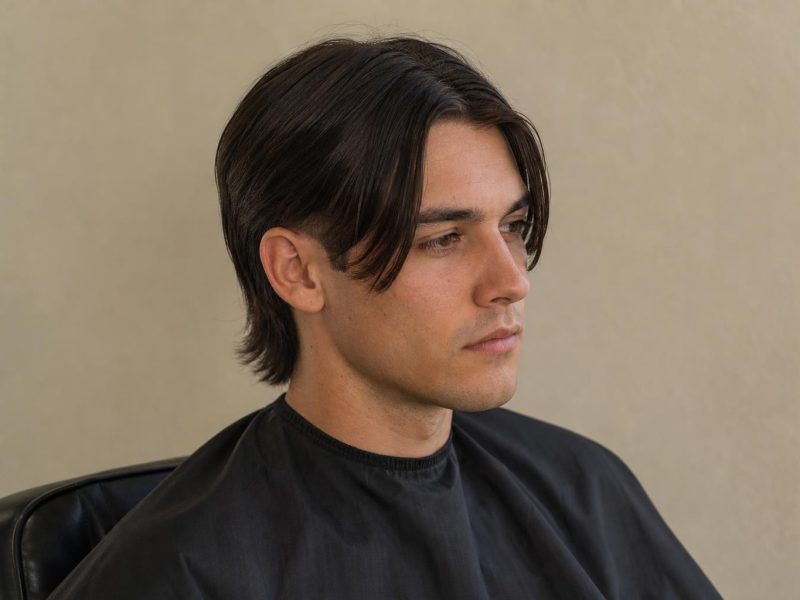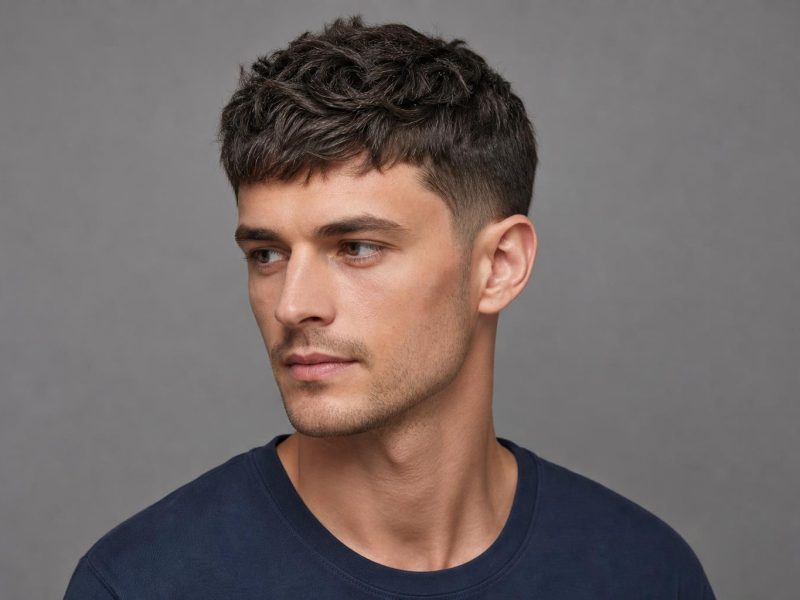


A professional haircut is not the one that looks sharpest on day one, it is the one that still looks tidy on day twenty-eight.
Every roundup of office-appropriate men’s cuts lists the same eight shapes and grades them on how they look fresh out of the chair. That is the wrong test. You will spend one day a month with a new haircut and twenty-nine days with a growing one, so the useful question is how a cut behaves in week four, when the sides have caught up and nobody has time for a barber visit.
These 24 cuts are sorted by exactly that: how long each one holds a clean outline before it starts looking untended. The sections run from grow-out-proof through to the sharp shapes that need a four-week cycle without exception, followed by an honest breakdown of how conservative different industries actually are, a face shape table, and the words to use with your barber.
| Factor | Details |
|---|---|
| The real test | How the outline looks at week four, not week one |
| Safest across industries | Scissor-cut side part, crew cut, Ivy League, blended taper |
| Riskiest in conservative rooms | Skin fades, hard part lines, disconnected undercuts |
| Morning styling | 0 to 6 minutes depending on how much length lives on top |
| Barber cycle | 4 weeks for faded shapes, 6 to 10 for scissor work |
| Avoid if | You cannot keep a fixed appointment; pick a scissor cut instead |
Grow-Out-Proof Cuts That Still Look Tidy in Week Six
These are the cuts built entirely with scissors, or with clippers used softly enough that there is no hard line to grow away from. Nothing here has an edge that becomes obvious as the hair lengthens, which is why men who travel, work long hours, or simply forget to book gravitate to this group. The trade-off is that none of them photograph as sharply on day one as a fade does.
1. Scissor-Cut Side Part
Cut entirely with scissors over the comb, with the sides left around an inch and the top two to three inches, this is the most forgiving shape in men’s barbering. Because no clipper line exists anywhere on the head, six weeks of growth simply makes the whole cut slightly bigger rather than shapeless. Best on straight to wavy hair of any density.
2. Classic Crew Cut
The top graduates from about an inch at the front down to a quarter inch at the crown, with the sides tapered rather than faded. Men with a strong cowlick at the front hairline do particularly well here, since the short front length removes the leverage the cowlick needs. It also asks nothing of you in the morning beyond a towel.
3. Ivy League
Think of this as a crew cut with an extra inch at the front, long enough to comb to one side when you want a more finished look. The extra length gives you two versions of the same cut, one for a normal day and one for a client meeting, without any product change. Ask for the front to stay long enough to part but short enough not to fall.
4. Short Textured Crop with a Scissor Taper
Point-cut ends across the top create movement without the length that would need styling, and the sides taper by hand rather than dropping to a guard line. Thick, coarse hair benefits most, because the texturing removes the bulk that otherwise makes short cuts look boxy. Our guide to the textured crop covers how short the fringe can go before it stops being office-safe.
5. Grown-Out Buzz at a Number Three
A single guard length over the whole head with a softly tapered neckline is the most maintenance-free option on this list, and it stays presentable for eight to ten weeks. The catch is that it exposes the shape of your skull completely, so book a consultation rather than deciding on the day. Men with thinning at the crown often find this more flattering than a comb over that attempts to hide it, and the full buzz cut guide covers guard numbers in detail.
6. Natural Part with a Blended Taper
Rather than a barber choosing a part line, the hair is cut to fall along where it already splits. That single decision removes the daily fight most men have with a part that migrates, and it means the cut looks the same whether you style it or not. Ask your barber to find the natural split while your hair is dry before they begin.
7. Business Cut with a Rounded Neckline
The neckline choice matters more for professional appearance than almost anything else at the back of the head. A rounded or tapered neckline grows out invisibly, while a blocked neckline develops a fuzzy shelf below the line within about ten days. Same cut, radically different week-three appearance.
8. Short Curls Cut to an Even Length
Curly hair cut to one uniform length all over, dry and curl by curl, holds its shape longer than almost any straight-haired cut, because curls disguise growth as extra volume rather than extra length. Two inches is the sweet spot for office wear on a 3a to 3c pattern. Insist on a dry cut, since wet curls stretch and the result comes back shorter than agreed.
Standard Business Cuts on a Six-Week Cycle
This middle group is where most professional men land. These cuts carry enough length on top to be styled deliberately, and the sides are taken shorter than the grow-out-proof group, which buys sharpness at the cost of a fixed barber appointment every six weeks or so. All of them land as conventional in a business setting.
9. Comb Over with a Low Taper
Three to four inches on top swept across, with the sides tapering gradually from about half an inch down to the skin at the very bottom edge only. Because the taper lives low near the ear, growth is far less visible than on a mid or high fade. A matte clay holds the sweep without the shine that makes a comb over look dated.
10. Textured Quiff Cut Short
Volume at the front, tapered at the back and sides, with the top point-cut so it lifts rather than forming a solid block. Fine hair gets the most benefit from this shape, since the vertical volume creates apparent density where a flat cut would expose scalp. Our walkthrough on how to ask for a quiff has the exact height language to use.
11. Slicked Back with a Taper
Four inches or more on top, combed straight back, with a taper that keeps the sides close enough not to balloon. The whole look lives or dies on product choice: a water-based pomade holds all day, while an oil-based one transfers onto shirt collars. Straight and slightly coarse hair holds this better than fine hair, which tends to separate and show scalp lines by afternoon.
12. Low-Volume Pompadour
A pompadour scaled down to about two inches of lift is one of the few genuinely striking shapes that still passes in a conservative office. Keep the sides tapered instead of faded and the height modest, since exaggerated versions cross into costume territory quickly. Budget four minutes with a round brush and a dryer each morning.
13. Side-Swept Fringe Trimmed Above the Brow
Softer than a part and easier than a quiff, this keeps three inches at the front swept diagonally across the forehead, stopping clear of the eyebrow. Men with a high hairline get the most from it, because the sweep covers ground without looking like a deliberate cover-up. Trim the fringe every three weeks even when the rest of the cut can wait.
14. Caesar Cut with a Short Forward Fringe
Hair combed forward from the crown and cut in a straight line across the forehead about an inch above the brow. It is the most practical answer to a receding front hairline that does not involve going short all over. Coarse, straight hair gives the cleanest fringe line, while fine hair tends to separate and expose the scalp underneath.
15. Medium Length Combed Back Behind the Ears
For men who prefer some length, four to six inches worn tucked behind the ears with a light taper at the nape stays professional as long as the perimeter is kept deliberate rather than growing wild. Book a shape-up every seven weeks focused only on the nape and around the ears. This is the version that carries a beard best.
16. Tapered Afro at Two Inches
Even length through the top with the sides and back tapered down by hand keeps the round shape without the width that makes longer afros harder to wear in formal settings. A sponge or a pick used on damp hair evens out the curl pattern in under a minute. Trims every four to five weeks keep the taper reading as a deliberate line.
17. Short Waves with a Tapered Neckline
Brushed waves cut close, with a soft taper at the neck and around the ears, land as polished in almost any workplace. The brushing routine is the real commitment here, roughly five minutes morning and night, and it is what separates a wave pattern from an undefined short cut. A durag at night does more for the result than any styling product.
Sharp Cuts That Need a Four-Week Cycle Without Exception
Everything in this section involves a hard line somewhere, whether a fade, a part line or a disconnection. All of them look exceptional for about ten days and noticeably neglected by week five, which is a real cost rather than a detail. Choose from this group only if a standing barber appointment is something you will genuinely keep.
18. Low Skin Fade with a Textured Top
The fade drops to bare skin just above the ear and blends upward into two or three inches of texture on top. Because the fade lives low, it is the most conservative of the skin fade family and the easiest to wear in a business setting. Details on where the line can fall are in our guide to the low fade.
19. Mid Fade with a Comb Over
Raising the fade to the temple line creates far more contrast between the sides and the combed top, which photographs well and suits rounder faces by adding apparent height. Expect visible stubble in the faded zone by day eighteen. Not a first choice for law, banking or client-facing finance roles.
20. Hard Part with a Low Fade
A razor line carved where the part falls, paired with a low fade, gives the sharpest definition available in a short men’s cut. The line itself lasts about twelve days before it blurs, which is the shortest useful lifespan of anything on this list. Worth it for a specific event, difficult to justify as a default.
21. Undercut with a Slicked Back Top
A single guard length on the sides with no blending, topped by four to five inches combed straight back. The disconnection is what makes it sharp and also what makes it the most polarizing option here, since the step between the two lengths is visible from every angle. Works best on thick, straight hair that holds a comb line.
22. Crew Cut with a Skin Fade
Take the classic crew cut and replace the taper with a fade to skin and you get a cleaner, harder version of a conservative shape. Men who want the precision of a fade without the length or styling of a comb over usually land here. The graduation on top still needs scissor work, so book a barber rather than a quick clipper shop.
23. Burst Fade with Short Curls on Top
The fade arcs around the ear rather than running straight across, leaving weight at the nape and short curls on top. It suits curly and coily textures particularly well because the arc follows the natural curve of the growth pattern. Sharper than most offices expect, so judge the room before committing.
24. French Crop with a Low Fade
A short, blunt fringe across the forehead over a low fade gives a modern outline that still keeps every strand under control. This is a strong option for thinning at the front, because the forward-facing weight works with the hairline rather than against it. Our French crop guide covers how blunt the fringe can go before it becomes severe.
How Conservative Your Industry Actually Is
The phrase “office-appropriate” hides an enormous range. A cut that marks you as well-groomed in a software company can mark you as unpolished in a private client wealth practice, and the difference has almost nothing to do with the quality of the haircut. Match the cut to the room rather than to a general idea of professionalism.
| Setting | Safe Choices | Usually Too Sharp |
|---|---|---|
| Law, banking, private client finance | Side part, crew cut, Ivy League, low taper | Skin fades, hard parts, disconnected undercuts |
| Corporate and consulting | Comb over, quiff, low fade, tapered afro | Hard part lines, high fades |
| Technology and engineering | Almost anything kept clean at the neckline | Nothing, provided it looks maintained |
| Medicine and healthcare | Short cuts that stay off the face and out of the way | Anything needing constant hand contact to fix |
| Teaching and public service | Crew cut, side part, buzz, natural part | High contrast fades on a stretched budget cycle |
| Creative and client-facing agency | Textured crop, quiff, mid fade, longer combed back | Looking so conventional you fade into the room |
Matching a Professional Cut to Your Face Shape
Short men’s cuts expose the outline of the head far more than longer styles, so the shape of your face does more work here than it does on a long cut. The principle is simple: put volume where your face is narrow and keep things close where it is wide.
| Face Shape | Best Choice | Why It Works | Avoid |
|---|---|---|---|
| Oval | Side part or crew cut | Balanced proportions take almost any outline | Heavy fringe that hides the balance |
| Round | Quiff or pompadour with a taper | Height above the forehead lengthens the face | Width at the sides or a forward fringe |
| Square | Textured crop or side-swept fringe | Softer top edges offset a strong jaw | A blocked neckline and squared-off top |
| Heart | Medium length worn back behind the ears | Weight near the jaw balances a wider forehead | Tall volume on top |
| Long or oblong | Caesar cut or French crop | A forward fringe shortens the visual length | Pompadours and high volume |
| Diamond | Ivy League or a soft crop | Fullness at the forehead and jaw evens the cheekbones | Anything taken tight at the temples |
If your jaw is the dominant feature, the specific adjustments in our guide to cuts for square faces go further than a single table row can.
What to Tell Your Barber
Naming a style is the least useful thing you can say, because every barber has a different mental picture of a comb over. Name measurements and the neckline instead. A request that works in any chair: “Scissors on top, leave about three inches at the front and take a little weight out. Taper the sides starting low, no fade line. Rounded neckline, not blocked. I want this to still look fine in five weeks.”
Stylist tip: Ask for the neckline to be tapered rather than blocked even if you like the crisp look of a blocked line. A blocked neckline is a horizontal edge drawn across a curved neck, so within ten days there is visible growth below it. A tapered neckline grows out invisibly and buys you two extra weeks between appointments without changing anything you can see on day one.
Stylist tip: If you are thinning at the crown, ask your barber to keep the sides longer rather than shorter. Very short sides increase the contrast against a sparse top and make the thinning more obvious, which is the opposite of what most men assume. Our guide on cuts for a thinning crown covers the specific lengths.
Maintenance and Morning Styling Time
Choosing a cut without knowing its real morning cost is how men end up wearing an expensive haircut badly. Below are honest numbers for the main shapes, measured as the time from towel to done.
| Cut | Barber Every | Morning Time | Product |
|---|---|---|---|
| Buzz or crew cut | 6 to 10 weeks | Under 1 min | None |
| Scissor side part | 6 to 8 weeks | 2 min | Light cream or nothing |
| Textured crop | 5 to 6 weeks | 2 to 3 min | Matte paste, pea-sized |
| Comb over or quiff | 5 to 6 weeks | 4 to 6 min | Clay plus a dryer |
| Slick back | 6 weeks | 3 to 4 min | Water-based pomade |
| Any skin fade | 4 weeks, firm | 2 to 5 min | Depends on the top |
| Short waves | 3 to 4 weeks | 5 min, twice daily | Brush, pomade, durag at night |
When a Professional Cut Is Not the Right Choice
- You cannot keep a four-week appointment. Any fade, hard part or disconnection becomes a liability rather than an asset once it grows past its line. Pick from the first section instead and you never face that problem.
- You wear a hard hat or helmet all day. Anything relying on volume on top flattens into a ring by mid-morning. A crew cut or a tapered buzz survives compression better than any styled shape.
- Your hairline is receding at the temples. A slicked back or exposed comb over draws attention straight to the recession. Forward-facing shapes like the Caesar or the French crop do the opposite.
- You have a strong double crown. Part-based cuts fight it every morning. Go to a forward or textured shape where the crown pattern becomes movement rather than a problem.
- You genuinely will not use product. Roughly half the list needs a pea of clay to look deliberate. Without it, the quiff, pompadour and slick back all fall flat and look unfinished by lunchtime.
FAQ
What Is the Most Professional Haircut for a Man?
A scissor-cut side part with a low taper and a rounded neckline is the safest choice across every industry, because it carries no hard line that can grow out badly and no styling requirement beyond a comb. It works on straight and wavy hair at any density and stays presentable for six to eight weeks. If your workplace leans conservative and you want one answer rather than a list, that is the one.
Are Fades Considered Professional?
Low fades and tapers are accepted almost everywhere now, while skin fades, high fades and hard part lines still land as informal in law, banking and private client work. The height of the fade matters more than the fact of it: a fade that stays below the temple looks like grooming, while one that climbs above it looks like a style statement. When in doubt, look at what the two most senior people in your office wear.
How Often Should I Get a Professional Haircut?
Four weeks for anything with a fade or a carved line, five to six for comb overs and crops, and six to ten for scissor cuts and buzzes. The variable is not how fast your hair grows but how visible a hard edge becomes as it grows. Booking your next appointment before you leave the shop is the single habit that keeps a professional cut looking professional.
Can I Have Long Hair and Still Look Professional?
Yes, provided the perimeter is deliberate rather than the result of not booking a haircut. Four to six inches worn tucked behind the ears with a tidy nape and a light taper around the ears works in most corporate settings. The failure mode is length with no shape, which looks unkempt regardless of how clean the hair is.
What Should I Ask For If I Am Starting to Thin on Top?
Ask for the sides to be kept moderate rather than very short, and for the top to be cut with texture and left slightly longer at the front. High contrast between short sides and a sparse top makes thinning more obvious, which is the most common mistake in this situation. A matte product also helps, since shine reflects off the scalp and exposes what you are trying to disguise.
Does Hair Color Affect How Professional a Cut Looks?
Grey hair tends to look more formal at the same length than dark hair, because the lower contrast against skin softens every line in the cut. That means men going grey can often carry slightly more length or a slightly sharper fade than they could before. If you are covering grey rather than wearing it, our guide to hair color for men covers how to avoid the flat, uniform result that gives box dye away.
What Should I Bring to the Barber?
Two photos taken from different angles of the same cut, plus one honest sentence about how often you can return. The second part matters more than the first, since a good barber will steer you away from a shape your schedule cannot support. Browsing the full range in our men’s haircut collection before you go makes that conversation much shorter.
The best professional hairstyles for men are the ones matched to two things at once: the formality of the room you work in and the barber schedule you will actually keep. Pick a shape from the first section if your calendar is unpredictable, from the third only if a standing appointment is realistic, and ask for a tapered neckline either way. That one detail does more for how maintained your hair looks than the cut itself.
Hair results vary based on your natural hair type, texture, density, and condition. Always consult with a licensed hairstylist before making significant changes, especially with chemical treatments or dramatic length changes. Photos may show styled results that require professional tools and products to replicate.