


The French crop lives or dies on two measurements: how high the fringe is cut and how high the fade starts, and getting either wrong turns a sharp cut into a bowl.
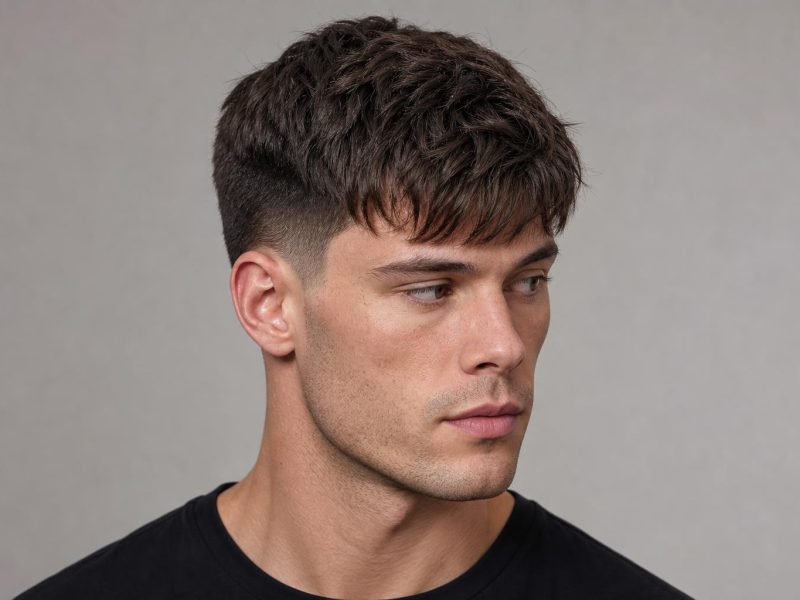
A French crop is a short men’s cut defined by a forward-combed fringe cut across the forehead, a short textured top, and tapered or faded sides. The fringe is the identifying feature: anything from just above the brow to mid-forehead qualifies, and where it lands changes the whole balance of the cut. This collection covers 26 versions grouped by fringe style, fade height, and hair texture.
Every entry names the guard number, fringe height, or cutting technique behind it, so you can describe it rather than hand over a phone. After the gallery you get a fade height comparison, face shape guidance built around forehead proportion, the exact barber wording for the fringe, and an honest look at a cut that needs a chair every three weeks.

| Factor | Details |
|---|---|
| Top length | 1.5 to 3 inches, textured rather than cut flat |
| Best for | Tall foreheads, receding hairlines, straight to wavy hair, oval and oblong faces |
| Maintenance | Barber every 3 to 4 weeks; under 2 minutes of daily styling |
| Avoid if | You have a strong front cowlick that pushes the fringe upward |
| Barber time | 25 to 40 minutes for the cut alone |
Classic French Crop Shapes
The classic form keeps the top short and uniform, the fringe blunt and level, and the sides tapered rather than faded to skin. It is the version closest to the original barbershop cut and the one that suits the widest range of workplaces. Everything here works on straight to slightly wavy hair with medium density or better.
1. Classic French Crop with a Blunt Fringe
The top is cut to about two inches, combed forward, and the fringe taken off in one straight line roughly an inch above the brow. That single line is the whole cut, and a barber who tapers it instead has given you a different haircut. Straight hair holds the line cleanest.

2. French Crop with a Tapered Back and Sides
Where a fade drops to bare skin, a taper stops at a 1 or 2 guard and keeps visible hair all the way down, which stretches the cut from three weeks to five before it looks grown out. The trade-off is less contrast against the top. This is the version for anyone who cannot get to a barber monthly.

3. French Crop with a Mid Skin Fade
Dropping the sides to bare skin from temple level maximizes the contrast against the fringe, which is what makes the shape look graphic rather than soft. Thick, dense hair benefits most, because a fade starting at temple level removes the side bulk that would otherwise widen the head. Expect a re-cut every two to three weeks.

4. Short French Crop Under Two Inches
Keeping the top to an inch and a half means the fringe lies flat with no product at all, which is the practical appeal for anyone who wants a two-minute morning. The shorter top also reduces how much a cowlick can lift it. Best on straight hair, where the shorter length still lies down.

5. French Crop with a Rounded Fringe
Cutting the fringe with a slight curve rather than a straight line softens the graphic edge and follows the natural shape of the hairline. Square and angular faces gain from the curve, which offsets a strong jaw and a straight brow. It also disguises an uneven hairline better than a blunt line does.

6. French Crop with a Line-Up at the Temples
Ask for square the temples and follow my natural hairline, do not push it back. A line-up sharpens the corners where the fringe meets the faded side, which is the transition most likely to look untidy. Barbers who square too aggressively gain you a sharper edge now and an artificially receded hairline over years.

Textured and Modern Crop Variations
The current direction of the cut has moved away from the flat, uniform top toward heavy internal texture, which makes the fringe separate into pieces rather than sitting as a solid block. This is the difference between a French crop that looks contemporary and one that looks military. All of these need a small amount of matte product.
7. Textured Crop with a Piecey Fringe
Point cutting into the top two inches breaks the fringe into separate strands so it falls forward in pieces rather than as one slab. Rub a pea of matte clay between warm palms and push the fringe forward with your fingertips, and the whole routine takes under a minute.

8. Disconnected French Crop
Unlike a standard crop where the top blends into the sides, a disconnected version leaves a deliberate step between the two with no graduation at all. The contrast is sharper and considerably less forgiving as it grows, since the step blurs within about ten days. Best on dense, straight hair that holds a clean edge.

9. French Crop with a Longer Sweeping Fringe
Letting the fringe reach the eyebrows rather than stopping above them gives the option of sweeping it slightly to one side, which is more forgiving on a wide forehead. Fine hair does better here than with a blunt short fringe, since the extra length adds visual density where a thin hairline would show.

10. Messy French Crop
Working a texturizing spray through dry hair and then pushing it forward with your fingers rather than a comb leaves the fringe irregular, with strands falling at slightly different lengths. Skipping the comb entirely is the whole technique. It hides a day of growth better than any other version here.

11. French Crop with a Hard Part
A single trimmer line shaved along the natural parting adds a graphic element that a crop usually lacks, and it draws a vertical against the horizontal fringe line. It grows in visibly within eight to ten days, so budget for the same cycle as the fade. Works best over a skin fade rather than a taper.

12. French Crop with a Burst Fade
A burst fade curves around the ear in a semicircle instead of running level around the head, leaving more weight at the back than a standard fade. Compared with the mid fade version, it keeps the silhouette rounder and less severe from the side. Burst fades suit narrower heads, where a full fade removes too much width.

13. French Crop with a Low Fade
Starting the fade just above the ear keeps weight through the sides and softens the whole shape, which flatters a rounder or fuller face where a high fade exaggerates width at the top. It is also the most conservative option for formal workplaces. The low fade holds more visible hair around the ear than any other height.

14. French Crop with a High Skin Fade
Taking the fade above the temple to the parietal ridge narrows the head sharply and pushes all the visual weight to the top. Long and oblong faces should skip this much height in the fade, since it lengthens the face further. On a round or square face it does useful work by adding apparent height.

French Crops for Curly, Wavy, and Coily Hair
Curl changes the cut in two ways that matter. First, the fringe shrinks upward as it dries, so a barber cutting it wet will leave it shorter than intended, sometimes by an inch. Second, the transition where the curl meets the faded side needs scissor-over-comb work rather than clippers alone, or it leaves a hard visible edge. Both of these are worth naming at the consultation.
15. Curly French Crop with a Textured Fringe
Cutting the fringe curl by curl in its dry state is the only way to control where it lands after shrinkage, and 2c to 3b hair can spring up by an inch or more. The result falls forward in irregular defined pieces rather than a straight edge. No styling is needed beyond a leave-in.

16. Wavy French Crop with Natural Movement
Wavy hair falls forward on its own, which means the crop shape needs almost no product to hold. Apply a sea salt spray to damp hair and rough dry with your fingers for thirty seconds, then leave it. Overworking a wavy crop with clay flattens exactly the movement you cut it for.

17. Coily French Crop with a Sponge-Defined Top
A curl sponge worked in small circles over damp coils gives uniform definition across a short top in about ninety seconds. The top needs at least an inch of length for the sponge to catch, and a leave-in should go on first or it will pull the ends. Best on 4a and 4b patterns.

18. French Crop with a Drop Fade on Curls
The fade line curves downward behind the ear instead of running level, which follows the round of the skull and keeps the back from looking flat where dense curl builds up. It costs the barber an extra ten minutes and is worth asking for by name on 3c and 4c textures.

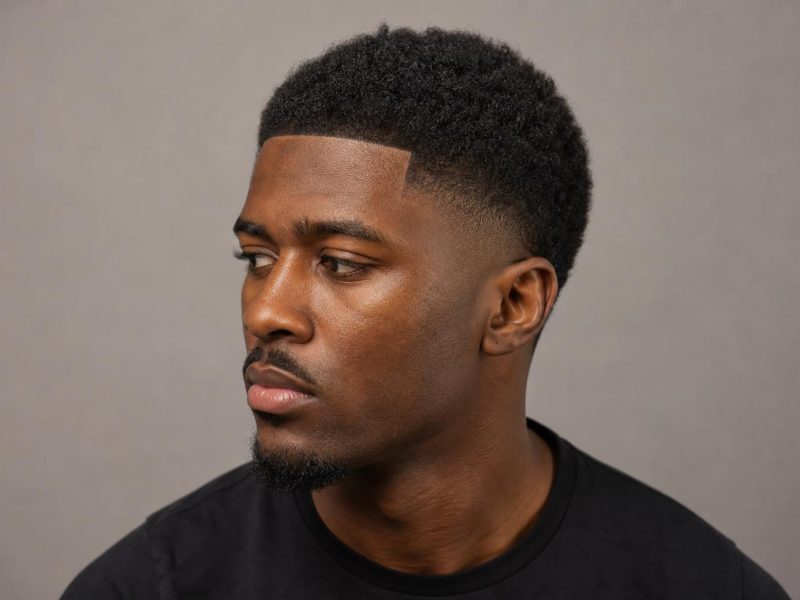
19. Afro-Textured Crop with a Straight Front Edge
Squaring the front edge across the forehead on natural hair gives the crop its defining horizontal line without needing the hair to lie flat. The top stays rounded at the crown while only the front is cut level. That contrast between a straight front and a round crown is what separates it from a plain low cut.

20. French Crop with a Twist-Out Top
Two-strand twists set on damp hair overnight and separated once in the morning elongate the coil and give the top definition a wash-and-go cannot match. Separating each twist more than once collapses the definition into frizz. Needs about three inches of length to be worth the effort.

French Crops for Thinning Hair and Receding Hairlines
This is the cut most often recommended for a receding hairline, and for a genuine structural reason: the forward-combed fringe covers the temple recession that other short cuts expose. It is one of the few short shapes that works with a receding hairline rather than around it. The adjustments below make it work better still.
21. French Crop for a Receding Temple Line
Keeping the fringe slightly longer and letting the corners fall forward past the temples covers the two recessed points without looking like a comb-forward. Ask for the fringe corners left longer than the center rather than cut level. This is the single most useful adjustment on the whole list.

22. French Crop with a Thinning Crown
A high fade against a thinning crown creates contrast that draws the eye straight to the sparse area, so the fix is keeping the shortest point at a 1 or 2 guard rather than skin. Texturizing the crown also breaks up the scalp showing through. Shapes built around a thinning crown all work on this principle.

23. French Crop on Fine Hair
Fine hair should skip the heavy point cutting that gives thick hair its separation, since removing weight from strands that have none makes the fringe look sparse at the edges. A blunt fringe on a shorter top gives the strongest impression of density. Use a volumizing powder at the root rather than a clay.

24. Grown-Out French Crop
Around week five the fringe reaches the brow and the fade blurs, at which point a lot of people restart the cut entirely. Asking for the sides cleaned up and the fringe trimmed while the top length is left alone buys another month, and it is the route to growing a crop into a longer textured cut without an awkward stage.

25. French Crop with a Bleached Top
Lightening only the top while the faded sides stay natural turns the fade line into a color break as well as a length one, which sharpens the whole shape. On dark hair this takes two sessions to reach a clean blonde without breakage, and the regrowth shows at about four weeks. Fringe-forward cuts show that regrowth line less than a swept-back style would.

26. French Crop with a Beard Blend
Connecting the fade into a trimmed beard removes the hard line at the jaw and balances the horizontal weight of the fringe with weight lower down, which suits longer faces. The cost is that both now run on the same two-week trim cycle, and letting the beard outgrow the fade inverts the balance.

Choosing Your Fade Height and Fringe Length
Two decisions account for almost all the variation in a French crop, and they interact. A high fade with a short fringe gives maximum contrast and a narrow silhouette; a low fade with a longer fringe keeps the shape soft and rounded. Match the pair to the proportion you want to change rather than picking each in isolation.
| Face Shape | Fade Height | Fringe | Avoid |
|---|---|---|---|
| Oval | Any height works | Blunt or textured, both suit | Very heavy fringes that shorten balanced proportions |
| Round | High or mid skin fade | Short and textured, with height at the crown | A low fade with a long flat fringe, which widens further |
| Square | Mid fade or taper | Rounded rather than blunt | A hard squared line-up over an already angular jaw |
| Heart | Mid fade | Longer, with corners falling past the temples | A very short fringe that exposes the full forehead width |
| Oblong | Low fade or taper | Blunt and low, sitting close to the brow | High fades and crown height, which lengthen the face |
| Diamond | Mid fade with tapered temple corners | Textured, falling forward | Squared temples, which widen the widest point |
Stylist tip: Forehead height matters more than face shape for this cut. Measure from your brow to your hairline with two fingers: if it takes more than three finger widths, the crop is working in your favor and a lower fringe suits you. Under two and a half, keep the fringe higher or the face looks compressed.
What to Tell Your Barber
A French crop request needs four specifics, and leaving any out hands the decision to the barber. Say how long the top stays, where the fringe is cut, how high the fade starts, and how short it goes at the bottom. In practice: about two inches on top with texture, fringe cut straight across an inch above my brow, mid fade starting at my temples, down to a 0.5 at the hairline.
The word crop on its own is the main source of trouble, because it covers everything from a Caesar to an Edgar with a hard straight fringe. Adding French and naming the fringe height removes almost all of the ambiguity. If you have a cowlick at the front, mention it before the first cut rather than after, since it dictates how the fringe will fall and changes where the barber has to start.
For curly or coily hair, add two requests: cut the top dry, and blend the transition with scissor-over-comb rather than clippers. Both add time to the appointment and both prevent the specific failures that come from treating textured hair like straight hair. The same logic applies to any short cut on curly hair.
Stylist tip: Ask your barber to leave the fringe half an inch longer than the photo on a first visit, then check it in the mirror before it is finalized. Taking more off the fringe is thirty seconds of work at the end of the appointment. Growing it back is three weeks of looking like you got a bowl cut.
Maintenance and Upkeep
The French crop is a three to four week haircut, slightly more forgiving than a plain fade because the fringe carries the shape even as the sides grow. The fringe itself is what fails first: half an inch of growth drops it from above the brow to in front of the eyes, which changes the cut completely.
| Element | Re-Cut Interval | Daily Effort | What Goes First |
|---|---|---|---|
| Fringe | 3 weeks | Under 1 minute with clay | Drops toward the brow and loses its line |
| Skin fade | 2 to 3 weeks | None | Stubble shadow within 4 days |
| Tapered sides | 4 to 5 weeks | None | Weight builds above the ear |
| Textured top | 4 to 6 weeks | 1 minute | Separation flattens as weight builds |
| Hard part or line-up | 8 to 10 days | None | The shaved edge blurs first |
Product choice is simple at this length: a matte clay in a pea-sized amount, warmed between the palms and pushed forward through dry hair. Anything with shine works against the cut, since a French crop relies on texture rather than gloss. If you use clay daily, a clarifying wash once a week stops residue from flattening the fringe.
When a French Crop Is Not the Right Choice
The French crop suits more hair types and hairlines than most short cuts, which makes the exceptions worth naming clearly.
- You have a strong cowlick at the front hairline. A forward-combed fringe fights a cowlick every day and usually loses, since there is no length to weigh it down. A side-swept crop or a textured quiff works with the growth pattern instead.
- Your forehead is short. The fringe covers part of an already compact forehead and shortens the face further. A swept-back or side-parted shape gives back the height the crop takes away.
- You cannot get to a barber monthly. The fringe line is the whole cut and it loses definition in three weeks. A taper with a longer top holds a decent shape for five or six.
- Your hair is very thick and grows straight upward at the front. Dense vertical growth pushes the fringe off the forehead no matter how it is cut, and the result looks like a wall rather than a fringe. Ask for the front section thinned from underneath first, and treat it as a trial.
- You want a cut that works both swept forward and pushed back. The crop is cut on the assumption the fringe goes forward, so the same length pushed back is usually too short to hold. Choose a textured quiff if you want both options.
FAQ
What Is a French Crop Haircut?
A short men’s cut with a forward-combed fringe cut across the forehead, a textured top of roughly one and a half to three inches, and tapered or faded sides. The fringe is what defines it: without one, the same cut is a Caesar or a textured crop. Its origins are in European barbering, and the modern version uses far more internal texture than the flat original did.
How Do I Ask My Barber for a French Crop?
Name four things: top length, fringe height, fade height, and how short the fade goes. Something like two inches on top with texture, fringe straight across an inch above the brow, mid fade from the temples, down to a 0.5. Saying only crop is the most common cause of a disappointing result, since it covers several different cuts.
Is a French Crop Good for a Receding Hairline?
It is one of the better options, because the forward fringe covers the recessed temple points that most short cuts expose. Ask for the fringe corners to be left slightly longer than the center so they fall past the temples rather than sitting level. Keep the fade at a 1 or 2 guard rather than skin, since heavy contrast draws the eye upward toward the hairline.
How Often Does a French Crop Need Cutting?
Every three to four weeks, with the fringe going first. If the sides are a skin fade, two to three weeks is more realistic, since the faded section shows stubble shadow within about four days. A tapered version rather than a fade stretches the interval to five weeks.
Does a French Crop Work with Curly Hair?
Yes, and curl adds texture to the fringe that straight hair needs product to imitate. Two requests make the difference: cut the top dry so shrinkage is accounted for, and blend the side transition with scissor-over-comb rather than clippers alone. Expect the appointment to run ten to fifteen minutes longer than a straight-hair version.
What Is the Difference Between a French Crop and a Caesar Cut?
Both comb forward, but a Caesar keeps the top at one uniform length all over with a longer, flatter fringe, while a French crop has more length and texture at the crown with a shorter, blunter fringe. The crop is also usually paired with a fade, where a Caesar traditionally has tapered sides. In practice the two names are used loosely, which is another reason to describe the fringe height rather than the style name.
What Products Do I Need for a French Crop?
A matte clay is the only essential, used in a pea-sized amount on dry hair, warmed between the palms and pushed forward with the fingertips. Avoid pomades and anything with shine, since gloss works against a cut built on texture. Fine hair does better with a volumizing powder at the root plus a very small amount of clay on the ends of the fringe.
The French crop hairstyle earns its popularity by being one of the few short cuts that works with a high forehead or a receding temple line rather than exposing it. Decide your fringe height and fade height before you sit down, name both in inches and guard numbers, and be honest about whether a three-week barber cycle fits your calendar. Get those settled and the cut needs under a minute a morning.
Hair results vary based on your natural hair type, texture, density, and condition. Always consult with a licensed hairstylist before making significant changes, especially with chemical treatments or dramatic length changes. Photos may show styled results that require professional tools and products to replicate.


3 responses