
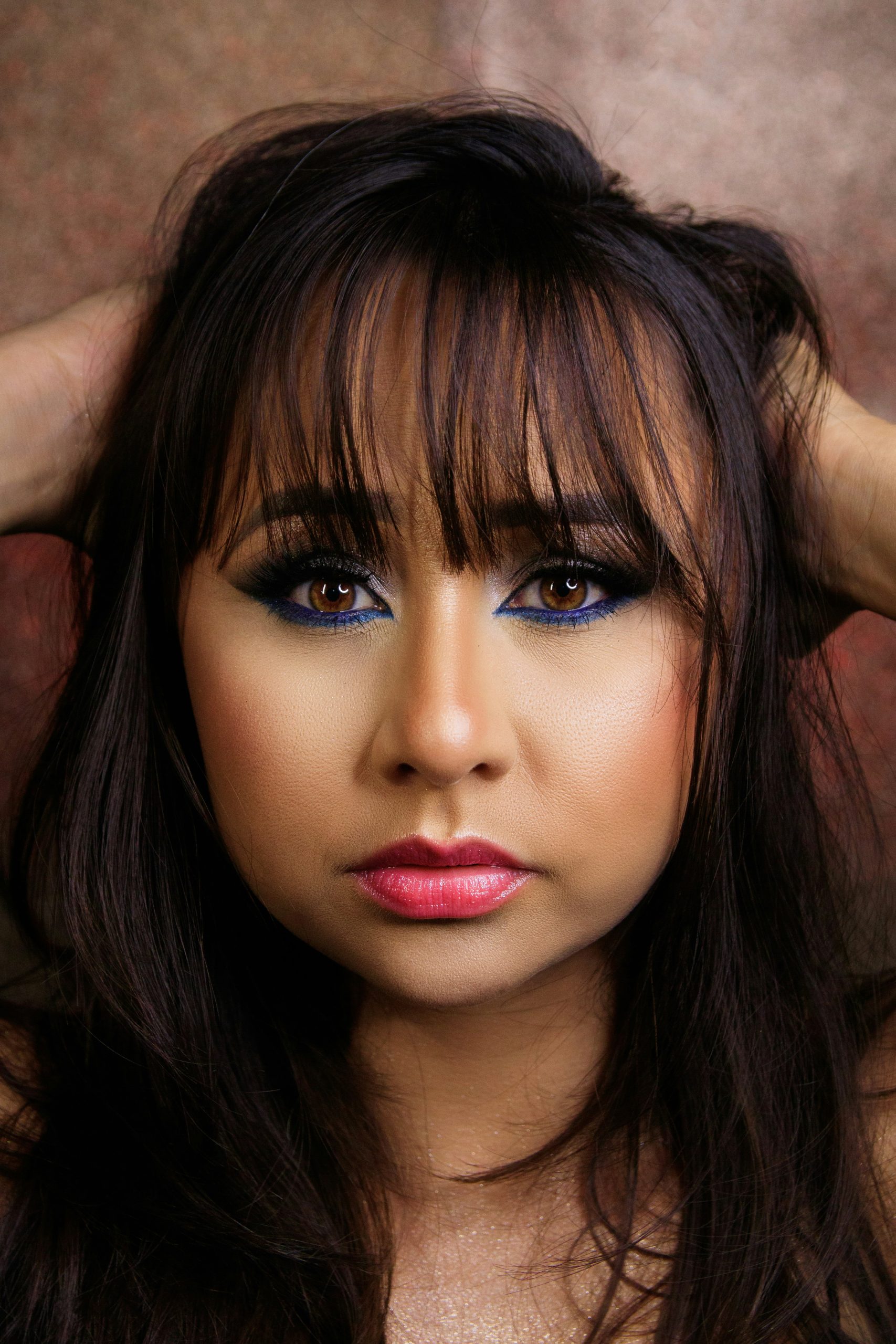

The hime cut is a long hairstyle built from three cut zones: a blunt straight-across fringe, two face-framing side panels cut sharply at the cheekbone or jaw, and long one-length hair flowing past the shoulders.
That three-part structure is what separates a real hime cut from a regular fringe with long hair, and it is the detail most salon visits get wrong. This guide breaks down the exact anatomy of the cut, shows the variations worth photographing for your stylist, and gives you the language to ask for the side panels at the right length for your face. The hime cut suits straight to lightly wavy hair best, which is why it looks like a princess style on sleek lengths and gets muddy on tight curls.
Below you will find a short history of where the style comes from, a dozen variations grouped from traditional to softened-modern, a face shape breakdown, salon-ready phrasing, and an honest look at the maintenance the blunt side panels demand. The goal is to walk you into the chair knowing precisely which version of the cut you want.
| Factor | Details |
|---|---|
| Best for | Straight to loosely wavy hair (type 1 to 2a); oval, long, and heart face shapes |
| Defining feature | Blunt face-framing side panels cut straight at the cheekbone or jaw, paired with long back length |
| Maintenance | Side panel and fringe trims every 4 to 6 weeks to keep the blunt edge crisp |
| Avoid if | You have tight curls, a cowlick at the temple, or no tolerance for a structured commitment |
| Salon time | 45 to 75 minutes for the cut alone; add time for any color on the panels |
What Actually Makes a Cut a Hime Cut
A hime cut is defined by contrast between short, sharp face-framing pieces and long, untouched back length. The two side panels are the signature: they fall straight down beside the face and end in a hard horizontal line, usually somewhere between the cheekbone and the jaw. Behind those panels, the rest of the hair stays long and mostly one length. A blunt fringe across the forehead is traditional but optional, and dropping it is the single easiest way to soften the look.
The reason the cut photographs so cleanly is geometry. The panels create two vertical lines beside the face and the fringe creates one horizontal line across it, framing your features inside a tidy rectangle. That framing is also why the cut rewards sleek, straight hair and fights against texture, since waves and curls blur the sharp edges the whole style depends on.
Stylist tip: Ask your stylist to cut the side panels with the hair dry and your head upright, not wet and pulled forward. Wet hair sits longer than dry, and panels cut at the wrong tension end up landing an inch higher than you wanted once the hair dries and springs back.
A Short History From Heian Courts to K-Pop Stages
The hime cut, hime meaning princess in Japanese, traces back to the Heian period, when noblewomen kept floor-length hair and trimmed shorter sections to frame the face. It stayed tied to traditional and aristocratic imagery for centuries before anime, J-pop, and K-pop idols pulled it back into the spotlight. The current wave of interest is largely idol and cosplay driven, which is why so much of the online inspiration leans editorial and stage-ready rather than everyday.
Western salons are still catching up, so the references you find online tend to be thin and heavy on pinned photos with no instruction. That gap is good news at the chair: a stylist who understands the three-zone structure can give you a far cleaner result than the scattered references suggest, as long as you arrive with a clear photo and the right vocabulary, both of which the sections below provide.
Classic and Traditional Hime Cuts
These versions keep the original architecture intact: a full blunt fringe, razor-straight side panels, and long one-length hair behind them. They make the strongest visual statement and demand the most upkeep, since every line is sharp enough that grow-out shows quickly. Start here if you want the unmistakable princess silhouette.
1. The Full Blunt Fringe Hime Cut
A heavy fringe cut straight across the brows sits above two cheekbone-length side panels, creating the textbook three-line frame around the face. The blunt edge needs to be cut in a single clean pass with the hair dry, since point cutting softens exactly the crispness this version is built on. This is the most demanding hime cut to maintain, with the fringe needing a tidy-up roughly every three weeks to stay off the lashes.
2. Cheekbone Side Panels with Long Sweep
Cutting the side panels short, at the top of the cheekbone, exaggerates the contrast against waist-length back hair and makes the most dramatic version of the style. This length flatters long and oval faces because the high horizontal line interrupts vertical length without adding width lower down. Keep the back as one blunt weight line so nothing competes with the framing.
3. Jaw-Length Panels for Softer Structure
Dropping the side panels to the jaw keeps the hime architecture while making it noticeably more wearable for daily life. Fine hair benefits from this length because a longer panel carries a little more visual weight and does not separate into thin strands the way a short cheekbone panel can. It is the version most first-timers should request before committing to anything higher.
4. The Center-Part Fringeless Hime
Skip the fringe entirely and let a sharp center part feed directly into the two side panels for a cleaner, more grown-up version of the cut. Without a fringe, the panels carry the whole look, so they need to be cut with real precision and symmetry. Bring a head-on photo and ask your stylist to check the panel lengths against each other from the front, since the eye catches even a quarter-inch mismatch at the center part.
5. Waist-Length Traditional Hime
The most historically faithful version pairs a blunt fringe and straight panels with hair grown to the waist or longer, all kept in a single uncut weight line. Achieving this means resisting layers anywhere in the back, which is harder than it sounds because many stylists add length-layers by reflex. State plainly that you want the back left one length with a blunt perimeter, and that the only short pieces in the cut are the fringe and the two panels.
6. High-Shine Straightened Hime
Glass-smooth straightening is the styling finish that makes a traditional hime cut look deliberate rather than grown-out, since every blunt line reflects light along its edge. A flat iron passed once through the panels and fringe, followed by a drop of lightweight shine serum, sets the polished idol-stage finish most reference photos show. This styling routine is the hidden cost of the classic look, adding ten to fifteen minutes most mornings.
Modern and Softened Hime Cuts
This group trades some of the sharpness for everyday ease. Stylists soften the blunt edges with point cutting, swap the straight fringe for a parted or wispy one, and occasionally add a little texture so the cut survives a missed straightening session. These are the versions to ask for if you love the framing but want something that fits a normal routine, like the gentler approach behind curtain bangs with layers.
7. Curtain-Fringe Hybrid Hime
Replacing the blunt forehead fringe with a parted curtain fringe instantly reads less costume and more contemporary, while the straight side panels keep the hime identity. The curtain pieces blend into the panels rather than sitting separately, which softens the rectangular frame into something closer to a heart shape around the face. This is the most flattering modern adaptation for anyone nervous about a heavy forehead fringe.
8. Wispy Razored Panels
Razoring the bottom edge of the side panels turns the hard blunt line into a feathered one that moves and forgives a missed trim. Coarse or thick hair is the right candidate here, since the razor removes bulk that would otherwise make heavy panels look blocky. The trade-off is lifespan, because razored ends lose their shape faster than scissor-blunt ones and look stringy if the hair is fine.
9. Side-Swept Modern Hime
Parting the fringe deep to one side and letting it sweep across the forehead shifts the whole style off its strict symmetry and into easy, asymmetric territory. The off-center weight is genuinely useful for round faces because the diagonal line breaks up width that a straight center fringe would emphasize. Style it by drying the fringe across with a round brush so it holds the sweep instead of falling back to a part.
10. Textured Lived-In Hime
Adding subtle internal texture to the panels and a touch of bend through the lengths gives a relaxed version that suits people who never straighten their hair. A spritz of sea-salt spray scrunched into the mid-lengths keeps the back from looking flat without disturbing the framing panels. This is the lowest-maintenance hime cut on the list, though it strays furthest from the polished original.
11. Pastel-Panel Hime
Coloring only the two side panels a contrasting shade, soft pink, lavender, or ash, turns the framing pieces into the focal point and leans into the cut’s cosplay-adjacent roots. Because the panels are a small, replaceable section, this is a relatively low-commitment way to test a fashion color without bleaching your whole head. Pastel tones on the panels fade within a few washes, so a color-depositing conditioner becomes part of the routine.
12. The Short Bob Hime
Unlike the long traditional cut, the bob hime keeps the fringe and panels but shortens the back to a blunt collarbone or chin-length bob, giving the framing without the upkeep of waist-length hair. This compromise works for anyone who loves the structure but does not want to grow and maintain very long lengths. It sits close to a blunt bob with a fringe, so if length is not your goal, compare it against a standard blunt bob before deciding.
How to Choose a Hime Cut for Your Face Shape
Face shape decides where your side panels should land, because the panel length sets the horizontal line that either balances or fights your proportions. The fringe choice matters too: a full blunt fringe shortens a long forehead, while skipping it keeps a shorter face open. Use the panel length as your main lever and treat the fringe as the secondary adjustment.

| Face Shape | Best Hime Variation | Side Panel Length | Avoid |
|---|---|---|---|
| Oval | Almost any version, classic or modern | Cheekbone to jaw | Nothing structural; pick by hair type instead |
| Round | Side-swept fringe, longer angled panels | Below the jaw | Short cheekbone panels with a full fringe (adds width) |
| Square | Wispy razored panels, curtain fringe | Cheekbone, softly angled | Razor-straight jaw panels that echo the jawline |
| Heart | Blunt fringe with jaw-length panels | Jaw length | Very short panels that leave a wide forehead exposed |
| Long | Full blunt fringe, high cheekbone panels | Cheekbone | Fringeless center part (lengthens the face further) |
| Diamond | Curtain fringe, chin-grazing panels | Chin length | Slicked styles that expose a narrow forehead |
If you are between shapes or unsure, default to jaw-length panels with a parted fringe, the most forgiving combination across the board. For a deeper read on framing pieces by proportion, the THP guide to face-framing layers by face shape applies directly to choosing your panel length.
What to Tell Your Stylist
The hime cut fails most often from vague instructions, because a stylist unfamiliar with the name will improvise. Skip the word hime if your stylist does not recognize it and describe the three zones instead. A reference photo plus the panel length in inches removes almost all the risk.
Ask for it like this: “I want two straight face-framing panels cut at jaw level, a parted fringe, and the rest of the length left one length and untouched. The panels and fringe are the only short pieces, no layers in the back.” Naming what stays long is as important as naming what gets cut, since the long one-length back is half of what makes the style read correctly.
Stylist tip: Bring a photo of the back of a hime cut, not just the front. Stylists default to adding long layers when they cannot see the reference for the back, and length-layers quietly erase the clean one-length weight the style needs.
Maintenance and Growing It Out
The long back of a hime cut is low effort, but the panels and fringe are not. Plan on a trim every four to six weeks to keep the blunt edges sharp, and a quick fringe tidy in between if you wear the full forehead version. Daily styling runs ten to fifteen minutes if you straighten the panels, less if you chose a textured or razored version that tolerates air-drying.
Grow-out is the honest weak point. As the panels lengthen they lose their crisp line and start to blend into the back, which can look like an accident rather than a choice around the two to three month mark. The graceful exit is to let the panels grow to match a layered shape, so booking a transition cut into long face-framing layers is easier than trying to disguise half-grown panels. Anyone who values a hands-off routine should weigh this upkeep honestly before committing.
When a Hime Cut Is Not the Right Choice
The hime cut looks striking on the right hair and turns into a daily fight on the wrong hair. These are the situations where another cut serves you better.
- Tight curls (type 3b to 4c): the style depends on sharp straight lines that coils will not hold, and straightening curly hair daily to fake them causes heat damage. A shaped layered cut that works with your curl pattern is a better use of the length.
- A temple cowlick or strong growth pattern: a panel sitting over a cowlick will flip and refuse to lie flat, breaking the clean vertical line. Ask your stylist to check your growth at the temple before committing to short panels.
- No appetite for upkeep: if a fringe trim every few weeks sounds like too much, the blunt edges will outgrow their shape and the look falls apart. A long layered cut delivers face framing with far more forgiveness.
- You want versatility: short blunt panels are hard to hide on days you would rather wear your hair simple, since they do not tuck behind the ear cleanly. Consider a fringeless, longer-panel version if you switch up your styling often.
FAQ
Does a Hime Cut Require Bangs?
No, a fringe is traditional but fully optional on a hime cut. The non-negotiable element is the pair of straight face-framing side panels, not the forehead fringe. Skipping the fringe and using a center or side part is the most common way people modernize the style and make it work-appropriate. If you are still weighing a fringe, the THP take on whether you should get bangs walks through the commitment honestly.
Will a Hime Cut Work on Wavy Hair?
Loose waves at type 2a can work, but anything more textured fights the sharp lines the cut depends on. If your waves are gentle, ask for slightly longer panels that carry more weight and resist flipping. For pronounced waves or curls, the cut needs daily straightening to read correctly, which most people are not willing to commit to long term.
How Is a Hime Cut Different From Curtain Bangs?
Curtain bangs are a single parted fringe that blends softly into the length, while a hime cut adds two separate blunt panels cut straight down the sides of the face. The hime panels are a hard architectural feature, not a soft transition. A curtain-fringe hime borrows the softer forehead piece but keeps those distinct side panels, which is what still makes it a hime cut.
How Often Do I Need to Trim a Hime Cut?
Plan on a trim every four to six weeks to keep the panels and fringe crisp. The blunt edges show grow-out faster than a layered cut because there is a defined line to lose. The long back length, by contrast, needs a trim only every couple of months to keep the perimeter clean.
Can I Get a Hime Cut on Short Hair?
Yes, the bob hime keeps the fringe and side panels over a chin or collarbone-length blunt bob. This version delivers the framing without committing to very long hair and is faster to maintain in the back. It sits close to a blunt bob with a fringe, so it is a good entry point if you are unsure about the full-length look. The Korean bob is another two-length Asian-trend cut worth comparing if you want something shorter.
Is the Hime Cut Hard to Grow Out?
The panels are the tricky part, since they lose their shape and blend awkwardly into the length around two to three months in. The cleanest path is to let your stylist transition the panels into long layered hair rather than waiting for them to disappear on their own. Tucking the growing panels behind the ear with a clip helps during the in-between weeks.
What Hair Type Suits the Hime Cut Best?
Straight, medium-density hair gives the cleanest hime cut because it holds the blunt lines without much effort. Fine hair works with slightly longer, jaw-length panels that avoid looking wispy, while thick or coarse hair benefits from razored panels that remove bulk. Tightly curled hair is the one type the style genuinely does not suit.
A hime cut rewards precision over guesswork, so the difference between a stage-ready princess style and an awkward grow-out comes down to choosing the right panel length for your face and arriving with a clear reference photo. Decide on your fringe, name what stays long, and book a stylist who will cut the panels dry. Done with intention, the hime cut is one of the most striking framing styles you can wear on long straight hair.
Hair results vary based on your natural hair type, texture, density, and condition. Always consult with a licensed hairstylist before making significant changes, especially with chemical treatments or dramatic length changes. Photos may show styled results that require professional tools and products to replicate.