
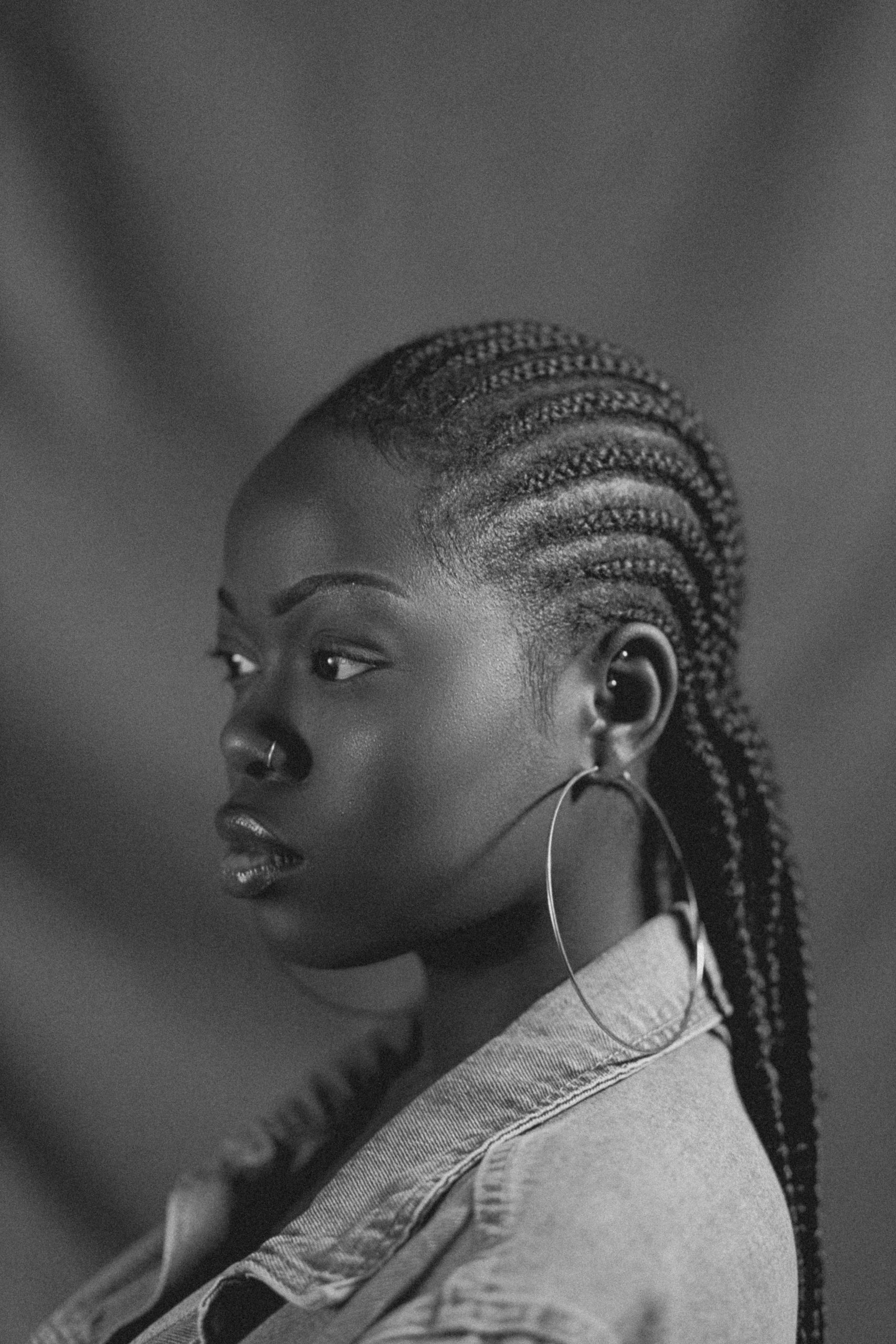

A braided ponytail gathers cornrows, box braids, or feed-in braids into a single secured tail, giving you a protective style that keeps your natural hair tucked while reading sleek and pulled-together.
The look spans everything from a tight feed-in cornrow ponytail to a voluminous mass of box braids swept into a high pony, so it works across textures and lengths. The 30 ideas below are grouped by braid type and drama level, from everyday sleek styles to long, accessorized statement ponytails, with the specific detail that defines each one. The goal is to help you pick a version that matches your hair, your edges’ tolerance for tension, and how long you want the style to last.
After the gallery you will find a face shape guide, salon-ready language, an honest look at tension and edge care, and a maintenance schedule for keeping the ponytail fresh.
| Factor | Details |
|---|---|
| Style type | Braids gathered into a ponytail; a protective style |
| Best for | Type 3 and 4 natural hair; also works on relaxed or loc’d hair |
| Install time | 1 to 4 hours depending on braid size and base detail |
| Lasts | 2 to 6 weeks; feed-in bases longer than gathered loose braids |
| Watch for | Edge tension at the hairline; the most common cause of damage |
Sleek Cornrow and Feed-In Ponytails
These versions build the ponytail directly into the braid pattern, feeding extension hair into cornrows so the whole style flows into one seamless tail. They give the sleekest, flattest base and the longest wear, which makes them the most popular choice for a clean, polished ponytail.
1. Classic Feed-In Cornrow Ponytail
Straight-back cornrows fed with extension hair all gather into a single high or low tail for the cleanest version of the style, with the same crisp parting as stitch braids. The feed-in technique starts each braid small at the hairline and builds thickness, which reduces tension on your edges. This is the foundation look most other variations branch from.
2. Sleek Low Feed-In Ponytail
Dropping the gather point to the nape gives a refined, grown-up version that flatters round and heart faces by elongating the neck. The low placement also puts less strain on the hairline than a high pony. Lay your edges with a soft gel for the polished finish this style is built around.
3. High Feed-In Ponytail with Swoop
Gathering the cornrows up high and leaving a sculpted swoop across the forehead adds drama and a face-framing detail. The high placement lifts the face and shows off the braid pattern across the crown. It photographs beautifully but carries more tension, so keep the install comfortable.
4. Zigzag-Part Cornrow Ponytail
Swapping straight parts for a zigzag or chevron pattern across the scalp turns the base into the focal point before the hair even reaches the tail. The geometric parting suits anyone who wants visible artistry in the cornrows. Ask your stylist to map the pattern before braiding, since it cannot be adjusted afterward.
5. Two-Layer Cornrow Ponytail
Braiding the top section into a high pony and the back into a separate lower one creates a stacked, two-tier tail with extra fullness. The layering adds movement that a single gather cannot. It works best on longer extension lengths that can carry the weight.
6. Side-Swept Feed-In Ponytail
Directing all the cornrows toward one side before gathering gives an asymmetrical pony that drapes over a shoulder. The diagonal flow flatters square faces by softening the jawline. Tell your stylist which shoulder you want it to fall over so the parts are angled correctly.
7. Heart-Pattern Cornrow Ponytail
Cornrows braided into a heart or curved design at the crown add a playful, detailed base that looks custom and intricate. The shaped parting is popular for events and photoshoots. This level of detail adds time at the chair, so book accordingly.
8. Baby-Hair Edged Feed-In Ponytail
Finishing a sleek feed-in pony with laid and styled baby hairs along the hairline turns the edges into a deliberate design element. Swirled or graphic edges complete the polished look. Use an edge brush and a light gel, and avoid daily re-laying, which stresses fragile hairline strands.
Box Braid and Knotless Ponytails
Here the braids are installed first as individual box or knotless braids, then gathered into a ponytail you can move and re-style. This route gives the most versatility, since you can wear the braids down some days and up on others.
9. High Box Braid Ponytail
Gathering a full head of box braids into a high tail gives a bold, voluminous pony that completely conceals the roots, the same up-do logic many wear with pop smoke braids. The weight is significant, so a strong elastic and a few bobby pins keep it secure. It is the most dramatic way to wear box braids up.
10. Knotless Braid Ponytail
Knotless braids gathered into a pony lie flatter at the root and put less tension on the scalp than traditional box braids, the same gentler approach behind boho knotless braids. The lack of a knot at the base means the gather lies smoother. This is the most comfortable option for sensitive scalps.
11. Jumbo Box Braid Ponytail
Larger jumbo braids gathered up create a chunky, statement pony that installs faster than small braids. Fewer, thicker braids mean less time at the chair and a bolder silhouette. The trade-off is more weight per braid, so keep the gather secure.
12. Half-Up Braided Ponytail
Pulling only the top half of box braids into a tail while the rest hangs loose gives a relaxed, versatile look for type 4 hair worn in braids. It keeps length visible while lifting hair off the face. This is the easiest braided pony to do yourself at home.
13. Bohemian Braided Ponytail
Adding loose, wavy curl pieces among the braids before gathering gives a soft, undone boho pony with romantic texture. The mix of sleek braids and loose waves balances polish with ease. Curly extension pieces left out near the face frame the look.
14. Knotless Ponytail with Curly Ends
Leaving the ends of the gathered braids unbraided and curled gives a fishtail of texture at the bottom of the pony. The curly ends add softness and movement that blunt braid ends lack. Dip the ends in hot water to set the curl pattern.
15. Color-Melt Box Braid Ponytail
Using ombre or two-tone extension hair makes the gathered pony shift color from root to tip for added dimension. Honey, burgundy, and copper blends are popular against dark bases. The color shows most when the braids are gathered and the lengths fan out.
Long and Dramatic Braided Ponytails
When length is the point, these ponytails use extra-long extension hair to create a sweeping, high-impact tail. They make the strongest statement and carry the most weight, so the base and the gather have to be secure.
16. Waist-Length Feed-In Ponytail
Feed-in cornrows gathered into a tail that falls to the waist gives the most dramatic length without loose box braids. The single sleek tail of very long hair looks sculptural and bold. Use quality extension hair, since cheaper fiber tangles at this length.
17. Wrapped-Base High Ponytail
Wrapping a section of braid around the elastic hides the band and gives a clean, finished base on a long pony. The wrapped base elevates the whole style from casual to polished. It takes two extra minutes and makes a visible difference.
18. Sleek Straight-Back Power Ponytail
Tight straight-back cornrows into one very long, smooth tail give a sharp, high-impact look that suits oval and long faces. The severe sleekness is the appeal, so lay the edges crisply. It is a favorite for a bold, confident statement.
19. Flipped-End Long Ponytail
Curling the bottom few inches of a long braided pony into a flip or wave softens the blunt end of the extensions. The curved finish keeps a very long tail from looking heavy and stiff. Rod-set or use hot water on the loosened ends.
20. Two-Tone Long Braided Ponytail
Splitting the extension color so the underneath is one shade and the top another adds depth to a long pony that flashes when the tail moves. Peekaboo color is a low-commitment way to experiment. The contrast shows clearest on a sleek straight-back base.
21. Pony with a Braided Wrap Detail
Adding a single accent braid wrapped around the base or running through the tail breaks up a long, smooth ponytail with one detailed element. The accent braid adds interest without complicating the whole style. It pairs well with an otherwise sleek pony.
22. Extra-Long Knotless Ponytail
Knotless braids in a very long length gathered into a tail keep the lightness of knotless at the root with the drama of length at the bottom. The gentle base makes the weight more bearable than jumbo box braids. It is the most comfortable way to wear a very long braided pony.
Accessorized and Patterned Ponytails
These final ideas lean on cuffs, beads, and detailed parting to personalize the style. Accessories are the fastest way to take a simple braided ponytail somewhere more festive or custom.
23. Beaded Braided Ponytail
Threading wooden or metal beads onto a few braids in the gathered tail adds movement, sound, and a cultural nod. Keep the beads to a handful so the pony stays wearable rather than heavy. They sit best on smaller braids that grip them.
24. Gold-Cuffed Feed-In Ponytail
Sliding gold cuffs onto select cornrows near the gather point adds polish and a glint of metal to a sleek pony. The cuffs draw the eye to the braid pattern at the crown. A few well-placed cuffs read more refined than a tail full of them.
25. Cornrow Ponytail with Curved Sides
Braiding the sides in sweeping curved cornrows before the gather frames the face with directional lines. The curves flatter round faces by adding the illusion of length. This base pattern is intricate, so it adds time at the chair.
26. Tribal Braid Ponytail
Mixing braid sizes and adding cuffs in a tribal-inspired pattern creates a textured, detailed pony with cultural roots, in the same family as lemonade braids when angled to the side. The varied braid widths add visual rhythm. Accessorize sparingly to keep it balanced.
27. Fulani-Inspired Braided Ponytail
A center cornrow with side braids and beads gathered into a tail draws on Fulani braiding traditions for a distinctive, heritage-rooted look. The central part is the signature element. Pair it with delicate cuffs for an authentic finish.
28. Sleek Pony with Edge Design
Letting laid, graphic baby hairs do the decorating keeps the pony itself simple while adding artistry at the hairline. Swirls and points along the edges personalize a plain feed-in tail. Lay them gently to protect the fragile strands underneath.
29. Braided Ponytail with a Scarf
Tying a silk scarf around the base or weaving it through the tail adds color and a soft, fashion-forward element. The scarf hides the elastic and updates the look in seconds. Swap scarves to restyle the same pony for different occasions.
30. Bubble Braided Ponytail
Segmenting the gathered tail with small elastics into rounded bubble sections adds a playful, modern twist to a braided pony, borrowing the segmented look of bubble braids. The bubbles add shape to a long, smooth tail. Space the elastics evenly for the cleanest effect.
How to Choose a Braided Ponytail for Your Face Shape
The height of the gather and the direction of the braids decide how the ponytail balances your features, so match the placement to your face shape. A high pony lifts and lengthens, a low one softens and elongates the neck, and side-swept braids break up width.

| Face Shape | Best Placement | Detail to Add | Avoid |
|---|---|---|---|
| Oval | High or low, both work | Any pattern or length | Nothing major |
| Round | High ponytail | A forehead swoop or curved sides | Wide center parts that add width |
| Square | Side-swept gather | Soft baby hairs to round the corners | Severe straight-back tension at the jaw |
| Heart | Low ponytail | Loose face-framing pieces at the chin | High tight ponies that widen the forehead |
| Long | Low or mid gather | A swoop or side bang for width | Very high slicked ponies that lengthen further |
What to Tell Your Stylist
Name the braid type, the gather height, and the length you want: for example, “feed-in cornrows, straight back, into a low ponytail at the nape, falling to mid-back.” Specify whether you want a sleek base or individual braids you can re-style, since the two require different installs. Bring a photo of both the base pattern and the finished tail so nothing is left to guesswork.
Stylist tip: Speak up the moment a braid feels too tight at the edges. Tension is the leading cause of traction alopecia along the hairline, and a comfortable install matters far more than an ultra-sleek finish. A good stylist will loosen the front braids without complaint, and pain on day one is a warning sign, not something to push through.
Maintenance and Edge Care
A braided ponytail lasts two to six weeks depending on the base, with feed-in styles holding longer than gathered loose braids that loosen at the gather point. Tie the pony down with a satin scarf or bonnet at night to reduce frizz and protect the edges, and oil your scalp every few days to keep it from drying out. Re-laying baby hairs daily looks polished but stresses the most fragile strands, so go easy on the edge gel and the brush. Take the style down at the first sign of significant slippage or scalp buildup rather than stretching it past its limit, since the foundations of any protective style only work when it comes out on time.
When a Braided Ponytail Is Not the Right Choice
As protective as braids are, the ponytail gather adds tension that does not suit every situation.
- Already thinning or fragile edges: the pulled-back gather concentrates tension at the hairline, so a sleek high pony can accelerate edge loss. A looser, lower style or a break from tension serves you better.
- A sensitive or sore scalp: if your scalp is tender or irritated, the weight of a gathered braided pony makes it worse. Wait until the scalp settles, and choose lighter knotless braids when you do.
- Very short natural hair: hair too short to grip the cornrow needs more extension and skill to hold, and a forced install slips fast. A stylist experienced with short natural hair is essential here.
- Daily heavy workouts: sweat builds up at the scalp under braids and shortens the clean lifespan. A lower, lighter style and diligent scalp washing help if you train often.
FAQ
How Long Does a Braided Ponytail Last?
A braided ponytail lasts two to six weeks depending on the braid type and your edges. Feed-in cornrow bases hold the longest because the whole style is one structure, while gathered loose box braids loosen sooner at the gather point. Take it down once the scalp shows significant buildup or the braids slip, rather than stretching the style.
Are Braided Ponytails Damaging to Your Hair?
They are protective when installed at a comfortable tension, but damaging when braided too tight. The pulled-back gather concentrates strain at the hairline, which is where traction damage starts. Insist on a comfortable install, baby your edges, and never push through pain during the appointment.
What Is the Difference Between a Feed-In and a Box Braid Ponytail?
A feed-in ponytail braids extension hair directly into cornrows that flow into one sleek tail, while a box braid ponytail gathers separately installed braids into a pony. Feed-in gives a flatter, longer-lasting base, and box braids give versatility to wear the hair up or down. Choose feed-in for sleekness and box braids for flexibility.
How Do I Keep My Edges Safe in a Braided Ponytail?
Ask for a low or comfortable gather, avoid daily re-laying of baby hairs, and keep the front braids loose at the hairline. Oil the edges lightly and tie them down with a satin scarf at night. If your edges are already sparse, skip the high sleek pony and give the hairline a rest.
Can I Wash a Braided Ponytail?
Yes, you can cleanse the scalp with a diluted shampoo or a cleansing spray applied along the parts, then dry thoroughly to prevent mildew. Keep washing gentle so you do not loosen the braids or frizz the base. A clean scalp also extends how long the style stays fresh.
What Hair Texture Suits a Braided Ponytail?
Type 3 and type 4 natural hair grip cornrows and braids best, which is why the style is a staple for textured hair. It also works on relaxed and loc’d hair, or even soft locs, with enough length to braid. The braid pattern holds most securely on coily and curly textures that naturally lock around the extension.
The right braided ponytail comes down to your braid type, the gather height that flatters your face, and an install gentle enough to protect your edges. Save a couple of photos from this collection, decide between a sleek feed-in base and versatile box braids, and tell your stylist the moment anything feels too tight. Worn with care, a braided ponytail is one of the most practical and striking protective styles you can put on textured hair.
Hair results vary based on your natural hair type, texture, density, and condition. Always consult with a licensed hairstylist before making significant changes, especially with chemical treatments or dramatic length changes. Photos may show styled results that require professional tools and products to replicate.
1 response