
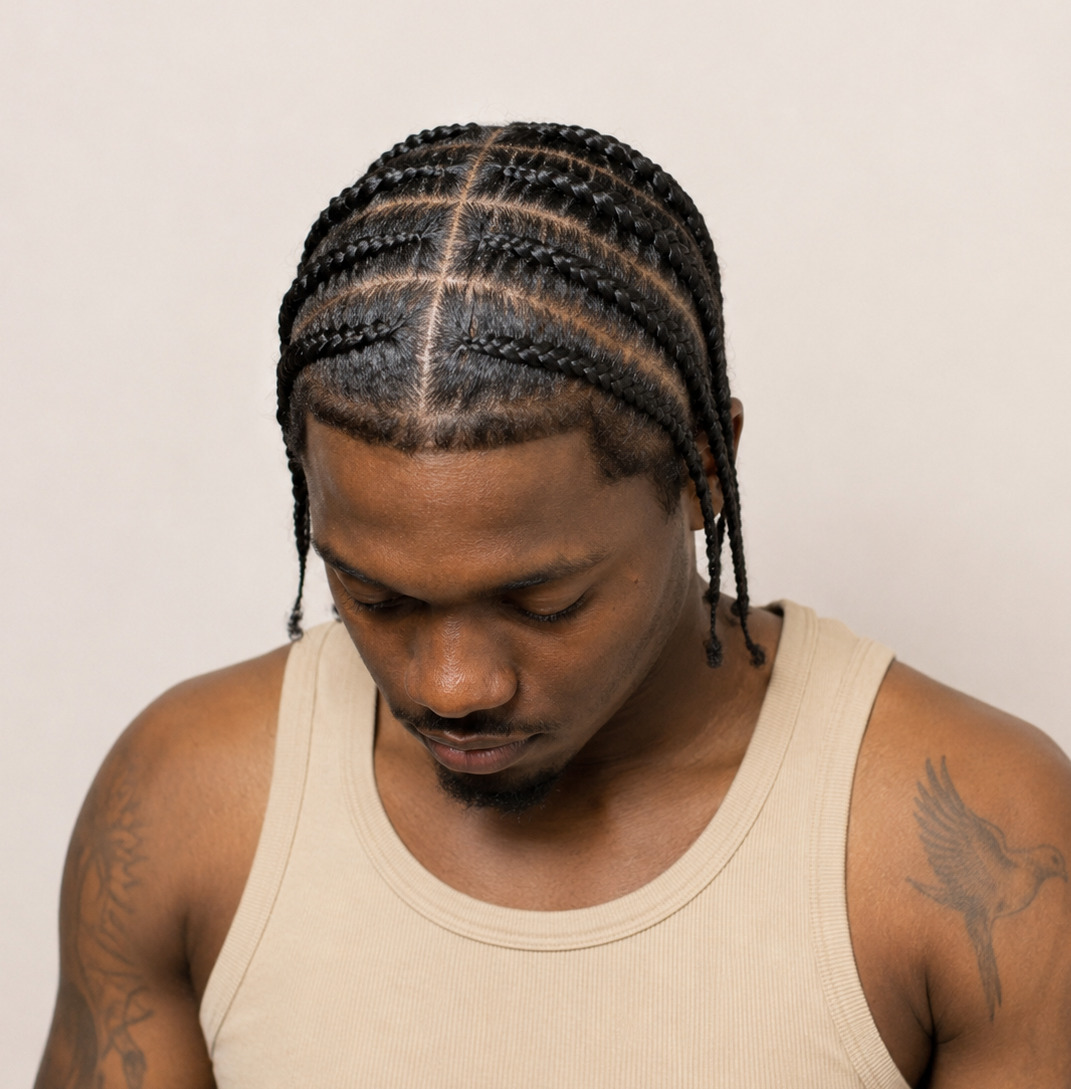
Pop smoke braids are eight thick cornrows installed from the hairline straight back with a center part — four on each side — named after rapper Pop Smoke, who wore this structured cornrow format as his signature look and made it one of the most-referenced protective braid styles of the early 2020s.
Installing a basic set requires a professional braider skilled in feed-in cornrow technique, roughly three packs of Kanekalon braid hair, and two to three hours of salon time. Extended, accessorized, and colored versions can take four to five hours and last six weeks with proper night-time maintenance. These 30 styles range from the classic eight-cornrow setup to beaded, ombre, and women’s updo adaptations — organized by category so you can find the version that matches your hair type, length, and styling context.
The sections below cover the signature classic look, color variations, styles adapted for women, accessorized and statement versions, and modern interpretations including short hair and technique variations. A face shape compatibility table, maintenance duration breakdown, and word-for-word salon language appear at the end.
| Factor | Details |
|---|---|
| Best for | Natural 3c–4c hair; also works on relaxed or lightly textured hair with extension |
| Salon time | 2–3 hours (basic); 4–5 hours (beaded, colored, or long extensions) |
| Duration | 4–6 weeks with proper night-time maintenance |
| Extensions | Kanekalon or jumbo braid hair (3–5 packs depending on thickness) |
| Avoid if | Hair is under 3 inches, you have active traction alopecia, or hair was chemically processed within 48 hours |
The Classic Pop Smoke Look
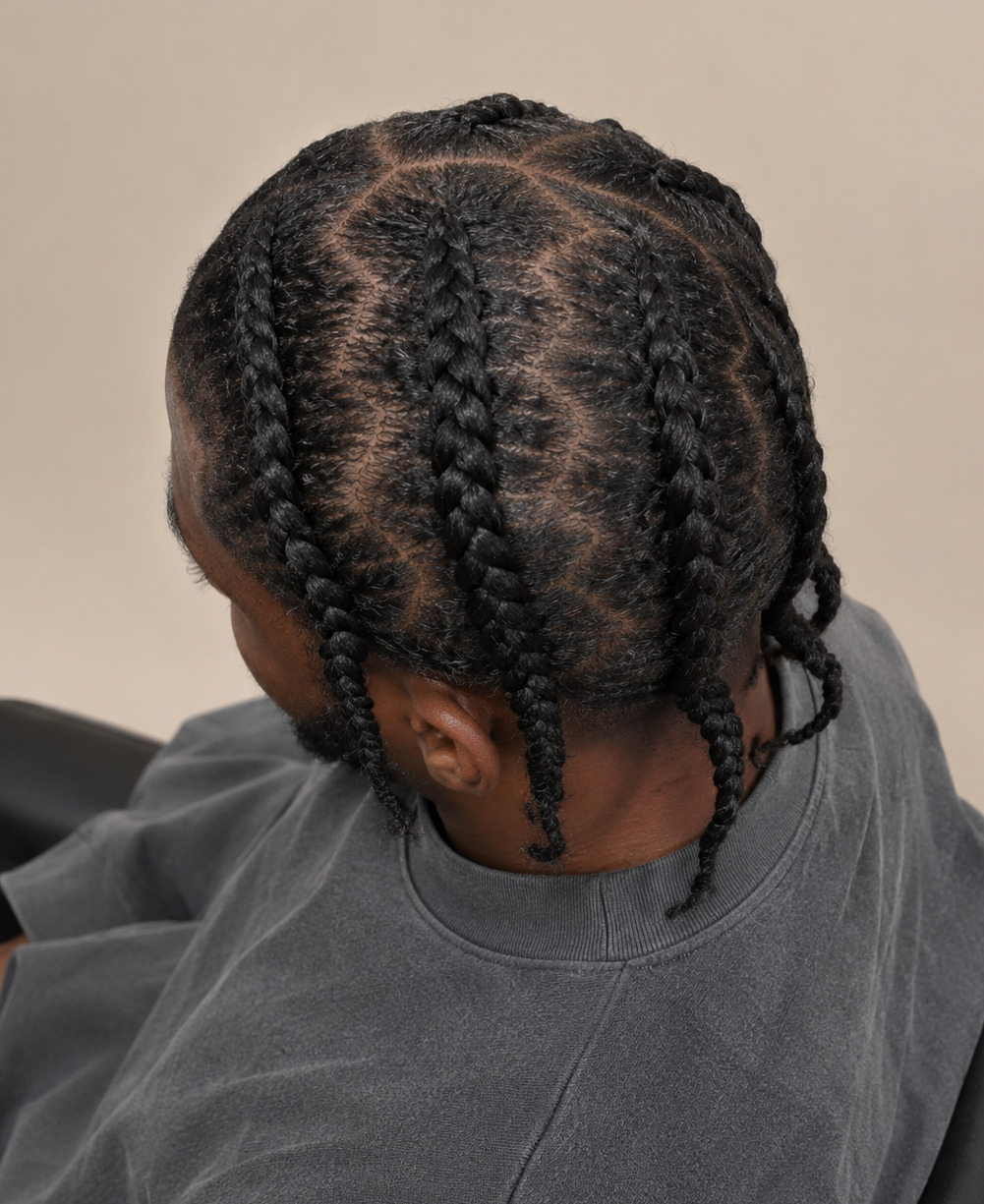
The eight-cornrow format with a center part is what made the style recognizable. The classic version runs clean, even sections straight back with feed-in technique for a flat, smooth profile at the scalp and controlled thickness through the length. Getting the look right depends on equal section sizing and consistent braiding tension across all eight rows — two things easier to evaluate from the front than from behind.
1. Classic Eight-Cornrow Center Part
Eight sections divided by a sharp center part, braided straight back from the hairline with feed-in Kanekalon added progressively to build fullness — this is the base format for every variation in this list. The sections should be equal width on both sides of the part; a rat-tail comb and a mirror check at each section before braiding prevents asymmetry that becomes visible once the braids are installed and lying flat. On natural 4a–4c hair, this version lasts up to six weeks before significant new growth disrupts the scalp pattern.
2. Classic Pop Smoke Braids with Low Taper
Oval and oblong face shapes benefit from combining the eight-cornrow format with a low taper fade at the sides and back. The fade creates a clean perimeter that keeps the braided section visually contained, rather than letting it blend into loose or untrimmed edges. Round and square faces may prefer a more defined fade line — a higher contrast taper — to add structure around a naturally rounder jawline. Pair with a barber visit for the fade section on the same day as or the day after the braid installation.
3. Jumbo Pop Smoke Braids
Thick, dense natural hair holds jumbo-sized sections without losing the flat cornrow profile, whereas fine or low-density hair often shows gaps at the scalp between sections when the braids are larger. Jumbo versions require four to five packs of extension hair rather than three, and each section takes longer to braid evenly. On 4b and 4c hair types, the larger section size creates less scalp tension per braid because the hair underneath is distributed across a wider base rather than pulled into a narrow channel.
4. Shoulder-Length Classic Pop Smoke Braids
Letting the extensions fall to shoulder length creates proportionate braids that work for both men and women, can be left down or swept back, and do not require the maintenance commitment of longer sets. At shoulder length, the braids are long enough to tuck into a collar or gather into a low ponytail, adding versatility that very short sets cannot provide. This length also makes the final removal easier because there is less extension hair to cut and detangle than in waist or hip-length versions.
5. Waist-Length Pop Smoke Braids
Extensions reaching the waist add weight that keeps the braids lying flat against the back without needing any product, but they increase the time required for both installation and removal. Plan for five to six packs of Kanekalon to maintain consistent thickness from root to tip at this length. A loose satin bonnet or a large square satin scarf secured around the full length of the braids every night prevents the frizz and matting at the ends that shortens the style’s clean wearable life from six weeks to three.
6. Stitch Braid Pop Smoke Variation
Stitch braids achieve a raised, textured look along each cornrow by adding the extension hair in visible horizontal stitches rather than feeding it in smoothly beneath the weave. The result is a pattern of visible lines across each braid that runs perpendicular to the braiding direction — more visually detailed than a standard feed-in cornrow and more likely to draw attention at the scalp where the stitching is clearest. On natural hair with significant shrinkage at the roots, stitch braids also provide a longer gap between tightening appointments because the exposed stitching disguises new growth more effectively than smooth feed-in cornrows.
Pop Smoke Braids with Color
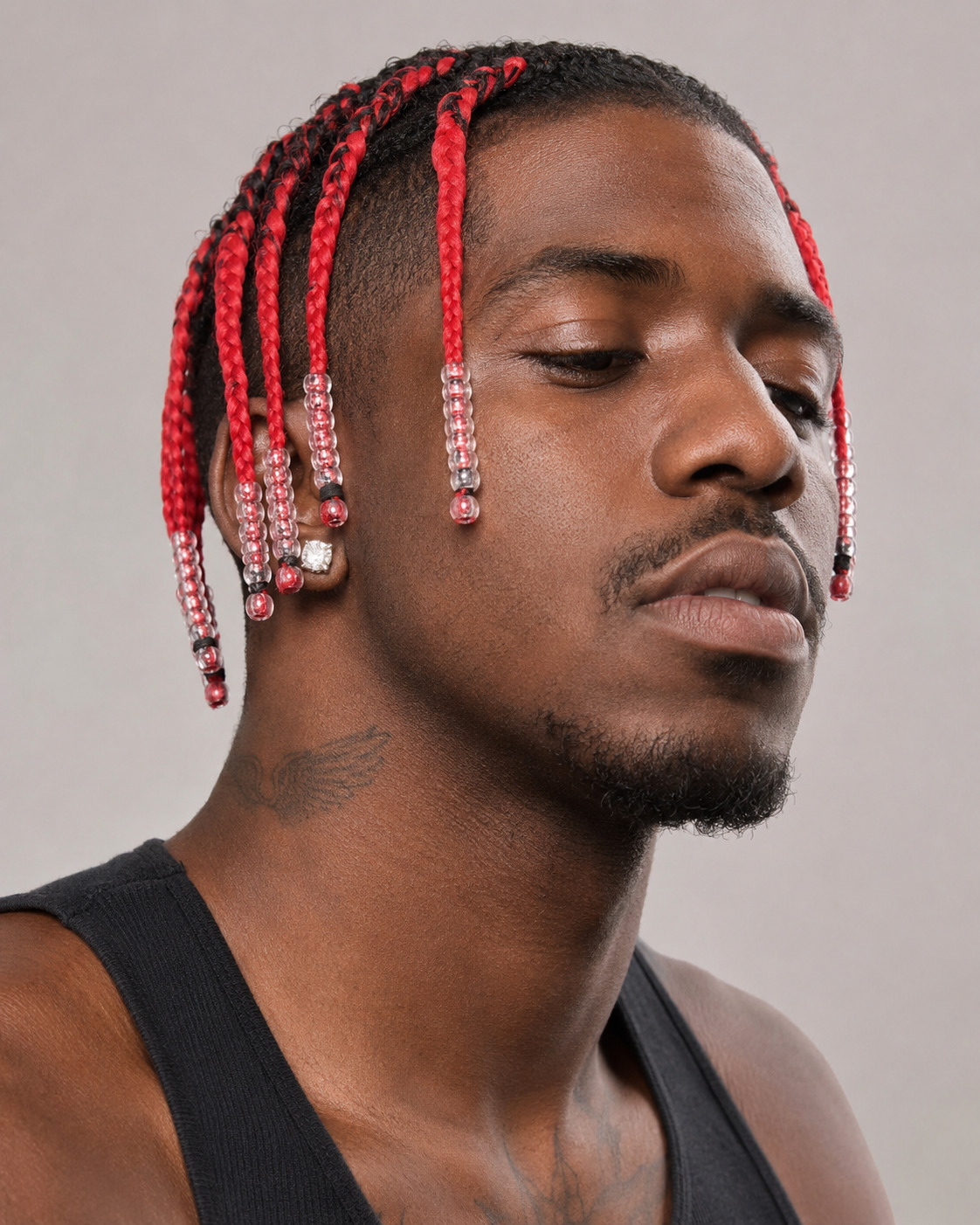
Color extension hair changes the visual weight of the same eight-cornrow base without any additional braiding technique. Subtle options like burgundy or auburn look dimensional in natural or artificial light. Bolder choices — platinum, cobalt blue, or two-tone setups — shift the style into editorial territory. The cornrow format shows color especially clearly because the flat, uniform sections display shading consistently from root to tip without the variation that loose natural hair creates.
7. Burgundy Extension Pop Smoke Braids
Burgundy and dark natural hair blend without a visible join point when the extension hair is close enough to the natural color at the root — typically a level 3 burgundy over a level 1 or 2 natural base. Mixing extension packs, one natural black and two burgundy, creates a dimensional result rather than a flat, uniform color. Warm skin tones suit burgundy best; cooler complexions achieve the same effect with a plum-based shade that leans more purple than red.
8. Honey Blonde Ombre Pop Smoke Braids
Lighter shades concentrated at the tips and mid-length of the extensions draw the eye downward and create the visual effect of length — useful for anyone with a rounder face who wants the braids to emphasize vertical proportion. Honey blonde over natural black creates a warm contrast that appears sun-lightened rather than bleached, particularly when the blonde begins gradually at mid-braid rather than sharply at a single point. Pre-ombre Kanekalon packs are available and eliminate the need to blend two separate shades during installation.
9. Blue-Tipped Pop Smoke Braids
Restricting the color to only the last four to six inches of each extension creates a dip-dye effect that adds visual interest without committing to full-length color. Cobalt and electric blue both work against dark natural hair, but electric blue shows more clearly in indoor lighting while cobalt holds better under direct sunlight without shifting toward teal. Style the tipped ends loose or gathered — the color placement ensures it remains visible regardless of how the braids are worn.
10. Two-Tone Pop Smoke Braids
Alternating the extension color braid by braid — one natural black, one colored, repeating across all eight rows — creates a striped effect that shows both shades clearly without blending them. This approach differs from ombre in that each shade stays distinct rather than transitioning, and differs from single-color versions in that the natural hair color remains part of the design rather than being covered completely. The contrast is most visible against lighter backgrounds and in settings with even, diffused lighting.
11. Knotless Pop Smoke Braids
A knotless feed-in install reduces scalp tension at the base of each section by eliminating the knot that traditional braids use to anchor the extension hair. Over a four to six-week wear period, the lower-tension install is significantly more comfortable and reduces hairline thinning risk compared to the same style done with a traditional knot anchor at the root. The knotless braid technique also allows the braids to lie flatter against the scalp during the first week before they loosen naturally.
12. Auburn Feed-In Pop Smoke Braids
When requesting auburn extension pop smoke braids, bringing a physical sample of the shade or a reference photo removes the ambiguity between “auburn” as a warm red-brown versus “auburn” as a cooler mahogany brown that different braiders understand differently. Specify “warm auburn, more red than brown” or “cool auburn, more mahogany than orange” before the stylist opens any extension packs. That one sentence of direction prevents a mismatch at the start of a three-hour appointment.
Pop Smoke Braids for Women
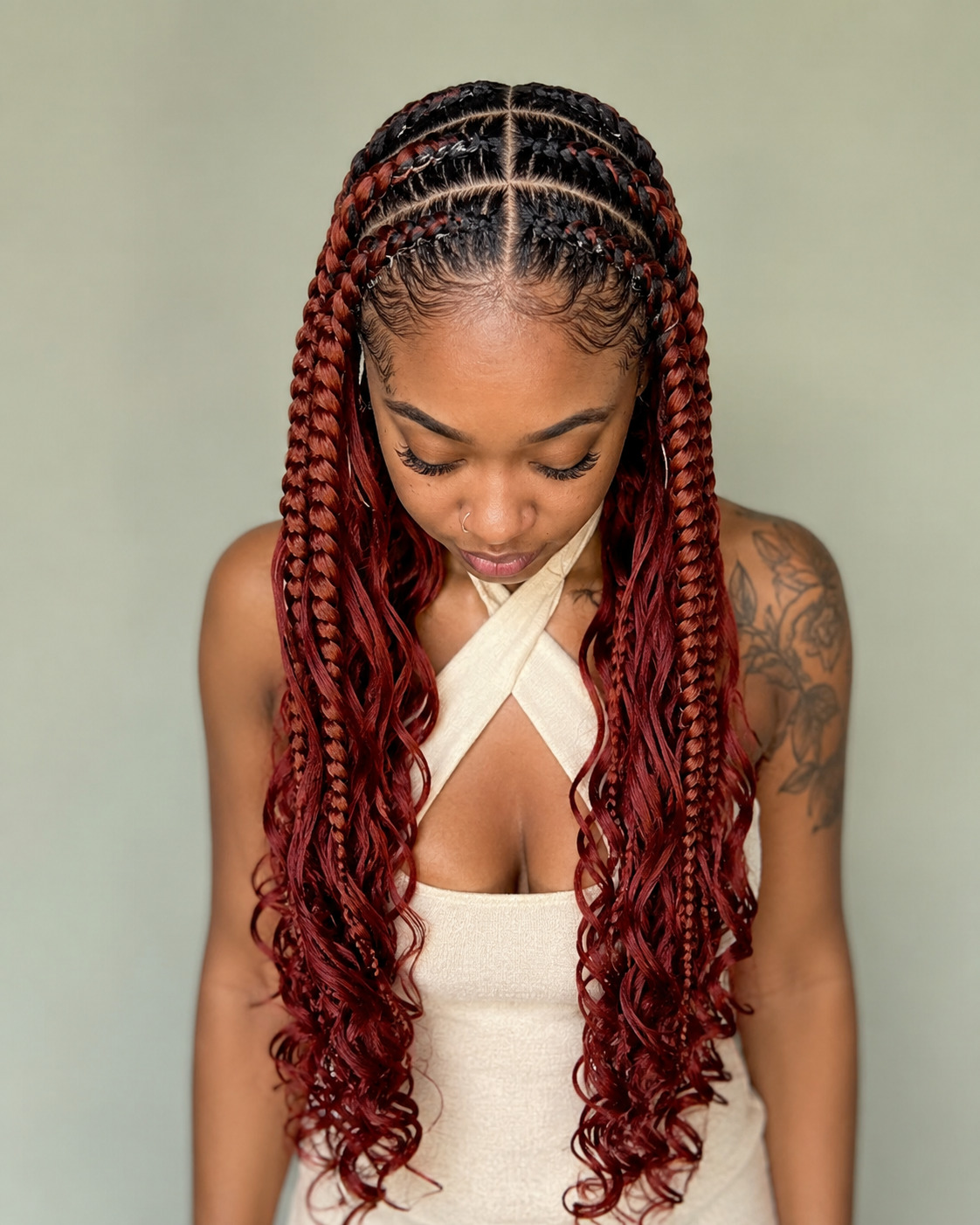
Women most commonly adapt the eight-cornrow format by styling the full length of the extensions rather than leaving them loose. The cornrow base functions exactly like a braided ponytail set — it can be gathered, coiled, or half-pinned in the same ways. Curly or wavy extension ends, used frequently in women’s versions, add a softer finish to the structured cornrow silhouette and make the style work across a broader range of occasions than the straight-ended classic.
13. Pop Smoke Braids into a High Ponytail
Gathering all eight cornrows and their full extension length into a single high elastic creates an updo that takes about thirty seconds and works for both formal and casual occasions. Secure the gather with a snag-free fabric band at the base of the scalp where the cornrows end — not at the mid-length of the extensions, which creates a sagging, unsupported ponytail. Women who also wear bubble braids or similar elastic-based updos will find the same gathering technique transfers directly to this format.
14. Half-Up Pop Smoke Braids
A half-up gather at the crown — collecting the top four braids while leaving the lower four down — creates the most face-lifting visual effect for round and heart-shaped faces. Oblong face shapes benefit more from a half-up at ear height rather than the crown, which reduces the vertical emphasis a high gather creates. Either position takes under a minute and can be adjusted throughout the day without disturbing the cornrow installation underneath.
15. Wet Wavy Pop Smoke Braids for Women
Wet-look wavy Kanekalon extension hair shifts the style from a structured street-influenced look to something more versatile across occasions. The wet-look finish comes from a silicone coating on the extension fiber that reflects light differently than standard Kanekalon — this coating is cosmetic, not functional, and maintains the look for the duration of the style without additional product. On very fine natural hair, the added weight of wavy extension fiber may cause slightly faster new growth tension than standard extension hair of the same length.
16. Goddess Pop Smoke Braids with Curly Ends
Transitioning the last six to eight inches of each extension into loose curls — using pre-curled extension fiber or applying a small-barrel curling iron to the Kanekalon ends — softens the silhouette of the straight-backed cornrow base. The contrast between the flat, structured braided section and the loose curled ends creates a layered look that photographs well from behind as well as the sides. On installation day, the braider sets the curl into the extension fiber using hot water before the final section is secured, adding twenty to thirty minutes to the appointment.
17. Pop Smoke Braids into Space Buns
Two equal groups of four braids each, gathered at opposite sides of the crown and coiled into buns, create a high-energy style that is faster to execute than it looks. Each grouping — four braids plus their full extension length — coils into a bun that holds without pins on most extension-weight hair because of the friction between multiple braid strands. This variation references the same double-bun structure found in many protective styles used for active wear or situations that call for hair fully off the shoulders.
18. Sleek Pop Smoke Braids for Women
A flat, smooth surface along each cornrow requires edge control applied at the hairline and re-laid every two to three days as new growth lifts the edges slightly. Medium-hold gel maintains sleekness most consistently for natural 4a–4b edges — heavier products build up at the hairline and create a dulled, flaky surface over the first two weeks. Protect the edges and the smoothed root section of each braid at night with a satin scarf wrapped firmly enough to hold the hairline flat but not so tightly that it creates a crease in the front braids.
Pop Smoke Braids with Accessories
Accessories on pop smoke braids attach most cleanly at the visible junction between the cornrow section and the loose extension length below it — the point where the tight braiding ends and the fiber opens up. Beads, cuffs, and shells all anchor differently at this junction. Beads slide over the braid and rest below that transition point; cuffs clip around the braid above it; shells can position at either point depending on the attachment method used.
19. Pop Smoke Braids with Gold Cuffs
Sliding spiral or clasp-style metal cuffs over the end of each braid and positioning them where the cornrow section transitions to loose extension adds a measured, consistent detail without the visual chaos of mixed accessory types. Gold suits warm skin tones and warm extension colors; silver pairs more cleanly with cooler complexions and neutral or ash-toned extension shades. Using one cuff per braid creates a uniform look; clustering two cuffs toward the bottom of the cornrow section on every other braid creates contrast within the pattern.
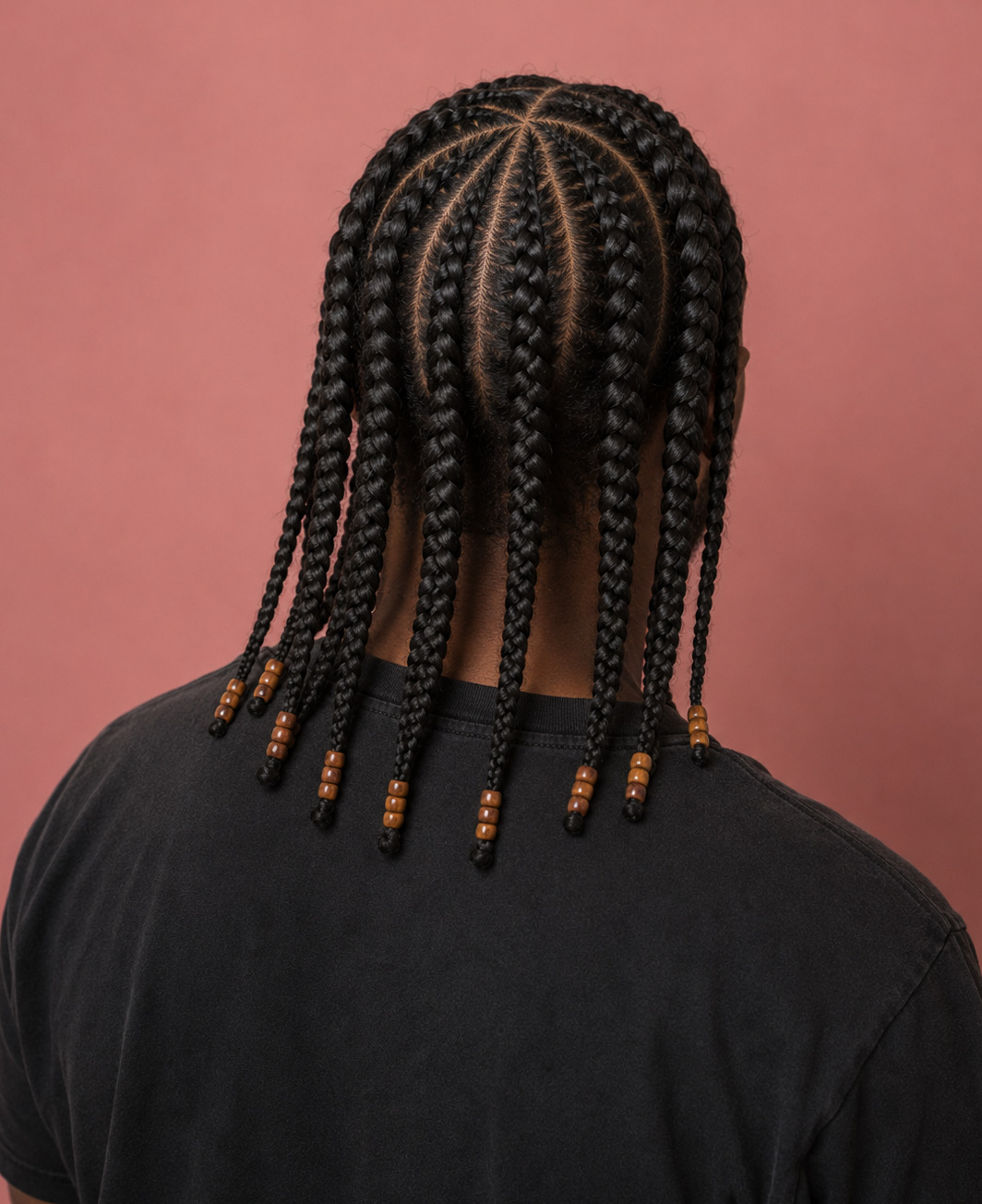
20. Beaded Pop Smoke Braids
Threading wooden or acrylic beads onto each braid at the end of the braided section is the version closest to the look that made pop smoke braids culturally recognizable — in many of the photographs that spread the style online, beads appear clearly at the base of each extension. Thread the bead onto a thin elastic loop, fold the loop around the braid at the desired position, and secure with a knot that holds under the movement of the braid throughout a full day. Wood beads are lighter than ceramic and add less weight pulling on the root of each section.
21. Pop Smoke Braids with Cowrie Shells
Cowrie shells attached by a thin cord looped around the braid hang lower and swing more freely than beads or cuffs that clamp directly onto the braid shaft, creating a different movement quality that is visible even when the braids are stationary. Compared to metal cuffs, cowrie shells carry cultural weight in Afro-Caribbean and West African hair traditions that many wearers find adds meaning to the accessory choice — the shells have been used as hair decoration across generations well before the pop smoke format made them a contemporary styling reference. Natural shells are heavier than plastic replicas; on fine or low-density hair, plastic shells create the same visual effect with less scalp strain.
22. Pop Smoke Braids with Rubber Bands
Rubber bands placed at the base of each braid just below the scalp compress the cornrow against the head and create a defined, structured silhouette without any ornamental addition. They also serve a maintenance function — fresh rubber bands re-anchor braids that have loosened at the root after several weeks of wear, extending the clean life of the set. Never roll rubber bands down the braid shaft during removal; cut each one with small scissors to prevent the snapping action from pulling and breaking the natural hair underneath.
23. Pop Smoke Braids with Thread Wraps
Color thread wrapped around specific sections of each braid — typically around the last two inches of the cornrow section — adds color without any extension fiber and without any commitment from the natural hair underneath. Satin-finish thread has a lustrous quality that catches light; matte cotton thread creates a flat, bold color that shows clearly in all lighting. The wrap technique on cornrow-style braids takes four to five minutes per braid and becomes significantly faster once the rhythm is established after the first few.
24. Pop Smoke Braids with Crystal Charms
Bringing the specific charms to your appointment rather than asking your braider to source them is the most reliable way to ensure the look matches your expectation — braiders stock whatever happens to be available locally, which may not match the crystal style, size, or color in a reference photo. Small, lightweight crystal charms on an S-hook or jump ring attach directly to a small loop of elastic secured around the braid base. Show your braider which braids should have charms and which should remain plain before the appointment starts, since re-positioning charms after a full set is installed is time-consuming.
Modern and Short Hair Variations
Short hair and contemporary technique adaptations expand who can wear the pop smoke format. The classic version requires at least three to four inches of natural hair to anchor the extension properly; below that threshold, the extension has too little to grip. Above that minimum, length is added entirely through extension and the natural hair length has little effect on the finished look.
25. Short Pop Smoke Braids
Hair between three and five inches creates a short but functional base for the feed-in cornrow technique — the extension hair makes up the majority of the braid’s length from roughly the second inch onward. Short versions typically stop at shoulder length or above because the ratio of extension-to-natural hair becomes structurally unstable beyond that point without using a larger extension pack. On 4c hair with significant shrinkage, three stretched inches often represent four to five natural coiled inches, which is enough to create a stable eight-cornrow base for a standard shoulder-length extension set.
26. Pop Smoke Braids with Shaved Design
A clipper design cut into the scalp between the cornrow sections — most commonly a geometric shape at the crown or a line design at the temple — adds visual detail that is visible at the root and changes the full character of the style when the braids are worn down. The design should be cut after the braiding sections are mapped but before braiding begins, so the section lines guide the clipper work rather than requiring measurement after the fact. Men who want to combine pop smoke braids with a low drop fade often add a design at the same barbershop visit before moving to the braider’s chair.
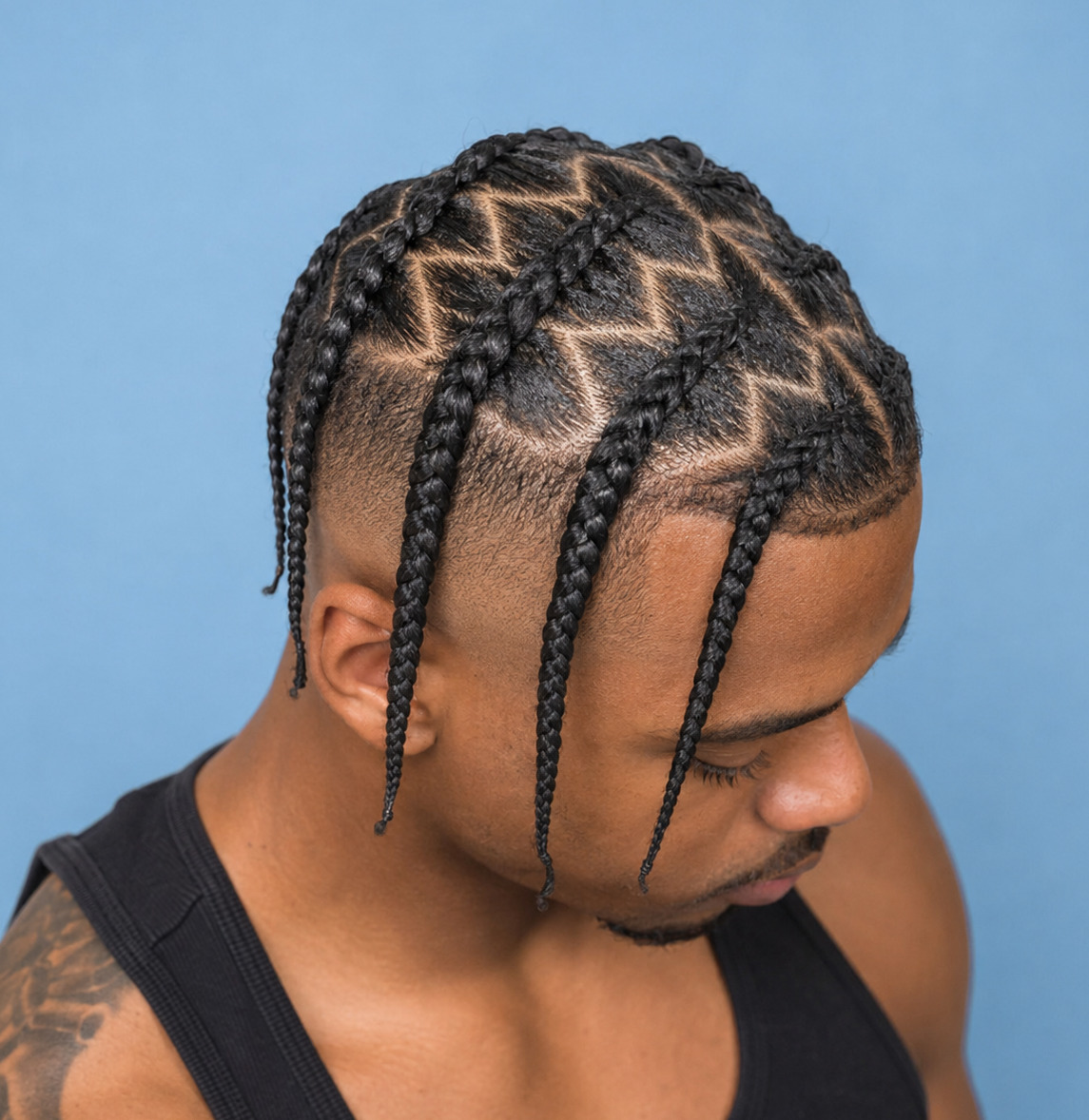
27. Zigzag Part Pop Smoke Braids
Parting the center in a zigzag rather than a straight line adds texture and detail at the most visible point of the style — the scalp — without requiring any change to the braiding technique behind the part. Round and square face shapes benefit most from the zigzag part because the diagonal lines at the crown break the horizontal impression of a flat-topped silhouette. Oval faces gain nothing specific from the zigzag over the standard straight part; both work equally well on an oval baseline.
28. Pop Smoke Braids on 4c Natural Hair
Natural 4c hair creates a different visual texture at the scalp between braids compared to relaxed or straighter hair types — the tight coil pattern at the exposed root adds visual density and makes any new growth less immediately visible than it would be on straight or wavy hair at the same stage. The braids themselves behave the same regardless of the texture underneath since Kanekalon extension fiber does not change based on what it anchors to. On 4c hair, the protective benefit is higher than on straighter textures because the natural coils are fully enclosed within the braid shaft, a level of end protection that relaxed hair in the same format does not achieve as completely.
29. Lemonade-Style Pop Smoke Braids
Asking specifically for “lemonade braids direction, but in the pop smoke cornrow format” communicates clearly to most professional braiders — it means the eight sections should sweep toward one side rather than run straight back, following the directional pattern Beyoncé’s visual album made widely recognizable. The side-sweep adds a face-framing effect on one side and works particularly well for oval and heart-shaped faces where the asymmetry complements the natural face structure. This variation takes more time than straight-back sections because the braider must maintain direction and tension simultaneously.
30. Pop Smoke Braids into Box Braids Hybrid
Starting from the eight-cornrow foundation at the scalp, the braider transitions each section into a freestanding individual braid at the back of the head rather than continuing the flat cornrow structure — creating a hybrid where the cornrow section frames the face and crown while the individual extensions provide the length and movement. This format lasts longer than standard pop smoke braids because the individual box braid ends can be refreshed or touched up without disturbing the cornrow base. For anyone already familiar with box braids as a protective style, the hybrid is an easy step up that adds a structured scalp section without requiring a completely different skill set from your braider.
Pop Smoke Braids by Face Shape
The center part divides the face vertically and the straight-back direction adds visual length. Varying the thickness, parting style, or sweep direction shifts how the style works against different facial structures.
| Face Shape | Best Pop Smoke Variation | Avoid |
|---|---|---|
| Oval | All variations; straight-back classic with any length | Nothing specific — most versions are flattering |
| Round | Straight-back with extensions to mid-back or longer; low taper fade at sides | Very short versions that end at the chin — adds width without the elongating benefit of length |
| Square | Feed-in with slightly softer hairline entry; lemonade-style side sweep | Very blunt flat sections with no fade — emphasizes sharp jaw corners |
| Heart | Longer extensions to mid-back or waist; standard straight-back works well | Wide-spaced jumbo sections with no taper — adds forehead width |
| Oblong | Half-up ponytail or gathered style at ear height; accessorized versions with side visual weight | High single-point gather that adds crown height |
| Diamond | Standard eight-cornrow center part; lemonade-style side sweep to add temple width | Very narrow-spaced sections that pull the sides in |
How Long Pop Smoke Braids Last
Duration depends on hair texture, extension weight, and how consistently the maintenance routine is followed. The numbers below assume nightly wrapping or a satin bonnet on all nights.
| Hair Type | Expected Duration | Key Maintenance Step |
|---|---|---|
| Natural 3c–4a | 4–6 weeks | Oil the scalp every 3–4 days; re-lay edges every 5–7 days |
| Natural 4b–4c | 5–7 weeks (texture grips extension fiber longer) | Scalp oil every 2–3 days; deep condition after removal before re-installing |
| Relaxed or texlaxed | 3–4 weeks before new growth disrupts the cornrow line | Avoid moisturizing products near the scalp section — they relax the grip on extension fiber |
| Fine or low-density | 2–3 weeks before braids start to slide or separate | Use knotless technique; lighter extension packs to reduce root strain |
Stylist tip: New growth starts softening the scalp section visible between each cornrow at around the three-week mark for most natural hair types. That visibility does not mean the braids need to come down — it means the style is showing age, which is different from the braids being unsalvageable. A targeted touch-up at the hairline rather than a full reinstall can add two to three additional weeks of clean wear.
When Pop Smoke Braids Are Not the Right Choice
Pop smoke braids are a lower-tension option than many cornrow styles, but specific situations make them an unnecessary risk for the scalp and existing hair.
-
Hair under 3 inches: There is not enough natural hair to anchor the extension feed-in technique reliably. The extension slides rather than braids, and the braider must compensate with extra tension on a smaller base — exactly the scenario that causes breakage at the root.
-
Active traction alopecia: A hairline already showing recession from previous tight styles needs recovery time without tension, not a new cornrow installation over the same stressed area. Any new braiding at an already-thinning hairline slows re-growth.
-
Within 48–72 hours of a chemical service: Relaxers and keratin treatments temporarily sensitize the scalp. Braiding immediately after either service adds tension to a scalp that has not finished processing, increasing the risk of scalp inflammation and post-chemical breakage.
-
Very fine or naturally silky hair: The cornrow technique requires friction between the natural hair and the extension fiber to hold the braid flat to the scalp. Very silky hair provides little friction; the braids lift and loosen significantly faster and may not reach the two-week mark before they look untidy.
What to Tell Your Stylist
The most common installation misunderstandings come from requests for “pop smoke braids” without specifying the technique, extension length, or thickness. Those three details determine the actual job, and without them the stylist defaults to whatever their standard version is — which may not match the reference photo you have in mind.
For the classic version: “I’d like pop smoke braids — feed-in knotless technique, eight sections with a center part, braided straight back, extensions to [shoulder / mid-back / waist] length. Standard thickness, not jumbo.”
For a colored version: “I’d like pop smoke braids in [burgundy / honey blonde ombre / two-tone black and burgundy] — can you show me the extension pack colors you have in stock before we start so I can pick the exact shade?”
For accessories: “I will bring [beads / cuffs] to the appointment — can we plan to add them during the installation rather than after?”
Stylist tip: When a client requests pop smoke braids without a reference photo, open the consultation by asking three questions: feed-in or traditional technique? Straight-back or directional? And what length? Those three answers define the full scope of the appointment before a single section is mapped. A client who cannot answer the technique question does not yet know — walk them through the difference in tension and longevity before starting.
FAQ
What Hair Do You Need for Pop Smoke Braids?
Natural hair should be at least 3–4 inches long for the extension to anchor securely at the root without requiring excessive tension. Extension hair — typically Kanekalon or jumbo synthetic braid fiber — makes up the majority of the braid’s length from about the second inch onward. Standard packs labeled “X-Pression” or “Outre Kanekalon” in a 116-gram size work for this style; plan on three to four packs for standard thickness and five or six for jumbo.
How Much Do Pop Smoke Braids Cost?
A basic eight-cornrow pop smoke set ranges from $80 to $180 at most natural hair salons, depending on the region and whether the extension hair is included in the price or sold separately. Beaded and accessorized versions add $15–$40 depending on the number of braids and the complexity of the attachment. Long extensions to waist or hip length add time and material cost, typically pushing the total to $150–$250 or more at full-service natural hair studios in major markets.
Are Pop Smoke Braids a Protective Style?
Pop smoke braids qualify as a protective style when installed with low-tension feed-in technique because the natural hair ends are enclosed within the braid shaft and the length is managed by the extension fiber rather than the natural hair. The primary protective benefit is reduced daily manipulation — there is no combing, detangling, or heat styling during the four to six weeks the style is in. That reduction in manipulation allows the natural hair to retain length more consistently than it would during a period of daily styling.
How Do You Sleep in Pop Smoke Braids?
Wrap the full length of the braids loosely in a satin scarf or use a large satin bonnet that fits over the complete extension length without compressing the braids against the scalp. Compression against a cotton pillowcase causes frizz on the extension fiber and can pull the cornrow section slightly out of its flat position over time. For very long sets at waist to hip length, a silk pillowcase is easier than a bonnet — fold the braids loosely across the pillow and let the silk reduce friction from all sides.
Can Women Wear Pop Smoke Braids?
Women wear pop smoke braids widely in every variation shown in this article. The eight-cornrow format is not gender-specific — the style originated in men’s hair culture but adapts to any hair type and length. Women most often style the braid length into updos, ponytails, or half-up arrangements, and frequently opt for curly or wavy extension ends that shift the finished look toward a softer aesthetic than the straight-ended classic version.
How Do You Remove Pop Smoke Braids Without Damage?
Cut each braid about two inches below the cornrow section before attempting any pulling. This removes the bulk of the extension weight and makes the remaining base section easier to separate. Apply a detangling conditioner to the remaining root sections before using fingers to separate the extension fiber from the natural hair, working in small pieces rather than pulling the full braid downward. After removal, a clarifying shampoo removes product buildup from the scalp section before deep conditioning the natural hair.
What Is the Difference between Pop Smoke Braids and Cornrows?
Cornrows is the general term for braids that run flat against the scalp in rows, a technique with roots in African hairstyling traditions spanning centuries. Pop smoke braids are a specific cornrow configuration — eight thick rows with a center part, usually with extension hair and beads — named after a specific person who made the configuration widely recognizable. All pop smoke braids are cornrows; not all cornrows are pop smoke braids.
Pop smoke braids remain one of the most-installed cornrow-based protective styles at natural hair salons because the format is clear, the look is versatile across lengths and accessories, and the eight-cornrow count provides enough coverage to work as a full long-wear set without the installation complexity of smaller, more numerous rows. Bring three reference photos to your appointment — one for the base section pattern, one for the extension length, and one for any accessories or color — so every detail is communicated before the first section is mapped.
Hair results vary based on your natural hair type, texture, density, and condition. Always consult with a licensed hairstylist before making significant changes, especially with chemical treatments or dramatic length changes. Photos may show styled results that require professional tools and products to replicate.