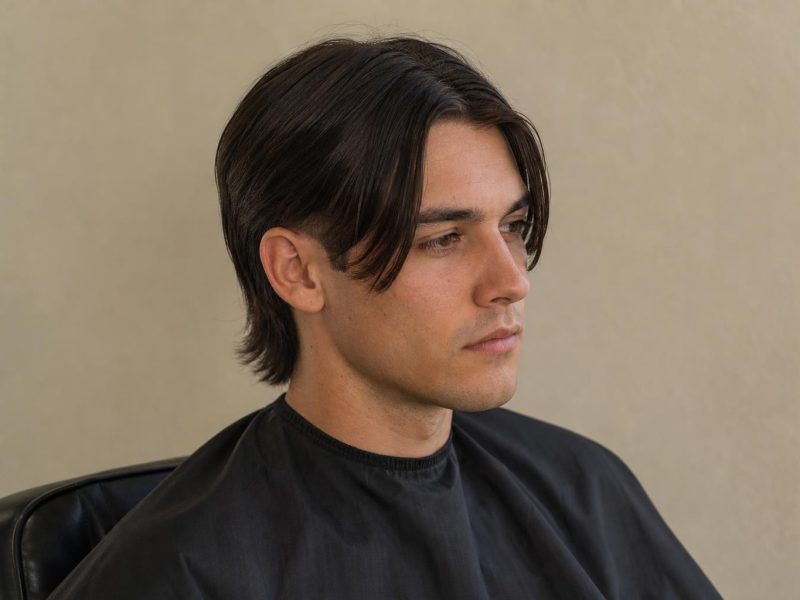
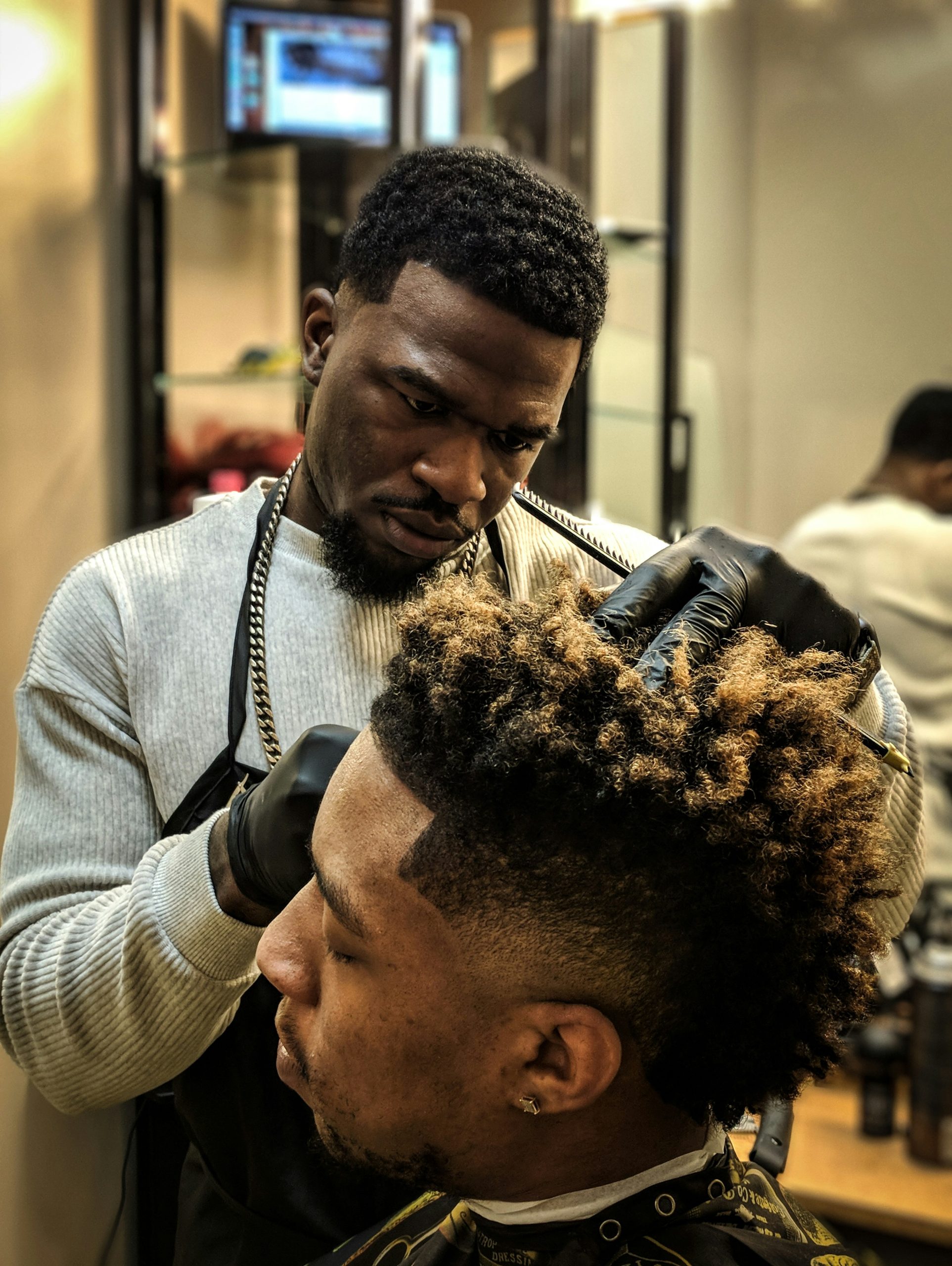
A taper fade on curly hair keeps the curls full and defined on top while the sides and back blend short, and the height of the fade decides how much contrast you get against the texture.
Curly and coily textures are some of the best-suited hair for a taper fade, because the cut sharpens the line between the bare sides and the natural bounce on top. The fade can sit low for a subtle, conservative blend, mid for balanced contrast, or high for a defined, bold silhouette. Here are 25 taper fade styles for curly hair sorted by fade height, curl type, and finishing detail, each with notes on who it suits and how to keep the curls healthy.
The gallery runs from low and mid tapers through high fades, then into curl-type-specific cuts and styles with length, color, and design. After the looks you will find a face shape table, the words for your barber, a realistic care and maintenance plan built around curly hair, and a section on when a taper fade is the wrong call for your texture.
| Factor | Details |
|---|---|
| Best for | Wavy, curly, and coily textures (2c through 4c); men who want defined curls on top |
| Maintenance | Fade refresh every 2 to 3 weeks; curls trimmed every 6 to 8 weeks |
| Works with | Low, mid, and high tapers; sponge curls, twists, curly fringes, designs |
| Cut curls | Dry, so the length lands where the curl actually sits after it springs up |
| Avoid if | Your hair is fine or thinning, where a high fade exposes too much scalp |
Low Taper Fade Curly Styles
A low taper keeps the fade concentrated around the hairline and sideburns, leaving more length on the sides than a mid or high version. It is the most conservative, low-maintenance way to wear a fade with curls, and it suits round and square faces by keeping width balanced. These cuts let the curls stay full while cleaning up the outline.
1. Low Taper with Loose 3A Curls
Loose 3A curls keep plenty of length and movement on top while the low taper tidies the hairline and sideburns. The subtle fade suits a workplace that leans conservative. A lightweight curl cream defines the loose pattern without weighing it down.
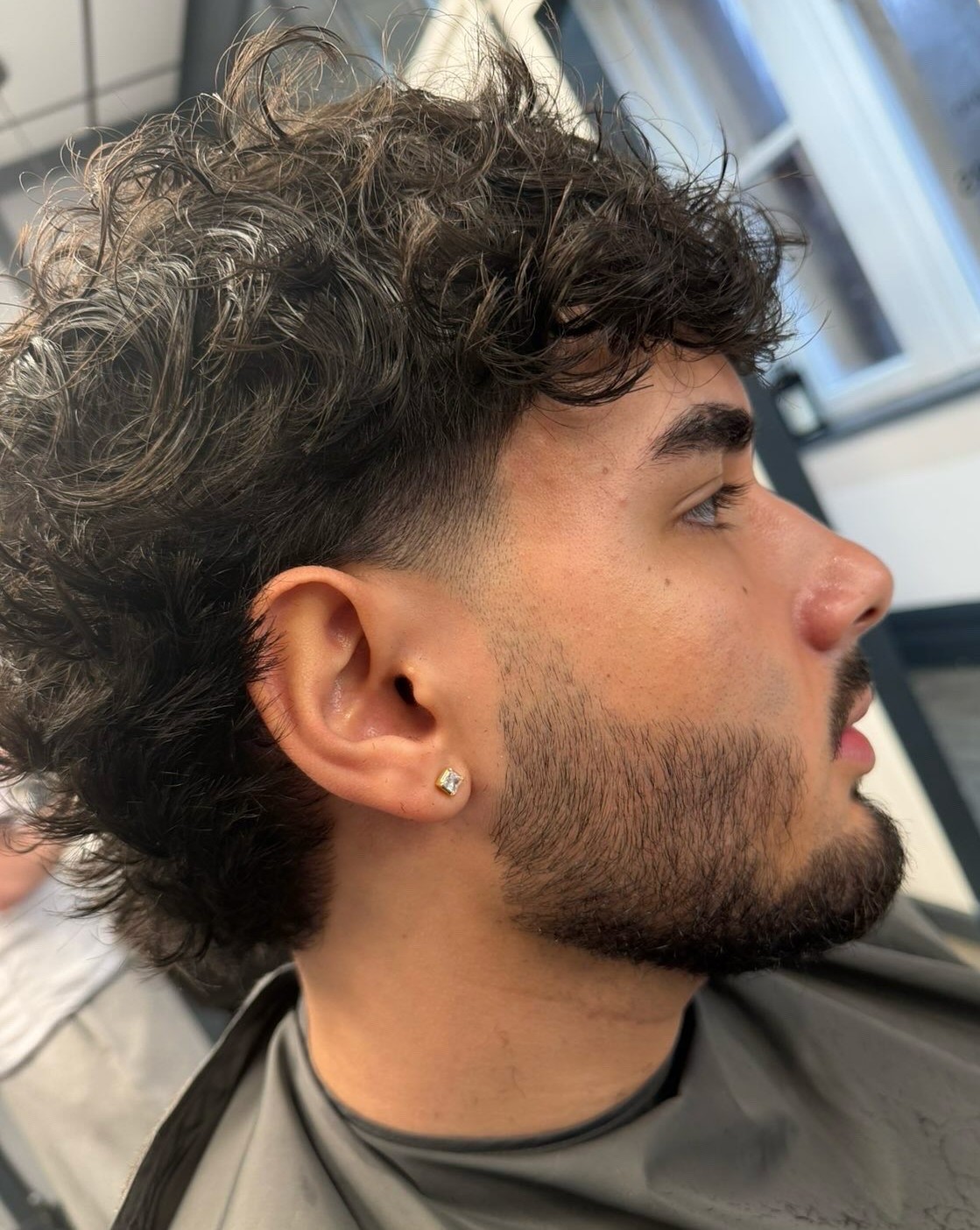
2. Low Taper Curly Fringe
Letting the curls fall forward into a fringe over a low taper frames the forehead and softens the face. The low fade keeps the sides clean so the fringe stays the focus. Scrunch a foam through damp hair to set the curl in the front pieces.
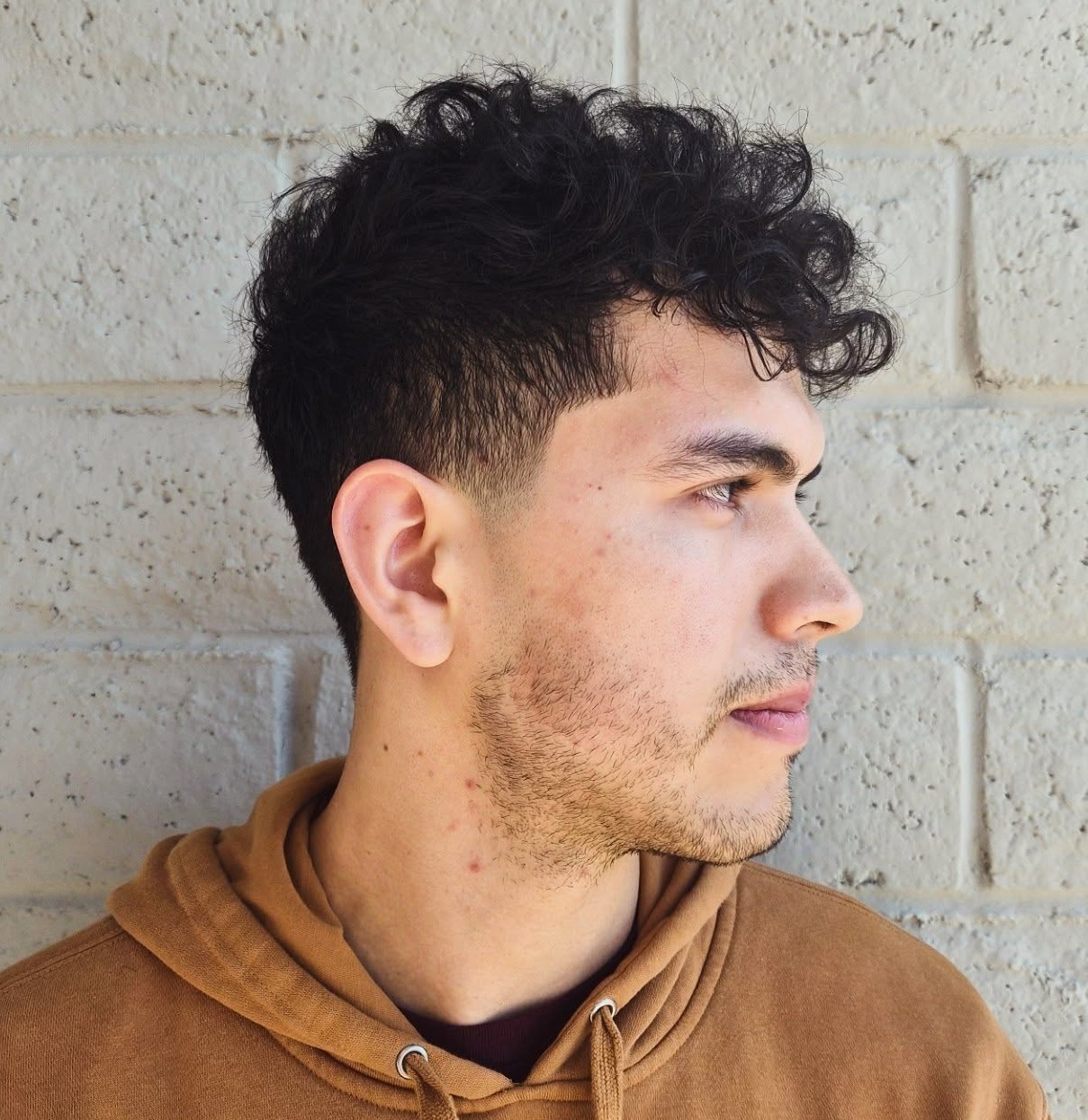
3. Low Taper for Round Faces
Round faces stay balanced under a low taper because the cut keeps width controlled at the sides without adding bulk. Height in the curls on top draws the eye up and lengthens the face. Ask the barber to leave the top full while tapering only the bottom edge.
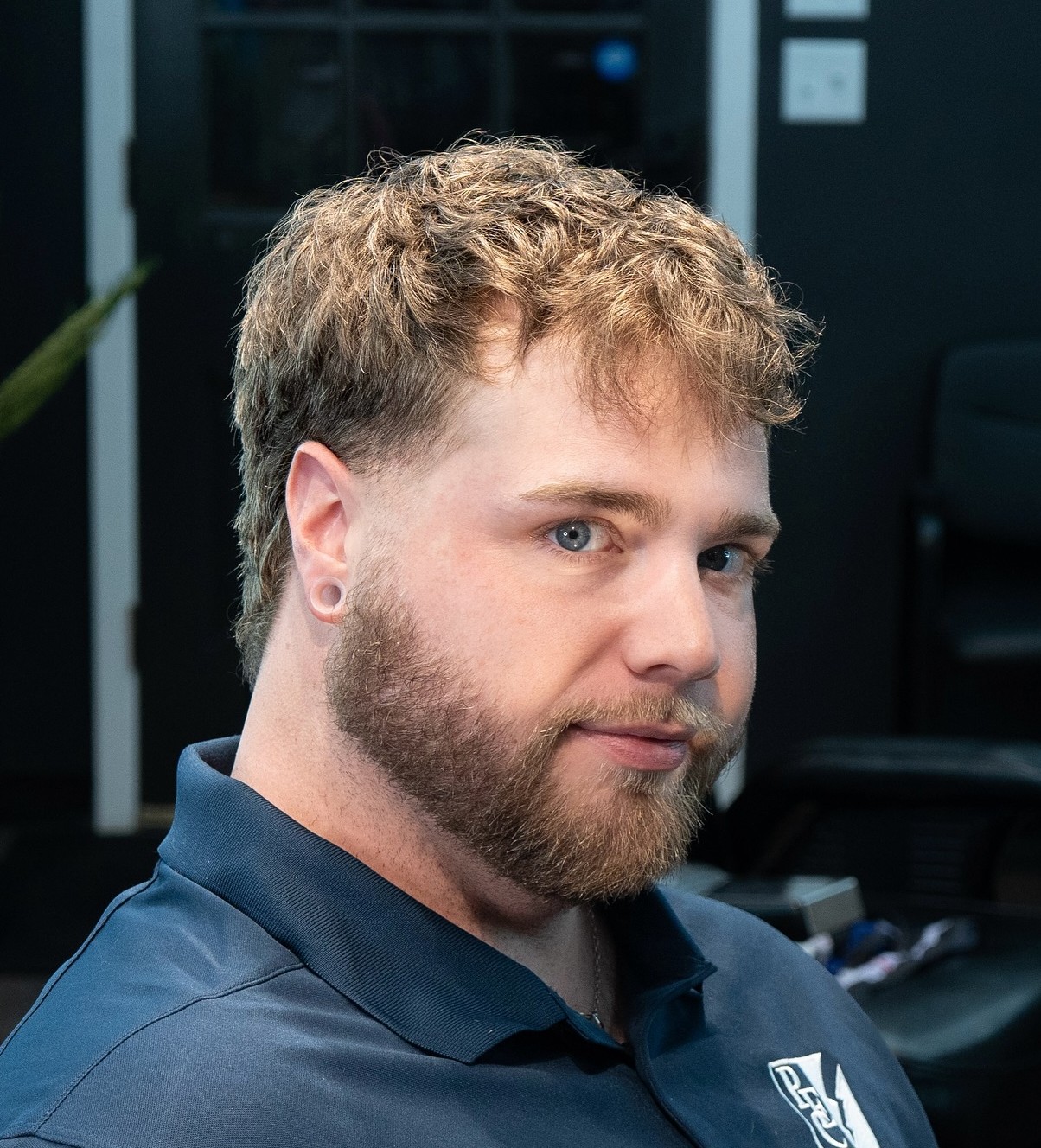
4. Low Taper on Coarse 4A Curls
Coarse 4A curls give a dense, full top that the low taper frames with a soft, blended edge. The density holds shape with little product. Keep the curls hydrated with a leave-in so they stay springy instead of dry and dull.
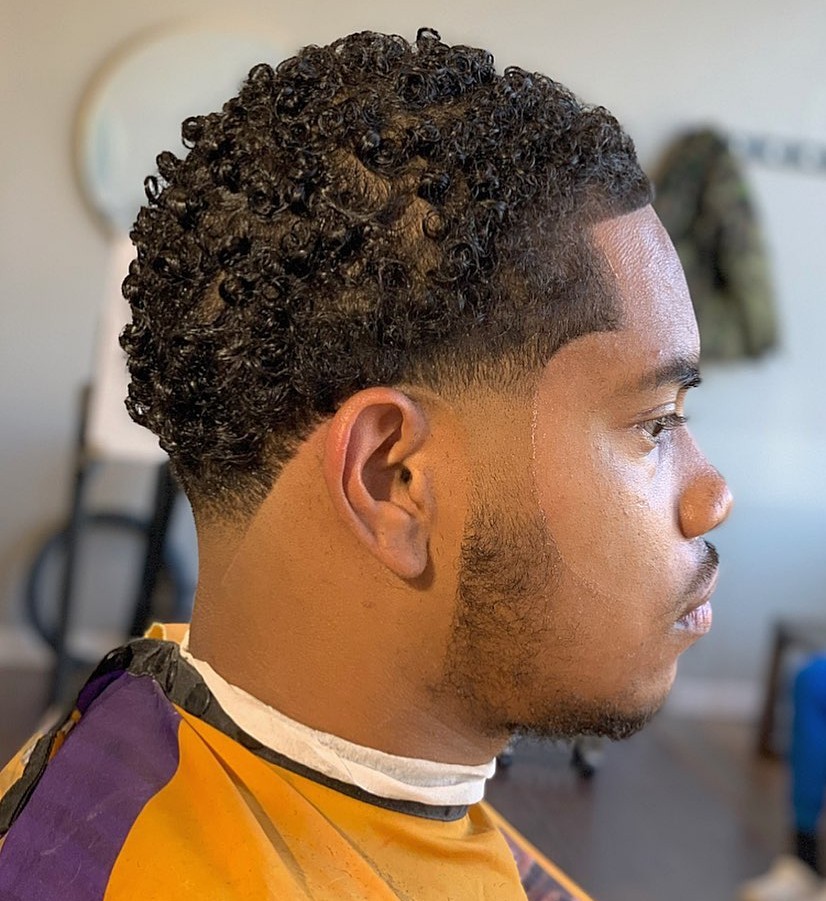
5. Low Taper with Sponge Curls
Working a hair sponge over the top defines and tightens the curl pattern while the low taper keeps the sides clean and close. The sponge gives a uniform, textured surface across the top. A hold cream before sponging keeps the definition through the day.
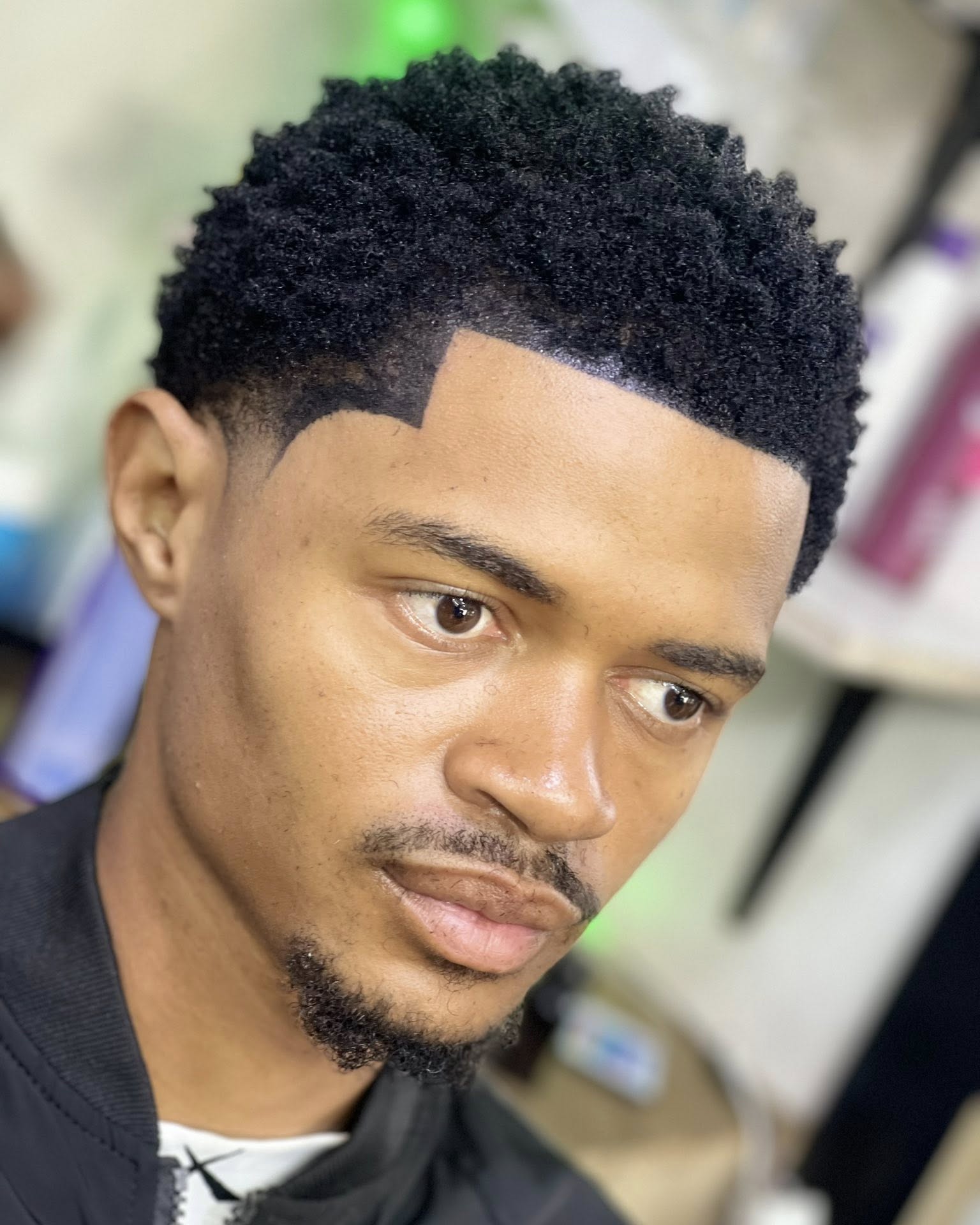
6. Low Taper Versus a Low Drop Fade
Unlike a drop fade that dips behind the ear, a low taper stays level along the hairline, which keeps the curl shape even and the upkeep lower. Choose the taper for a subtle, conservative blend and the drop for a more framed, dramatic line. Both leave the curls full on top.
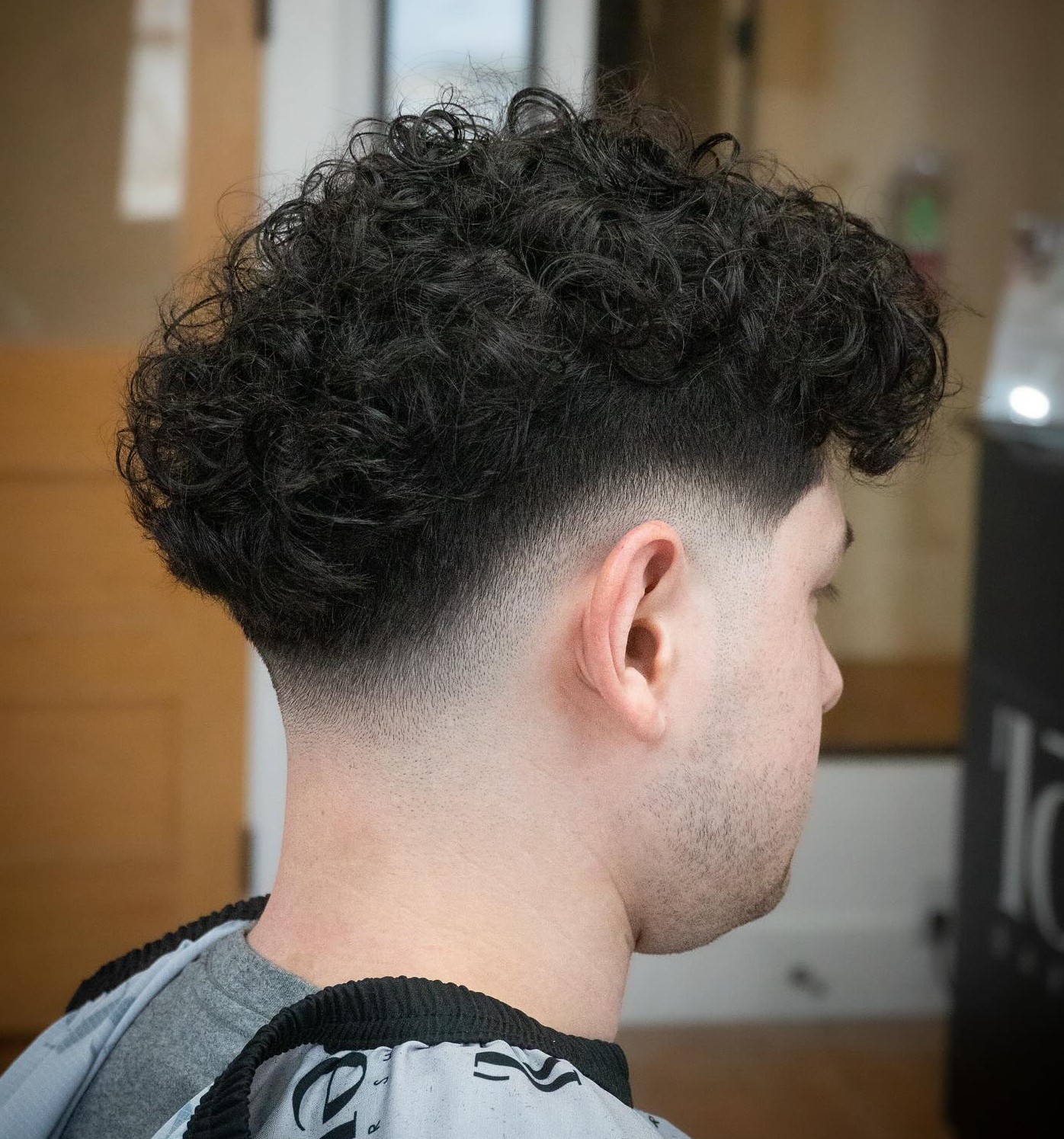
Mid Taper Fade Curly Styles
A mid taper starts the blend around the middle of the side, giving balanced contrast that draws attention to the curls on top without going as bare as a high fade. It is the most-requested version at barbershops for its versatility, and it flatters oval and diamond faces. These cuts hit the sweet spot between clean sides and full texture.
7. Classic Mid Taper with 3B Curls
Springy 3B curls on top play off the mid taper fade for the balanced, everyday look most men ask for. The mid placement removes bulk around the ears without losing the curl personality. A curl-defining cream keeps the pattern tight and shiny.
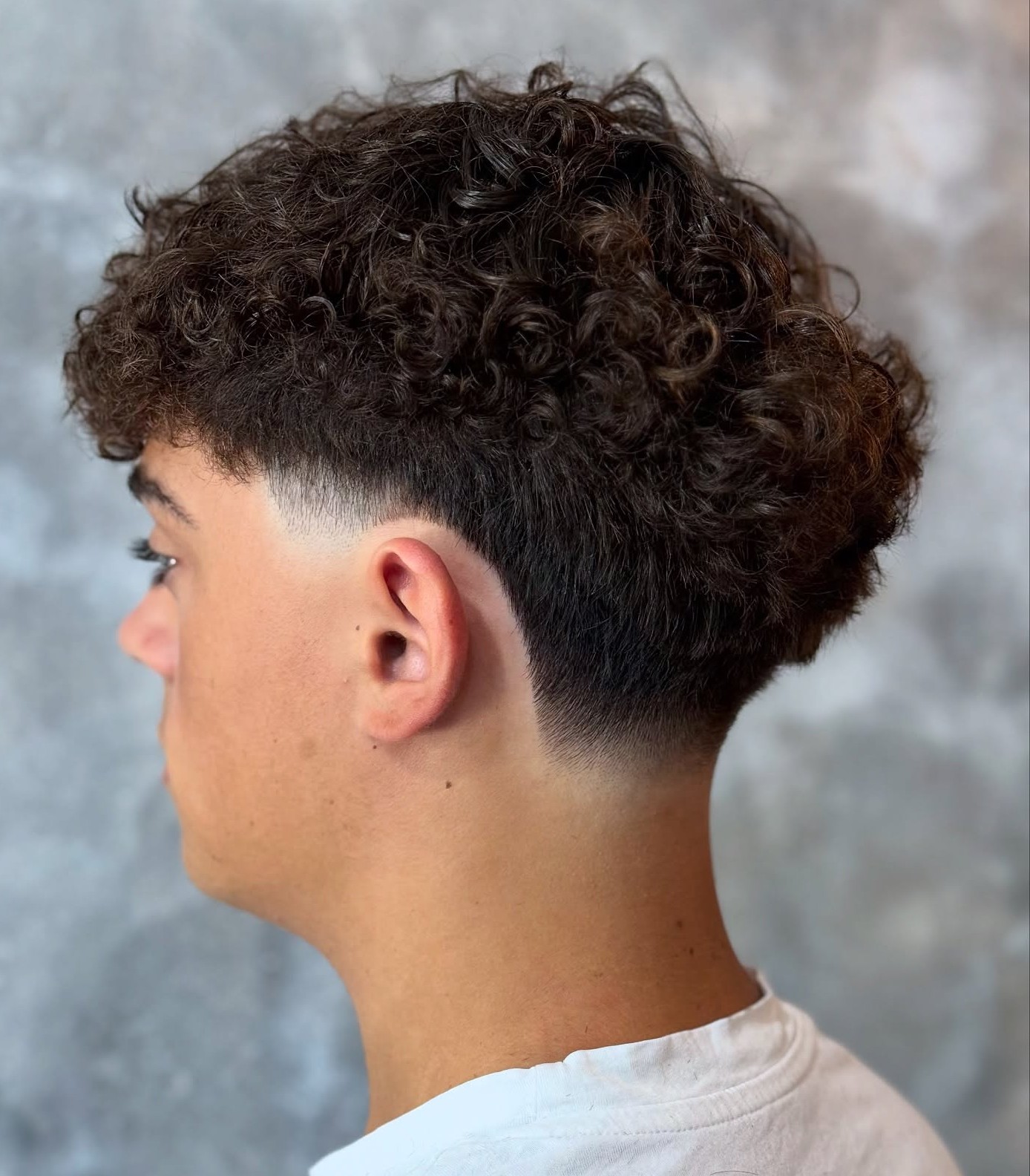
8. Mid Taper with Curly Top and Line-Up
Adding a line-up across the hairline sharpens the frame around a mid taper and curly top. The barber sets a clean edge before blending down from it. Keep the line soft if your hairline is uneven so it does not move back over repeat cuts.
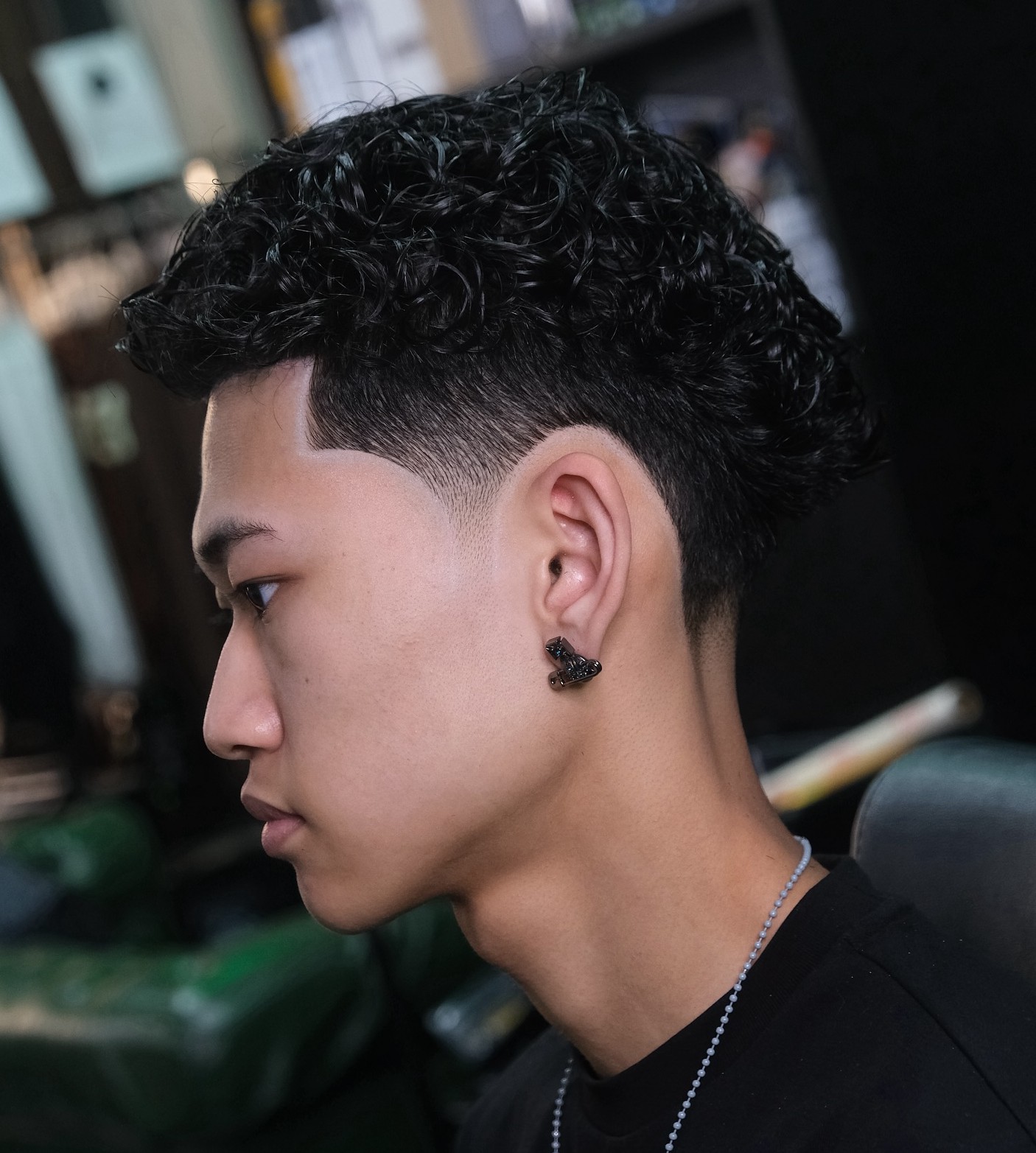
9. Mid Taper for Diamond Faces
Diamond faces, widest at the cheekbones, stay balanced under a mid taper with fuller curls left near the forehead and jaw. The volume at the top and the clean sides offset the wider middle of the face. Ask the barber to keep width in the front curls rather than slicking them back.
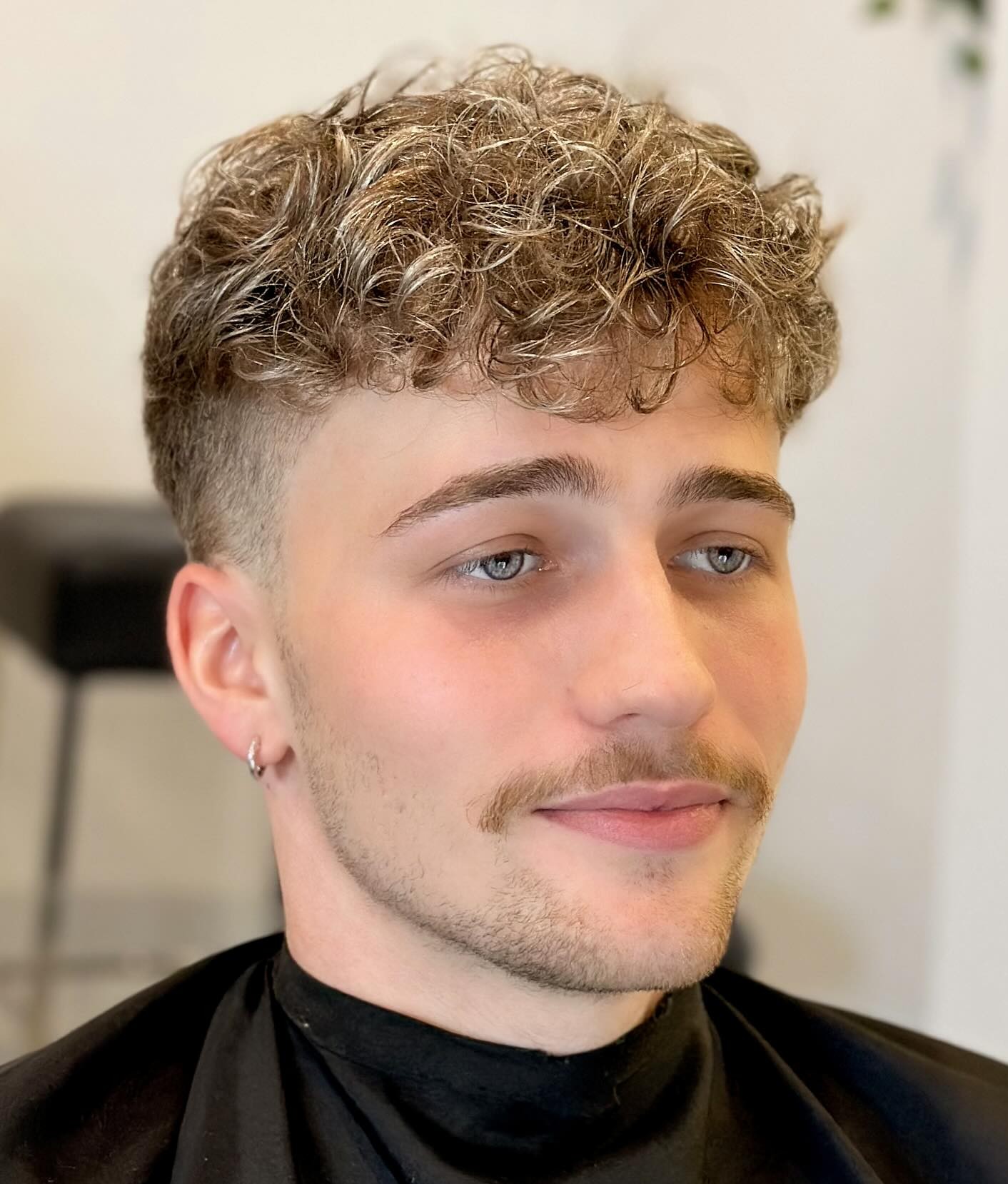
10. Mid Taper Curly Blowout
Blowing the curls up and out over a mid taper gives a rounded, voluminous shape with the curls expanded for height. A diffuser on a blow-dryer lifts the curl without frizzing it. This look reads bold and full, so it suits a confident wearer.
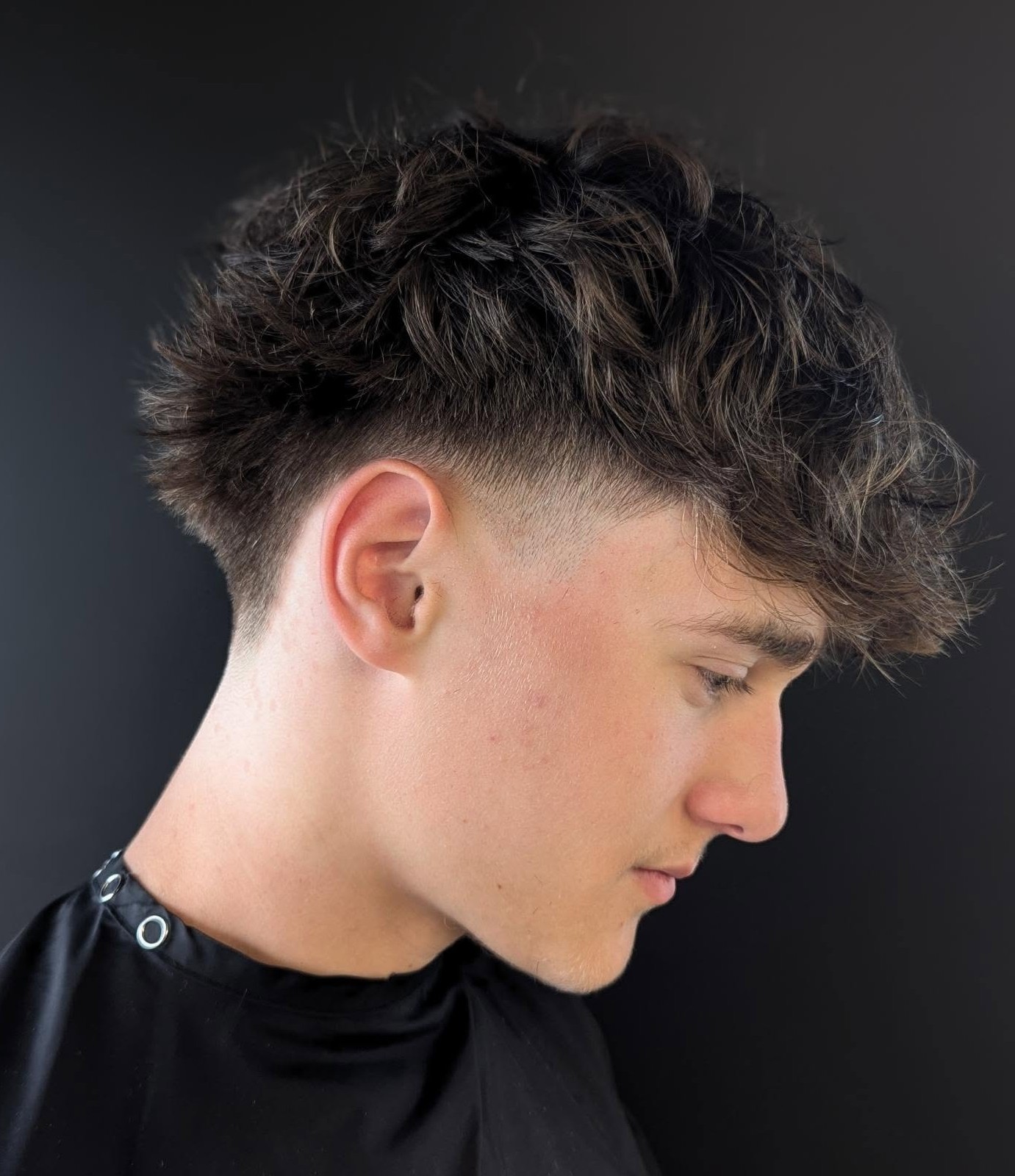
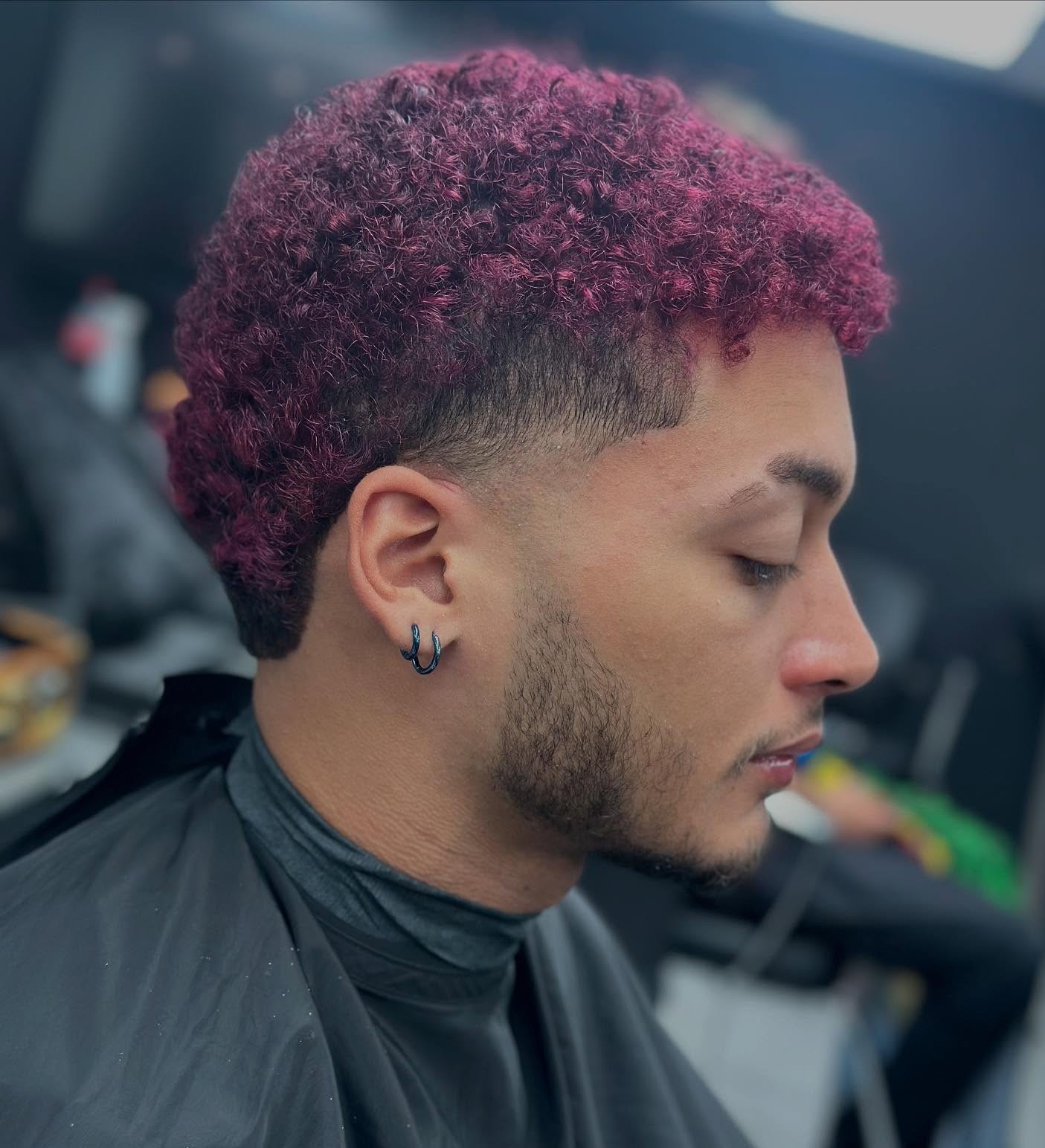
11. Mid Taper with Burgundy Curls
A deep burgundy wash on the curls contrasts against the dark, faded sides for a bold but wearable pop of color. Because the sides stay natural, the regrowth stays forgiving. A color-depositing conditioner keeps the burgundy rich as it softens.
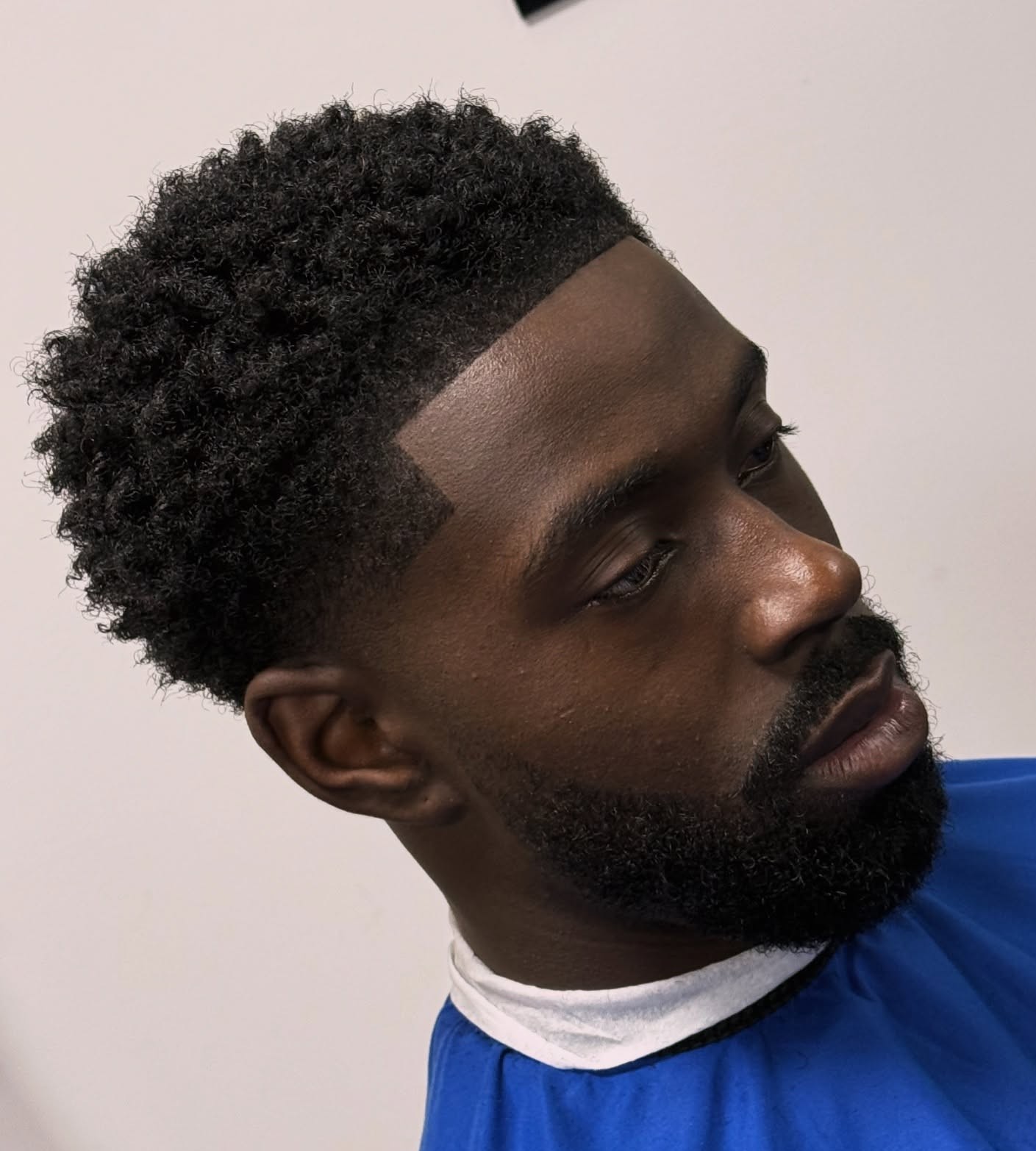
12. Mid Taper with Twisted Top
Short two-strand twists or finger coils on top sit over a mid taper for defined, rope-like texture against the clean sides. The twists need a few inches of length to coil, so grow the top first. A twisting cream sets the coils so they hold for days.
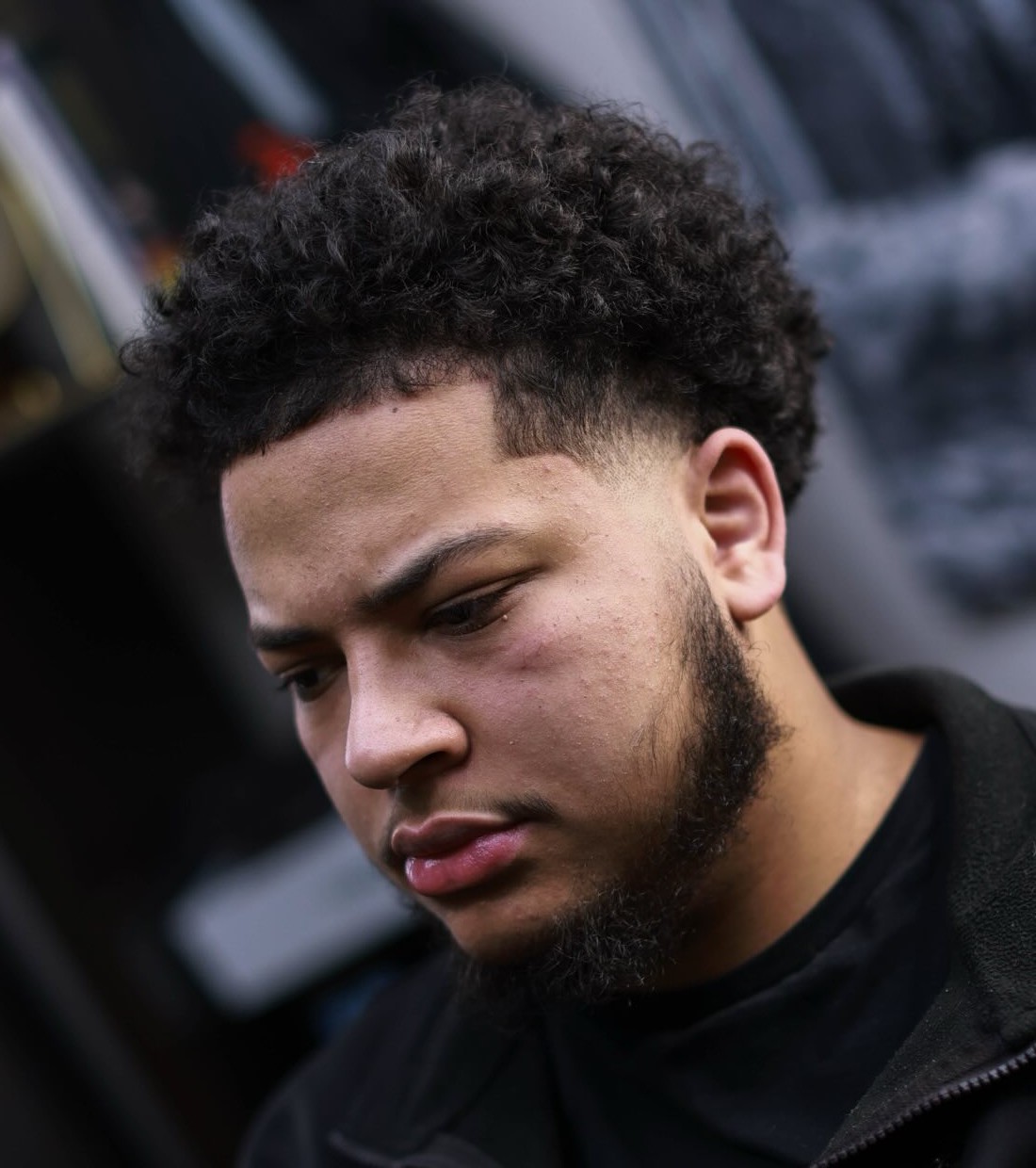
13. Mid Taper Versus a High Taper on Curls
Unlike a high taper that exposes more scalp for sharp contrast, a mid taper keeps a softer balance that suits more face shapes and thinner density. Choose the mid for versatility and the high for a bolder, more defined silhouette. The curls on top stay full in both.
High Taper Fade Curly Styles
A high taper takes the blend up close to the crown for the sharpest contrast between the bare sides and the curls on top. It gives a defined, bold silhouette and pairs best with tight curls or a cropped curly top. These cuts make the most statement but need the most frequent upkeep.
14. High Taper with Tight 4B Curls
Tight 4B curls give a dense, sculptural top that the high taper fade frames with maximum contrast. The bold split between skin and curl reads sharp and clean. Keep the curls moisturized so the pattern stays defined against the bare sides.
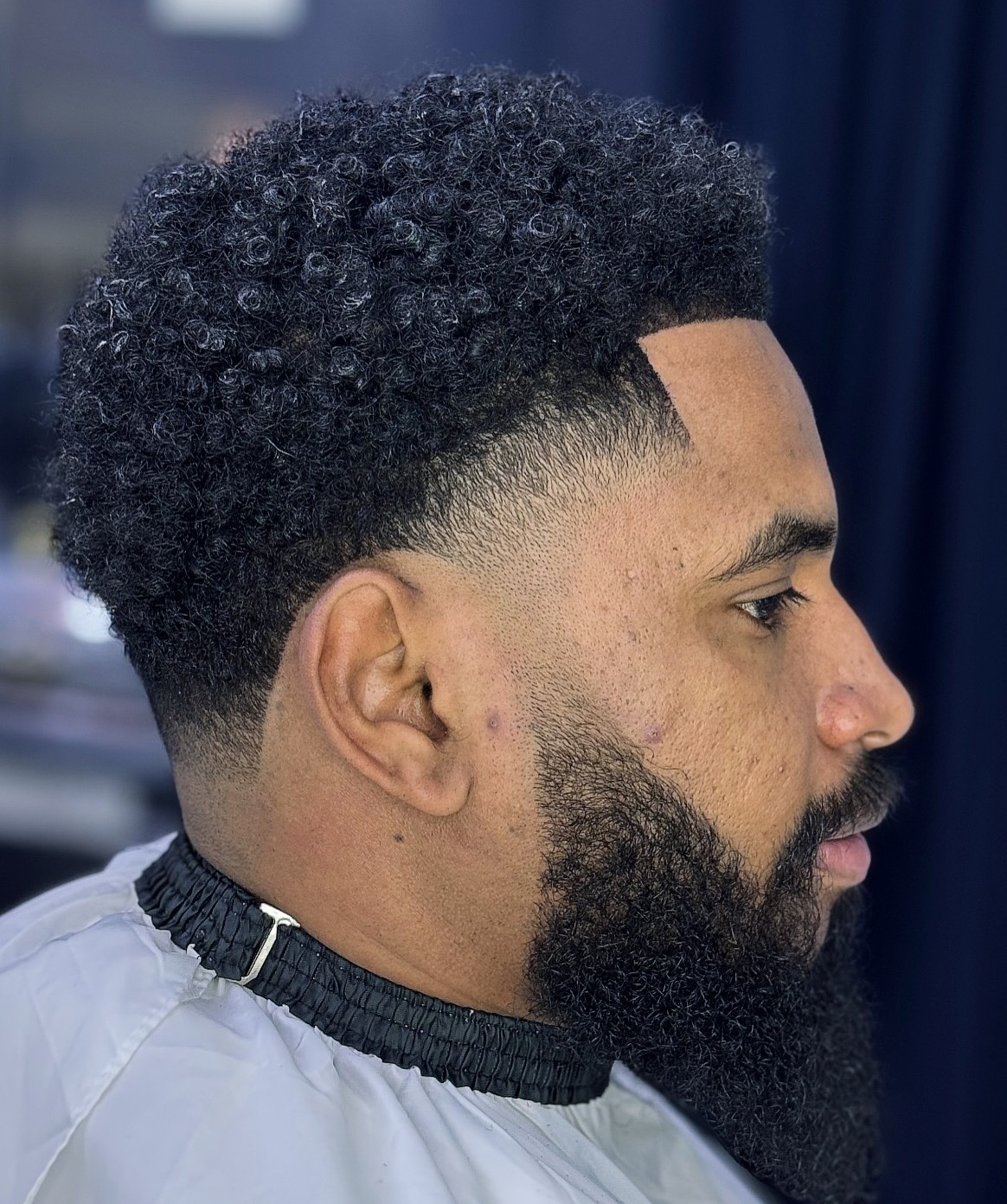
15. High Taper Curly Crop
A cropped curly top over a high taper keeps the look low-effort while the fade does the framing. The short length needs only a little curl cream to define. It is a strong pick for tight curls that hold their shape close to the head.
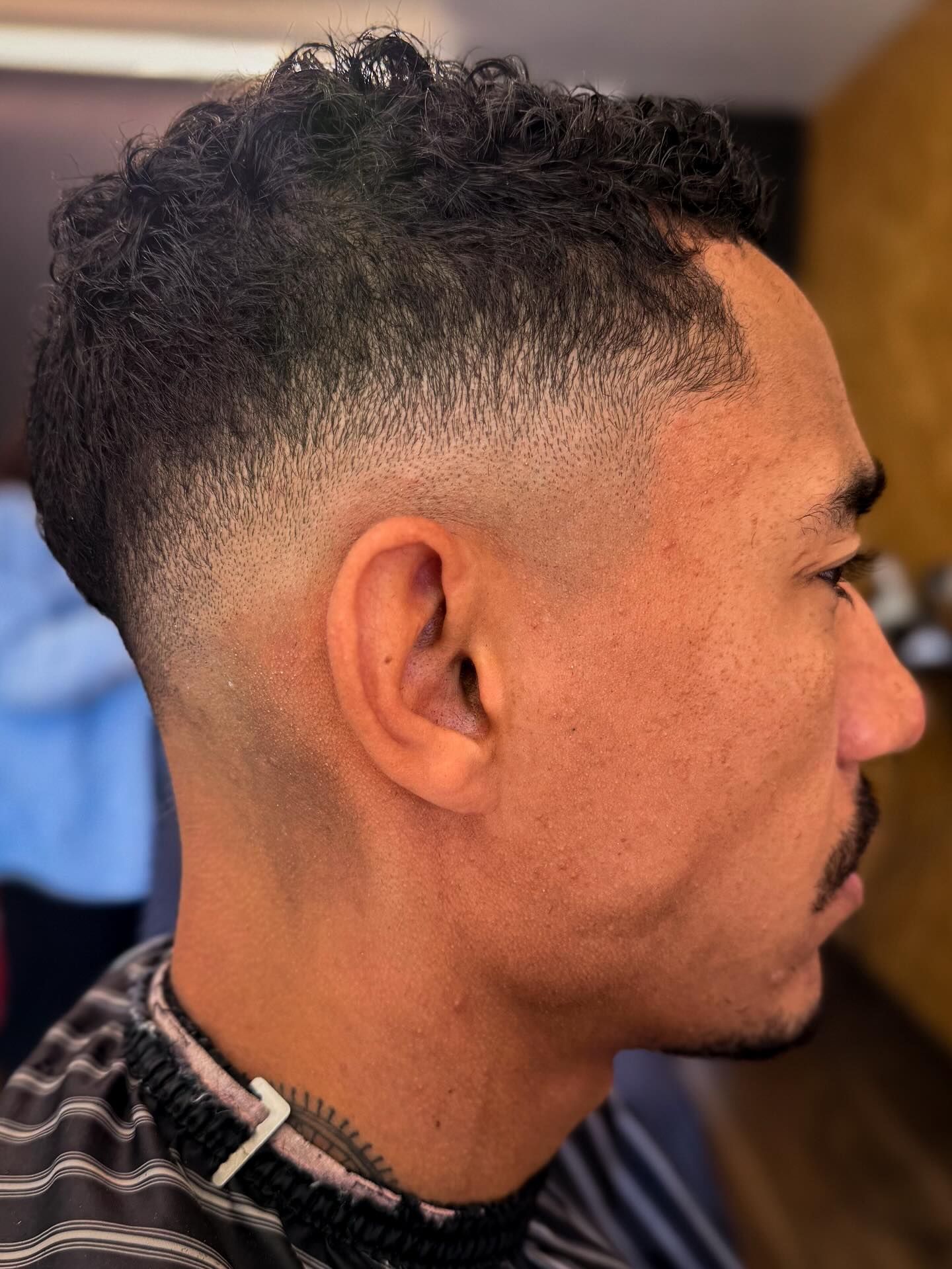
16. High Taper with Curly Fringe
Letting tight curls fall forward into a short fringe over a high taper frames the forehead with texture and contrast. The high sides keep the silhouette sharp. Scrunch the front pieces forward with a foam to set the fringe.
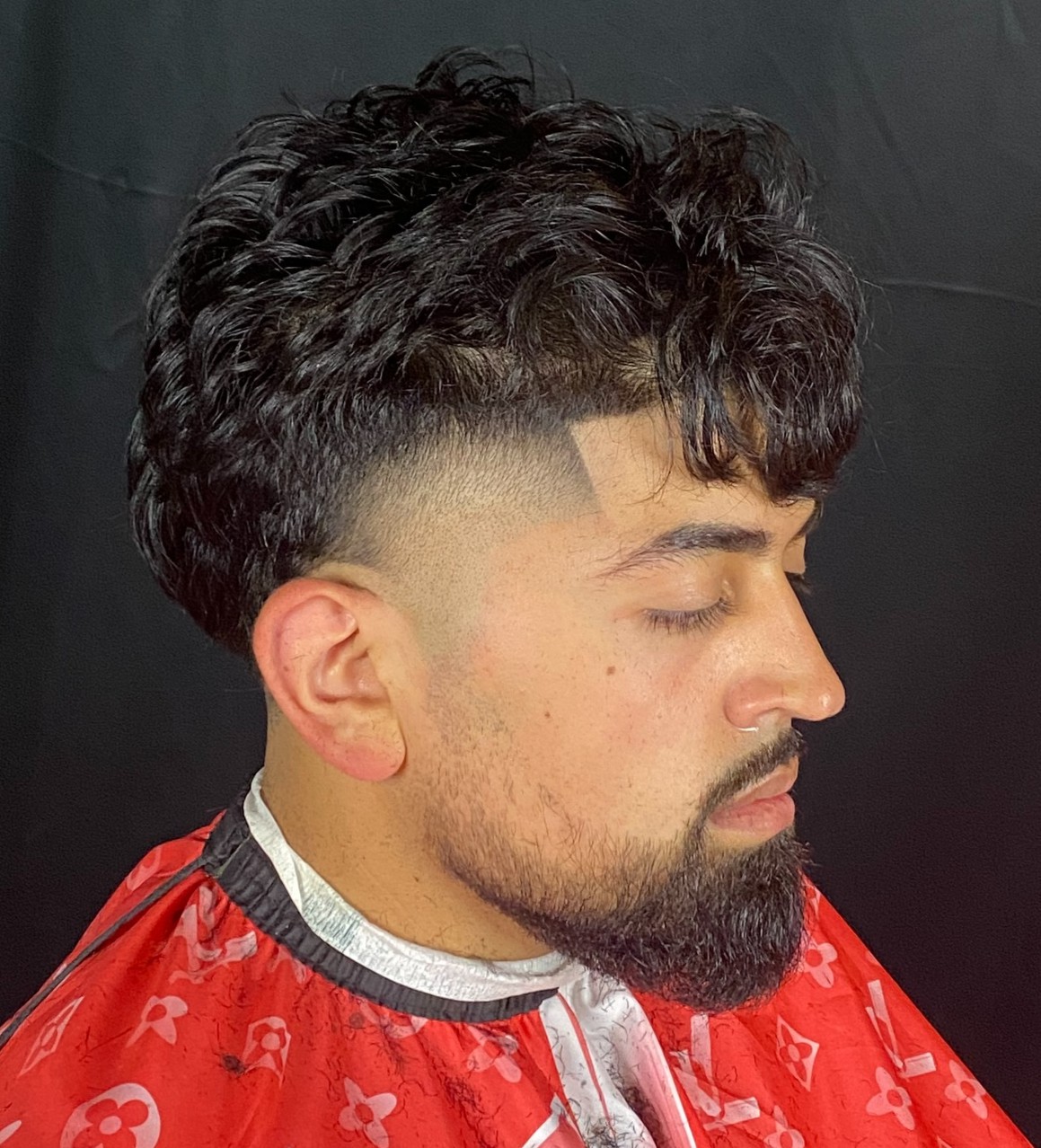
17. High Taper with Design Line
A single razored line set into the high taper adds a graphic detail without a full pattern, and it grows out cleanly within a couple of weeks. Place the line along the fade transition so it frames the curls. It is the easiest design to keep up at home.
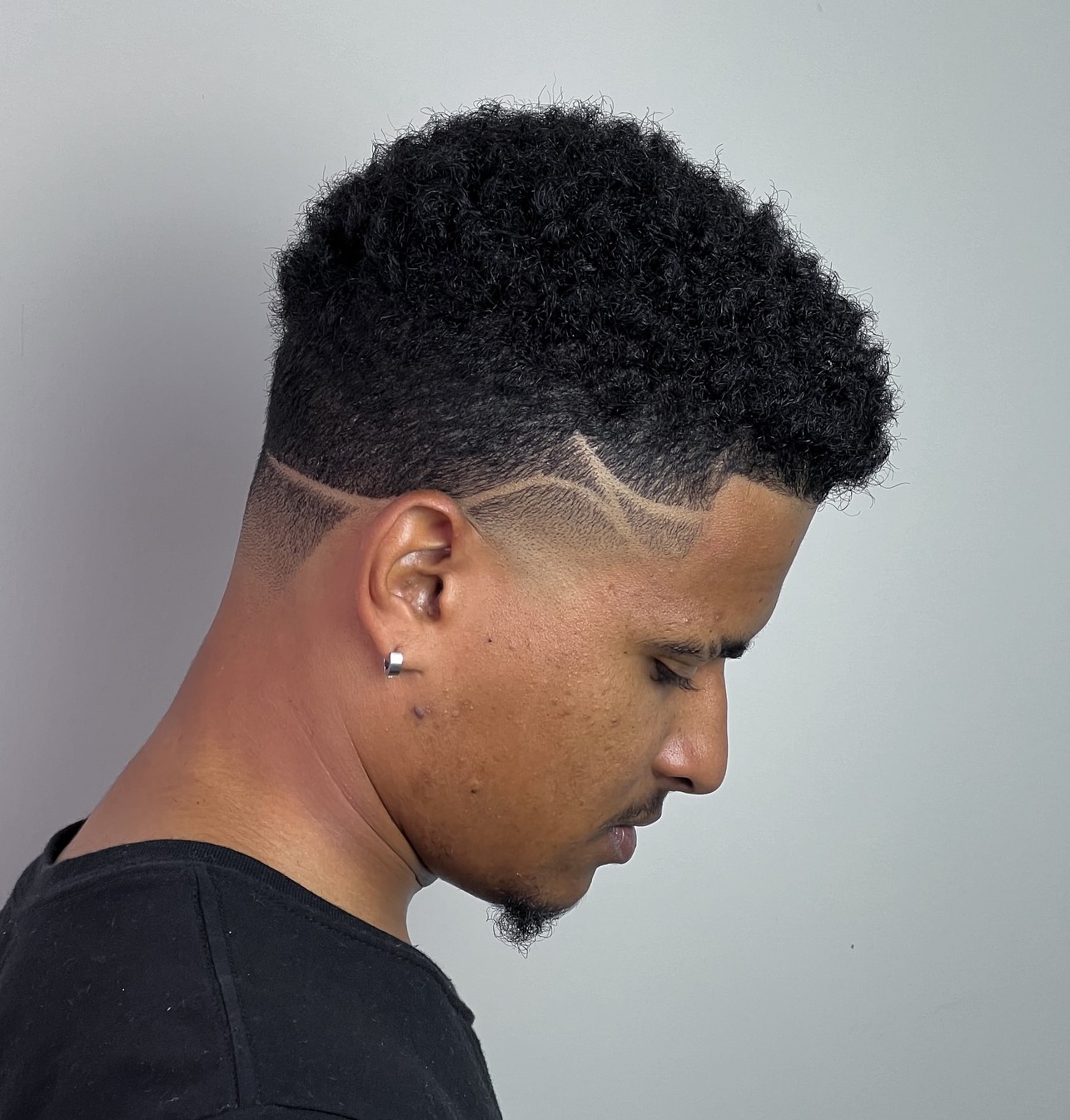
18. High Taper Curly Mohawk Shape
Keeping a wider strip of curls down the center over high-tapered sides reads as a soft, curly mohawk shape without a hard shave. The high taper makes the center curls stand out. It is a bold look that still grows out evenly.
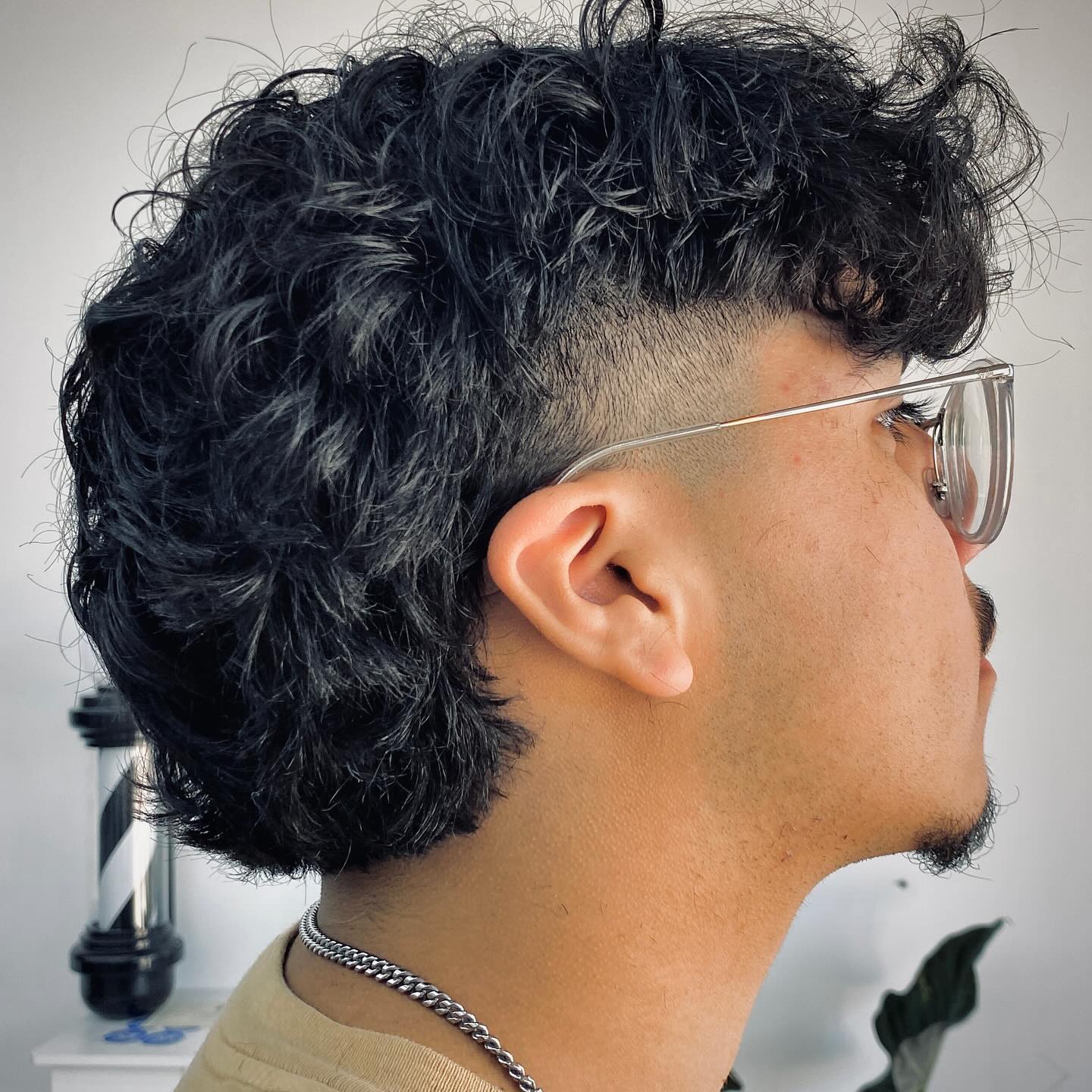
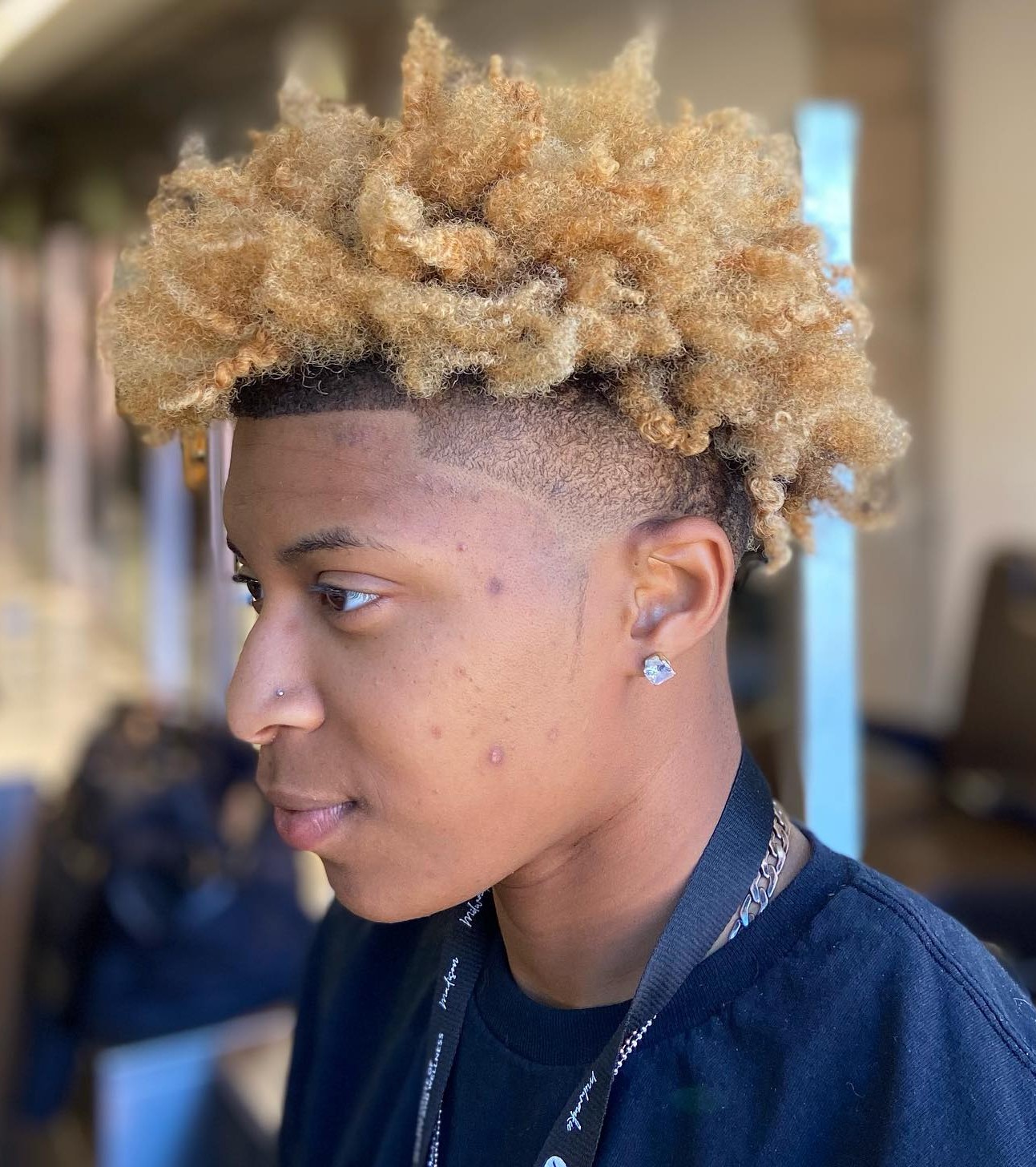
19. High Taper with Bleached Curl Tips
Lifting just the tips of the curls to a lighter tone draws the eye to the texture against the dark faded sides. Going light on curly hair runs dry, so a bond treatment during the lightening protects the curl. Purple shampoo keeps the tips from going brassy.
Curly Taper Fades with Length, Type, and Detail
These looks match the taper to specific curl types and add length, color, or finishing detail. They cover the range from wavy 2c hair to tight 4c coils, plus longer and styled curly tops. Treat them as the most varied end of the curly taper range.
20. Taper Fade on Wavy 2C Hair
Wavy 2C hair takes a taper fade with loose, flowing movement on top and a clean blend at the sides. The waves need less product than tighter curls to look defined. A sea-salt spray plays up the natural bend with a matte finish.
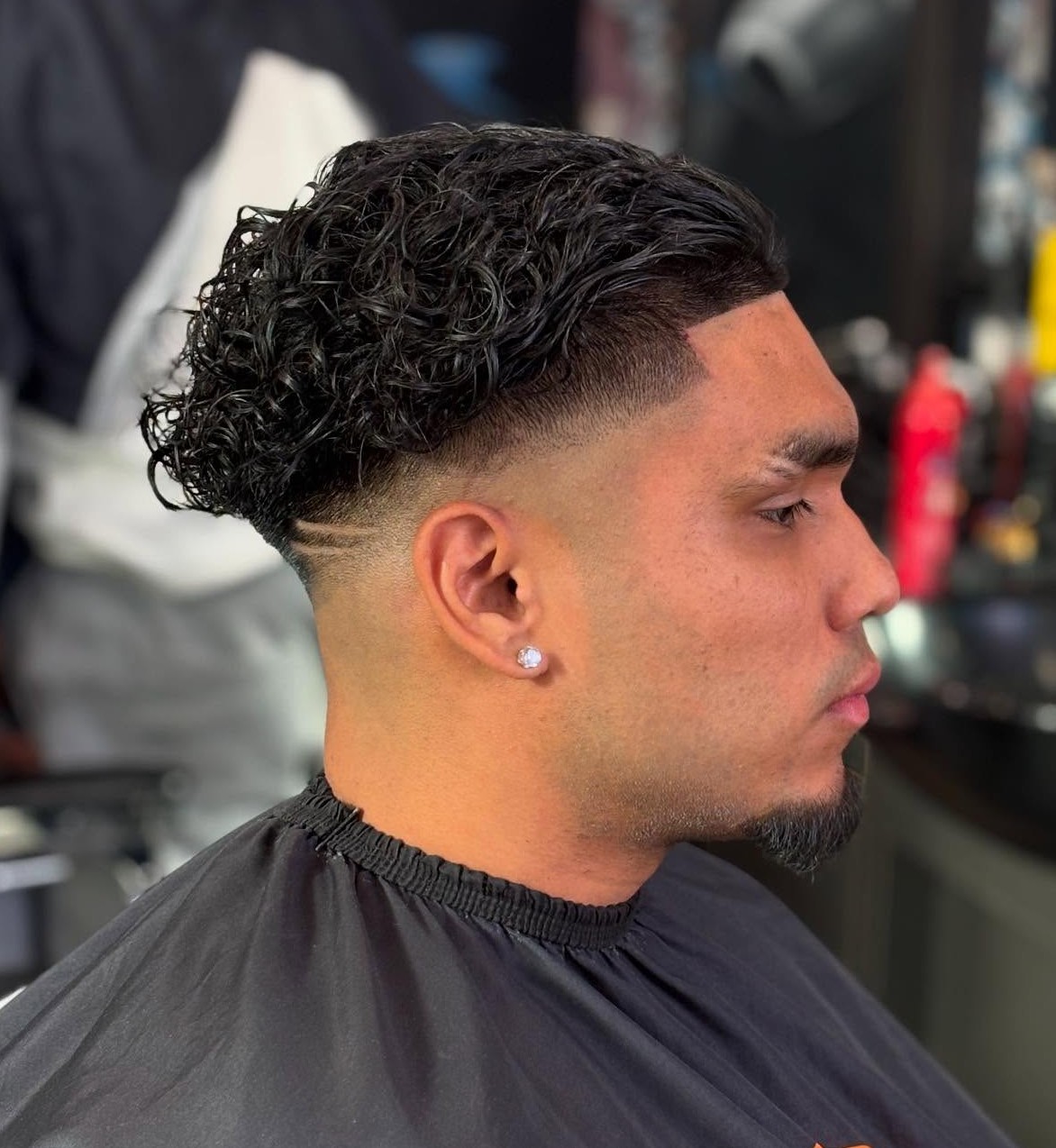
21. Taper Fade on 4C Coils
Tight 4C coils give the densest, most defined top, and the taper frames the texture with a sharp, clean edge. Cutting the coils dry lets the barber shape where the shrinkage actually lands. A rich leave-in keeps the coils hydrated and springy.
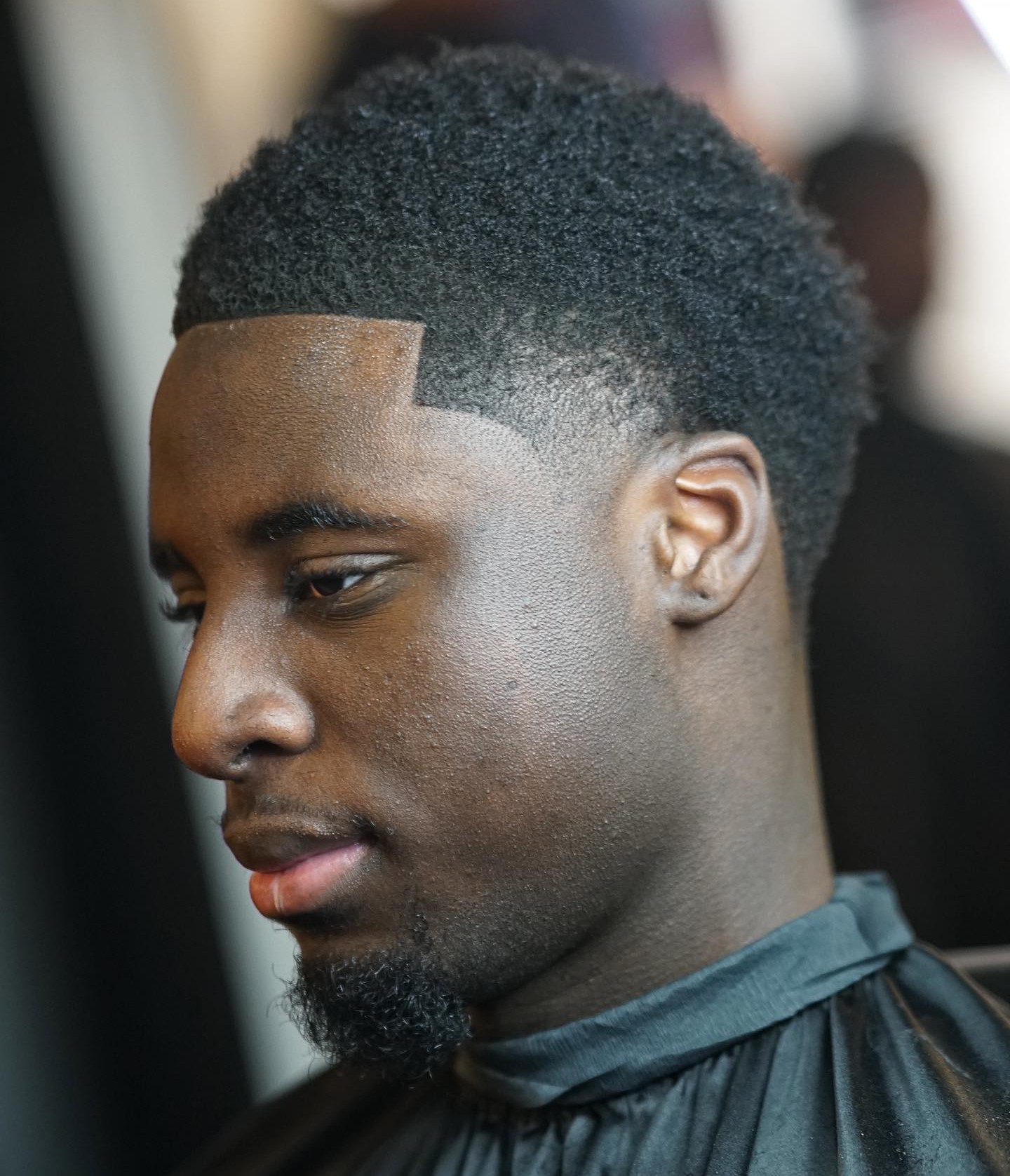
22. Long Curly Taper
Leaving the curls long on top over a taper gives the fullest, most dramatic shape with the most movement. Tell your barber to keep real length up top and only taper the sides, since some will shorten the whole thing. A curl cream and air-drying keep long curls defined.
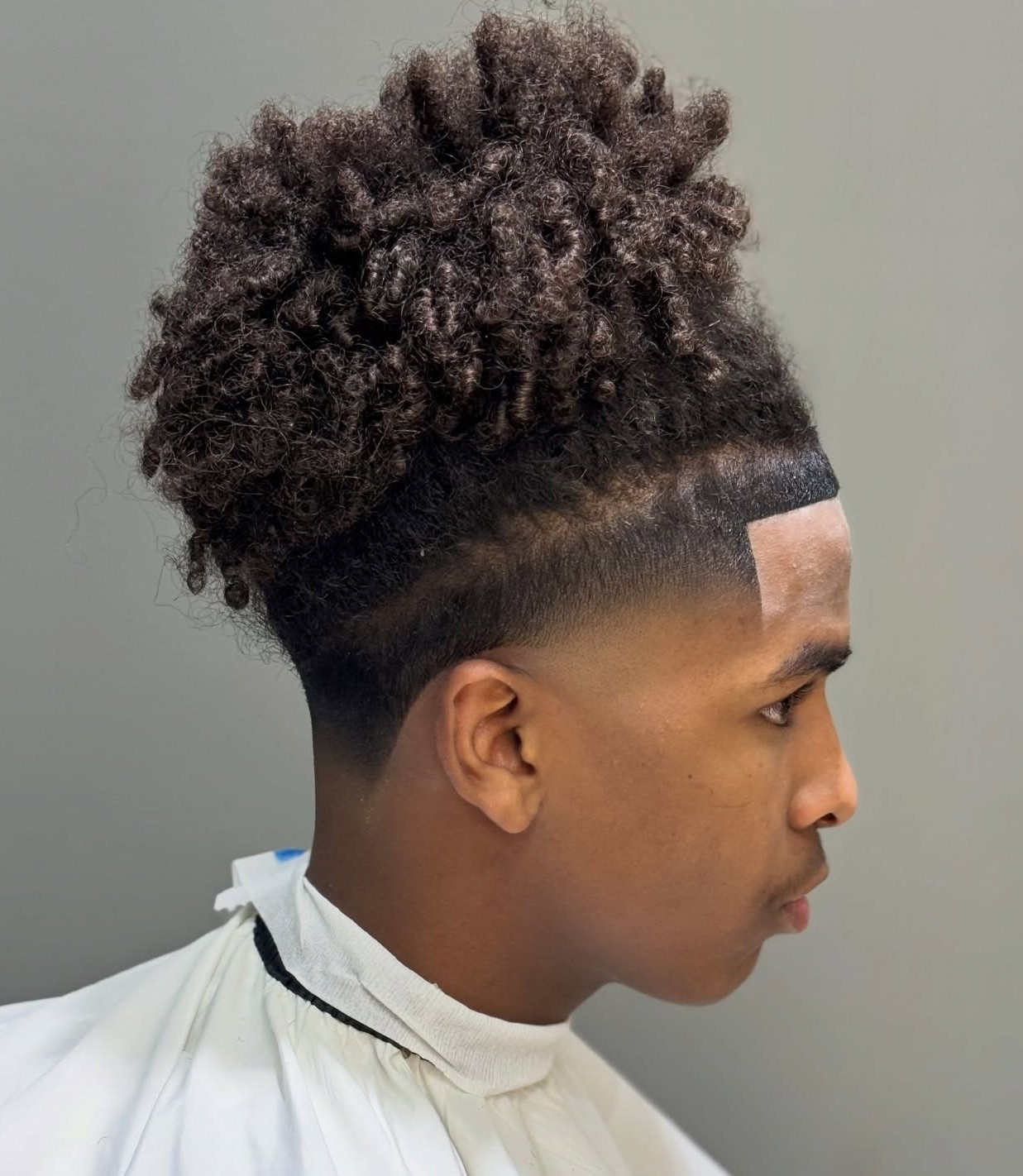
23. Taper Fade with Curly Hard Part
A razored hard part separates the curly top from the tapered side with one clean line for added structure. The barber carves it along the natural part with a trimmer corner. It gives a shaggy curly top a sharper, more deliberate edge.
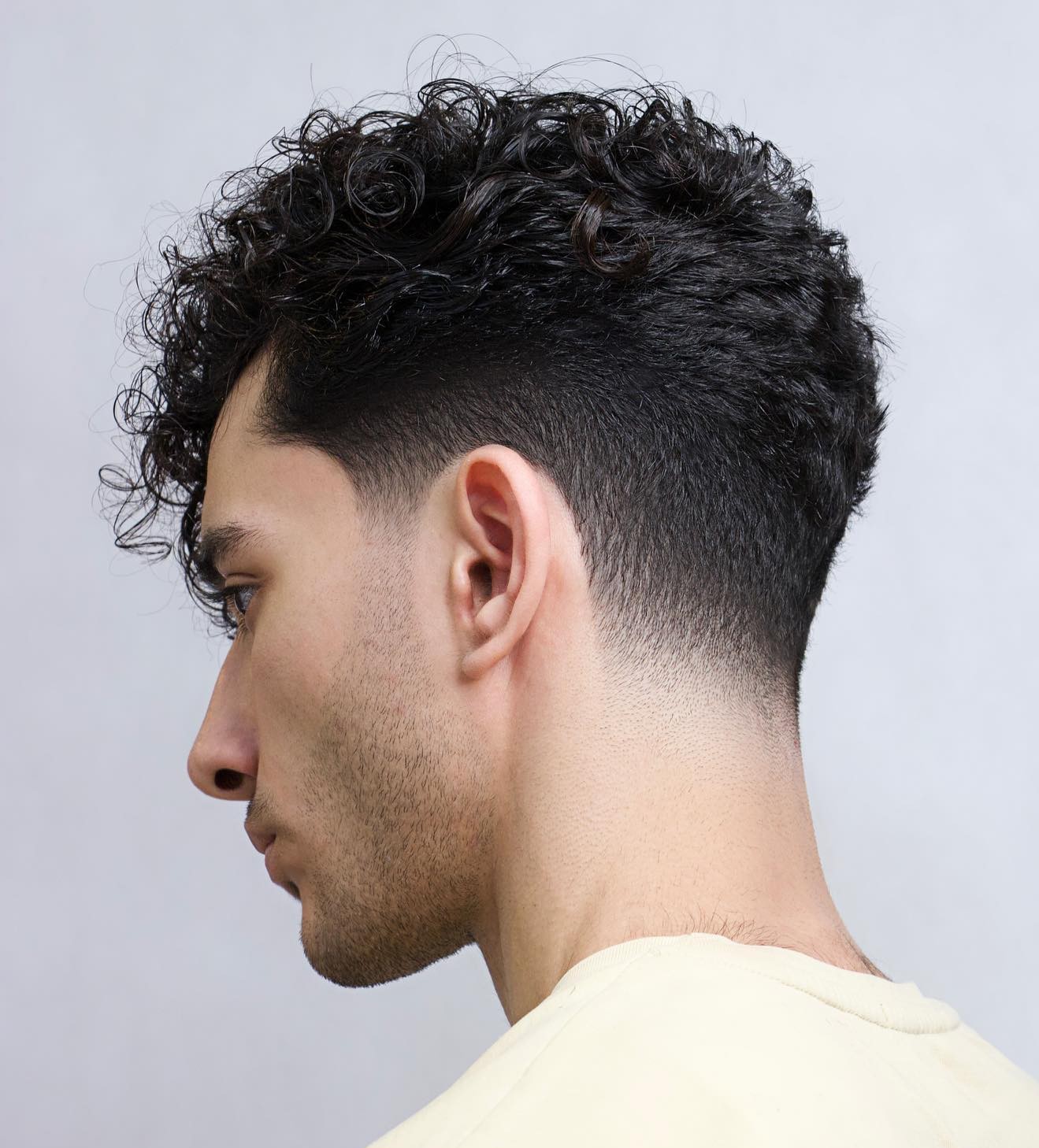
24. Taper Fade with Caramel Curls
Warm caramel tones through the curls catch the light as the texture moves, adding dimension over the dark faded sides. The color reads soft and natural on curly hair. A color-safe routine keeps the curls from drying out and the tone from fading flat.
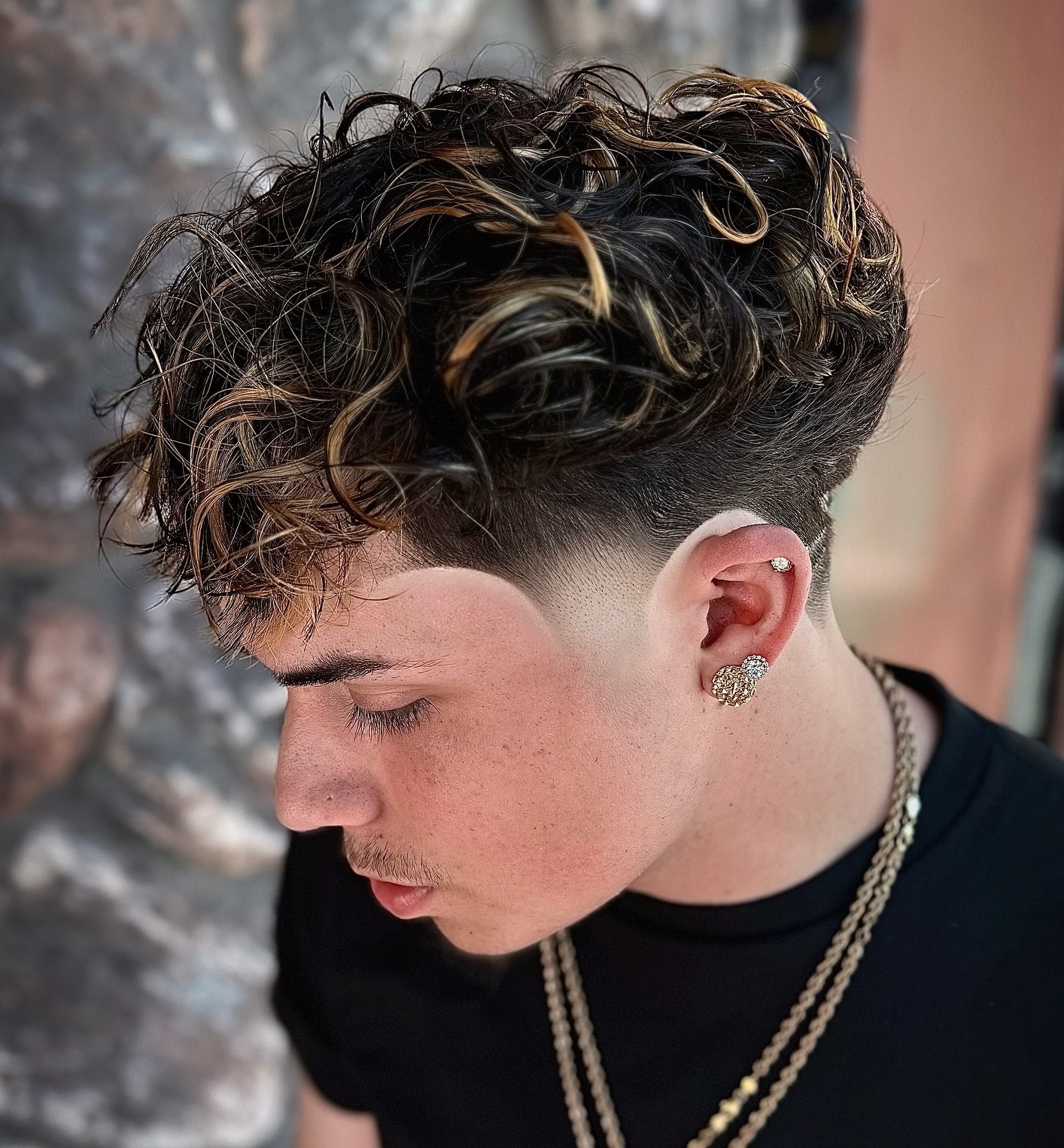
25. Taper Fade Curly Top Versus an Afro
Unlike a full afro that keeps the sides as long as the top, a taper fade with a curly top blends the sides short for a cleaner, more defined silhouette. Choose the taper for a sharp frame and the afro for full, even volume all around. Both show off the natural curl pattern.
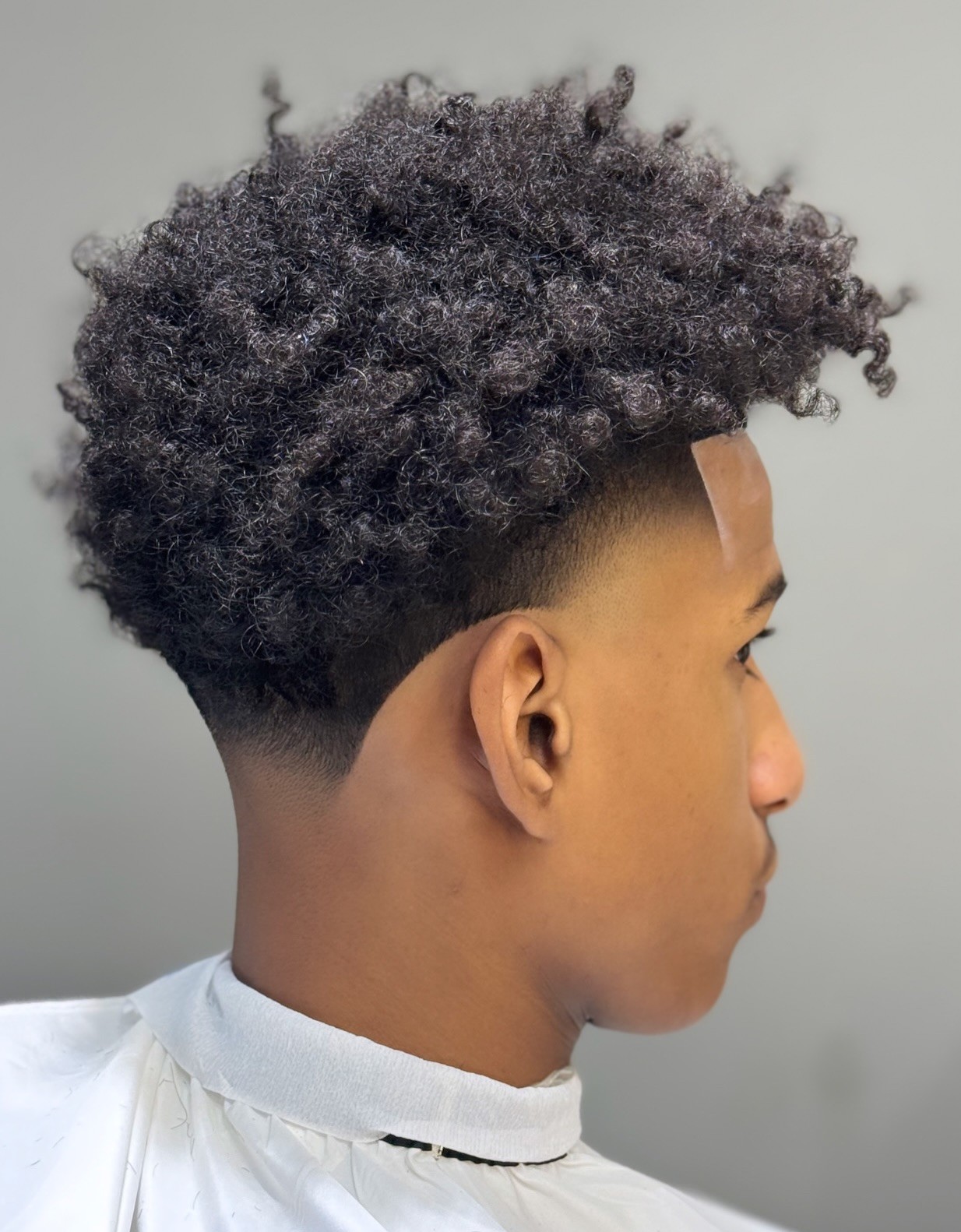
How to Choose a Curly Taper Fade for Your Face Shape
Face shape guides how high the fade should sit and how much curl volume to keep on top. The fade controls width at the sides, while the curls add height, so matching the two to your proportions matters. Use the table as a starting point, then refine with your barber.
| Face Shape | Best Fade Height | Curl Volume | Avoid |
|---|---|---|---|
| Oval | Any height | Most volumes work | Little to avoid; most versions suit |
| Round | Low taper | Height on top, narrow sides | Wide curl volume at the sides |
| Square | Low to mid taper | Soft, rounded curls | Hard lines stacking on the jaw |
| Diamond | Mid taper | Fuller curls at forehead and jaw | Slicked sides exposing the cheekbones |
| Oblong | Low taper | Width at the sides, less height | Tall curl volume that lengthens the face |
| Heart | Mid taper | Fuller curls near the jaw | Heavy volume at the forehead |
What to Tell Your Barber
Name the fade height, ask for the curls to be cut dry, and say how much length you want to keep on top. Curly hair shrinks as it dries, so a dry cut is the single most important request. The right consultation gets you a fade that frames your curls instead of fighting them.
Say something close to this: “I want a mid taper fade with my curls cut dry so the length lands where the curl sits. Keep the top full and only blend the sides, and clean up my hairline with a soft line-up.” Name the fade height, low, mid, or high, and mention your curl type if you know it so the barber adjusts the shape. Ask for a blend, not a hard disconnect, if you want the curls to flow into the fade.
Stylist tip: Come to the appointment with your curls in their natural state, washed and defined, not slicked back or stretched out wet. A barber can only shape what they can see, and curls cut while wet or pulled straight spring up two inches shorter than expected once they dry. Show up with your real curl pattern and the cut lands where you want it.
Curl Care and Maintenance
A curly taper fade needs the sides refreshed every two to three weeks to keep the contrast sharp, while the curls on top can grow for six to eight weeks between trims. A high or skin-level taper needs the most frequent attention because bare sides show regrowth fast. The curls hide their own growth well, so the top sets the slower part of the schedule.
Curl health is what makes the cut look good, so the daily routine matters as much as the trim. Use a sulfate-free wash, then a leave-in conditioner and a curl cream on damp hair to define the pattern, and scrunch rather than comb to keep the curl intact. Sleep on a satin pillowcase or wear a durag to protect the curls overnight. Refresh second-day curls with a water-and-leave-in spray rather than rewetting fully.
Stylist tip: Dry curls look shorter than wet ones, so resist asking the barber to take off more when the hair looks long while damp. The curls will spring up and tighten as they dry, and a top that looks right wet often ends up too short once it shrinks. Cut conservatively and judge the length dry.
When a Taper Fade Is Not the Right Choice for Curly Hair
A taper fade suits most curly textures, but it is not the right call in every case. A few honest exceptions:
- Fine or thinning curls: a high taper exposes the scalp and can make sparse curls look thinner, so a low taper or a fuller, even cut holds the look of density better.
- You cannot get to the barber often: the faded sides blur within three weeks, so a longer, scissor-cut curly shape holds up better with infrequent visits.
- Very dry or damaged curls: a sharp fade highlights the contrast, so brittle, undefined curls on top can look rough, and a moisture-rebuilding routine should come before the cut.
FAQ
Should Curly Hair Be Cut Wet or Dry for a Taper Fade?
Curly hair should be cut dry on top so the length lands where the curl actually sits after it springs up. Wet or stretched curls shrink as they dry, leaving the top shorter than you wanted. The faded sides can be clipped as usual, but ask the barber to shape the curls dry and in their natural state.
Which Taper Fade Height Is Best for Curly Hair?
A mid taper is the most versatile and most-requested height because it balances clean sides with full curls on top. A low taper suits round and square faces and a more conservative look, while a high taper gives the sharpest contrast and suits tight curls. Choose the height based on how much contrast you want and your face shape.
How Often Do I Need to Refresh a Curly Taper Fade?
Plan to refresh the faded sides every two to three weeks to keep the contrast sharp, while the curls on top can grow six to eight weeks between trims. A high taper needs touching up sooner because bare sides show regrowth fast. The curls hide their own growth, so they set the slower part of the schedule.
Does a Taper Fade Work on 4C Hair?
Yes, a taper fade looks especially clean on 4C hair because the dense coils give a full, defined top that contrasts sharply with the blended sides. Ask for the coils cut dry and keep them moisturized with a leave-in so the pattern stays springy. A mid or high taper frames tight coils best.
How Do I Keep My Curls Defined with a Taper Fade?
Keep curls defined by washing with a sulfate-free product, then applying a leave-in and a curl cream on damp hair and scrunching rather than combing. Sleep on satin or wear a durag to protect the pattern overnight. Refresh second-day curls with a water-and-leave-in spray instead of fully rewetting.
What Is the Difference Between a Taper and a Fade on Curly Hair?
A taper is a gradual, softer blend usually kept around the hairline and sideburns, while a fade can go shorter and higher for more contrast. On curly hair, a taper fade combines both, keeping the curls full on top with a blended, shorter side. The height you choose decides how bold the contrast looks.
A taper fade with curly hair frames your natural texture with clean, blended sides and keeps the curls full and defined on top, with the fade height setting how much contrast you get. Ask for the curls cut dry, name your fade height, and build a moisture routine so the curls look their best between trims. A taper fade for curly hair cut to your texture and face shape is one of the sharpest looks in the chair, and you can compare it with related cuts like the low taper fade for curly hair and other men’s haircut styles.
Hair results vary based on your natural hair type, texture, density, and condition. Always consult with a licensed barber or hairstylist before making significant changes, especially with chemical treatments or dramatic length changes. Photos may show styled results that require professional tools and products to replicate.