
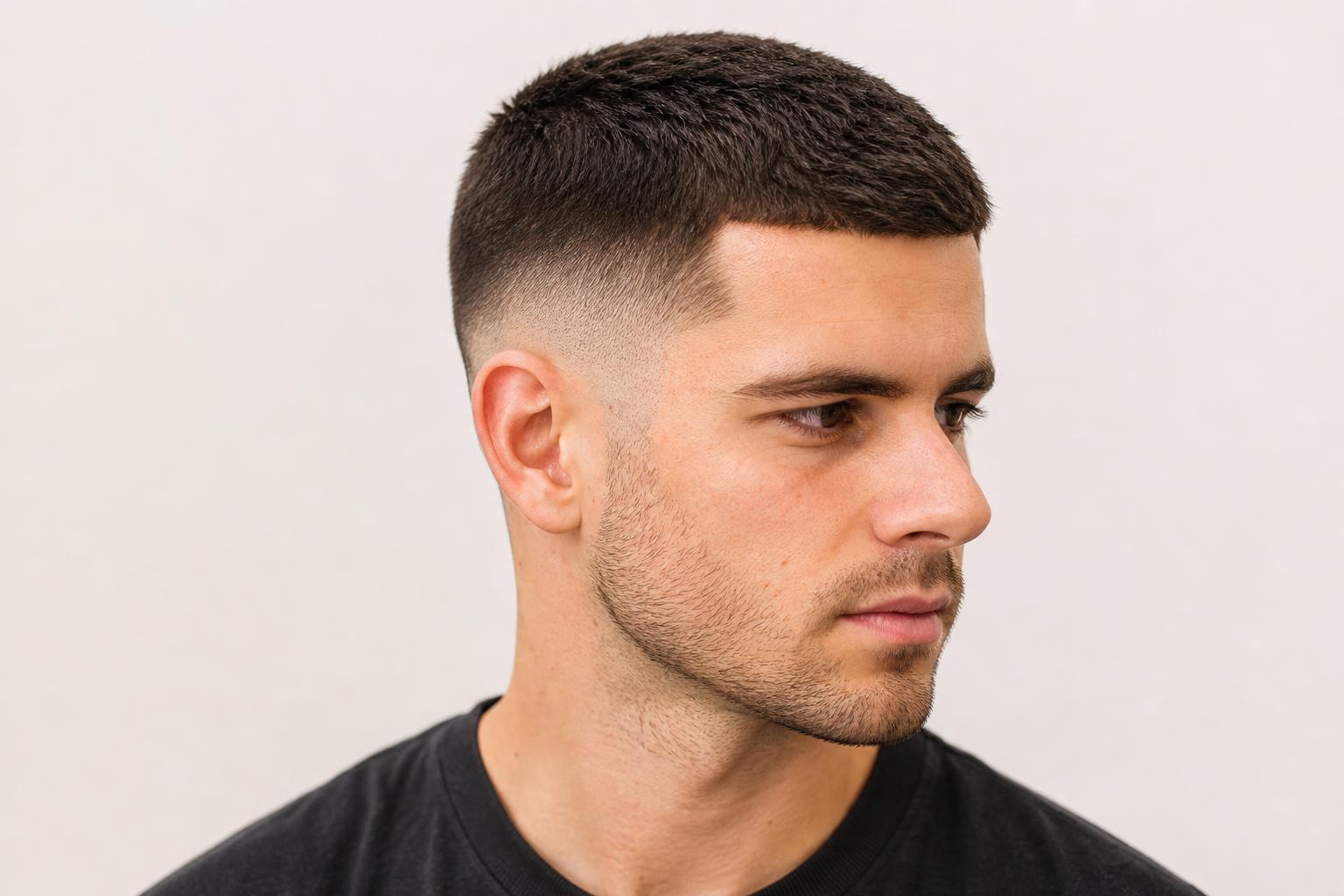
A buzz cut taper keeps the top buzzed to one short length while the sides and back fade down gradually at the edges, giving a clean military-short cut a modern, finished outline.
The 30 styles below sort by the decisions you actually make at the barber: where the taper sits (low, mid, or high), how short the buzzed top is by guard number, the detailing you add like a line-up or design, and how the cut reads on different hair types and face shapes. Each entry names the specific choice that defines it so you can point to exactly what you want.
A buzz cut taper sits in the same family as the longer taper styles, so if you want more length on top, the mid taper fade and high taper fade galleries cover those. After the styles, this article explains guard numbers, what to tell your barber, and how often to go back for a refresh.
| Factor | Details |
|---|---|
| Best for | Most face shapes; anyone wanting a clean, low-effort cut |
| Top length | Usually a number 1 to 4 guard on the top |
| Refresh | Every 2 to 3 weeks to keep the taper sharp |
| Styling time | Under 2 minutes; little to no product needed |
| Avoid if | You want volume or length, or dislike frequent barber visits |
Buzz Taper by Fade Placement
The first decision is where the taper starts on the head, since that single choice changes how bold the cut looks. A low taper keeps it subtle, a mid taper adds visible contrast, and a high taper makes the strongest statement.
1. Low Taper Buzz Cut
A low taper keeps the fade close to the hairline around the ears and neck, leaving most of the side length intact for a subtle, professional finish. It is the most office-friendly buzz taper because the contrast is gentle. This is the default choice for anyone who wants the cut clean but understated.

2. Mid Taper Buzz Cut
A mid taper starts the fade halfway between the ear and the temple, creating more visible contrast than a low taper while staying versatile. It suits almost every face shape, which is why barbers reach for it most often. Ask for a mid taper if you want definition without going dramatic.
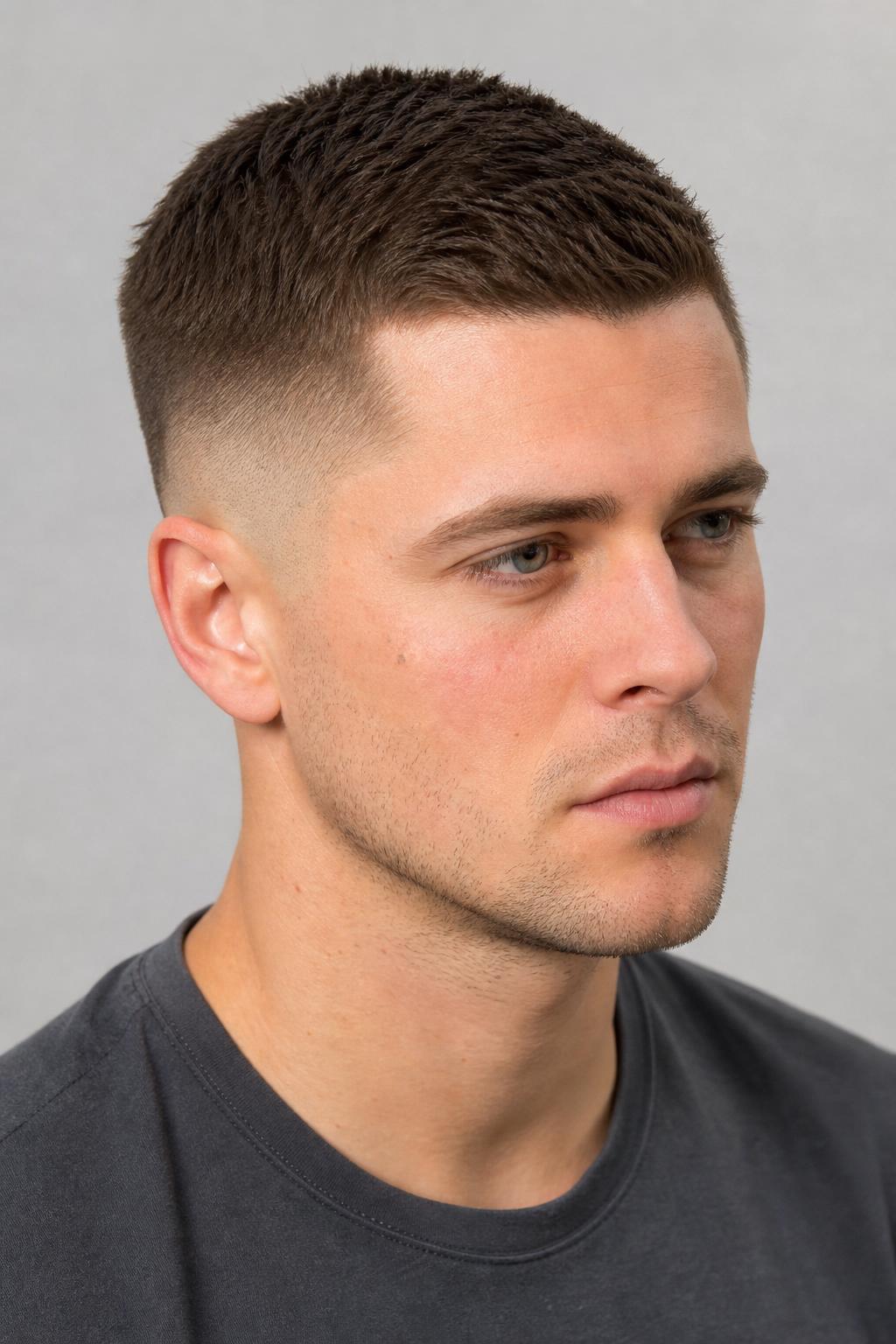
3. High Taper Buzz Cut
A high taper takes the fade up near the temples, putting maximum focus on the buzzed top and giving the sharpest contrast. The bold outline suits oval and square faces that can carry a strong line. This is the statement version of the buzz taper.
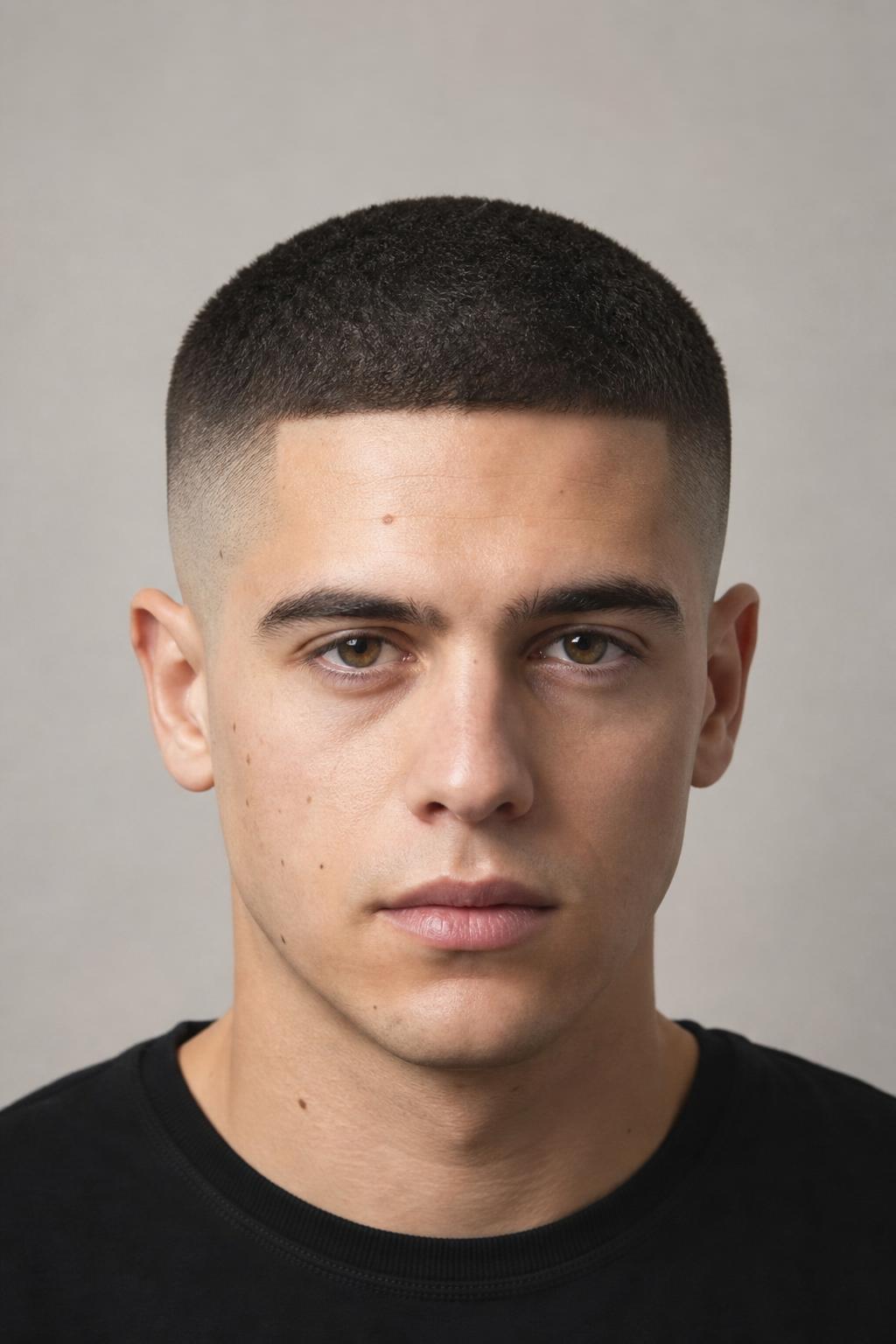
4. Low Taper with a Skin Finish
Taking the lowest point of a low taper all the way down to skin adds a crisp edge while keeping the overall look subtle. The skin finish at the bottom sharpens the cut without raising the contrast up the head. It does grow out faster, so expect a refresh closer to every two weeks.
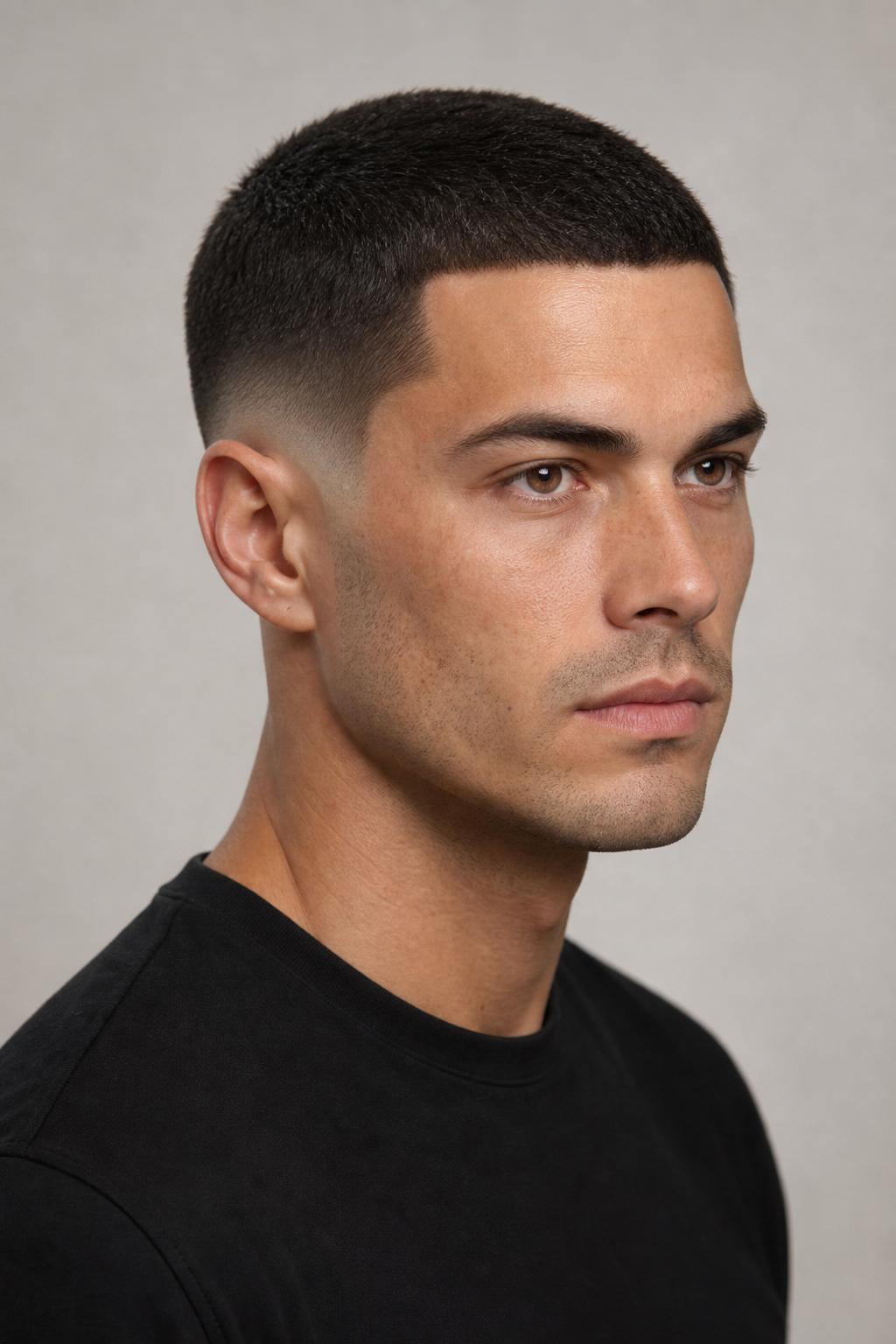
5. Taper Buzz with a Burst Around the Ear
A burst taper curves the fade in a semicircle around the ear rather than running straight down, softening the transition. It pairs well with a buzzed top for a rounded, modern outline. The boosie fade uses a similar curved approach if you want a reference for the shape.
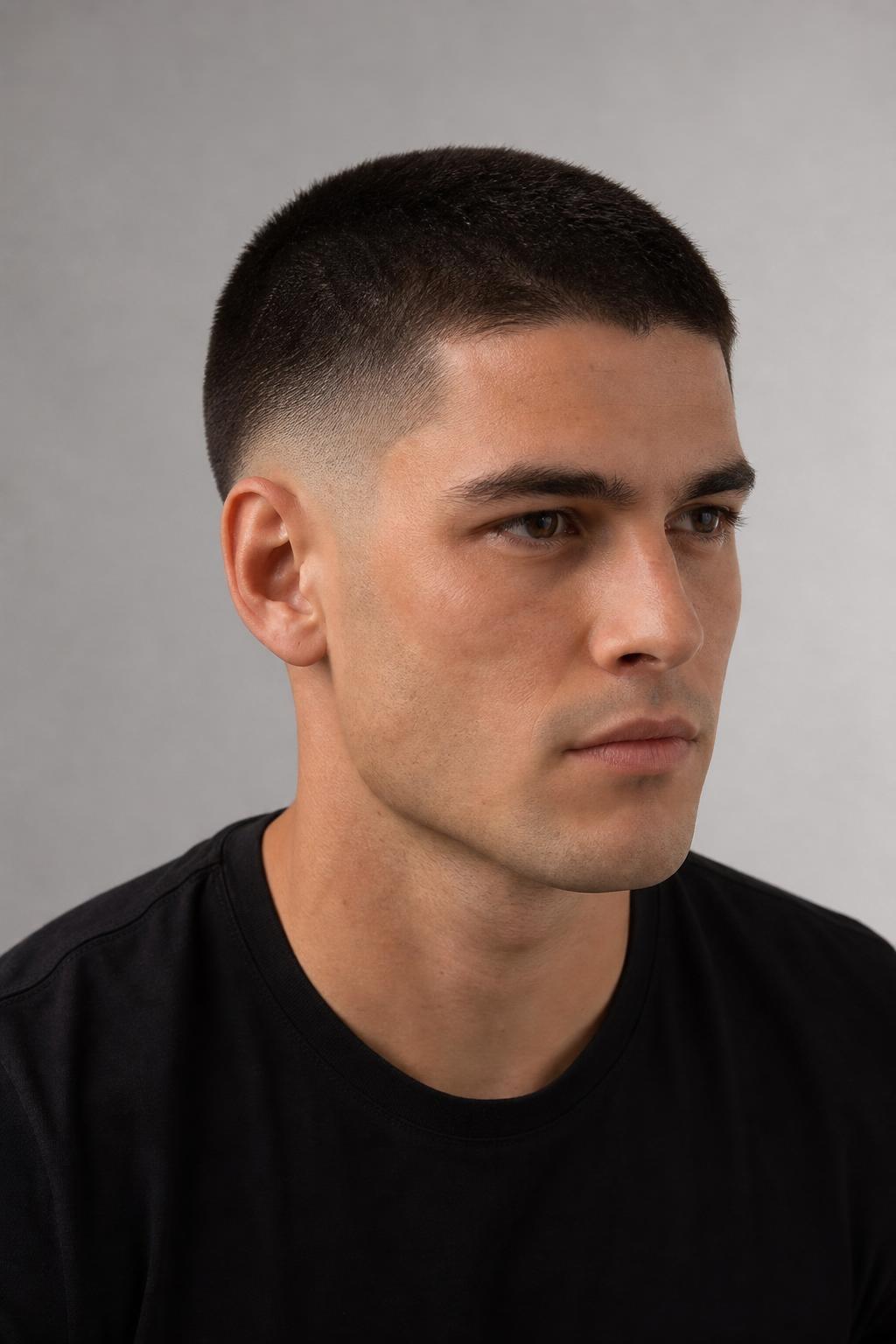
6. Drop Taper Buzz Cut
A drop taper dips lower behind the ear, following the natural hairline down toward the nape for a contoured finish. The drop shape flatters a rounder head by adding a clean line at the back. It reads slightly more styled than a straight taper while keeping the buzzed simplicity.
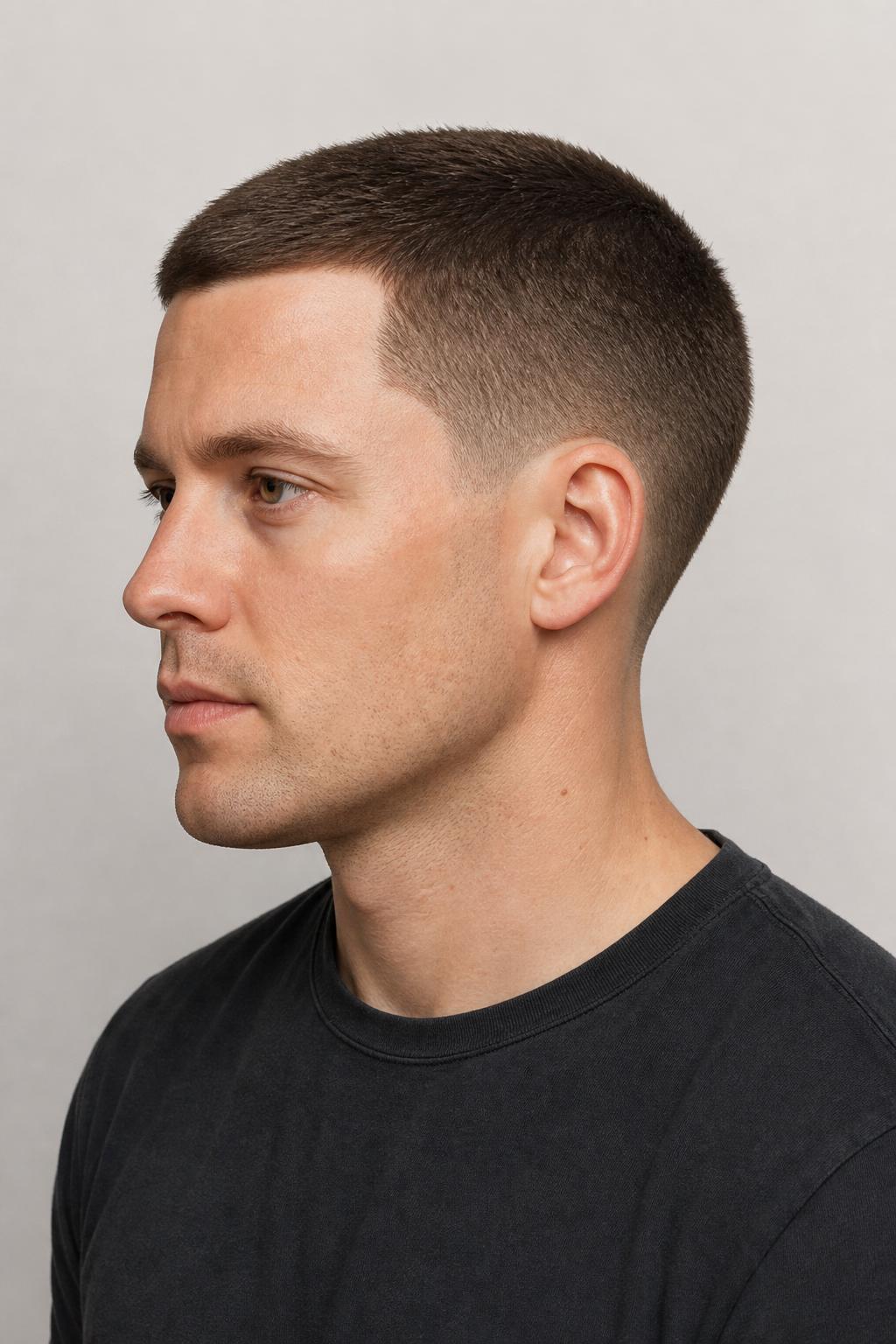
7. Temple Taper with a Buzz
A temple taper cleans up just the corners at the front hairline while leaving the rest of the sides fuller, the most minimal taper option. It suits anyone who wants tidy edges without committing to a full fade. The focus stays on a sharp front hairline against the buzzed top.

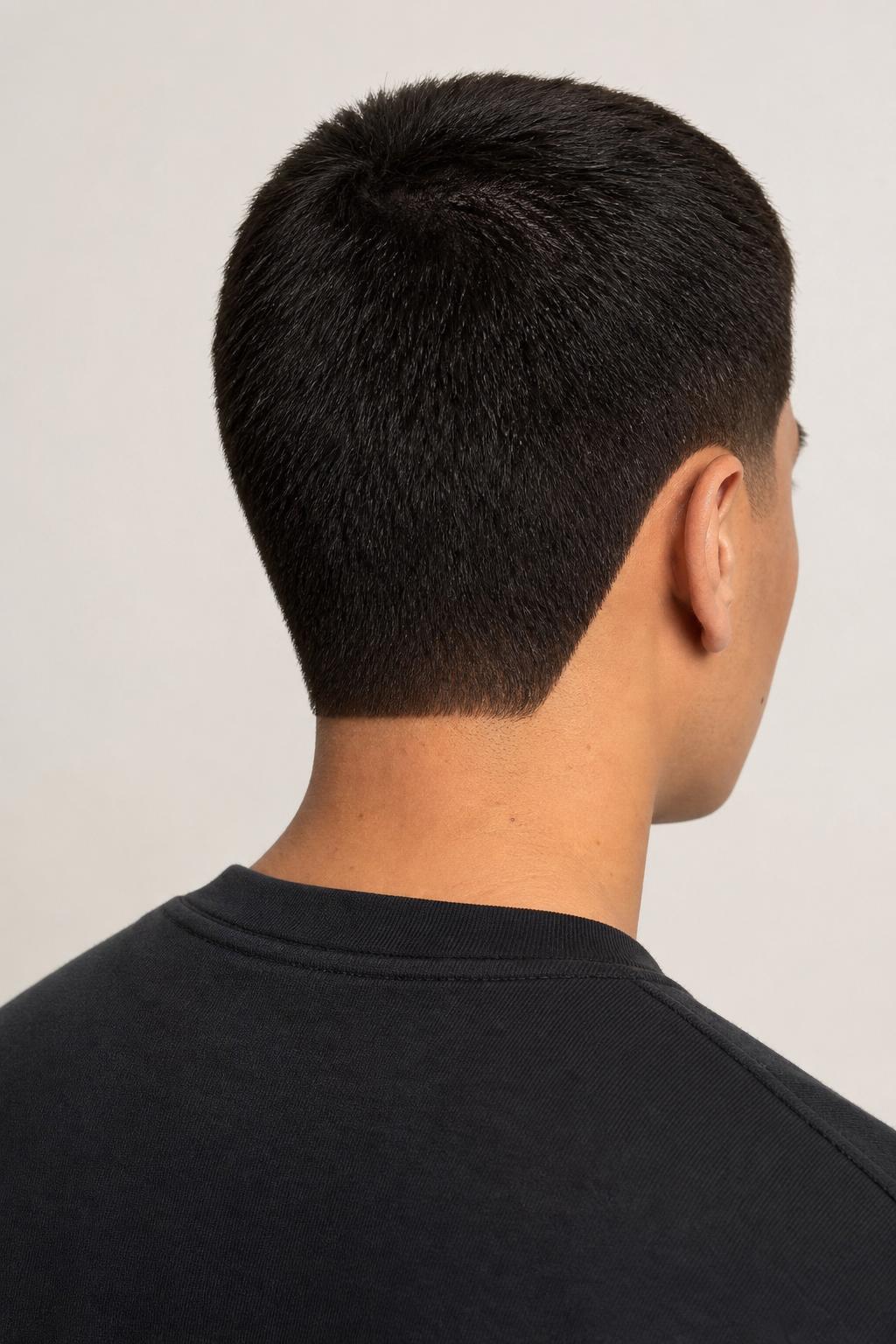
8. Taper Buzz with a Blocked Neckline
Finishing a taper buzz with a squared-off blocked neckline at the back gives a structured, deliberate edge instead of a natural taper into the skin. The blocked line suits thicker, straight hair that holds a clean edge. Tell your barber you want the nape blocked rather than tapered if you prefer the squared look.
Buzz Length by Guard Number
The second decision is how short the buzzed top is, set by the clipper guard number. Lower numbers mean shorter hair and more scalp showing, while higher numbers leave enough length to show some texture on top.
9. Number 1 Guard Buzz with a Taper
A number 1 guard leaves the top very short at about an eighth of an inch, close to the scalp but with more coverage than a true shave. Paired with a taper, it is the lowest-maintenance buzz you can get while still having a defined edge. This suits anyone who wants minimal hair and a clean line.
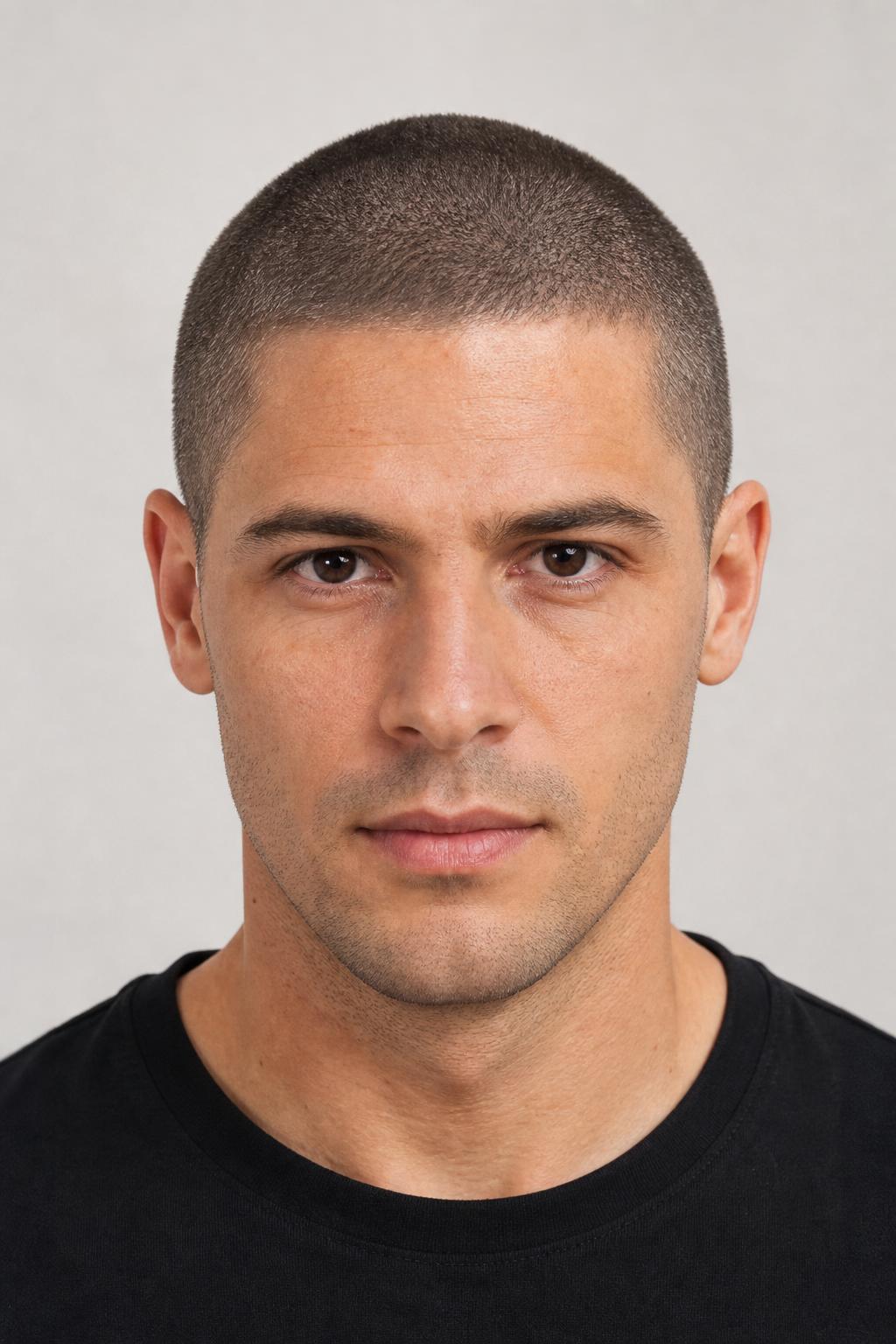
10. Number 2 Guard Buzz with a Taper
The number 2 guard is the most popular buzz length because it shows a hint of hair color and texture while staying very short. With a taper, it reads clean without exposing too much scalp. It is the safe, universally flattering choice for a first buzz taper.
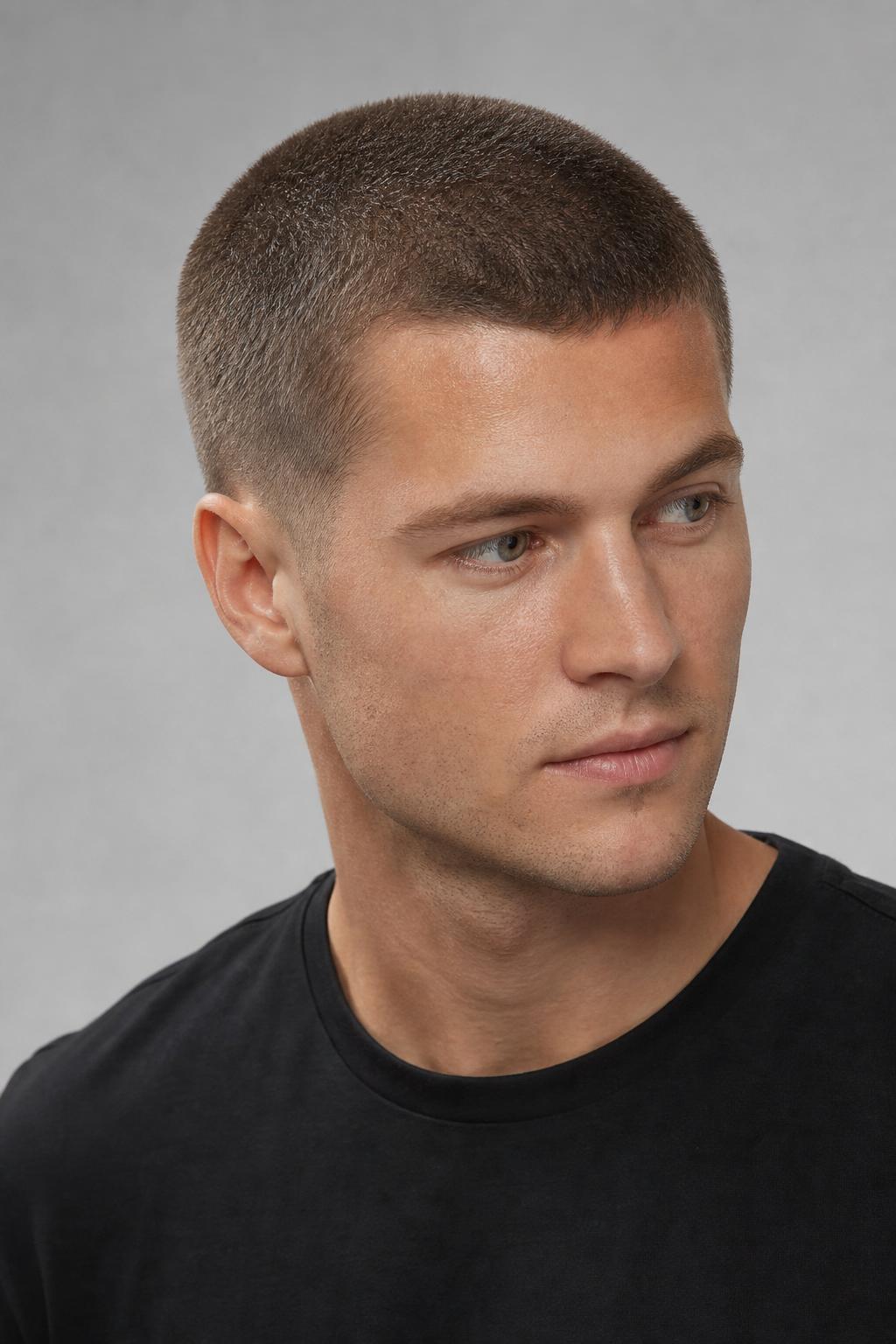
11. Number 3 Guard Buzz with a Taper
A number 3 guard leaves enough length to soften the look and partly cover the scalp, which helps anyone self-conscious about a very short cut. The slightly longer top blends a little more gently into the taper. This is the most forgiving buzz length for thinner hair.

12. Number 4 Guard Buzz with a Taper
At a number 4 guard the top is long enough to show real texture and even a hint of movement, bordering on a brush cut. Combined with a taper, it gives the most styling flexibility of any buzz length. The 4 guard buzz cut guide covers exactly what this length looks like.
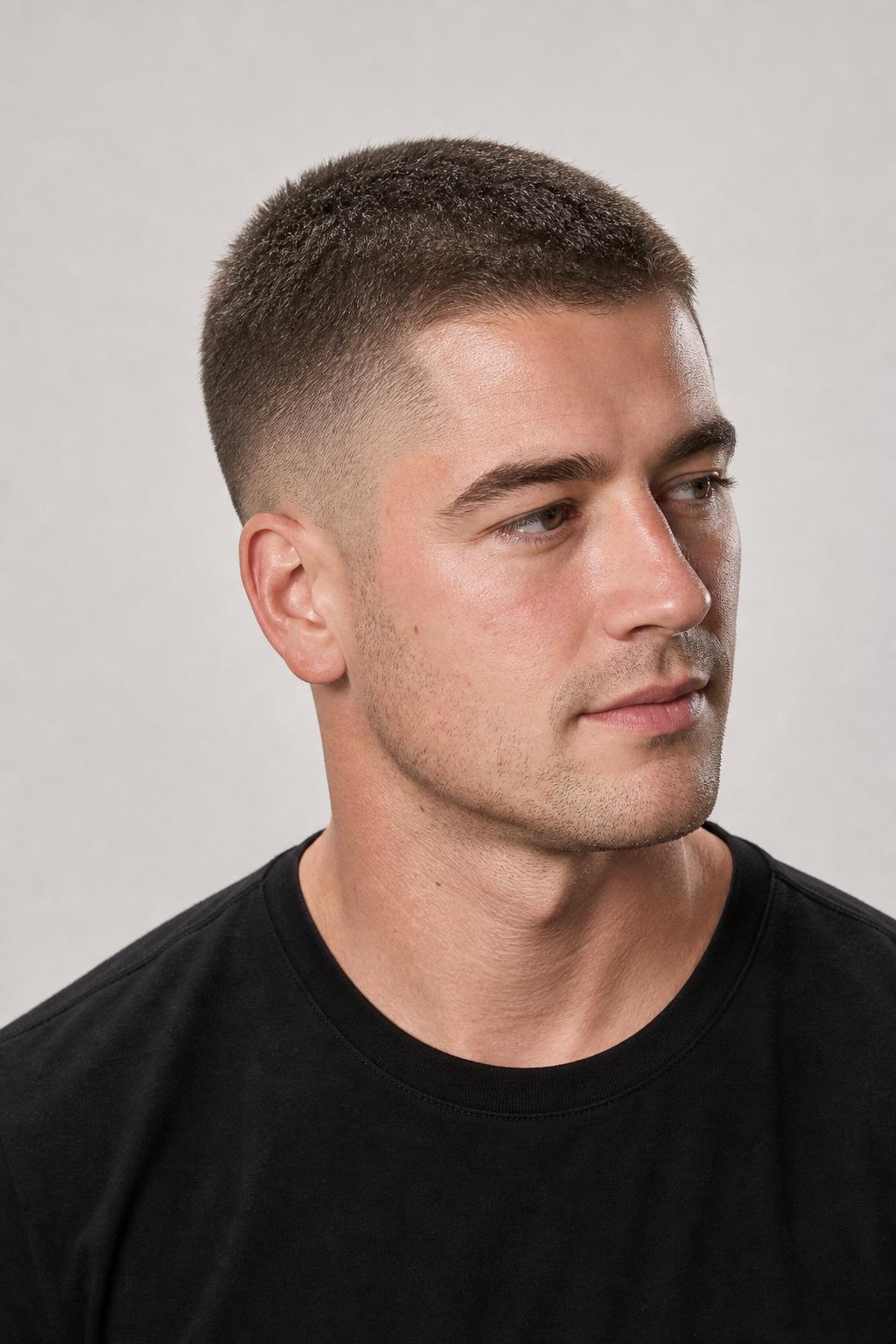
13. Graduated Guard Buzz
Using a slightly longer guard at the crown and a shorter one at the sides builds subtle shape into a buzz cut, so it is not perfectly uniform. The graduation adds a touch of dimension that flatters a flatter head shape. Ask your barber to leave a hair more length on top for this effect.
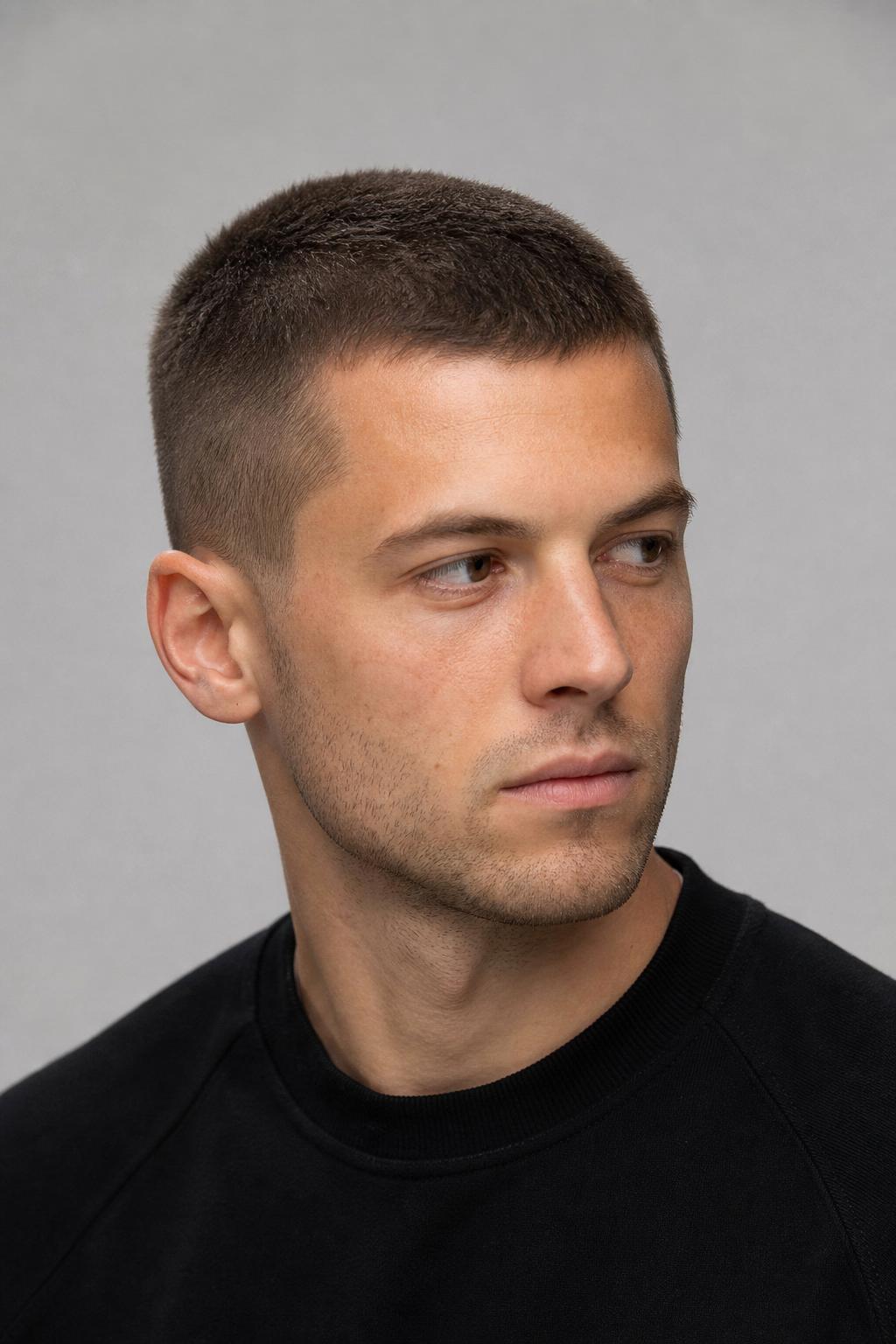
14. Induction-Style Short Buzz Taper
The shortest practical buzz uses a half guard or zero for a near-uniform short finish, with a taper keeping the edges clean. It is the most extreme low-maintenance option and shows the head shape clearly. This suits confident wearers with an even hairline and good head shape.
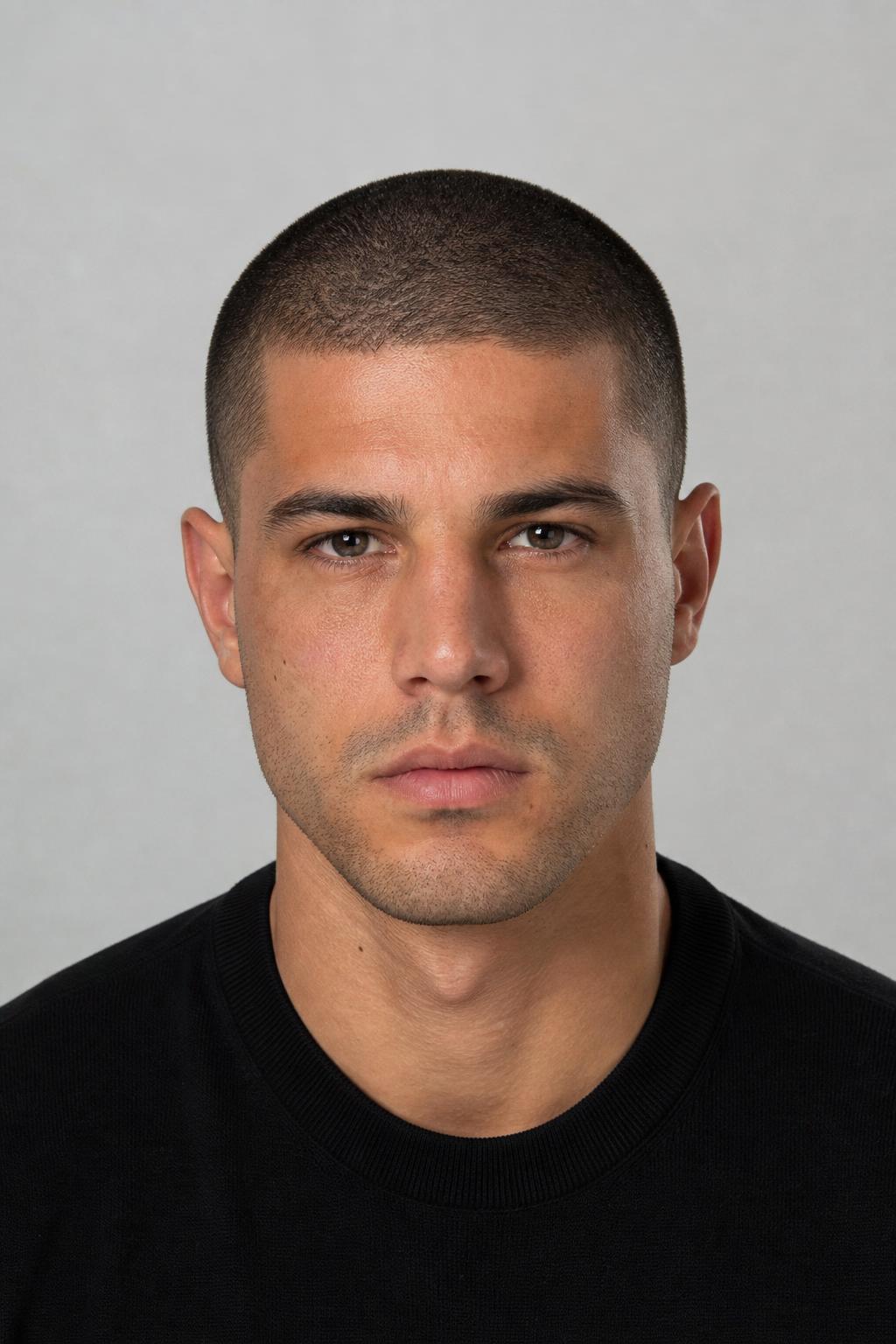
15. Buzz Taper with a Faded Top Blend
Blending the buzzed top gradually into the taper, rather than keeping a single uniform length, removes any hard line where the top meets the sides. The result is a smooth, all-over graduated finish. This is the cleanest-looking buzz taper for those who dislike any visible step in length.
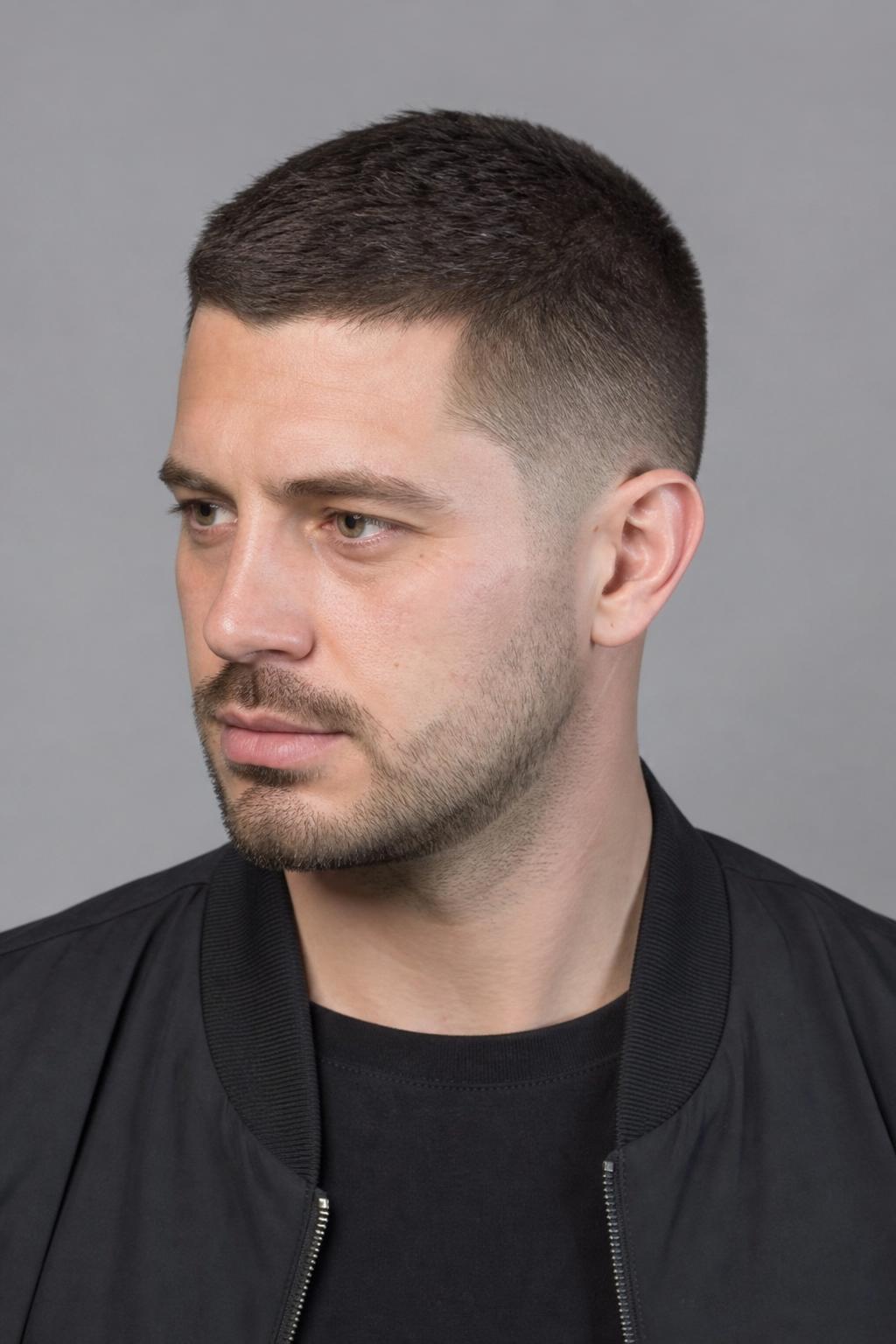
Buzz Taper with Detailing
Once the length and fade are set, the detailing is what personalizes a buzz taper. A line-up, a shaved design, or a paired beard turns a simple cut into something more deliberate.
16. Buzz Taper with a Sharp Line-Up
A line-up squares off the front hairline and temples with a trimmer, giving the buzz taper a crisp, defined frame. The straight edge against the buzzed top is what makes the cut look freshly barbered. This is the single most common add-on and worth requesting by name.
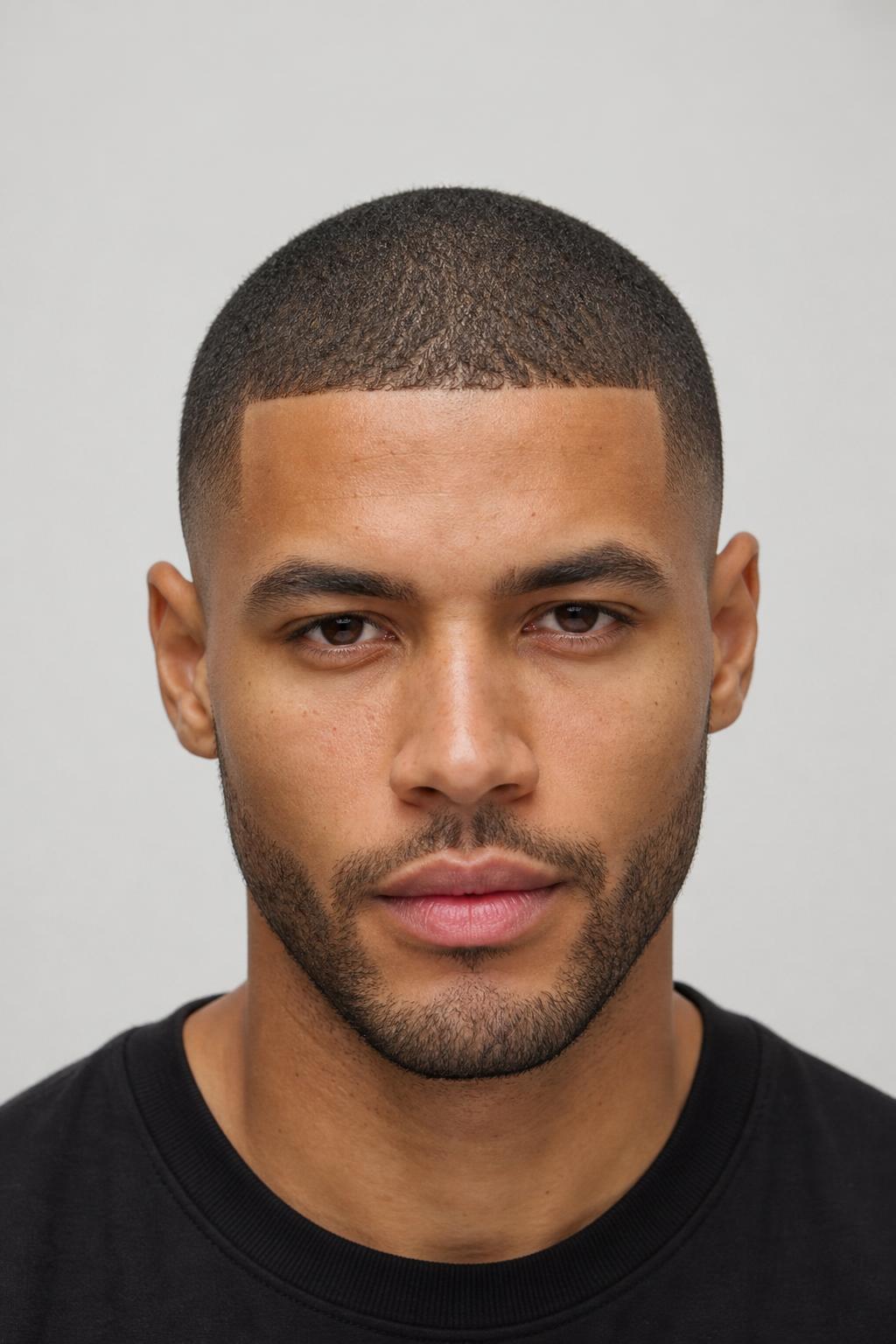
17. Buzz Taper with an Edge-Up and Beard
Connecting the taper to a faded beard creates one continuous line from hairline to jaw for a fully finished look. The beard fade should match the hair taper height so the transition is seamless. This combination suits anyone who wears facial hair and wants it integrated rather than separate.
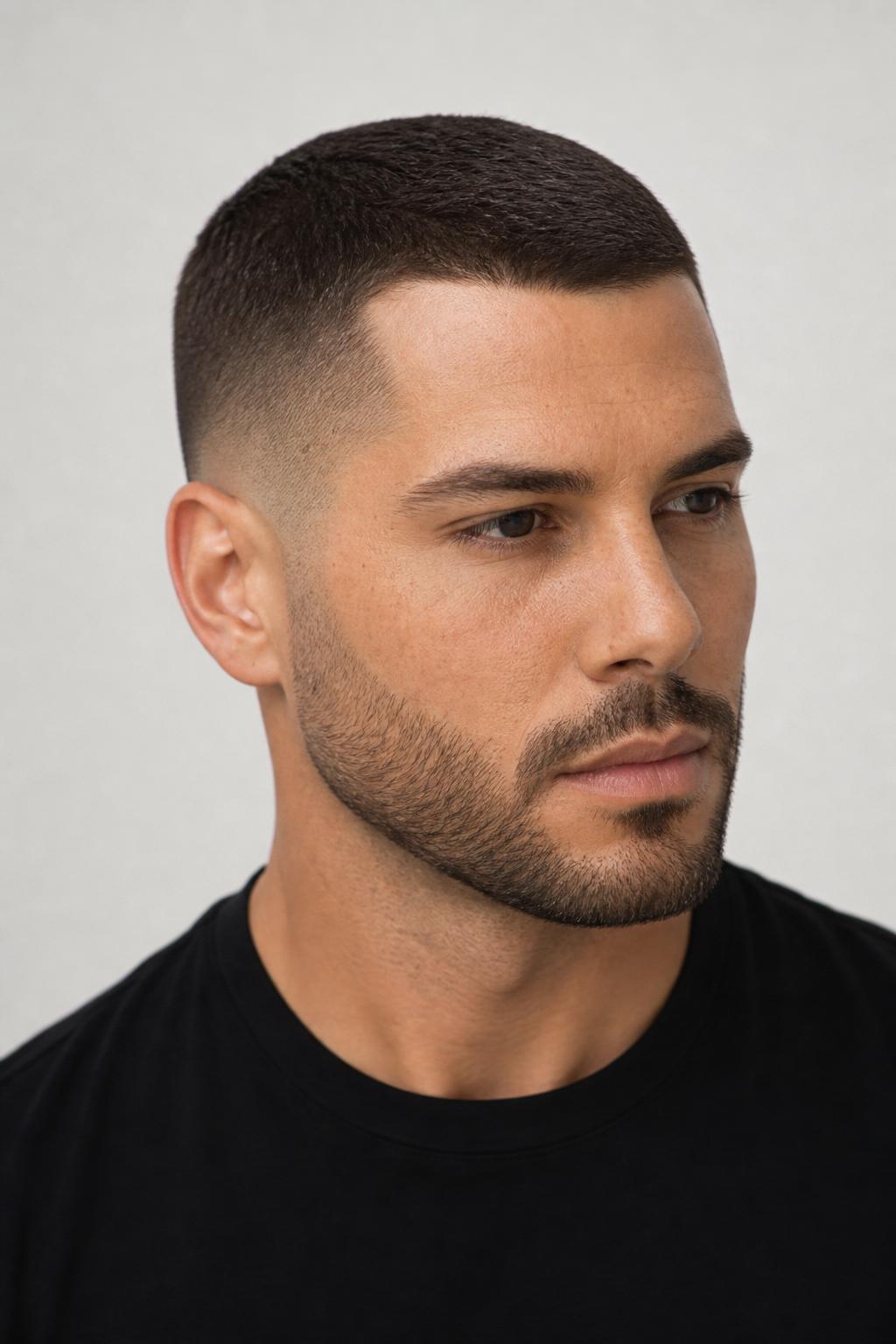
18. Buzz Taper with a Hard Part
A hard part is a single razored line shaved into the side, adding a sharp detail to an otherwise plain buzz. The line catches the eye and gives the cut structure. Keep it simple with one clean part rather than multiple lines for a timeless rather than trendy look.
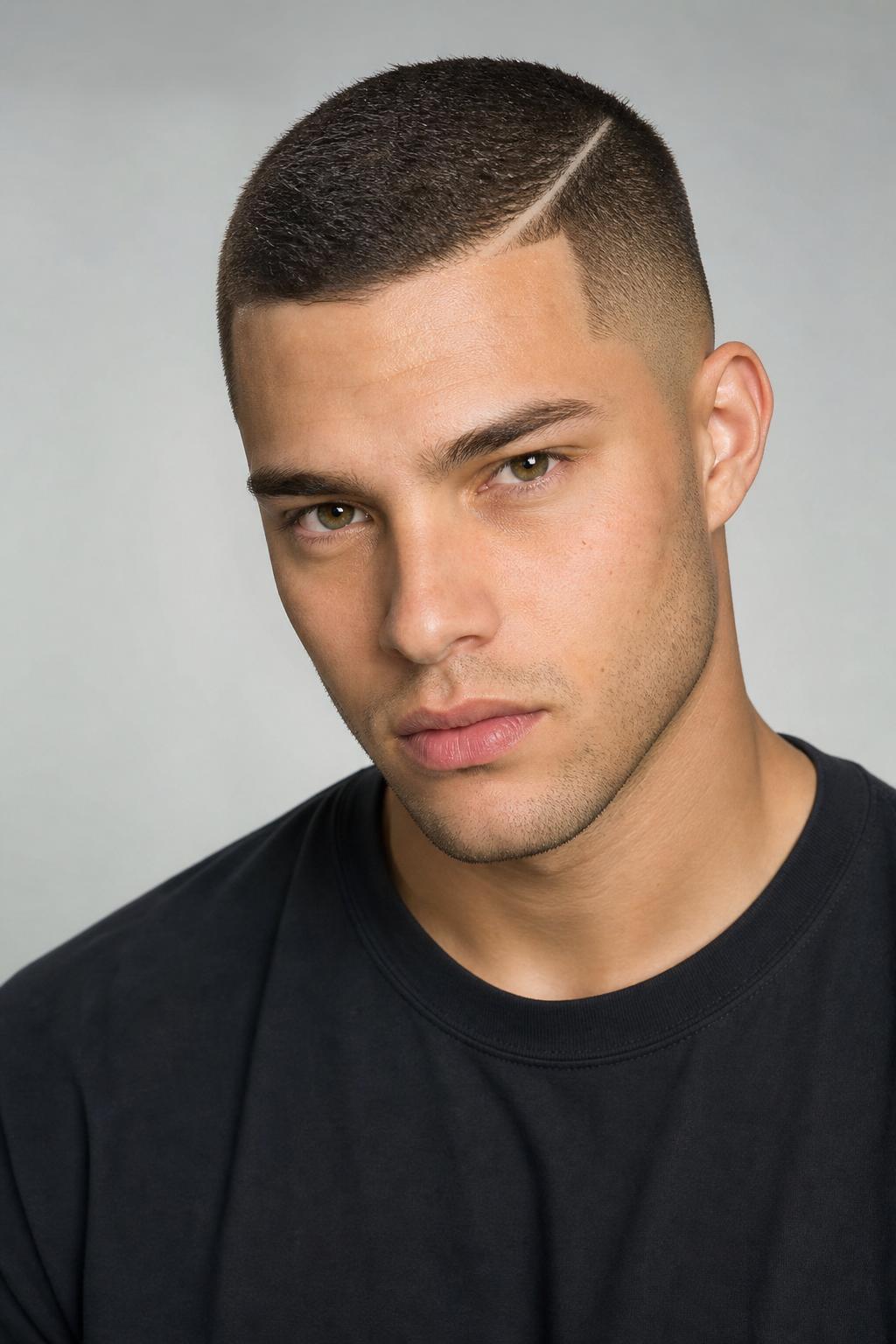
19. Buzz Taper with a Shaved Design
A razor design shaved into the tapered side adds a custom element, from geometric lines to more intricate patterns. The design works best against a low or mid taper that leaves room for it. Bring a clear reference so the barber can place and scale it correctly.
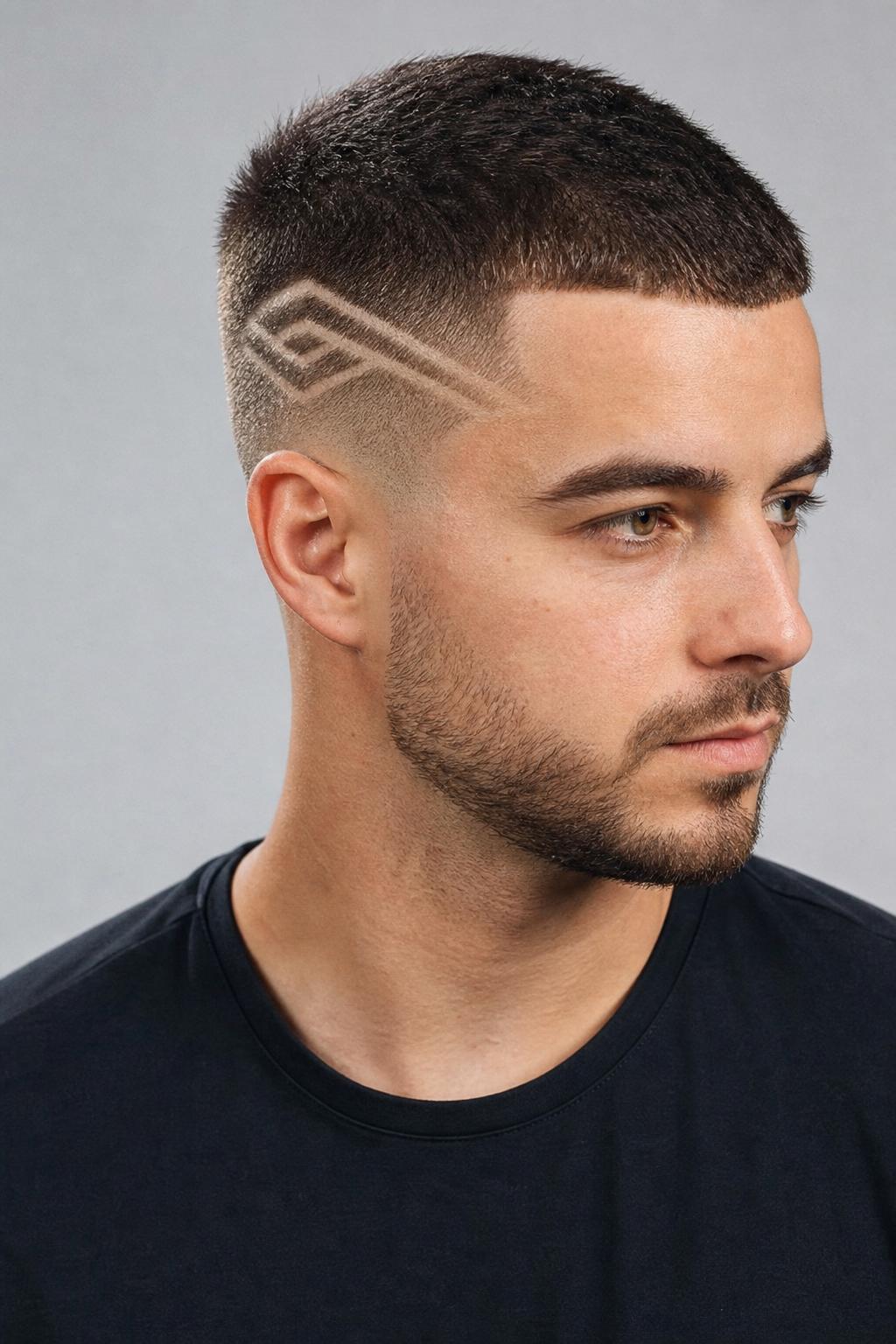
20. Buzz Taper with Defined Edges and a Skin Nape
Pairing crisp edges with a skin-finished nape at the back gives the cut a polished, complete outline from every angle. The skin nape keeps the back looking sharp even on a simple buzz. It does need touching up every couple of weeks to stay clean.
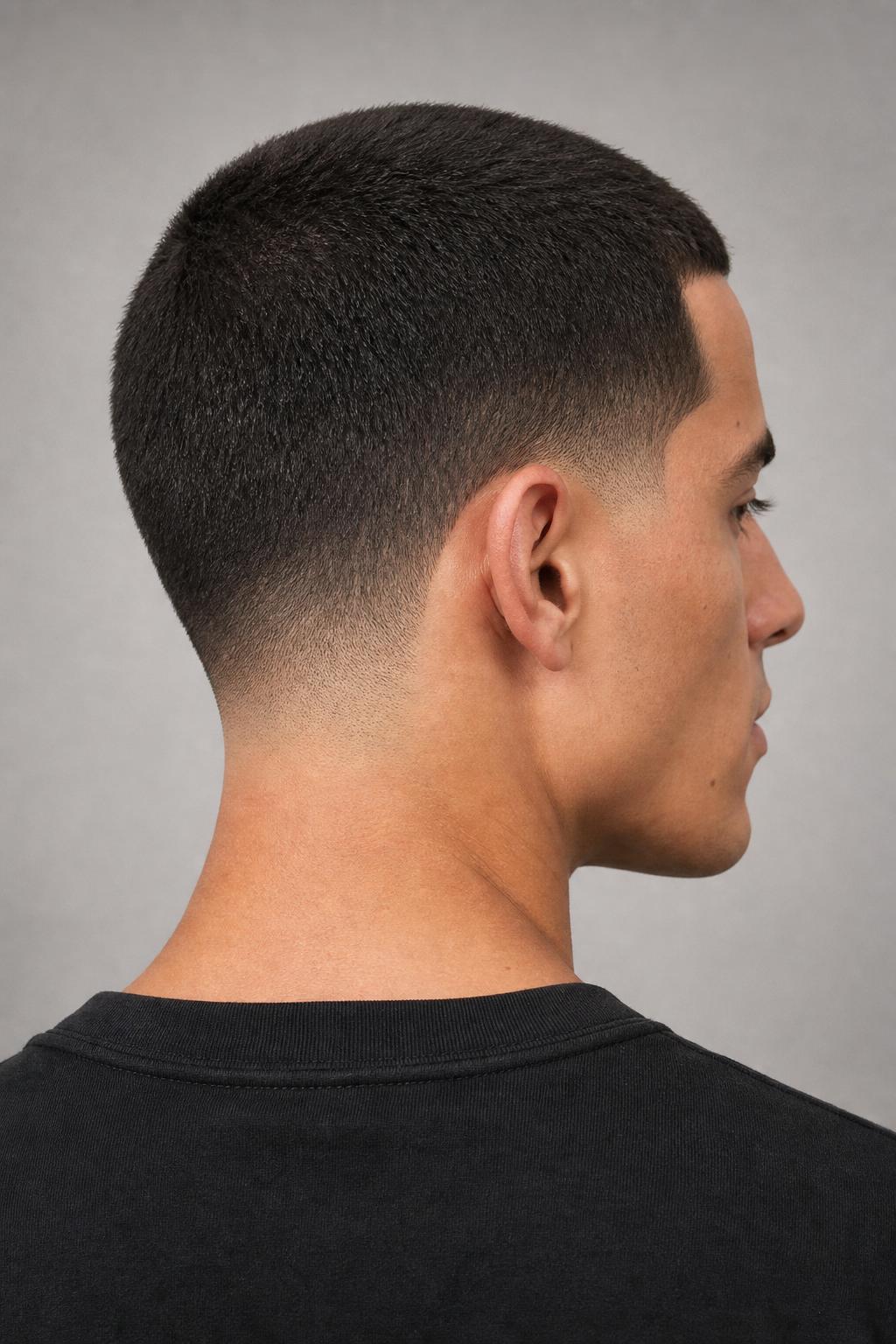
21. Buzz Taper with a Faded Beard Connection
When the sideburn area tapers directly into the beard with no gap, the cut and beard read as one designed shape. The barber fades the sideburn down and brings the beard up to meet it. This suits fuller beards that can hold the connection cleanly.
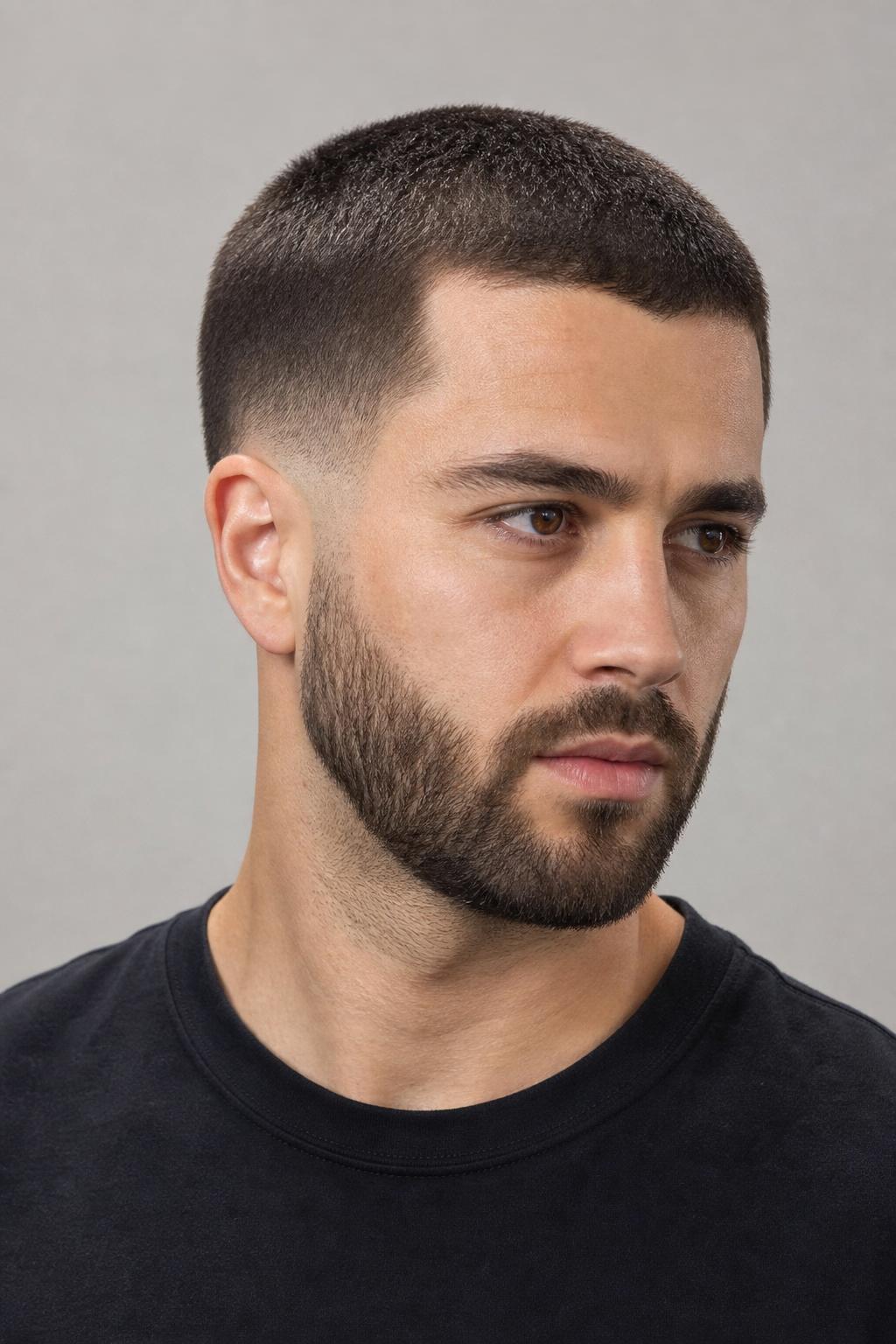
22. Buzz Taper with Twists or Sponge Texture
On coily hair, a number 3 or 4 buzz on top can be sponged into short twists or curls while the sides stay tapered. The textured top against the clean taper adds interest without much length. This is a great middle ground between a plain buzz and a longer textured cut.
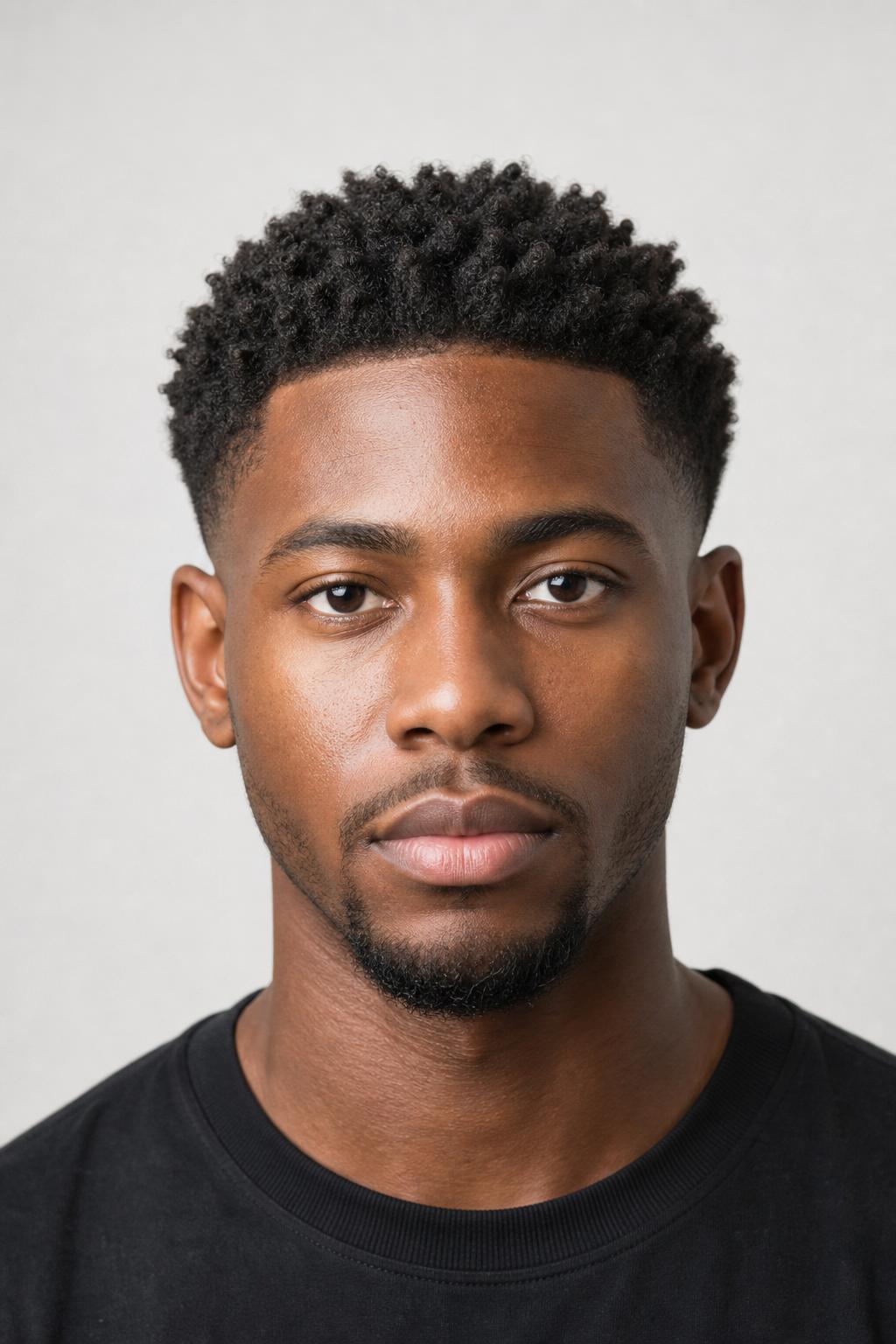
23. Buzz Taper with a Subtle Design at the Temple
A small, understated line or notch at the temple adds personality without the commitment of a full design. It reads as a deliberate detail rather than a statement. This is the lowest-key way to add something custom to a buzz taper.
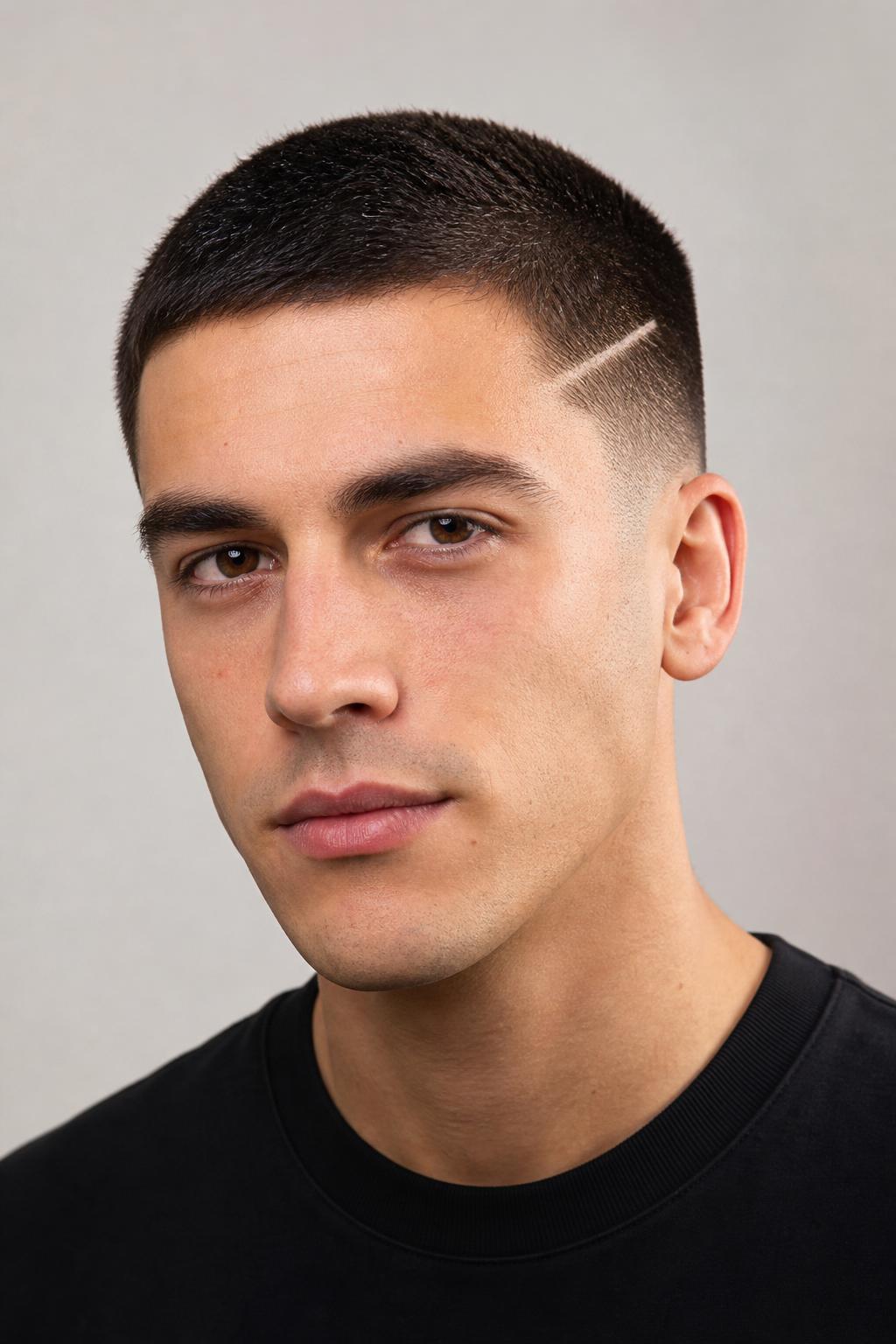
Buzz Taper by Hair Type and Face Shape
The same buzz taper behaves differently depending on your hair texture and head shape, so the final tweaks come down to what you are working with. These entries match the cut to specific hair and face combinations.
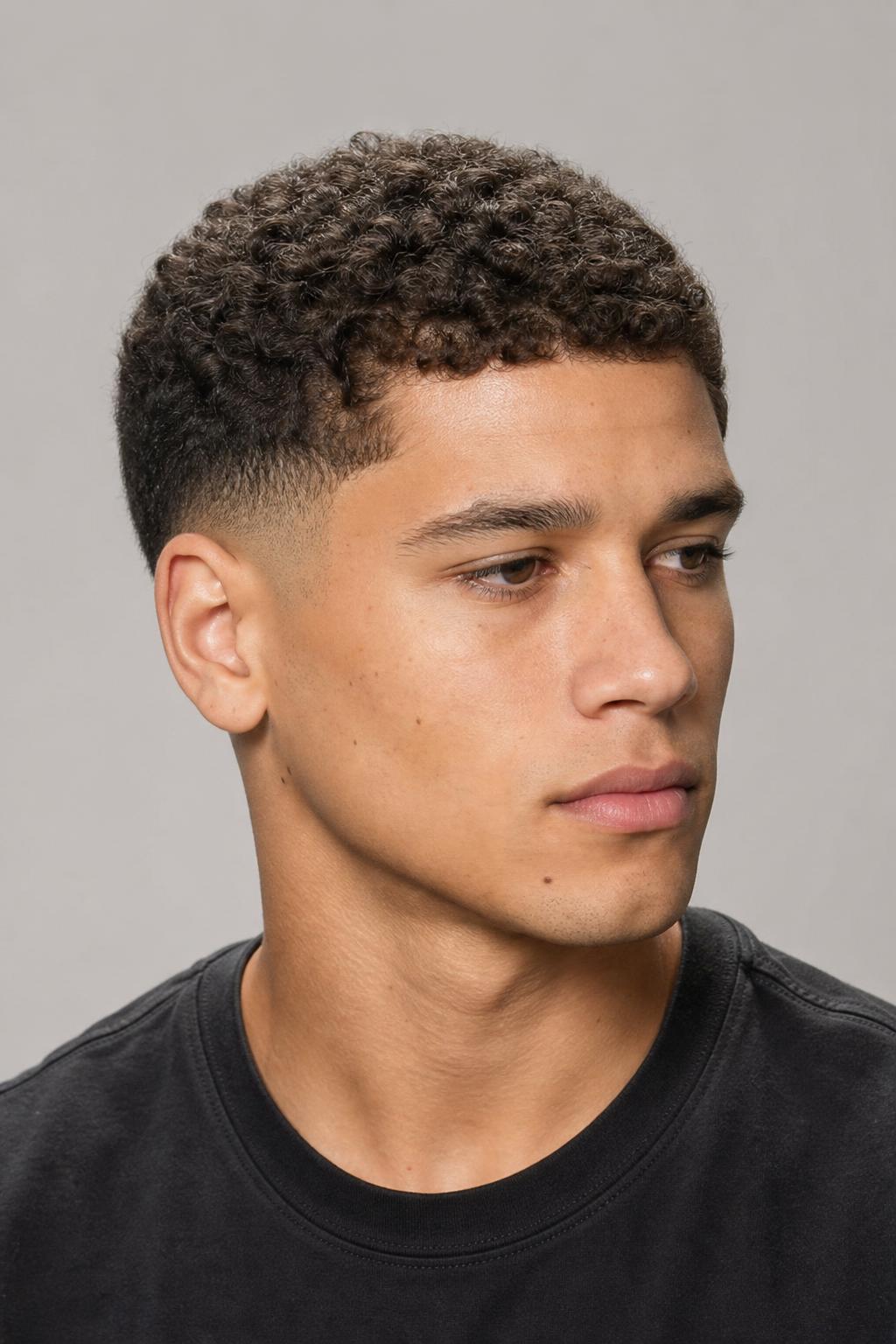
24. Buzz Taper for Curly Hair
A buzz on curly hair keeps the curl pattern visible as tight texture on top while the taper cleans the sides. Leaving a 3 or 4 guard on top shows the most curl. The taper fade on curly hair guide covers how texture changes the look.
25. Buzz Taper for Thinning Hair
A buzz taper is one of the best cuts for thinning hair because a uniform short length minimizes the contrast between denser and sparser areas. Keeping the top a 2 or 3 guard avoids exposing the scalp too much. The clean taper draws the eye to the sharp edges rather than the density.

26. Buzz Taper for a Round Face
A higher taper with a slightly longer top adds a little height that helps lengthen a round face. The vertical emphasis from the taper line balances the width. Keep the very top a touch longer than the sides to maximize the effect.

27. Buzz Taper for a Square Face
A square face suits almost any buzz taper, and a clean mid taper plays up the strong jaw and bone structure. The uniform length lets the face shape do the work. This is one of the most flattering pairings in the gallery.

28. Buzz Taper for Straight Thick Hair
Thick straight hair holds a buzz beautifully, standing up evenly across the top for a dense, clean finish. The taper keeps the bulk at the sides under control. A slightly longer guard shows off the density without becoming hard to maintain.
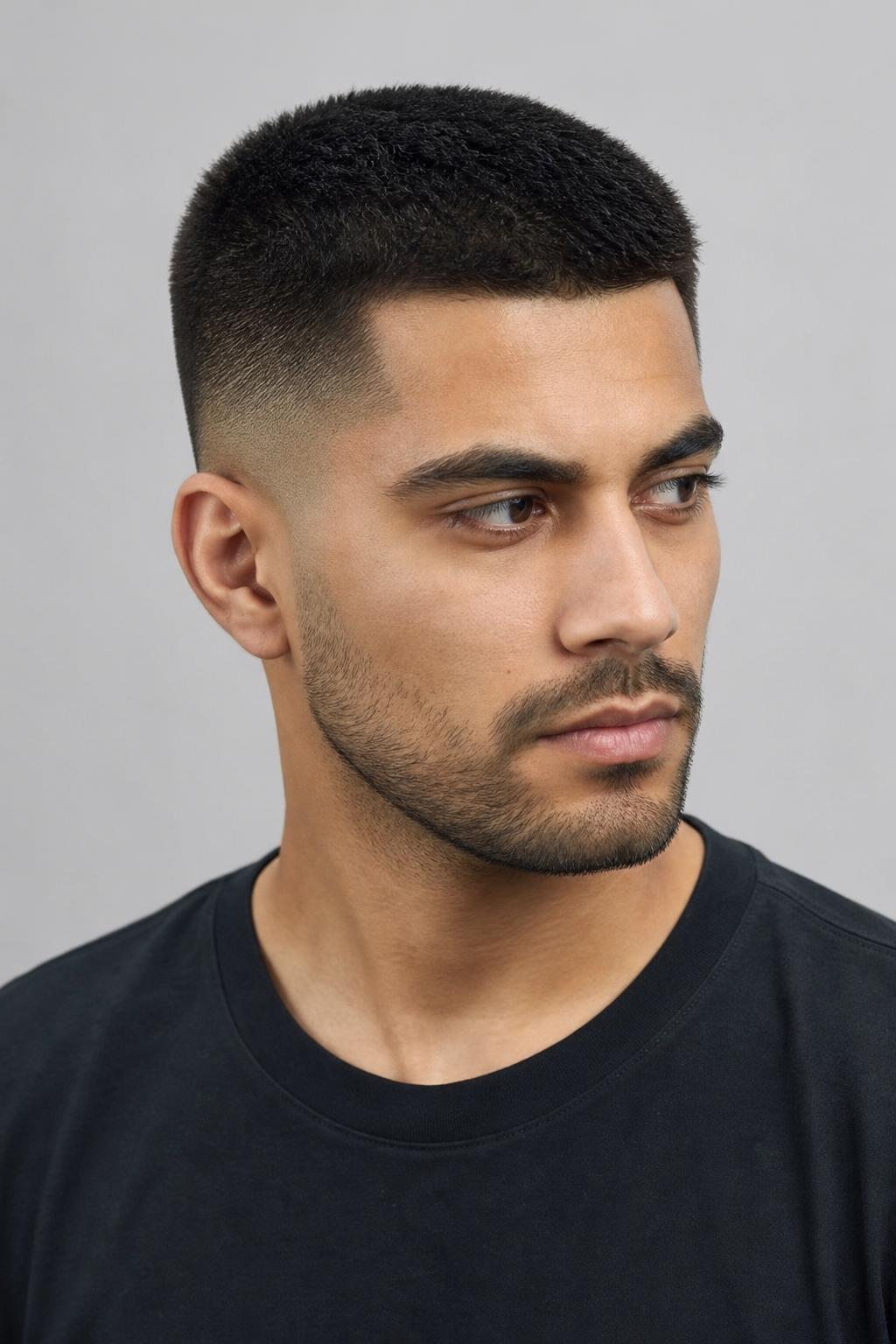
29. Buzz Taper with a Receding Hairline
A buzz taper handles a receding hairline well because the short, even length makes the recession far less noticeable than longer styles do. A line-up can be softened or skipped to avoid drawing a hard line at the temples. This is a confident, practical choice rather than fighting the hairline.

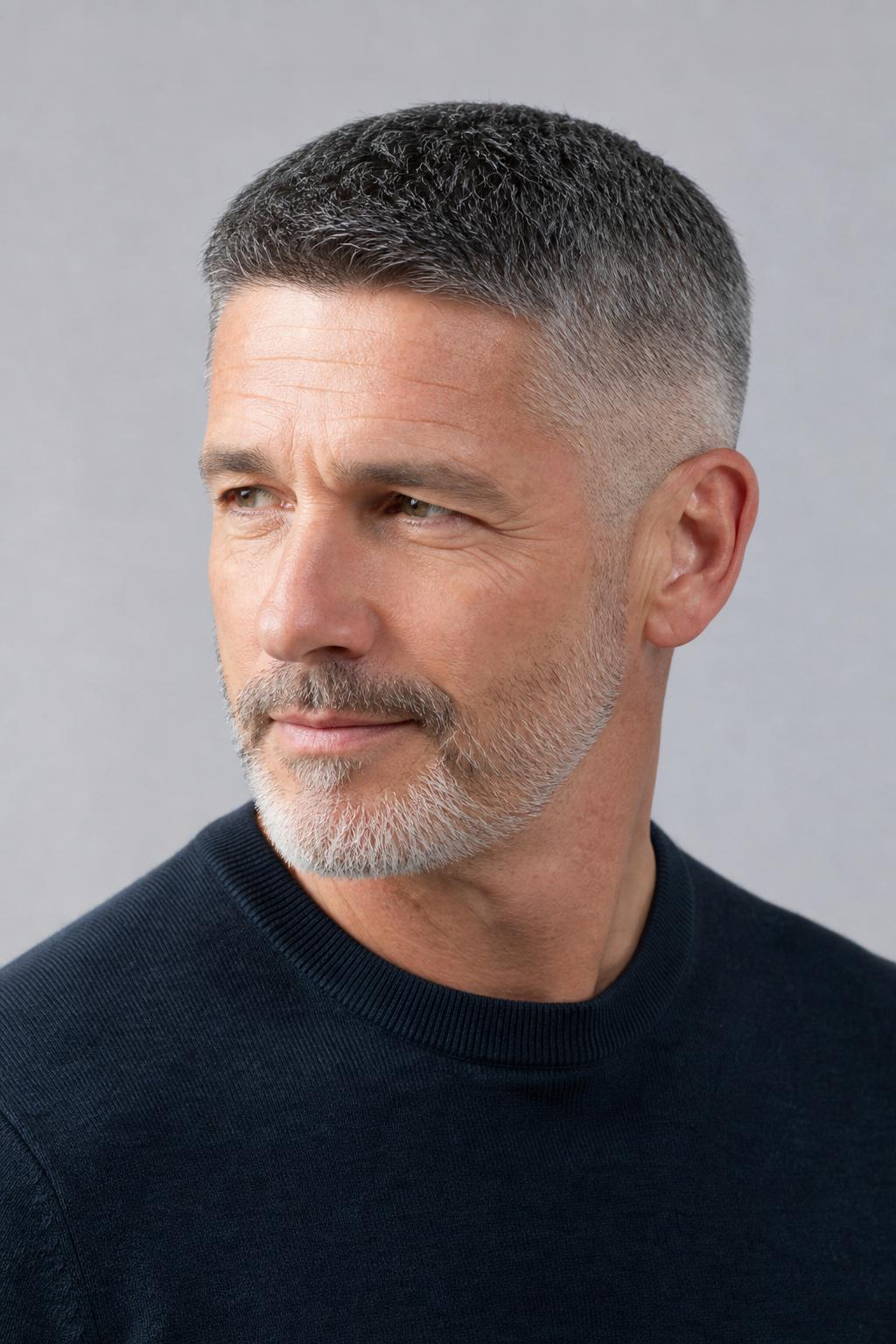
30. Buzz Taper with Gray or Salt-and-Pepper Hair
A buzz taper on gray or salt-and-pepper hair reads sharp and modern, letting the natural color stand as the feature. The clean taper keeps the look intentional rather than aging. No product is needed, which suits the easy, distinguished character of the cut.
Understanding Guard Numbers Before You Sit Down
Clipper guards are numbered by length, and knowing them is the fastest way to get exactly the buzz you want. Each number adds roughly an eighth of an inch, so a 1 is very short and a 4 leaves noticeable texture.
| Guard | Approx Length | Best For |
|---|---|---|
| Number 1 | About 1/8 inch | Very short, lowest upkeep, even hairlines |
| Number 2 | About 1/4 inch | The popular all-rounder; shows color and texture |
| Number 3 | About 3/8 inch | Softer look, better scalp coverage, thinner hair |
| Number 4 | About 1/2 inch | Visible texture and movement, most styling room |
What to Tell Your Barber
Give your barber three things: the guard number for the top, the taper height, and the finish at the bottom. Something like “number 2 on top, low taper, and take the bottom down to skin with a line-up” is everything they need to deliver the cut without guesswork.
Stylist tip: If it is your first buzz, ask for a slightly longer guard than you think you want, like a 3 instead of a 2. You can always go shorter at the next visit, but you cannot add length back once it is cut, and a buzz feels much shorter in person than it looks in photos.
Maintenance and How Often to Refresh
A buzz cut taper is the lowest-styling-effort cut there is, needing under two minutes and usually no product, but the taper does demand regular barber visits to stay sharp. The buzzed top grows out slowly and forgivingly, while the tapered edges lose their crispness within a couple of weeks.
Plan on a refresh every two to three weeks to keep the taper and any line-up clean, sooner if you have a skin finish at the bottom. Between visits, a quick trim of the neckline and around the ears with your own trimmer extends the sharp look. A daily swipe of moisturizer on the scalp keeps a very short buzz from looking dry or flaky.
Stylist tip: Buy a cheap pair of clippers with guards to touch up your own neckline between barber visits. Cleaning up just the back and around the ears every few days keeps the whole cut looking fresh for the full stretch, even as the taper softens.
When a Buzz Cut Taper Is Not the Right Choice
A buzz taper suits most people, but a few situations call for a different cut.
- You want volume or length on top: a buzz is uniformly short by definition. A blowout taper with a textured fringe keeps the clean sides but adds length up top.
- An uneven scalp or scarring you would rather not show: very short lengths reveal the scalp. A slightly longer crop with a taper covers more while staying clean.
- You dislike frequent barber visits: the taper needs upkeep every two to three weeks. A grown-out scissor cut holds its shape much longer between appointments.
FAQ
What Is the Difference Between a Buzz Cut Taper and a Buzz Cut Fade?
A taper is a gentler, shorter transition kept mostly around the ears and neckline, while a fade blends the hair higher up the head, often down to skin. A buzz cut taper keeps more side length and reads more subtle, whereas a buzz cut fade has stronger contrast. The taper is the more conservative, professional-friendly of the two.
What Guard Number Is Best for a Buzz Cut?
A number 2 guard is the most popular because it shows a hint of hair color and texture while staying very short and easy to maintain. A number 1 is shorter and exposes more scalp, while a 3 or 4 leaves more coverage and texture. If it is your first buzz, start with a 3 and go shorter next time if you want.
How Often Do You Need to Get a Buzz Cut Taper?
Every two to three weeks to keep the taper and any line-up sharp, and sooner if you have a skin finish at the bottom. The buzzed top itself grows out slowly and forgivingly, so the taper edges are what drive the schedule. Touching up your own neckline between visits stretches the time you can go.
Does a Buzz Cut Taper Suit a Round Face?
Yes, especially a higher taper with a slightly longer top, which adds a little height that helps lengthen a round face. The vertical line from the taper balances the width. Keep the very top marginally longer than the sides to get the most flattering effect.
Is a Buzz Cut Taper Good for Thinning Hair?
Yes, it is one of the best options for thinning hair because a uniform short length minimizes the contrast between fuller and sparser areas. Keeping the top a 2 or 3 guard avoids exposing the scalp too much. The clean taper draws attention to the sharp edges rather than the density.
Can You Style a Buzz Cut Taper?
There is very little to style at buzz length, which is part of the appeal, though a longer 4 guard top can be brushed or sponged for texture. Most buzz tapers need no product at all. A light moisturizer on the scalp is the only upkeep a very short buzz really requires.
The right buzz cut taper comes down to three simple choices: how short you want the top, where the taper sits, and what edges you want at the bottom. Tell your barber the guard number, the taper height, and whether you want a line-up, and you will walk out with exactly the cut you pictured. A buzz cut taper is the cleanest, lowest-effort way to look sharp, as long as you keep up with the quick refreshes.
Hair results vary based on your natural hair type, texture, density, and condition. Always consult with a licensed hairstylist before making significant changes, especially with chemical treatments or dramatic length changes. Photos may show styled results that require professional tools and products to replicate.