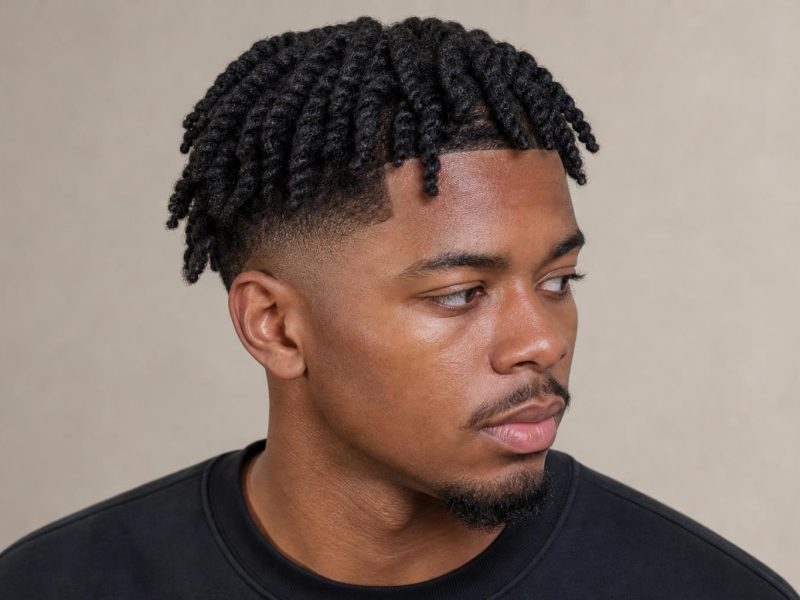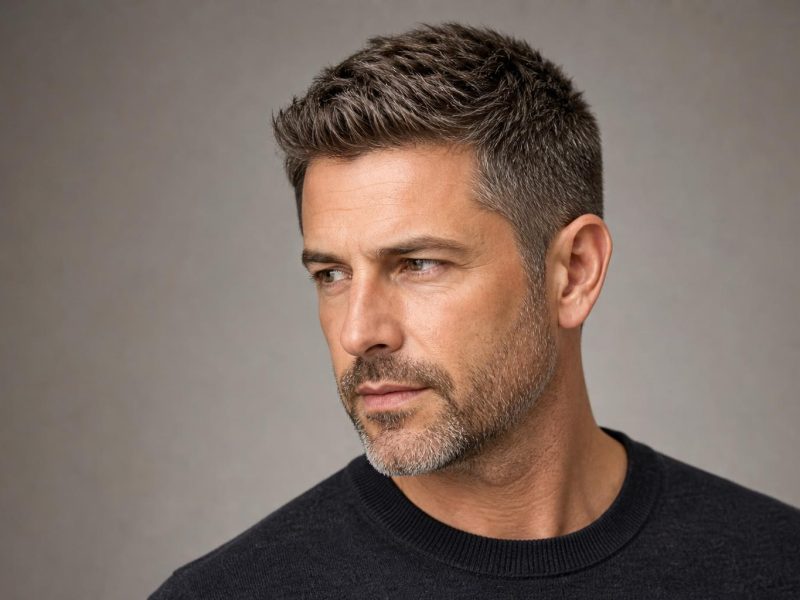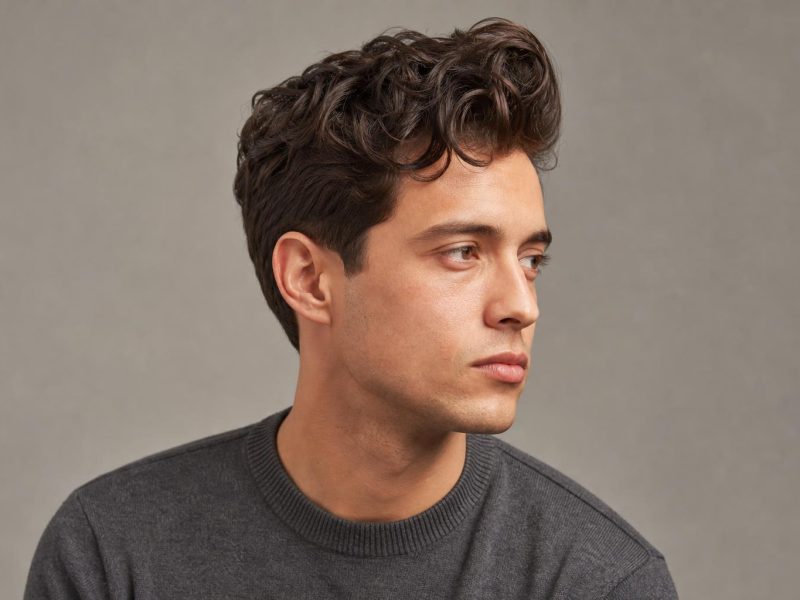

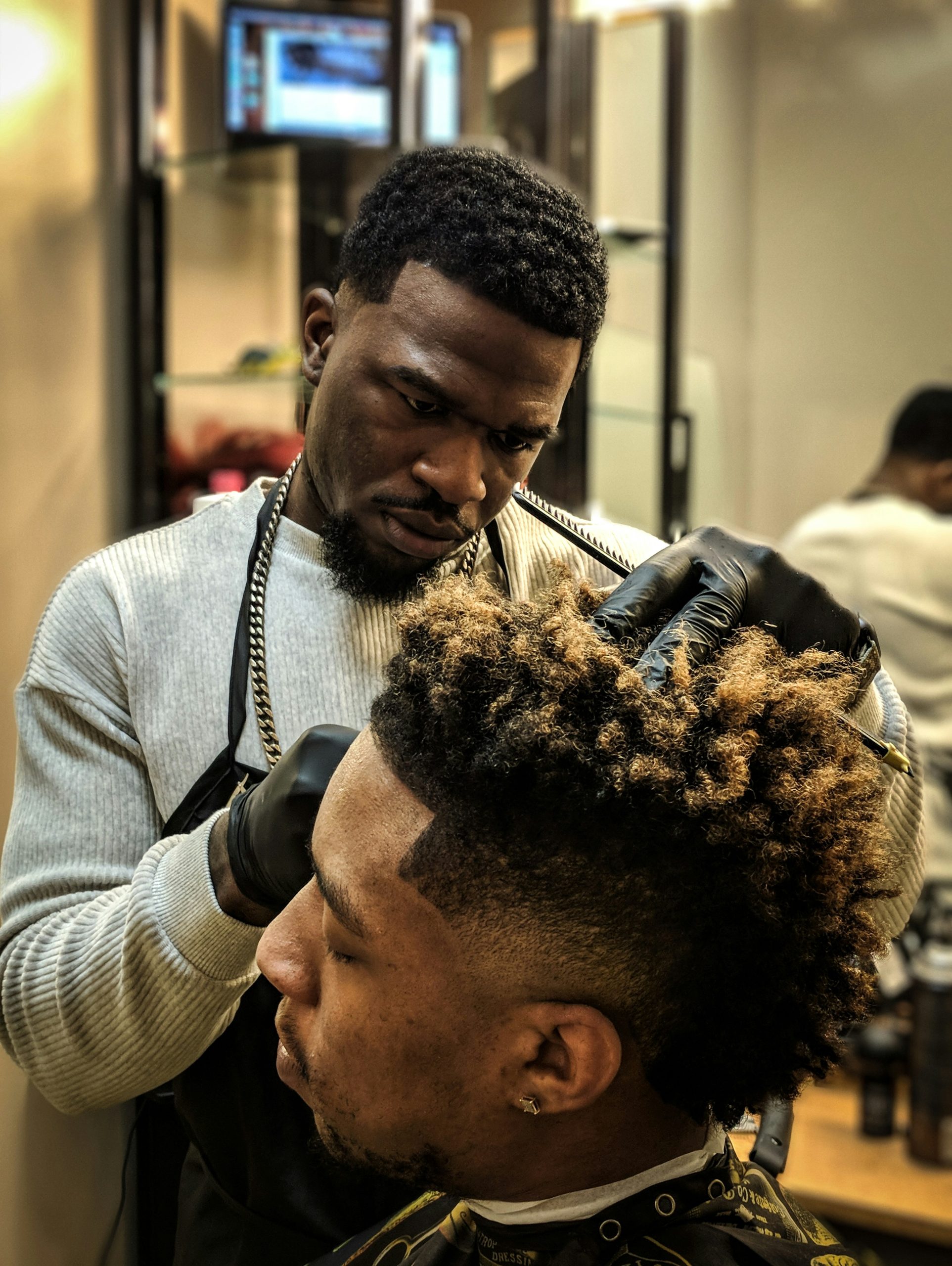

Named after Baton Rouge rapper Boosie Badazz, this Southern fade starts completely bald at the ear and blends upward with surgical precision — one of the cleanest, most technically demanding cuts in the barbershop.
A boosie fade is a skin-close fade that begins at the very base of the hairline, leaving zero hair at the lowest points and transitioning through guard lengths as it moves up. What separates it from a standard skin fade is the extremely low start point and the sharp, uncompromising line-up that frames the hairline. Barbers in the Southern United States began refining this technique in the early 2000s as Boosie Badazz’s influence spread from Baton Rouge into hip-hop culture nationwide. Here are 25 variations, from the classic cut to modern interpretations with waves, textured tops, and graphic designs.
This collection covers the full range: classic short-top styles, wave combinations, drop fade variations, and longer tops that pair the boosie fade with natural texture. Every entry includes guidance on face shape fit, hair type compatibility, or what to say in the barber chair so you can walk in knowing exactly what you want.
| Factor | Details |
|---|---|
| Best for | All face shapes; most hair textures; men who prefer sharp, defined cuts |
| Maintenance | Edge-up every 5–7 days; full fade refresh every 12–14 days |
| Works with | Type 1–4 hair; short to medium top length; waves, textured tops, locs, braids |
| Avoid if | You prefer a softer, low-maintenance look; scalp conditions that make razor work uncomfortable |
| Salon time | 45–75 minutes for a full cut and line-up; add 15–20 minutes for design work |
What Sets the Boosie Fade Apart from Other Skin Fades
Most skin fades start their blend at the temple or mid-ear level and work downward. The boosie fade inverts that approach: it starts completely bald at the very base of the neckline and just below the ear, then builds upward. The fade begins its transition about 1.5 inches above the hairline, blending through guard 0, 0.5, and 1 before reaching the hair mass on top. Some barbers call it a southside fade or high box fade, but the boosie fade label has become the most recognized term nationally. The result is a stark, clean contrast that makes the hair on top appear deliberately shaped, not just uncut.
Stylist tip: The line-up is non-negotiable on a boosie fade. Without crisp edges along the hairline, temples, and neckline, the skin fade looks unfinished. Use a straight razor on the neckline and a T-outliner for the hairline and temples — skipping this step drops the quality of the entire cut noticeably.
The cultural origin matters for understanding the aesthetic. Boosie Badazz wore the style throughout his rise in Southern hip-hop from roughly 2004 to 2008, when Southern rap was at its commercial peak. Barbers in Baton Rouge, Houston, and Atlanta were already pushing fade technique further than mainstream shops offered, and the boosie fade became a regional signature that spread nationally through music videos and social media. Unlike a mid taper fade, which gradually tapers rather than starting completely bald, the boosie fade is about maximum contrast from the very bottom up.
Classic Boosie Fade Styles
These eight variations build on the core technique: skin-bald at the base, sharp line-up at the hairline. All work on straight to loosely coiled hair; the tighter the curl pattern, the more texture the top naturally contributes to the overall shape.
1. Classic Short Crop Boosie Fade
The razor-cut skin fade starts below the ear and transitions cleanly through zero guards before meeting a close-cropped top cut with a 1.5 or 2 guard. This is the most technically demanding variation because there is no top texture to distract from the quality of the blend — the fade itself carries the entire statement. On a first appointment with a new barber, this is the version to request: it reveals the quality of their fade work before you commit to anything more complex.
2. Low Drop Boosie Fade
Oval faces get the most flexibility with fade height, but men with longer face shapes benefit from a drop fade that follows the natural curve of the skull rather than running straight across at the ear. The drop curves downward slightly behind the ear, visually widening the side profile and balancing an oblong face. When requesting this, ask specifically for “a drop at the back”; the low drop fade is clear shorthand most experienced barbers recognize, and it pairs naturally with the boosie base.
3. Boosie Fade on Thick Coarse Hair
Coarse, thick hair holds a skin fade with more visible contrast than fine hair because the pop from bald to full is more dramatic. On type 3b–4c hair, the transition happens quickly and the top volume looks deliberate rather than overgrown. The barber typically combines clippers and a straight razor at the neckline to keep the base absolutely clean. Plan for fade touch-ups every 10–12 days, as thicker coils show base growth faster than fine hair does.
4. Boosie Fade with 360 Waves
Get the fade first, then build the waves. Achieving 360 waves on a boosie fade requires daily brushing with a medium-soft wave brush and a wave pomade applied to damp hair, brushed in circular patterns from the crown outward. The bald base makes the wave pattern on top appear more defined because there is no hair on the sides competing with the crown pattern. Start the brushing routine immediately after the cut; the wave pomade holds better on freshly shaped hair before any buildup develops.
5. Boosie Fade with Beard
A full beard paired with a boosie fade creates a sharp contrast between the smooth-faded sides and the structured beard mass. The maintenance runs on a dual schedule: the fade needs refreshing every 12–14 days, and the beard line-up benefits from a trim every 7–10 days to keep the connection between fade and beard looking crisp. Ask your barber to blend where the sideburn meets the beard rather than leaving a hard edge; the transition should feel continuous, not abrupt.
6. Boosie Fade with Line Design
The bald base is an ideal canvas for geometric line designs because there is literally no hair in the way at the lowest fade level; designs sit directly on the scalp without the competing shadow that mid-fades create. A single diagonal line above the ear or a part carved into the temple adds visual detail without requiring a longer grow-out. After the first appointment, photograph the design from both sides: most barbers can recreate a pattern from a reference photo even if they did not do the original work.
7. Boosie Fade with Tapered Neckline
Ask for “a boosie fade up top with a tapered neckline” if you prefer the rounded nape taper over a hard horizontal line at the neck. The taper follows the natural hairline curve rather than cutting straight across it, which grows in more gracefully between appointments. This is the variation to request for an office environment or a lifestyle that allows only one barber visit per month; the squared neckline looks sharper day-of but shows grow-out more visibly as the weeks pass.
8. Boosie Fade vs. High Taper Fade
The boosie fade and the high taper fade are frequently confused, but they achieve different silhouettes. The high taper takes more hair off the sides and rises higher on the head, creating a longer gradual reduction that prioritizes soft blending over stark contrast. The boosie fade stays closer to the base, leaving more hair mass between the bald starting point and the top, which produces a blockier, more defined shape. If you want a rounder, more tapered profile, go high taper; if you want maximum contrast from the very bottom, the boosie is the call.
Boosie Fade with Waves and Designs
Design work, wave patterns, and graphic elements turn the boosie fade from a clean technical cut into a complete style statement. The bald starting point gives designers a clear canvas. On other fades, residual shadow hair competes with fine detail work. These variations take 15–30 extra minutes in the chair and need a barber who specializes in detail work, not just standard fade cuts.
9. Boosie Fade with Zig-Zag Part Design
Zig-zag parts shaved into the fade line or above the ear are cut with a T-outliner or a razor and hold their crisp edges for 5–7 days before growing hair softens the geometry. The technique requires a steady hand and a clear reference image — bring a photo from a direct front or side angle, not a 45-degree shot, so the barber can see the exact pattern proportions. Barbershops specializing in design work typically charge $15–$30 above the base cut price for custom line patterns.
10. Boosie Fade for Round Face Shapes
Round faces benefit from a boosie fade paired with a taller, more elongated top, whether that is a textured puff, a frohawk, or extra length left at the crown. The bald fade narrows the perceived width of the face, while added crown height creates vertical length that balances circular proportions. Avoid very flat tops on round faces; they add width rather than reducing it. A slight point at the top of the crown is more flattering for this face shape than a perfectly squared flat top.
11. Boosie Fade on Fine Straight Hair
Fine, straight hair shows a skin fade cleanly because low hair density means the scalp shows through quickly at lower guard lengths. The top needs more styling product than thicker hair types to look substantial next to the sharp fade; a light-hold clay applied to dry hair with fingers adds texture and body without weighing fine strands down. Fine hair also shows base growth faster than coarser types, so plan for fade refresh appointments every 10–12 days rather than waiting the full two weeks.
12. Boosie Fade with 180 Waves
Apply a wave-promoting pomade, brush for 15 minutes before bed, sleep under a durag, and remove it in the morning; this routine produces 180 waves (half-head coverage) once the top is long enough to show the pattern. A boosie fade keeps the sides and back clean while the top develops its wave formation, creating a look that appears effortfully groomed without complex daily styling. Type 2b–3a hair is the sweet spot for a clean wave pattern; coarser hair forms waves with more training but produces a denser, more defined result once set.
13. Boosie Fade Grow-Out Reality
The boosie fade grows out faster than most cuts precisely because it starts so close to zero; any base growth is immediately visible. By day 10–12, the zero line shows about 1–2 mm of shadow, which some men prefer as a softer version of the look. By week 3, the fade has blurred enough that a fresh cut is needed. Budget for 2–3 barber visits per month, or plan edge-up-only appointments between full fades to maintain the line-up without paying for a complete redo each time.
14. Boosie Fade with Color-Treated Crown
Bleached or color-treated hair on the crown contrasts sharply with a dark skin fade, amplifying the drama of the bald base. The color should break before the fade transition zone; a clean ring of color at the top of the fade gives the look clear definition. On type 3+ hair, bleach raises porosity, which can change how the fade blends at the color boundary. Ask your barber to assess the condition of the bleached section before clipping near the treated area.
15. Boosie Fade with Locs on Top
Ask for “a boosie fade with a clean skin line” and coordinate the fade appointment with your loc maintenance schedule so the barber can position the fade line just below where the locs begin at the scalp. Mature locs have a defined, clean root line; starter locs may need the fade to begin slightly lower to avoid the freeform root section. The fade and the locs run on separate timelines: plan for fade refreshes every two weeks and loc maintenance every 4–6 weeks.
16. Boosie Fade vs. Burst Fade
A burst fade radiates from behind the ear in a semicircle, creating a curved fade line that frames the ear. The boosie fade runs along the bottom of the head in a straighter, more horizontal line before dropping. Side-by-side, the burst fade looks rounder and more organic; the boosie fade looks harder and more linear. Both work on most hair textures, but the burst fade tends to suit rounder face shapes better because its curved line softens the overall silhouette.
Boosie Fade with Longer Tops and Natural Texture
Pairing the boosie fade with a longer, textured top changes the energy of the cut entirely. The skin-bald base anchors the look as a precision fade, while the top adds volume and personality. These variations suit men with type 2c–4c hair who want the clean fade architecture with natural texture preserved on top.
17. Boosie Fade with Textured Crop
A textured crop, cut with scissors and thinning shears on top of a boosie fade, creates a structured disconnect between the clean sides and the piece-y top. The scissors work reduces bulk without removing length, so the texture looks deliberate rather than unkempt. Apply a small amount of water-based clay to dry hair and finger-style to define the sections. The crop needs trimming every 3–4 weeks to maintain its shape; the boosie base still runs on its own 12–14-day refresh schedule.
18. Boosie Fade for Square Face Shapes
Square faces have strong jaw angles that a very low boosie fade can accentuate, since the bald line draws attention to the jaw-to-temple transition. To soften this, request a slightly higher starting point on the fade, still skin close but beginning its blend a touch higher above the ear, and leave more volume on top to add height rather than width. A natural coil-out or afro puff at the crown adds upward visual length that balances a strong jaw without covering it.
19. Boosie Fade on Type 4c Hair
Type 4c hair shrinks up to 75% of its stretched length, meaning the top can appear close-cut immediately after styling and expand significantly as moisture absorbs and coils compress. A boosie fade accommodates this natural volume range well, because the hard fade boundary clearly defines where the top begins regardless of how much the coils expand during the day. Apply a curl-refresher spray daily to keep the coils defined and prevent frizz at the fade boundary where the shortest hairs live.
20. Boosie Fade with Frohawk
Style the top section into a narrow strip from crown to forehead using a light-hold gel, letting the natural coils or waves form the frohawk’s shape. The bald sides create maximum visual contrast with the raised center section. On type 3b–4a hair, the frohawk holds without additional products for 6–8 hours; on type 2a–2c hair, a flexible-hold spray after finger-styling keeps the center elevated through the day. This combination works especially well for face shapes that benefit from added vertical height.
21. Boosie Fade with Cornrows on Top
Keeping cornrows on a boosie fade means managing two separate care schedules: the cornrows last 2–4 weeks depending on hair texture and climate, while the fade needs refreshing every 12–14 days. Ask your braider to lay the cornrows starting slightly behind the hairline so the line-up stays visible; if braid roots cover the edge work, the precision of the boosie fade disappears under the style. Keep braid ends lightweight; heavy accessories on one side pull the part line off-center over time.
22. Boosie Fade with High-Contrast Color Top
A platinum, copper, or vivid-toned natural puff on a fresh boosie fade creates one of the strongest color-to-fade contrasts in the barbershop. The bleaching process works fastest on type 3a–3c hair, typically reaching target lightness in 1–2 sessions; type 4 hair may need 3–4 sessions spaced over time to prevent breakage. The contrast between the color-treated top and the razor-clean fade base is the entire visual anchor; the line-up must be precise, or the color alone carries the look without the structure it needs.
23. Boosie Fade with Flat Top
When booking, ask specifically for “a flat top finish on the crown” and bring two reference photos: one showing the top view and one from the side. A flat top on a boosie fade is a retro-modern combination that works best on type 3b–4a hair with enough density to hold the squared crown shape without daily blow-drying. Have the barber cut the flat section after the fade is done, not before; the fade changes the overall proportion and the flat top needs to be sized to the finished head shape.
24. Boosie Fade vs. Blowout Taper
A blowout taper features a rounded explosion of volume at the top that gradually fades down, with the volume as the defining element. The boosie fade achieves something different: the statement is in the precision of the base, not the top mass. Paired together, with a boosie base and a blowout top, the high-volume top appears to float above the skin-clean sides, which is one of the more striking combinations for type 3c–4a hair that holds blown-out volume well.
25. Boosie Fade with Edgar Crop Front
The edgar cut’s straight horizontal fringe transitions sharply from the blunt front to the faded sides; a boosie fade underneath sharpens that transition even further. The straight fringe line should sit at the forehead or just above the eyebrows. On type 1–2 hair, the fringe may need a flat iron pass to prevent lifting; on type 3+ hair, the natural spring keeps the fringe down without heat. Bring a side-profile reference photo alongside the front-view photo so the barber can see how the fringe weight connects to the fade height.
How Face Shape Affects the Best Boosie Fade Variation

The boosie fade is versatile across face shapes because the top length and shape can be adjusted independently of the core fade technique. The table below addresses what to modify at the top; the bald fade base stays consistent across all shapes.
| Face Shape | Best Top Style | Avoid | Why |
|---|---|---|---|
| Oval | Any: waves, crop, puff, flat top | Nothing specifically | Balanced proportions suit nearly every top style |
| Round | Frohawk, textured puff, slight point at crown | Flat top (adds visual width) | Height at the crown elongates round proportions |
| Square | Slightly higher fade start, rounded crown | Very low boxy flat top (emphasizes jaw width) | Softens the hard line at the jaw |
| Oblong | Drop fade variation, flat top or waves on crown | Frohawk or very tall crown | Width at the sides via drop fade balances a long face |
| Heart | Medium top length, textured crop | Very short crop that exposes a narrow chin | Some top volume at the sides balances a wider forehead |
| Diamond | Blowout top, natural puff | Skin-tight crop at the crown | Volume at crown level balances the widest point at the cheekbones |
What to Tell Your Barber
Barbers in different cities use different names for this cut, so being precise matters. Say: “I want a boosie fade, skin bald at the base, sharp line-up, blending up from the hairline with zero guards, and [describe your top preference].” If your barber is unfamiliar with the boosie fade name, add: “Some call it a southside fade or a high box fade; it starts completely bald at the ear and the neckline.” Showing a photo eliminates almost all ambiguity.
Stylist tip: Bring two reference photos — one showing the fade angle from the side, and one showing the line-up from the front. Even an experienced barber benefits from seeing your specific head shape reference. Mention your hairline type (straight, rounded, or widow’s peak) so the line-up is cut to work with your natural shape rather than against it.
For neckline preference, specify whether you want a squared neckline (cut straight across the nape) or a tapered neckline (following the natural hairline curve). First-time clients should request the tapered neckline, which grows in more naturally between appointments and is less unforgiving if the barber’s horizontal line is slightly off. The squared neckline looks sharper on day one but reveals grow-out more quickly as the weeks pass.
Maintenance and Styling
A boosie fade requires more frequent maintenance than most cuts because the skin-bald base shows growth immediately. The core schedule: full fade refresh every 12–14 days, edge-up only between full cuts every 5–7 days. Daily care is minimal: wave brushing for waves, a curl refresher spray for natural tops, or nothing for very short crops. Scalp health matters more with a skin fade than with longer cuts; a lightweight scalp oil (jojoba or castor oil-based) applied twice weekly prevents the dry, ashy appearance that shows clearly on bare scalp.
| Task | Frequency | What to Use |
|---|---|---|
| Full fade refresh | Every 12–14 days | Barber appointment with clippers and straight razor |
| Edge-up only | Every 5–7 days | T-outliner or quick barber appointment |
| Scalp moisture | 2–3 times per week | Lightweight scalp oil applied with fingertips to bare skin |
| Wave brushing (if applicable) | Daily, 10–15 minutes | Medium-soft wave brush plus durag for sleeping |
When a Boosie Fade Is Not the Right Choice
The boosie fade is a high-contrast, high-maintenance cut that does not suit every lifestyle or hair condition. These are the situations where a different fade variation is more practical:
- Active scalp conditions (folliculitis, razor bumps, psoriasis): The straight razor work at the neckline and hairline can aggravate active skin conditions. A mid taper or scissor-cut taper causes far less irritation; tell your barber about any scalp issues before the straight razor comes out.
- Very low natural hairlines: Men with a hairline that starts very close to the ear level have limited room for the fade to begin its blend, which can make the fade zone look compressed rather than clean. A mid taper starting higher on the head tends to work better for this hairline type.
- Lifestyle with limited barber access: If two visits per month is not realistic for your schedule or budget, the boosie fade will look ungroomed by week 2. A longer tapered cut with a softer line-up grows out more gracefully and needs appointments every 4–6 weeks instead.
- Conservative professional environments: The stark contrast of a boosie fade makes a strong visual statement. Know your workplace culture before committing to a cut that stands out; a softer mid taper or crew cut taper delivers the same barbershop precision with a lower profile.
FAQ
What Is the Difference Between a Boosie Fade and a Regular Skin Fade?
All boosie fades are skin fades, but not all skin fades are boosie fades. A skin fade blends down to zero guard length at the lowest point. A boosie fade is a specific style of skin fade that begins its bald zone at the very base of the hairline and ear line, lower than a typical skin fade, and pairs with a sharp, defined line-up as a non-negotiable finishing element. The distinction is the starting position of the zero point and the mandatory edge work that completes the look.
How Long Does Hair Need to Be for a Boosie Fade?
The fade itself needs essentially no length; you can get a boosie fade starting from a completely shaved head as the regrowth base. The top needs at least 0.5–1 inch to show any style, whether that is waves, a crop, or natural texture. For 360 waves specifically, aim for 2–3 inches on the top section before fading the sides; the wave pattern becomes visible once the top is long enough to show a brushing pattern when styled.
Can Men with Straight Hair Get a Boosie Fade?
Yes, the boosie fade works on straight, wavy, curly, or coily hair. Fine or straight hair shows a slightly softer fade transition than coarser hair because thinner individual strands produce less shadow contrast, but the cut still reads clearly as a skin fade with a defined line-up. Many barbershops now list the boosie fade on their menu alongside styles that were historically associated with specific hair types.
How Much Does a Boosie Fade Cost?
Expect $30–$60 for a standard boosie fade and line-up at a mid-range barbershop in most US markets, and $60–$100+ at a premium shop in a major metro. Prices vary considerably by city; shops in New York and Los Angeles typically charge roughly double what shops in smaller Southern cities charge for the same cut. Add $15–$30 if you want custom design work. Building a relationship with a consistent barber is often worth a higher per-visit cost given how frequently the boosie fade needs refreshing.
Does a Boosie Fade Work on Thinning Hair?
A boosie fade can work on thinning hair, but the placement matters. If thinning is concentrated at the crown or top, the strong fade base draws the eye upward to exactly where the thinning is most visible. A very close crop on top, matching the visual weight of the fade, minimizes the contrast between thin and full sections. If the sides are thinning but the crown has density, the fade naturally reduces the sides and lets the top density become the focal point, which is genuinely flattering.
How Do I Find a Barber Who Can Do a Boosie Fade Well?
Search Instagram for #boosiefade and filter by location; look for barbers posting consistent, well-lit side-profile photos showing the fade blend, not just front-facing shots with heavy filters. The side angle reveals whether the transition is clean or has ladder lines. Call the shop and confirm the barber does boosie fades regularly before booking. Treat the first appointment as an audition: start with the classic short crop before requesting complex design work with a barber you have not worked with before.
Whether you want the tight, Southern-original look that made the boosie fade famous or a modern version with natural texture, waves, or graphic detail work, the key is finding a barber who takes the line-up as seriously as the fade itself. Bring reference photos, communicate your neckline preference and how often you can realistically come in, and give the barber the information they need to build the right version of the boosie fade for your head shape and lifestyle.
Hair results vary based on your natural hair type, texture, density, and condition. Always consult with a licensed hairstylist before making significant changes, especially with chemical treatments or dramatic length changes. Photos may show styled results that require professional tools and products to replicate.