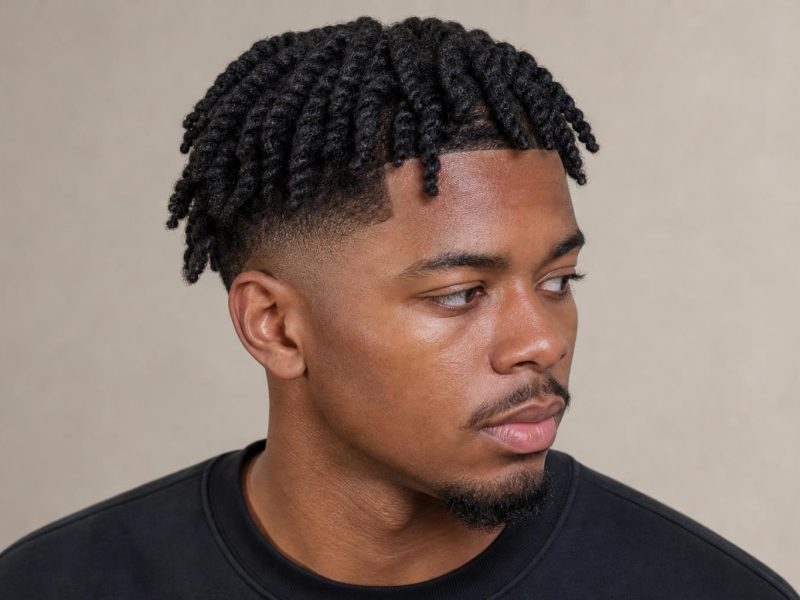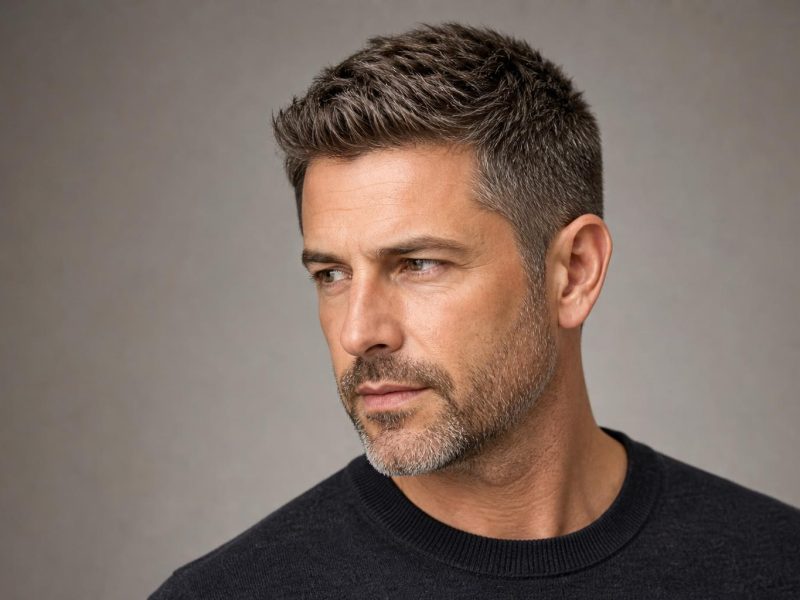



A blowout taper with textured fringe pairs a voluminous, swept-up top with a short taper around the ears and neckline, finished with a piecey fringe that falls forward instead of sitting in a flat, blunt line.
The 25 styles below cover the full range of this cut: low, mid, and high taper heights, fringe lengths from cropped to brow-grazing, and texture-specific versions for straight, wavy, and curly hair. Each entry names the detail that sets it apart and how to ask for it, so you can match a look to your hair type rather than guessing from a photo. The blowout taper sits in the same family as the mid taper fade and the Edgar cut, but the forward-falling fringe and rounded volume on top are what make it distinct.
After the gallery, this guide breaks down how to choose a taper height for your face shape, the exact words to give your barber, a realistic styling and trim schedule, and the cases where a different cut works better.
| Factor | Details |
|---|---|
| Best for | Straight to wavy hair with medium density; oval, square, and heart face shapes |
| Top length | Roughly 3 to 5 inches on top to allow the blowout lift and forward fringe |
| Maintenance | Taper sharp for 2 to 3 weeks; full reshape every 4 to 5 weeks |
| Daily styling | 5 to 10 minutes with a blow-dryer and a light matte product |
| Avoid if | You want zero daily styling, or your hair is too fine to hold volume without product |
Low Blowout Taper with Textured Fringe
A low taper keeps the short work close to the hairline, around the ears and the nape, while leaving more length through the sides. It is the most conservative version of the cut and the easiest to wear in a professional setting, since the contrast between top and sides stays moderate. These seven entries cover the low-taper foundation looks.
1. Classic Low Taper with a Forward Piecey Fringe
The defining move here is a low taper that drops only at the ears and neckline, leaving the top long enough to round up and forward into a soft fringe. Point-cut ends on the fringe keep it from looking like a solid block, so it separates into pieces as it falls. This is the version most barbers picture when you ask for a blowout taper, and it works as a default starting point for a first appointment.
2. Low Taper Blowout for Square Face Shapes
Square faces with a strong jawline get balance from the rounded volume a blowout builds at the crown, which draws the eye upward and softens the angular lower half. Keeping the taper low rather than high preserves a little width at the sides, so the head doesn’t read as narrow against a broad jaw. Ask for the fringe to sit just past the brow to add a second horizontal line that breaks up the face’s height.
3. Wavy Hair Worked Into a Low Taper Blowout
Natural wave is an advantage with this cut because it gives the top built-in movement before any product goes in. On wavy hair, the fringe falls in soft S-bends rather than straight pieces, which reads as effortless once the taper cleans up the perimeter. A light sea-salt spray on damp hair before blow-drying exaggerates the wave and helps the fringe hold its forward shape through the day.
4. Low Skin Taper with a Cropped Fringe
Dropping the low taper all the way to skin at the very bottom edge gives a crisp finish while keeping the overall contrast gentle higher up. A shorter, cropped fringe pairs well with this because it shifts the focus to the texture on top rather than the length at the front. The skin edge needs a touch-up every 10 to 14 days to stay clean, so factor that into your schedule before committing to the skin version.
5. Grown-Out Low Taper That Still Holds Shape
One reason the low taper suits busy schedules is that it grows out softly instead of developing a hard line. Around week four the taper blurs into the sides, the volume on top loosens, and the cut shifts toward a fuller, shaggier blowout without looking unkempt. If you can only get to the barber every five or six weeks, the low taper is the most forgiving height for stretching time between visits.
6. Low Taper Blowout with a Subtle Color Melt
A soft color melt that darkens slightly toward the taper and lightens through the fringe adds depth without an obvious dye line. The lighter ends catch the lift of the blowout, so the volume on top looks fuller and more dimensional under normal light. This is a low-commitment color choice because the taper grows the demarcation out cleanly, unlike an all-over lightening that needs root upkeep.
7. Asking Your Barber for a Low Taper Specifically
Say it plainly at the chair: “Low taper, blended at the ears and neckline only, and leave the sides long enough to keep some width.” Barbers sometimes default to a mid taper because it photographs with more contrast, so naming the height up front avoids a surprise. Confirm the fringe length in the same breath, since the taper and the fringe are the two decisions that define the whole look.
Mid and High Blowout Taper Styles
Raising the taper to mid or high level increases the contrast between the full top and the clean sides, which gives the cut more visual punch. Mid is the most popular height for a reason, balancing contrast with versatility, while high taper pushes the look sharper and bolder. These eight entries move up the head.
8. The Standard Mid Blowout Taper
A mid taper starts its blend around the temple level, creating a clean line of separation between the voluminous top and the short sides. It is the most-requested version because the contrast flatters most face shapes without going to either extreme. The top is styled up and forward, and the fringe breaks over the forehead to anchor the shape. For a deeper look at this height across hairlines, the high taper fade guide covers where the line sits.
9. Mid Taper Blowout for Oval Faces
Oval faces have the most freedom with this cut, so a mid taper with a moderate fringe length lets the natural balance of the face show without correction. The rounded blowout adds a little height that suits the proportions rather than fighting them. Because oval faces don’t need the cut to disguise anything, the styling can stay loose and the fringe can be worn longer or shorter based purely on preference.
10. High Taper Blowout with Maximum Lift
A high taper clears the sides well above the temple, leaving a tall column of hair on top that the blowout pushes up and back for dramatic height. The look is bold and best suited to thicker hair that can stand up to the volume without collapsing by midday. Expect to use a stronger blow-dry technique and a matte clay to hold the lift, since gravity works against this height more than the lower versions.
11. Thick Coarse Hair in a High Blowout Taper
Coarse, dense hair is the ideal texture for a high taper blowout because it holds volume on its own and resists falling flat. The fringe on this texture sits with weight and stays put once shaped, so a single pass with the dryer usually sets it for the day. Thinning shears through the top reduce bulk so the volume reads as movement rather than a solid helmet.
12. Mid Taper Blowout with a Drop Fade Curve
Adding a drop-fade curve behind the ear sends the taper line dipping down toward the nape, which frames the back of the head and adds a custom touch. The curve plays well with the forward fringe because both elements create motion that travels around the head. If you like the contrast of a taper but want a softer back, the low drop fade shows how that curve behaves at a lower height.
13. High Taper with a Hard Part and Fringe
A razored hard part cut into a high taper blowout adds a clean architectural line that separates the volume from the short side. The fringe still falls forward, but the hard part gives the style a sharper, more deliberate finish for those who like definition. The part line needs re-cutting at each visit, so it commits you to a tighter barber schedule than a partless version.
14. Mid Blowout Taper for Heart-Shaped Faces
Heart-shaped faces, wider at the forehead and narrow at the chin, are balanced by a fringe that adds coverage and softness across the brow. A mid taper keeps width through the sides at jaw level, which fills in the narrower lower half of the face. Keep the top volume moderate rather than towering, since too much height stretches the face and works against the proportions you want to even out.
15. Mid Taper Blowout Compared to the Edgar Cut
Both cuts keep short sides and a defined fringe, but the blowout taper lifts the top into rounded volume while the Edgar keeps the top flatter with a blunt, straight-across front line. The blowout reads as softer and more textured; the Edgar reads as sharper and more graphic. If you like the short-sides-plus-fringe formula but want movement instead of a hard line, the blowout is the version to ask for.
Textured Fringe Variations by Hair Type
The fringe is where this cut earns its name, and the right fringe depends heavily on your natural texture. These six entries focus on how the front section is cut and styled across different hair types, from pin-straight to tightly curled.
16. Piecey Fringe on Fine Straight Hair
Fine straight hair needs help to avoid a flat, separated-into-strings fringe, so point cutting and a light texturizing powder give it grit and separation. Blow-drying the fringe forward over a round brush builds the small amount of body fine hair can hold. Skip heavy pomades here, since they drag fine hair down and undo the lift the blowout depends on.
17. Curly Textured Fringe with a Defined Taper
Curly hair turns the fringe into a cluster of soft coils that fall over the forehead, and a clean taper underneath keeps the shape from looking wide or bulky. Cutting curly hair dry lets the barber see where each curl lands so the fringe sits evenly once it springs up. A curl cream worked through damp hair and air-dried keeps definition without the crunch of gel. For more curl-specific fade pairings, see our low taper fade for curly hair gallery.
18. Brow-Grazing Fringe for a Bolder Front
Leaving the fringe long enough to graze the brows makes the front the focal point and gives the most dramatic forward fall. This length suits straight to wavy hair that lies down predictably, since very curly fringe at this length can read as uneven. Trim the fringe every two to three weeks on its own, even between full cuts, because the front grows into your eyeline faster than the rest.
19. Short Crop Fringe That Stays Low Effort
A cropped fringe that sits high on the forehead is the lowest-effort version because it needs little styling to look intentional. The shorter front shifts attention to the volume and the clean taper rather than the fringe itself. This works well for anyone who likes the cut’s structure but doesn’t want to fuss with shaping a longer front each morning.
20. Wavy Fringe with a Natural Side Bend
Wavy hair often carries a natural bend that sends the fringe slightly to one side, and working with that direction looks better than forcing a dead-center fall. The blowout adds lift at the root so the fringe arcs rather than droops. A flexible-hold spray locks the bend without stiffening the wave, keeping the movement that makes this texture look easy.
21. Matching the Fringe Shape to Your Hairline
Tell your barber to cut the fringe around your actual hairline rather than to a generic straight line: a rounded hairline suits a softly curved fringe, while a straight hairline can carry a blunter front. A widow’s peak can be incorporated into the fringe’s center fall instead of being hidden, which looks more natural than fighting it. Bringing a photo of the fringe shape you want, not just the overall cut, removes most of the guesswork.
Blowout Taper Fringe Styles by Length and Finish
The last group covers finishing choices, from glossy to matte and from understated to statement, that change the personality of the same underlying cut. These four entries help you fine-tune the final look.
22. Matte-Finish Blowout for an Undone Look
A matte clay or paste kills shine and gives the blowout a dry, lived-in finish that looks less styled and more natural. Matte products also add grip, so the volume and fringe hold their shape without the wet, slicked appearance a pomade creates. This finish reads as casual and modern, and it hides product better than a shiny formula if you reapply midday.
23. Glossy Blowout Taper for a Polished Finish
A light pomade or a shine spray gives the top a sleek, reflective finish that suits dressier settings and sharper outfits. The fringe still falls forward, but the polish makes the whole shape look more deliberate and put-together. Use a small amount, since too much weighs the volume down and flattens the lift that defines the blowout.
24. Blowout Taper Paired With a Beard Line-Up
Connecting the taper to a clean beard line-up creates a continuous frame from the hairline down through the jaw, which makes the whole look more intentional. The volume up top balances a fuller beard, keeping the proportions from feeling bottom-heavy. Ask your barber to bridge the taper and the beard at the sideburn so there’s no awkward gap between the two.
25. Statement Blowout Taper With Added Height
For the boldest take, the top is left longer and blown straight up for maximum height before the fringe is shaped forward, creating a tall, eye-catching silhouette. This is the most styling-intensive version and rewards thick hair that can sustain the volume all day. It pairs naturally with a high or skin taper, where the clean sides make the height on top stand out even more, similar to the contrast you see on a burst fade at the back.
How to Choose a Blowout Taper for Your Face Shape
Taper height and fringe length are the two levers that make this cut flatter your face. The volume on top adds height, the fringe adds a horizontal line across the forehead, and the taper controls how much width stays at the sides. Matching those three to your face shape is what separates a generic blowout from one that actually suits you.

| Face Shape | Best Taper Height | Fringe Length | Why It Works |
|---|---|---|---|
| Oval | Any height | Short to brow-grazing | Balanced proportions carry almost any version |
| Round | High or skin | Shorter, lifted | Added height stretches the face and reduces visual width |
| Square | Low to mid | Brow-grazing | Rounded volume softens a strong, angular jaw |
| Heart | Mid | Fuller across the brow | Width at the jaw and fringe coverage balance a wide forehead |
| Oblong | Low | Longer, forward | A lower fringe and less height shorten a long face |
What to Tell Your Barber
The blowout taper goes wrong when the request is vague, because the barber has to guess at taper height, top length, and fringe shape. Naming all three removes the guesswork and gets you the cut in the photo on your phone. Bring a reference image of the finished, styled look as well as one of the taper height, since a single photo rarely shows both clearly.

The four things to say at the chair:
- Taper height: Low, mid, high, or skin. This is the single biggest decision, so say it first and point to where on your head you want the blend to start.
- Top length: Ask to keep 3 to 5 inches on top so there is enough hair to build the blowout volume and the forward fringe.
- Fringe length and shape: Cropped, mid, or brow-grazing, and cut to a soft piecey edge rather than a blunt line.
- Finish: Mention whether you style it matte or glossy so the barber can texturize the top to suit how you wear it.
Stylist tip: Ask your barber to show you the blow-dry at the end of the cut and to name the products they used. The blowout taper lives and dies by the daily blow-dry, so watching it done once on your own hair is worth more than any tutorial. Most barbers will walk you through the round-brush angle if you ask.
“I’d like a blowout taper, mid height starting at the temple, about four inches left on top for volume, and a piecey fringe just past my brow. I style it matte, so keep some texture in the top.”
Maintenance and Styling
This is not a wash-and-go cut. The taper stays sharp on its own for a couple of weeks, but the volume on top depends on a daily blow-dry to look like the photo. Budget five to ten minutes each morning and a trim roughly once a month to keep both halves of the cut working together.
| Aspect | Details |
|---|---|
| Trim frequency | Full reshape every 4 to 5 weeks; skin taper edge-ups every 10 to 14 days |
| Daily styling | Blow-dry damp hair up and forward over a round or vent brush, 5 to 10 minutes |
| Key products | Sea-salt spray or mousse for grip, matte clay or light pomade to finish |
| Tools | Blow-dryer with a nozzle, a round brush, fingers for shaping the fringe |
| Grow-out behavior | Low taper blurs softly; high and skin tapers lose their crisp line faster |
Stylist tip: Blow-dry your hair while it is damp, not soaking wet and not fully dry. Soaking hair takes too long and never holds the shape, while bone-dry hair won’t take the volume at all. Slightly damp is the window where the round brush can lift the roots and set the fringe in one pass.
When a Blowout Taper with Textured Fringe Is Not the Right Choice
This cut suits a lot of people, but it asks for daily effort and a certain amount of hair to work with. A few situations call for a different style.
- You want zero daily styling: The blowout volume collapses without a morning blow-dry, so if you skip styling entirely the cut looks flat and unfinished. A simple temp fade with shorter top length holds its shape with no daily work and is the better low-effort option.
- Very fine or thinning hair: Fine hair struggles to hold the height the blowout depends on, and the lift drops within hours. A textured crop cut shorter on top reads as fuller and needs far less product to look intentional.
- A workplace that requires conservative hair: The volume and forward fringe can look bold for strict dress codes. A low taper with a shorter, flatter top keeps the clean sides while toning down the statement.
- Tight, short curl patterns you want worn long: Very tight coils left long on top can outgrow the fringe shape quickly and need frequent reshaping. A defined taper with a shorter curly top is easier to maintain between visits.
FAQ
What Is the Difference Between a Blowout Taper and a Blowout Fade?
A taper keeps a little length through the sides and blends gradually, while a fade takes the sides much shorter, often down to the skin, with higher contrast. A blowout taper therefore looks softer and more grown-in than a blowout fade. The top styling is identical for both: volume blown up and a fringe falling forward. Choose the taper for a subtler look and the fade for sharper contrast.
How Long Does Hair Need to Be on Top for a Blowout Taper?
You need roughly 3 to 5 inches on top to build the blowout volume and have enough length for a fringe that falls forward. Shorter than about 3 inches and the hair won’t lift into the rounded shape or reach the forehead. If you are growing out from a short cut, expect two to four months before there is enough length on top, depending on how fast your hair grows.
How Often Should I Get a Blowout Taper Touched Up?
A full reshape every 4 to 5 weeks keeps the top length and taper working together. If you wear a skin or high taper, the bottom edge needs a quick line-up every 10 to 14 days because skin and very short lengths show grow-out fast. A low taper can stretch to five or six weeks since it blurs softly instead of forming a hard line.
Can I Get a Blowout Taper with Curly Hair?
Yes, and curly hair gives the fringe natural texture and movement that straight hair has to fake with product. The key is cutting curly hair dry so the barber can see where the curls land before shaping the fringe. Style it with a curl cream rather than a stiff gel to keep the coils soft, and keep the taper clean underneath so the curly top doesn’t read as wide.
What Products Do I Need to Style a Blowout Taper?
At minimum, a blow-dryer, a round or vent brush, and a finishing product suited to your texture. A sea-salt spray or light mousse on damp hair adds grip and hold before drying, then a matte clay or a small amount of pomade locks the shape. Fine hair benefits from a texturizing powder for extra body, while thick hair may need only the finishing product.
Is a Blowout Taper the Same as a Textured Crop?
No, though both keep short sides and texture on top. A textured crop is cut shorter on top and worn flatter and forward, while a blowout taper leaves more length and lifts the top into rounded volume. The blowout is more dramatic and needs more daily styling; the crop is shorter, lower effort, and reads more understated.
The blowout taper with textured fringe rewards a little daily effort with a cut that looks sharp at the sides and full of movement on top. Decide on your taper height and fringe length first, bring two reference photos to the chair, and ask your barber to walk you through the blow-dry once so you can recreate it at home. Matched to your face shape and hair type, this is one of the most flexible men’s cuts on the menu right now.
Hair results vary based on your natural hair type, texture, density, and growth pattern. Consult a licensed barber or stylist before a significant change, and remember that styled results in photos usually require a blow-dryer and product to recreate at home. Individual results will vary.