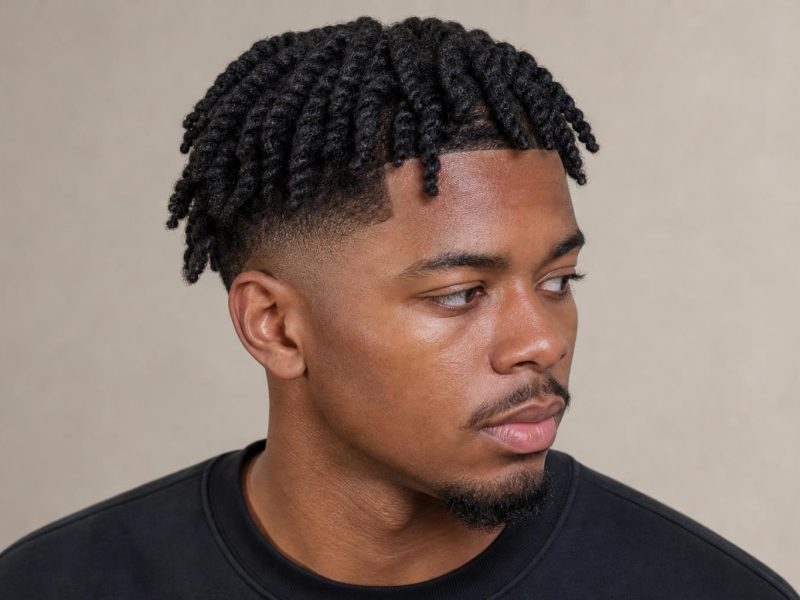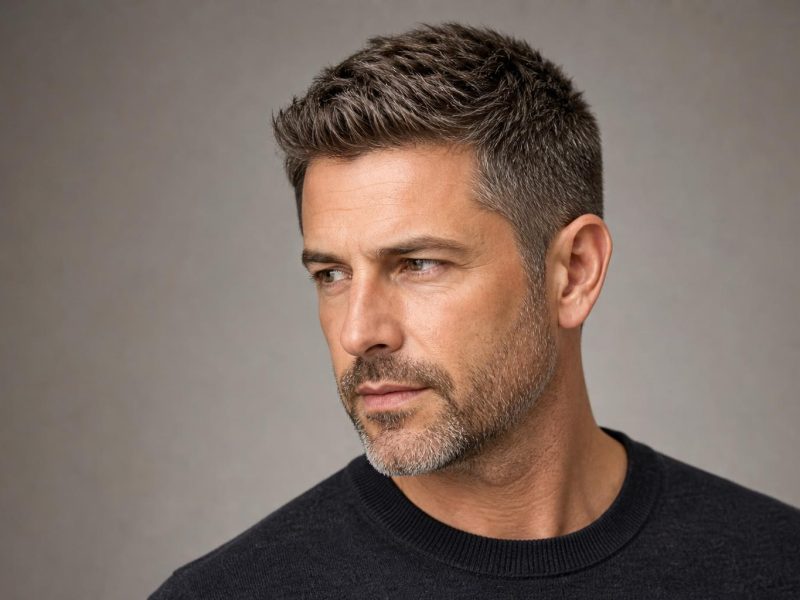
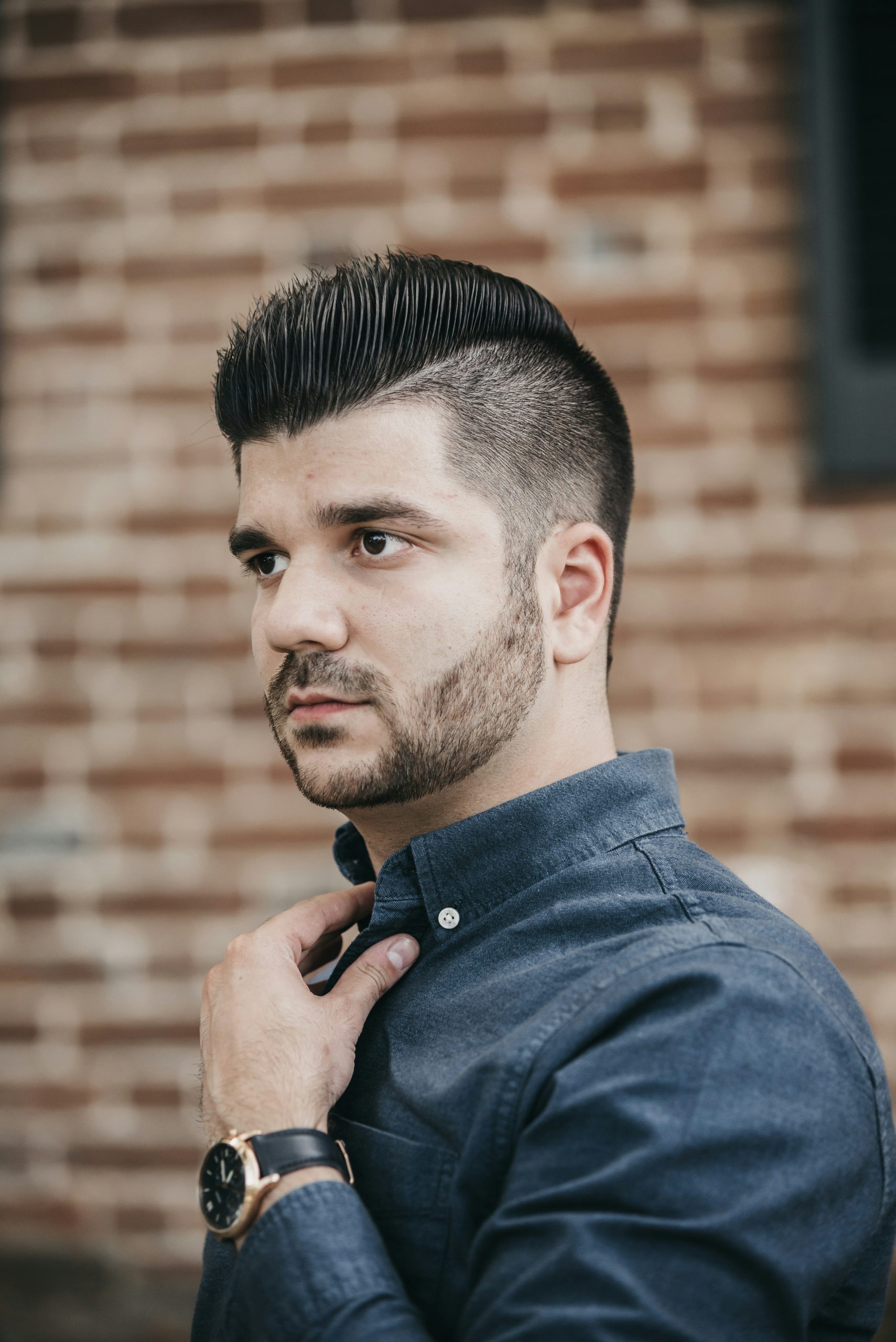

A low taper blowout keeps the taper soft and close to the ears while the top is blown up and out for volume, giving you the height of a blowout with the most subtle, work-friendly sides.
A low taper blowout pairs a low taper, where the hair shortens gradually only around the ears and neckline, with a top blow-dried up and outward into a full, rounded shape. Keeping the taper low makes it the most understated member of the blowout family, which is exactly why it suits straight and wavy hair so well and passes in more settings. Here are 25 low taper blowout styles sorted by fringe and hair texture, plus how to ask your barber.
The gallery opens with the classic low taper blowout, moves through fringe versions, then breaks down the cut for straight and for wavy hair specifically. After the photos you will find how the low taper differs from a mid or high one, a face shape table, the exact words for your barber, a blow-dry and maintenance guide, and when this cut is the wrong call.
| Factor | Details |
|---|---|
| Best for | Men with straight or wavy hair wanting volume and subtle sides |
| Maintenance | Taper refresh every 3 to 4 weeks; daily blow-dry styling |
| Works with | Straight and wavy hair with enough length on top to blow out |
| Avoid if | You want a wash-and-go cut or bold high-contrast sides |
| Salon time | 25 to 40 minutes for the cut and a style demo |
Classic Low Taper Blowout Styles
The core look pairs a soft low taper at the sideburns and neckline with a top blown up into a full, rounded volume. Because the taper stays low, the sides keep more length and the whole cut reads understated. These versions stick to the essential formula.
1. Classic Low Taper Blowout
A low taper blended just around the ears with a blown-out top is the cleanest version of this cut. Blow-dry damp hair up and back over a round brush, then set it with a matte clay. The low taper keeps the sides subtle enough for almost any setting.
2. Low Taper Blowout with Pushed-Back Volume
Directing the blowout straight back builds height at the crown and a clean swept shape. Square and oval faces wear this comfortably since the lift adds proportion without widening. A medium round brush and a few minutes of heat are all it takes.
3. Low Taper Blowout with Hard Part
A razored hard part adds one crisp line that separates the tapered side from the volume on top. The detail sharpens the cut and gives the blowout a defined starting point. Ask your barber to follow your natural part so it grows in evenly.
4. Office-Friendly Low Taper Blowout
Keeping the blowout softer and the taper subtle makes this the most workplace-appropriate version. Use a lighter product and less height so the top has body rather than maximum lift. It is a strong pick if a dramatic blowout feels like too much.
5. Low Taper Blowout with Tapered Neckline
Pairing the low side taper with a clean, tapered neckline keeps the back as tidy as the front. The continuous low taper around the head reads polished from every angle. This finish grows out softly without a hard line.
6. Voluminous Low Taper Blowout
Pushing the blowout to its fullest height makes the volume the centerpiece while the sides stay quiet. Rounder and shorter faces benefit most, since the lift adds flattering length. Commit to the daily blow-dry, because this version falls flat without it.
Low Taper Blowout with Fringe
A textured fringe at the front brings the volume forward and frames the face, while the low taper keeps the sides understated. The fringe is one of the most-requested ways to wear this cut. These entries focus on the fringe-forward look.
7. Low Taper Blowout with Textured Fringe
A piece-y, textured fringe pushed slightly forward over a low taper is a clean, modern take. Point-cut ends keep the fringe from looking blunt, and a matte clay separates the pieces. Our gallery of the blowout taper with a textured fringe shows how much variety the front can carry.
8. Low Taper Blowout with Fringe Down
Wearing the fringe down and forward gives a relaxed look while the blowout adds height behind it. Longer faces benefit from the forehead coverage the fringe provides. Scrunch a little texture through the front so it sits naturally rather than flat.
9. Low Taper Blowout with Wispy Fringe
A lighter, wispy fringe keeps the front airy and suits finer straight hair that a heavy fringe would overwhelm. The see-through texture frames the forehead without looking blocky. Use a light hand with product so the wisps stay separated.
10. Low Taper Blowout with Middle-Part Fringe
Splitting the fringe down the center gives a soft, curtain-style front that pairs neatly with the volume behind. The middle part suits oval and heart faces. Blow each side out and away from the center for the clean split.
11. Low Taper Blowout with Rounded Fringe
A softly rounded fringe follows the curve of the blowout for a cohesive shape. The rounded front flatters square and angular faces by easing hard lines. Blow-dry the fringe forward over a brush to set the curve.
12. Low Taper Blowout with Long Fringe
Letting the fringe grow longer so it nearly reaches the brows gives a heavier, bolder front. The length pairs well with thick, straight hair that holds the weight. Keep the sides clean with regular low taper refreshes to balance the front.
Low Taper Blowout for Straight Hair
Straight hair gives the cleanest, most uniform blowout, lifting into a smooth, full shape. The challenge is holding the height, since straight hair can drop, so the cut and product matter. These entries focus on straight textures.
13. Sleek Straight Low Taper Blowout
Straight hair blown up and back over a round brush gives a smooth, polished blowout with clean lines. Because straight hair can fall flat, a stronger clay helps hold the height through the day. This is the easiest texture to get a textbook blowout on.
14. Straight Low Taper Blowout with Volume Root
Lifting the roots with a blow-dryer is the key to fullness on straight hair, since the volume starts at the base. Aim the dryer at the crown and brush upward before the hair cools into shape. A volumizing mousse at the root locks in the lift.
15. Straight Low Taper Blowout with Texture
Asking your barber to add texture on top gives straight hair the grip it needs to hold a blowout. Point cutting and a little thinning create separation so the hair does not sit like a helmet. A texture powder shaken into the roots adds the messy, voluminous finish.
16. Fine Straight Low Taper Blowout
Fine straight hair can fake real fullness with a blowout, since lifting the roots creates the illusion of density. Skip heavy products that flatten the lift and reach for a volumizing mousse. Be realistic that fine-hair volume softens by evening.
17. Thick Straight Low Taper Blowout
Thick straight hair holds a blowout effortlessly, but it needs internal thinning so the volume stays light. Tell your barber to remove weight from the inside while keeping length on top. The result is a tall, full shape that holds all day.
18. Straight Low Taper Blowout with Side Sweep
Sweeping the blown-out top to one side gives a slightly more classic, groomed finish on straight hair. The side direction suits men who want polish over height. A shine-free pomade keeps the sweep in place without stiffness.
Low Taper Blowout for Wavy Hair
Wavy hair adds natural movement to a blowout, giving the top a textured, less rigid shape that many men prefer. The waves do some of the styling work, which makes this an easier daily cut. These entries focus on wavy textures.
19. Wavy Low Taper Blowout
Natural waves blown up and back give a relaxed, textured blowout with plenty of body. The waves keep the shape from looking too rigid or sculpted. A light matte paste defines the movement without weighing it down.
20. Tousled Wavy Low Taper Blowout
Letting the waves stay loose and tousled over a low taper gives an undone, effortless finish. Rough-dry the hair up and back, then scrunch in a sea-salt spray for grip. This version suits men who want volume without a polished look.
21. Wavy Low Taper Blowout with Fringe
Pairing wavy texture with a forward fringe softens the front while the blowout adds height behind. The waves give the fringe natural separation. Scrunch the front forward as it dries so the waves frame the face.
22. Defined Wavy Low Taper Blowout
Enhancing the wave pattern with a curl-friendly cream gives a more defined, structured blowout. The defined waves read intentional rather than messy. Apply to damp hair and diffuse on low heat to set the pattern with volume.
23. Thick Wavy Low Taper Blowout
Thick wavy hair builds serious volume in a blowout, so internal thinning keeps the shape from getting too wide. Ask your barber to remove bulk from the inside while keeping the waves on top. The payoff is a full, textured shape with movement.
24. Wavy Low Taper Blowout with Flow
Growing the top longer so the waves flow back after the blowout bridges this cut toward a fuller style. The volume transitions into movement for a relaxed finish. If you like the length, our flow haircut gallery shows where this can grow into.
25. Wavy Low Taper Blowout with Mid-Length Top
Keeping the top mid-length lets the waves build a tall, full blowout with maximum movement. The extra length gives the waves room to bend and stack. Blow-dry up and back, then break up the shape with your fingers for a natural finish.
What a Low Taper Blowout Is and How It Differs from a Mid or High Taper
A low taper blowout is two things at once: a taper and a styling technique. The low taper shortens the hair gradually only around the ears and neckline, low on the head, so most of the side length stays intact. The blowout is the way the top is styled, blow-dried up and outward over a brush into a full, rounded volume rather than combed flat.
The difference between low, mid, and high comes down to where the taper starts. A low taper keeps the change near the ear for the most subtle look, a mid taper starts around the middle of the side for more contrast, and a high taper begins well up the head for a bold split. The low version is the quietest, which is why it works so well for men who want volume on top but understated, professional-looking sides. For more contrast, compare it to our mid blowout taper gallery.
Stylist tip: The blowout needs length to work, so do not let the low taper fool you into cutting the top too short. Tell your barber to keep at least two to three inches on top, because there is nothing to blow out below that. The low taper only affects the sides, not the length you style.
How to Choose a Low Taper Blowout for Your Face Shape
The low taper flatters most faces, but the height and direction of the blowout should match your proportions. The goal is to add length to a rounder face and avoid stretching a longer one. The table below pairs each shape with the version that works best.
| Face Shape | Best Version | Why It Works | Avoid |
|---|---|---|---|
| Oval | Most versions | Balanced proportions take any height | Little to avoid |
| Round | Tall voluminous blowout | Height lengthens a round face | Low, wide volume that adds width |
| Square | Blowout with a rounded fringe | Soft curve eases a strong jaw | Hard blocky fringe lines |
| Heart | Blowout with fringe down | Fringe softens a wider forehead | Extra width or height up top |
| Oblong | Lower blowout with a fringe | Keeps height down to avoid lengthening | Tall sky-high volume |
| Diamond | Blowout with a forward fringe | Fringe balances wider cheekbones | Tight sides that narrow the temples |
If your face is round, push the blowout taller to stretch the proportions upward. For a longer, oblong face, keep the volume lower and add a fringe so the cut does not lengthen things further. Square jaws look softest with a rounded fringe rather than a hard, blocky front that echoes the angle of the jaw.
What to Tell Your Barber
Cover three things: the taper height, the length on top, and the fringe. Try, “I want a low taper around the sides and neckline, with enough length on top to blow out, and a textured fringe at the front.” That gives your barber the subtle side, the styling intent, and the front shape in one go.
Say clearly that you want a low taper, not a mid or high, since the height is the whole point of choosing this version. Mention that you plan to blow the top out so the barber texturizes the length accordingly. Ask them to show you how they style it before you leave, because the cut and the blow-dry work together.
Stylist tip: If you have very straight hair that sticks out at the sides, ask for weight control on top so you do not get a mushroom shape. A low taper plus a little internal thinning keeps the volume going up rather than out, which is the difference between a clean blowout and a wide one.
How to Style and Maintain a Low Taper Blowout
This is a styled cut, so the daily blow-dry is the trade-off for the volume. Start with damp, towel-dried hair, apply a heat protectant, then blow-dry up and back over a round brush, finishing with a blast of cool air to set the shape. A matte clay or paste worked through after locks the height.
| Aspect | What to Expect |
|---|---|
| Taper refresh | Every 3 to 4 weeks; the low taper grows out softly |
| Daily styling | 5 to 10 minutes for the blow-dry and product |
| Products | Heat protectant, volumizing mousse, matte clay or paste |
| Tools | Blow-dryer, round brush sized to your length |
| Grow-out | Graceful; the low taper blends out without a harsh line |
One genuine advantage of the low taper is that it grows out more gracefully than a mid or high version, so you can stretch a few extra days between barber visits. The blowout itself is the only daily commitment, and skipping it leaves the top flat. If you would rather avoid styling entirely, a buzz cut with a taper needs none, and the full set of men’s haircuts covers other clean-sided options.
When a Low Taper Blowout Is Not the Right Choice
The low taper blowout looks great but is not for everyone or every routine.
- No interest in daily styling makes this the wrong cut, since the blowout needs a blow-dryer every morning to hold its shape. A textured crop or buzz gives a clean look with zero effort.
- Wanting bold, high-contrast sides means the low taper will feel too subtle, since it removes the least hair of the taper family. A mid or high taper blowout gives the dramatic split you are after.
- Very tightly curled or coily hair behaves differently from straight and wavy textures in a blowout. A version built around your curl pattern, such as our low fade styles for curly hair, usually serves coily hair better.
FAQ
What Is a Low Taper Blowout?
A low taper blowout is a haircut with a soft taper around the ears and neckline paired with a top blow-dried up and out for volume. The low taper keeps the sides subtle, which makes it the most understated and work-friendly of the blowout tapers. It suits straight and wavy hair especially well.
How Do I Ask My Barber for a Low Taper Blowout?
Ask for a low taper around the sides and neckline, with enough length on top to blow out, and a fringe if you want one. Say specifically that you want a low taper, not a mid or high, and that you plan to blow-dry the top. Bring a photo of the finished, styled look for the clearest result.
Is a Low Taper Blowout Good for Straight Hair?
Yes, straight hair gives the cleanest, most uniform blowout, lifting into a smooth, full shape. The main challenge is holding the height, so ask for texture on top and use a volumizing mousse at the roots. A stronger clay helps the volume last through the day.
What Is the Difference Between a Low, Mid, and High Taper Blowout?
The difference is where the taper starts on the head. A low taper keeps the change near the ear for the most subtle look, a mid taper starts around the middle of the side, and a high taper begins well up the head for bold contrast. The low version is the quietest and most workplace-friendly.
How Much Length Do I Need on Top for a Blowout?
Most men need at least two to three inches on top to get a proper blowout, since shorter hair has nothing to lift. The low taper only affects the sides, so it does not reduce the length you style. If your hair is shorter, grow it out before expecting a full blowout shape.
How Often Does a Low Taper Blowout Need a Refresh?
The low taper grows out gracefully, so a refresh every three to four weeks keeps the sides clean without feeling urgent. Because the taper is subtle, it looks tidy longer than a mid or high version. The daily blow-dry is the main upkeep, taking only five to ten minutes.
A low taper blowout gives you the volume of a blowout with the most understated sides, which is why it has become a favorite for men with straight and wavy hair who want height without bold contrast. Decide how tall you want the top and whether to add a fringe, ask your barber to keep the taper low and leave enough length to style, and commit to the quick daily blow-dry. Styled with a round brush and the right product, a low taper blowout gives you clean, subtle sides and standout volume that still looks sharp at the office.
Hair results vary based on your natural hair type, texture, density, and condition. Always consult with a licensed barber or hairstylist before making significant changes. Photos may show styled results that require professional tools and products to replicate.