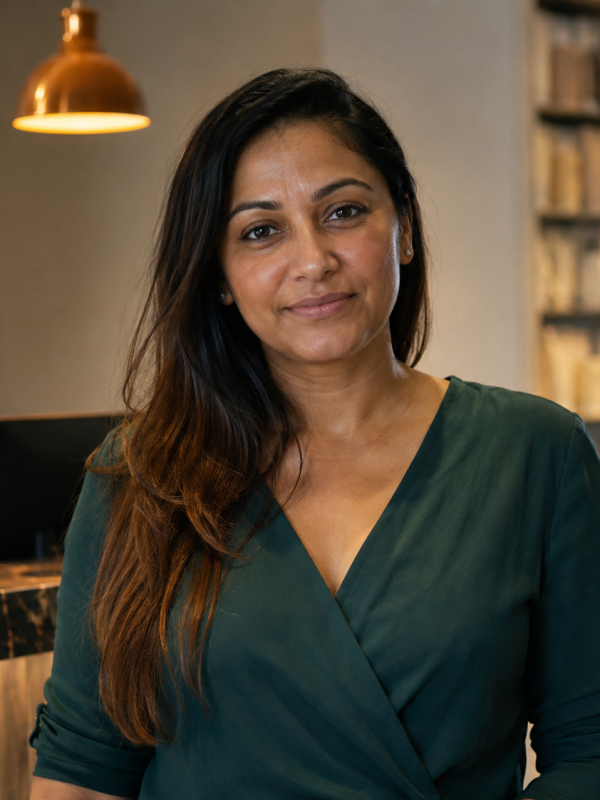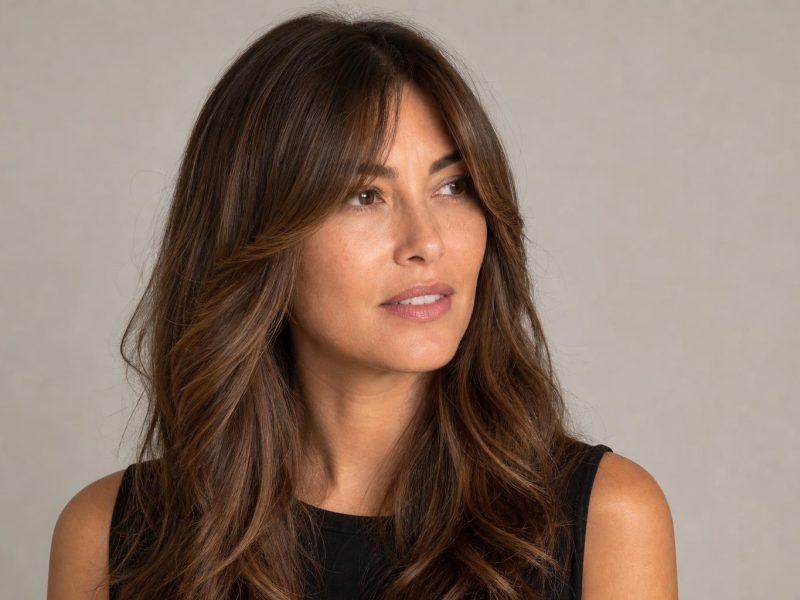

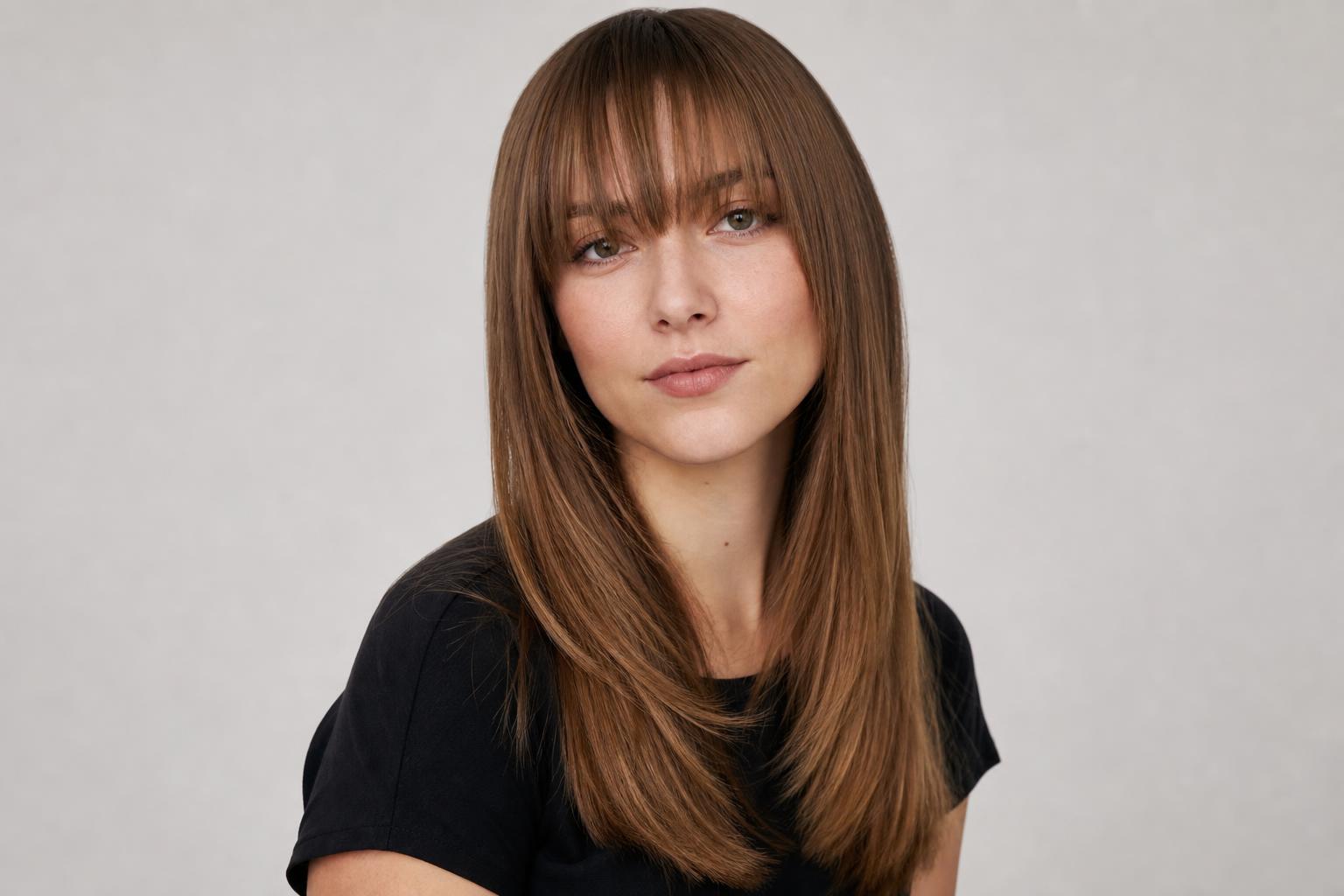
Birkin bangs are the long, soft, slightly grown-out fringe Jane Birkin wore in the 1970s, and getting them right is more about how they are cut than how you style them.
Birkin bangs are a full but airy fringe that grazes the lashes or brows, feathered at the ends and often split with a faint center break so they never look blunt or heavy. Named for the actress and singer Jane Birkin, the look is undone on purpose, the fringe that seems to have grown out perfectly rather than been freshly cut. The secret is in the cutting: soft, tapered ends and a length that skims the eyes instead of stopping short above them.
This guide covers what separates Birkin bangs from a standard fringe, the exact words to bring to your stylist, how to style them in about five minutes at home, and which face shapes and hair types get the easiest results. There is also an honest section on who should skip them, because this fringe rewards a certain hair texture and punishes another.
| Factor | Details |
|---|---|
| Best for | Straight to loosely wavy hair with medium density; most face shapes |
| Length | Long, grazing the lashes to just below the brows, with a faint center break |
| Maintenance | Trim every 5 to 7 weeks; grows out easily into face-framing pieces |
| Avoid if | You have tight curls or want a crisp, structured fringe |
| Salon time | 20 to 30 minutes to add to a cut |
What Birkin Bangs Actually Are
Birkin bangs are longer and softer than most fringes, which is what gives them that 70s French-girl ease. Where a blunt fringe stops in a clean line above the eyes, a Birkin fringe extends down to the lashes and feathers apart, so you see through it and past it. A subtle center break lets it fall into two soft halves without committing to a full center part. The whole effect depends on length and taper, not on product or heat, which is why it suits people who want to look polished without a real routine.
Stylist tip: Birkin bangs are best cut on dry hair by a stylist who works freehand. Wet-cutting a long fringe almost guarantees it ends up shorter than you wanted once it dries and lifts, and the whole charm of this look is length that skims the eyes.
Birkin Bang Variations Worth Knowing
The Birkin fringe is a template more than a single cut, and small changes in length, density, and parting shift the mood. These variations show the range so you can point to the one that matches your hair and your patience.
The Classic Lash-Grazing Birkin
The original: a full fringe that falls right to the lash line and feathers softly at the tips. It frames the eyes closely and makes them the focal point of the face. This is the version to ask for if you want the truest nod to Jane Birkin herself.
The Grown-Out Birkin
Cut longer so the outer pieces reach the cheekbones, this version blurs the line between a fringe and face framing. It is the most forgiving between trims and the easiest to pin back on days you want your forehead clear. Anyone testing the waters before a shorter commitment should start here.
The Center-Split Birkin
A defined middle break splits the fringe into two curtain-like halves while keeping the density of a true fringe. It opens up the face and flatters a wider forehead. This one sits closest to the border with wavy curtain bangs, so it is a natural pick if you like both looks.
The Wispy See-Through Birkin
Thinned for a sheer, barely-there finish, this fringe lets a wash of forehead show through the strands. The lightness keeps it from overwhelming small or delicate features. It borrows the airiness of see-through bangs while keeping the longer Birkin length.
The Full Bardot-Weight Birkin
Heavier through the body with only the ends softened, this fuller take makes a stronger statement and holds up better on thick, straight hair. It leans more 60s screen siren than 70s folk singer. Book more frequent trims, since the extra weight shows growth sooner.
The Tousled Wavy Birkin
On hair with a natural bend, the fringe falls in soft, uneven pieces that need almost no styling. The wave does the work of separating the ends that a straight-haired person creates with their fingers. A quick mist of texture spray keeps the movement lively without crunch.
Birkin Bangs by Hair Type
Texture decides how easily this fringe falls into place and how much daily effort it asks for. Match the approach below to your own hair before you book.
Fine Hair Needs a Wider Section, Not More Thinning
On fine hair, take the fringe from further back so it borrows density and does not look sparse, and resist heavy thinning, which fine hair cannot afford. A whisper of dry texture spray at the roots gives the fringe enough grip to hold its shape. The Birkin length actually helps here, since longer pieces lie together and look fuller than a short blunt fringe would.
Thick Hair Needs Internal Weight Removed
Thick hair can turn a Birkin fringe into a heavy slab, so the stylist should hollow out the underside with point cutting while keeping the surface smooth. Done well, the fringe lies flat and moves instead of puffing. Skip this step and the fringe will fight you every morning.
Wavy Hair Gets the Look Almost for Free
Loose waves give the fringe built-in separation and that undone Birkin softness with barely any styling. Rough-dry it with your fingers and leave the ends to fall where they want. This is the texture the look was practically made for.
Curly Hair Needs a Modified, Longer Cut
Tight curls do not fall into a soft skimming fringe the way straight hair does, so a true Birkin is a stretch, but a longer curly fringe cut dry can echo the spirit of it. Expect a rounder, springier shape rather than a flat curtain. Our gallery of curly bangs ideas shows what actually works on curls up front.
How to Ask Your Stylist for Birkin Bangs
Bring a reference photo, then translate it into cutting language so nothing is lost. Ask for a long, soft fringe cut dry, grazing the lashes, with feathered, point-cut ends and a faint center break. Say the words “do not open up the face too much,” because the appeal of a Birkin fringe is that it stays close and flirty rather than being swept wide like a curtain bang. If you want the fringe to blend into the rest of your hair, ask for shorter face-framing pieces that connect it to your lengths.
Stylist tip: Ask specifically for a stylist who is comfortable with dry, freehand fringe cutting. This look lives and dies on the taper of the ends, and a stylist who only cuts fringes wet and straight across will hand you a blunt fringe no matter which photo you showed.
How to Style Birkin Bangs at Home
The Birkin fringe is low effort by design, but a couple of minutes of shaping keeps it from falling flat or splitting oddly. Here is the fastest reliable method.
Step 1: Dry the Fringe First, While It Is Wettest
Right out of the shower, before the rest of your hair, rough-dry the fringe with a small round or vent brush, directing it down and slightly side to side. Drying it first, while it holds the most water, sets the shape and stops a cowlick from taking over. Leaving the fringe to air-dry last is the most common reason it separates into a gap.
Step 2: Break the Ends, Do Not Smooth Them
Once dry, pinch the ends between your fingers with a trace of light styling cream or texture spray to separate them into soft pieces. The goal is feathery, not glued together. Heavy product near the roots kills the airiness, so keep it to the tips.
Step 3: Set the Center Break by Hand
Nudge a faint parting into the middle of the fringe with your fingers so it falls into two soft halves. You are guiding it, not carving a hard part. A quick shot of flexible hairspray from a distance holds the movement without stiffness.
How to Choose Birkin Bangs for Your Face Shape
Birkin bangs are one of the more universally flattering fringes because their length and softness can be nudged to balance almost any face. The table pairs each shape with the version that works hardest for it.
| Face Shape | Best Variation | Ideal Length | Avoid |
|---|---|---|---|
| Oval | Classic lash-grazing Birkin | At the lashes | Over-thinning that loses the soft body |
| Round | Grown-out Birkin with long sides | Longer at the cheekbones | Short rounded fringe that adds width |
| Square | Center-split Birkin | Just below the brows | Full Bardot weight that squares the frame |
| Heart | Wispy see-through Birkin | At the brows | Dense fringe that widens a broad forehead |
| Oblong | Full Bardot-weight Birkin | Fuller, at the brows | Sheer wispy styles that lengthen the face |
Maintenance and Grow-Out
Because Birkin bangs are meant to look grown out, they are gentler on your schedule than a blunt fringe. A trim every 5 to 7 weeks keeps the ends soft, and you can stretch that longer than you could with a crisp fringe. When you do decide to move on, they grow out into face-framing pieces with almost no awkward stage, blending naturally into face-framing bangs as they reach the cheekbones. Daily upkeep is minimal, but a travel-size dry shampoo helps, since a fringe against the forehead picks up oil faster than the rest of your hair.
When Birkin Bangs Are Not the Right Choice
This fringe flatters a lot of people, but a few situations make it more trouble than it is worth.
- You have tight, coily curls, since the soft skimming line that defines a Birkin fringe simply will not form; a longer curly fringe is a better route.
- You want a crisp, structured, editorial fringe, in which case a blunt or micro cut delivers the sharp line a Birkin deliberately avoids. Our guide to micro bangs covers that bolder direction.
- You have a strong cowlick at the front hairline that pushes the fringe up and apart, which fights the low, close fall this look depends on.
- You truly never want to touch your hair, because even a five-minute morning shape matters more with a long fringe than with no fringe at all.
FAQ
What Is the Difference Between Birkin Bangs and Curtain Bangs?
Birkin bangs keep the density and length of a true fringe that grazes the eyes, while curtain bangs are lighter face-framing pieces that part and sweep away. A Birkin fringe stays close to the face, whereas curtain bangs open it up. The center-split Birkin is the closest overlap between the two if you want a bit of both.
Do Birkin Bangs Suit Everyone?
They suit most people because the length and thinness can be adjusted to balance different faces, but tight curls and strong cowlicks are the real exceptions. Straight to loosely wavy hair gets the easiest, most authentic result. A skilled stylist can tailor the density and parting to your features, which is why the consultation matters.
How Long Do Birkin Bangs Need to Be?
They should be long enough to graze your lashes or reach just below your brows, which is longer than a standard fringe. That extra length is what lets them feather apart and look grown out rather than blunt. Ask your stylist to cut them dry so the finished length is exactly what you see in the chair.
Can I Get Birkin Bangs with Fine Hair?
Yes, and the longer length often works in fine hair’s favor because the pieces lie together and look fuller than a short fringe. Take the fringe from a little further back for extra density and avoid heavy thinning. A light dry texture spray at the roots gives fine hair the grip it needs to hold the shape.
How Do I Style Birkin Bangs Without a Round Brush?
Rough-dry the fringe with your fingers straight out of the shower, directing it down and side to side to set the shape. Once dry, separate the ends with a trace of styling cream for that feathery finish. A flat paddle brush works in place of a round one if you keep the tension light.
Are Birkin Bangs High Maintenance?
They are lower maintenance than most fringes because they are designed to look grown out, so you can stretch trims to every 5 to 7 weeks. Daily styling is about five minutes. The one ongoing task is managing oil at the hairline, which a quick pass of dry shampoo handles.
Getting Birkin bangs right comes down to the cut: a long, soft, dry-cut fringe that skims the eyes and feathers apart, shaped by a stylist who cuts freehand. Bring a photo of Jane Birkin herself, ask them not to open up the face, and keep your at-home routine to a quick shape and a little separation at the ends. Done that way, Birkin bangs give you that unforced 70s softness that looks like good genes rather than a standing salon appointment.
Hair results vary based on your natural hair type, texture, density, and condition. Always consult with a licensed hairstylist before making significant changes, especially with chemical treatments or dramatic length changes. Photos may show styled results that require professional tools and products to replicate.