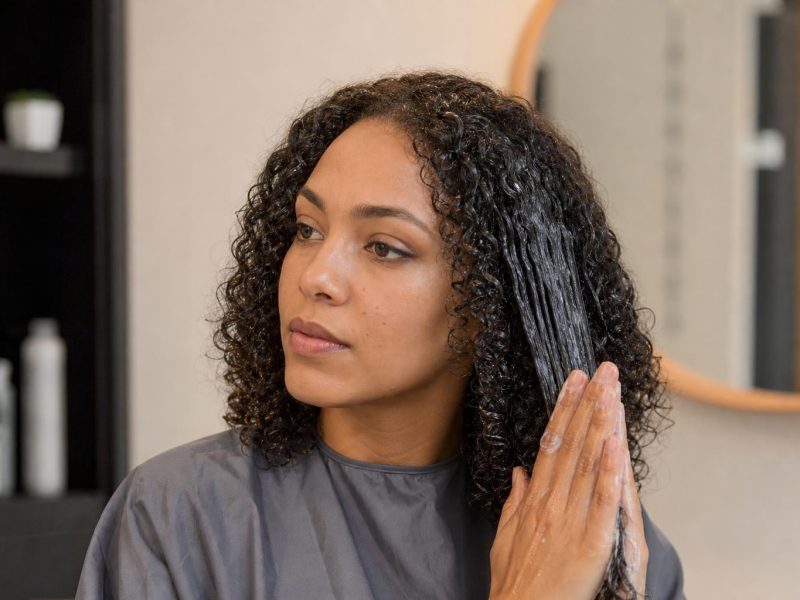

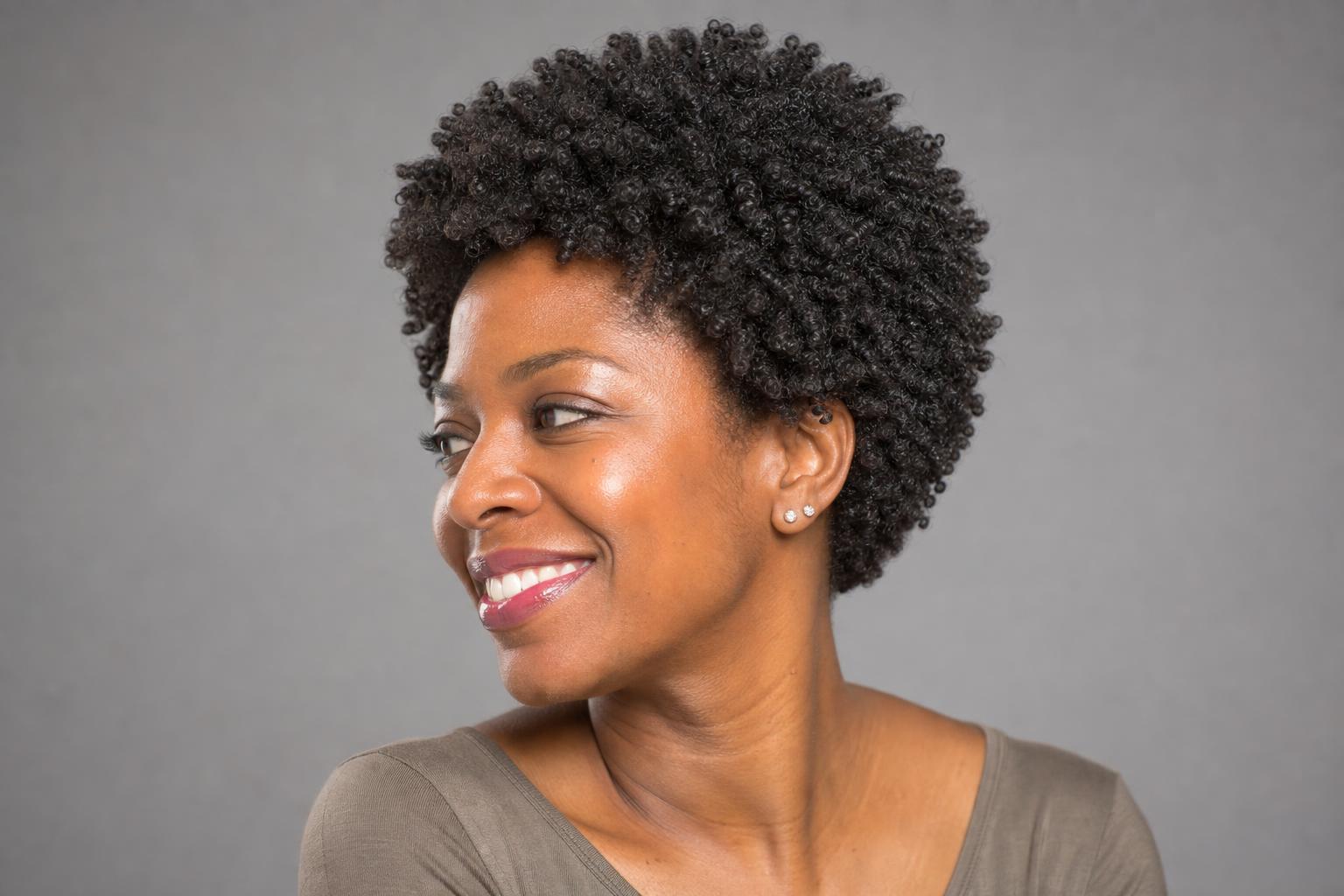
4A coils hold a visible spring shape on their own, which means the right haircut builds a silhouette rather than fighting for definition you already have.
Haircuts for 4A hair are shape decisions first and length decisions second. A 4A coil is about the width of a crochet needle, springs back into a tight S when released, and shrinks roughly 65 to 75 percent, so the outline of the cut is what people see long before any individual curl. Below are 25 cuts organized from cropped shapes through bobs to long sculpted layers, each with the structural reason it holds up on coily hair.
The sections that follow the gallery cover something most 4A roundups get wrong: they list styles like twist-outs and high puffs and call them haircuts. A twist-out is a set, not a cut. Here you get the actual cutting decisions, plus a face shape table, consultation wording, and a realistic trim schedule.
| Factor | Details |
|---|---|
| Best for | Defined S-pattern coils, medium to high density, anyone wearing natural texture most days |
| Maintenance | Shape refresh every 8 to 12 weeks; tapered edges every 4 weeks if you have them |
| Works with | Dry cutting, coil-by-coil shaping, scissor tapering, internal weight removal |
| Avoid if | You wear braids or wigs most of the year, or your stylist cuts coils in a wet, stretched state |
| Salon time | 2 to 3 hours for a full shape including wash, detangle, and dry |
Short Shaped Cuts for 4A Coils
Cropped 4A hair lives or dies on its outline. Because the coils sit close to the head and hold their own volume, the eye reads the silhouette as a single form, which makes the perimeter and the hairline more important than any interior layering. The cuts here range from a rounded teeny weeny afro to a scissor-shaped crop, and all of them are built to keep a clean edge as they grow.
1. Rounded TWA with a Clean Outline
A rounded outline adds width at the temples and softens a long or narrow face, which is why it flatters oblong and heart shapes so reliably. Keeping the perimeter uniform rather than tapered means the whole head reads as one balanced curve. Ask for the outline to be shaped with shears so the coils keep their spring at the edges.
2. Scissor-Cut Coily Crop
Cutting with shears rather than clippers leaves each coil with a tapered tip that springs and separates, while clippers give a blunt, uniform end that reads flatter. On 4A hair that difference is visible from across a room. The trade-off is time in the chair, since a scissor crop takes considerably longer than a guard-and-go.
3. Low-Maintenance Shaped Afro
Cut to a uniform three or four inches with no tapering anywhere, this shape needs a reshape roughly every ten weeks and nothing in between. Growth stays proportional because every section is the same length, so nothing goes out of balance first. It is the least demanding cut in this collection by a wide margin.
4. Wash-and-Go Shape with Lifted Roots
Apply a leave-in and a medium-hold gel section by section on soaking wet hair, then hover-diffuse without touching the hair until it is about 80 percent dry. Lift the roots with your fingers only at the very end, once the coil clumps have set. Touching too early is what turns a wash-and-go into a frizz halo.
5. Coily Pixie with an Exposed Nape
A coily pixie differs from a standard pixie in where the volume sits: the classic version relies on a fringe sweeping across the forehead, while this one puts the fullness on top of the head and clears the nape entirely. The result is more vertical and less side-swept. If you want the sweep, you need three or four inches at the front, which changes the cut significantly.
6. Dense Crop for High-Density Coils
High-density 4A hair holds so much bulk that a short crop still looks substantial, and the interior needs thinning from underneath or the shape balloons. Lower-density coils need the opposite treatment, with every strand kept for fullness. Judge by how much scalp shows when you part the hair, not by how thick the ponytail feels.
7. Shape-Up with a Squared Hairline
Ask for a shape-up with a squared corner at the temple rather than a rounded one, and say how far back you want the line to sit relative to your natural hairline. Barbers vary a lot on how aggressively they push the line back, and stating a preference protects the hairline over time. Some of the terms that come up here appear in our rundown of common salon vocabulary, which is worth skimming before a first appointment with a new stylist.
Bobs and Mid-Length Shapes for 4A Hair
Bobs on 4A hair sit higher than the number suggests. A cut measured at shoulder length while stretched will settle somewhere near the chin once the coils spring back, so the conversation about length has to happen in shrunken inches. The shapes below use different weight distributions to control where the width lands.
8. Auburn-Tinted Coily Bob
A soft auburn tint over a natural dark base warms the whole silhouette without lifting the hair enough to loosen the coil pattern. Semi-permanent color deposits without a developer strong enough to swell the strand, which matters when the coil structure is the shape you are paying for. Expect the warmth to soften over about eight weeks.
9. Angled Coily Bob Cut Curl by Curl
The stylist works through the head coil by coil in a dry, unstretched state, trimming each one where it naturally rests so the angle emerges from the way the hair actually falls. No tension is applied at any point. Pulling a 4A coil taut before cutting it is what produces those uneven steps that only appear once the hair dries.
10. Jaw-Length Bob Styled with a Twist-Out
Set the bob on medium two-strand twists while damp, let it dry fully overnight, and separate each twist into two rather than four for a fuller result. The bob shape gives a twist-out more definition at the ends than long hair does, because there is less weight pulling the pattern down. The same setting logic applies across most two-strand twist styles, though shorter hair needs smaller sections.
11. Rounded Bob That Sits Above the Shoulder
Stopping the perimeter just above the shoulder keeps the widest point of the shape level with the jaw, which balances a square face by softening the corners. On a round face the same cut needs an extra inch of length to avoid doubling the width. Length is the lever here, not layering.
12. Golden-Brown Highlights on a Coily Lob
Golden-brown pieces placed through the top third of a lob catch the light on the outer curve of each coil, which reads as depth rather than as stripes. Because coils interlock, highlights placed deep inside the head disappear completely, so the placement has to stay near the surface. Two or three shades of lift from your base is the sweet spot before definition starts to soften.
13. Shoulder-Grazing Cut for Fine-Stranded Coils
Fine strands in a 4A pattern tangle more easily and lose definition at the ends, so this cut keeps the perimeter blunt and takes nothing off the interior. Coarse 4A hair can carry internal layering at the same length without going wispy. The distinction is strand diameter, not how much hair you have.
14. Coily Bob with a Blunt Line, Not a Layered One
A blunt coily bob keeps a dense, unbroken perimeter, while a layered version lets the coils separate and stack upward into a rounder outline. Blunt reads sharper and holds a defined edge for longer between trims. Layered reads softer and disguises grow-out better, so the choice comes down to which compromise you would rather live with.
Long Layered and Sculpted 4A Cuts
Long 4A hair carries weight that pulls the coil pattern downward at the root, so length brings its own problems. The cuts in this section solve them by removing bulk where it cannot be seen and by using the outline to create shape, which is a different approach from the surface layering used on looser textures. The general rules for layering on curly hair hold, but the layers themselves need to sit deeper.
15. Long Coils with Invisible Internal Layers
Because the layering happens underneath, nothing about the outline changes as it grows, which means this cut holds its look for the full 12 to 16 weeks between appointments. There is no awkward stage where a layer becomes visible in the wrong place. It is the most forgiving long option for anyone who books infrequently.
16. Collarbone Cut Asked for in Shrunken Inches
Tell your stylist you want the length to sit at your collarbone in its shrunken state, and add that you understand this means roughly mid-back when stretched. Saying both measurements out loud removes the most common source of disappointment in a long coily cut. Write the numbers on your phone if you tend to freeze up in the chair.
17. Elongated Coils Set on Flexi Rods
Wrap damp sections around large flexi rods, sit under a hooded dryer until completely dry, then unravel and separate at the root only. The set stretches the coils by two or three inches without heat, so the length of the cut finally becomes visible. Rods larger than an inch keep the result looking like elongated coils rather than a curl set.
18. Face-Framing Coils Cut at the Cheekbone
Framing pieces that land at the cheekbone widen the middle of the face and balance a narrow forehead or a pointed chin. Drop that starting point to the jaw and the effect reverses, adding fullness lower down where a heart-shaped face needs it. Pick the level you want to look wider and put the shortest piece there.
19. Rezo Cut for Uniform Fullness
The Rezo method cuts every coil to an identical length in its natural resting position, producing a full, rounded silhouette with no graduation anywhere. It requires specific training, so confirm the stylist has actually done the certification rather than just watched the technique. Sessions typically run three hours and are priced accordingly.
20. Layered Afro Shape That Grows Out Evenly
Layers cut in a rounded pattern grow at a consistent rate across the head, so the shape enlarges rather than distorting. Plan a reshape every ten to twelve weeks, mostly to restore the outline rather than to remove length. This is one of the few 4A cuts where skipping an appointment costs you nothing visually.
Tapered and Fade-Based 4A Shapes
Tapering is the most reliable way to give 4A hair a defined shape without touching the crown volume, and it is why so many coily cuts share the same short-sides logic. The distinction worth knowing is between a taper, which gradually shortens the hair but leaves it visible, and a fade, which takes it down to the skin. An afro taper fade sits at the sharper end of that range.
21. Tapered Cut with a Full Crown
Ask for a scissor taper starting at the temple with the crown left untouched, and specify that you want to still see coil pattern at the shortest point rather than a skin finish. Mention how often you plan to come back, because a stylist will taper more conservatively for someone visiting every eight weeks. Being upfront about your realistic maintenance level changes the cut you get more than any photo will.
22. Honey-Lightened Tapered Coils
Honey tones lifted two levels on the crown of a tapered cut make the full section read even fuller, since lighter hair catches more light at the top of the silhouette. Keeping the tapered sides at the natural base color preserves the contrast the shape depends on. Lightened coils need a bond-building treatment monthly to hold their spring.
23. Frohawk with Rounded, Not Faded, Sides
A rounded-side frohawk keeps enough length at the temples to be brushed flat on any given day, unlike a faded version which commits you to the shape until it grows out. That flexibility costs some sharpness in the silhouette. Choose the rounded version if you need one cut to work for both a weekend and a formal setting.
24. High Taper for Thick, Coarse 4A Hair
Coarse, high-density 4A hair needs the taper carried up past the temple, since a low taper leaves too much width at the sides and the head reads square. Softer, medium-density coils look better with a low taper that preserves that width. Coarseness is about strand thickness, so test it by rolling a single shed hair between your fingertips.
25. Drop Fade with Sculpted Coil Length on Top
The fade line curves downward behind the ear rather than running straight around, which follows the natural curve of the skull and makes the crown coils look taller. The top is then shaped with shears into a rounded or squared form depending on face shape. Precision at the fade line is what separates this from a generic short back and sides.
A Haircut and a Hairstyle Are Not the Same Thing
Most 4A articles blur the two, which is why people leave the salon with a cut that will not do what the photo did. A haircut is a permanent change to length and shape that lasts months. A hairstyle is a temporary set that lasts days. Knowing which one you are actually looking at in a reference photo is the difference between a good appointment and a wasted one.
| What You Want | Cut or Style? | How Long It Lasts | Who Does It |
|---|---|---|---|
| Tapered sides | Cut | 4 to 5 weeks before the line softens | Stylist or barber |
| Twist-out definition | Style | 3 to 5 days | You, at home, overnight |
| Rounded afro silhouette | Cut | 8 to 12 weeks | Stylist |
| High puff | Style | A single day | You, in five minutes |
| Elongated coils | Style | Until the next wash | You, with rods or bands |
| Face-framing length | Cut | 6 to 10 weeks | Stylist |
How to Choose a 4A Haircut for Your Face Shape
Because coily hair builds outward, the face shape question for 4A is about controlling the silhouette rather than choosing a length. A rounded outline widens, a tapered one narrows, and height at the crown lengthens. Match the effect you want to the shape below, then pick any cut from the gallery that produces it.
| Face Shape | Silhouette to Aim For | Cut That Delivers It | Avoid |
|---|---|---|---|
| Oval | Anything, proportions are already balanced | Rounded afro, tapered cut, long layered coils | Extreme asymmetry that unbalances the proportions |
| Round | Height at the crown, narrow at the cheeks | Tapered cut with a full crown, frohawk | Wide rounded afro level with the cheekbones |
| Square | Soft curves sitting just below the jaw | Rounded bob above the shoulder, layered afro | Squared hairline paired with a blunt jaw-length line |
| Heart | Fullness at and below the jaw | Framing coils cut at the jaw, shoulder-grazing shape | Tight sides with all the volume piled on top |
| Oblong | Width at the temples, low crown height | Rounded TWA, jaw-length coily bob | Tall frohawk or a high-volume crown |
| Diamond | Volume at forehead and jaw, less at the cheekbone | Coily lob, long coils with framing at the jaw | Maximum width level with the cheekbones |
What to Tell Your Stylist
Booking matters as much as the consultation. Look for a stylist who mentions coily or textured cutting specifically rather than curly, because those are different skill sets, and confirm on the phone that they cut in a dry, unstretched state. A salon that only offers a blow-out-then-cut service is not the right place for a shaped 4A haircut.
Once you are in the chair, lead with the silhouette rather than the length. Something like: “I want a rounded shape that sits about four inches off my scalp, tapered from the temple down, with the crown left full. Please cut it dry and unstretched, and take bulk out from underneath rather than off the outline.” Then say what you do at home, because a stylist who knows you wear a wash-and-go will cut differently from one who assumes you stretch it every week.
Stylist tip: Ask to see the shape from the back with a hand mirror before the stylist starts refining. Coily cuts are built as a three-dimensional form, and problems with the back outline are much cheaper to fix at the halfway point than after the finish.
Maintenance, Trims, and Grow-Out
4A hair grows at roughly half an inch a month like every other texture, but shrinkage means you see far less of it, which tempts people into skipping trims. The cost of skipping is not length, it is shape: the outline distorts and the ends start to knot. Here is what each shape asks for.
| Cut | Reshape Frequency | Wash-Day Time | What Fails First |
|---|---|---|---|
| TWA or crop | 6 to 8 weeks | 10 minutes | The outline loses its curve |
| Tapered shape | Edges every 4 weeks, full cut every 10 | 15 minutes | The taper closes up at the temples |
| Coily bob | 8 to 10 weeks | 30 to 45 minutes | The perimeter widens at the jaw |
| Rounded afro | 10 to 12 weeks | 20 minutes | Very little; it enlarges evenly |
| Long layered coils | 12 to 16 weeks | 45 to 60 minutes | Single-strand knots at the ends |
Between appointments, the two things that protect a 4A cut are a satin covering at night and enough moisture at the ends. Dry ends knot, knots break, and broken ends turn a deliberate outline into an uneven one within a couple of months.
Common 4A Haircut Myths
Three beliefs about coily haircuts come up constantly and each one leads to a bad appointment. Here is what is actually going on.
Myth: Cutting Coily Hair Makes It Grow Faster
Reality: Growth happens at the follicle and nothing done at the ends changes the rate. What a trim does is remove split and knotted ends before the damage travels up the strand and snaps mid-shaft. So trimming protects the length you already have, which can look like faster growth, but the mechanism is retention rather than growth.
Myth: Layers Always Make Coily Hair Look Thinner
Reality: Surface layers cut close to the perimeter do thin the outline, but internal layers taken from underneath remove bulk while the outer length stays intact. The difference is where the stylist takes the section from, not whether layers are used at all. Ask specifically for weight removal from the interior with no change to the outline.
Myth: 4A Hair Cannot Hold a Bob
Reality: It holds a bob well, provided the cut is measured in shrunken inches and the perimeter is left blunt enough to carry weight. The failures people remember usually come from a bob cut wet and stretched, which lands several inches shorter than expected once it springs back. Cut dry, a coily bob keeps a clean line for eight to ten weeks.
FAQ
How Much Does 4A Hair Shrink?
Roughly 65 to 75 percent, meaning 12 inches of stretched hair sits at around three or four inches when it dries. That is more than 3C and less than 4C. Measure one strand pulled straight and the same strand released, and take both numbers to your appointment so the length conversation starts from facts rather than guesses.
Can 4A Hair Be Cut with Clippers?
Yes for tapered sides and fade lines, where clippers give the precision the shape needs. For the crown and any length you want to keep, shears are better because they leave a tapered tip that lets each coil spring and separate. Many good coily cuts use both tools on the same head.
How Is a 4A Haircut Different from a 3C One?
3C spirals are looser and hang more, so length-driven shapes like layered lobs translate directly, while 4A coils hold their own volume and need the silhouette built through outline and tapering instead. If your pattern is somewhere in between, comparing the approaches to cuts for 3C spirals against the ones here usually makes the answer obvious. Density and strand thickness settle any remaining ambiguity.
Should I Straighten My Hair Before a Haircut?
No, and this is worth being firm about. A stylist who cuts your hair straightened is cutting a version of your hair you will rarely wear, and the shape will not translate when the coils return. Arrive with clean, dry, detangled hair worn the way you normally wear it.
Do I Need a Trim If I Wear Protective Styles Most of the Time?
Yes, roughly every three to four months, though a shaped cut is not worth the money if the hair spends most of the year braided. A straight dusting of the ends protects against the breakage that tension styles cause at the perimeter. Save the shaped cut for a stretch when you plan to wear your natural texture.
What If My Hair Is 4A in Some Places and 4B in Others?
That is extremely common, and the answer is to shape around the least defined section so the cut looks even in its natural state. The tighter areas will read fuller than the defined ones no matter what, so a uniform length across the head will look lopsided. Reading up on how 4B hair behaves alongside this guide helps you describe the mix accurately at the consultation.
Good haircuts for 4A hair start with a decision about silhouette, not about inches, because a defined coil pattern already gives you the texture and what it needs is a shape to sit in. Choose two cuts from this collection that suit both your face shape and the number of salon visits you will realistically make, then walk in with your shrunken and stretched measurements ready. A stylist who cuts coils dry and a client who can describe the outline they want is a combination that rarely goes wrong.
Hair results vary based on your natural hair type, texture, density, and condition. Always consult with a licensed hairstylist before making significant changes, especially with chemical treatments or dramatic length changes. Photos may show styled results that require professional tools and products to replicate.