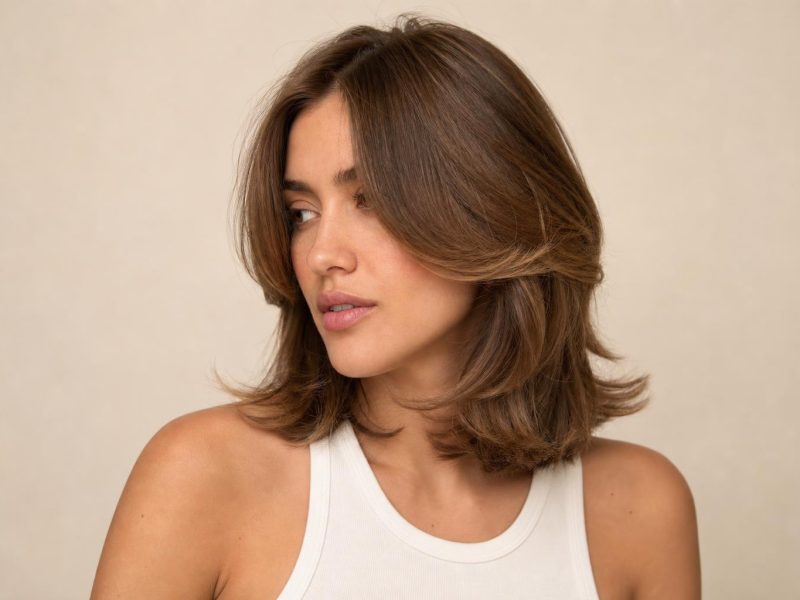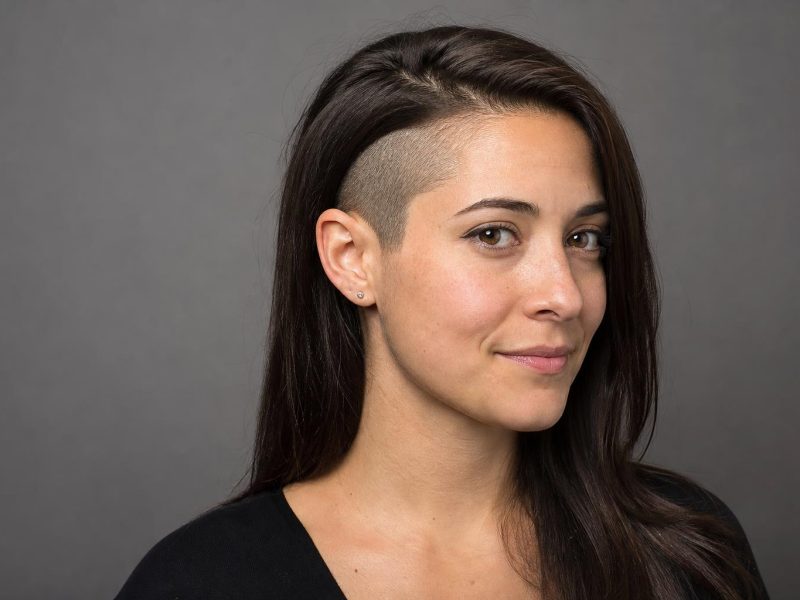

A travel-friendly haircut is one that still looks like itself on day fourteen, in different water, with nothing but your hands.
The test for a travel haircut is not how it looks the day you leave the salon. It is whether it survives a hotel shower with hard water, an air-conditioned flight, three weeks of grow-out, and a suitcase with no dryer in it. Below are 20 cuts that pass, sorted by whether you want something that needs no tools at all, something that shifts from beach to dinner, or a shape built for trips measured in months rather than days.
Each entry names what the cut asks of you on the road and how it behaves as it grows. After the gallery there is a breakdown by trip length, the right time to book before you leave, an honest list of what actually earns space in the bag, and the cases where cutting before a trip is a mistake.
| Factor | Details |
|---|---|
| Best for | Frequent flyers, long-trip travelers, anyone packing carry-on only |
| Maintenance | Cut 10 to 14 days before departure, then nothing until you return |
| Works with | Any texture, provided the cut is shaped around the hair’s natural fall |
| Avoid if | Your cut needs a specific dryer, a fixed part, or a trim every three weeks to hold |
| Salon time | 45 to 60 minutes, longer for a dry curly cut or a protective style |
Cuts That Air-Dry With Nothing in the Bag
Every tool you bring costs weight, an adapter, and the risk of a voltage mismatch that kills it on the first use. The cuts in this section were shaped so that hands and gravity finish the job. What they have in common is that the stylist cut them dry, or at least checked the shape dry, so the fall pattern you see is the one you get with no intervention. Anyone traveling somewhere tropical should also read how humid air changes which cuts hold before booking.
1. Lived-In Long Layers Cut Dry
Cutting long layers on dry hair means the stylist can see exactly where each section falls rather than where it falls when weighted with water. The layers land in their natural resting place, so the cut looks finished after a shower with no product. Medium-density hair from wavy through straight gets the most out of this approach.

2. French Bob with a Blunt Fringe
Sitting high at the jaw with a fringe cut straight across, the French bob is the shortest cut here that needs no styling and still reads as finished. Its whole shape comes from the line rather than from volume, so nothing has to be created each morning. It does need a trim every four to five weeks though, which makes it better for short trips than long ones, and the difference between the French and Italian versions is worth knowing before you commit.

3. Butterfly Cut with Long Face Layers
Two layer lengths do the work here: short face-framing pieces around the cheekbone and long layers through the back that stay connected. The short front sections dry with their own bend, so hair looks styled without a curling iron ever coming out of the case. Thick hair benefits most, since the short front layers take out the bulk that would otherwise sit heavy.

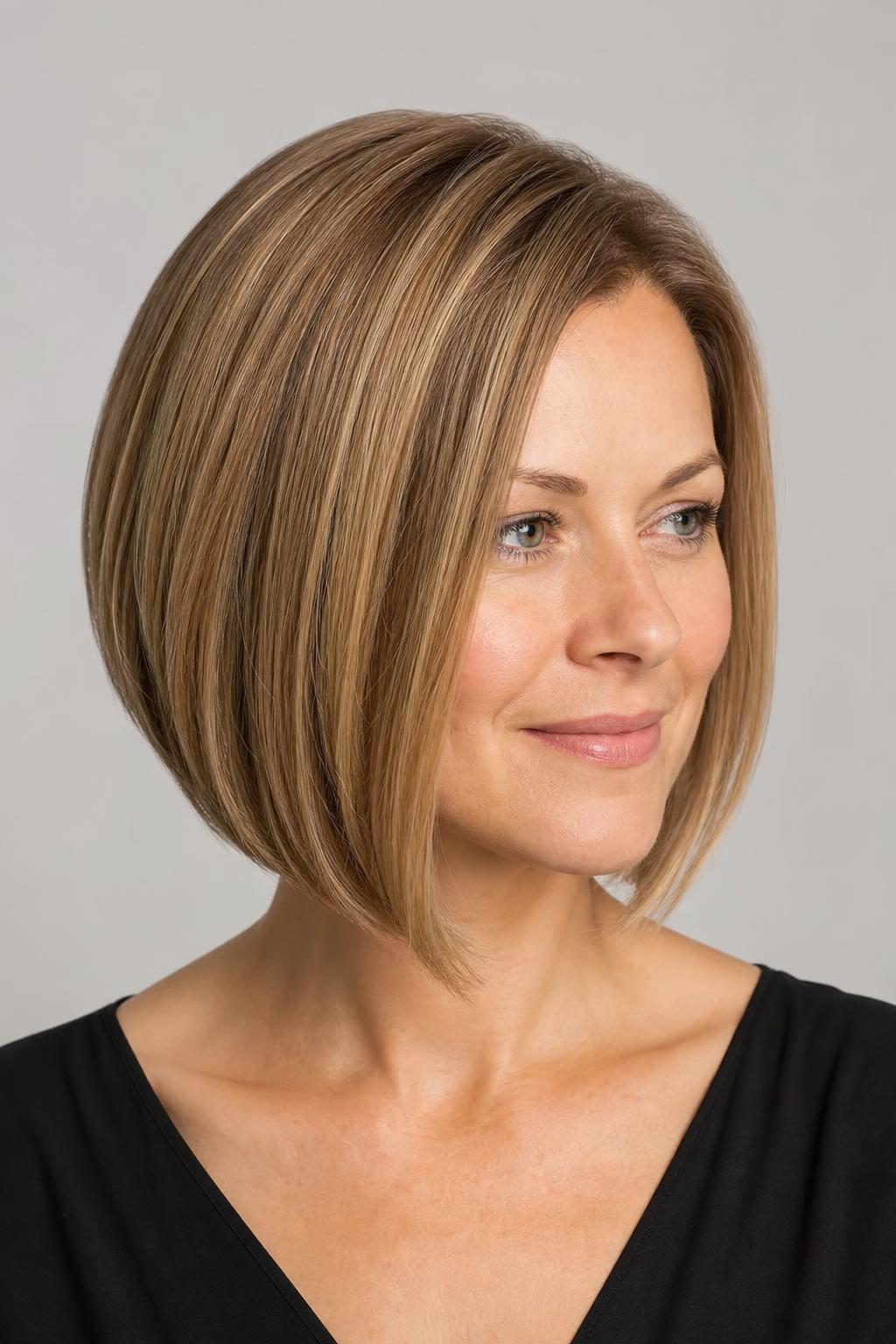
4. A-Line Bob That Falls Forward
Angling a bob so the front sits longer than the back means gravity pulls the shape into place every time it dries. There is no direction to set and no part to maintain. Round and square faces gain a useful diagonal from the angle, which softens the jawline without any styling at all.
5. Pageboy with a Rounded Hem
The rounded hem of a pageboy curves under on its own as it dries, which is why the shape held up decades before anyone owned a styling tool. Straight, fine to medium hair produces the crispest version. On thick or wavy hair the curve fights the natural bend, so this one is worth skipping unless you already blow-dry smooth at home.

6. Long Hair with a Center Part and No Fringe
Growing out a fringe before a long trip removes the one section that genuinely cannot be ignored for three weeks. A center part needs no maintenance, sits the same on every hair type, and stays correct whether hair is wet, damp, or dry. Say to your stylist that you want the front sections cut to the same length on both sides so nothing pulls to one side.

7. Beachy Mid-Length Cut on Natural Waves
Cut to just below the shoulder with the ends left slightly uneven, 2a waves dry into loose separated pieces without a single product. Salt water actually improves it, adding the grip that a texturizing spray usually provides. It is the rare cut that looks better on day four of a trip than day one, and it pairs naturally with the styles that hold up through salt and sun.

Cuts That Go From Beach to Dinner
The harder travel problem is not looking good at the pool, it is looking different at eight in the evening without repacking a bathroom. Cuts that manage it share one property: they hold at least two distinct shapes depending on where the hair is parted, gathered, or pushed. That flexibility comes from the cut, not from product, and it is the difference between a versatile trip and one where you look identical in every photograph.
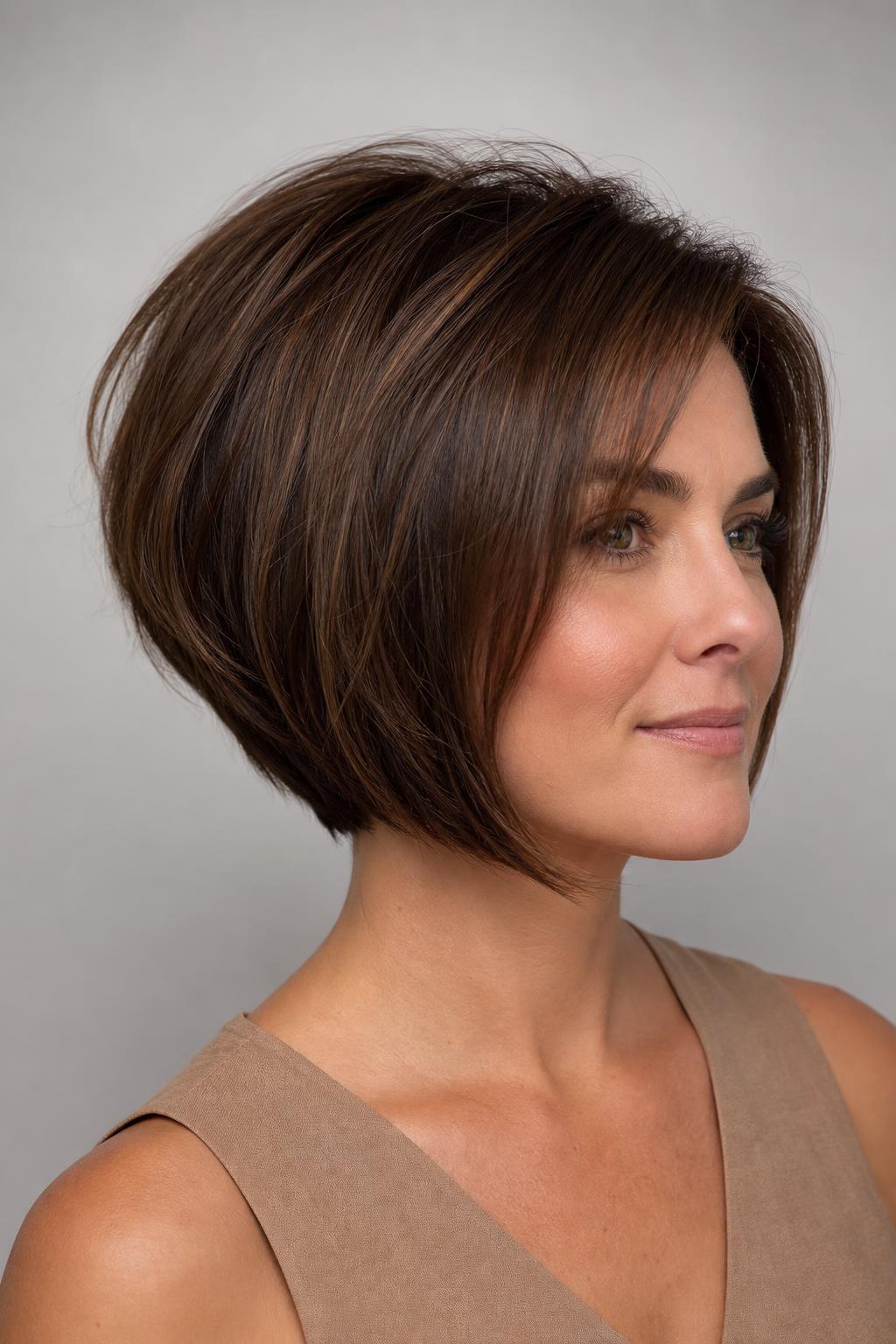
8. Stacked Bob That Holds a Shape Wet or Dry
Graduated layers stacked short at the back build a rounded volume that survives being slicked wet and then reappears as it dries. Slicked back it reads polished for the evening; air-dried it reads casual. Thick and medium hair holds the stacking best, since fine hair needs the graduation cut more shallowly to avoid looking sparse at the nape.
9. Layered Cut with a Deep Off-Center Part
Shifting the part two inches off center changes the entire silhouette of the same cut, which is the cheapest wardrobe change you can pack. Because the layers are cut symmetrically, the shape works parted either way rather than only in the direction it was cut. Move the part with wet fingers straight out of the shower and it sets there.

10. Blunt Fringe Bob for a Fast Reset
Wet the fringe for ten seconds under a tap, comb it flat, and the whole cut looks freshly done regardless of what the rest of the hair is doing. A blunt fringe is the one section short enough to fully reset in a hotel bathroom in under a minute. The trade-off is that it needs that reset most days, so it suits shorter trips.

11. Mid-Length Cut Long Enough for a Twisted Half-Up
Keeping length at collarbone or below leaves enough to twist the top sections back and secure them, which turns a beach shape into an evening one in about thirty seconds. Layers need to start below the ear or the twisted sections will not hold. It is the most useful length for anyone who wants options without carrying tools.

12. Curly Cut with a Defined Crown
Shaping 3a to 3c curls so the crown carries the most definition means the section people actually look at holds up longest between washes. Refreshing just the top with water in the morning revives the whole shape, which is the practical version of reviving curls without a full wash. That matters when hotel water is hard enough to leave a film after three days.

13. Undercut Bob You Can Wear Two Ways
Unlike a plain bob, this one hides a shaved section on one side that only appears when the hair is tucked behind an ear. Down it is conventional, tucked it is not, which covers both a museum morning and a bar in the evening. Thick hair gains the most, since the undercut also removes the bulk that makes a bob widen in heat.
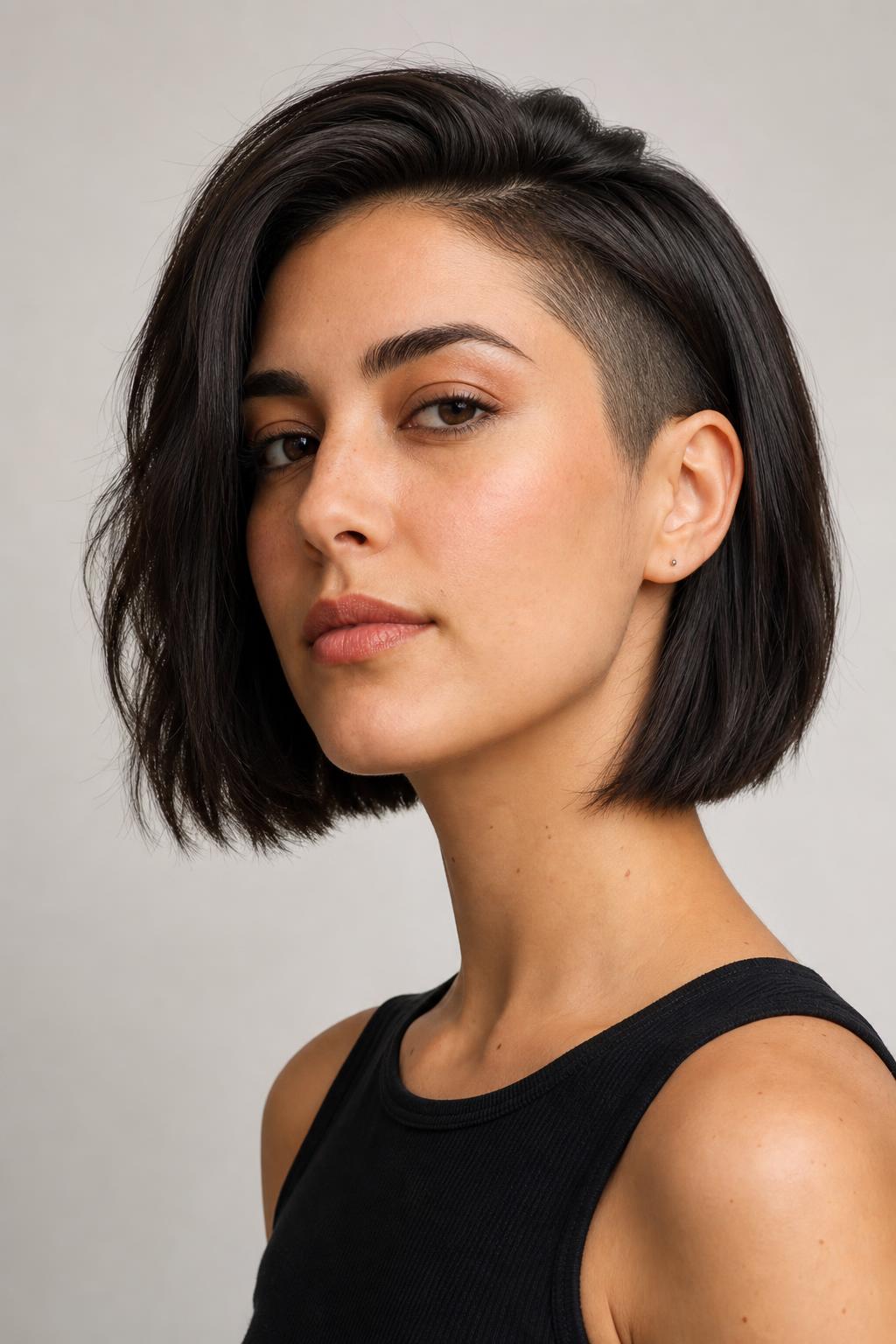
14. Long Cut with Invisible Layers for Volume
Weight removed entirely from the interior leaves the outline solid while giving flat hair somewhere to lift from. On the road that means hair still has body on day three without dry shampoo doing the work. Fine hair sees the clearest benefit, though the removal has to be conservative or the ends thin out.

Shapes Built for Trips Measured in Months
Past about three weeks, the question stops being how a cut styles and becomes how it grows. Anything relying on a crisp line will be past its best by week five, and finding a stylist abroad who cuts your texture well is a gamble. Protective styles and cuts with no fixed line are what long-trip travelers end up with, and there is a reason they are the standard among people who move for a living.
15. Knotless Box Braids at Mid-Back
Installed without a knot at the root, these braids sit flatter and pull less than the traditional version, which matters when they stay in for six to eight weeks. Washing is simple, drying takes a while, and daily styling drops to nothing. Budget five to seven hours for installation and book it before you leave rather than hoping to find someone abroad.

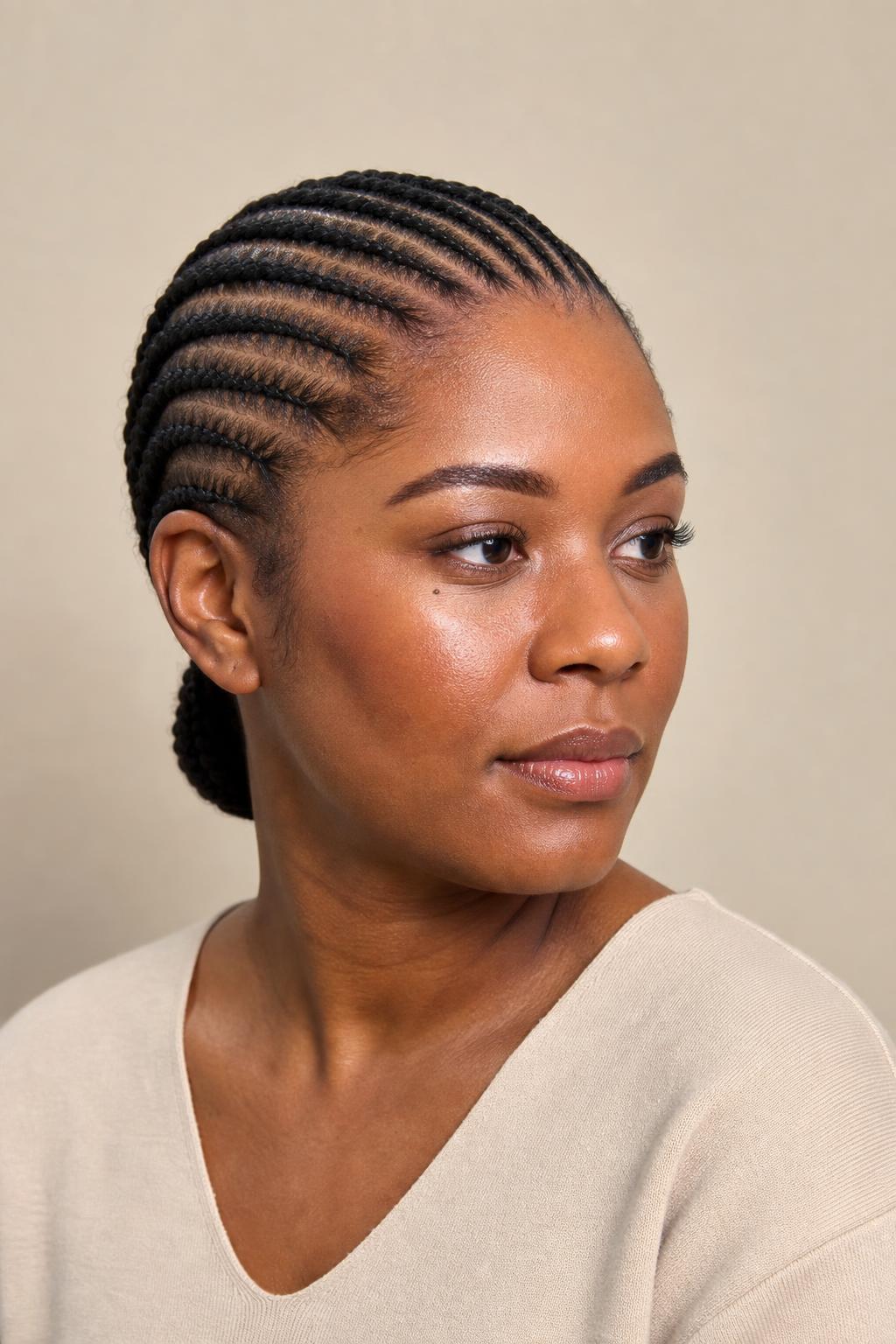
16. Cornrows Gathered Low at the Back
Straight-back cornrows keep the scalp accessible for washing, which is the practical advantage over styles that cover it, and they gather into a low tie for evenings. Expect two to three weeks before the roots need attention rather than the six a braided style gives. Anyone with a tighter pattern should read the shape guidance for 4B and 4C hair before deciding between this and a cut.
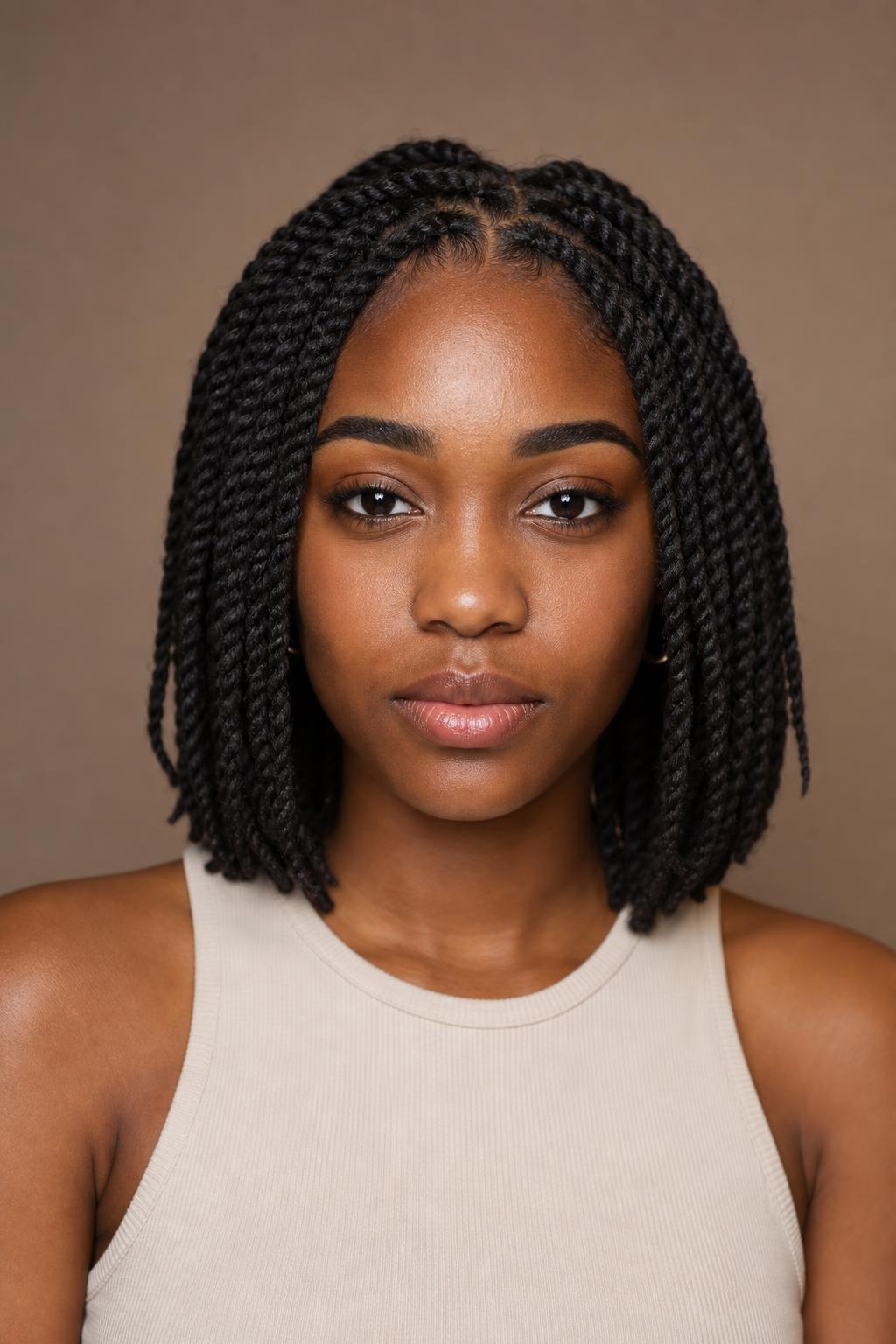
17. Senegalese Twists at Shoulder Length
Keeping twists at shoulder length rather than longer cuts the weight roughly in half, which is the difference between comfortable and a headache by week three. Shorter twists also dry faster in humid places, where a mid-back set can stay damp for hours. Retwist the perimeter at week four and the set holds another two.
18. Caesar Cut with a Short Blunt Fringe
Cutting the top to a uniform inch and a half and combing it forward into a short blunt fringe gives a shape that grows out proportionally rather than losing its line. Every part of it lengthens at the same rate, so week six looks like a slightly longer version of week one. It also needs no product, which is one less bottle through security.

19. Ivy League Cut with a Tapered Back
Longer at the front than a crew cut, the Ivy League can be combed to the side for something formal or raked forward for something casual, covering both a business trip and the weekend attached to it. The tapered back grows out without a hard line appearing. It buys about five weeks before it stops looking deliberate.
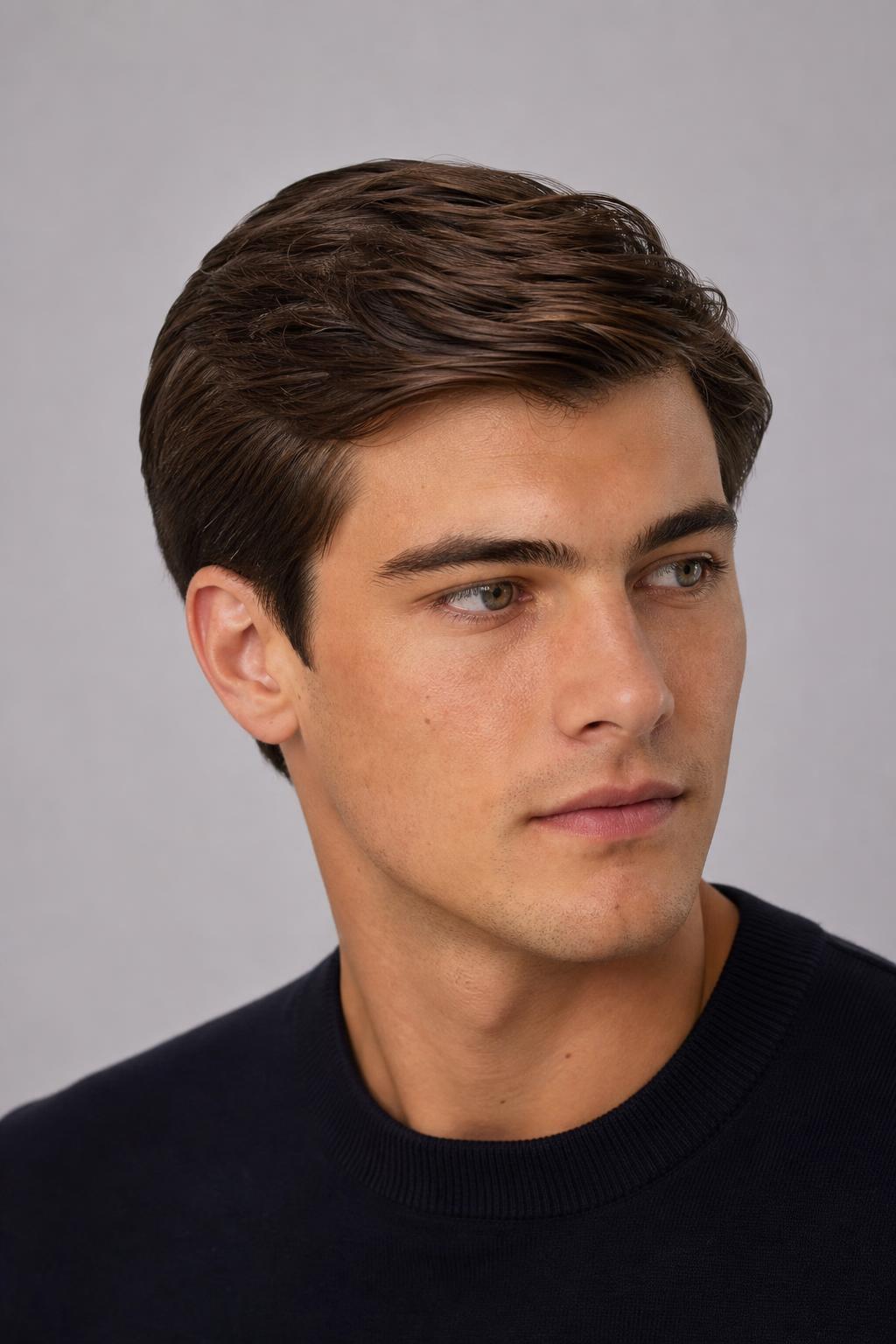
20. Short Layered Cut with a Grown-In Nape
Leaving the nape slightly longer than a standard crop removes the one part of a short cut that betrays grow-out first. Because there is no clipper line at the neck, nothing appears as an obvious edge in week four. The layered top continues to look intentional as it lengthens, which is what makes this the most forgiving short cut for an open-ended trip.

Matching the Cut to the Length of the Trip
The single biggest mistake is choosing a cut for how it looks on day one of a trip that lasts a month. Grow-out rate is roughly half an inch a month for most people, which sounds small until it lands on a cut whose whole identity is a sharp line. Pick the row that matches how long you will be away from your stylist, not how long the holiday feels.
| Trip Length | Best Cut Type | Book Before Leaving | Avoid |
|---|---|---|---|
| Weekend to 5 days | Anything, including sharp blunt lines and fringes | 3 to 7 days ahead | A dramatic new cut the day before you fly |
| 1 to 2 weeks | Bobs, layered mid-lengths, Ivy League and Caesar shapes | 10 to 14 days ahead | Skin fades, which blur inside two weeks |
| 3 to 6 weeks | Long layers, grown-in napes, curly shapes with no hard line | 2 weeks ahead | French bobs and blunt fringes needing 4-week trims |
| 2 months or open-ended | Protective styles, one-length lengths, uniform clipper shapes | 3 to 5 days ahead for a braid install | Any cut whose shape depends on a crisp perimeter |
What to Tell Your Stylist Before You Travel
Book roughly ten to fourteen days before departure rather than the day before. A fresh cut needs about a week to settle into how it will actually fall, and if something is wrong you still have time to fix it at home rather than in a foreign salon. It also gives a blunt line a chance to soften into something more forgiving.
Tell your stylist three things: how long you will be gone, whether you are taking any heat tools, and what the water and climate are like where you are going. That last one changes the recommendation more than people expect, since hard water leaves mineral deposits that make fine hair look dull and coarse hair feel rough. Then ask directly: “How will this look in four weeks with no trim?” A good answer names the specific part that goes first.
Stylist tip: Ask for a slightly longer version of whatever you want, then have the ends dusted rather than shaped. You leave with a cut that is a week ahead of ideal and lands exactly right in the middle of the trip, which is when most of the photographs happen.
What Actually Earns Space in the Bag
Most travel hair kits are built around the fear of a bad day rather than around what gets used. The honest list is short, and it changes depending on which of the three cut categories above you chose. The one thing worth carrying regardless of cut is a clarifying option, because hard water buildup is the most common cause of hair behaving strangely abroad. Between washes, the same principles behind reviving second-day hair by cut type apply on the road.
- A solid or travel-size clarifying shampoo, used once mid-trip, to strip the mineral film hard water leaves behind.
- One multipurpose product matched to your cut: a light cream for curls, a matte paste for short shapes, a texturizing spray for mid-lengths.
- A wide-tooth comb rather than a brush, which handles wet hair of any texture and packs flat.
- Two or three spiral coil elastics, which do not leave a crease and survive being wet repeatedly.
- A silk or satin pillowcase if you are away more than a week, since hotel cotton is the reason hair looks rougher by day four.
Stylist tip: Rinse with bottled or filtered water once every few days if you are somewhere with very hard water. You do not need to wash with it, just a final rinse over the lengths, which removes most of the mineral deposit that builds up and stops product working the way it does at home.
When Cutting Before a Trip Is a Mistake
The pre-holiday haircut is close to a reflex, and it goes wrong often enough to be worth naming the cases.
- You are trying a completely new shape. A trip is the worst time to learn how a cut behaves, since you have no tools, no routine for it, and no way to correct it. Try the new cut after you get back.
- You are traveling somewhere with much higher humidity than home. The cut that works in dry air can behave completely differently, and you will not know how until you land. Keep more weight than you think you need.
- Your trip is longer than six weeks. Cutting to a sharp shape means you spend most of the trip watching it grow out. A longer, softer shape that improves as it lengthens is the better bet.
- You are going somewhere with strong sun and have recently lightened your hair. Cutting does nothing for that, and the priority is protecting the color rather than reshaping around it.
FAQ
How Long Before a Trip Should I Get a Haircut?
Ten to fourteen days is the sweet spot for most cuts. A fresh cut sits slightly stiff for the first week and settles into its natural fall after that, so you travel with the version that actually behaves. It also leaves time to go back if something needs adjusting, which is not an option once you have left.
What Is the Most Low-Maintenance Haircut for Vacation?
A one-length or long-layered cut with no fringe asks the least of you. There is no line to maintain, no part to set, and no section that looks wrong if you ignore it for a week. For short hair the equivalent is a uniform clipper length, since it grows out proportionally rather than losing a shape.
Do I Need to Bring a Hair Dryer When I Travel?
Only if your cut genuinely does not work air-dried, and most travel-appropriate cuts do. Hotel dryers are usually weak, and travel dryers take up a third of a carry-on for something used twice. If you are unsure, air-dry your hair at home for a week before the trip and see whether you can live with the result.
Why Does My Hair Look Different in Other Countries?
Water hardness and humidity are the two usual causes. Hard water leaves calcium and magnesium deposits on the shaft that make fine hair look dull and flat, while a change in humidity shifts how much moisture the hair holds and therefore how much it swells. A single clarifying wash usually resets the first problem, and the second is a matter of matching your cut to the climate.
Should I Get Braids or a Protective Style Before Long-Term Travel?
For textured hair on trips over a month, it is usually the most practical choice. A knotless braid or twist set holds six to eight weeks, removes daily styling entirely, and does not depend on finding a stylist who knows your texture abroad. Install before you go rather than after you arrive, and choose shoulder length over mid-back if you are heading somewhere hot.
How Do I Stop My Hair Getting Damaged on a Long Flight?
Cabin air is extremely dry, so the priority is sealing moisture in before you board. Apply a leave-in conditioner through the mid-lengths and ends at the airport, and tie hair loosely at the nape rather than in a tight elastic that creases and pulls for eight hours. A silk scrunchie or a loose braid does the job better than a bun.
Is a Bob a Good Travel Haircut?
It depends on the type and the trip length. A blunt French bob is excellent for a week and past its best by week five, since its whole shape depends on a clean line that needs trimming every four to six weeks. A longer, softer bob or a stacked shape grows out far more gracefully and covers a longer trip.
Can I Get a Haircut Abroad Mid-Trip?
You can, though the risk goes up sharply if you have curly or coily hair or a cut that depends on a specific technique. Bring photographs of your hair from behind as well as from the front, since describing a shape across a language barrier rarely works. For a simple trim of the ends on straight hair, most salons anywhere will do fine.
The best travel-friendly haircuts are chosen for week three, not for the day you leave the salon. Work out how long you will be away from your stylist first, pick the shape from the matching section, and book it a clear two weeks before you fly. A cut that grows the right way means the only thing you have to think about on the trip is where you are going next.
Hair results vary based on your natural hair type, texture, density, and condition. Always consult with a licensed hairstylist before making significant changes, especially with chemical treatments or dramatic length changes. Photos may show styled results that require professional tools and products to replicate.